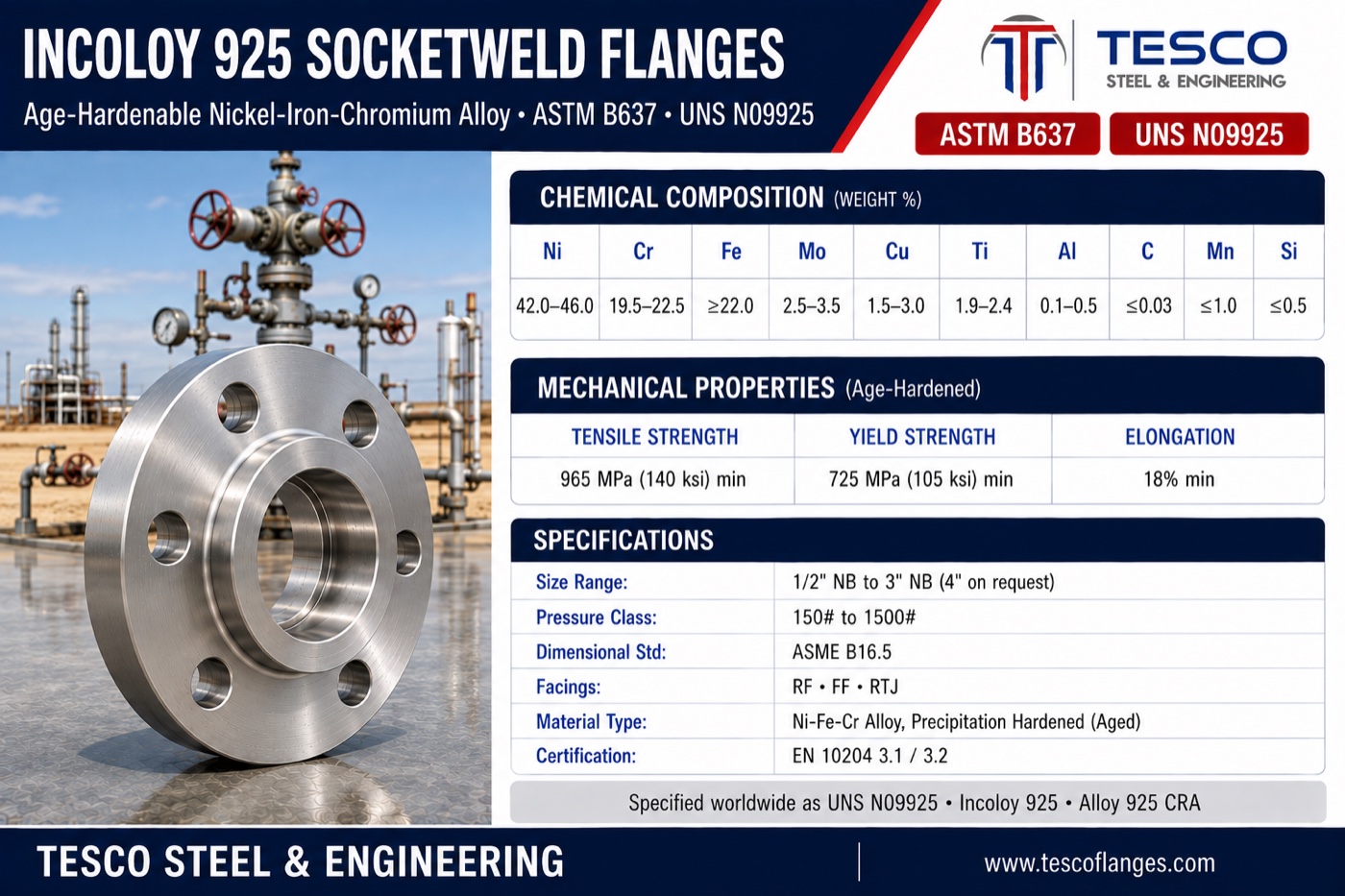
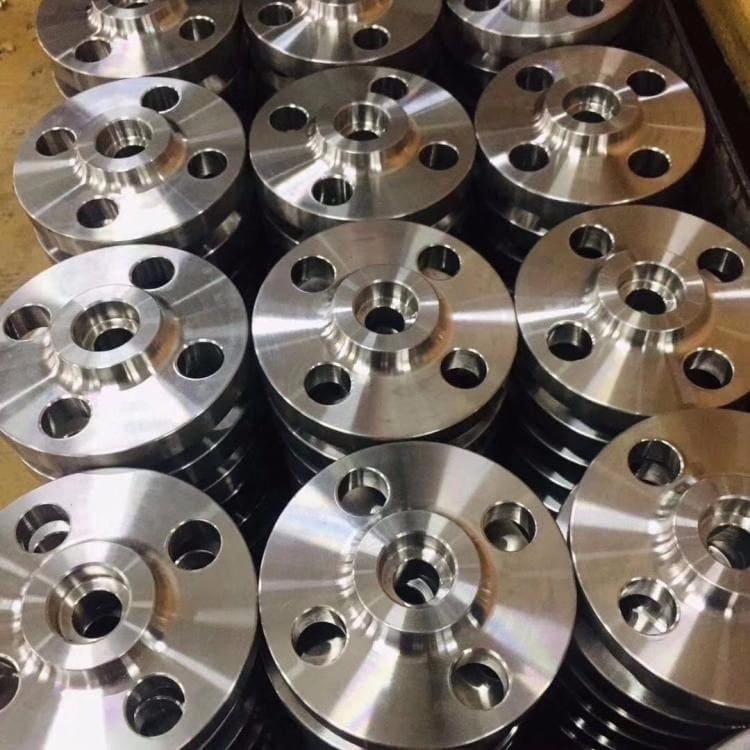
Tesco Steel & Engineering manufactures Incoloy 925 socketweld flanges — the age-hardened one: ASTM B637, UNS N09925, Alloy 925 CRA — to ASME B16.5 from ½″ to 3″ NB in Classes 150–1500. The formula is 825's proven corrosion chemistry with one dial turned: titanium raised from stabiliser dose to 1.9–2.4%, so on ageing gamma-prime precipitates through the grains and lifts the yield to 725 MPa — roughly three times the parent's. It is the K-500 trick on the Fe-Ni-Cr base: same mechanism as Monel K-500, same weld-then-age discipline — but with chromium and molybdenum aboard, so high-strength sour service per NACE MR0175/ISO 15156 and API 6A practice is the franchise: wellheads, christmas trees, gas-well and subsea small bore. The honesty carries from both parents: if the design never calls the strength, 825 saves real money; the extreme-chloride frontier stays with 625; and the aged certificate keeps its thermometer — service below ~450–500 °C. Supplied age-hardened with the full heat-treatment record (annealed to order). Facings: SWRF, SWFF, SWRTJ. Every lot with EN 10204 3.1/3.2 MTC. ISO 9001:2015, made in Mumbai, India — exported to 50+ countries.
Incoloy 925 · B637 · N09925 · 925 CRA825's Chemistry · Ti 1.9–2.4% — The Hardener965 / 725 MPa Aged — 3× the Parent's YieldHigh-Strength Sour: NACE MR0175 · API 6AThe K-500 Trick, With Cr & Mo AboardHeat-Treatment Record on Every MTCASME B16.5 ½″–3″ · Class 150–1500EN 10204 3.1 / 3.2 · ISO 9001:2015
Incoloy 925 Socketweld Flanges — Specifications at a Glance
What is an Incoloy 925 Socketweld Flange?
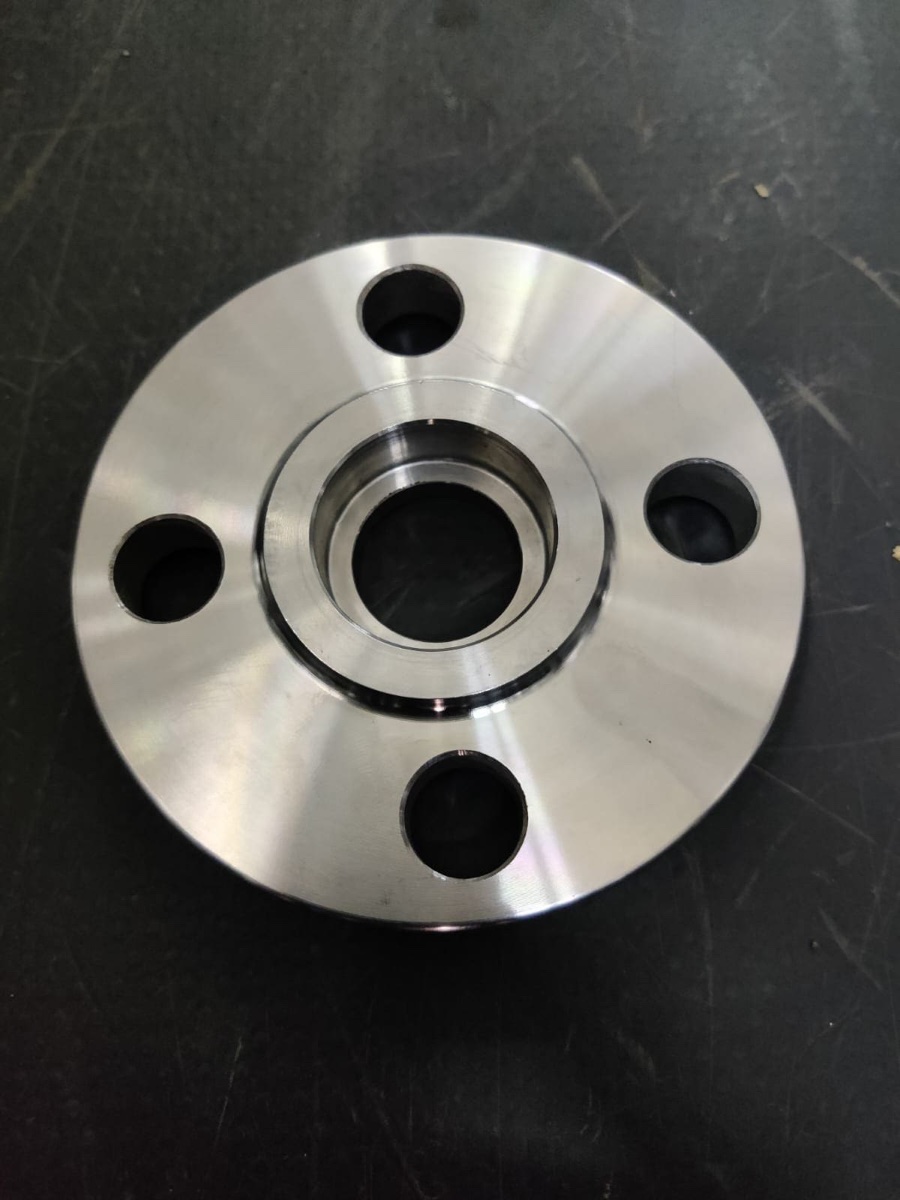
The strength grade in the small-bore pattern. A forged Incoloy 925 flange (ASTM B637 / UNS N09925 / Alloy 925 CRA) with a machined socket: pipe seated square by geometry, one external fillet weld, through-bore matched to the pipe schedule. 825's corrosion chemistry — Ni 42–46%, Cr 19.5–22.5%, Mo 2.5–3.5%, Cu 1.5–3.0% — with titanium turned up to 1.9–2.4%: gamma-prime ageing lifts the certificate to tensile ≥965 MPa, yield ≥725 MPa, elongation ≥18% — roughly three times the parent's yield — for high-strength sour service per NACE MR0175/ISO 15156 and API 6A practice. Supplied age-hardened with heat-treatment records (annealed to order). Sized by ASME B16.5 at ½″–3″ NB, Classes 150–1500; EN 10204 3.1 on every lot.
Also searched as: Alloy 925 socket weld flange, N09925 SW flange, 925 CRA flange, age-hardened Incoloy flange, precipitation-hardened Fe-Ni-Cr flange — all the same product family. Related pages: the facings — SWRF / SWFF / SWRTJ — the socketweld hub, the other Incoloy 925 types — blind, weld neck, slip-on — the parent 825, the fire side 800 / 800H / 800HT, and the other aged one — Monel K-500.
The rule of the bench: annealed alloys wear their strength permanently; aged alloys carry a certificate that heat can revoke — which is why the condition, the welding plan and the MTC's heat-treatment record are part of the metallurgy here.
What the Turned-Up Titanium Buys
Gamma-Prime Through the Grains
Ti 1.9–2.4% with Al 0.1–0.5% precipitates Ni3(Ti,Al) on ageing — billions of fine particles that block slip everywhere at once, lifting yield from the annealed ~300 class to 725 MPa certified.
825's Defence, Unchanged
The Cr-Mo-Cu corrosion kit carries over almost untouched — acids, chlorides and sour gas meet the same chemistry the 825 page documents, now with triple the muscle behind it.
The High-Strength Sour Franchise
NACE MR0175/ISO 15156 standing for PH nickel alloys plus API 6A practice — wellheads, christmas trees, hangers and gauge trim: the one duty that needs CRA chemistry and a 105 ksi certificate at once.
Honesty About the Certificate
Strength from heat treatment can be revoked by heat — welding softens the HAZ locally, ~450–500 °C service over-ages it, and if the design never calls the 725, 825 saves real money.
Incoloy 925 Chemical Composition (UNS N09925)
Element
Ni
Cr
Fe
Mo
Cu
Ti
Al
C
Mn
Si
Weight %
42.0–46.0
19.5–22.5
≥22.0
2.5–3.5
1.5–3.0
1.9–2.4
0.1–0.5
≤0.03
≤1.0
≤0.5
Read it as 825 with one dial turned: the Mo and Cu carry over, nickel and chromium narrow slightly, carbon tightens to the family's lowest cap — and titanium jumps from stabiliser dose (0.6–1.2) to hardener dose (1.9–2.4) with aluminium as its ageing partner. The iron floor stays: still an Incoloy. PMI confirms the chemistry on every piece.
Mechanical Properties (Age-Hardened)
Property
ASTM B637 N09925 Aged Requirement
Tensile Strength
≥ 965 MPa (140 ksi) — second only to K-500's class on this socketweld bench
Yield Strength (0.2%)
≥ 725 MPa (105 ksi) — roughly three times 825's
Elongation
≥ 18% — ample for flange duty; deliberately below the annealed bench's 30%
Condition
Age-Hardened (solution treatment + two-step ageing near 730/620 °C) — furnace records certified; solution-annealed (~650/300 MPa, 30%) to order for weld-then-age fabrication
Temperature Span
Sub-zero to ~450–500 °C — the over-ageing thermometer of every aged certificate
Rating
B16.5 nickel-alloy tables govern the joint — the aged strength pays in the upper classes; stated per class on our quotations
925's order book inverts the usual pattern: the upper classes dominate — that is what the aged certificate is for — and SWRTJ carries most of it. State ring number and any API 6A context on the enquiry.
Incoloy 925 Socketweld Flange Specifications
Incoloy 925 Socketweld Flanges are available in the following specifications:
Material Grade
Incoloy 925, ASTM B637 (UNS N09925), Alloy 925 CRA — certificates carry the designations your documentation uses
Heat Treatment
Age-hardened (standard) with full furnace records; solution-annealed to order for weld-then-age fabrication — condition stated unambiguously on the MTC
Size
1/2"NB to 3"NB per ASME B16.5; 4″ and larger to order; EN 1092-1 patterns to order
Class
150#, 300#, 600#, 900#, 1500# (900# shares 1500# dimensions in most sizes) — the upper classes are the home game
Facings
Raised Face (SWRF), Flat Face (SWFF), Ring Type Joint (SWRTJ) with groove per B16.20
Bore
Socket bore to pipe OD; through-bore matched to pipe schedule
Welding
Single external fillet with 1/16″ expansion gap; weld-then-age where full joint strength is required; over-matched ERNiCrMo-3 common on aged small bore; sulphur-clean practice; no preheat
Service Span
High-strength sour service per NACE MR0175/ISO 15156 and API 6A practice; sub-zero to ~450–500 °C; unused strength to 825, extreme chlorides to 625, heat to the 800 side — see the notes
Tension per condition and chemistry per heat; PMI on every piece; hardness verified where sour standards require; socket depth and bore gauged
Certification
EN 10204 3.1 with heat-treatment records (standard) / 3.2 witnessed
Specification Notes — Getting Alloy 925 Sockets Right
Four honest notes.The unused-strength trap: if the design never calls the 725 MPa, 825 does the identical corrosion job cheaper and welds without ceremony — order the parent. The condition discipline: welding softens the HAZ locally and service above ~450–500 °C over-ages the metal — plan weld-then-age where the joint must carry the full number, and read the MTC's condition line as part of the design. The corrosion ceiling: 825-class chemistry is mid-tier — extreme chlorides and the reducing frontier belong to 625 and C-276, whatever the yield says. And heat is the other family's job: creep certificates live with 800H/800HT — an aged alloy has no business in a furnace.
How Our Incoloy 925 Socketweld Flanges Are Manufactured
1
Forging — cut billet of the spectro-verified N09925 heat is hot-forged into the flange blank with full heat traceability and segregated nickel-alloy handling.
2
Heat treatment — solution treatment followed by the two-step ageing cycle (or annealed-only to order); every chart retained against the heat number — the certificate is the condition.
3
Machining — faces, OD and drilling to ASME B16.5 on dedicated stations with sulphur-free lubricants; the aged hardness is machined with carbide discipline; socket counterbore and depth gauged piece by piece, through-bore matched to the ordered schedule.
4
Facing — RF serrations, flat face or RTJ groove per B16.20.
5
Testing & marking — tension per condition and chemistry per heat; PMI on every piece; hardness verified where sour standards require; laser-marked with grade, size, class, schedule and heat number.
6
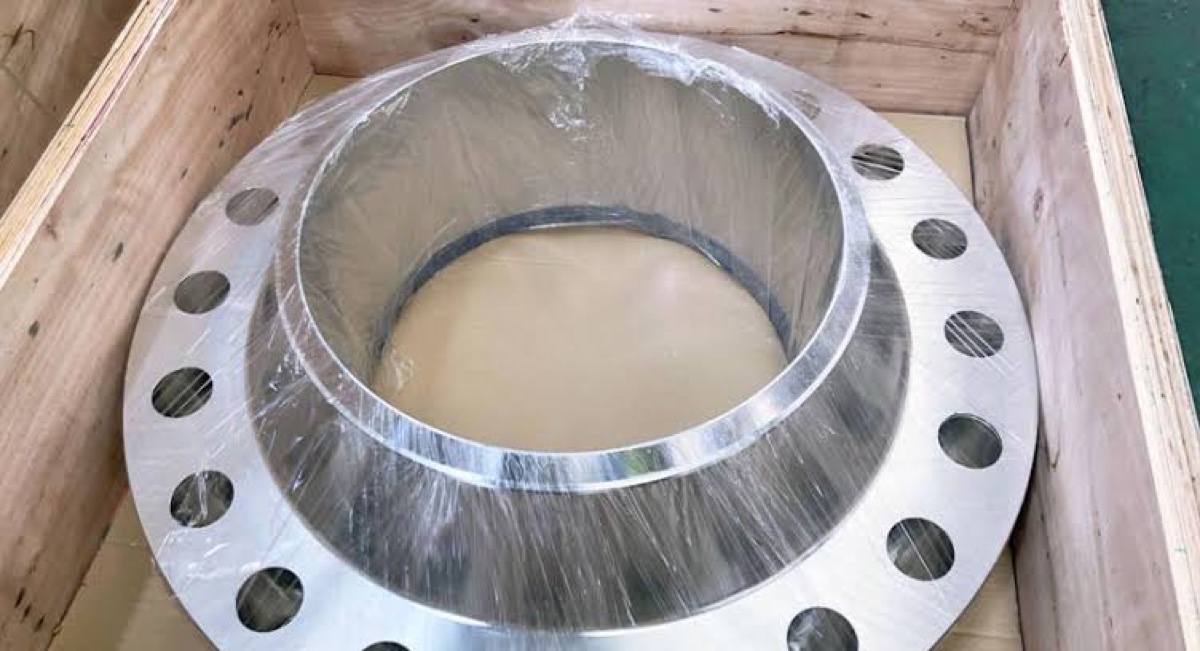
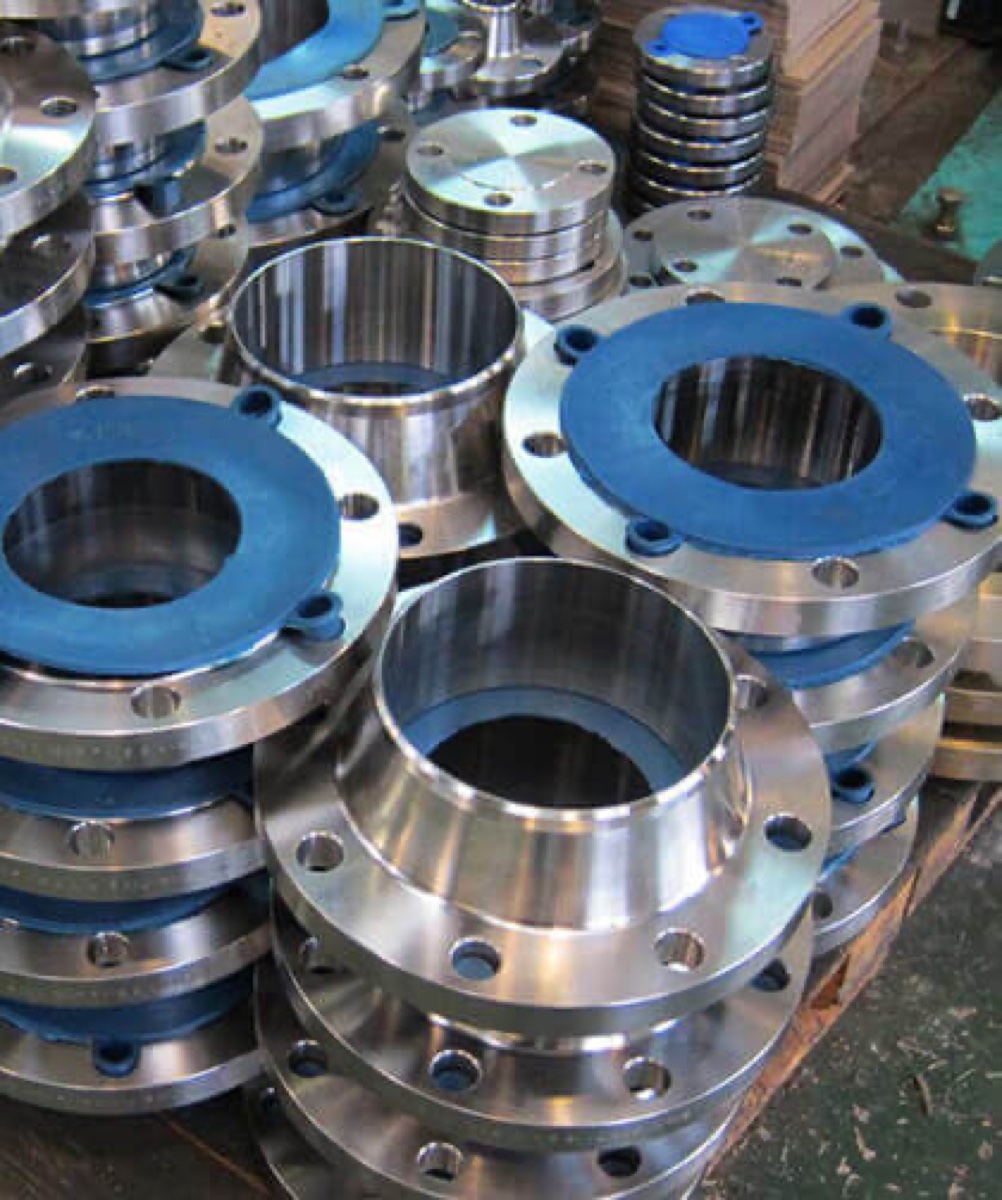
Certification & packing — EN 10204 3.1 MTC with the full heat-treatment record (3.2 witnessed on request); WPS guidance included; packed sea-worthy with no carbon-steel contact.
Where Incoloy 925 Socketweld Flanges Are Used
Where sour chemistry meets serious pressure: wellhead and christmas-tree instrument and gauge trim, gas-well completion and surface hardware, sour flowline and injection small bore in the upper classes, subsea hydraulic and chemical-injection connections, and high-pressure test and metering systems on CRA-specified developments. Production below:
Socket weld flange dimensions are class-governed per ASME B16.5 — identical across material grades (pressure-temperature ratings follow the nickel-alloy group). Full charts:
How to Specify & Order an Incoloy 925 Socketweld Flange
Seven elements — the condition is part of the metallurgy:
1
Size & standard — e.g. 1″ NB ASME B16.5, or DN25 EN 1092-1 to order.
2
Pressure class & facing — 150#–1500#; SWRF, SWFF or SWRTJ with ring number (the sour-service default) — with the design temperature.
3
Pipe schedule — the through-bore is matched to the pipe ID.
4
Grade line — Incoloy 925 / B637 / N09925 / 925 CRA all name the same metal.
5
Condition & standards — age-hardened (our standard) or solution-annealed for weld-then-age; any NACE MR0175/ISO 15156 or API 6A requirement stated — hardness and condition limits follow from them; if the strength is not actually needed, 825 is the honest order and our quotation will say so.
6
Certification — EN 10204 3.1 with heat-treatment records (our standard) / 3.2 witnessed, PMI as applicable.
Example: “SWRTJ Flange, 1″ NB, ASME B16.5 Class 1500, R16 groove, Sch 160 bore, Incoloy 925 / B637 N09925 age-hardened, gas wellhead gauge trim per NACE MR0175 / API 6A, EN 10204 3.1 with heat-treatment record — 6 pcs.” Quotations normally within 24 hours.
An Incoloy 925 socketweld flange is a forged age-hardenable nickel-iron-chromium alloy flange — 42-46% nickel, 19.5-22.5% chromium, 2.5-3.5% molybdenum and 1.5-3.0% copper on an iron floor of at least 22%, with titanium raised to 1.9-2.4% as the hardening addition, ASTM B637, UNS N09925 — whose back carries a machined socket: the pipe end seats inside, self-aligned square to the face, and is secured with a single external fillet weld. 925 is the Incoloy bench's strength grade: alloy 825's proven corrosion chemistry with gamma-prime ageing that lifts the yield to 725 MPa minimum — roughly three times the parent's — for high-strength sour service per NACE MR0175/ISO 15156 and API 6A practice. Dimensioned to ASME B16.5 for ½" to 3" NB in Classes 150 to 1500 — the wellhead grade, in the small-bore pattern.
What makes 925 different from 825?
One dial, turned an order of magnitude. 825 doses titanium at 0.6-1.2% as a stabiliser — just enough to tie up carbon and guard the grain boundaries. 925 raises it to 1.9-2.4% with 0.1-0.5% aluminium alongside, and that surplus has a different job entirely: on ageing it precipitates gamma-prime through the matrix and roughly triples the yield strength. The corrosion chemistry underneath barely moves — nickel narrows to 42-46%, chromium to 19.5-22.5%, the molybdenum and copper carry over, carbon tightens to ≤0.03% — so 925 keeps 825's standing in acids, chlorides and sour gas while adding the muscle 825 never had. Same defence, three times the strength: that is the entire grade, and why the oil patch adopted it for wellhead hardware.
What is gamma-prime, and how does ageing triple the yield strength?
Gamma-prime is an intermetallic compound — nickel with titanium and aluminium, Ni3(Ti,Al) — that forms as a fine dispersion of particles inside the metal's grains during the ageing treatment: a controlled soak in the region of 700-730°C followed by a step near 620°C. Each particle is an obstacle a dislocation must cut or climb past, so slip becomes hard everywhere at once and the yield strength climbs from the annealed 300 MPa class to 725 MPa minimum, certified. It is the same mechanism that strengthens Monel K-500 on the nickel-copper bench and the jet-engine superalloys beyond — and the same trade: the strength is a heat-treatment product, so the certificate must state the condition, and anything that re-heats the metal (welding included) locally disturbs it. The heat-treatment record therefore travels with every 925 lot we supply.
What is the chemical composition of Incoloy 925 (UNS N09925)?
Nickel 42.0-46.0%, chromium 19.5-22.5%, iron ≥22.0% — still the Incoloy floor — molybdenum 2.5-3.5%, copper 1.5-3.0%, titanium 1.9-2.4% — the hardener — aluminium 0.1-0.5% — its ageing partner — carbon ≤0.03%, manganese ≤1.0%, silicon ≤0.5%. Read it against the parent: 825's molybdenum and copper carry over unchanged, nickel and chromium narrow slightly, carbon tightens, and the titanium jumps from stabiliser dose to hardener dose. Nothing in the recipe serves heat — this is an aqueous-service strength alloy through and through. Chemistry is verified per heat, PMI-confirmed on every piece, and travels on the EN 10204 3.1 MTC with the heat-treatment record beside it.
What are the mechanical properties of Incoloy 925 socketweld flanges?
In the age-hardened condition: tensile strength 965 MPa (140 ksi) minimum, yield strength 725 MPa (105 ksi) minimum, elongation 18% minimum — the second-strongest certificate on this site's socketweld bench, and roughly three times 825's yield. In the solution-annealed condition the same metal certifies around 650/300 with 30% elongation — the state in which fabrication-heavy work is done before ageing. Both conditions are supplied, and the certificate states which, with furnace records. The elongation honesty is worth noting: 18% is ample ductility for flange service but deliberately lower than the annealed family's 30% — the price of the particle dispersion. B16.5's nickel-alloy tables govern the joint rating as everywhere, and the strength premium pays exactly where the sour order book uses it: the upper pressure classes.
Is Incoloy 925 suitable for high-strength sour service — NACE MR0175 and API 6A?
That combination is precisely why 925 exists. Sour wellhead and downhole hardware needs two things at once: corrosion resistance against H2S, CO2 and chlorides — which annealed CRAs like 825 provide — and high certified strength for the pressure containment and mechanical loads — which annealed CRAs lack. 925 delivers both in one certificate: 825-class corrosion chemistry with a 725 MPa aged yield, and long-recognised standing in NACE MR0175/ISO 15156 practice for precipitation-hardened nickel alloys, within the standard's condition and hardness requirements. That is why the alloy's home turf is API 6A country — wellheads, christmas trees, tubing hangers, valve and gauge trim — and why our order examples for this page read like a gas well. State the NACE/ISO and API requirements on the enquiry; the certificate documents condition, hardness and heat treatment.
Incoloy 925 or 825 — when is the parent the better order?
Whenever the strength is not actually used — and that is more often than the catalogue admits. The two alloys share their corrosion chemistry, so in plain acid, chloride and moderate sour duty they survive identically; what 925 adds is a certificate of muscle, bought with an ageing treatment, a welding discipline and a price premium. If the flange bolts into ordinary process piping at ordinary stresses, 825 does the same corrosion job, welds anywhere without ceremony, and saves real money — our 825 page carries that half of the family. 925 earns its premium where the design actually calls the strength: high-pressure sour trim, API 6A hardware, upper-class small bore where compact joints carry serious pressure. The same honesty the K-500 page gives its Monel parent applies here verbatim: order the aged grade for its numbers, not its prestige.
Incoloy 925 or Monel K-500 — the two age-hardened ones?
The site's two gamma-prime alloys, built on different foundations for different waters. K-500: nickel-copper — Monel 400 plus titanium and aluminium — aged to a 690 MPa yield; its franchise is seawater machinery, pump shafts, fasteners and marine hardware, defending by nobility. 925: iron-nickel-chromium-molybdenum-copper — 825 plus the same trick — aged to 725 MPa; its franchise is sour gas, defending by film and nickel both. The split is chemical: K-500 carries no chromium and no molybdenum, so oxidising media and sour-service qualification favour 925 decisively — for H2S country the choice is effectively made by the NACE tables. Conversely, classic seawater machinery duty keeps K-500's long record. Same mechanism, same weld-then-age discipline, different oceans — and both pages tell the same honest story about their annealed parents.
Incoloy 925 or Inconel 625 — aged strength or solid-solution strength?
Two philosophies of strength. 625 builds it into the matrix — niobium in solid solution, 414 MPa yield straight from the anneal, nothing for a weld to undo, corrosion armour (8-10% molybdenum, PREN past 50) far beyond 925's. 925 builds it by heat treatment — 725 MPa yield, three-quarters again 625's, but condition-dependent and welding-sensitive, with 825-class corrosion that is honest mid-tier rather than extreme. So the duties sort themselves: where the enemy is the environment at its worst — hot brines, crevices, the stacked offshore duty — 625 wins regardless of its lower yield; where the enemy is pressure and load in known sour chemistry — wellhead and completion hardware — 925's certificate is the one the design wants. Price usually favours 925 for the strength role and 625 for nothing less than its own territory.
How is an Incoloy 925 socketweld flange welded?
With the age-hardened discipline this site's K-500 page established, applied to a friendlier base. The geometry is standard socket-weld practice: pipe bottomed, withdrawn 1/16" (1.6 mm) for the expansion gap, single external fillet — no preheat. The discipline is in the condition: welding locally re-heats the joint, softening aged material in the HAZ, so where the design counts the full 725 MPa through the joint, practice is weld-then-age — fabricate in the annealed condition and age the assembly — or qualify the joint with the HAZ soft zone accounted for; for socket-weld small bore, where the fillet is rarely the governing structural member, welding aged flanges with over-matched ERNiCrMo-3 and accepting the local anneal is common and sensible. Sulphur-clean housekeeping as everywhere on the nickel bench. State the intent on the enquiry and the WPS guidance follows it.
How hot can Incoloy 925 actually go?
Its strength has a thermometer. The gamma-prime dispersion that gives 925 its certificate is itself a creature of the 620-730°C ageing range — hold the alloy hot enough for long enough and the particles coarsen, over-age and give the strength progressively back. Practical design therefore keeps aged 925 below roughly 450-500°C, generous for its actual career: wellhead, subsea and process small bore is rarely hot. Corrosion-wise the alloy tolerates more, but there is no reason to spend it there — the Incoloy bench holds better tools: 800H and 800HT carry the certified creep duty, the Inconels carry the fire. The same over-ageing honesty the K-500 page tells about its 480-500°C band applies here: an age-hardened certificate is a low-and-medium-temperature instrument by nature.
What are Incoloy 925's honest weaknesses?
Four, named plainly. The unused-strength trap: if the design never calls the 725 MPa, 825 does the identical corrosion job cheaper and welds without ceremony — order the parent. The condition discipline: strength that comes from heat treatment must be protected from heat — welding softens the HAZ locally, service above roughly 450-500°C over-ages the metal, and the certificate is only as good as the recorded condition; we put the heat-treatment record on every MTC for exactly this reason. The corrosion ceiling: 825-class chemistry is mid-tier — the extreme chloride and reducing frontiers belong to 625 and C-276, whatever the yield numbers say. And the elongation: 18% is honest and sufficient, but this is not the 30-40% forgiveness of the annealed bench — handling and cold-work practices should respect it. None of these touch the franchise: certified strength in sour chemistry.
What sizes and pressure classes do Incoloy 925 socketweld flanges come in?
ASME B16.5 standardises socket weld flanges from ½" to 3" NB in Classes 150, 300, 600, 900 and 1500 — Class 900 sharing Class 1500 dimensions in most small-bore sizes — with 4" and Class 2500 made to order. 925's order book is the mirror image of most grades on this site: it lives in the upper classes — 600, 900 and 1500 wellhead, injection and gas-well trim, where the aged strength is precisely what is being bought — with the lower classes appearing mainly for instrument and gauge connections on the same hardware. All three facings are available, and SWRTJ with solid or soft-iron rings dominates the high-pressure sour work. Put the pipe schedule on the enquiry — the through-bore is matched to the pipe ID — and B16.5's nickel-alloy tables set the rating; our quotations state it per class.
What details are needed to get an accurate Incoloy 925 socketweld flange quotation?
Seven elements plus commercial terms: (1) size — ½" to 3" NB; (2) pressure class — 150 to 1500, with the design temperature; (3) facing — SWRF, SWFF or SWRTJ with ring number; (4) the pipe schedule, so the through-bore matches the pipe ID; (5) the grade line — Incoloy 925, ASTM B637, UNS N09925 or Alloy 925 CRA all name the same metal; (6) the condition — age-hardened (our standard) or solution-annealed for weld-then-age fabrication — with any NACE MR0175/ISO 15156 or API 6A requirement stated, since hardness and condition limits follow from them; (7) certification — EN 10204 3.1 with heat-treatment records (our standard) or 3.2 witnessed, PMI as applicable. Add quantity and destination; quotations normally within 24 hours — and if the strength is not actually needed, the quotation will honestly suggest 825.
Who manufactures Incoloy 925 socketweld flanges in India?
Tesco Steel & Engineering is an ISO 9001:2015 certified flange manufacturer based in Mumbai, India, producing Incoloy 925 (ASTM B637, UNS N09925) socket weld flanges from ½" to 3" NB (larger to order) in Classes 150-1500 — each forged from certified heats, solution-treated and age-hardened with the full furnace record against the heat number (solution-annealed supply to order), machined on dedicated nickel-alloy stations with sulphur-free lubricants, gauged socket depth and schedule-matched bore, PMI-checked and hardness-verified where sour standards require, and laser-marked with grade, size, class, schedule and heat number. Supplied with EN 10204 3.1/3.2 certification and WPS guidance, alongside the 825 parent, the 800/800H/800HT fire side, and the full nickel-alloy socketweld range this series covers. Exported to more than 50 countries.