

Tesco Steel & Engineering is a manufacturer and exporter of custom-made Inconel refractory anchors — the nickel-alloy anchors that hold refractory lining on the hottest furnace, reformer, heater, reactor and incinerator shells, where stainless grades reach their limit. Most of our anchors are made to customer drawings, samples and specifications. Every type — V, Y, Flat-Type Y, H, UV, crook, L, bull horn, slitted, brick holders, twist-lock, stud and christmas-tree — in Inconel 600, Inconel 601, Inconel 625, Incoloy 800 and other nickel alloys. Exported worldwide, with fast production and competitive pricing. ISO 9001:2015 certified.
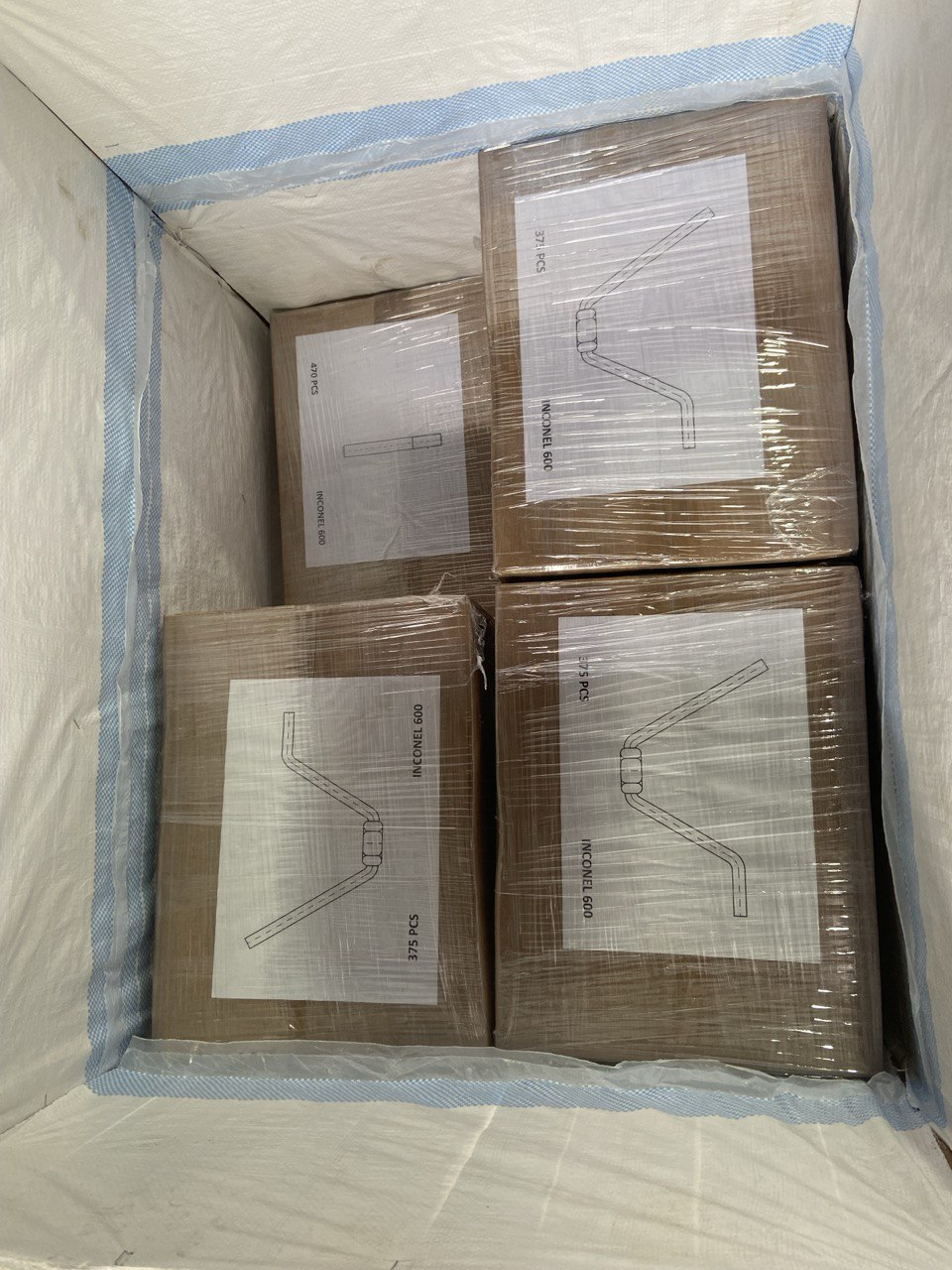
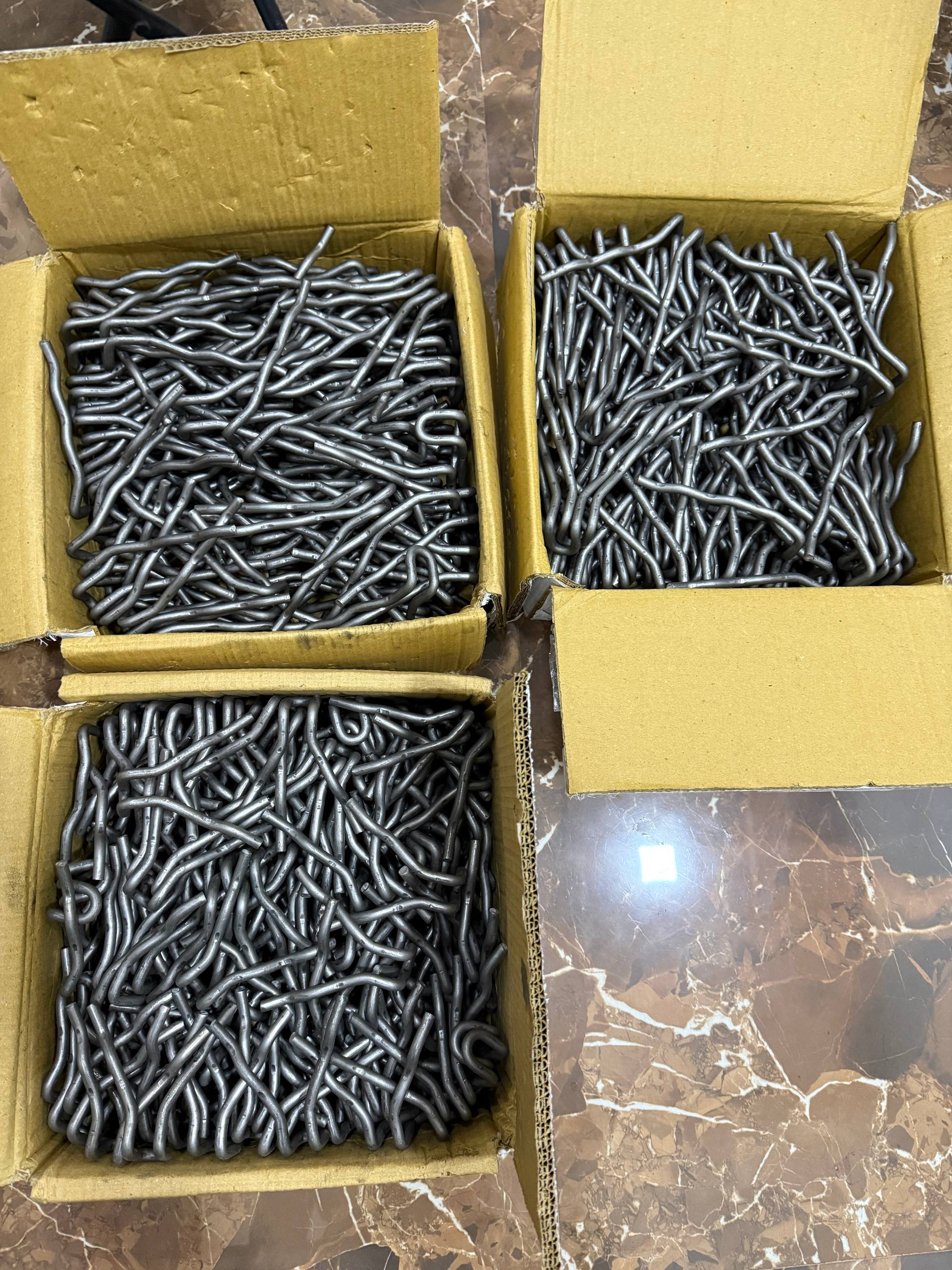
Inconel 600 Refractory Anchors — Export Crates
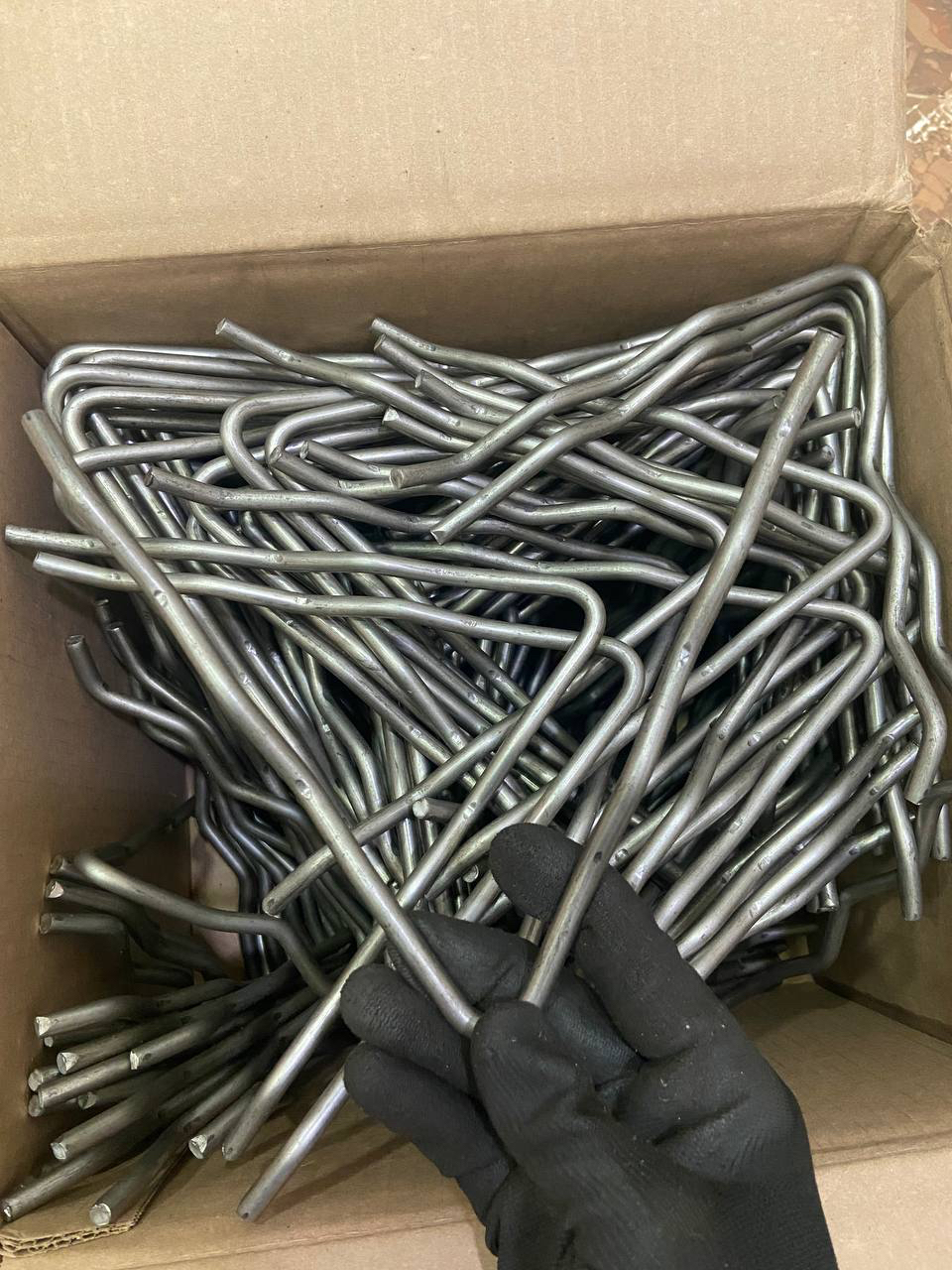
Custom Nickel-Alloy Anchors — Made to Drawing
Refractory anchors hold the lining onto the steel shell of high-temperature equipment. As the operating temperature climbs, the anchor — which sits inside the lining, close to the hot face — is the part most at risk: it must keep its strength and resist oxidation, scaling, carburisation and the fatigue of repeated heating and cooling. Around 1100–1150 °C, stainless grades such as SS310 and SS330 reach their practical limit. Above that, or in reducing, cyclic, carburising or sulphidising atmospheres, the anchor must be made from a nickel alloy.
That is where Inconel and Incoloy anchors come in. Inconel 601 (with its aluminium addition) offers outstanding oxidation resistance to about 1200 °C; Inconel 600 excels in reducing and cyclic service to about 1175 °C; Inconel 625 adds very high strength and corrosion resistance; and Incoloy 800 / 800H / 800HT give excellent carburisation and creep resistance for reformer-type service. The anchor type, grade, wire/bar size and length are chosen for the lining, its thickness and the operating conditions — which is why almost every Inconel anchor is engineered and made to the project's own drawings.
We manufacture the full range of anchor types in Inconel and Incoloy grades — standard forms and fully custom shapes — each made to your dimensions and material.
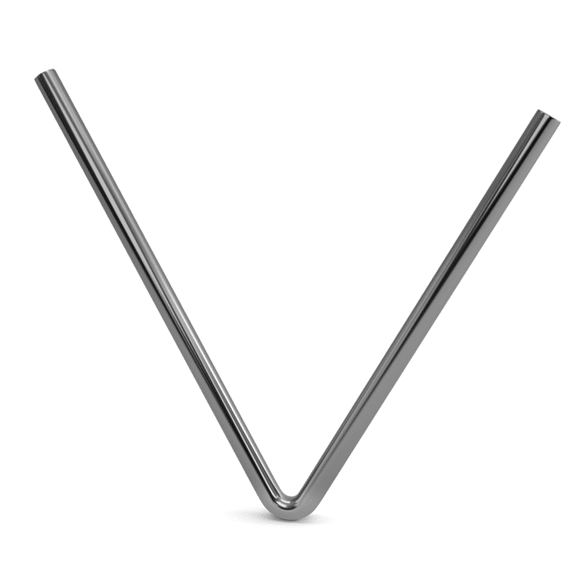
The most common, economical anchor — a V-shaped wire form welded to the shell by its legs — in Inconel for high-temperature monolithic (castable and gunning) refractory in furnaces, heaters and ducts.
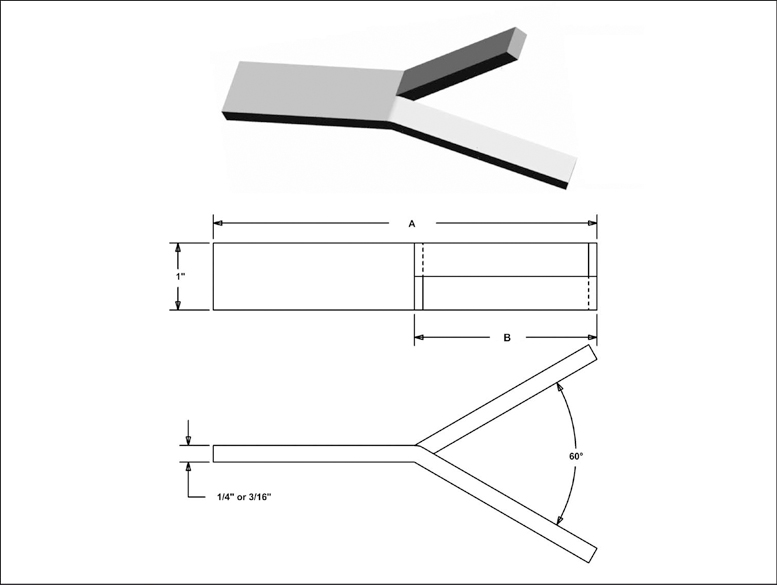
A single stem splitting into two legs forming a Y, welded by the stem so it anchors deeper into the lining — for medium-to-thick monolithic refractory in petrochemical reformers, heaters and reactors.
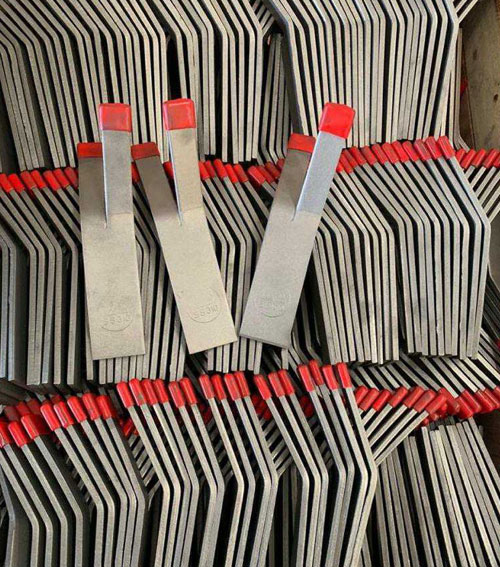
Manufactured from flat bar rather than round wire, suited to thicker linings with improved load distribution and holding power — widely used in petrochemical heaters, reformers, furnaces and boilers with heavy high-temperature castable.
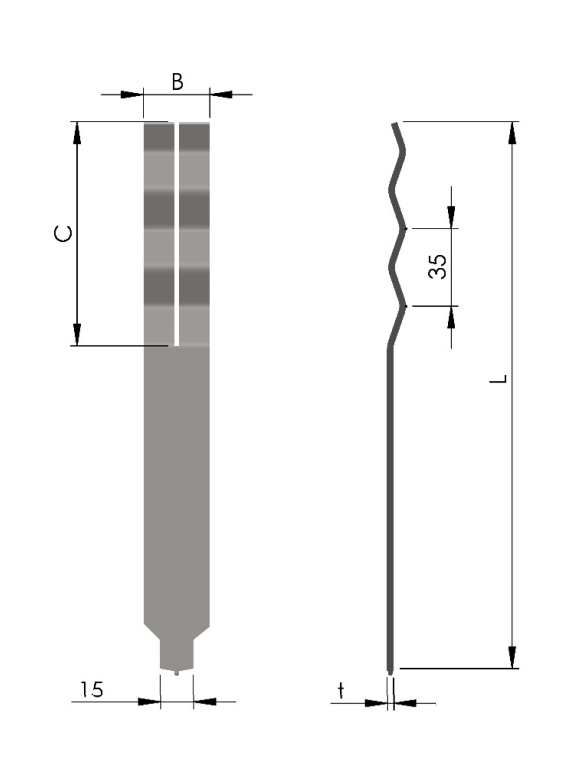
A high-holding-power anchor (often corrugated) in a double-V / H form for thick, heavy monolithic linings needing maximum retention at high temperature.
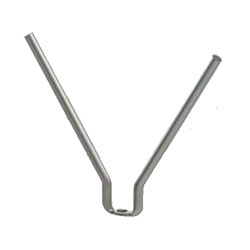
Combines U and V geometry for additional anchoring points, suiting heavier or thicker high-temperature linings that need more grip than a single V.
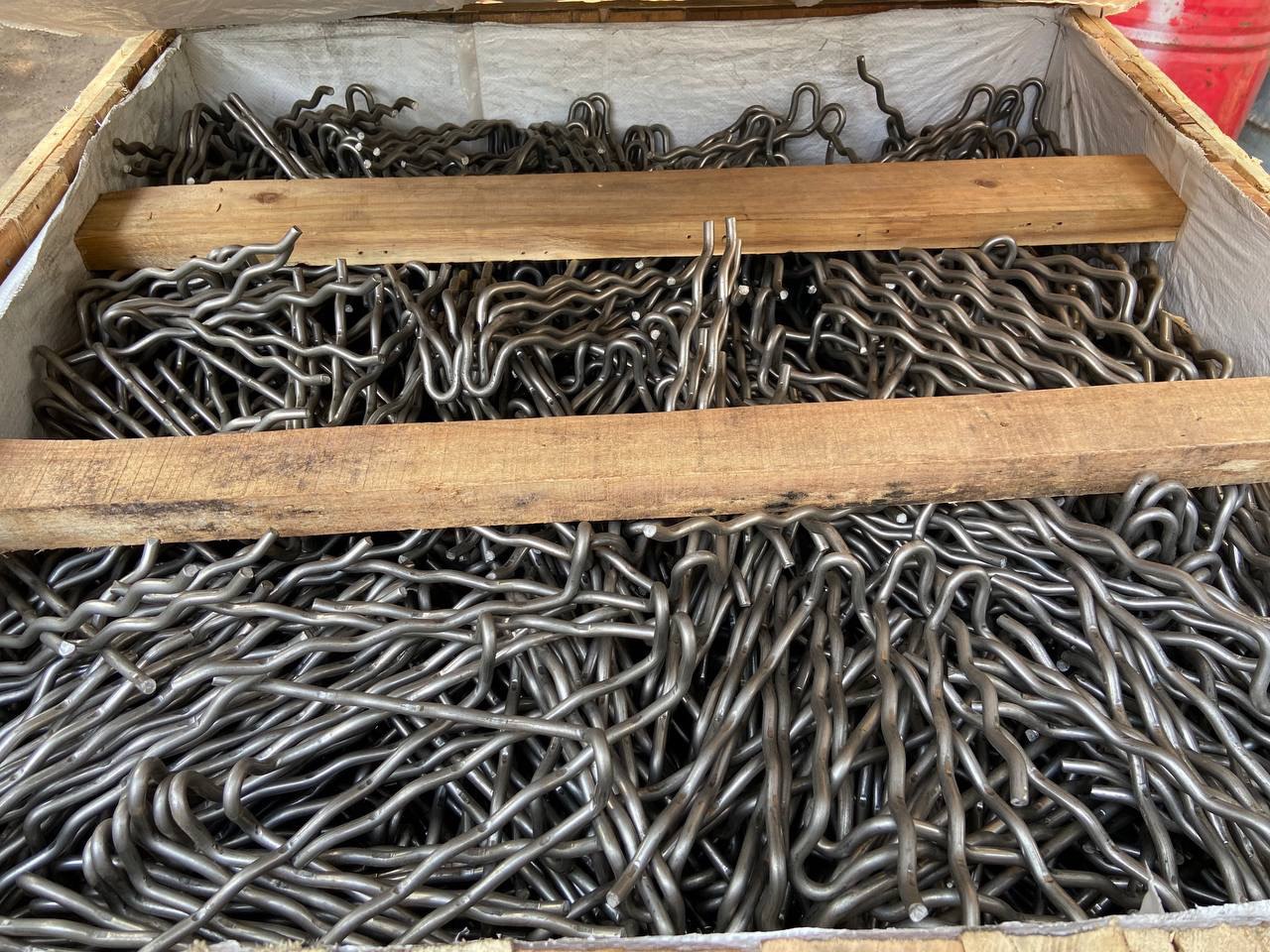
A simple single-leg anchor bent into a crook/hook, welded to the shell, for thinner refractory and ceramic-fiber linings where a nickel-alloy grade is needed.
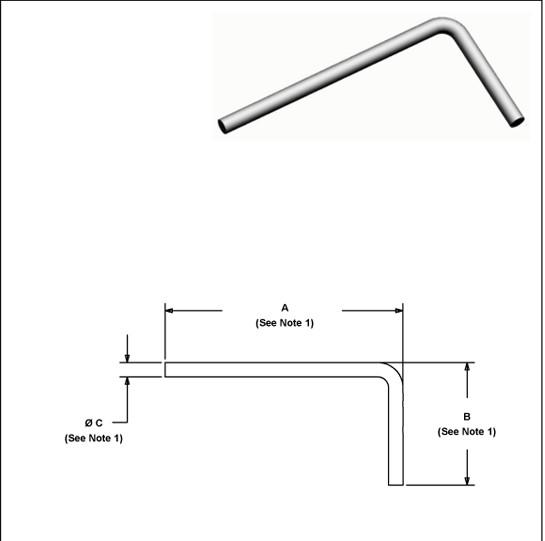
An L-shaped (right-angle) anchor or stud used to retain refractory tiles, bricks and lining edges, and as a base for brick-holding systems, in nickel-alloy grades.
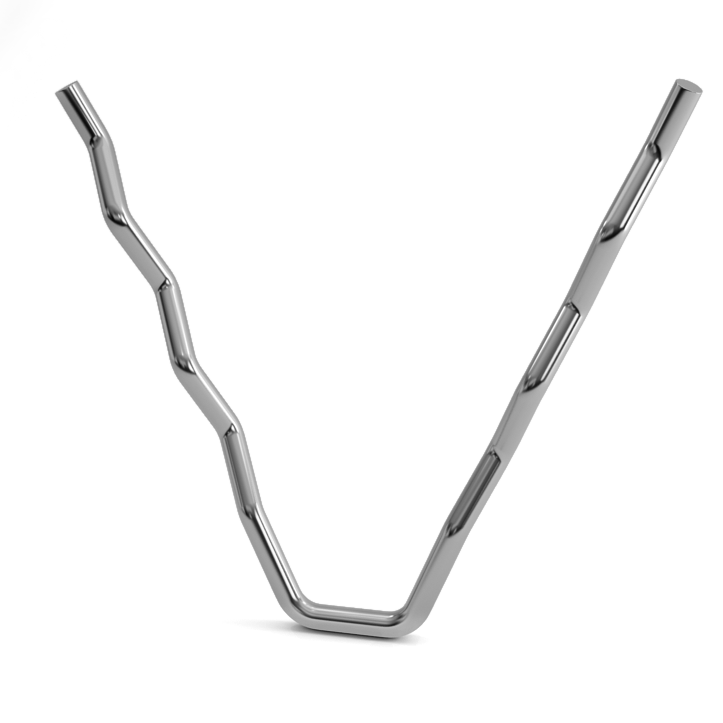
Two curved legs that splay outward like horns, giving high pull-out resistance in thick, heavy castable linings at high temperature.
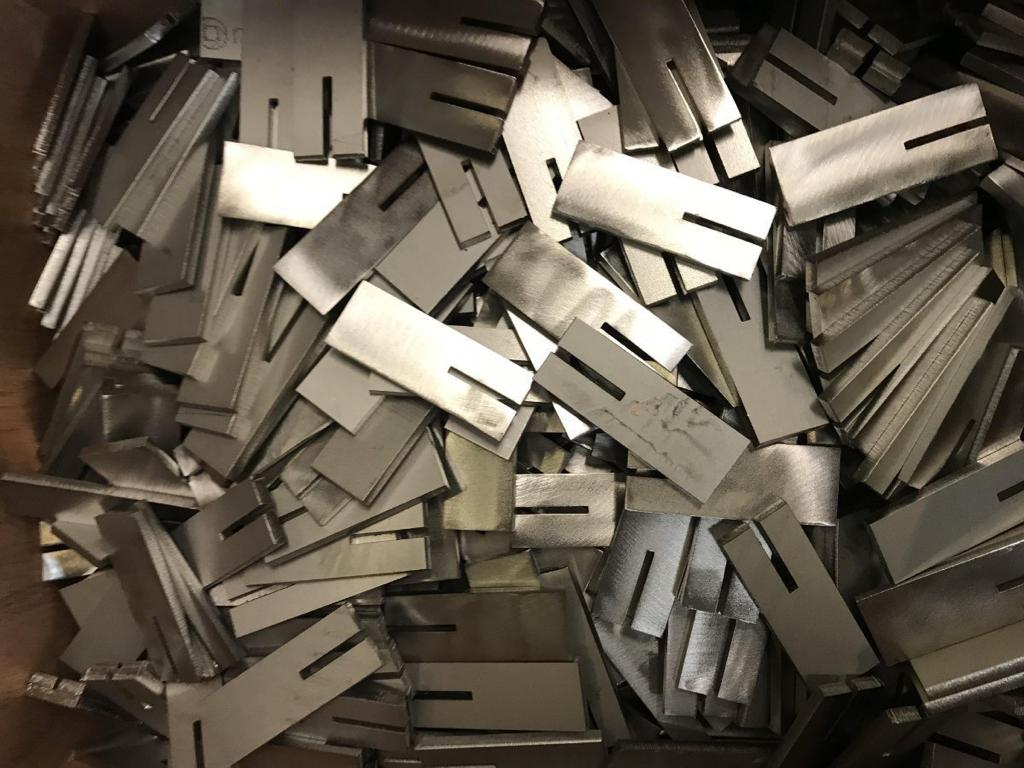
A flat metal strip with slits that key mechanically into monolithic or ceramic-fiber refractory, giving good grip from a low-profile weldable base, in Inconel grades.
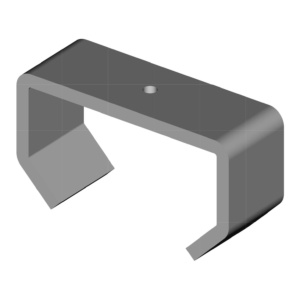
Metal clips/holders that mechanically retain refractory bricks or tiles against the shell — in Inconel/nickel-alloy grades for the highest-temperature brick linings.
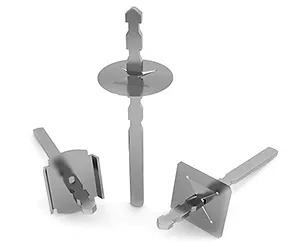
Stud-welded serrated anchors for ceramic-fiber blanket: the blanket is impaled over the stud and a twist-lock washer is twisted onto the serrations to lock it — in Inconel for the hottest fiber-lined furnaces. See our Insultwist twist-lock studs.
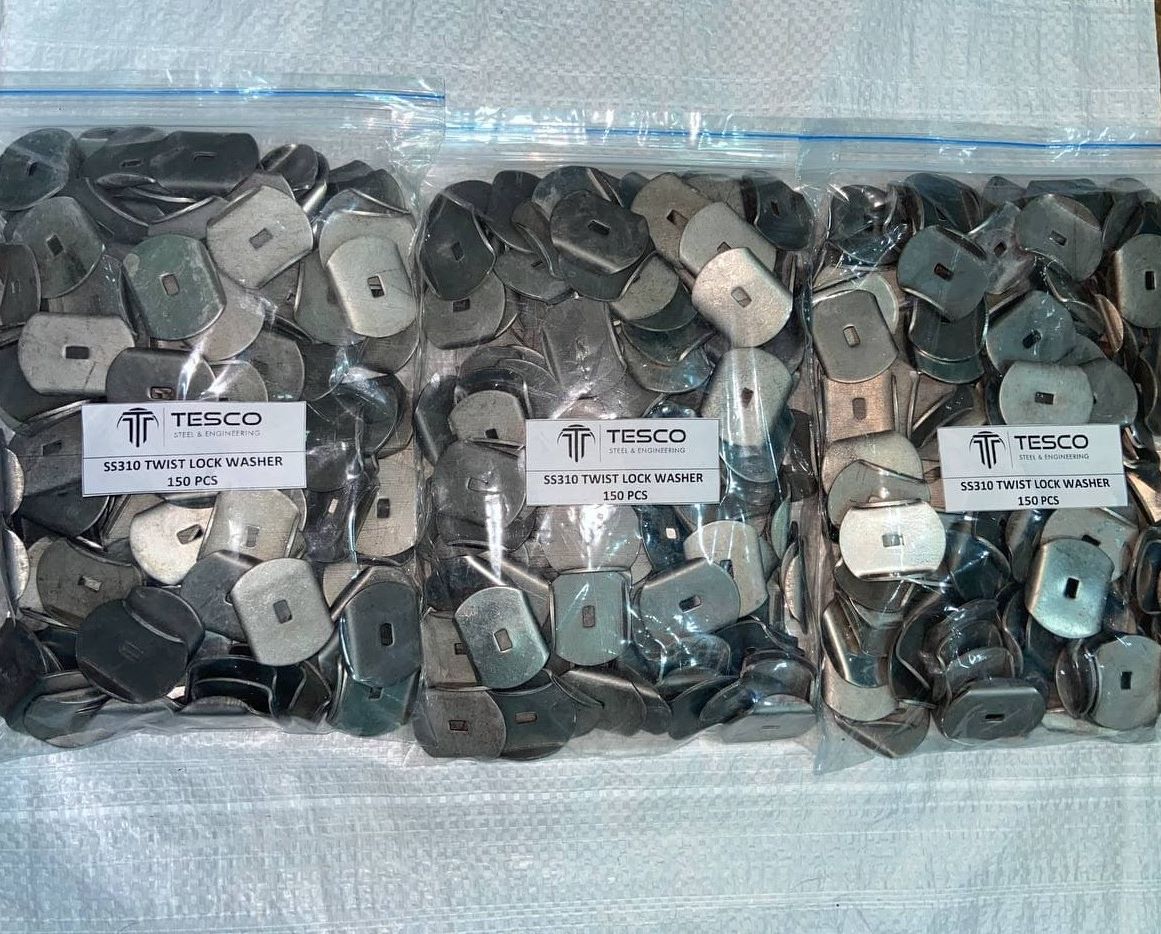
A pressed metal washer with a central slot that pushes over the serrated section of a twist-lock anchor and twists a quarter-turn to lock the ceramic-fiber blanket at the hot face.
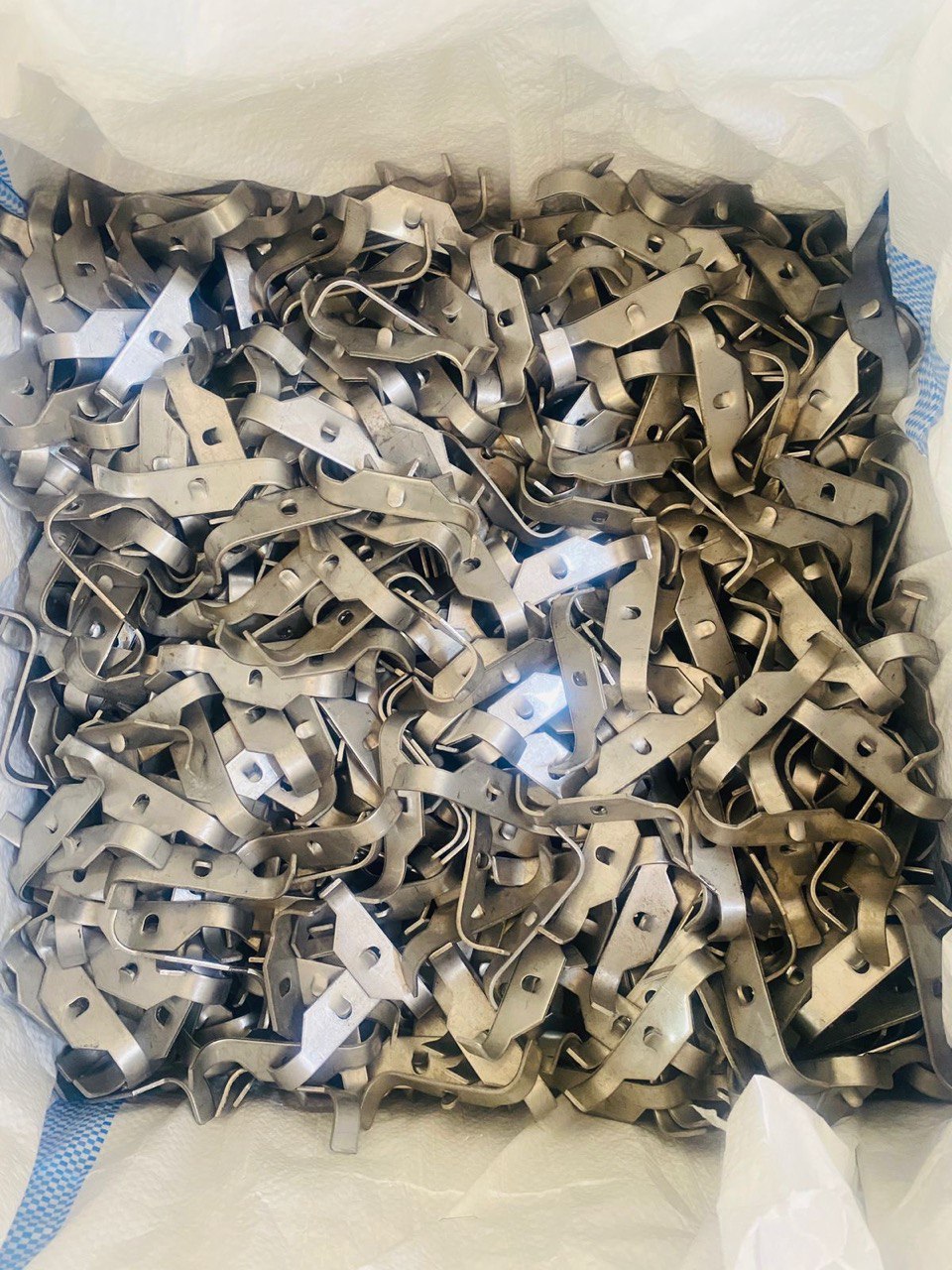
A pressed clip that pushes onto an anchor's serrations to quickly retain intermediate layers of ceramic-fiber blanket during installation, before the final lock washer is fitted.
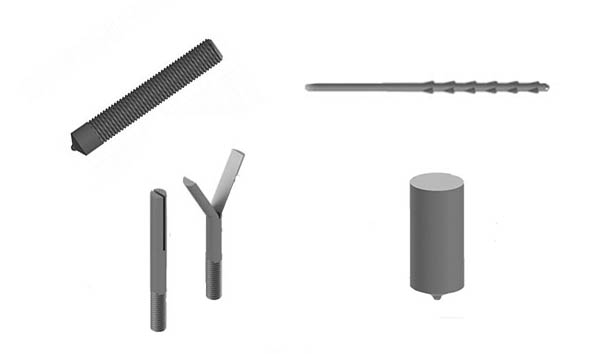
Straight or headed weld studs/pins welded to the shell to anchor ceramic-fiber or monolithic refractory — used in large numbers across fiber-lined surfaces, in Inconel where the temperature requires it.
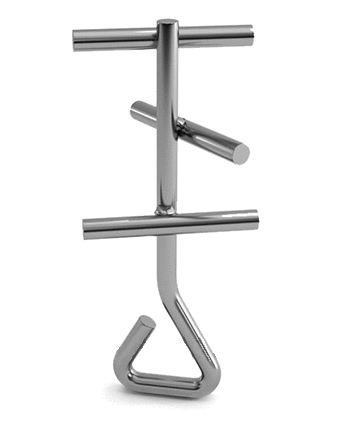
Multiple branching legs along a central stem give many grip points and very high holding power in thick, heavy monolithic linings — for maximum retention in the hottest service.
High-temperature refractory anchoring is rarely "off-the-shelf". The anchor type, leg geometry, length, wire diameter or flat-bar section, weld base and nickel-alloy grade are all dictated by the lining design, its thickness, the surface orientation and the operating temperature and atmosphere — so almost every project needs anchors made to its own drawing. Our custom capability includes:
| Custom capability | Detail |
|---|---|
| Custom dimensions | Any leg length, height, spread and base to your drawing |
| Custom wire diameters | Round-wire anchors in the gauge your spec calls for |
| Custom flat-bar sizes | Flat-Type Y and flat anchors in your bar width & thickness |
| Custom bending profiles | Special bends, angles and multi-leg geometries |
| Custom welding requirements | Weld bases, tabs, studs and joint details to suit your fixing method |
| Custom nickel-alloy grade | Inconel 600/601/625, Incoloy 800/800H/800HT, RA330 and others on request |
| Prototype & production quantities | From trial samples to full project volumes |
| Reverse engineering from samples | We reproduce anchors accurately from a physical sample |
| Engineering & drawing-review support | We help confirm the right type, grade and dimensions before production |
Custom Inconel anchors and labelled export crates from our works — products made to drawing and packed for worldwide shipment:
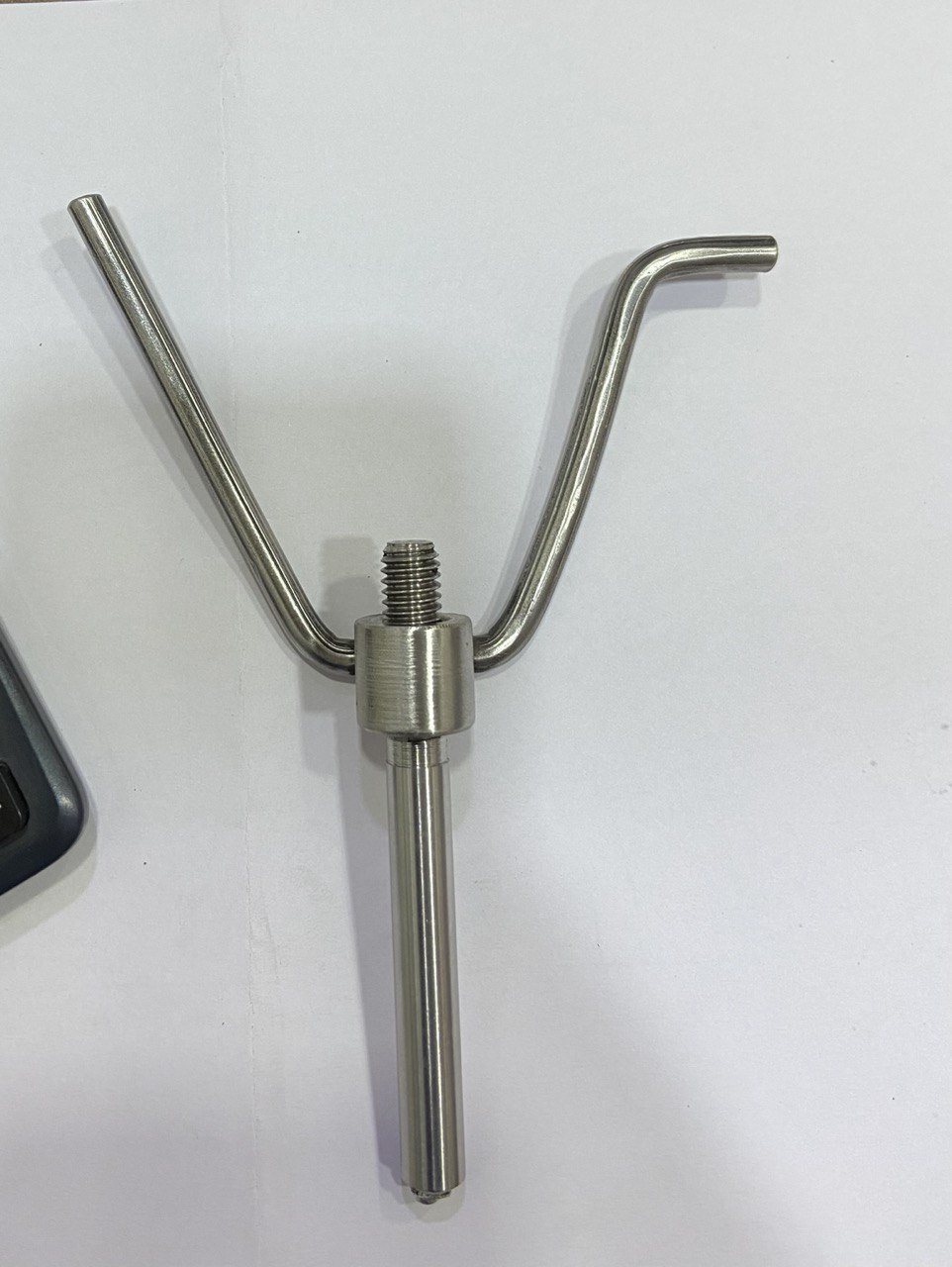
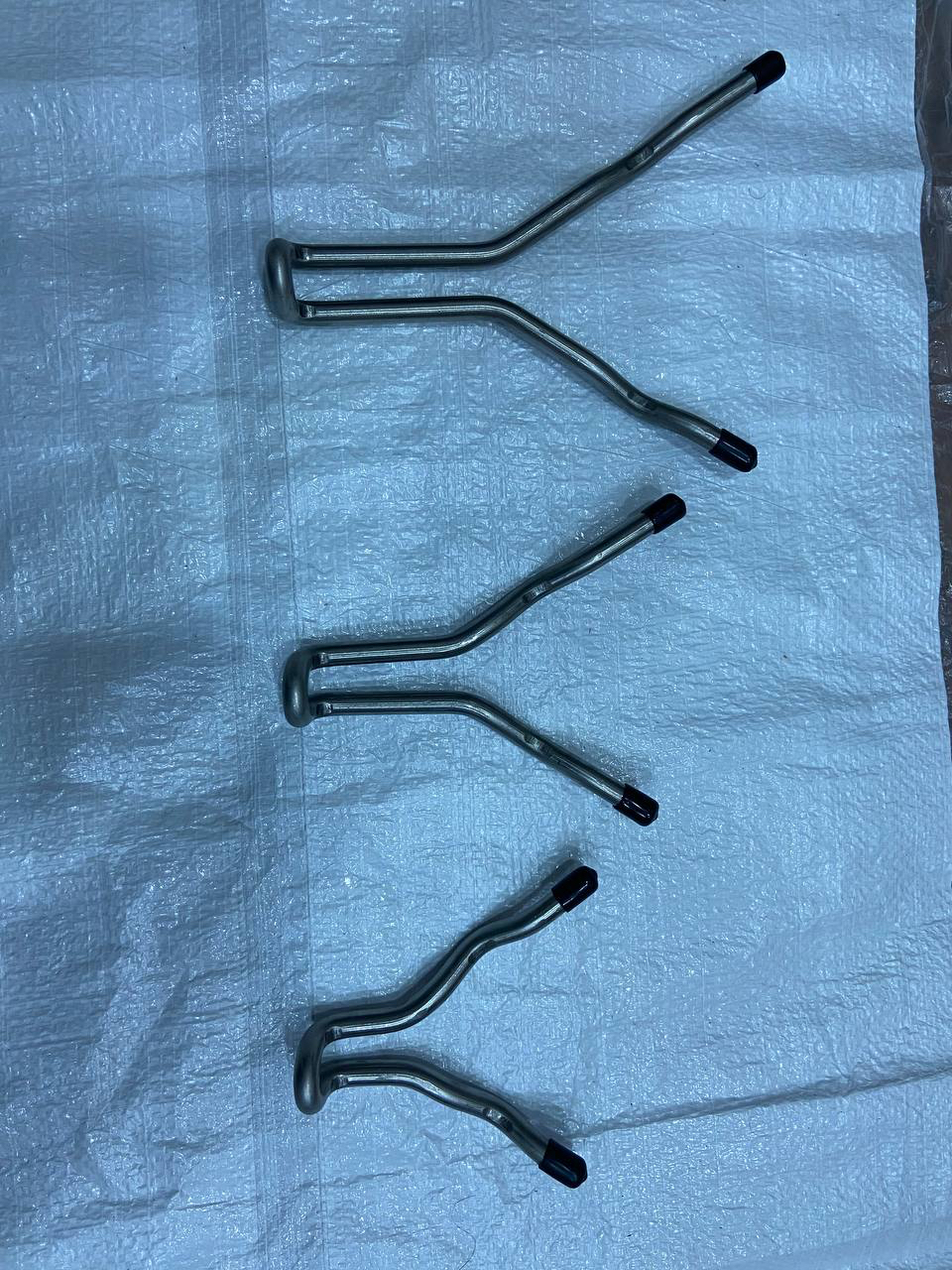
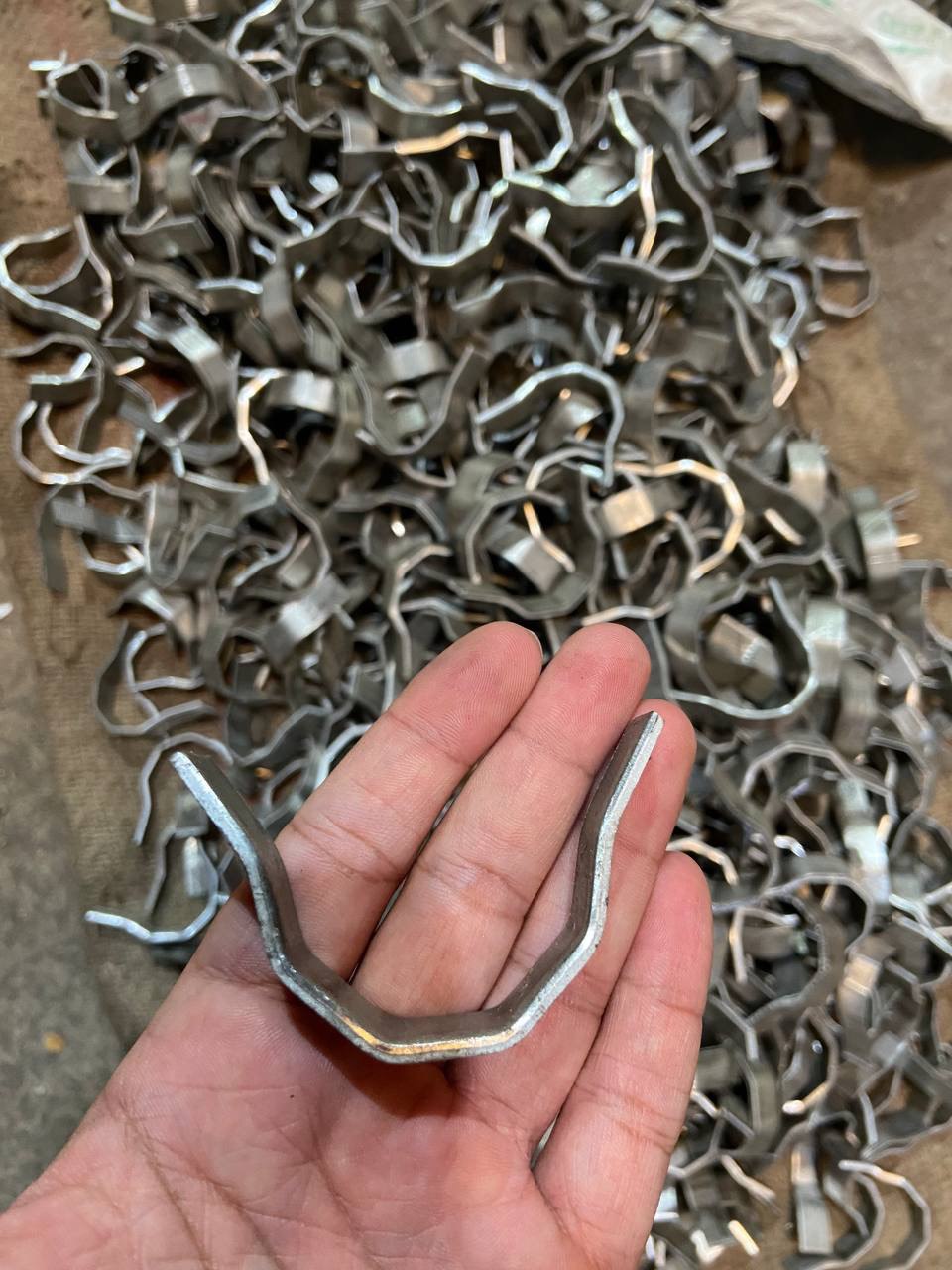
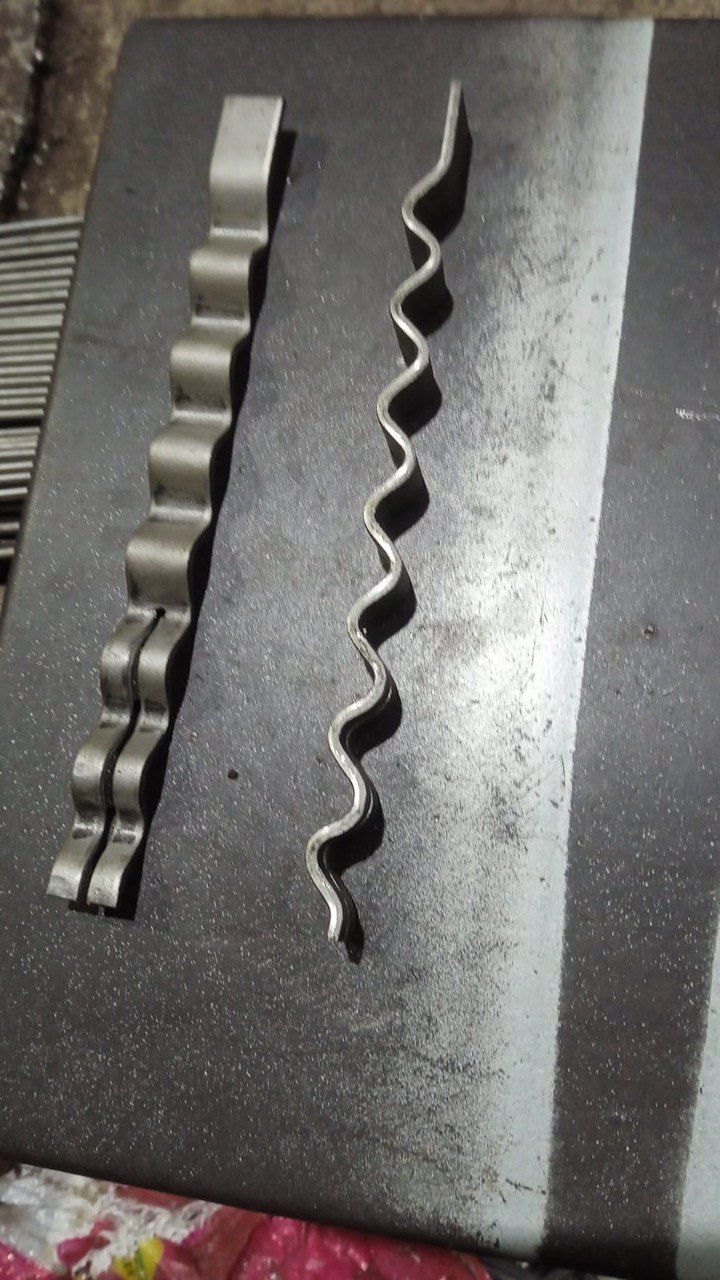
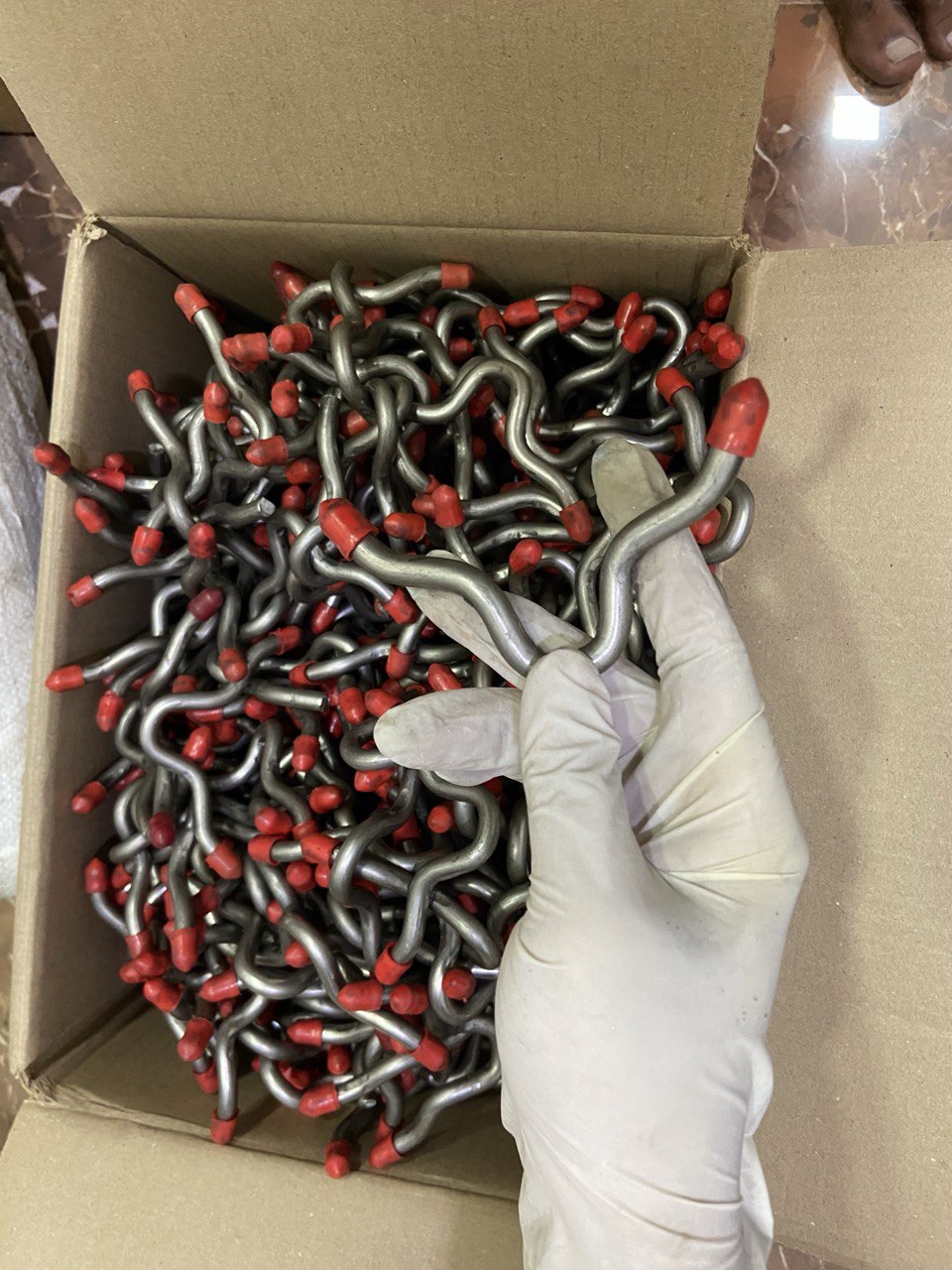
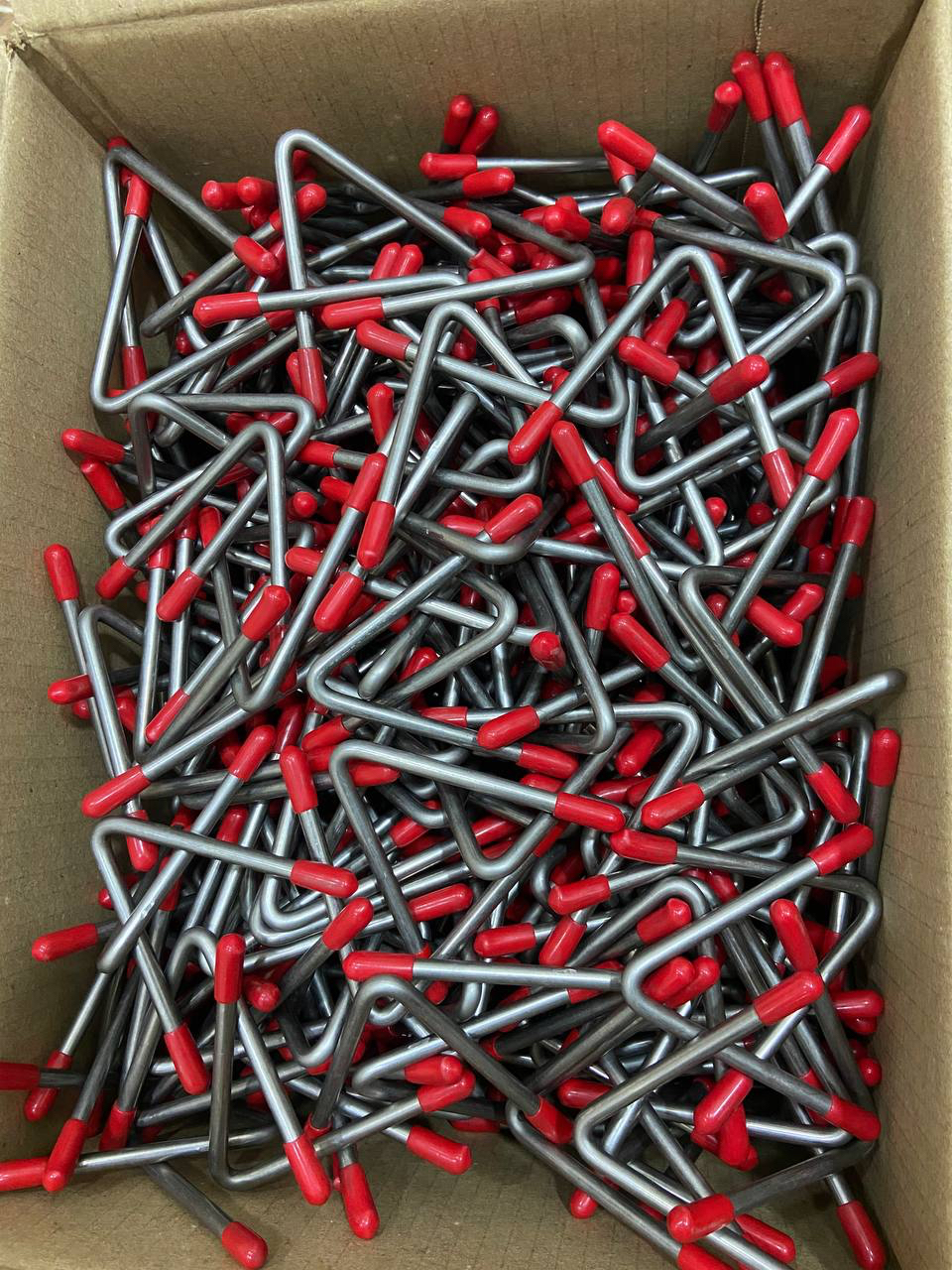
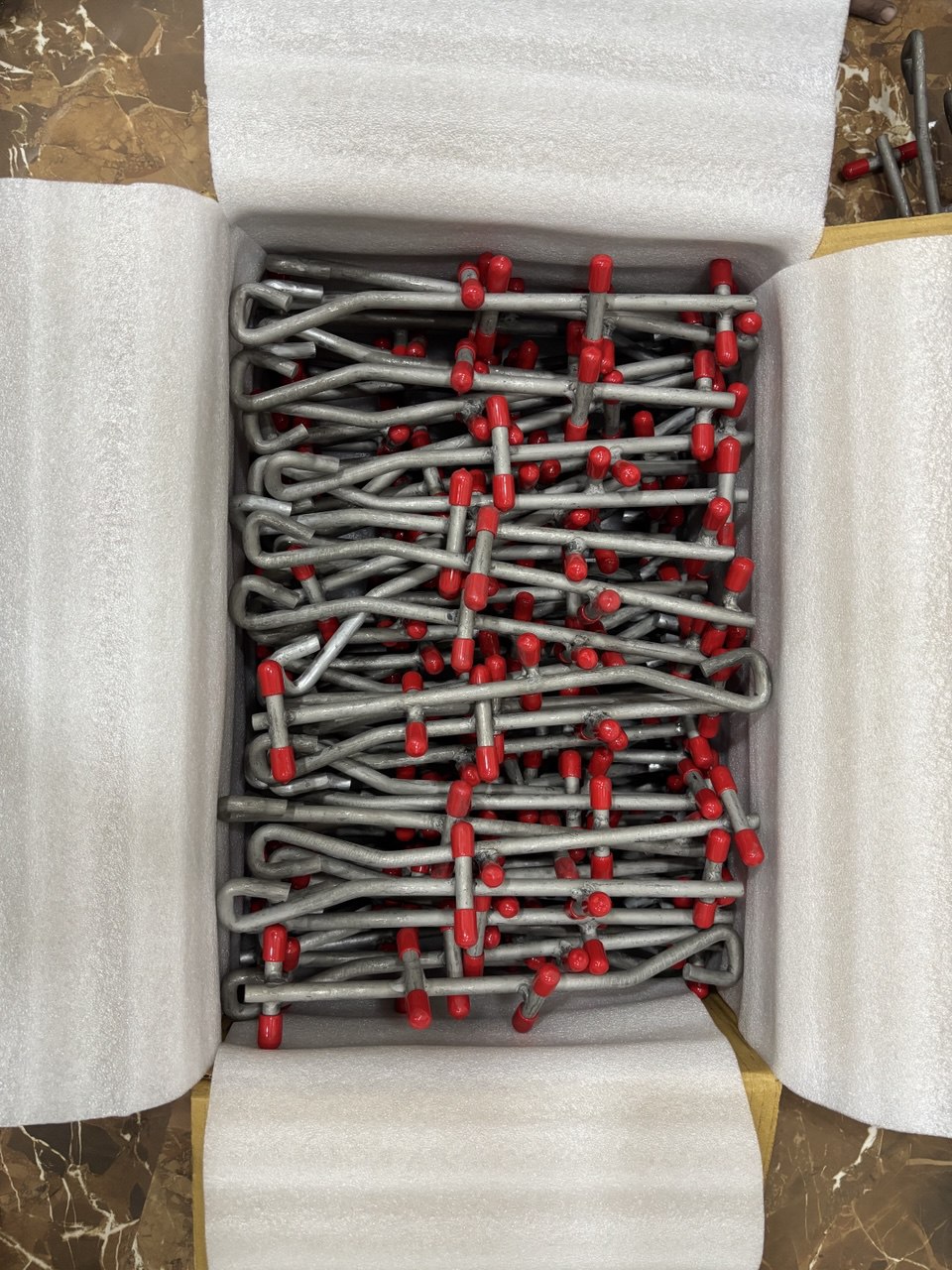
Our refractory anchors are formed in-house on CNC wire-bending and press-forming machinery, then welded and finished — here is the process on the shop floor:
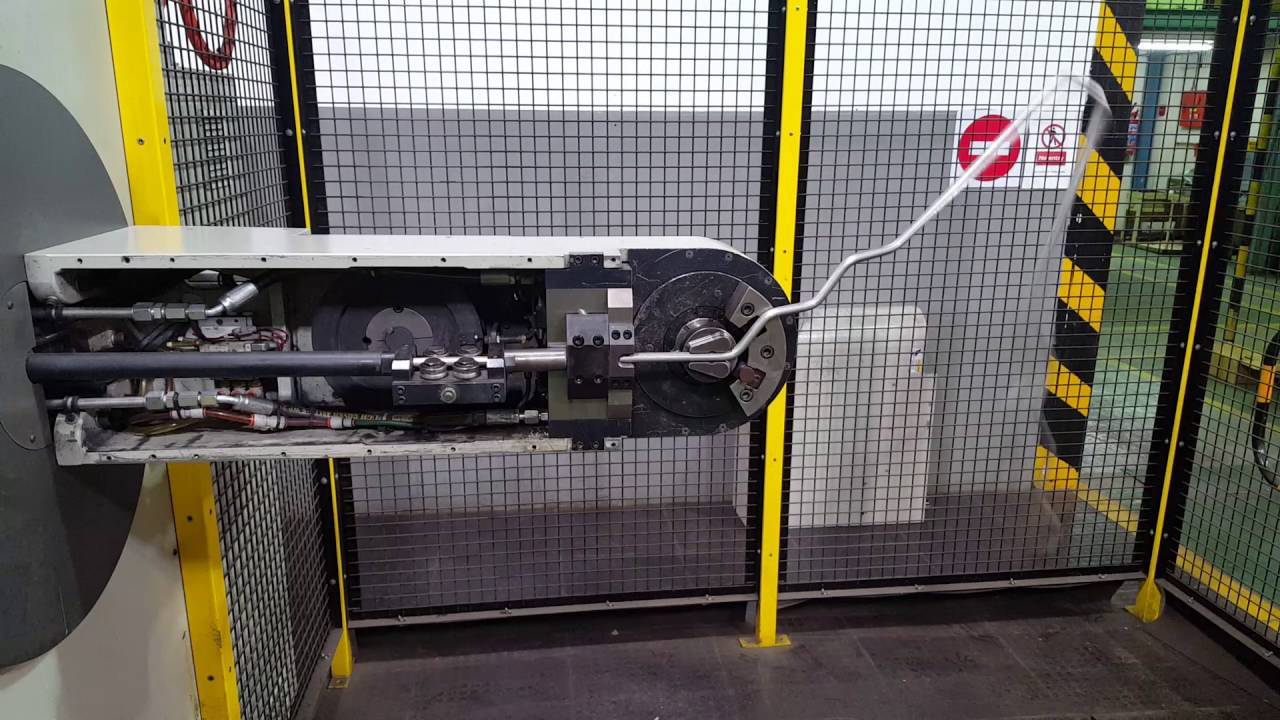
CNC Wire Bending — V Anchor
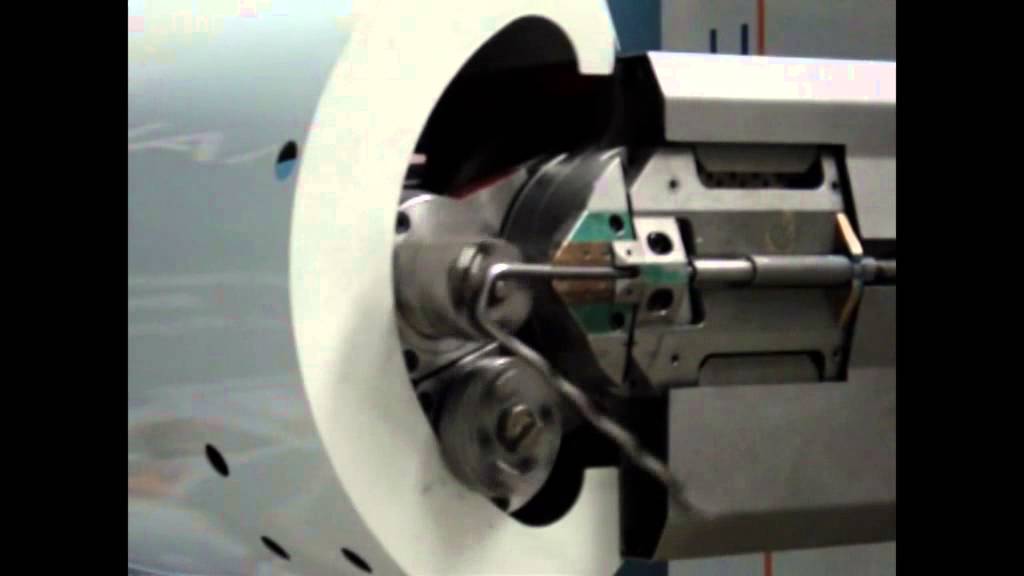
CNC Wire Forming — Y Anchor
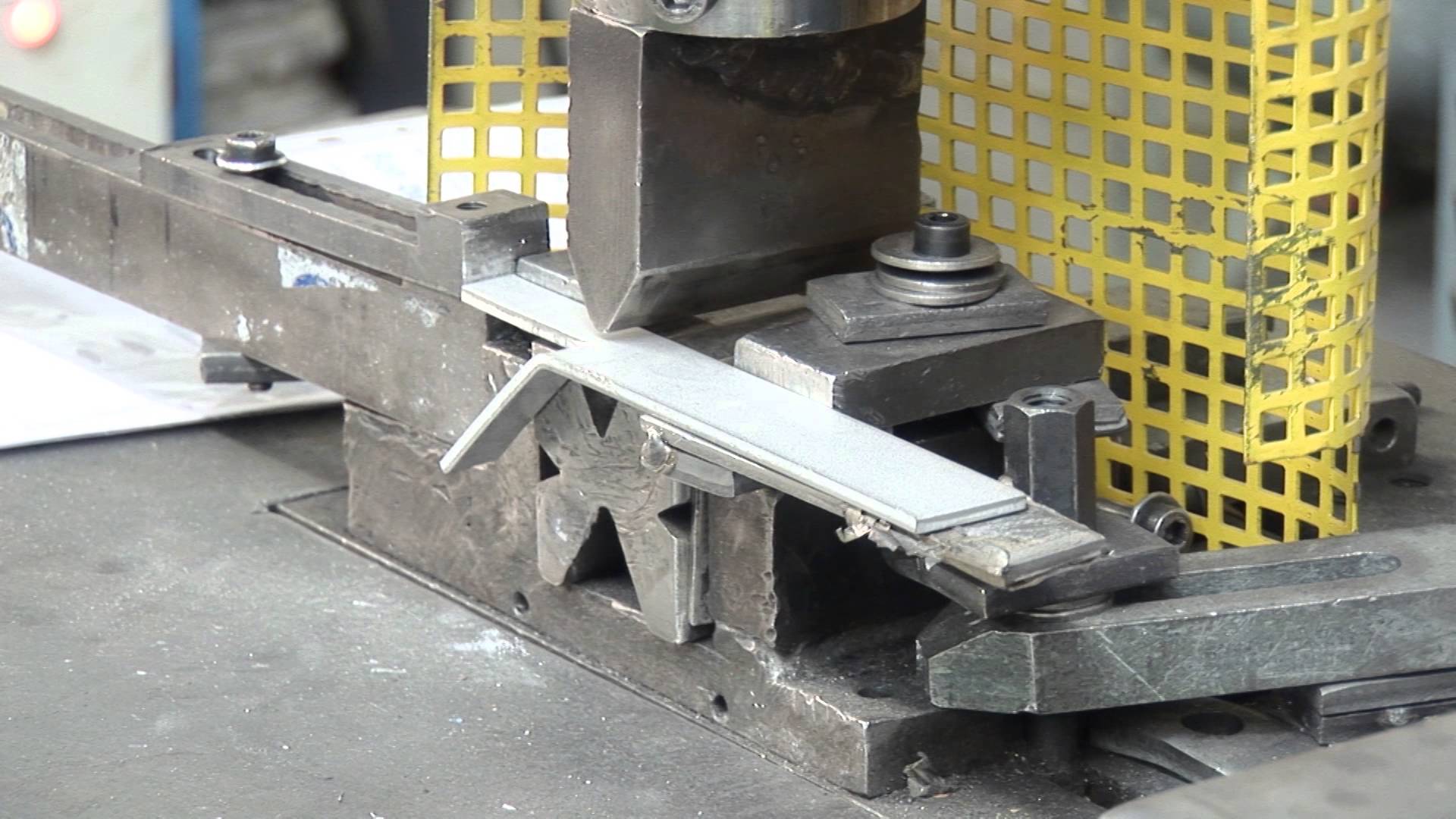
Flat-Bar Press Forming — Flat-Y Anchor
| Grade | Max service temp (approx.) | Oxidation resistance | Key strength | Typical applications |
|---|---|---|---|---|
| Inconel 601 (N06601) | ~ 1200 °C | Outstanding (Al-bearing) | Top oxidation & cyclic resistance | Hottest oxidising furnace & heater linings |
| Inconel 600 (N06600) | ~ 1175 °C | Excellent | Reducing/cyclic & chloride SCC resistance | Reformers, heat treatment, cyclic service |
| Inconel 625 (N06625) | ~ 980–1000 °C | Excellent | Very high strength + corrosion | Hot, corrosive & high-load anchoring |
| Incoloy 800 (N08800) | ~ 1100 °C | Excellent | Carburisation resistance | Petrochemical & process furnaces |
| Incoloy 800H / 800HT | ~ 1100–1150 °C | Excellent | Superior creep-rupture strength | Reformer & pyrolysis furnace anchors |
| RA330 (N08330) | ~ 1150 °C | Excellent | Carburisation & thermal-cycling resistance | Heat-treatment furnaces & process heaters |
Other heat-resistant nickel alloys can be supplied on request. Temperatures are indicative guidance — confirm against your actual service conditions. For service within the stainless range (to about 1100 °C), see our more economical stainless steel refractory anchors.
| Industry | Typical high-temperature equipment |
|---|---|
| Refineries & Petrochemical | Steam reformers, cracking & pyrolysis furnaces, fired process heaters |
| Chemical & Fertilizer | Reformers, reactors, sulphur recovery units (SRU), incinerators |
| Waste-to-Energy | Incinerators and high-temperature waste-heat boilers |
| Steel & Metals | Reheating & heat-treatment furnaces, recuperators |
| Power | High-temperature boiler, duct and stack linings |
| Thermal Processing | Any furnace, kiln, reactor or heater running beyond the stainless range |
We make Inconel and Incoloy anchors to your drawings, samples and specs — non-standard shapes, sizes and grades are our specialty.
Inconel 600/601/625, Incoloy 800/800H/800HT and RA330 — matched to your temperature and atmosphere.
Engineering and drawing-review support, fast turnaround, and flexible prototype-to-production quantities.
EN 10204 3.1 MTC, PMI and inspection reports, with worldwide export experience and packaging.
Representative example illustrating typical custom scope and outcomes.
| Related | Description |
|---|---|
| Stainless Steel Refractory Anchors | The same anchors in SS304–SS330 for service within the stainless range — more economical |
| Insultwist Twist-Lock Studs | Twist-lock stud, washer & ceramic-cuplock system for ceramic-fiber blanket |
| Ceramic Fiber Blanket Fixing Stud | Fixing studs for ceramic-fiber blanket linings |
| Inconel & Hastelloy | Our nickel-alloy material range |
| All Other Products | Full list of Tesco's other engineered products |
What are Inconel refractory anchors?
Inconel refractory anchors are nickel-alloy refractory anchors — welded to a furnace, reformer or incinerator shell — that mechanically hold refractory lining in place at the highest temperatures. Made from Inconel 600, Inconel 601, Inconel 625 or Incoloy 800, they withstand extreme heat, oxidation, carburisation and thermal cycling where stainless steel grades reach their limit, and are usually custom-made to customer drawings.
When should Inconel refractory anchors be used instead of stainless steel?
Use Inconel anchors when the service temperature or atmosphere exceeds what stainless can handle — typically above roughly 1100 °C, or in reducing, cyclic, carburising or sulphidising atmospheres. Stainless grades such as SS310 and SS330 cover service up to about 1100–1150 °C; beyond that, or where the atmosphere is aggressive, Inconel 600/601 and Incoloy 800 are specified.
What is the maximum temperature for Inconel refractory anchors?
Inconel 600 is used to about 1175 °C and Inconel 601 to about 1200 °C, with outstanding oxidation resistance from its aluminium addition. Incoloy 800/800H/800HT serves to roughly 1100–1150 °C with excellent creep strength. The exact limit depends on the atmosphere, loading and cycling, so confirm against your service conditions.
What is the difference between Inconel 600 and Inconel 601 anchors?
Both are nickel-chromium alloys, but Inconel 601 has an aluminium addition that gives it superior high-temperature oxidation resistance and a slightly higher service ceiling (~1200 °C), making it the top choice for severe oxidising and cyclic service. Inconel 600 (~1175 °C) excels in reducing and cyclic atmospheres and resists chloride stress-corrosion cracking. We supply both to drawing.
When is Inconel 625 used for refractory anchors?
Inconel 625 is used where high strength and outstanding corrosion resistance are needed together — in hot, corrosive or sour atmospheres and where the anchor carries significant load. It combines excellent oxidation resistance with very high strength and is specified where 600/601 alone would not meet the mechanical or corrosion demands.
When is Incoloy 800 / 800H used for anchors?
Incoloy 800, 800H and 800HT are iron-nickel-chromium alloys used for high-temperature anchors with excellent resistance to oxidation, carburisation and creep — 800H/800HT have controlled carbon and grain size for superior creep-rupture strength, making them common in reformer and pyrolysis furnace service to about 1100–1150 °C.
Can Inconel refractory anchors be manufactured according to customer drawings?
Yes — this is our specialty. We manufacture Inconel refractory anchors exactly to customer drawings, samples, sketches and technical specifications, including custom dimensions, wire diameters, flat-bar sizes, bending profiles, welding details and grade. Most refractory anchors used on real projects are custom-made, and we are set up specifically to produce non-standard anchors in nickel alloys to spec.
Do you manufacture custom Inconel refractory anchors?
Yes. Custom manufacturing is the core of our business. Send a drawing, sketch or sample and we will produce the Inconel anchor to match — in prototype quantities for trials or full production quantities for projects, in the grade and form your lining and temperature require.
Can you manufacture Inconel anchors from samples?
Yes. We routinely reverse-engineer refractory anchors from a physical sample — measuring the geometry, wire/bar size and material — and reproduce it accurately in the specified Inconel or Incoloy grade, ideal when the original drawing is unavailable or you need a like-for-like replacement.
What information is required for a quotation?
Ideally a drawing or sketch (or sample), the anchor type, Inconel/Incoloy grade, wire diameter or flat-bar size, key dimensions, quantity and your delivery location. If you are unsure, send your lining type, thickness, operating temperature and atmosphere and our team will recommend a suitable anchor and grade and quote.
Can non-standard Inconel refractory anchors be produced?
Yes. Non-standard and project-specific anchors are exactly what we make. Most refractory anchors used in industrial projects are custom-made, and we specialize in manufacturing non-standard Inconel anchors to customer specifications — special shapes, sizes, grades and welding requirements included.
What order quantities do you accept — prototypes and production?
Both. We make small prototype quantities of Inconel anchors for trials and qualification, and large production quantities for full projects and turnarounds. Order quantities are flexible to suit your project stage.
What grades of Inconel and nickel alloy do you offer?
Inconel 600 (UNS N06600), Inconel 601 (N06601) and Inconel 625 (N06625), plus Incoloy 800 / 800H / 800HT (N08800/N08810/N08811) and RA330 (N08330). Other heat-resistant nickel alloys are available on request. The grade is chosen to match the maximum service temperature, the atmosphere and the mechanical loading.
Why is Inconel used for high-temperature refractory anchors?
Inconel's high nickel and chromium content gives it exceptional resistance to oxidation, scaling, carburisation and the fatigue of severe thermal cycling at temperatures where stainless steels weaken or scale. That means the anchor keeps its strength and stays sound for the life of the lining in the hottest furnaces, reformers and incinerators.
Are Inconel anchors resistant to carburisation and sulphidation?
Yes. Inconel 600/601 and especially Incoloy 800H/HT offer strong resistance to carburisation in reducing and carbon-rich atmospheres, and Inconel 600 resists many sulphur-bearing and chloride environments. The right grade is selected for the specific atmosphere — reducing, oxidising, carburising or sulphidising.
What is a V Type Inconel Refractory Anchor?
A V type Inconel anchor is a V-shaped wire anchor welded to the shell by its legs — the most common, economical anchor for monolithic refractory, made in Inconel 600/601 for high-temperature furnaces, heaters and ducts where stainless would not survive.
What is a Y Type Inconel Refractory Anchor?
A Y type Inconel anchor has a single stem that splits into two legs forming a Y, welded by the stem so it anchors deeper into the lining — used in Inconel 600/601 or Incoloy 800 for medium-to-thick monolithic refractory in petrochemical reformers, heaters and reactors.
What is a Flat Type Y Inconel Refractory Anchor?
A Flat Type Y Inconel anchor is a Y-shaped anchor made from flat bar rather than round wire, suited to thicker linings with improved load distribution and holding power — widely used in Inconel 601 and Incoloy 800 in petrochemical heaters, reformers, furnaces and boilers.
What is the difference between a Y Anchor and a Flat Type Y Anchor?
Both are Y-shaped, but a standard Y anchor is made from round wire while a Flat Type Y is made from flat bar. The flat bar spreads load over a larger surface, so the Flat Type Y holds thicker, heavier linings better — preferred on demanding high-temperature petrochemical linings in Inconel and Incoloy grades.
What is a Bull Horn Inconel Anchor?
A bull horn Inconel anchor has two curved legs that splay outward like horns, giving high pull-out resistance in thick, heavy castable linings at high temperature — a strong choice in Inconel 601 for demanding reformer and furnace linings.
What is an H Type Inconel Anchor?
An H type Inconel anchor is a high-holding-power anchor (often corrugated) in a double-V / H form for thick, heavy monolithic linings needing maximum retention at high temperature, made in Inconel 601 or Incoloy 800.
What is a UV Type Inconel Anchor?
A UV type Inconel anchor combines U and V geometry for additional anchoring points, suiting heavier or thicker high-temperature linings that need more grip than a single V provides.
What is a Crook Inconel Anchor?
A crook anchor is a simple single-leg anchor bent into a crook/hook, welded to the shell, used for thinner refractory and ceramic-fiber linings — supplied in Inconel where the hot-face temperature requires it.
What is an L Type Inconel Anchor?
An L type Inconel anchor is an L-shaped (right-angle) anchor or stud used to retain refractory tiles, bricks and lining edges, and as a base for brick-holding systems, in high-temperature nickel-alloy grades.
What is a Slitted Inconel Anchor?
A slitted anchor is a flat metal strip with slits that key mechanically into monolithic or ceramic-fiber refractory, giving good grip from a low-profile weldable base — made in Inconel for high-temperature service.
What is an Inconel Refractory Brick Holder?
A refractory brick holder (brick anchor/clip) mechanically retains refractory bricks or tiles against the shell — used where the lining is brick rather than castable, in Inconel/nickel-alloy grades for the highest-temperature brick linings.
What is a Twist Lock Inconel Anchor?
A twist-lock anchor is a stud-welded serrated anchor for ceramic-fiber blanket: the blanket is impaled over the stud and a twist-lock washer is twisted onto the serrations to lock it. In Inconel 600/601 it is used for the hottest fiber-lined furnaces. See our Insultwist twist-lock studs.
What is a Twist Lock Washer?
A twist-lock washer (fibrelok / pressed lock washer) is a pressed metal washer with a central slot that pushes over the serrated section of a twist-lock anchor and twists a quarter-turn to lock the ceramic-fiber blanket at the hot face — supplied in Inconel for high-temperature service.
What is a Speed Clip Washer?
A speed clip washer is a pressed clip that pushes onto an anchor's serrations (or round rod) to quickly retain intermediate layers of ceramic-fiber blanket during installation, before the final lock washer is fitted.
What is an Inconel Stud Anchor?
A stud anchor (weld stud / pin) is a straight or headed pin welded to the shell to anchor ceramic-fiber or monolithic refractory — used in large numbers across fiber-lined surfaces, in Inconel where the temperature requires a nickel alloy.
What is a Christmas Tree Inconel Anchor?
A christmas-tree anchor has multiple branching legs along a central stem, giving many grip points and very high holding power in thick, heavy monolithic linings — supplied in Inconel 601 / Incoloy 800 for maximum retention in the hottest service.
Which industries use Inconel refractory anchors?
Refineries and petrochemical plants (reformers, cracking and process heaters), fertilizer and chemical plants, sulphur recovery units, waste incinerators, steel reheating and heat-treatment furnaces, and power plants — anywhere the hot-face temperature or atmosphere is too severe for stainless anchors.
Are Inconel refractory anchors supplied with Mill Test Certificates (MTCs)?
Yes. Inconel anchors are supplied with EN 10204 3.1 mill test certificates confirming the grade and chemistry, with full raw-material verification and batch traceability.
Can Inconel anchors be supplied with PMI reports?
Yes. Positive Material Identification (PMI) by XRF or optical emission is available on request to confirm the nickel-alloy chemistry of the finished anchors — important for Inconel/Incoloy grades — with the PMI report included in the documentation.
What inspections are performed?
Raw-material verification, PMI testing, dimensional inspection against the drawing, visual inspection of forming and welds, and a final inspection report — with batch traceability throughout. Tesco Steel & Engineering is an ISO 9001:2015 certified manufacturer.
Are Inconel anchors more expensive than stainless steel anchors?
Yes — nickel alloys cost more than stainless steel, so Inconel and Incoloy anchors are specified where the temperature or atmosphere genuinely requires them. Where service is within the stainless range, SS310 or SS330 stainless anchors are the economical choice; for the most severe duty, the longer life of Inconel justifies the cost.
What is the lead time for Inconel refractory anchors?
Lead time depends on type, grade, quantity and material availability — prototypes are fast, and production quantities are scheduled to your project. Send your drawing and quantity and we will confirm a delivery date with the quote.
Do you export Inconel refractory anchors worldwide?
Yes. We are a manufacturer and exporter and ship Inconel and nickel-alloy refractory anchors worldwide with appropriate export and custom packaging, with export experience across the Middle East, Europe, Asia, Africa and the Americas.