

Tesco Steel & Engineering manufactures 904L stainless steel flanges — forged from UNS N08904 (ASTM A182 F904L, EN 1.4539), the high-alloy austenitic stainless steel with about 25% nickel, 4.5% molybdenum and a copper addition and a PREN of about 35. That recipe — especially the copper — gives 904L its hallmark resistance to sulphuric and phosphoric acid, plus strong resistance to chloride pitting, crevice corrosion and stress-corrosion cracking far beyond 316L. The trusted stainless for acid plants, pickling lines, FGD and chloride chemical service. Weld neck, slip-on, blind, socket-weld, threaded, lap-joint & spectacle flanges to ASME B16.5 / B16.47, Class 150–2500, ½″–24″. ISO 9001:2015 certified. Made in India.
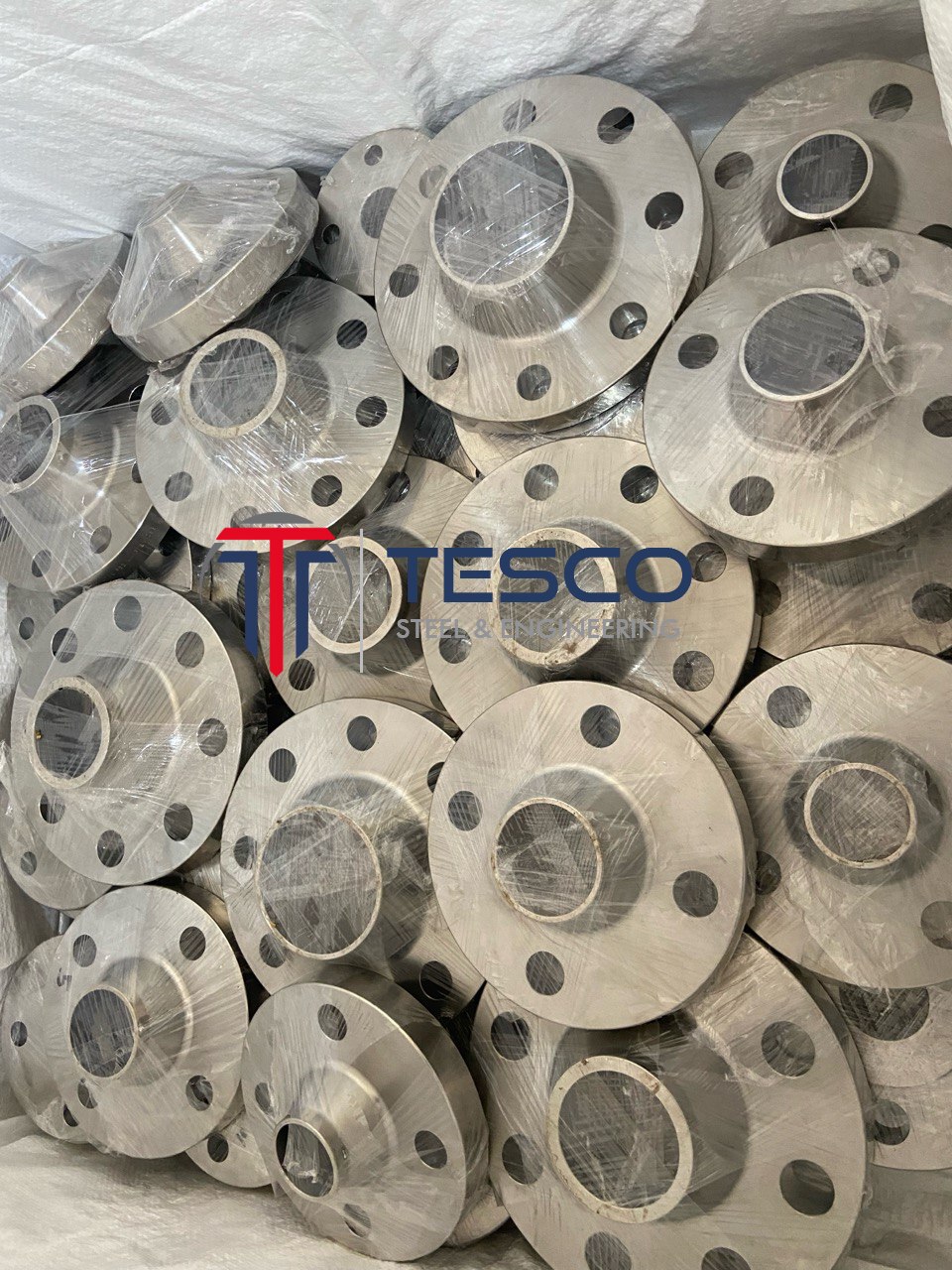
904L Weld Neck Flanges (UNS N08904 / F904L)
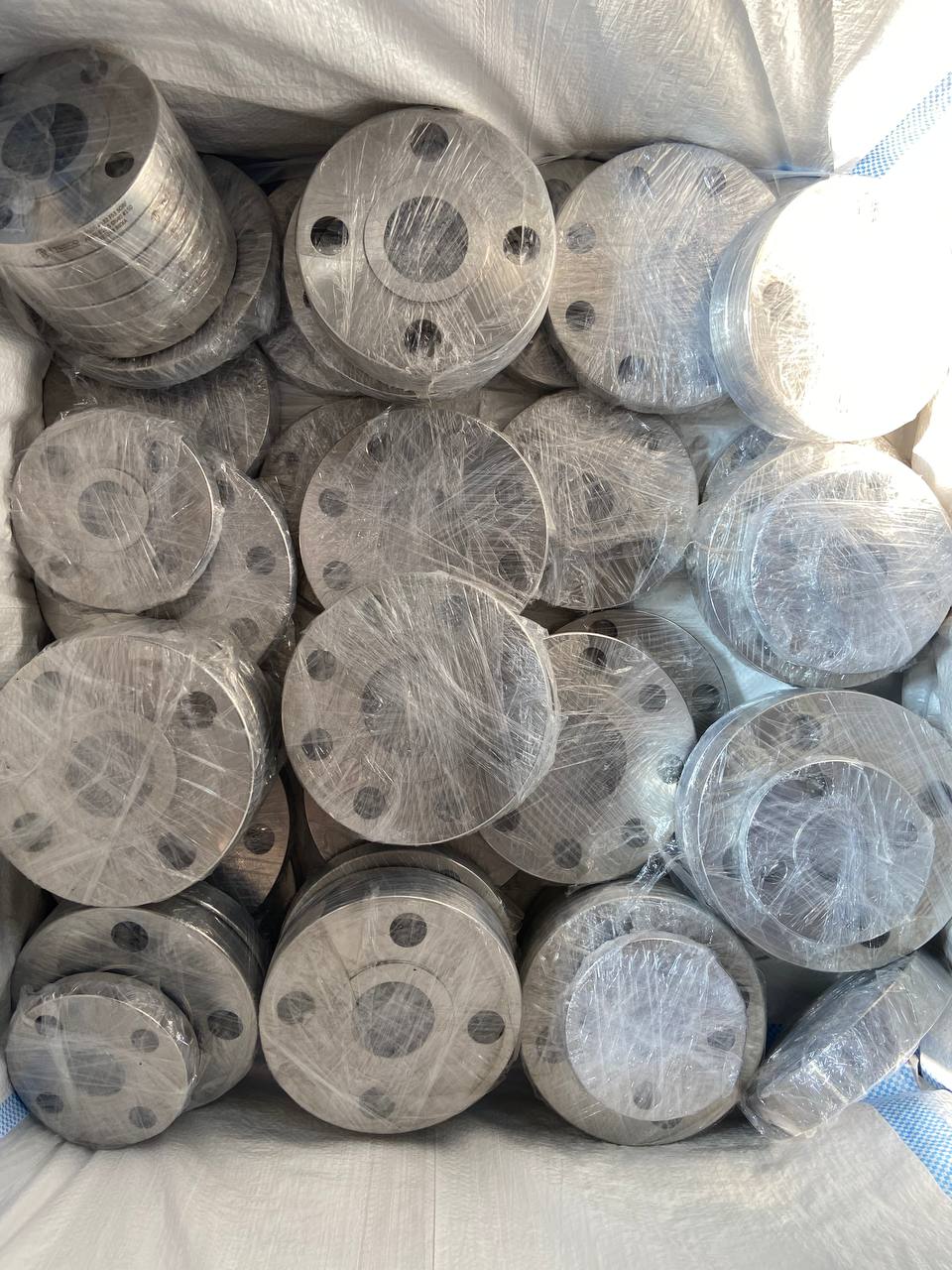
904L Slip-On Flanges — Ready Stock
904L is a high-alloy austenitic stainless steel developed to handle the acids and chlorides that defeat ordinary 304 and 316. Chemically it carries far more of the good stuff — around 20% chromium, 25% nickel, 4.5% molybdenum — plus the feature that really defines it: a deliberate copper addition of about 1.5%. That copper, working with the high nickel, is what makes 904L so good in sulphuric acid, the duty it was created for. The low carbon (the “L”) keeps welds free of sensitisation, and the heavy alloying also lifts its resistance to chloride pitting and stress-corrosion cracking well above standard stainless. Engineers reach for 904L when 316L is corroding in acid or chloride service, but the extreme molybdenum of a 6-moly grade is not required.
| Element | C | Cr | Ni | Mo | Cu | Mn | Si | P | S |
|---|---|---|---|---|---|---|---|---|---|
| UNS N08904, % | 0.020 max | 19.0–23.0 | 23.0–28.0 | 4.0–5.0 | 1.0–2.0 | 2.0 max | 1.0 max | 0.045 max | 0.035 max |
The defining features are the high ~25% nickel, the ~4.5% molybdenum and the ~1.5% copper — the combination that gives 904L its resistance to reducing acids such as sulphuric, backed by low carbon for weldability.
| Property | Value (typical, A182 F904L) |
|---|---|
| Tensile strength | ≥ 490 MPa (71 ksi) |
| Yield strength (0.2%) | ≥ 220 MPa (32 ksi) |
| Elongation | ≥ 35% |
| Hardness | ≤ 90 HRB (approx. 240 HBW) |
| Density | 8.0 g/cm³ |
| PREN | ≈ 35 (Cr + 3.3×Mo + 16×N) |
| Condition | Solution annealed (~1100–1180°C, rapid quench), essentially non-magnetic |
904L is an austenitic grade, so its strength is moderate (similar to 316L) but its toughness is excellent across a wide temperature range, including cryogenic service.
The copper, nickel and molybdenum together make 904L one of the standard stainless steels for sulphuric acid plants, pickling lines and phosphoric acid service.
With a PREN of about 35, 904L resists chloride pitting and crevice corrosion far better than 304/316 in process and seawater-adjacent duty.
Its high nickel content gives much better resistance to chloride SCC than standard austenitic stainless — a common cause of cracking in hot chloride service.
The low carbon (“L”) keeps the heat-affected zone free of carbide sensitisation, so welds stay corrosion-resistant with no post-weld heat treatment.
As a fully austenitic grade it stays tough from cryogenic to elevated temperature and is essentially non-magnetic.
In many acid and chloride duties 904L delivers similar life to far costlier nickel alloys, making it an economical upgrade from 316L.
| Grade | Type | Mo (approx.) | Cu (approx.) | PREN (approx.) | Best Suited To |
|---|---|---|---|---|---|
| 316L | Austenitic | 2.1% | — | ~24 | General corrosion, mild chloride service |
| 904L (N08904) | High-alloy austenitic | 4.5% | 1.5% | ~35 | Sulphuric / phosphoric acid & moderate chloride |
| Duplex 2205 | Duplex | 3.1% | — | ~35 | High-strength moderate chloride service |
| 254 SMO (S31254) | Super austenitic (6Mo) | 6.1% | 0.7% | ~43 | Seawater, desalination, high chloride |
In short: 904L is the acid specialist — the copper gives it an edge in sulphuric and phosphoric acid that even the higher-molybdenum 254 SMO does not match — while staying a tough, non-magnetic, weld-friendly austenitic upgrade from 316L. For pure seawater chloride duty, 254 SMO’s PREN of ~43 is the stronger choice.
| Parameter | Scope |
|---|---|
| Flange types | Weld neck (WNRF), slip-on (SORF), blind, socket-weld, threaded, lap-joint (stub-end), spectacle blind, ring-type-joint (RTJ), orifice, long weld neck |
| Material standard | ASTM A182 / ASME SA182 Grade F904L (UNS N08904); plate ASTM A240, fittings A403 WP904L, pipe A312 / A790 N08904, bar B649 |
| Dimensional standards | ASME B16.5 (½″–24″), ASME B16.47 Series A/B, MSS SP-44, EN 1092-1 (type 11/05/01), BS 4504 |
| Pressure classes | Class 150, 300, 600, 900, 1500, 2500 · PN6–PN100 |
| Facings | Raised Face (RF), Flat Face (FF), Ring Type Joint (RTJ), Tongue & Groove |
| Size range | ½″ NB to 24″ NB (DN 15–DN 600); larger to order |
| Certification | EN 10204 3.1 / 3.2, PMI, hydro & third-party inspection on request |
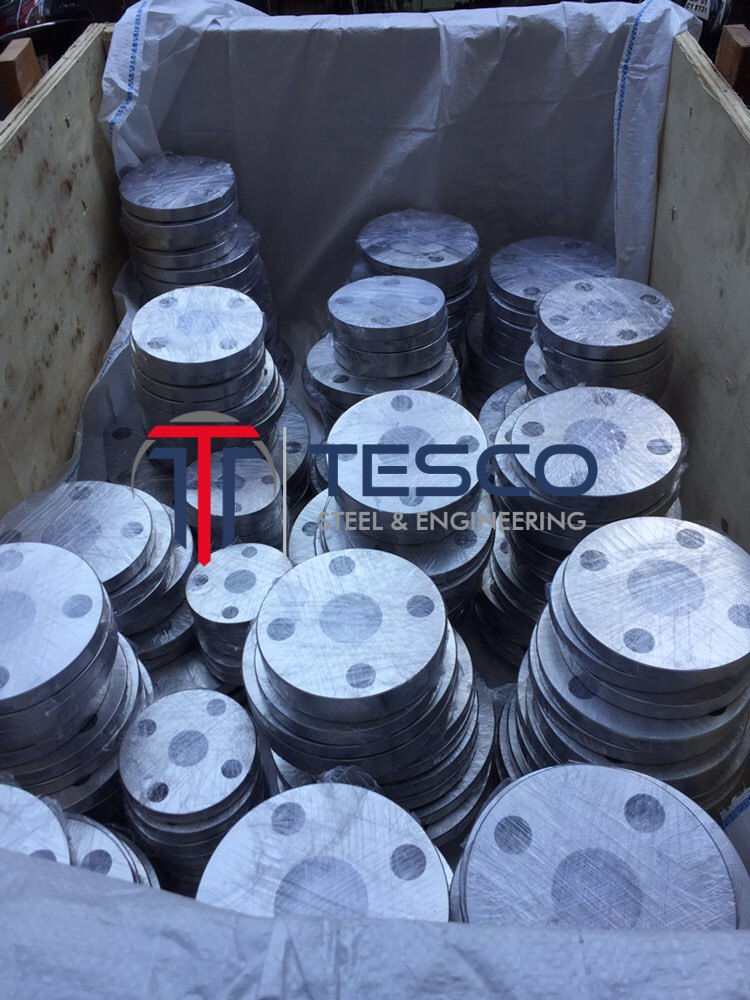
904L Blind Flanges (UNS N08904 / F904L)
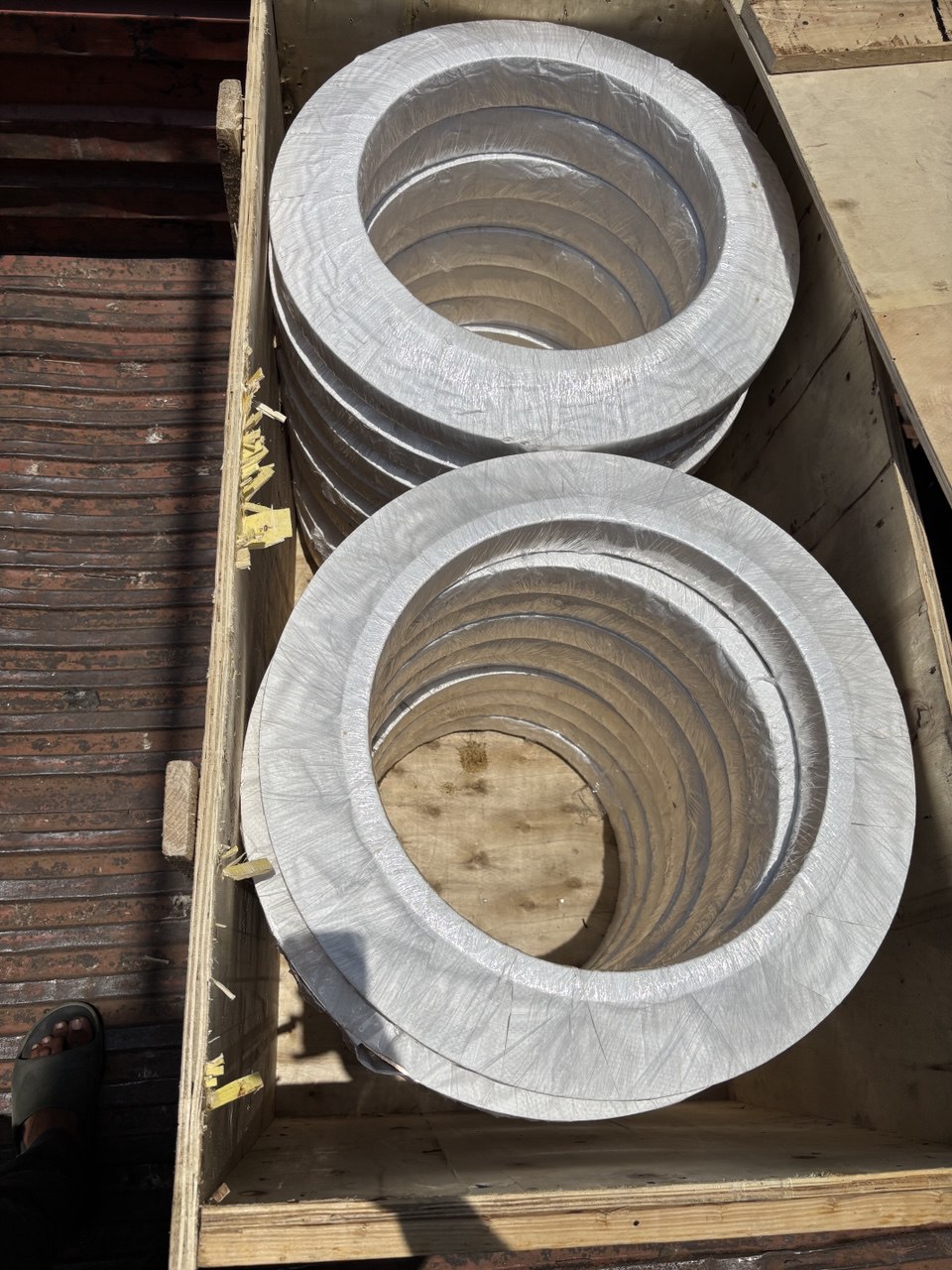
904L Flanges — Export Crate Packing
| System | Designation |
|---|---|
| UNS | N08904 |
| ASTM / ASME (forged flanges) | A182 / SA182 Grade F904L |
| EN (Werkstoff) | 1.4539 — X1NiCrMoCu25-20-5 |
| Common / trade names | 904L · high-alloy austenitic stainless · Uranus B6 · Cronifer 1925 |
| Plate / sheet | ASTM A240 (N08904) |
| Pipe / tube | ASTM A312 / A790 (N08904) |
| Fittings | ASTM A403 WP904L |
| Bar / wire | ASTM B649 (N08904) |
| Industry / Service | Typical 904L Flange Use |
|---|---|
| Sulphuric acid | Sulphuric acid production, dilution, coolers and handling piping — the duty 904L was designed for |
| Pickling & metal finishing | Mixed-acid pickling lines (nitric/HF, sulphuric), regeneration and rinse systems |
| Phosphoric acid & fertilizer | Wet-process phosphoric acid, fertilizer plant piping and connections |
| Pulp & paper | Bleach plant and chemical recovery piping in chloride and acid environments |
| Flue-gas desulphurization (FGD) | Scrubber and absorber connections in chloride-laden wet FGD |
| Chemical, refining & pharma | Organic acids (acetic, formic), seawater-adjacent systems, refinery and pharmaceutical process lines |
904L is welded with conventional processes — GTAW, GMAW, SMAW, SAW. It can be welded with a matching 904L filler, but for the most demanding corrosion service many fabricators prefer an over-alloyed nickel-base filler such as ERNiCrMo-3 (Alloy 625 type) to ensure the weld matches the base metal’s corrosion resistance. No preheat is required and, thanks to the low carbon content, no post-weld heat treatment is normally needed; just keep heat input moderate and interpass temperature low.
Every 904L flange is supplied solution-annealed and verified before despatch. We provide EN 10204 Type 3.1 (or 3.2 third-party witnessed) mill test certificates confirming chemistry, mechanical properties, heat-treatment condition and heat traceability; positive material identification (PMI / XRF) to confirm the molybdenum and copper that define the grade; and hydrostatic testing, dimensional inspection to ASME B16.5 and third-party inspection (Bureau Veritas, Lloyd’s, SGS, TÜV, Intertek) on request. Tesco Steel & Engineering is an ISO 9001:2015 certified manufacturer and exporter from Mumbai, India.
A complete 904L flange specification has five elements:
Example of a complete line item: “Weld Neck Flange, 4″ NB, ASME B16.5 Class 150, RF, Sch 40 bore, ASTM A182 F904L, EN 10204 3.1 — 20 pcs.”
What is 904L stainless steel?
904L is a high-alloy austenitic stainless steel, designated UNS N08904, ASTM A182 Grade F904L and EN 1.4539. It contains roughly 20% chromium, 25% nickel, 4.5% molybdenum and a 1.5% copper addition. The high nickel, molybdenum and copper give it far better resistance to acids — especially sulphuric and phosphoric — and to chloride pitting and stress-corrosion cracking than standard 316L. Its low carbon content (the “L”) keeps it resistant to intergranular corrosion after welding.
What is the UNS, ASTM and EN designation for 904L?
904L is UNS N08904. For forged flanges the ASTM grade is A182 F904L (ASME SA182 F904L); plate and sheet are ASTM A240 N08904, pipe is ASTM A312 / A790 N08904, fittings are ASTM A403 WP904L, and bar/wire is ASTM B649. The European designation is EN 1.4539, material name X1NiCrMoCu25-20-5. A flange marked N08904, F904L or 1.4539 is the same 904L material.
What is the chemical composition of 904L (UNS N08904)?
Typical N08904 / F904L composition: carbon 0.020% max, chromium 19.0–23.0%, nickel 23.0–28.0%, molybdenum 4.0–5.0%, copper 1.0–2.0%, manganese 2.0% max, silicon 1.0% max, phosphorus 0.045% max, sulphur 0.035% max, balance iron. The high nickel and the deliberate copper addition (about 1.5%) are what give 904L its hallmark resistance to sulphuric acid.
What are the mechanical properties of 904L flanges?
In the solution-annealed condition, A182 F904L / N08904 has tensile strength about 490 MPa (71 ksi) minimum, 0.2% yield about 220 MPa (32 ksi) minimum, elongation about 35% minimum, hardness up to ~90 HRB (~240 HBW), and density about 8.0 g/cm³. The steel is fully austenitic, tough and essentially non-magnetic.
What is the PREN of 904L and why does it matter?
904L has a PREN (= %Cr + 3.3×%Mo + 16×%N) of about 35. PREN indexes resistance to chloride pitting and crevice corrosion. At ~35, 904L sits well above 316L (~24) and on par with duplex 2205, but below the 6-molybdenum super austenitics such as 254 SMO (~43). So 904L is a strong all-rounder for acids and moderate chloride service, while 254 SMO is preferred for the most aggressive seawater duty.
What is the difference between 904L and 316L?
904L is far more highly alloyed: about 25% nickel, 4.5% molybdenum and 1.5% copper, against roughly 10% nickel, 2% molybdenum and no copper in 316L. That gives 904L a PREN of ~35 versus ~24, dramatically better resistance to sulphuric and phosphoric acid, and much greater resistance to chloride stress-corrosion cracking. Where 316L corrodes in warm acids or chloride streams, 904L keeps working.
904L vs 254 SMO — which should I choose?
Both are high-alloy austenitic stainless steels, but they target different enemies. 254 SMO has about 6% molybdenum and a nitrogen addition, giving a PREN of ~43 — the better choice for warm seawater, desalination and the most aggressive chloride service. 904L has about 4.5% molybdenum and a copper addition, giving it the edge in sulphuric and phosphoric acid. For pure chloride pitting resistance choose 254 SMO; for reducing acids such as sulphuric, choose 904L.
How does 904L compare with duplex 2205?
904L is austenitic while 2205 is duplex (austenitic-ferritic). Their PREN values are similar (~35), but 2205 has roughly double the yield strength and is more economical, whereas 904L offers better toughness over a wider temperature range, non-magnetic behaviour, easier fabrication and superior performance in reducing acids such as sulphuric. The choice depends on whether strength or acid resistance and fabricability matter most.
Why is 904L so good for sulphuric acid service?
The copper addition (about 1.5%) is the key. Copper, together with the high nickel and molybdenum, suppresses corrosion in reducing acids — particularly sulphuric acid across a wide range of concentrations and temperatures, and phosphoric acid. This is why 904L was originally developed and why it remains a standard material for sulphuric acid plants, pickling lines and acid handling where ordinary stainless steels fail.
What flange types and sizes do you make in 904L?
All standard types — weld neck (WNRF), slip-on (SORF), blind, socket-weld, threaded, lap-joint (stub-end), spectacle blind, RTJ and orifice — to ASME B16.5 (½″–24″), ASME B16.47 / MSS SP-44 for larger diameters, and EN 1092-1 (1.4539). Classes 150 to 2500 with RF, FF and RTJ facings. Custom sizes are made to drawing.
Where is 904L used?
Wherever acids and chlorides defeat ordinary stainless: sulphuric acid production and handling, pickling plants, phosphoric acid and fertilizer plants, pulp and paper bleaching, flue-gas desulphurization (FGD), seawater and brackish water systems, organic acids such as acetic and formic, oil refining, and pharmaceutical processing. It is often a cost-effective alternative to nickel alloys in acid service.
How is 904L welded?
By GTAW, GMAW, SMAW and SAW. It can be welded with a matching 904L filler, but for the most demanding corrosion service an over-alloyed nickel-base filler such as ERNiCrMo-3 (Alloy 625 type) is often preferred to keep weld corrosion resistance equal to the base metal. No preheat is required; interpass temperature is kept low and heat input controlled, and no post-weld heat treatment is normally needed because of the low carbon content.
Are 904L flanges supplied with test certificates?
Yes. Every 904L flange ships with EN 10204 Type 3.1 (or 3.2 third-party witnessed) mill test certificates confirming chemistry, mechanical properties, solution-annealed condition and heat traceability, with PMI / XRF confirming the molybdenum and copper content, plus hydrostatic testing and third-party inspection on request. Tesco Steel & Engineering is ISO 9001:2015 certified, based in Mumbai, India.
Is 904L magnetic?
No. 904L is fully austenitic, so it is essentially non-magnetic in the solution-annealed condition (a slight magnetic permeability can develop after heavy cold work). This distinguishes it from duplex grades such as 2205, which are magnetic because of their ferrite content.
What details are needed to get an accurate 904L flange quotation?
Five elements plus commercial terms: (1) size and dimensional standard — e.g. 4" NB ASME B16.5; (2) flange type and pressure class; (3) facing and pipe schedule; (4) grade — ASTM A182 F904L (UNS N08904), stating the acid concentration and temperature if the duty is sulphuric so the grade can be sanity-checked against 254 SMO or Alloy 20 alternatives; (5) certification — EN 10204 3.1 or 3.2, PMI, ASTM A262 IGC as required. Add the quantity and destination and we return price, weight and delivery — normally within 24 hours. 904L prices track nickel and molybdenum, so quotations carry a validity period.
Who manufactures 904L stainless steel flanges in India?
Tesco Steel & Engineering is an ISO 9001:2015 certified flange manufacturer based in Mumbai, India, forging 904L (UNS N08904 / ASTM A182 F904L / EN 1.4539) flanges — every type from weld neck to spectacle blind, in ASME B16.5, B16.47 and EN 1092-1 patterns. Flanges ship solution annealed, pickled and passivated with EN 10204 3.1/3.2 certification, PMI and A262 testing on request, and are exported to sulphuric acid, fertilizer, pharmaceutical and offshore projects worldwide.