SWFF Flanges — Socket Weld Flat Face (FFSW) Flange Manufacturer
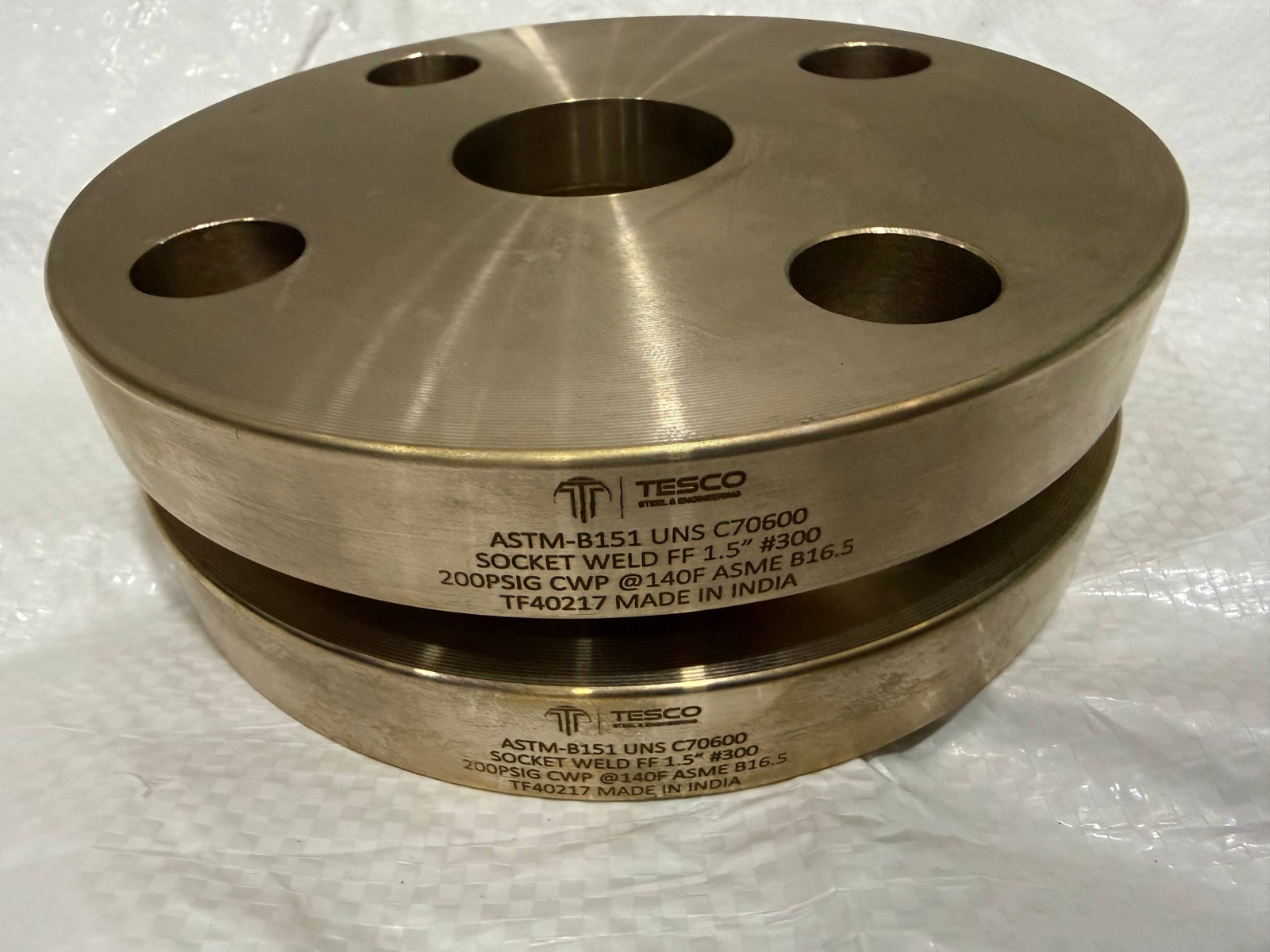
Tesco Steel & Engineering manufactures SWFF flanges — Socket Weld Flat Face, written FFSW in facing-first piping classes — to ASME B16.5 from ½″ to 3″ NB in Classes 150–1500 (2500 and 4″ to order) and EN 1092-1 Type 03. The same small-bore socket weld as our SWRF — pipe seated in a machined socket, one external fillet weld, self-aligned — but with the face machined flush for a full-face gasket: bolt load passes straight through as compression, and the brittle mate sees no bending moment. That is the SWFF's whole job: connecting welded steel small-bore to cast iron pumps and valves, GRP, glass-lined and rubber-lined nozzles without cracking them. Full material range — A105, A350 LF2, stainless, duplex, nickel alloys, CuNi (the C70600 flat face pictured is ours). Steel-to-steel mate? SWRF. Metal-ring seal? SWRTJ. Every lot with EN 10204 3.1/3.2 MTC. ISO 9001:2015, made in Mumbai, India — exported to 50+ countries.
Socket Weld × Flat FaceASME B16.5 ½″–3″ · Class 150–1500EN 1092-1 Type 03Full-Face GasketNo Bending Moment on Brittle MatesCast Iron · GRP · Lined EquipmentA105 · LF2 · SS · Duplex · CuNiEN 10204 3.1 / 3.2 · ISO 9001:2015
The socket weld for brittle mates. SWFF — also abbreviated FFSW — = Socket Weld Flat Face: the pipe seats in a machined socket and takes one external fillet weld — the same small-bore connection as the SWRF — but the face is machined flush and carries a full-face gasket covering the bolt holes. Load passes through as pure compression, so cast iron, GRP and lined nozzles see no bending moment. Sized by ASME B16.5 at ½″–3″ NB, Classes 150–1500 — most demand in 150/300, where the brittle equipment lives. Same 1/16″ welding gap, same socket-crevice cautions — both below. EN 10204 3.1 on every lot.
Also searched as: socket weld FF flange, SW flat face flange, FFSW flange, socket welding flat face flange — all the same product. Related pages: SWRF (raised face) / SWRTJ (ring joint) siblings, the socketweld hub, the SOFF slip-on equivalent, BLFF blind flat face, flat flanges, and flange-o-lets for branch connections.
SWFF Flange Specifications
SWFF (Socket Weld Flat Face) Flanges are available in the following specifications:
Type / Facing
Socket weld flange, face machined flush full-width; serrated stock finish Ra 3.2–6.3 µm, smooth finish to order for lined mates
Connection
Pipe seats in machined socket; single external fillet weld per B16.5/B31.3; 1/16″ gap before welding — see the FAQ
Size
1/2"NB to 3"NB per ASME B16.5; 4″ and larger to order; DN15–DN80 per EN 1092-1 Type 03 (Type A face)
Class
150#, 300#, 600#, 900#, 1500# (900# shares 1500# dimensions in most small-bore sizes); 2500# on request; most demand PN16–PN40 / Class 150–300
Bore
Socket bore to pipe OD; through-bore matched to pipe schedule (Sch 40/80/160) — state the schedule at enquiry
Full-face soft sheet per ASME B16.21 — CNAF, elastomer, PTFE; bolt holes punched; no spiral wounds on flat faces
Mates
Cast iron pumps & valves, GRP/FRP piping, glass-lined and rubber-lined nozzles, composite equipment
Testing
Chemistry & mechanicals per heat; socket depth, bore and face flatness gauged piece by piece; PMI on alloy grades
Certification
EN 10204 3.1 (standard) / 3.2 witnessed; NACE MR0175 where specified
Why the Flat Face Earns Its Place
No Fulcrum, No Crack
A raised face bolted to cast iron levers the brittle rim over the ring — cracked pump flanges on commissioning day trace to exactly that. Flush face + full-face gasket = pure compression, no bending moment.
The Small-Bore Socket Advantage, Kept
One external weld, self-jigging socket, no internal fillet anyone would have to make inside a ¾″ bore — everything that makes the SWRF the small-bore default carries straight over.
Where Steel Meets Everything Else
Cast iron hydrants and pumps, FRP scrubber lines, glass-lined reactor nozzles, CuNi-to-composite marine systems — the SWFF is the translation joint between welded steel small-bore and equipment that cannot take a ring.
Soft Gasket, Honest Torque
Full-face sheet gaskets seal at the lower stresses a flat face develops — and our gasket FAQ says plainly why spiral wounds don't belong here and why thin beats thick on small bores.
Specification Notes — Getting Flat-Face Sockets Right
Three honest notes.Never bolt a raised face to a brittle flat face: if the mate is cast iron or GRP, the steel side must be flat-faced too (or machined flush) with a full-face gasket — that rule is the whole reason this page exists, and the FAQ explains the mechanics. The socket weld limits still apply: the 1/16″ expansion gap is mandatory, the socket's annular crevice excludes it from corrosion-critical and hygienic duty, and fillet welds cannot be radiographed — the small-bore weld neck takes the severe-service escalation. And state the face finish for lined mates: glass-lined nozzle makers often specify smoother-than-stock faces — put it on the enquiry and we machine to it.
How Our SWFF Flanges Are Manufactured
1
Forging — cut billet of the certified heat is hot-forged into the flange blank with full traceability, in every grade from A105 to copper-nickel.
2
Heat treatment — normalised, quenched-and-tempered or solution annealed per the material specification; furnace records retained.
3
Machining — faces, OD and drilling to ASME B16.5; the socket counterbore and depth gauged piece by piece, through-bore matched to the ordered pipe schedule.
4
Facing — the full face machined flush in one setup and checked flat — waviness costs gasket stress on a flat-face joint; serrated stock finish standard, smooth to order.
5
Testing & marking — chemistry and mechanicals per heat, PMI on alloy grades; laser-marked with grade, size, class, schedule and heat number.
6
Certification & packing — EN 10204 3.1 MTC (3.2 witnessed on request); faces protected, packed sea-worthy.
Where SWFF Flanges Are Used
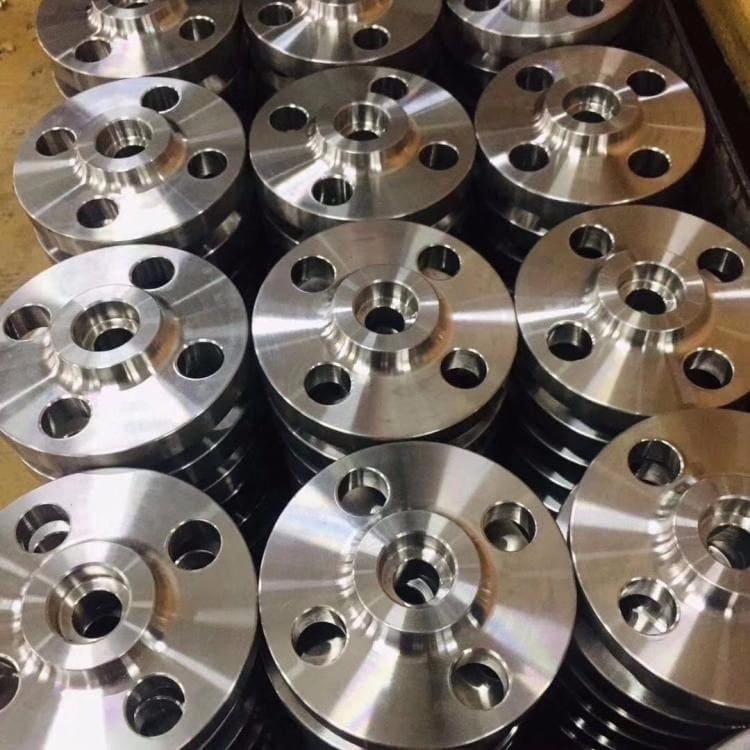
Wherever welded small-bore meets the un-weldable: cast iron pump and valve connections in water and utility systems, FRP and GRP scrubber and chemical lines, glass-lined reactor nozzle instrument connections, rubber-lined slurry systems, marine CuNi-to-composite interfaces, and fire-water hydrant and sprinkler hardware. Production below:
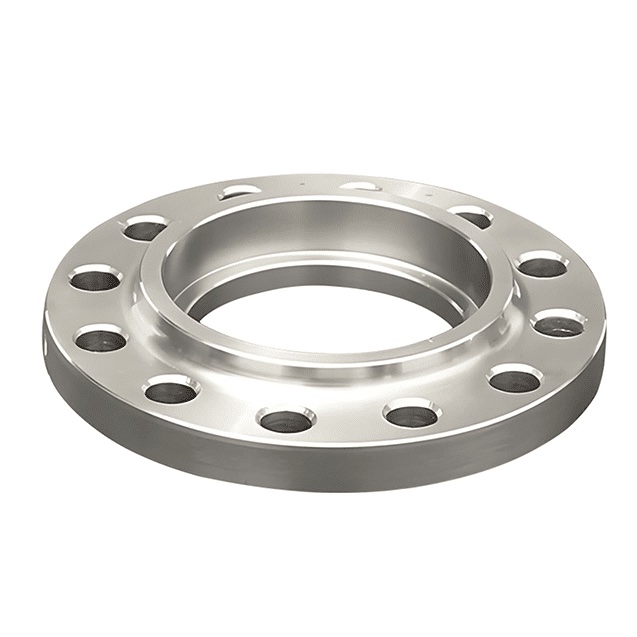
Socket weld flange dimensions are class-governed per ASME B16.5 — the flat face shares all dimensions with the raised face pattern except the ring itself. Full charts:
Five elements — state the flat face explicitly, and the schedule. Write SWFF or FFSW as your piping class prefers; both reach the same product:
1
Size & standard — e.g. 1″ NB ASME B16.5 Flat Face, or DN25 EN 1092-1 Type 03, Type A face.
2
Pressure class — 150#–1500# (2500# to order); most flat-face duty lives in 150/300.
3
Pipe schedule — Sch 40, 80 or 160: the through-bore is matched to the pipe ID so the flow path stays smooth.
4
Material & certification — e.g. ASTM A105, A182 F316L, C70600; coating for carbon steel; special face finish if a lined-nozzle maker specifies it; EN 10204 3.1 (our standard) / 3.2, PMI, NACE MR0175 as applicable.
Example: “SWFF Flange, 1″ NB, ASME B16.5 Class 150, Flat Face, Sch 80 bore, ASTM A105, EN 10204 3.1 — 12 pcs, cast iron pump connections.” Quotations normally within 24 hours with price, unit weight and delivery.
SWFF Flanges — Frequently Asked Questions
What is a SWFF flange?
SWFF stands for Socket Weld Flat Face — a socket weld flange whose gasket face is machined flush across its full width, with no raised ring. The pipe end seats inside a machined socket in the back of the flange and takes a single external fillet weld — the same small-bore connection as the SWRF — while the flat face carries a full-face gasket covering the entire face including the bolt holes. That combination exists for one purpose: connecting welded small-bore steel piping to equipment that cannot tolerate a raised face — cast iron pumps and valves, GRP, glass-lined and rubber-lined nozzles. Dimensioned to ASME B16.5 for ½" to 3" NB in Classes 150 to 1500.
Why does the flat face exist at all?
To protect brittle mates from bending. When a raised face flange is bolted up, all contact happens on the narrow raised ring — and as the bolts outside that ring tighten, the flange rims are pulled toward each other around the ring as a fulcrum, bending both flanges. Ductile steel shrugs that off; cast iron, GRP and glass linings crack. The flat face removes the fulcrum: contact and gasket cover the whole face, bolt load passes straight through as compression, and the brittle mate sees no bending moment at all. That is why flat-faced equipment — cast iron pump casings, FRP piping, lined vessels — must be met with a flat-faced flange and a full-face gasket, and why the SWFF pattern exists for welded small-bore connections to exactly that equipment.
Is SWFF the same as FFSW or SW FF?
Yes — SWFF, FFSW, SW FF and 'socket weld flat face' all describe exactly the same flange; the industry simply abbreviates in both orders, type-first (SWFF) or facing-first (FFSW). Purchase orders, piping classes and marking practices vary between companies and countries — facing-first FFSW is common in European and Middle-East specifications, type-first SWFF in American ones — but the product quoted and supplied is identical. Tesco marks flanges with the designation your specification uses: write FFSW on the order and FFSW is what the marking and the certificate will say.
What is the difference between SWFF and SWRF flanges?
Only the facing — and therefore the mate. Socket, bore, bolt circle, thickness and the single external fillet weld are identical. The SWRF carries the raised ring and a ring gasket: the default for steel-to-steel joints, where concentrated seating stress makes spiral wound and sheet gaskets tight. The SWFF is machined flush and carries a full-face gasket: the specialist for cast iron, GRP and lined mates, where spreading the load matters more than concentrating it. Ordering rule: the mating flange decides. Steel to steel — SWRF; anything brittle, lined or flat-faced on the other side — SWFF. Our SWRF page carries the raised face story in full.
How is a SWFF flange welded — and does the 1/16" gap still apply?
Identically to every socket weld flange, and yes. The pipe is inserted until it bottoms against the socket shoulder, withdrawn approximately 1/16" (1.6 mm), and secured with a single external fillet weld — the set-back required by ASME B31.3 so thermal expansion of the pipe cannot drive against the socket shoulder and crack the weld root. The weld throat must be at least the pipe wall thickness and not less than 3 mm, and being external it is visually and MT/PT inspectable, though never radiographable. Nothing about the flat face changes the welding practice — the facing rules the gasket side of the flange, the socket rules the pipe side, and the two are independent.
Which gasket is used with a SWFF flange?
A full-face gasket per ASME B16.21 — soft sheet material (CNAF, elastomer, PTFE) cut to the full flange diameter with holes punched for every bolt, so the gasket is held flat across the whole joint including the bolt circle. Full-face gaskets are deliberately soft: the flat face develops lower seating stress than a raised face, and soft sheet seals at exactly those stresses — which is also why spiral wound gaskets, built for concentrated load, do not belong on a flat-face joint. On small bores keep the gasket thin (1.5-3 mm) and follow the maker's torque card: over-thick soft gaskets on Class 150 small-bore joints relax and lose bolt load with time.
Can I bolt a raised face flange against a flat face one?
Against steel, it works but wastes the flat face; against cast iron or GRP, it is exactly the mistake the flat face exists to prevent. An RF against a brittle FF mate concentrates all load on the raised ring and levers the rim of the cast iron flange over that ring as the bolts tighten — cracked pump flanges on commissioning day trace to precisely this. Good practice, written into most specifications: where the mate is flat-faced and brittle, the steel flange shall be flat-faced too (or the raised face machined off flush) and the gasket shall be full-face. That is the SWFF's whole job on small bore. Steel-to-steel RF/FF mismatches merely lose the ring's stress concentration — poor practice, not catastrophe.
What sizes and pressure classes do SWFF flanges come in?
The socket weld tables of ASME B16.5: ½" to 3" NB in Classes 150, 300, 600, 900 and 1500 — with Class 900 small-bore flanges sharing Class 1500 dimensions in most sizes, and 2500 or 4" sockets manufactured to order. In practice the SWFF concentrates heavily in Classes 150 and 300: the cast iron, GRP and lined equipment it mates to is itself low-pressure hardware, so high-class flat-face sockets are rare and usually special-ordered. European equivalents follow EN 1092-1 Type 03 with the Type A flat face, PN 16-40 covering most of the demand.
When should I not use a socket weld flange?
The socket weld limits apply to SWFF exactly as to SWRF. Corrosion-sensitive and stagnant services: the annular gap between pipe end and socket shoulder is a built-in crevice where pitting and crevice attack start — corrosive alloy duty often specifies butt welds instead. Hygienic and high-purity lines: the same crevice traps product and defeats cleaning, so food, pharma and clean utilities exclude sockets. Severe cyclic or vibrating service: the fillet root concentrates stress and codes push such lines to weld necks. And wherever volumetric examination is mandated: a fillet weld cannot be radiographed. One addition specific to flat-face duty: if the brittle mate ever disappears from the line — equipment replaced in steel — the joint can revert to SWRF at the next opportunity.
What materials are SWFF flanges available in?
The complete industrial range: carbon steel ASTM A105 (the volume standard for cast iron pump and valve connections), LTCS A350 LF2, stainless ASTM A182 F304/L, F316/L, F321, F347, F904L, duplex and super duplex F51/F53/F55, chrome-moly F5-F91, Monel 400/K-500, Inconel 600/601/625, Incoloy 800/825, Hastelloy C-276/C-22, titanium Grade 2 and copper-nickel C70600/C71500 — the C70600 flat face socket weld flange pictured on this page is from our production, made for marine systems where CuNi piping meets lined or composite equipment. All grades ship with EN 10204 3.1 or 3.2 certificates.
What is the difference between SWFF and SOFF flanges?
The pipe connection — the flat face logic is identical. A SOFF (slip on flat face) slides over the pipe OD and takes two fillet welds, one of them inside the bore, and serves general sizes from 2" up. A SWFF seats the pipe in a socket and takes a single external weld — the small-bore answer, since nobody can weld inside a ¾" pipe — and self-aligns the pipe square to the face in the bargain. Below 2", welded lines use the SWFF; above 3", where B16.5 sockets end, the SOFF takes over against the same brittle mates. Both carry full-face gaskets and both exist for the same reason: no bending moment on the thing you bolt to.
What face finish does a SWFF flange carry?
The same serrated 'stock' finish as a raised face — Ra 3.2-6.3 µm (125-250 µin) concentric or spiral serrations per ASME B16.5 — but applied flush across the full face width. The serrations grip the soft full-face gasket exactly as they grip a ring gasket. Flatness matters more than on an RF joint: with contact across the whole face, waviness shows up as local loss of gasket stress, so our faces are machined in one setup and checked flat. Smooth finishes are supplied on request where elastomer gaskets or lined mates specify them — glass-lined nozzle makers in particular often call for smoother faces; state it on the enquiry.
How much does a SWFF flange weigh?
Essentially the same as its SWRF twin — the raised ring's metal is negligible: as working approximations for carbon steel ASME B16.5 socket weld flanges, a ½" Class 150 weighs about 0.4 kg, a 1" Class 150 about 0.8 kg, a 2" Class 150 about 2 kg, a 2" Class 600 about 3.5 kg, and a 3" Class 1500 roughly 9 kg. Stainless, nickel alloys and copper-nickel weigh essentially the same; titanium about 57% of these figures. The complete size-by-size table is on our Flange Weight Chart page, and every quotation states the exact unit weight.
What details are needed to get an accurate SWFF flange quotation?
Five elements plus commercial terms: (1) size and dimensional standard — e.g. 1" NB ASME B16.5 or DN25 EN 1092-1 Type 03, flat face stated explicitly; (2) pressure class or PN rating; (3) the pipe schedule — the socket bore suits the pipe OD but the through-bore is matched to the pipe ID, so Sch 40, 80 or 160 belongs on the enquiry; (4) material grade — e.g. ASTM A105, A182 F316L, C70600 — with coating stated for carbon steel and any special face finish for lined mates; (5) certification — EN 10204 3.1 or 3.2, PMI, NACE MR0175 where applicable. Add the quantity and destination and we return price, weight and delivery — normally within 24 hours.
Who manufactures SWFF flanges in India?
Tesco Steel & Engineering is an ISO 9001:2015 certified flange manufacturer based in Mumbai, India, producing SWFF flanges from ½" to 3" NB (larger to order) in Classes 150-1500 across the full material range — carbon steel A105, LTCS A350 LF2, stainless and duplex A182 grades, chrome-moly, nickel alloys, Hastelloy, titanium and copper-nickel to ASTM B564/B381 — each machined flush in one setup with gauged socket depth and bore, laser-marked with grade, size, class and heat number, and shipped with EN 10204 3.1/3.2 certification. Common sizes are held in ready stock and exported to more than 50 countries.