

TES-LOK instrumentation tube fittings — precision twin-ferrule (double-ferrule) compression fittings for leak-tight, gaugeable, vibration-resistant connection of instrument and process tube. A complete range of connectors, unions, elbows, tees, crosses, and bulkhead fittings. SS 316, SS 304, Brass, Monel, Inconel, Hastelloy. Tube 1/16" to 2" OD and 2 mm to 50 mm. Up to 6000 PSI. −196°C to 649°C. ISO 9001:2015 certified. Made in India.
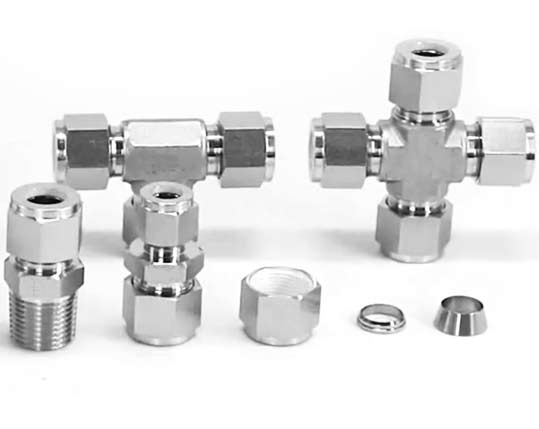
TES-LOK Instrumentation Tube Fittings
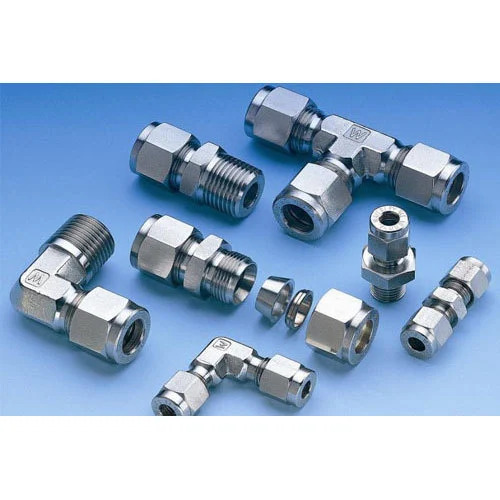
Twin-Ferrule Compression
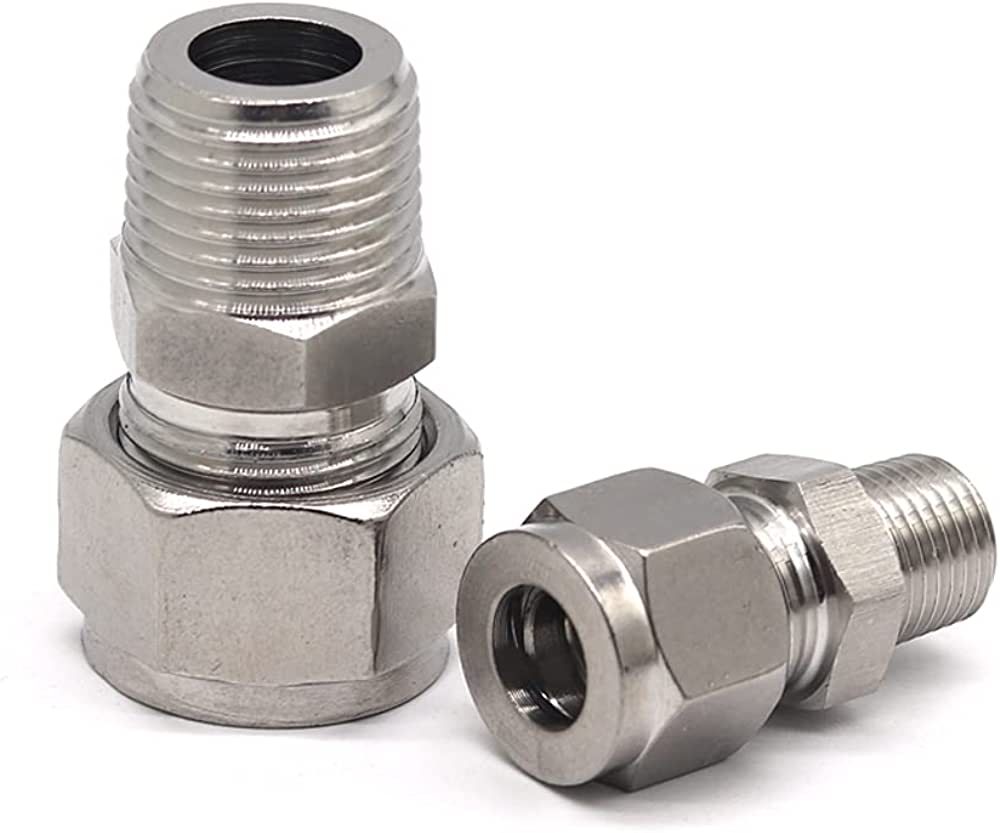
Male Connector
Instrumentation tube fittings are used wherever clean, leak-free small-bore tube connections are required: pressure and temperature instruments, analyser sample systems, gas panels, hydraulic and pneumatic control, and process tapping points. TES-LOK manufactures the full range of fitting shapes and connection ends, in materials from Brass to Hastelloy, all to a consistent twin-ferrule design.
TES-LOK manufactures the complete range of twin-ferrule fitting shapes and connection ends. Explore each product:
| Category | Fittings |
|---|---|
| Connectors | Male Connector • Female Connector • Bulkhead Male Connector • Gauge Connector • Port Connector • Thermocouple Connector |
| Unions | Union • Reducing Union • Bulkhead Union • Socket Weld Union |
| Elbows | Male Elbow (90°) • 45° Male Elbow • Female Elbow • Union Elbow |
| Tees & Crosses | Union Tee • Male Run Tee • Female Run Tee • Union Cross |
| Adapters | Male Adapter • Female Adapter • SAE MS Male Adapter • O-Seal Straight Thread Adapter • Weld Adapter |
| Connection Type | Standard | Seal / Grip | Best For |
|---|---|---|---|
| Twin-Ferrule Compression | Instrument tube fitting standard | Front ferrule seals, back ferrule grips | Instrumentation, analyser, gas, process tube |
| Bite-Type DIN 2353 | DIN 2353 / ISO 8434-1 | Single cutting ring bites tube OD | European hydraulics |
| Bite-Type JIS B2351 | JIS B2351 | Single cutting ring bites tube OD | Japanese-built equipment |
| 37° Flared (JIC) | SAE J514 | 37° flared tube cone, metal-to-metal | Hydraulic, fuel, fluid-power tube |
| Parameter | Details |
|---|---|
| Brand | TES-LOK (Tesco Steel & Engineering) |
| Design | Twin-ferrule (double-ferrule) compression |
| Tube OD Range | 1/16" to 2" OD | 2 mm to 50 mm OD |
| Working Pressure | Up to 6000 PSI for Stainless Steel | 300 / 1000 / 3000 PSI for Brass (size dependent) |
| Working Temperature | −196°C to 649°C (−320°F to 1200°F) — material dependent |
| Thread Options | NPT, BSP (BSPP), BSPT, UNF, ISO metric, SAE |
| Body Material | SS 316 / 316L, SS 304, Brass, Monel, Inconel, Hastelloy, special alloys |
| Ferrule Material | Matched to body — case-hardened SS for SS fittings |
| Make-Up | 1¼ turns from finger-tight (common sizes); gaugeable pull-up |
| Standards | Manufactured to recognised instrument tube fitting standards; ASTM material specs |
| Certifications | ISO 9001:2015 | EN 10204 3.1 MTC on request |
| Material | Max Temp | Corrosion Resistance | Typical Service |
|---|---|---|---|
| SS 316 / 316L | 649°C | Excellent — chloride resistant | General instrumentation, offshore, chemical, marine |
| SS 304 / 304L | 649°C | Good — general service | Food, pharma, water, mild process |
| Brass | 150°C | Moderate — no ammonia/acids | Pneumatics, compressed air, low-pressure water |
| Monel 400 | 480°C | Excellent — HF, seawater | HF service, desalination, marine |
| Inconel 625 | 650°C+ | Outstanding — high-temp & sour | Furnace, sour gas, high-temperature lines |
| Hastelloy C-276 | 500°C | Superior — strong acids | Chemical reactors, acid & halogen service |
The two-ferrule design separates sealing from gripping, giving leak-tight performance and excellent resistance to vibration fatigue and pressure cycling — the proven mechanism for critical instrument and process tube connections.
Consistent 1¼-turn pull-up with gap-gauge verification means every joint can be checked for correct assembly — no guesswork, repeatable quality across thousands of connections on a plant.
Connections can be disconnected and remade many times without losing seal integrity — ideal for instruments that need periodic calibration, replacement, or loop testing.
From Brass and SS 304 for general service to SS 316, Monel, Inconel, and Hastelloy for corrosive, sour, marine, and high-temperature media — one fitting design across the entire material spectrum.
Connectors, unions, elbows, tees, crosses, bulkheads, and adapters — plus bite-type and 37° flare standards — all from one source, simplifying procurement of the whole tube-fitting bill of material.
Manufactured under ISO 9001:2015 with EN 10204 3.1 material test certificates available on request — full traceability for instrumentation, offshore, and process-plant QA requirements.
| Industry | Typical Use Point | Why Twin-Ferrule Preferred |
|---|---|---|
| Oil & Gas / Offshore | Instrument impulse lines, hydraulic control, wellhead tapping points | SS 316 corrosion resistance; vibration-proof, gaugeable, leak-tight |
| Refinery & Petrochemical | Analyser sample systems, transmitter connections, process taps | Reliable seal on critical small-bore lines; reusable for maintenance |
| Power Generation | Turbine and boiler instrument lines, lube oil control tube | Wide temperature range; high-pressure leak-tight connections |
| Pharmaceutical / Biotech | Clean instrument connections on CIP/SIP and bioreactor systems | SS 316L, crevice-minimised, cleanable, no welding required |
| Chemical Processing | Corrosive and acid-service instrument and sample tube | Hastelloy / Monel options for aggressive media |
| Semiconductor & Gas | High-purity gas panels and mass-flow connections | Leak-tight, low dead-volume, no tape contamination |
| Hydraulics & Pneumatics | Control and signal tube on machines and skids | Fast, tool-light make-up; vibration-resistant |
| Shipbuilding & Marine | Engine and control instrument tube | SS 316 salt resistance; reliable under vibration |
Q1. What is an instrumentation tube fitting?
It is a precision twin-ferrule (double-ferrule) compression fitting that connects small-bore instrument and process tube to instruments, valves, and equipment without welding or flaring. Tightening the nut drives a front ferrule that seals and a back ferrule that grips the tube. The result is a leak-tight, gaugeable, vibration-resistant, reusable connection — the standard for instrumentation tube worldwide.
Q2. Why does it use two ferrules instead of one?
The twin-ferrule design separates the two jobs: the front ferrule seals against the tube and body cone, while the back ferrule grips the tube OD and hinges to resist pull-out. Letting each ferrule specialise gives better vibration-fatigue resistance, more consistent make-up, and more reliable sealing than single-ferrule or bite-type fittings — which is why it dominates critical instrumentation.
Q3. What is the difference between an instrumentation (twin-ferrule) fitting and a bite-type or 37° flare fitting?
A twin-ferrule fitting grips the tube OD with two ferrules and needs only a cut, deburred tube — it dominates instrumentation and process. A bite-type (DIN 2353 / JIS B2351) fitting uses a single cutting ring that bites into the tube OD and dominates hydraulics. A 37° flare (JIC / SAE J514) fitting seals on a flared tube cone and dominates fluid power and fuel systems. TES-LOK manufactures all of these — see the connection-standards table above.
Q4. What is meant by "gaugeable" make-up?
Gaugeable means the correct pull-up of the fitting can be verified with a simple gap-inspection gauge after assembly. The fitting is tightened 1¼ turns from finger-tight (for common sizes), and the gauge confirms the nut has been advanced the correct amount. This removes guesswork and gives repeatable, inspectable quality across many connections.
Q5. What materials are available?
SS 316/316L and SS 304 for general and corrosive service; Brass for pneumatics and low-pressure water; and Monel, Inconel, and Hastelloy for HF, sour, high-temperature, and strong-acid service. The same twin-ferrule design is offered across the full material range, with EN 10204 3.1 MTC available on request.
Q6. What tube should I use with instrumentation tube fittings?
Use fully annealed, high-quality seamless instrument tube of the correct OD and wall thickness, within tolerance, and softer than the ferrules so the ferrules can seal and grip. SS 316 instrument tube to ASTM A269 / A213 is typical. Avoid hardened, oversized, scratched, or out-of-round tube — it will compromise the seal and grip. Match the tube material to the fitting material.
Q7. Are instrumentation tube fittings reusable?
Yes. Once the ferrules are set on the tube, the connection can be disconnected and remade many times — on re-make, the nut is simply turned to the previously pulled-up position plus a slight nip. This makes twin-ferrule fittings ideal for instruments that require periodic calibration, replacement, or loop testing.
Q8. Do you supply the full range of fitting shapes?
Yes. TES-LOK manufactures the complete range — male and female connectors, unions, reducing unions, bulkhead fittings, 90° and 45° elbows, run and union tees, crosses, gauge and port connectors, thermocouple connectors, and adapters — plus the bite-type and 37° flare connection standards. See the range table above and the sidebar for links to each product.