

TES-LOK Socket Weld Union Tube Fittings — socket weld (SW) end connections on both ports with a separable threaded union nut. Permanent fillet-welded joints rated to Class 3000 / Class 6000; union body allows line disconnection without cutting the tube. SS 304 · SS 316 · Carbon Steel · Special Alloys · ASME B16.11 · ISO 9001:2015 certified.
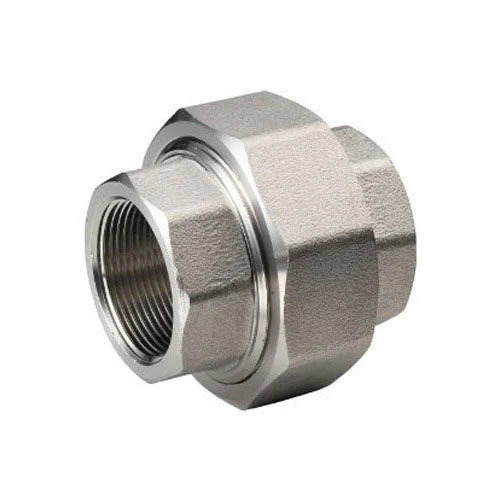
A socket weld union tube fitting combines two distinct engineering features in a single assembly: socket weld (SW) end connections on both ports, and a separable union body secured by a threaded union nut. The tube slides into the socket bore and is permanently attached by a full circumferential fillet weld; the union nut then allows the two welded halves to be disconnected and reconnected for maintenance or component replacement — without cutting the tube or disturbing the weld.
Unlike compression tube unions — which rely on ferrule grip and face-seal pressure to hold and seal the tube — socket weld unions create a metallurgical bond between the tube and the fitting body. This makes them the preferred choice for service conditions that exceed the performance envelope of compression fittings: high-temperature steam lines, high-pressure wellhead piping, vibration-intensive process loops, and ASME B31.3 piping systems where welded joints are specified by the piping class.
TES-LOK Socket Weld Union Tube Fittings are forged or machined to ASME B16.11 socket bore dimensions, available in Class 3000 and Class 6000, and certified to ASTM A182 (stainless and alloy steel) or ASTM A105 (carbon steel). Equal and reducing configurations are available. All materials are supplied with full Mill Test Certificates.
The socket weld union consists of three components:
After both tube ends are welded, the union nut can be loosened to separate the two body halves — allowing the line to be broken for valve replacement, instrument removal, or pipe section maintenance — then retightened to restore the sealed connection.
| Component | Connection Type | Function |
|---|---|---|
| Body Half A — Tube End | Socket weld (SW) | Tube inserted and fillet-welded — permanent attachment |
| Body Half B — Tube End | Socket weld (SW) | Tube inserted and fillet-welded — permanent attachment |
| Union Nut (centre) | Threaded union collar | Draws both body halves together; loosened to separate line for maintenance |
| Union Joint Face | Metal-to-metal face seal | Primary pressure seal when union nut is tightened |
| Parameter | Details |
|---|---|
| Product name | Socket Weld Union Tube Fitting (SW Union) |
| Brand | TES-LOK (Tesco Steel & Engineering) |
| End connection type | Socket weld (SW) both ends per ASME B16.11 |
| Union joint type | Threaded union nut — metal-to-metal face seal |
| Pressure class | Class 3000 · Class 6000 (per ASME B16.11) |
| Tube OD range | 1/4" to 1" (imperial) · 6 mm to 25 mm (metric) |
| Socket bore standard | ASME B16.11 — bore diameter + 1/16" expansion gap |
| Configuration | Equal (same bore both ends) · Reducing (different bore each end) on request |
| Materials (SS) | SS 304 / ASTM A182 F304 · SS 316 / A182 F316 · SS 316L / A182 F316L |
| Materials (CS / Alloy) | Carbon Steel ASTM A105 · LTCS A350 LF2 · Alloy A182 F11 / F22 / F91 |
| Materials (Special Alloy) | Monel 400 · Inconel 600 · Hastelloy C-276 · Duplex 2205 · Super Duplex 2507 |
| Temperature range | −100 °F to +1500 °F (material and class dependent) |
| Dimensional standard | ASME B16.11 |
| Piping code | ASME B31.3 Process Piping · ASME B31.1 Power Piping |
| Quality certification | ISO 9001:2015 · EN 10204 3.1 MTCs · 3.2 MTCs on request |
| Weld process | GTAW / TIG (SS & alloy) · SMAW (carbon steel) |
| Tube OD | NPS Equivalent | Class 3000 Rating (SS 316) | Class 6000 Rating (SS 316) |
|---|---|---|---|
| 1/4" | 1/8" NPS | Up to 15,000 PSI* | Up to 20,000 PSI* |
| 3/8" | 1/4" NPS | Up to 10,000 PSI* | Up to 15,000 PSI* |
| 1/2" | 3/8" NPS | Up to 7,500 PSI* | Up to 12,000 PSI* |
| 3/4" | 1/2" NPS | Up to 6,000 PSI* | Up to 9,000 PSI* |
| 1" | 3/4" NPS | Up to 5,000 PSI* | Up to 7,500 PSI* |
| 6 mm | — | Consult P-T table | Consult P-T table |
| 12 mm | — | Consult P-T table | Consult P-T table |
| 25 mm | — | Consult P-T table | Consult P-T table |
* Indicative values at ambient temperature for SS 316 per ASME B16.11 P-T ratings. Actual ratings depend on material, wall schedule, operating temperature, and applicable code. Always refer to the published ASME B16.11 pressure-temperature tables for design purposes.
The fillet weld creates a metallurgical bond between tube and fitting body — not a mechanical grip. This joint is immune to the micro-movement, vibration loosening, and fretting that can affect compression ferrule joints over time. It is the correct choice for high-vibration environments including reciprocating compressors, pump discharge lines, and shipboard piping.
Compression tube fittings using PTFE or elastomeric components have a practical upper limit of around 450–500 °F (232–260 °C). Socket weld unions — being all-metal with no sealing polymers — are limited only by the metal's temperature rating, extending service to high-temperature steam, hot oil, and furnace-feed piping that is incompatible with compression fittings.
Once both tube ends are welded, the union nut is the only removable element. Loosening it separates the two body halves cleanly, allowing a valve, instrument, or pipe section between two socket weld unions to be removed and replaced without disturbing or cutting the welded tube runs on either side — a critical maintenance advantage in dense process piping.
Socket weld joints per ASME B16.11 are explicitly permitted connection types in ASME B31.3 (Process Piping) and B31.1 (Power Piping). For piping classes that mandate welded connections — Class 900 and above, or high-temperature service — compression fittings may be excluded; socket weld unions comply with the applicable code by design.
Available in Class 3000 (suitable for most process and instrument piping) and Class 6000 (for high-pressure wellhead, hydraulic, and steam header applications), TES-LOK Socket Weld Unions cover a wider pressure range than standard compression fittings, with ratings that scale conservatively with the applicable ASME B16.11 pressure-temperature tables.
Available in SS 304, SS 316, SS 316L, Carbon Steel A105, LTCS A350 LF2, Alloy F11/F22/F91, Monel 400, Inconel 600, Hastelloy C-276, Duplex 2205, and Super Duplex 2507. Every material is supplied with ASTM/ASME-compliant EN 10204 3.1 Mill Test Certificates; 3.2 third-party MTCs are available on request for critical, nuclear, or NACE MR0175 applications.
| Fitting | End Connection | Separable? | Max Temp | When to Choose |
|---|---|---|---|---|
| Socket Weld Union | Socket weld (welded) | Yes — union nut | Metal rating (~1500 °F) | High-temp / high-pressure / ASME B31.3 code compliance required |
| Compression Union | Double-ferrule compression | Yes — ferrule nut | ~450 °F (elastomer limited) | General instrumentation; frequent disconnection; no welding available |
| Butt Weld Union | Butt weld (pipe end prep) | Yes — union nut | Metal rating | Large bore or schedule pipe; full-penetration weld required |
| Threaded Union | NPT / BSP threads | Yes — union nut | ~750 °F (PTFE limited) | Medium pressure threaded piping; no welding required |
| Weld Adapter | Socket weld one end, compression other | No — permanent | Metal rating | Transition point from welded pipe to compression tube system |
Step 1 — Prepare the tube. Cut the tube square with a tube cutter or cold saw (not a hacksaw). Deburr the OD and ID of the cut end. Clean the tube surface and the inside of the socket bore with acetone or a suitable solvent — weld contamination from oil, grease, or scale causes porosity.
Step 2 — Insert the tube and set the gap. Push the tube fully into the socket until it bottoms. Then withdraw it exactly 1/16" (1.6 mm). This mandatory expansion gap per ASME B16.11 accommodates differential thermal expansion during the weld thermal cycle and prevents restraint cracking. Mark the tube at the socket face as a reference before tack-welding.
Step 3 — Tack weld in position. With the fitting assembly positioned correctly (union nut and body half assembled loosely), apply two or three tack welds 120° apart to hold the gap and prevent distortion during the root pass.
Step 4 — Full fillet weld. Apply a full circumferential fillet weld at the socket face. Weld throat size should equal the socket wall thickness. For SS 304/316 and alloy steels, use GTAW (TIG) with matching filler wire (ER316L for SS 316 applications); for carbon steel, SMAW with E7018 electrodes. Maintain inter-pass temperatures per the applicable WPS.
Step 5 — Post-weld treatment. For SS materials, brush the weld area with a passivating acid gel (citric or nitric) and rinse with clean water to restore corrosion resistance. For P91, F22, or other Cr-Mo alloy steels, post-weld heat treatment (PWHT) per ASME B31.3 table 331.1.1 is required — do not pressurise until PWHT is complete and documented.
Step 6 — Tighten union nut. Once both welded halves have cooled to ambient temperature, engage the union nut and tighten to the specified torque for the fitting size and material. Leak-test per the applicable pressure test procedure before commissioning.
| Industry | Typical Application |
|---|---|
| Oil & Gas | High-pressure wellhead instrument piping, subsea control module SW connections, offshore topside process lines |
| Refinery / Petrochemical | High-temperature process lines above compression fitting limits, catalytic cracker instrument loops, fired heater piping |
| Power Generation | High-pressure steam header unions, boiler feed instrument piping, turbine extraction line branches |
| Chemical / Petrochemical | Corrosive service with special alloys, high-temperature reaction piping, NACE MR0175 sour service lines |
| Nuclear & Defence | Safety-class instrumentation piping, ASME B31.1 Code Class 1/2/3 systems, seismically qualified loops |
| Marine & Offshore | Deck piping requiring welded connections, vibration-intensive machinery spaces, high-pressure hydraulics |
▶ What is a socket weld union tube fitting?
▶ What is the difference between a socket weld union and a compression union?
▶ What standard governs socket weld union tube fittings?
▶ What pressure classes are available?
▶ What tube sizes are available?
▶ What materials are available?
▶ How do I weld a socket weld union tube fitting?
▶ Which industries use socket weld union tube fittings?
ISO 9001:2015 certified manufacturer. SS 304 · SS 316 · Carbon Steel · Special Alloys. 1/4"–1" OD. Class 3000 / Class 6000. ASME B16.11. EN 10204 3.1 MTCs included.
✉ Email Quote 📞 WhatsApp 📞 Call Us