

TES-LOK 37° flared (JIC) tube fittings to SAE J514 — the tube end is flared to a 37-degree cone that seals metal-to-metal against the fitting nose, giving a strong, leak-tight, reusable connection for hydraulic, fuel, and high-pressure tube. SS 316, Carbon Steel, Brass. Tube 1/8" to 2" OD. Pressures up to 8700 PSI (600 bar). Temperature −196°C to 649°C. ISO 9001:2015 certified. Made in India.
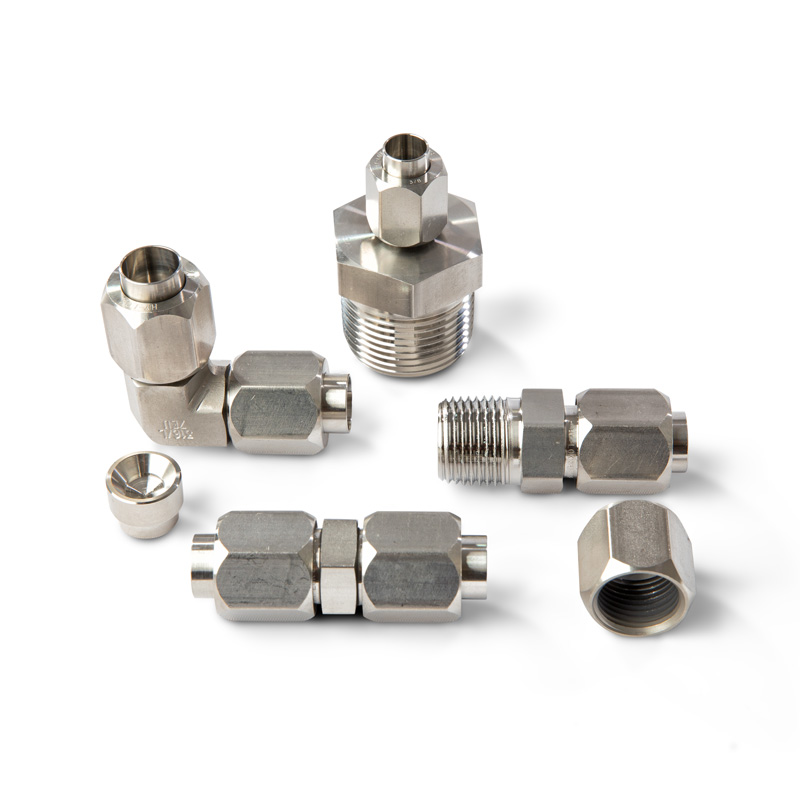
TES-LOK 37° Flared (JIC) Fitting
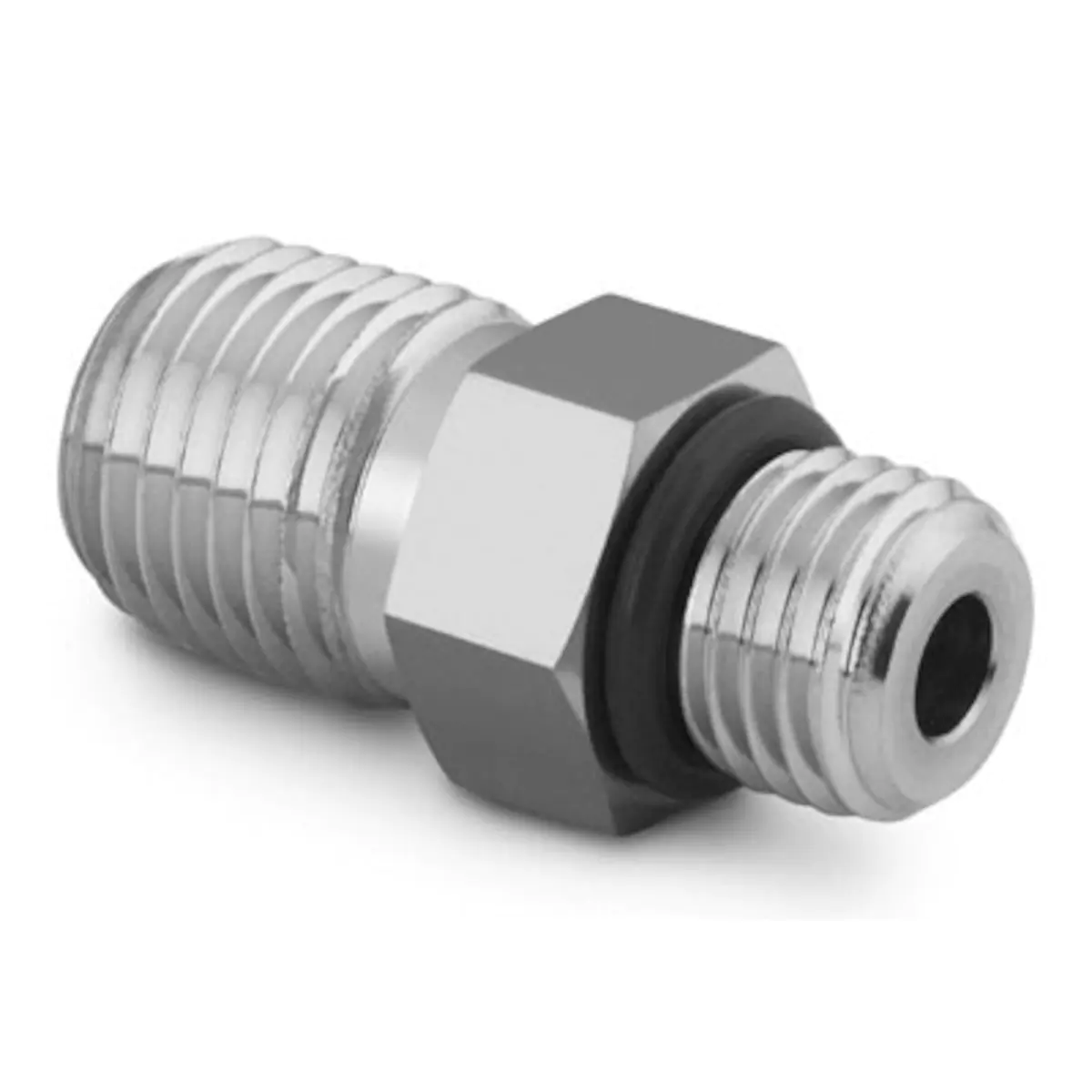
SAE Straight Thread Adapter (Related)
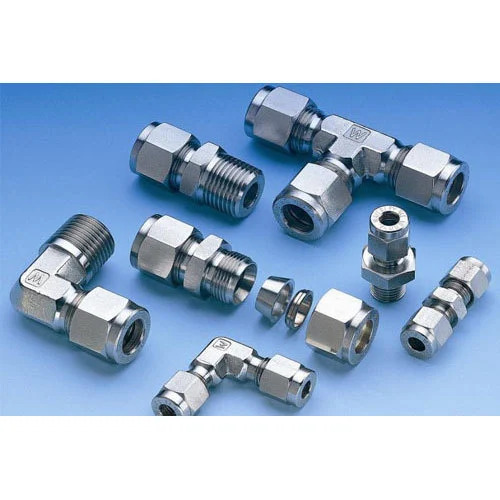
Double-Ferrule Compression (Related)
Because the seal is made by the flared tube cone, JIC fittings require the tube to be flared with a 37° flaring tool before assembly. The 37° angle distinguishes JIC/SAE J514 from the 45° flare used in automotive and refrigeration (SAE J512) — the two are not interchangeable. JIC threads are straight UNF, matching the SAE/MS straight-thread family.
| Connection | Standard | Seal Method | Tube Prep | Best For |
|---|---|---|---|---|
| 37° Flare (JIC) | SAE J514 | 37° flared tube cone, metal-to-metal | Tube must be flared to 37° | Hydraulic, fuel, fluid-power tube; aerospace (AN) |
| 45° Flare | SAE J512 | 45° flared tube cone, metal-to-metal | Tube flared to 45° | Automotive, refrigeration, low/medium pressure |
| Bite-Type (Cutting Ring) | DIN 2353 / ISO 8434-1 | Ring cuts into tube OD | Cut & deburr only (no flare) | European high-pressure hydraulics |
| Double-Ferrule Compression | Instrument standard | Front + back ferrule grip tube OD | Cut & deburr only (no flare) | Instrumentation, analyser, gas tube |
| SAE ORB / O-Ring Boss | SAE J1926 | O-ring on straight-thread shoulder | None (port fitting) | Hydraulic pump/valve port connections |
| Shape | Configuration | Use |
|---|---|---|
| Male Connector | 37° flare to male NPT / BSPP / SAE thread | Flared tube to a threaded port |
| Female Connector / Swivel | 37° flare to female JIC swivel nut | Flared tube to another JIC fitting (swivel = no tube twist) |
| Union | 37° flare both ends | Joining two flared tubes |
| Bulkhead Union | 37° flare through-panel union | Panel / wall pass-through |
| Elbow / Tee / Cross | 90° / 45° / branch with 37° flare ends | Direction change and branching |
| JIC to ORB / NPT Adapter | 37° flare one end, ORB or NPT other end | Connecting JIC tube to pump/valve ports |
| Parameter | Details |
|---|---|
| Brand | TES-LOK (Tesco Steel & Engineering) |
| Standard | SAE J514 (37° JIC flare) | AN (aerospace 37° flare) on request |
| Flare Angle | 37° included (per side from tube axis) |
| Construction | Three-piece: body (37° nose), flare nut, sleeve |
| Tube OD Range | 1/8" to 2" OD (dash -2 to -32) | metric on request |
| Pressure Rating | Up to 8700 PSI (600 bar) @ 38°C (100°F) — size dependent |
| Temperature Range | −196°C to 649°C (−320°F to 1200°F) — material dependent |
| Thread | Straight UNF (JIC) | also available with NPT, BSPP, SAE ORB adapter ends |
| Body Material | SS 316 / 316L, SS 304, Carbon Steel (zinc/zinc-nickel plated), Brass, special alloys |
| Seal | Metal-to-metal 37° cone (standard) | JIC-O with O-ring for extra leak-tightness on request |
| Certifications | ISO 9001:2015 | EN 10204 3.1 MTC on request |
JIC fittings are specified by dash size — the tube OD in sixteenths of an inch — with a fixed straight UNF thread for each size.
| Dash Size | Tube OD | JIC Thread (UNF) |
|---|---|---|
| -4 | 1/4" | 7/16"-20 |
| -6 | 3/8" | 9/16"-18 |
| -8 | 1/2" | 3/4"-16 |
| -10 | 5/8" | 7/8"-14 |
| -12 | 3/4" | 1-1/16"-12 |
| -16 | 1" | 1-5/16"-12 |
| -20 | 1-1/4" | 1-5/8"-12 |
| -24 | 1-1/2" | 1-7/8"-12 |
| -32 | 2" | 2-1/2"-12 |
37° cone angle, sleeve geometry, and straight UNF threads are manufactured to SAE J514, so TES-LOK JIC fittings interchange with standard JIC tube assemblies and connect reliably to JIC ports from any compliant maker.
The metal-to-metal 37° flare seal handles high working pressures up to 8700 PSI (600 bar), making JIC the workhorse connection for hydraulic and fluid-power tube assemblies.
With an all-metal cone seal and no elastomer required, the standard JIC fitting serves from cryogenic −196°C up to 649°C (material dependent) — far beyond the range of O-ring-sealed connections.
The flare stays formed on the tube, so JIC joints can be disconnected and remade many times — and swivel female ends let tube be connected without twisting the line. Ideal for maintenance-heavy hydraulic systems.
JIC-to-NPT, JIC-to-BSPP, and JIC-to-ORB adapters connect flared tube to almost any port standard, making the 37° flare a versatile hub for mixed-standard hydraulic systems.
SS 316, SS 304, Carbon Steel, and Brass bodies, with an optional O-ring (JIC-O) version for higher leak-tightness on gas and low-viscosity media. EN 10204 3.1 MTC available on request.
| Industry | Typical Use Point | Why 37° JIC Preferred |
|---|---|---|
| Industrial Hydraulics | Hydraulic tube assemblies on power units, presses, manifolds | High-pressure metal-to-metal seal; reusable, serviceable joints |
| Mobile & Construction Equipment | Excavator, loader, crane hydraulic tube and hose ends | JIC is the dominant North American hydraulic tube standard; swivel ends ease assembly |
| Fuel & Fluid Systems | Fuel, oil, and coolant tube on engines and gensets | Leak-tight metal seal; no elastomer to degrade in fuel/oil |
| Aerospace & Defence | Aircraft and vehicle hydraulic/fuel tube (AN 37° flare) | Same 37° flare as the AN aerospace standard; high integrity and traceability |
| Oil & Gas | Hydraulic control and instrument tube on skids and rigs | SS 316 corrosion resistance; high-pressure, wide-temperature seal |
| Power Generation | Turbine governing and lube oil tube | All-metal seal for hot oil; wide temperature range |
| Agriculture | Tractor and harvester hydraulic tube | Field-serviceable, reusable flare connections |
| Machine Tools | Hydraulic and lubrication tube on presses and CNC | Compact, high-pressure, reliable JIC connections |
Q1. What is a 37° flared (JIC) tube fitting?
It is a tube fitting to SAE J514 in which the tube end is flared to a 37° cone. A flare nut and sleeve clamp the flared cone against the fitting body's matching 37° nose, forming a metal-to-metal seal. Known as a JIC fitting, it uses straight UNF threads and is the dominant high-pressure hydraulic tube connection in North America and (as the AN flare) in aerospace.
Q2. What is the difference between a 37° JIC flare and a 45° flare?
The cone angle differs: JIC/SAE J514 is 37°, while the automotive and refrigeration flare (SAE J512) is 45°. They are not interchangeable — mating a 37° flare to a 45° seat (or vice versa) gives only line contact and leaks. 37° JIC is used for higher-pressure hydraulic and fuel-power systems; 45° is for lower-pressure automotive and refrigeration lines.
Q3. Does the tube have to be flared before assembly?
Yes. The seal is made by the flared tube cone, so the tube end must be flared to 37° with a flaring tool before the fitting is assembled. The flare nut and sleeve must be slipped onto the tube before flaring. This is the key difference from bite-type and compression fittings, which need only a square, deburred tube end and no flare.
Q4. How is JIC different from bite-type and compression fittings?
JIC seals on the flared tube cone (the tube is flared to 37°). Bite-type fittings (DIN 2353) use a ring that cuts into the tube OD. Double-ferrule compression fittings grip the tube OD with two ferrules. JIC dominates North American hydraulics and fuel systems; bite-type dominates European hydraulics; double-ferrule dominates instrumentation. Choose by region, equipment standard, and whether tube flaring is practical.
Q5. What pressure and temperature can JIC fittings handle?
TES-LOK JIC fittings are rated up to 8700 PSI (600 bar) at 38°C, size dependent, with a temperature range of −196°C to 649°C (−320°F to 1200°F) for the all-metal version, depending on body material. The metal-to-metal cone seal — with no elastomer — is what gives JIC its very wide temperature capability.
Q6. What is a JIC swivel fitting?
A JIC swivel (female) fitting has a free-spinning flare nut, so a tube or hose end can be connected to another JIC fitting without rotating the tube/hose itself. This avoids twisting the line during assembly and makes JIC connections easy to make up in confined spaces and on hose ends. The seal is still the 37° cone.
Q7. Can JIC fittings connect to NPT or SAE ports?
Yes, via adapter fittings. JIC-to-NPT, JIC-to-BSPP, and JIC-to-SAE ORB adapters have a 37° flare on one end and the port thread on the other, letting flared tube connect to almost any port standard. This makes the 37° flare a versatile hub for mixed-standard hydraulic systems. Note JIC straight UNF threads should not be confused with SAE ORB ports — use the correct adapter.
Q8. Is there an O-ring version of the JIC fitting?
Yes — the JIC-O (or "JIC with O-ring") version adds an O-ring at the flare seal for extra leak-tightness, useful on gas and low-viscosity media or where zero weepage is critical. The standard JIC fitting relies on the metal-to-metal cone seal alone and is preferred for the widest temperature range. Specify the O-ring option and elastomer (FKM/NBR) when ordering.