

TES-LOK Port Connectors and Reducing Port Connectors — double-ferrule compression tube fittings engineered for direct insertion into instrument ports, gauge entry ports, and manifold block port faces. Available in equal-bore and reducing-bore configurations. SS 304, SS 316, Brass. NPT / BSPT / BSP. Up to 6000 PSI. ISO 9001:2015 certified. Made in India.
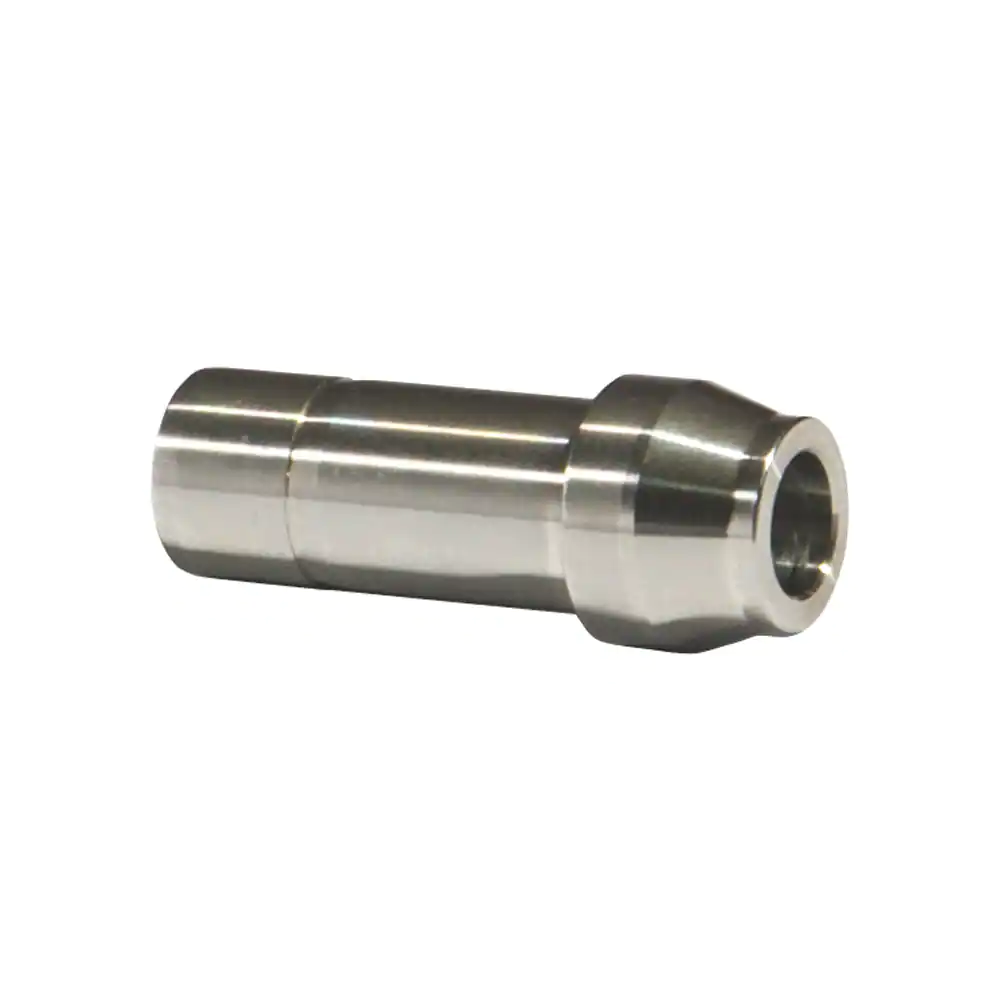
TES-LOK Port Connector
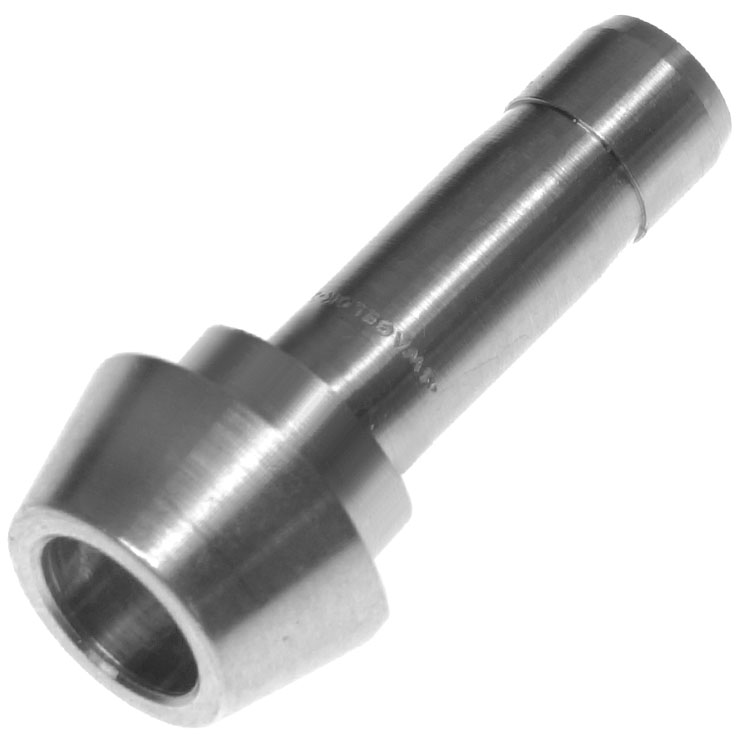
Reducing Port Connector
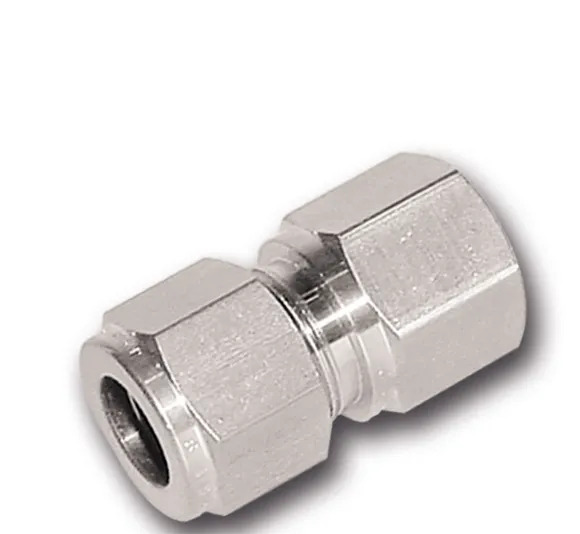
Gauge Connector (Related)
Port connectors are particularly valuable in instrument panel assemblies and manifold-based measurement systems where multiple tube runs of different sizes must be consolidated at a single port-face entry without additional reducing unions or multiple-piece adaptor stacks.
| Fitting | End 1 | End 2 | Key Distinction | Best Use |
|---|---|---|---|---|
| Port Connector (Equal) | Compression tube (e.g. 1/4") | Port-entry face / thread same size | Equal bore on both ends; minimises assembly height at port | Panel instrument entries; direct port connections same tube OD each side |
| Reducing Port Connector | Larger compression tube (e.g. 3/8") | Smaller compression or port end (e.g. 1/4") | Reduces tube OD at point of port entry in one body | Main instrument line (larger tube) to instrument port (smaller entry) — no separate reducer needed |
| Male Connector | Compression tube | Male NPT / BSPT thread | Threaded into female port — projects further into instrument body | Standard instrument connections to threaded female ports |
| Gauge Connector | Compression tube | Gauge union nut end | Gauge union nut threads onto gauge stem — specific to gauge inlet connection | Pressure gauges with gauge union stem |
| Union Connector | Compression tube | Compression tube (same OD) | Tube-to-tube straight union; no port interface | Joining two tube runs of equal OD in-line |
| Reducing Union | Larger compression tube | Smaller compression tube | Tube-to-tube reducer; no port interface | Reducing tube size mid-run; not at a port face |
| Configuration | End 1 (Inlet) | End 2 (Port/Outlet) | Application |
|---|---|---|---|
| Equal Port Connector (Straight) | Double-ferrule compression — tube OD | Double-ferrule compression — same tube OD | Connecting equal-size tubes at a port face; manifold block top-entry connections |
| Reducing Port Connector | Double-ferrule compression — larger tube OD | Double-ferrule compression — smaller tube OD | Main line to instrument port where tube OD reduces at port entry; single-body size transition |
| Port Connector — Male Thread End | Double-ferrule compression | Male NPT / BSPT / BSPP — threaded port end | Tube to threaded instrument port with minimum fitting projection |
| Port Connector — Female Thread End | Double-ferrule compression | Female NPT / BSPT — threaded port end | Tube to male-stem instrument port (e.g. transmitter with male NPT outlet) |
| Port Connector — Cone Seat End | Double-ferrule compression | Internal 37° or 60° cone seat | Tube to cone-seat instrument port; common on European pressure gauges and transmitters |
| Reducing Port Connector — Metric/Inch | Metric OD compression (e.g. 10 mm) | Inch OD compression (e.g. 3/8") | Metric instrument tube to inch-standard instrument port on mixed-standard panels |
| Parameter | Details |
|---|---|
| Brand | TES-LOK (Tesco Steel & Engineering) |
| Equal Bore Tube OD Range | 1/8", 3/16", 1/4", 5/16", 3/8", 1/2", 5/8", 3/4", 1" | Metric: 3 mm to 25 mm |
| Reducing Port Connector Combinations | 3/8" × 1/4", 1/2" × 3/8", 1/2" × 1/4", 3/4" × 1/2", 1" × 3/4" (most common) | Metric equivalents available |
| Pressure Rating | SS 316: up to 6 000 PSI | Brass: 300 / 1 000 / 3 000 PSI by size |
| Temperature Range | SS 316: −196°C to 450°C | Brass: −40°C to 150°C | Inconel 600: up to 800°C |
| Body Material | SS 304, SS 316 / 316L, Brass (CW617N), Inconel 600, Monel 400, Hastelloy C-276 |
| Ferrule Material | Matched to body — SS 316 ferrules with SS body; Brass ferrules with Brass body |
| Thread Options (Port End) | NPT (ASME B1.20.1) | BSPT / Rc (BS 21 / ISO 7-1) | BSPP / G (BS 2779 / ISO 228) |
| Cone Seat Options (Port End) | 37° JIC (SAE J514) | 60° cone (DIN 2353 / ISO 8434-1) | Flat face (gauge union) |
| Surface Finish | Bright annealed and passivated (SS); bright zinc or nickel plated (Brass) |
| Certifications | ISO 9001:2015 | EN 10204 3.1 MTC on request | Hydrostatic test cert available |
Reducing port connectors are specified as Inlet OD × Outlet OD (larger × smaller). The ferrule and nut on each end are sized to the respective tube OD.
| Inlet OD (Larger) | Outlet OD (Smaller) | Reduction Ratio | Typical Application | Max Pressure (SS 316) |
|---|---|---|---|---|
| 3/8" (9.53 mm) | 1/4" (6.35 mm) | 1.5:1 | Main sample line to analyser inlet port | 5 000 PSI |
| 1/2" (12.7 mm) | 3/8" (9.53 mm) | 1.33:1 | Process tap to secondary instrument run | 4 500 PSI |
| 1/2" (12.7 mm) | 1/4" (6.35 mm) | 2:1 | Supply header to small-bore instrument tapping | 4 500 PSI |
| 3/4" (19.05 mm) | 1/2" (12.7 mm) | 1.5:1 | Bulk process line to instrument loop header | 3 500 PSI |
| 1" (25.4 mm) | 3/4" (19.05 mm) | 1.33:1 | Main line connection to secondary manifold port | 3 000 PSI |
| 10 mm | 6 mm | 1.67:1 | Metric analyser panel: main run to sensor port | 5 500 PSI |
| 12 mm | 8 mm | 1.5:1 | Metric instrument loop to small-bore measurement port | 5 000 PSI |
| Material | Max Temp | Pressure (1/4" end) | Corrosion Resistance | Typical Industry |
|---|---|---|---|---|
| SS 304 | 450°C | 5 000 PSI | Good — general service | Food, pharma, water treatment instrument panels |
| SS 316 / 316L | 450°C | 6 000 PSI | Excellent — chloride resistant | Oil & gas, offshore, chemical instrument panels |
| Brass (CW617N) | 150°C | 3 000 PSI | Moderate — no ammonia/acids | HVAC, compressed air, low-pressure instrument ports |
| Inconel 600 | 800°C | 4 000 PSI | Outstanding — high-temp oxidation | Furnace instrument connections, thermowell connections |
| Monel 400 | 480°C | 4 500 PSI | Excellent — HF, seawater | HF alkylation, desalination plant instruments |
| Hastelloy C-276 | 500°C | 4 000 PSI | Superior — strong acids | Chemical reactor instrument panels, acid gas service |
The TES-LOK port connector body is proportioned to minimise the fitting projection below the port face — reducing dead-leg volume in analyser sample systems and minimising the risk of the fitting nose obstructing the instrument's internal bore or calibration port.
The reducing port connector achieves a size change from the main tube run to the instrument port entry in a single machined body, eliminating the need for a separate reducing union + male connector stack. Fewer joints means lower leak probability and a more compact instrument assembly.
TES-LOK port connectors are available in imperial inch OD (1/8" to 1") and ISO metric OD (3 mm to 25 mm) — with mixed combinations for metric-to-inch transitions. Ideal for projects where European instruments (metric ports) are used with US-standard tubing, or vice versa.
Port connectors are available with NPT, BSPT, BSPP+bonded-seal, 37° JIC cone, 60° DIN cone, and flat-face gauge union port ends — all with the same compression tube end on the instrument-tubing side. A single product family covers every standard instrument port geometry worldwide.
The most common SS 316 reducing combinations (3/8" × 1/4", 1/2" × 3/8", 1/2" × 1/4") are maintained in stock in Mumbai. Custom reducing combinations and special alloy (Inconel, Monel) port connectors are manufactured to order with 2–3 week lead time.
EN 10204 3.1 material test certificates and hydrostatic pressure test certificates available per batch. Dimensional inspection to confirm both ferrule ends match their respective tube OD specifications — critical for reducing connectors where end-mix errors cause field leaks.
| Industry | Typical Use Point | Why Port Connector Preferred |
|---|---|---|
| Oil & Gas Instrumentation | Wellhead instrument panel tube entries into pressure transmitter ports and gauge ports | Compact port entry profile; reducing connector consolidates size transition at instrument in single body |
| Analyser Systems | Sample conditioning panels — main sample loop connection to analyser cell sample ports | Reducing port connector (3/8" × 1/4") connects main loop tube to small-bore analyser port without reducing union |
| Petrochemical | Process gas chromatograph sample connections; multi-point instrument manifold port entries | Minimal dead-leg volume at port entry — critical for representative sample transport |
| Pharmaceutical / Biotech | Bioreactor and fermenter instrument port connections on clean steam and WFI loops | SS 316L passivated; compact body reduces crevice at port face; reducing type eliminates extra fittings |
| Power Generation | Turbine instrument rack port connections; boiler drum level instrument tapping points | Single-body reducer eliminates a separate union in packed instrument racks |
| Food & Beverage | CIP circuit pressure and temperature measurement port connections | Minimal wetted joint count at instrument port; full SS 316L body; hygienic compression seal |
| Semiconductor | Process gas distribution panel port entries on mass flow controllers and pressure controllers | Reduces dead-volume at instrument port — important for fast-response gas switching |
| HVAC & Building Services | Chiller and AHU instrument panel port connections in mixed metric/inch systems | Metric-to-inch reducing port connector handles mixed-standard panels common in building automation projects |
Q1. What is the difference between a port connector and a male connector?
A male connector has a standard male NPT or BSPT tapered thread on one end and a compression tube end on the other — it screws into a female-threaded port and the thread itself provides the sealing (with PTFE tape). A port connector is designed with a port-entry-optimised body profile and may have a thread end, a cone seat end, or a flat face end — the key distinction is that the body length and port-end geometry are matched to the specific instrument port entry dimensions, minimising projection depth into the instrument. Some port connectors have no thread at all and use a compression-to-compression straight-through body for port-face clamped connections in manifold block applications.
Q2. What does a "reducing port connector" do that a reducing union + male connector cannot?
A reducing union joined to a male connector achieves the same end result (size reduction + port connection) but requires two fittings, two compression joints, and more overall assembly length. A reducing port connector does both in a single machined body — one compression joint on each tube, no intermediate joint between the reducer and the connector. This halves the number of potential leak points at the size-change location and reduces the axial length of the assembly by 30–50%, which is significant in compact instrument panels where space is constrained.
Q3. Can I use a reducing port connector to go from metric to inch tube?
Yes. TES-LOK supplies reducing port connectors with one metric OD end and one inch OD end — for example, 10 mm OD inlet × 3/8" OD outlet, or 12 mm OD inlet × 1/2" OD outlet. These mixed metric/inch reducing connectors are common in projects where European instruments (metric ports, metric tube) connect to US/British measurement networks (inch tube). Specify both tube ODs clearly when ordering.
Q4. How is a port connector different from a gauge connector?
A gauge connector is a specific fitting with a compression tube end and a gauge union nut end — the union nut threads onto the male gauge stem of a pressure gauge (typically 1/4" or 1/2" gauge stem). A port connector has a broader range of port-end configurations (thread, cone seat, flat face) and is used for a wider range of instrument types — transmitters, analysers, flow meters, manifold blocks — not just pressure gauges. The gauge connector is a subset of the port connector family optimised specifically for gauge stem connections.
Q5. Are both ferrule ends on a reducing port connector swaged at the same make-up turns?
Yes. Both ends use the standard double-ferrule compression make-up of 1¼ turns from finger-tight for initial assembly, regardless of the tube OD difference between the two ends. The ferrule sizes are different (matched to each tube OD), but the swage mechanism and make-up procedure are identical. Tighten one end, then the other — do not attempt to tighten both simultaneously.
Q6. What port entry profile does the TES-LOK port connector use?
The TES-LOK port connector range offers three standard port-end profiles: (1) male tapered thread (NPT or BSPT) — most common for threaded instrument ports; (2) 60° cone nose (DIN 2353 / ISO 8434-1 compatible) — for cone-seat instrument ports common on European pressure sensors; and (3) 37° JIC flare nose (SAE J514) — for JIC-ported instruments. Custom port-end geometries (e.g. specific OEM instrument seat dimensions) can be manufactured to order. Specify the instrument make and model when ordering non-standard port ends for TES-LOK to confirm the correct geometry.
Q7. Can a port connector be used in a multi-port manifold block?
Yes — this is one of the primary applications. Instrument manifold blocks (2-valve, 3-valve, 5-valve) have multiple tube entry ports machined into the block face. Port connectors insert directly into these ports, allowing instrument tubing to be connected at each port without additional male connectors. The reducing variant allows different tube sizes to be connected to different ports on the same manifold without any extra fittings between the manifold and the tube.
Q8. Do you supply port connectors with Hastelloy or Inconel bodies?
Yes, on a make-to-order basis. Hastelloy C-276 and Inconel 600 port connectors — both equal-bore and reducing — are available with matching ferrule sets and EN 10204 3.1 material test certificates. Lead time is 3–5 weeks. Minimum order is typically 10 pieces per size combination. Contact TES-LOK's sales team with tube ODs, port-end type, operating pressure, temperature, and fluid details for a formal quotation.