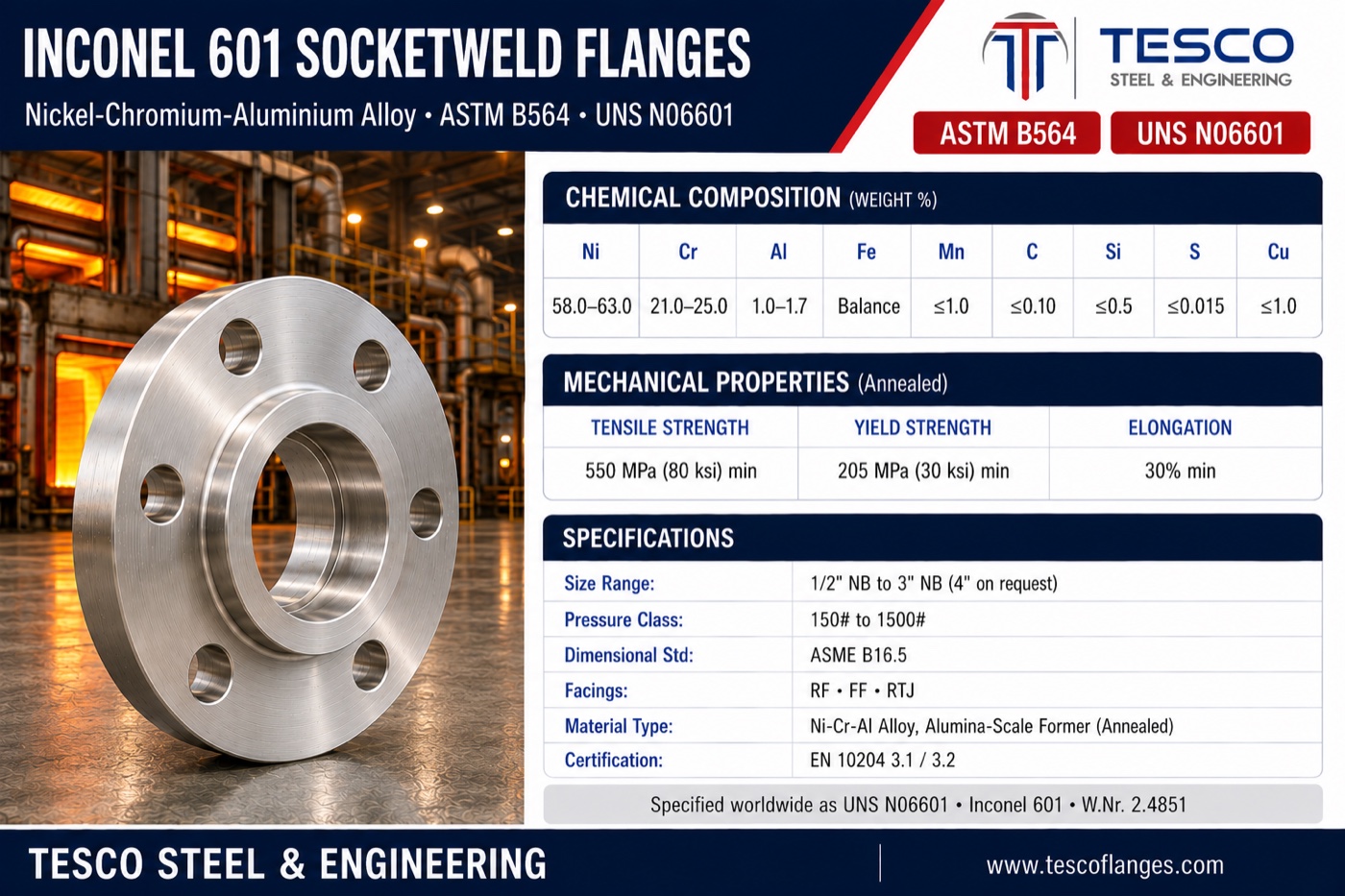
Tesco Steel & Engineering manufactures Inconel 601 socketweld flanges — the top of the furnace: ASTM B564, UNS N06601, W.Nr. 2.4851 — to ASME B16.5 from ½″ to 3″ NB in Classes 150–1500. 601 is Alloy 600 rebuilt for the summit: chromium raised to 21–25% and a deliberate 1.0–1.7% aluminium grow an alumina-strengthened scale that clings through thermal cycling — where plain chromia flakes and re-grows itself away — carrying oxidation service toward 1200 °C: radiant tubes, muffle ends, burner zones, the hottest cycled duty in this entire series. The honest splits are below: the halogen, caustic and aqueous side stays with 600; steady clean heat often belongs to cheaper F310; hot reducing sulphur is excluded as everywhere in the nickel family. Welded with ERNiCrFe-11 or 617-type filler — no preheat, no PWHT. Facings: SWRF, SWFF, SWRTJ. Every lot with EN 10204 3.1/3.2 MTC. ISO 9001:2015, made in Mumbai, India — exported to 50+ countries.
Inconel 601 · B564 · N06601 · 2.4851Ni 58–63% · Cr 21–25% · Al 1.0–1.7%The Alumina Scale That ClingsToward 1200 °C — The Series' SummitCyclic Oxidation Is the Franchise550 / 205 MPa · 30% ElongationASME B16.5 ½″–3″ · Class 150–1500EN 10204 3.1 / 3.2 · ISO 9001:2015
Inconel 601 Socketweld Flanges — Specifications at a Glance
What is an Inconel 601 Socketweld Flange?
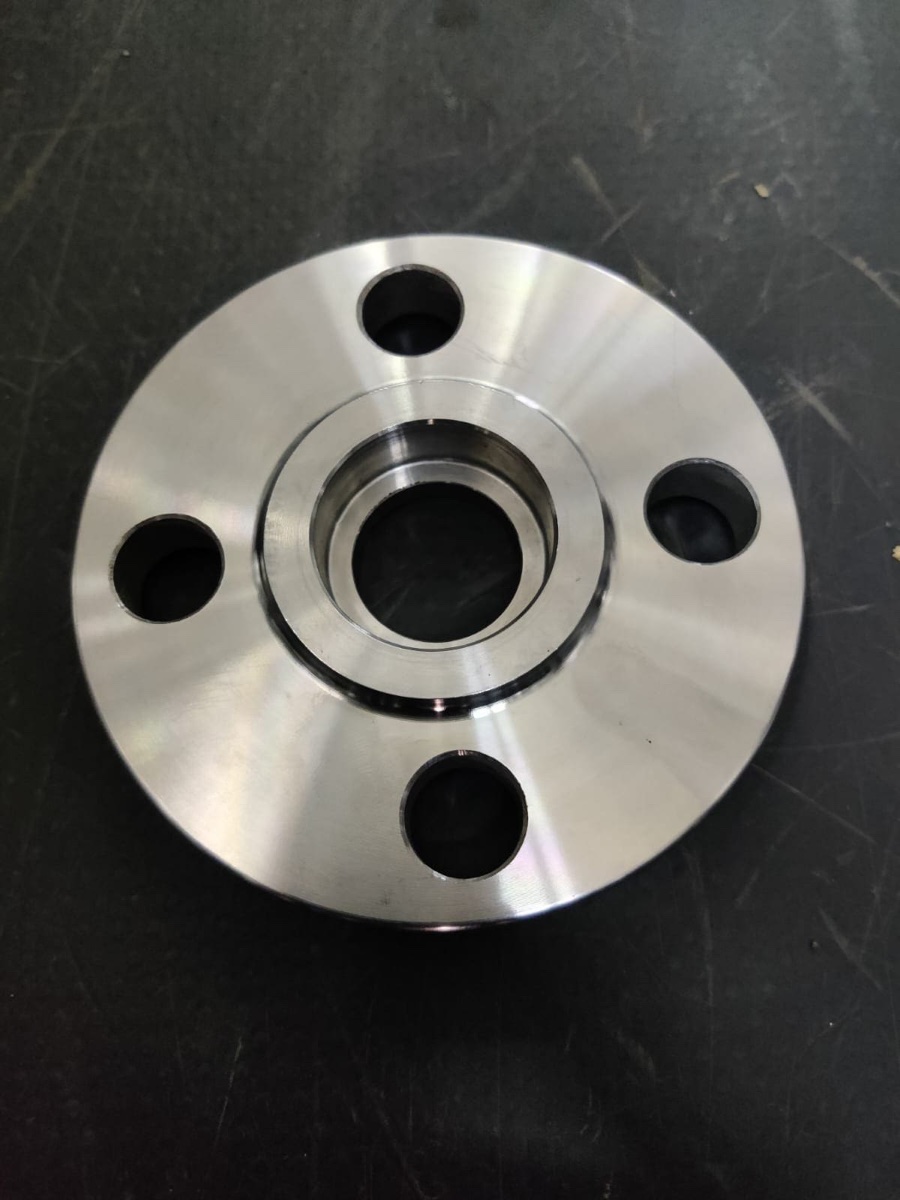
The summit alloy in the small-bore pattern. A forged Inconel 601 flange (ASTM B564 / UNS N06601 / W.Nr. 2.4851) with a machined socket: pipe seated square by geometry, one external fillet weld — no preheat, no PWHT — through-bore matched to the pipe schedule. Cr 21–25% + Al 1.0–1.7% grow an alumina-strengthened scale that clings through thermal cycling, carrying oxidation service toward 1200 °C — radiant tubes, muffle ends, burner zones. Carburising atmospheres barely touch the nickel matrix. Tensile ≥550 MPa, yield ≥205 MPa, elongation ≥30%, annealed. Sized by ASME B16.5 at ½″–3″ NB, Classes 150–1500; EN 10204 3.1 on every lot.
The rule of the last rungs: steady clean heat — 310 on price; broad hot service and halogens — 600; cycled, carburising or hottest duty — 601.
What the Aluminium Buys
The Scale That Clings
Alumina forms beneath and within the chromia, anchoring a tighter, slower-growing layer that flexes with the thermal cycle instead of flaking off — the failure mode of the summit, solved at the scale itself.
The Series' Highest Ceiling
Continuous oxidation service toward 1200 °C — the last hundred degrees beyond 310 and 600, where radiant tubes and muffle ends live.
Carburising Atmospheres, Shrugged At
A nickel matrix dissolves almost no carbon — case-hardening and endothermic furnace atmospheres that embrittle iron-base alloys barely touch it.
Honesty About the Split
The aluminium buys nothing against halogens or wet chemistry — dry chlorine stays with 600, brines with 625. 601 is a fire alloy, and says so.
Inconel 601 Chemical Composition (UNS N06601)
Element
Ni
Cr
Al
Fe
Mn
C
Si
S
Cu
Weight %
58.0–63.0
21.0–25.0
1.0–1.7
Balance
≤1.0
≤0.10
≤0.5
≤0.015
≤1.0
Read the trades against 600: nickel becomes a range, not a ≥72% floor — spent on more chromium and iron; chromium jumps to 21–25%; and the aluminium is the signature, dosed for the alumina sub-scale. No molybdenum, no niobium — a hot-oxidation alloy, not a wet-corrosion one. PMI confirms the chemistry on every piece.
Mechanical Properties (Annealed)
Property
ASTM B564 N06601 Requirement
Tensile Strength
≥ 550 MPa (80 ksi)
Yield Strength (0.2%)
≥ 205 MPa (30 ksi) — slightly below 600's, the price of the leaner nickel and the ductility cycling wants
Elongation
≥ 30% — no ductile-brittle transition
Condition
Annealed — furnace records certified
Temperature Span
Cryogenic to ~1200 °C oxidation service — the series' summit; hot reducing sulphur excluded per the nickel rule
Rating
B16.5 nickel-alloy tables govern the joint — gasket-limited long before metal-limited; stated per class on our quotations
One Socket, Three Facings — and the Summit-Gasket Note
At 601's temperatures the sealing system is the joint's real design problem — and B7 studs creep long before the flange notices. State the actual joint temperature; guidance rides with the quotation.
Inconel 601 Socketweld Flange Specifications
Inconel 601 Socketweld Flanges are available in the following specifications:
Material Grade
Inconel 601, ASTM B564 (UNS N06601), W.Nr. 2.4851 — certificates carry the designations your documentation uses
Heat Treatment
Annealed with furnace records certified
Size
1/2"NB to 3"NB per ASME B16.5; 4″ and larger to order; EN 1092-1 patterns to order
Class
150#, 300#, 600#, 900#, 1500# (900# shares 1500# dimensions in most sizes) — furnace-zone volume lives in 150/300
Facings
Raised Face (SWRF), Flat Face (SWFF), Ring Type Joint (SWRTJ) with groove per B16.20
Bore
Socket bore to pipe OD; through-bore matched to pipe schedule
Welding
Single external fillet with 1/16″ expansion gap; ERNiCrFe-11 matching filler (617-type at extreme temperature; ERNiCr-3 for moderate); sulphur-clean practice; no preheat, no PWHT
Service Span
Cycled oxidising duty toward 1200 °C, carburising atmospheres; halogens stay with 600, wet chemistry with 625, reducing sulphur excluded — see the notes
Tension & chemistry per heat; PMI on every piece — Ni-Cr-Al confirmed; socket depth and bore gauged
Certification
EN 10204 3.1 with anneal records (standard) / 3.2 witnessed
Specification Notes — Getting Alloy 601 Sockets Right
Four honest notes.Steady clean heat may not need it: a gently-run, rarely-cycled hot zone is F310's territory at a fraction of the price — 601's case is cycling, carburising and the last hundred degrees. The halogen franchise stays with 600: aluminium buys nothing against hot chlorides — 600 remains the chlorination reference. Hot reducing sulphur is excluded: the nickel rule at full force; oxidising sulphur-bearing combustion gas is tolerated far better — name the atmosphere. And long 550–750 °C dwell can age it: some ambient ductility loss on long-served components — a handling-and-shutdown note, not a service limit.
How Our Inconel 601 Socketweld Flanges Are Manufactured
1
Forging — cut billet of the spectro-verified N06601 heat is hot-forged into the flange blank with full heat traceability and segregated nickel-alloy handling.
2
Annealing — sets the tough solid-solution structure; furnace charts retained against the heat number.
3
Machining — faces, OD and drilling to ASME B16.5 on dedicated stations with sulphur-free lubricants; socket counterbore and depth gauged piece by piece, through-bore matched to the ordered schedule.
4
Facing — RF serrations, flat face or RTJ groove per B16.20.
5
Testing & marking — tension and chemistry per heat; PMI on every piece; laser-marked with grade, size, class, schedule and heat number.
6
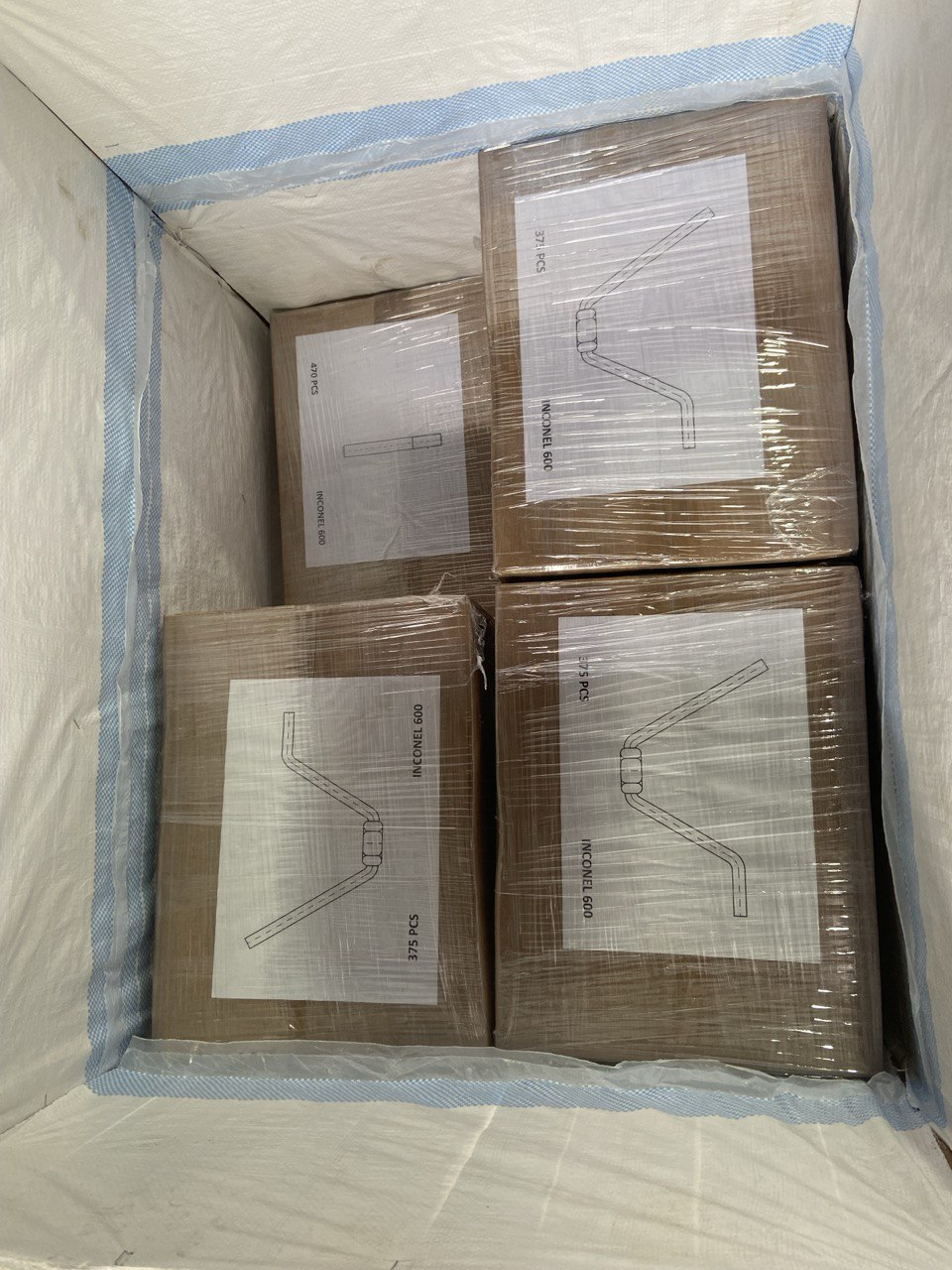
Certification & packing — EN 10204 3.1 MTC with anneal records (3.2 witnessed on request); WPS guidance included; packed sea-worthy with no carbon-steel contact.
Where Inconel 601 Socketweld Flanges Are Used
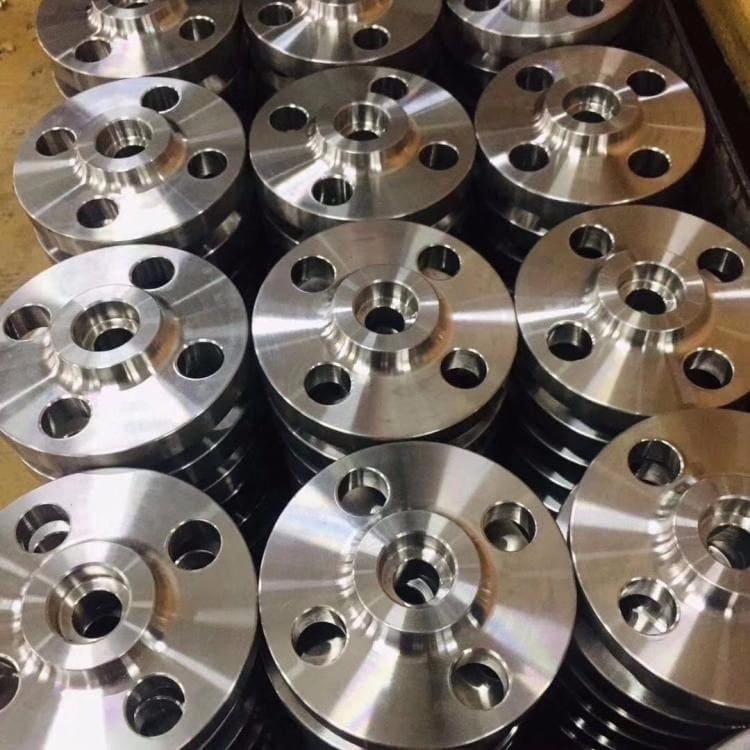
At the summit of the plant's temperature map: radiant-tube and muffle-end connections, burner and combustion-zone trim, heat-treatment furnaces running carburising and endothermic atmospheres, thermal-reactor and incinerator internals-adjacent small bore, thermocouple and purge connections in the hottest cycled zones, and petrochemical fired-heater hardware beyond 600's comfort. Production below:
Socket weld flange dimensions are class-governed per ASME B16.5 — identical across material grades (pressure-temperature ratings follow the nickel-alloy group). Full charts:
How to Specify & Order an Inconel 601 Socketweld Flange
Six elements — the zone and the atmosphere decide the grade:
1
Size & standard — e.g. 1″ NB ASME B16.5, or DN25 EN 1092-1 to order.
2
Pressure class & facing — 150#–1500#; SWRF (the default), SWFF or SWRTJ — with the actual joint temperature, so sealing and bolting guidance ride with the quote.
3
Pipe schedule — the through-bore is matched to the pipe ID.
4
Grade line, zone & atmosphere — Inconel 601 / B564 / N06601 / 2.4851; steady or cycled, oxidising or carburising, sulphur or clean — it decides between 601, 600 and F310 more often than price does.
5
Certification — EN 10204 3.1 with anneal records (our standard) / 3.2 witnessed, PMI as applicable.
An Inconel 601 socketweld flange is a forged nickel-chromium-aluminium alloy flange — 58-63% nickel with 21-25% chromium, a deliberate 1.0-1.7% aluminium and iron as the balance, ASTM B564, UNS N06601, W.Nr. 2.4851 — whose back carries a machined socket: the pipe end seats inside, self-aligned square to the face, and is secured with a single external fillet weld. 601 is Alloy 600 rebuilt for the top of the furnace: the raised chromium and the aluminium together grow an alumina-strengthened oxide scale that clings through thermal cycling, carrying oxidation service toward 1200°C — the hottest zones in this entire socketweld series. Dimensioned to ASME B16.5 for ½" to 3" NB in Classes 150 to 1500 — the radiant-tube and muffle-end alloy, in the small-bore pattern.
What does the aluminium in 601 actually do?
It makes the scale stick. Every high-temperature alloy lives or dies by its oxide scale, and the failure mode at the top of the furnace is not slow oxidation but cycling: each heat-up and cool-down flexes the scale, plain chromia cracks and spalls, and the metal spends its chromium re-growing what it just shed — 600's honest limitation in cycled zones. 601's 1.0-1.7% aluminium changes the scale itself: alumina forms beneath and within the chromia, anchoring a tighter, more adherent, slower-growing layer that flexes with the cycle instead of flaking off. The result is dramatic life extension in cyclic oxidation and a continuous-service ceiling raised toward 1200°C. One element, one job — and the reason 601 exists as a separate grade rather than a hotter 600.
What is the chemical composition of Inconel 601 (UNS N06601)?
Nickel 58.0-63.0%, chromium 21.0-25.0%, aluminium 1.0-1.7%, iron the balance (roughly 14%), manganese ≤1.0%, carbon ≤0.10%, silicon ≤0.5%, sulphur ≤0.015%, copper ≤1.0%. Read the trades against Alloy 600: nickel becomes a range rather than a ≥72% floor — 601 spends some nickel to afford more chromium and iron; chromium jumps from 14-17 to 21-25%, deepening the scale-forming reserve; and the aluminium is the grade's signature, dosed for the alumina sub-scale rather than for hardening. No molybdenum, no niobium — this remains a hot-oxidation alloy, not a wet-corrosion one. Chemistry is verified per heat and travels on the EN 10204 3.1 MTC.
What are the mechanical properties of Inconel 601 socketweld flanges?
In the annealed condition ASTM B564 requires tensile strength 550 MPa (80 ksi) minimum, yield strength 205 MPa (30 ksi) minimum and elongation 30% minimum — note the yield sits slightly below Alloy 600's 240, the small price of the leaner nickel and the ductility the cycling duty wants. As across the hot-service family, the room-temperature certificate is not the story: 601 retains useful strength and, more importantly, its working surface at temperatures where every stainless in this series has retired. B16.5's nickel-alloy pressure-temperature tables govern the flange's rating, and hot joints are gasket-limited long before they are metal-limited — the two-ceilings honesty that every hot page in this series carries.
How hot can Inconel 601 actually go?
The metal: continuous oxidation service toward 1200°C in air, with its cyclic-service advantage over every alloy below it on this site — the clinging alumina-strengthened scale is precisely a cycling technology. That makes 601 the series' summit for oxidising heat: radiant tubes, muffle and retort ends, burner and combustion components, thermal-reactor internals. The joint: the same honest split as every hot page here — ASME B16.5's tables and the gasket govern a bolted connection far below the metal's ceiling, so a 601 socket weld flange is the connection on hot-zone-adjacent small bore where the pipe demands 601 and the joint itself sits within the flange envelope: purge, instrument, pilot and burner-trim connections around the hottest equipment. State both temperatures on the enquiry; they are usually very different numbers.
Inconel 601 or 600 — how do the siblings split the plant?
By zone and by chemistry, exactly as the 600 page says from the other side. 601 takes the hottest, most cycled oxidising zones — above roughly 1000°C, or anywhere thermal cycling spalls plain chromia — and its raised chromium also gives it the edge in oxidising sulphur-bearing combustion gas, where 600's lower chromium runs out sooner. 600 keeps everything else: the broad furnace mid-range, the hot halogen franchise (dry chlorine and HCl remain 600's, not 601's — the aluminium buys nothing there), hot caustic and the aqueous-adjacent duties, all at a friendlier price. The two commonly serve in one plant, split by zone temperature, and our quotation asks the zone before it names the grade.
Inconel 601 or the heat-grade stainlesses — 310 and friends?
The honest cost conversation every furnace enquiry deserves. Stainless 310 — 25% chromium on an iron base — serves to roughly 1100°C in steady dry air at a fraction of 601's price, and where the duty is a gently-run, rarely-cycled hot zone, it is the economical right answer; our F310 socketweld page says so plainly. 601 earns its nickel three ways: cycling, where 310's scale spalls and sigma-phase embrittlement stalks its long dwell times while 601 shrugs at both; carburising and nitriding atmospheres, which penetrate iron-base alloys and barely touch a nickel matrix; and the last hundred degrees, where 310's ceiling ends and 601 continues. The practical rule: steady clean heat — 310; cycled, carburising or hottest duty — 601. Both pages link each other for exactly this decision.
What about carburising atmospheres and green rot?
Two furnace-atmosphere hazards, one alloy answer. Carburisation: case-hardening and endothermic atmospheres inject carbon into iron-base alloys, embrittling them from the surface in — but a nickel matrix dissolves almost no carbon, so 601 (like its family) serves carburising furnaces that destroy heat-grade stainless. Green rot is the nastier cousin: in atmospheres that alternate between carburising and oxidising, Ni-Cr alloys can suffer internal chromium-carbide formation followed by oxidation of those carbides — a green-fractured intergranular attack that classically strikes plain Ni-Cr heating elements. 601's defences are real but not absolute: the alumina-bearing scale slows ingress and the raised chromium buys margin. For severely alternating atmospheres, say so on the enquiry — atmosphere honesty decides more furnace metallurgy than temperature does.
What are Inconel 601's honest weaknesses?
Four, each with a named alternative. Hot reducing sulphur: the nickel rule stands — sulphidizing gas above roughly 300-350°C attacks the high-nickel matrix; oxidising sulphur-bearing combustion gas is tolerated far better, but the reducing case belongs to lower-nickel heat grades. Wet aggressive chemistry: no molybdenum means modest pitting credentials — brines, acids and marine duty belong to 625 and the wet-corrosion families; 601 is a fire alloy. The halogen franchise stays with 600: aluminium buys nothing against hot chlorides, and 600 remains the chlorination reference. And ageing embrittlement: after very long service in the 550-750°C band, 601 can lose some ambient ductility — relevant to handling and shutdown work on long-served components, managed by awareness rather than avoidance. None of these touch the summit duty it was built for.
How is an Inconel 601 socketweld flange welded?
With nickel-family practice and a filler chosen by service temperature. Geometry is standard: pipe bottomed in the socket, withdrawn 1/16" (1.6 mm) to leave the expansion gap, single external fillet weld. No preheat, no PWHT. The consumable: matching ERNiCrFe-11 (601 filler) keeps the deposit's aluminium and chromium doing the scale work for the hottest service; 617-type filler serves where specs prefer it at extreme temperature; and ERNiCr-3 is acceptable for moderate-temperature fabrication. The aluminium asks slightly more care than 600 — clean, well-shielded arcs keep it out of trouble. Nickel-family housekeeping is non-negotiable: sulphur, lead and zinc embrittle hot nickel, doubly so on weldments headed for 1000°C service. Our flanges arrive annealed with records, and WPS guidance travels with every supply.
What facings and gaskets suit the hottest flanged joints?
All three facings, each with its own page — SWRF the default, SWFF for cast and lined mates, SWRTJ for high-pressure classes — and at 601's service temperatures the sealing system is the joint's real design problem: flexible graphite retires around 450-500°C, mica-graphite and vermiculite systems carry hotter joints, and the hottest connections move to metallic seals or welded-and-flanged hybrid details, with bolting alloy upgraded to match — B7 studs creep long before a 601 flange notices. This is the same two-ceilings honesty as the metal's own: state the actual joint temperature, not the furnace temperature, and the sealing recommendation rides with the quotation. NPT-tapped variants are machined and certified at the works.
What sizes and pressure classes do Inconel 601 socketweld flanges come in?
ASME B16.5 standardises socket weld flanges from ½" to 3" NB in Classes 150, 300, 600, 900 and 1500 — Class 900 sharing Class 1500 dimensions in most small-bore sizes — with 4" and Class 2500 made to order. Furnace-zone small bore lives almost entirely in Classes 150 and 300: purge, pilot, instrument and burner-trim connections run at modest pressures where the temperature and the atmosphere, not the rating, drive the specification. Put the pipe schedule on the enquiry — the through-bore is matched to the pipe ID — and state the design temperature, which sets the governing B16.5 rating; our quotations state it per class.
What details are needed to get an accurate Inconel 601 socketweld flange quotation?
Six elements plus commercial terms: (1) size — ½" to 3" NB; (2) pressure class — 150 to 1500, with the design and joint temperatures, which govern the rating and the sealing guidance; (3) facing — SWRF, SWFF or SWRTJ with ring number; (4) the pipe schedule, so the through-bore matches the pipe ID; (5) the grade line — Inconel 601, ASTM B564, UNS N06601 or W.Nr. 2.4851 all name the same metal; the zone and atmosphere (steady or cycled, oxidising or carburising, sulphur or clean) invited — they decide between 601, 600 and F310 more often than price does; (6) certification — EN 10204 3.1 with anneal records (our standard) or 3.2 witnessed, PMI as applicable. Add quantity and destination; quotations normally within 24 hours.
Who manufactures Inconel 601 socketweld flanges in India?
Tesco Steel & Engineering is an ISO 9001:2015 certified flange manufacturer based in Mumbai, India, producing Inconel 601 (ASTM B564, UNS N06601) socket weld flanges from ½" to 3" NB (larger to order) in Classes 150-1500 — each forged from certified heats, annealed with furnace records against the heat number, machined on dedicated nickel-alloy stations with sulphur-free lubricants, gauged socket depth and schedule-matched bore, PMI-checked — the nickel-chromium-aluminium chemistry confirmed on every piece — and laser-marked with grade, size, class, schedule and heat number. Supplied with EN 10204 3.1/3.2 certification and WPS guidance, alongside the Inconel 600 and 625 siblings, our Inconel refractory anchor lines, and the full nickel-alloy socketweld range this series covers. Exported to more than 50 countries.