

Tesco Steel & Engineering manufactures Inconel 601 flanges (UNS N06601 / W.Nr. 2.4851) — the aluminium-bearing nickel-chromium-iron alloy with ~60.5% Ni, ~23% Cr, ~14% Fe and ~1.4% aluminium. The high chromium plus the aluminium addition form a tightly adherent oxide that gives outstanding resistance to high-temperature and cyclic oxidation up to ~1250°C, with good high-temperature strength and carburization resistance — the benchmark for furnace, radiant-tube and heat-treatment hardware. Available in weld neck, slip-on, blind, socket-weld, threaded, lap-joint, spectacle and orifice types to ASTM B564 / ASME B16.5. Class 150 to 2500, NPS 1/2″ to 24″, PN6 to PN400. ISO 9001:2015 certified. Made in India.

Inconel 601 (UNS N06601) Flanges
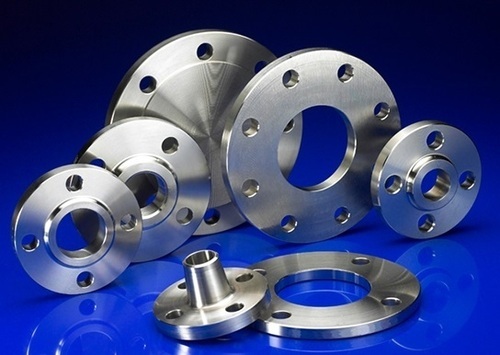
Inconel 601 Weld Neck & Blind Flanges
Tesco Steel & Engineering manufactures Inconel 601 flanges in all types from weld neck to orifice, Class 150 to 2500 — supplied with EN 10204 3.1 / 3.2 certification, PMI and third-party inspection on request. Explore the wider Inconel flange range, the general-purpose Inconel 600 flanges and the high-strength Inconel 625 flanges, and the flange dimension charts.
| Inconel 601 flanges are available in the following specifications: | |
|---|---|
| Material Grade | Inconel 601 / UNS N06601 / W.Nr. 2.4851 (NiCr23Fe) |
| Alloy Type | Nickel-chromium-iron-aluminium alloy (Ni-Cr-Fe-Al), non-age-hardenable |
| Size | 1/2″ NB to 24″ NB (DN 15 to DN 600); larger to ASME B16.47 |
| Class / Rating | 150#, 300#, 600#, 900#, 1500#, 2500# · 3000#, 6000#, 9000# (socket-weld / threaded) |
| Pressure Ratings | PN 6 – PN 400 (PN6, 10, 16, 25, 40, 64, 100, 160, 250, 320, 400) |
| Material Standards | ASTM B564, ASME SB564, AMS 5870; EN designation 2.4851 |
| Dimensional Standards | ASME B16.5, ASME B16.47 (Series A & B), MSS SP-44, DIN EN 1092-1 |
| Flange Types | Weld Neck (WNRF), Slip-On (SORF), Blind, Socket Weld (SWRF), Lap Joint, Threaded / Screwed, Spectacle Blind, Long Weld Neck, Orifice, Plate |
| Flange Faces | Raised Face (RF), Flat Face (FF), Ring Type Joint (RTJ), Tongue & Groove (T&G) |
| Weld Filler | ERNiCrFe-11 / ENiCrFe-3 (Inconel Filler Metal 601) |
| Testing | PMI, hydrostatic, UT, MT/PT per spec; EN 10204 3.1 / 3.2 |
Inconel 601 pairs a high chromium content with a deliberate aluminium addition on a nickel-iron base. The chromium and aluminium together form the tenacious, spall-resistant oxide that defines the alloy's high-temperature and cyclic-oxidation resistance.
| Element | Inconel 601 (UNS N06601) |
|---|---|
| Nickel (Ni) | 58.0 – 63.0% (~60.5%) |
| Chromium (Cr) | 21.0 – 25.0% (~23%) |
| Iron (Fe) | Balance (~14%) |
| Aluminium (Al) | 1.0 – 1.7% (oxidation/cyclic resistance) |
| Carbon (C) | 0.10% max |
| Manganese (Mn) | 1.0% max |
| Copper (Cu) | 1.0% max |
| Silicon (Si) | 0.5% max |
| Mechanical Property (annealed, typical) | Inconel 601 |
|---|---|
| Tensile Strength | 550 – 760 MPa (80–110 ksi) |
| Yield Strength 0.2% | 205 – 345 MPa (30–50 ksi) |
| Elongation | 30 – 50% |
| Max Oxidation-Resistant Temp | ~1250 °C (2280 °F) |
| Density | 8.11 g/cm³ |
| Melting Range | 1300 – 1370 °C |
| Standard | Inconel 601 Designation |
|---|---|
| UNS (USA) | N06601 |
| Werkstoff (Germany) | 2.4851 |
| EN designation | NiCr23Fe |
| ASTM / ASME | B564 / SB564 (forgings); B166, B167, B168 (other forms) |
| AMS | 5715 / 5870 |
| Common names | Inconel 601, Alloy 601, Nickel Alloy 601 |
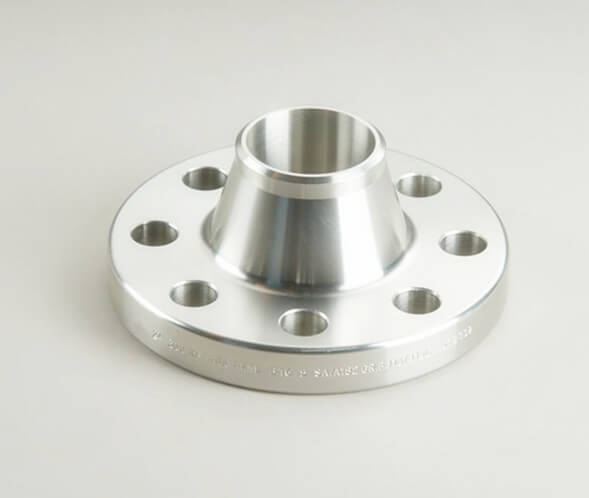
Inconel 601 Weld Neck Flange (WNRF)

Inconel 601 Slip-On Flange (SORF)
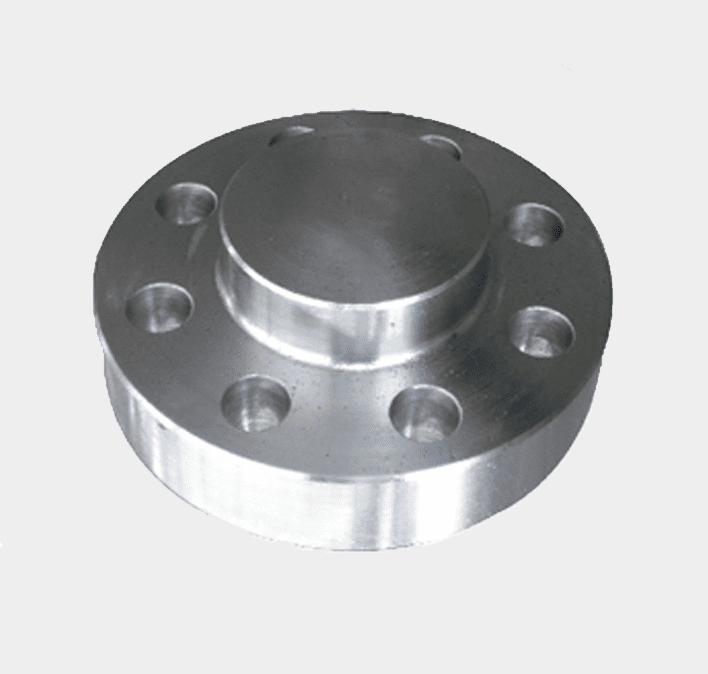
Inconel 601 Blind Flange
| Flange Type | Description & Inconel-601-Specific Use |
|---|---|
| Weld Neck (WNRF) | Tapered hub butt-welded to pipe for high-integrity, high-temperature furnace and radiant-tube service; weld with ERNiCrFe-11 filler. |
| Slip-On (SORF) | Fillet-welded over the pipe; common in furnace and hot-gas piping at moderate pressure. |
| Blind | Seals pipe ends and vessel nozzles in furnace, muffle and high-temperature systems. |
| Socket Weld (SWRF) | Small-bore (1/2″–2″) instrument and branch connections in high-temperature service. |
| Lap Joint (LJRF) | Used with an Inconel 601 stub end where frequent dismantling is required; economizes on alloy in the backing ring. |
| Threaded (TRFF) | Internal NPT/BSP threads for non-welded connections at lower pressure. |
| Spectacle Blind / Long Weld Neck | Isolation spades and nozzle/long-neck flanges in Inconel 601 for furnace and high-temperature duty. |
| Property | 601 (N06601) | 600 (N06600) | 625 (N06625) |
|---|---|---|---|
| Type | Ni-Cr-Fe + Al | Ni-Cr-Fe | Ni-Cr-Mo-Nb |
| Chromium | ~23% | ~15.5% | ~21.5% |
| Aluminium | ~1.4% | — | — |
| Max temperature | ~1250°C | ~1095°C | ~980°C |
| Cyclic oxidation resistance | Excellent | Good | Good |
| Aqueous corrosion | Good | Good (chloride SCC) | Excellent |
| Typical role | Furnace / cyclic-oxidation HT service | General nickel alloy, chloride/HT | Seawater, acids, high strength |
Chromium plus aluminium form a tenacious oxide that resists oxidation up to ~1250°C — among the best of the nickel alloys.
The adherent, spall-resistant scale withstands repeated heating and cooling — ideal for furnace components.
Good resistance to carburizing and nitriding atmospheres in heat-treatment and process furnaces.
Non-age-hardenable and readily welded with ERNiCrFe-11 filler — no PWHT needed for strength.
| Industry | Typical Application |
|---|---|
| Heat Treatment & Furnaces | Muffles, retorts, radiant tubes, baskets and furnace flanged connections |
| Thermal Processing | Thermal reactors, recuperators and high-temperature ducting flanges |
| Petrochemical | High-temperature reformer, cracking and process hardware flanges |
| Power Generation | High-temperature ducting, burner and combustion flanges |
| Thermal Oxidizers / Incineration | Flue, stack and oxidizer flanged connections in oxidizing atmospheres |
| Chemical Processing | High-temperature oxidizing process flanges |
Made from certified Alloy 601 with PMI verification of Cr, Fe and Al — full chemistry confirmed on the MTC.
Manufactured to ASTM B564 / ASME B16.5 in the annealed condition for optimum high-temperature properties.
WNRF, SORF, blind, socket-weld, threaded, lap-joint, spectacle, LWN, orifice and plate — in RF, FF, RTJ and T&G.
EN 10204 3.1 / 3.2 MTC, heat/lot traceability, hydrostatic and third-party inspection on request.
Inconel 601 flange prices reflect the high nickel and chromium content plus the aluminium addition, forging and machining — it is a premium high-temperature alloy for furnace and oxidizing service. Tesco Steel & Engineering offers competitive ex-works pricing from Mumbai with full export documentation and material traceability. Click Ask for Quote or message us on WhatsApp at +91 92233 66922 with flange type, size (NB), pressure class, quantity and documentation requirements.
Q1. What is an Inconel 601 flange?
An Inconel 601 flange is a pipe flange made from the aluminium-bearing nickel-chromium-iron alloy UNS N06601 (W.Nr. 2.4851) — about 60.5% nickel, 23% chromium, 14% iron and 1.4% aluminium. The high chromium plus the deliberate aluminium addition form a tightly adherent oxide that gives outstanding resistance to high-temperature and cyclic oxidation up to about 1250 degrees C. Flanges are forged to ASTM B564 and machined to ASME B16.5 / B16.47 dimensions.
Q2. What is the chemical composition of Inconel 601?
Inconel 601 (UNS N06601) nominal composition: nickel 58–63% (~60.5%), chromium 21–25% (~23%), iron balance (~14%), aluminium 1.0–1.7% (~1.4%), with carbon 0.10% max, manganese 1% max, copper 1% max and silicon 0.5% max. The high chromium and the aluminium addition are what give the alloy its exceptional oxidation resistance.
Q3. Why does Inconel 601 contain aluminium?
The ~1.4% aluminium in Inconel 601 forms a tightly adherent aluminium-oxide-rich scale on top of the chromium oxide. This scale resists spalling under thermal cycling, which is why Inconel 601 has outstanding resistance to cyclic oxidation and can be used up to about 1250 degrees C — significantly higher than Inconel 600. The aluminium also improves carburization resistance.
Q4. What temperature can Inconel 601 flanges handle?
Inconel 601 offers outstanding oxidation resistance up to about 1250 degrees C (2280 degrees F) and retains useful high-temperature strength and creep resistance. Its resistance to cyclic (intermittent) oxidation is a particular strength, making it ideal for furnace components that are repeatedly heated and cooled.
Q5. What is the difference between Inconel 601 and 600?
Both are nickel-chromium-iron alloys. Inconel 600 (~15.5% Cr, no Al) is the general-purpose grade with excellent chloride-SCC and aqueous corrosion resistance plus high-temperature capability to ~1095 degrees C. Inconel 601 has higher chromium (~23%) and an aluminium addition, giving superior resistance to high-temperature and cyclic oxidation up to ~1250 degrees C. Choose 601 for the hottest oxidizing/furnace service and 600 for chloride and aqueous-plus-temperature applications.
Q6. What standards apply to Inconel 601 flanges?
Inconel 601 flanges are forged to ASTM B564 (UNS N06601) and machined to ASME B16.5 (1/2 inch to 24 inch) or ASME B16.47 / MSS SP-44 for larger sizes, with EN 1092-1 for PN-rated flanges. The European designation is W.Nr. 2.4851 / NiCr23Fe. Material is supplied with EN 10204 3.1 / 3.2 certification.
Q7. Can Inconel 601 flanges be welded?
Yes. Inconel 601 has good weldability by GTAW (TIG), GMAW and SMAW using matching filler such as ERNiCrFe-11 / ENiCrFe-3 (or Inconel Filler Metal 601). It is non-age-hardenable, so no post-weld heat treatment is generally required for strength; clean joints and controlled heat input give sound, oxidation-resistant welds.
Q8. Does Inconel 601 resist carburization?
Yes. In addition to oxidation resistance, Inconel 601 offers good resistance to carburizing and nitriding atmospheres and to oxidation under reducing/oxidizing cycling. This combination makes it a standard material for heat-treatment furnace hardware, radiant tubes, muffles and baskets that face aggressive high-temperature atmospheres.
Q9. What are the mechanical properties of Inconel 601?
Typical Inconel 601 properties in the annealed condition: tensile strength about 550–760 MPa (80–110 ksi), yield strength about 205–345 MPa (30–50 ksi), elongation about 30–50%, density 8.11 g/cm³. Its real value is the strength, creep resistance and oxidation resistance it retains at very high temperature.
Q10. Are Inconel 601 flanges supplied with material test certificates?
Yes. Every Inconel 601 flange is supplied with EN 10204 3.1 (or 3.2) mill test certificates confirming chemistry, mechanical properties and heat/lot traceability, with PMI, hydrostatic testing and third-party inspection on request. Tesco Steel & Engineering is an ISO 9001:2015 certified manufacturer and exporter from Mumbai, India.