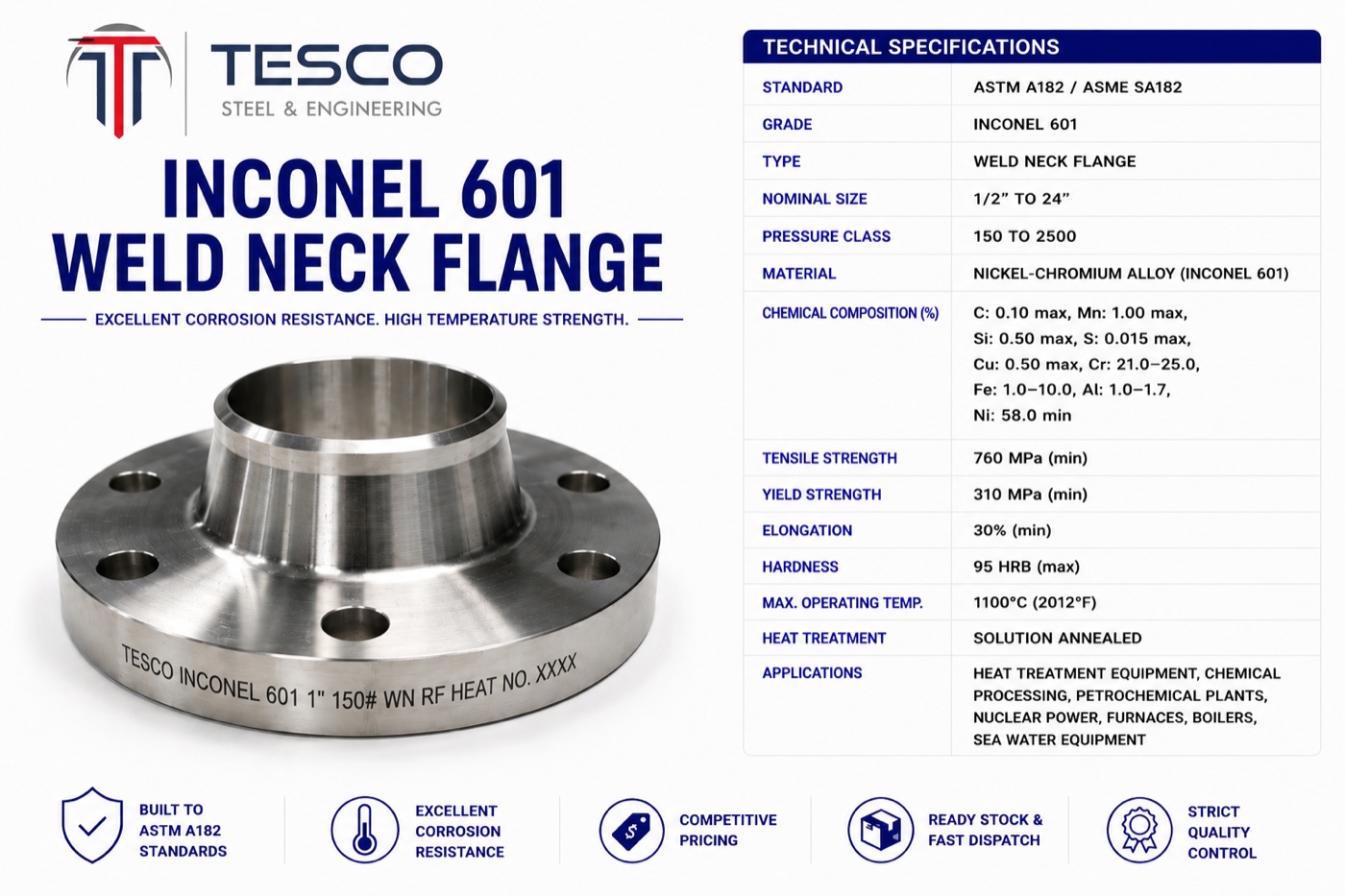
Tesco Steel & Engineering forges Inconel 601 weld neck flanges — UNS N06601, Werkstoff Nr. 2.4851, the nickel-chromium alloy with deliberate aluminium — to ASTM B564, from 1/2″ NB to 56″ NB in ASME B16.5 Class 150–2500 and European PN patterns. The 1.0–1.7% aluminium builds an alumina-reinforced scale that resists oxidation to ~1250 °C, clings through thermal cycling that spalls plain chromia alloys, and blocks carburization — the thermal-processing industry's alloy for radiant tubes, muffles, baskets and hot-gas connections, one step above Inconel 600. Mating B167 pipe, welded with ERNiCrFe-11 / ERNiCr-3. Supplied with PMI and EN 10204 3.1/3.2 on request. ISO 9001:2015, made in Mumbai, India — exported worldwide.
Inconel 601 · UNS N06601 · 2.4851Ni 58–63% · Cr 21–25% · Al 1.0–1.7%ASTM B564 / ASME SB-564Oxidation to ~1250 °CCarburization & Spalling Resistant1/2″ – 56″ NB · Class 150–2500ISO 9001:2015 · Exported Worldwide
Inconel 601 (UNS N06601 / 2.4851) is alloy 600 rebuilt for the furnace: chromium raised to 21–25% and a deliberate 1.0–1.7% aluminium whose alumina-reinforced scale resists oxidation to ~1250 °C, survives thermal cycling without spalling, and blocks carburization. An Inconel 601 weld neck flange pairs that scale with a long tapered hub butt-welded to the pipe, forged to ASTM B564 — so the joint matches the furnace hardware it serves.
The family splits by enemy: 600 is the heat-plus-chemistry generalist to 1093 °C, 601 owns dry heat, cycling and carburizing atmospheres above it, and 625 takes wet corrosion and strength. Decades of radiant tubes, muffles, retorts, baskets and incinerator loops built 601's pedigree — flanged connections on those systems specify the same alloy so the joint is never the weak point.
Also searched as: Alloy 601 flange, UNS N06601 flange, 2.4851 flange, NiCr23Fe flange, nickel chromium aluminium flange, furnace flange — all refer to the product on this page; see also our Inconel 601 flanges overview.
Chemical Composition of Inconel 601
C
Mn
Si
S
Cu
Fe
Ni
Cr
0.10 max
1.00 max
0.50 max
0.015 max
1.00 max
Bal
58.00-63.00
21.00-25.00
Values in weight %. N06601 additionally requires the grade's defining aluminium addition of 1.0–1.7% — the element that reinforces the oxide scale and gives 601 its furnace pedigree over plain Ni-Cr alloys.
Mechanical Properties of Inconel 601
Tensile Strength, MPa
Yield Strength, Min, MPa
Elongation % min.
550
205
30
Minimums per ASTM B564 in the annealed condition — demonstrated on every certificate. Useful strength and creep resistance persist deep into the furnace range, keeping 601 hardware straight where steels sag.
Equivalent Grades of Inconel 601
Standard
Werkstoff Nr.
UNS
JIS
BS
GOST
AFNOR
EN
Inconel 601
2.4851
N06601
NCF 601
NA 49
ХН60ВТ
NC23FeA
NiCr23Fe
System partners: ASTM B167 seamless pipe, B366 butt-weld fittings, B168 plate and B564 forgings. Family siblings: Inconel 600 and Inconel 625.
Inconel 601 Weld Neck Flange Specifications
Inconel 601 Weld Neck Flanges are available in the following specifications:
Size
1/2"NB to 56"NB
Class
150#, 300#, 400#, 600#, 900#, 1500#, 2500#
Sch (Schedule)
XS, XXS, STD & Schedule 20, 40, 80, 160
Pressure Ratings
PN 2.5 - PN 400
Standards
ASTM B564 / ASME SB-564; ASME B16.5, ASME B16.47, EN 1092-1, DIN 2631–2635, BS 4504
The alumina-reinforced scale outlasts plain chromia by roughly 150 °C — the top of the wrought Ni-Cr family.
Cycling Without Spalling
Heat-quench-repeat is furnace life; 601's scale clings where others flake, so section loss stays negligible for years.
Carburization Blocked
The tight oxide keeps carbon out of the metal in carburizing atmospheres — baskets, fixtures and radiant tubes stay ductile.
Strength at Red Heat
Useful creep resistance deep into the furnace range keeps hardware and flanged joints straight where steels sag.
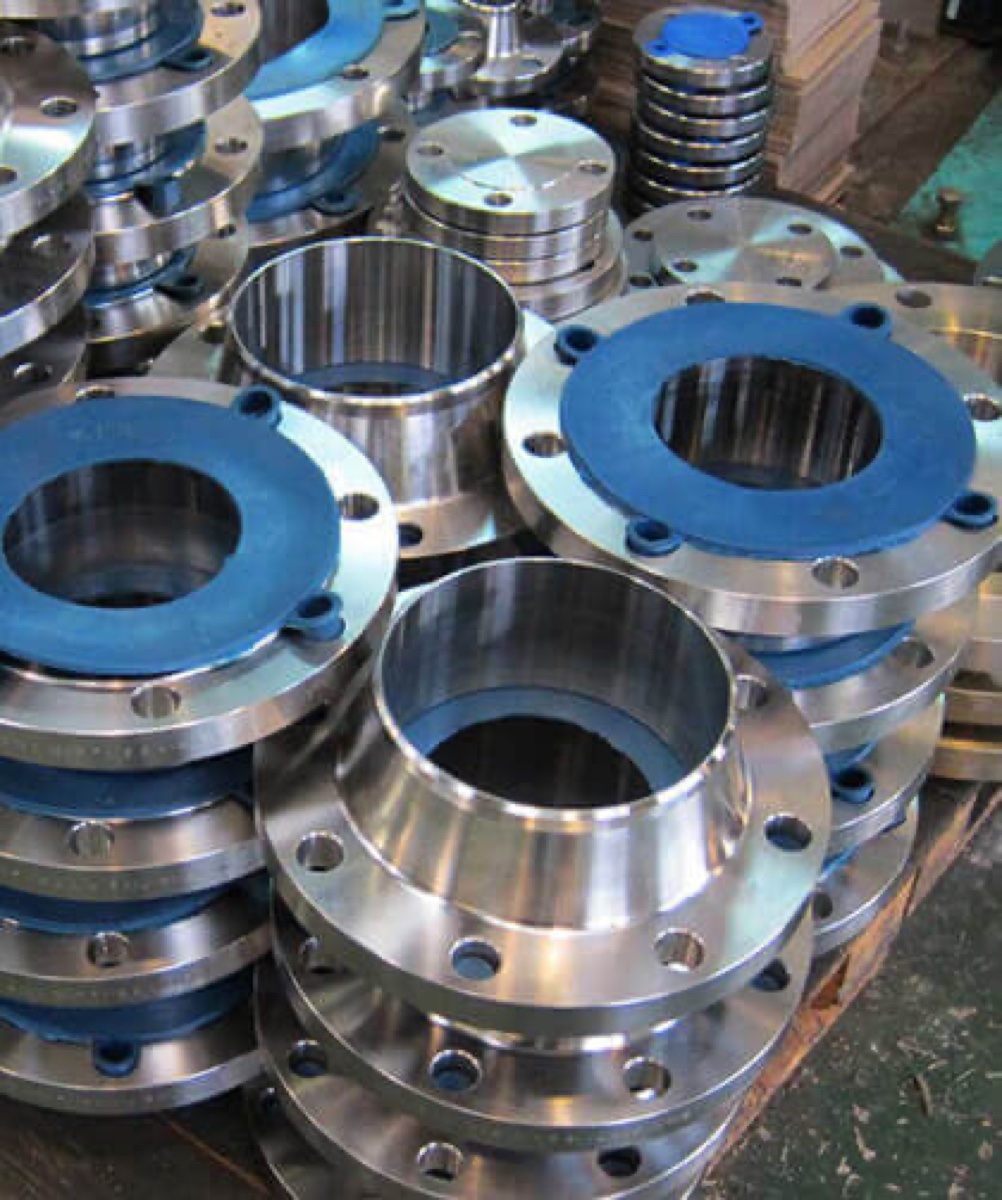
600, 601 & 625 From One Forge
The full Inconel flange family in production — whichever member the atmosphere picks, the bevels and certificates arrive matched.
Welding Inconel 601 — Match the Rating
Alloy 601 welds with matching ERNiCrFe-11 (601) filler where the full 1250 °C rating must carry through the joint, or ERNiCr-3 (82) where specifications allow — plus nickel-alloy discipline: sulphur-free cleanliness, low heat input, no preheat, no PWHT. The solid-solution alloy has no sensitization to manage in normal fabrication.
Family-selection note: for mixed heat-plus-chemistry duty to 1093 °C, Inconel 600 is the economical generalist; for wet, acidic or seawater service, 625 is the heavyweight. 601 earns its premium in the furnace.
Where Inconel 601 Weld Neck Flanges Are Used
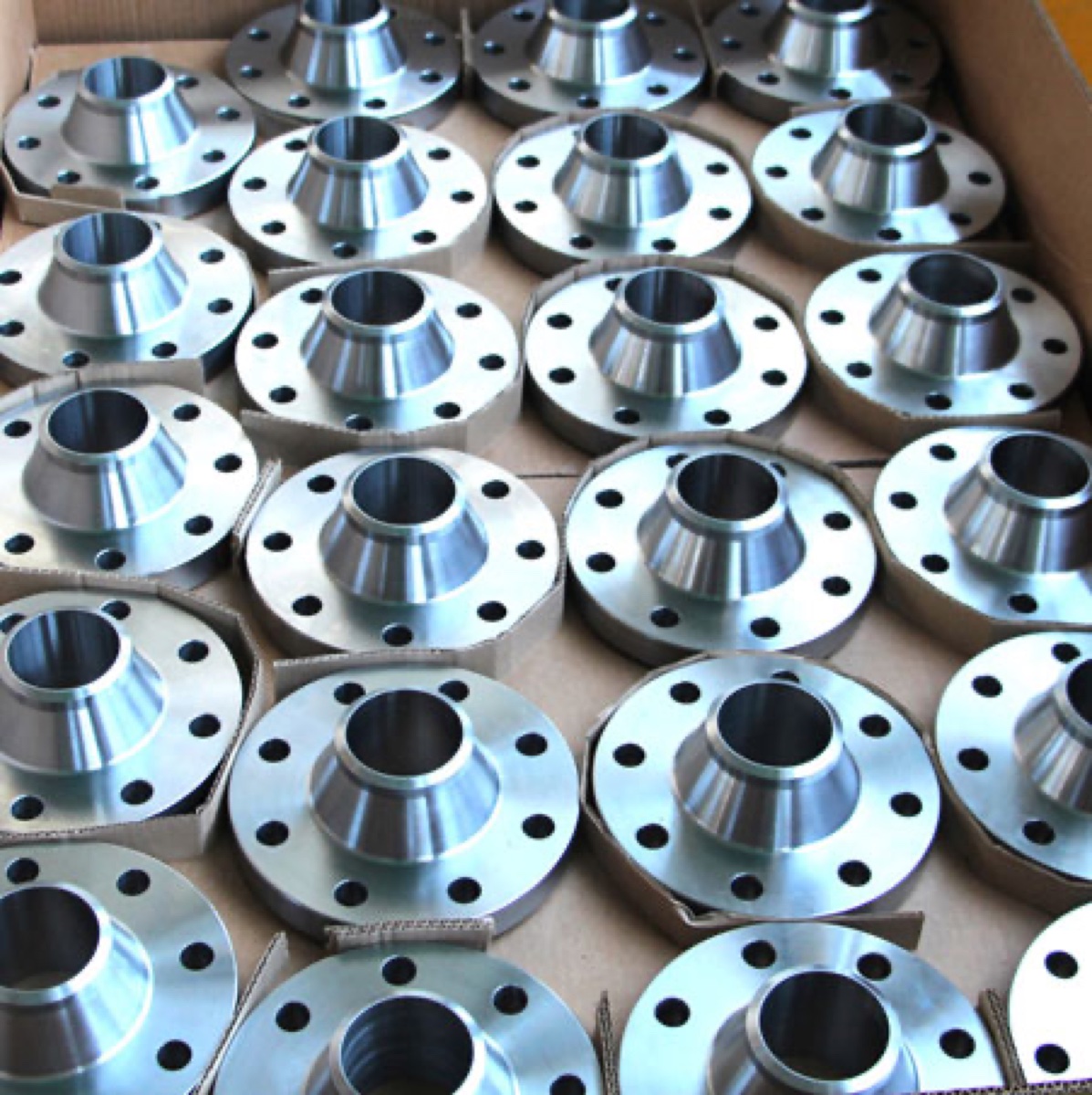
Thermal processing leads: radiant tubes, furnace muffles and retorts, baskets and fixtures, hot-gas ducting and burner-train connections. Petrochemical fired heaters, waste incinerators and afterburner loops, oxygen preheaters and gas-turbine exhaust systems complete the range. Our nickel-alloy production below:
Inconel 601 weld neck flanges share their dimensions with every other material in the same class — OD, thickness, hub, bore, bolt circle and bolting per the standard tables. Full ASME B16.5 charts:
Inconel pricing tracks nickel closely plus the testing scope, so we quote live with a stated validity rather than publish a static list. To get a firm quotation, usually within 24 hours:
1
List your requirement — size (NB), class or PN, standard (ASME B16.5 / B16.47 / EN / DIN / BS), grade (Inconel 601 / N06601 — or 600/625 if the service demands), pipe schedule or bore, and quantity.
2
State the service & testing scope — temperature, atmosphere and cycling regime (they pick the family member), plus 3.2 witness, PMI or project specifications.
3
Send it across — via the inquiry form, WhatsApp, or email to sales@tescosteel.com — and we reply with price, delivery and stock position.
It is a weld neck flange forged from Inconel 601 — the nickel-chromium-aluminium alloy of 58-63% nickel, 21-25% chromium and a deliberate 1.0-1.7% aluminium, UNS N06601 / 2.4851 — to ASTM B564. The long tapered hub is butt-welded to the pipe with the bore matched to the pipe schedule, giving a radiographable joint in the furnace industry's alloy: oxidation resistance to about 1250 °C with a scale that clings through thermal cycling.
What does the aluminium addition do in Inconel 601?
It transforms the oxide scale. Plain chromia protects alloy 600 to about 1093 °C but spalls under heavy cycling; 601's aluminium builds an alumina-reinforced scale that is both more protective — extending oxidation resistance toward 1250 °C — and far more adherent, so repeated heating and quenching cannot flake it away. The same tight scale is the alloy's shield against carburization in furnace atmospheres.
What is the difference between Inconel 601 and Inconel 600?
601 is 600 rebuilt for the furnace: chromium rises from ~15 to ~23%, aluminium joins at 1.0-1.7%, and nickel eases back to 58-63% with iron taking the balance. The result trades a little of 600's aqueous-chemistry breadth for roughly 150 °C more oxidation capability, far better cyclic-spalling behaviour and genuine carburization resistance. Hot-gas and heat-treatment duty picks 601; mixed heat-plus-chemistry duty keeps 600.
When should I choose Inconel 601 versus 625?
By environment. 601 is the dry-heat specialist — furnace atmospheres, hot air, combustion gas to 1250 °C. 625 is the wet-corrosion heavyweight, whose 9% molybdenum and niobium serve seawater, acids and sour service with double the strength but a lower temperature ceiling. If the flange lives in a furnace loop, 601; if it lives in aggressive liquid chemistry, 625. We forge both alongside 600.
What are the equivalent designations for Inconel 601?
UNS N06601; Werkstoff Nr. 2.4851; EN NiCr23Fe; JIS NCF 601; BS NA 49; GOST ХН60ВТ; AFNOR NC23FeA; and the trade names Inconel 601 or Alloy 601. System partners: ASTM B167 seamless pipe, B366 butt-weld fittings, B168 plate and B564 forgings. An enquiry in any of these designations is quoted as the same material.
What is the chemical composition of Inconel 601?
Per ASTM B564: nickel 58.00 to 63.00%, chromium 21.00 to 25.00%, iron balance, with residuals capped at carbon 0.10%, manganese 1.00%, silicon 0.50%, copper 1.00% and sulphur 0.015% — plus the grade's defining aluminium addition of 1.0 to 1.7%, which reinforces the oxide scale and gives 601 its furnace pedigree.
What are the mechanical properties of Inconel 601 flanges?
Per ASTM B564 in the annealed condition: tensile strength 550 MPa (80 ksi) minimum, yield strength 205 MPa (30 ksi) minimum and elongation 30% minimum, demonstrated on every certificate. Useful strength and creep resistance persist deep into the furnace range — the property that keeps 601 hardware straight where steels sag.
Which pipe and fittings do Inconel 601 weld neck flanges mate with?
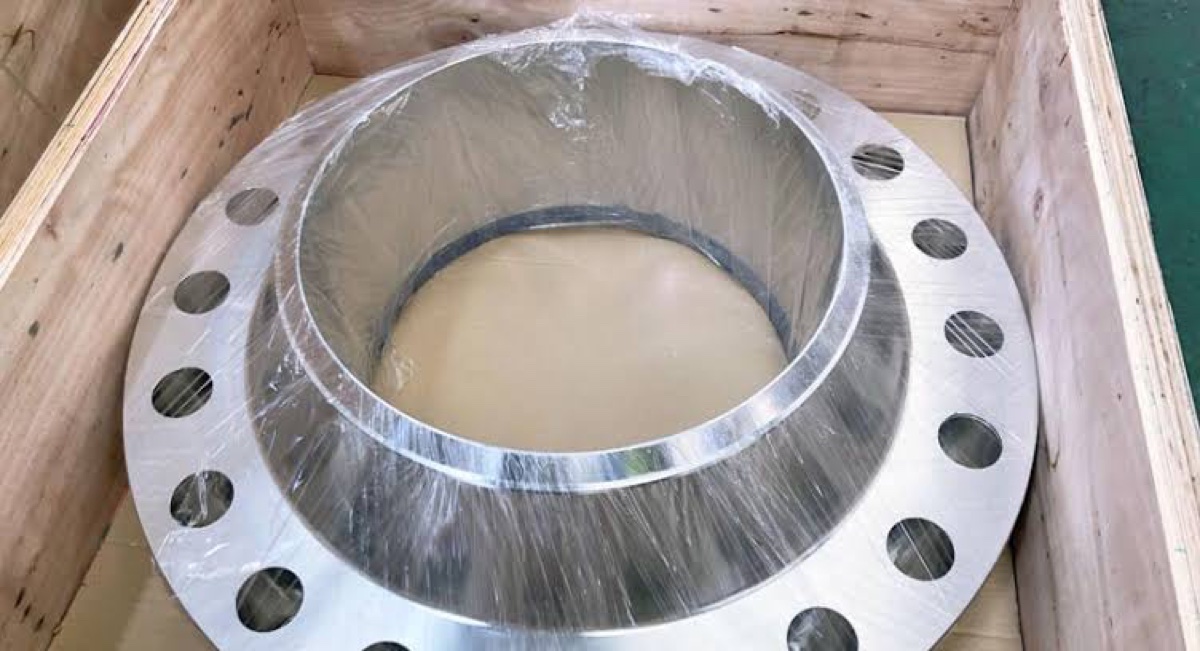
ASTM B167 seamless Inconel 601 pipe is the standard partner, with B366 butt-weld fittings and B168 plate completing the system. The weld neck bore is machined to the pipe schedule you state, so the bore runs flush through the joint and the bevel arrives ready for a matched-chemistry butt weld.
How are Inconel 601 flanges welded to pipe?
With matching ERNiCrFe-11 (601) filler where the full 1250 °C rating must carry through the joint, or ERNiCr-3 (82) where specifications allow — plus nickel-alloy discipline: sulphur-free cleanliness, low heat input, no preheat, no PWHT. The solid-solution alloy has no sensitization to manage in normal fabrication.
What temperature range can Inconel 601 flanges be used in?
From cryogenic to about 1250 °C in oxidizing atmospheres — the top of the wrought nickel-chromium family — with the alumina-bearing scale holding through thermal cycling that spalls plain chromia alloys. The universal caution applies: sulphur-bearing hot atmospheres attack all high-nickel alloys, so fuel quality and atmosphere chemistry steer the design.
Does Inconel 601 resist carburization?
Yes — notably well. The tight aluminium-reinforced oxide blocks carbon ingress in carburizing furnace atmospheres that steadily embrittle plain Ni-Cr alloys, which is why carburizing-furnace baskets, fixtures, radiant tubes and muffles are classic 601 hardware. Flanged connections on those atmosphere loops specify the same alloy so the joint matches the equipment.
Is Inconel 601 resistant to chloride stress corrosion cracking?
Yes — at ~60% nickel the alloy sits far beyond the chloride SCC threshold, and its aqueous behaviour is solid across general chemistry. Its purchase reason is heat rather than immersion service, but the SCC immunity means condensing and washdown episodes in hot systems hold no cracking anxiety.
What testing and certification do you supply with Inconel 601 flanges?
Every lot ships with EN 10204 3.1 mill test certificates covering chemical analysis — demonstrating the chromium and aluminium windows — mechanical properties and the anneal record, with 3.2 certification witnessed by Lloyd's, DNV, BV or TÜV on request. We also offer PMI verification, hydrostatic testing and dye-penetrant examination, with full heat-number traceability.
Where are Inconel 601 weld neck flanges used?
Thermal-processing plants above all: radiant tubes, furnace muffles and retorts, baskets and fixtures, hot-gas ducting and burner-train connections. Beyond furnaces: petrochemical fired heaters, waste incinerators and their afterburner loops, oxygen preheaters, gas-turbine auxiliaries and exhaust systems. Wherever the atmosphere is hot, oxidizing or carburizing, 601 is the named answer.
What sizes and standards do you manufacture Inconel 601 weld neck flanges in?
From 1/2 inch NB to 56 inch NB: ASME B16.5 Class 150 to 2500 up to 24 inch, ASME B16.47 above, and European PN 2.5 to PN 400 patterns to EN 1092-1, DIN and BS 4504. Raised face is standard, ring joint on request, and every bore is machined to the mating pipe schedule from Sch 10 through XXS.
Do you keep Inconel 601 weld neck flanges in stock? What is the lead time?
Inconel moves in project quantities, so common furnace-plant sizes in Class 150 and 300 rotate through production with popular items often available, while larger diameters, higher classes and witness-tested lots are forged to order — typically 4 to 6 weeks. Prices track nickel closely, so quotations carry a validity period.
Do you export Inconel 601 flanges outside India?
Yes. Tesco Steel & Engineering is an ISO 9001:2015 certified manufacturer based in Mumbai, and Inconel 601 flanges ship to furnace, petrochemical and thermal-processing projects across the Middle East, Europe, Africa, Southeast Asia and the Americas. Flanges travel face-protected and seaworthy-packed, with full heat-number and test traceability.