

'SHAPING INDUSTRIES WITH THE FINEST STEEL'
'SHAPING INDUSTRIES WITH THE FINEST STEEL'
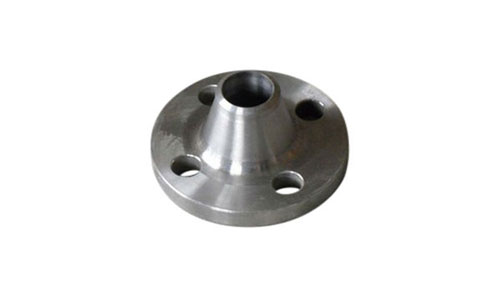
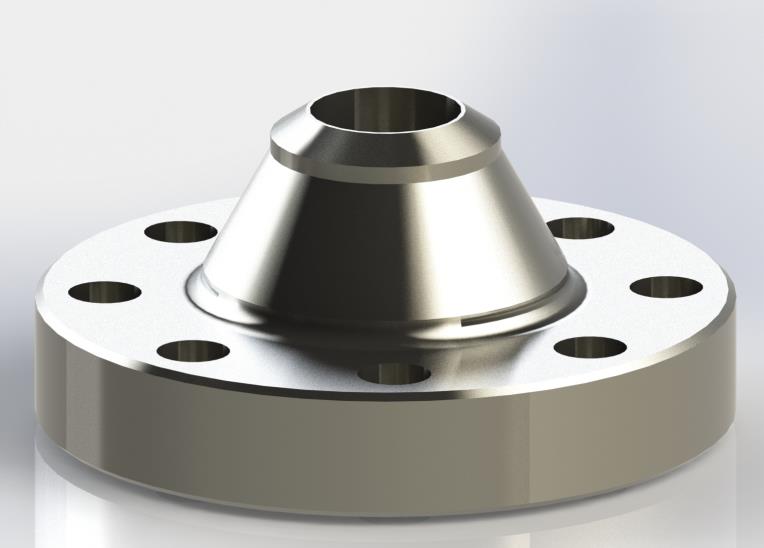
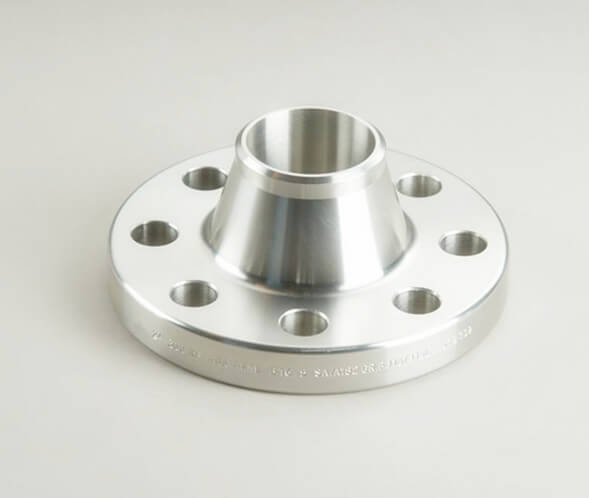
Tesco Steel & Engineering manufactures ASME B16.5 Class 2500 weld neck flanges — the ultra-high-pressure summit of the standard, built for synthesis loops, hydrogen compression and injection service — in NPS 1/2 to 12 (DN 15–300), raised face or ring type joint, with the bore matched to your pipe schedule. This page is the complete reference for the class: the full dimension chart in mm with approximate weights in kg and lbs, the stud chart, the pressure–temperature table in bar and every material grade we produce — from A105 and A350 LF2 to SS 316, duplex and Inconel. ISO 9001:2015 certified, made in Mumbai, India — exported worldwide.
Class 2500 is where ASME B16.5 ends. The services that live here — urea and ammonia synthesis loops, hydrogen compression, injection wells at extreme pressure, hyper-compressor circuits — run at 400-plus bar, and the geometry answers in kind: a 10″ flange carries a hub 419 mm long, a 12″ weighs more than a 20″ Class 900, and the standard refuses to tabulate anything larger than NPS 12 because beyond that a conventional bolted flange stops making sense — larger ultra-high-pressure connections move to API 6A flanges, hub clamps or welded construction.
Every joint at this class is an engineering event: RTJ facing, hydraulic tensioning, NACE and impact-test clauses, witness inspection. The weld neck is the only line flange that exists here — the long tapered hub feeding load gently into heavy-wall pipe is the whole design philosophy made visible. The tables below are the working data: dimensions in millimetres against the lettered B16.5 figure, published weights in kg with our lbs conversion, the stud chart, and the pressure–temperature table in bar for the three most-ordered material groups. Bores are finished to the pipe schedule you specify.
“Class 2500” (also written #2500 or 2500 lb) is a pressure–temperature rating class, not a working pressure of 2500 psi. ASME B16.5 tabulates, for every material group, the maximum allowable working pressure at each temperature — here is the table in bar for the three groups we ship most:
| Temperature °C | Group 1.1 — A105 / A350 LF2 | Group 2.1 — A182 F304 | Group 2.2 — A182 F316 |
|---|---|---|---|
| −29 to 38 | 425.5 | 413.7 | 413.7 |
| 100 | 388.3 | 351.6 | 359.5 |
| 150 | 375.6 | 320.8 | 329.2 |
| 200 | 365.0 | 297.2 | 306.4 |
| 250 | 349.5 | 278.1 | 287.2 |
| 300 | 331.8 | 263.5 | 272.0 |
| 350 | 313.0 | 252.7 | 260.6 |
| 400 | 289.3 | 245.3 | 253.3 |
| 450 | 239.7 | 239.7 | 245.0 |
Working pressure in bar (gauge) per ASME B16.5-2020 Tables 2-1.1, 2-2.1 and 2-2.2 — confirm for your exact material group, bolting and gasket. For A105 that is ≈6170 psig cold, still holding ≈332 bar at 300 °C.
All dimensions in mm. Letters follow the ASME B16.5 figure: O = outer diameter, C = flange thickness, X = hub diameter at base, A = hub diameter at the weld bevel, V = length through hub, R = raised face diameter, H = raised face height, B = bolt circle (PCD). At this class, C excludes the 7 mm raised face while V includes it; the bore and the 1.6 mm weld-end land carry no letter on the figure. The two right-hand columns give the weight per flange in kg (published, carbon steel, standard bore) and our lbs conversion. Prefer it on paper? Download the full Class 2500 weld neck dimensions datasheet (PDF) — the same table with the drawing, bolting, P–T ratings and weights, ready for the workshop.
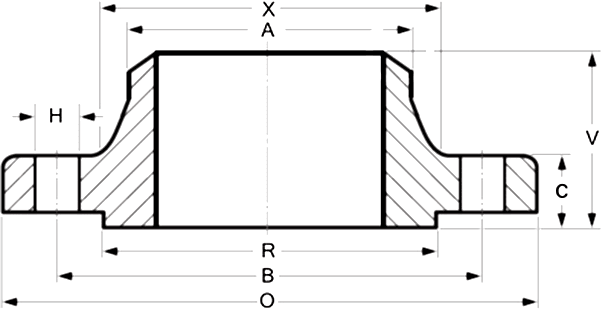
Weld Neck Flange Dimension Reference — ANSI / ASME B16.5
| Size in Inch | Size in mm | Outer Diameter | Flange Thickness | Hub OD | Weld Neck OD | Length Through Hub | Bore | RF Diameter | RF Height | PCD | Weld Face | Approx Weight (kg) | Approx Weight (lbs) |
|---|---|---|---|---|---|---|---|---|---|---|---|---|---|
| O | C | X | A | V | — | R | H | B | — | ||||
| 1/2 | 15 | 135 | 30.2 | 43 | 21.3 | 73 | According to Schedule | 34.9 | 7 | 88.9 | 1.6 | 3.2 | 7.1 |
| 3/4 | 20 | 140 | 31.8 | 51 | 26.7 | 79 | 42.9 | 7 | 95.2 | 1.6 | 3.6 | 7.9 | |
| 1 | 25 | 160 | 35 | 57 | 33.4 | 89 | 50.8 | 7 | 108 | 1.6 | 5.4 | 11.9 | |
| 1 1/4 | 32 | 185 | 38.1 | 73 | 42.2 | 95 | 63.5 | 7 | 130.2 | 1.6 | 7.7 | 17.0 | |
| 1 1/2 | 40 | 205 | 44.5 | 79 | 48.3 | 111 | 73 | 7 | 146 | 1.6 | 11.3 | 24.9 | |
| 2 | 50 | 235 | 50.8 | 95 | 60.3 | 127 | 92.1 | 7 | 171.4 | 1.6 | 19.1 | 42 | |
| 2 1/2 | 65 | 265 | 57.2 | 114 | 73 | 143 | 104.8 | 7 | 196.8 | 1.6 | 23.6 | 52 | |
| 3 | 80 | 305 | 66.7 | 133 | 88.9 | 168 | 127 | 7 | 228.6 | 1.6 | 42.6 | 94 | |
| 4 | 100 | 355 | 76.2 | 165 | 114.3 | 190 | 157.2 | 7 | 273 | 1.6 | 65.8 | 145 | |
| 5 | 125 | 420 | 92.1 | 203 | 141.3 | 229 | 185.7 | 7 | 323.8 | 1.6 | 111 | 245 | |
| 6 | 150 | 485 | 108 | 235 | 168.3 | 273 | 215.9 | 7 | 368.3 | 1.6 | 172 | 379 | |
| 8 | 200 | 550 | 127 | 305 | 219.1 | 318 | 269.9 | 7 | 438.2 | 1.6 | 263 | 580 | |
| 10 | 250 | 675 | 165.1 | 375 | 273 | 419 | 323.8 | 7 | 539.8 | 1.6 | 488 | 1076 | |
| 12 | 300 | 760 | 184.2 | 441 | 323.8 | 464 | 381 | 7 | 619.2 | 1.6 | 692 | 1526 |
Stud quantities and UNC sizes with raised-face stud lengths (mm), bolt hole sizes and metric equivalents per flange size. The Class 2500 pattern is few but massive studs — eight up to NPS 6, twelve at most, with diameters reaching 2¾″ — and make-up is exclusively by hydraulic tensioner. A193 B7 / A194 2H standard; B16 for high temperature. See also our fastener weight & count chart.
| Size in Inch | Size in mm | No of Studs | Stud Size UNC | RF Stud Length | Hole Size | ISO Stud Size |
|---|---|---|---|---|---|---|
| 1/2 | 15 | 4 | 3/4 | 120 | 7/8 | M20 |
| 3/4 | 20 | 4 | 3/4 | 125 | 7/8 | M20 |
| 1 | 25 | 4 | 7/8 | 140 | 1 | M24 |
| 1 1/4 | 32 | 4 | 1 | 150 | 1 1/8 | M27 |
| 1 1/2 | 40 | 4 | 1 1/8 | 170 | 1 1/4 | M30 |
| 2 | 50 | 8 | 1 | 180 | 1 1/8 | M27 |
| 2 1/2 | 65 | 8 | 1 1/8 | 195 | 1 1/4 | M30 |
| 3 | 80 | 8 | 1 1/4 | 220 | 1 3/8 | M33 |
| 4 | 100 | 8 | 1 1/2 | 255 | 1 5/8 | M39 |
| 5 | 125 | 8 | 1 3/4 | 300 | 1 7/8 | M45 |
| 6 | 150 | 8 | 2 | 345 | 2 1/8 | M52 |
| 8 | 200 | 12 | 2 | 380 | 2 1/8 | M52 |
| 10 | 250 | 12 | 2 1/2 | 490 | 2 5/8 | M64 |
| 12 | 300 | 12 | 2 3/4 | 540 | 2 7/8 | M72 |
Class 2500 weld neck flanges are produced in every material family from our range — each supplied with EN 10204 3.1 mill certificates, heat-number traceability and PMI on request:
| Material Family | Typical Flange Grades | Best suited to |
|---|---|---|
| Carbon Steel | ASTM A105, A694 F42–F65 | General & high-pressure hydrocarbon service |
| LTCS | ASTM A350 LF2 / LF3 | Low-temperature service, impact tested |
| Stainless Steel | A182 F304/L, F316/L, F310, F321, F347, F410 | Corrosive process & hygienic service |
| 254 SMO | A182 F44 (UNS S31254) | Seawater & high-chloride service |
| 904L | A182 F904L (UNS N08904) | Sulphuric & phosphoric acid service |
| Duplex / Super Duplex | A182 F51 (2205), F53/F55 (2507) | High strength + chloride resistance, offshore |
| Alloy Steel | A182 F1, F5, F9, F11, F22, F91 | High-temperature steam & refinery lines — classic Class 2500 territory |
| Monel | 400 / K500 (B564 N04400) | Seawater, HF acid, marine |
| Inconel | 600 / 601 / 625 / 825 | High temperature, sour & oxidising media |
| Hastelloy | C276 / C22 / B2 | Severely corrosive chemical service |
| Titanium | Gr. 2 / Gr. 5 (B381) | Chlorides, seawater; ≈42% lighter |
| Copper Nickel | 90/10 (C70600), 70/30 (C71500) | Marine & seawater cooling systems |
| Bimetal / Clad | CS base + SS/alloy overlay | Corrosion resistance at carbon-steel cost |
Class 2500 is manufactured strictly to order — use the Ask for Quote button or the inquiry form for today’s price and delivery position.
| Pressure Class | Dimension Chart | Approx. A105 Rating @ 38 °C |
|---|---|---|
| Class 150 | Class #150 Weld Neck Flange | ≈285 psig |
| Class 300 | Class #300 Weld Neck Flange | ≈740 psig |
| Class 400 | Class #400 Weld Neck Flange | ≈990 psig |
| Class 600 | Class #600 Weld Neck Flange | ≈1480 psig |
| Class 900 | Class #900 Weld Neck Flange | ≈2220 psig |
| Class 1500 | Class #1500 Weld Neck Flange | ≈3705 psig |
| Class 2500 | Class #2500 Weld Neck Flange (this page) | ≈6170 psig |
Related references: Weld Neck Flanges overview · Long Weld Neck Flanges · All Flange Dimension Charts · Flange Weight Chart.
The tapered hub and full-penetration butt weld give the joint the strength and fatigue life of the pipe itself — at 400-plus bar, the long hub feeding load gently into heavy-wall pipe is the whole design philosophy made visible.
The heaviest class the standard tabulates, and the last stop before special joint designs — API 6A flanges, hub clamps, welded construction — take over above NPS 12.
RTJ facings, hydraulic tensioning, NACE and impact-test clauses, witness inspection — the daily business of this class, and of our documentation, from 3.1 MTCs to 3.2 witness.
Urea and ammonia synthesis high-pressure sections, hydrogen compression and storage, extreme-pressure injection wells, hyper-compressor circuits and high-pressure test facilities.
What are the dimensions of a Class 2500 weld neck flange?
They are tabulated in ASME B16.5 and reproduced in full in the chart above: for each of the fourteen sizes from NPS 1/2 to 12, the outer diameter, flange thickness, hub diameters at base and bevel, length through hub, raised face diameter and height (7 mm at this class), bolt circle and weld face — all in millimetres — plus the published weight. A 4 in Class 2500 weld neck flange, for example, is 355 mm OD, 76.2 mm thick plus the 7 mm face, on a 273 mm PCD, at about 66 kg.
What pressure can a Class 2500 flange handle?
The rating depends on material and temperature. For Group 1.1 materials such as A105 carbon steel, ASME B16.5 allows 425.5 bar (roughly 6170 psig) at 38 °C, easing to about 332 bar at 300 °C and 240 bar at 450 °C — the full bar table for carbon steel, 304 and 316 groups is reproduced on this page. Stainless and alloy grades have their own columns. Always confirm the rating at your design temperature.
What does the "Class 2500" designation actually mean?
Class 2500 (also written #2500 or 2500 lb) is a pressure-temperature rating class, not a working pressure of 2500 psi. Each class maps to a table in ASME B16.5 giving the maximum allowable working pressure at each temperature for each material group — a Class 2500 A105 flange is good for roughly 6170 psig cold, nearly two and a half times the number in its name, and less when hot.
Does the thickness in the chart include the raised face?
No — for Class 400 and above, ASME B16.5 tabulates flange thickness C excluding the 7 mm raised face, while the length through hub V includes it. That is the reverse of the Class 150 and 300 convention, where the standard includes their 2 mm face in the thickness. Our charts follow the standard on every page and say so under each table — worth checking whenever you compare charts from different sources.
Why does Class 2500 stop at NPS 12?
Because beyond that, a conventional bolted flange stops making engineering sense at these pressures. ASME B16.5 tabulates Class 2500 only through NPS 12 — a 12 in flange already weighs about 692 kg on twelve 2-3/4 in studs — and the forces on anything larger would demand bolting and ring sections outside sensible practice. Larger ultra-high-pressure connections move to other technologies: API 6A wellhead flanges, clamp-type hub connectors or welded construction. No NPS 3-1/2 exists at this class either, so the chart runs fourteen sizes.
How much does a Class 2500 weld neck flange weigh?
From the weight columns in our chart: a 2 inch Class 2500 weld neck flange weighs about 19 kg (42 lbs), a 4 inch about 66 kg (145 lbs), an 8 inch about 263 kg (580 lbs) and a 12 inch about 692 kg (1526 lbs) — heavier than a 20 inch Class 900, at a third of the bore. These are published carbon-steel weights with a standard bore; the exact weight varies with the bore schedule and material density.
What is the raised face height on a Class 2500 flange?
7 mm (nominally 1/4 inch) — the tall face shared by Class 400 and above. In practice nearly all Class 2500 line classes specify RTJ facings, where an octagonal ring gasket seats in a machined groove — state RF or RTJ with the enquiry, because the two are not interchangeable in the field.
Are Class 2500 flanges interchangeable with Class 1500?
No — and unlike Classes 400 and 900, Class 2500 shares no sizes with any neighbour: every size has its own OD, bolt circle and bolting, so a Class 2500 flange never mates with a Class 1500 flange of the same size. A spec break between the two classes always means matching flanges on both sides of the joint.
What bore should I specify for a weld neck flange?
The bore of a weld neck flange is machined to match the inside diameter of the pipe it will be welded to, so state the pipe schedule with your order. At Class 2500 pressures the mating pipe runs Sch 160, XXS or heavier still, and the match is critical: a bore step at the butt weld concentrates turbulence and erosion exactly where the joint works hardest. That is why the Bore column in our chart reads "as per pipe schedule".
What materials and grades are available for Class 2500 weld neck flanges?
We manufacture Class 2500 weld neck flanges in carbon steel A105, low-temperature A350 LF2/LF3, stainless steel A182 F304/L, F316/L, F310, F321, F347 and F410, 254 SMO (F44), 904L, duplex 2205 (F51), super duplex 2507 (F53/F55), alloy steel F1/F5/F9/F11/F22/F91, Monel 400/K500, Inconel 600/625/825, Hastelloy C276/C22, titanium, copper nickel 90/10 and 70/30, and bimetal/clad — each with EN 10204 3.1 mill certificates.
Does a Class 2500 flange use machine bolts or stud bolts?
Stud bolts with two heavy hex nuts, always — in the Class 2500 pattern of few but massive studs: just 8 studs up to NPS 6, but already 2 inch UNC at that size, and a 12 inch flange takes 12 studs of 2-3/4 inch UNC at 540 mm. Make-up is exclusively by hydraulic tensioner. A193 B7 / A194 2H remain the standard grades on carbon-steel joints, B16 for high temperature.
Which gasket is used with Class 2500 flanges?
RTJ, almost without exception: Class 2500 line classes specify ring type joints with octagonal ring gaskets (soft iron or low-carbon steel for A105, stainless for stainless flanges) in machined grooves — at 400-plus bar, the self-energising metal ring is the only gasket culture that belongs. Spiral wound gaskets remain technically available for RF joints on milder duty. Our RTJ gasket size chart on this site covers the ring numbers per flange size.
Why is the weld neck the only flange type that matters at Class 2500?
Because at 400-plus bar the joint must be as strong as the pipe, and only the weld neck's tapered hub and full-penetration butt weld deliver that — with a weld geometry open to full radiography, which every line class at this rating demands. The proportions tell the story: a 10 in Class 2500 flange carries a 419 mm hub, longer than many complete flanges, purely to feed the load gently into the pipe. Slip-on and socket-weld flanges do not exist in B16.5 practice at this class; blinds and spectacle blinds remain for isolation.
What is the difference between Class 2500 and Class 1500 flanges?
For A105 at 38 °C the allowable working pressures are roughly 6170 and 3705 psig. Dimensionally the step is brutal: a 6 in flange grows from 395 to 485 mm OD and from 82.6 to 108 mm thickness, and the size range itself shrinks — Class 1500 runs to NPS 24 where Class 2500 stops at 12. Class 2500 belongs to urea and ammonia synthesis, hydrogen compression and injection service — the last stop in B16.5 before special joint designs take over.
How are your Class 2500 flanges tested and certified?
Every batch is dimensionally inspected against ASME B16.5, marked per MSS SP-25 and supplied with EN 10204 3.1 mill test certificates traceable by heat number. We offer PMI, ultrasonic and magnetic particle examination, impact testing for low-temperature grades, NACE MR0175 compliance for sour service — a frequent requirement at this class — and third-party inspection by LR, BV, DNV, SGS, TÜV or IBR on request.
Do you make the other Class 2500 flange types too?
Yes — blind, lapped joint and spectacle blind dimension charts for Class 2500 are on this site (linked in the sidebar), alongside the weld neck charts for every class from 150 to 2500. Special bores, facings, RTJ grooves and flanges to customer drawings are quoted case-by-case.
Which industries use Class 2500 weld neck flanges?
Urea and ammonia synthesis high-pressure sections, hydrogen compression and storage, gas injection and water injection at extreme wellhead pressures, hyper-compressor circuits and high-pressure test facilities — the ultra-high-pressure corner of the process industries, where every joint is engineered, witnessed and documented one by one.
Are these the same dimensions as ANSI 2500?
Yes — "ANSI 2500", "ANSI B16.5" and "2500 lb" all refer to what is today the ASME B16.5 Class 2500 table; the standard transferred from ANSI to ASME custodianship decades ago but the old name persists on drawings and enquiries. The dimensions on this page are the current ASME B16.5 values.