Hastelloy C-22 Blind Flanges — UNS N06022 Blind Flange Manufacturer
Tesco Steel & Engineering forges Hastelloy C-22 blind flanges — ASTM B564, UNS N06022, W.Nr. 2.4602 — to ASME B16.5 Class 150–2500 from ½″ to 24″ NB and to ASME B16.47 up to 60″. This is the C-family rebalanced for the oxidizing flank: chromium promoted to 20–22.5%, above molybdenum's 12.5–14.5% — the reverse of C-276's ranking — with tungsten retained. Command of nitric-bearing mixtures, ferric and cupric chlorides, hypochlorite and ClO2, deep reducing reserve kept — which is why C-22 is the versatility grade of pharma and multi-product chemistry, and the C-alloy whose chemistry welds the whole family together. Flatly reducing stream? C-276 takes it — we stock both siblings and the quote names the right one. Strength or heat leading? 625. Facings: BLRF, BLFF or BLRTJ. Every lot with EN 10204 3.1/3.2 MTC. ISO 9001:2015, made in Mumbai, India — exported to 50+ countries.
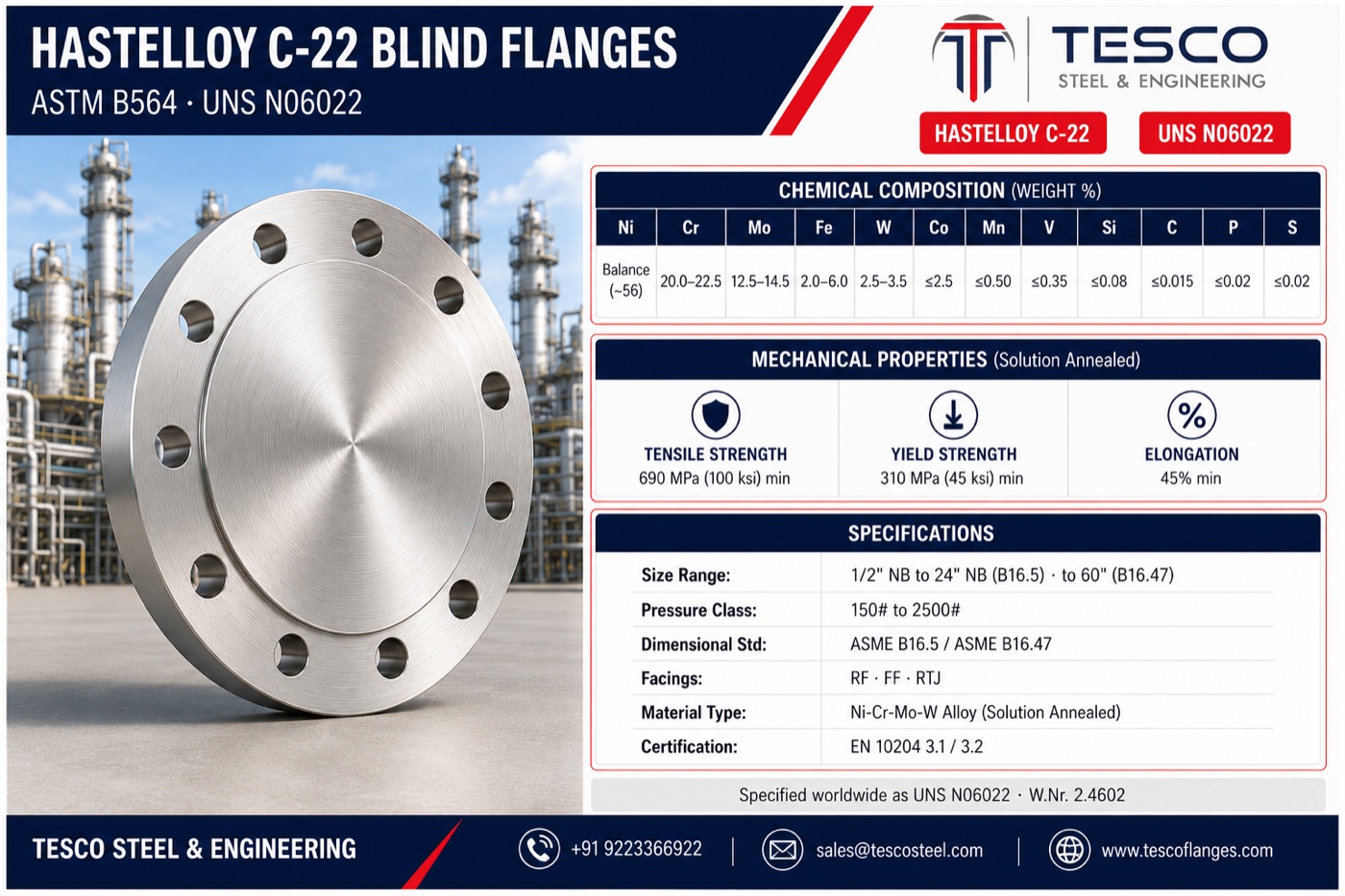
Hastelloy C-22 · ASTM B564 · UNS N06022W.Nr. 2.4602Cr 20–22.5% — Promoted Above MoMo 12.5–14.5% + W 2.5–3.5%The Oxidizing-Flank C-AlloyPharma's Versatility GradeNACE MR0175 ListedASME B16.5 ½″–24″ · Class 150–2500EN 10204 3.1 / 3.2 · ISO 9001:2015
Hastelloy C-22 Blind Flanges — Specifications at a Glance
What is a Hastelloy C-22 Blind Flange?
The oxidizing-flank C-alloy. A solid forged disc of nickel-chromium-molybdenum-tungsten alloy (ASTM B564 / UNS N06022 / W.Nr. 2.4602) with no bore — the C-family rebalanced: Cr promoted to 20–22.5%, above Mo's 12.5–14.5% (the reverse of C-276), W 2.5–3.5% retained. Command of oxidizing acids, ferric/cupric chlorides, hypochlorite and ClO2 with deep reducing reserve — the versatility grade of multi-product and pharmaceutical chemistry. Solution annealed — 690/310 MPa, 45% elongation. Dimensions per ASME B16.5 / B16.47 in RF, FF and RTJ facings; EN 10204 3.1 on every lot.
Also searched as: Alloy C-22 blind flange, C22 blind, N06022 blind flange, B564 C-22 blind, 2.4602 blind flange, alloy 22 blind flange — all refer to the product on this page. See also the sibling Hastelloy C-276 blind flanges, the strength rival Inconel 625, the acid trio 904L / Alloy 20 / 825, the other C-22 types — weld neck, slip-on, spectacle blind — and the facing pages BLRF / BLFF / BLRTJ.
Hot HCl, hot dilute H2SO4, flatly reducing sour packages
Yield / Elong.
310 MPa / 45%
283 MPa / 40%
Chlorides
Top-of-table CPT/CCT in oxidizing media; SCC off the map
Essentially immune; deeper in reducing brines
Typical home
Pharma, multi-product plants, bleach chemistry
FGD, chlor-alkali, worst sour wells
The redox balance of the stream decides. Streams that refuse to declare a side are exactly why C-22 exists — and both siblings are B564 forgings from our works.
What the Rebalance Buys
Chromium Half Again
20–22.5% Cr against C-276's 14.5–16.5 — the protective film in oxidizing media is chromium's work, and C-22 posts among the highest critical pitting and crevice temperatures of any wrought alloy in the standard oxidizing-chloride tests.
The Reducing Reserve Stays Deep
Mo 12.5–14.5% + W 2.5–3.5% — trimmed from C-276, but still a combined ~16% that out-guns everything outside the C-family on the reducing flank.
The Family's Weld Chemistry
C-22's balance makes it the universal filler of the C-family — C-276 and C-2000 equipment is routinely welded with C-22-matching consumables. A C-22 blind on C-276 piping is electrochemically at home.
Hastelloy C-22 Chemical Composition (UNS N06022)
Element
Ni
Cr
Mo
Fe
W
Co
Mn
V
Si
C
P
S
Weight %
Balance (~56)
20.0–22.5
12.5–14.5
2.0–6.0
2.5–3.5
≤2.5
≤0.50
≤0.35
≤0.08
≤0.015
≤0.02
≤0.02
Read it against C-276: chromium and molybdenum swap ranks, tungsten is trimmed, and the extra-low carbon and silicon discipline carries over — clean grain boundaries as-welded. C-22 and C-276 are identical on the shelf; our PMI reads the Cr-Mo-W signature on every piece, so the siblings can never mix.
Mechanical Properties (Solution Annealed)
Property
ASTM B564 N06022 Requirement
Tensile Strength
≥ 690 MPa (100 ksi)
Yield Strength (0.2%)
≥ 310 MPa (45 ksi) — quietly the stronger of the two mainstream C-alloys
Elongation
≥ 45% — and the more ductile
Condition
Solution annealed — single-condition, non-hardenable; no ageing windows, no hardness ceilings
Escalation
Yield beyond 310 MPa inside a CRA certificate → 625 (414), then the aged grades 925 / K-500
Hastelloy C-22 / UNS N06022 Blind Flanges are available in the following specifications:
Material Grade
Hastelloy C-22 — ASTM B564 (UNS N06022), W.Nr. 2.4602; plate B575 and bar B574 belong on mill paperwork, the flange certificate reads B564
Heat Treatment
Solution annealed — furnace records certified; extra-low C/Si guarantee travels on the MTC
Size
1/2"NB to 24"NB per ASME B16.5; 26"–60" per ASME B16.47; EN 1092-1 to order
Class
150#, 300#, 400#, 600#, 900#, 1500#, 2500# — rated on the nickel-alloy B16.5 lines
Facings
Raised Face (BLRF), Flat Face (BLFF), Ring Type Joint (BLRTJ) with groove per B16.20
Service Span
Oxidizing acids, ferric/cupric chlorides, hypochlorite, ClO2, multi-product duty, sour service with oxidizing excursions; hot concentrated HCl handed to C-276
Surface Finish
Pickled or natural machined — no paint; segregated alloy handling throughout
Modifications
NPT-tapped test and injection blinds; matching spectacle blinds, spades and bleed rings from the same certified stock
Testing
Tension & chemistry per heat — the Cr, Mo, W and low-C/Si windows verified; PMI routine on every piece
Certification
EN 10204 3.1 (standard) / 3.2 witnessed — solution-anneal records included
Why Hastelloy C-22 Blind Flanges Are Specified
The Campaign Changes Monthly
Multi-product plants, toll manufacturers and pharma reactor trains cannot re-alloy per campaign. C-22 covers the union of oxidizing and reducing duties in one certificate — the versatility grade.
The Duty Is Oxidizing-Chloride
Hypochlorite sanitisation, ClO2 bleach chemistry, ferric and cupric etching liquors — chromium-led attack maps are C-22's home fixture, with top-of-table pitting temperatures to show for it.
The Sour Well Sees Oxidizing Excursions
NACE MR0175-listed beside C-276, single-condition, no hardness ceilings — and preferred where treatments or upsets push the stream across the redox line.
The Closure Should Match the Vessel
A C-22 reactor deserves a C-22 closure — one alloy, one heat, one MTC across the isolation point, with no cheaper sacrificial member in the joint.
Three honest notes.Hot concentrated hydrochloric is not its brief: the trimmed molybdenum hands flatly reducing duty to C-276 — that is a sibling handoff, not a family failure. Heat is not where its money goes: oxidation-limited hot duty belongs to 601 and the 800 trio. And the price is C-family price: a defined, predictable duty usually has a cheaper right answer — 904L, Alloy 20, 825 or a 6Mo grade — and our quotations name it when it does.
How Our Hastelloy C-22 Blind Flanges Are Manufactured
1
Forging — cut billet of the spectro-verified N06022 heat — the Cr, Mo and W windows and the extra-low C/Si confirmed — is hot-forged into the solid disc blank with full heat traceability and segregated alloy handling.
2
Solution annealing — the anneal-and-quench that locks the clean solid-solution structure; furnace charts retained against the heat number.
3
Machining & facing — faces, OD, drilling and any NPT taps cut to ASME B16.5 / B16.47; RF serrations, flat face or RTJ groove gauged per B16.20.
4
Testing — tension test and full chemistry against the heat; PMI reads the Cr-Mo-W signature on every piece — C-22 and C-276 can never mix.
5
Finishing — pickled or natural machined finish; marked with standard, grade, size, class and heat number.
6
Certification & packing — EN 10204 3.1 MTC (3.2 witnessed on request) including solution-anneal records; faces protected, palletised or crated sea-worthy — no carbon-steel contact in transit.
Where Hastelloy C-22 Blind Flanges Are Used
Where versatility earns its keep: pharmaceutical and fine-chemical reactor trains with their CIP/SIP circuits, multi-product and toll plants, hypochlorite and ClO2 systems in pulp bleaching and water treatment, ferric/cupric etching and leaching lines, nitric-bearing mixed acids, waste-incineration gas trains, and sour wells with oxidizing excursions. Production below:
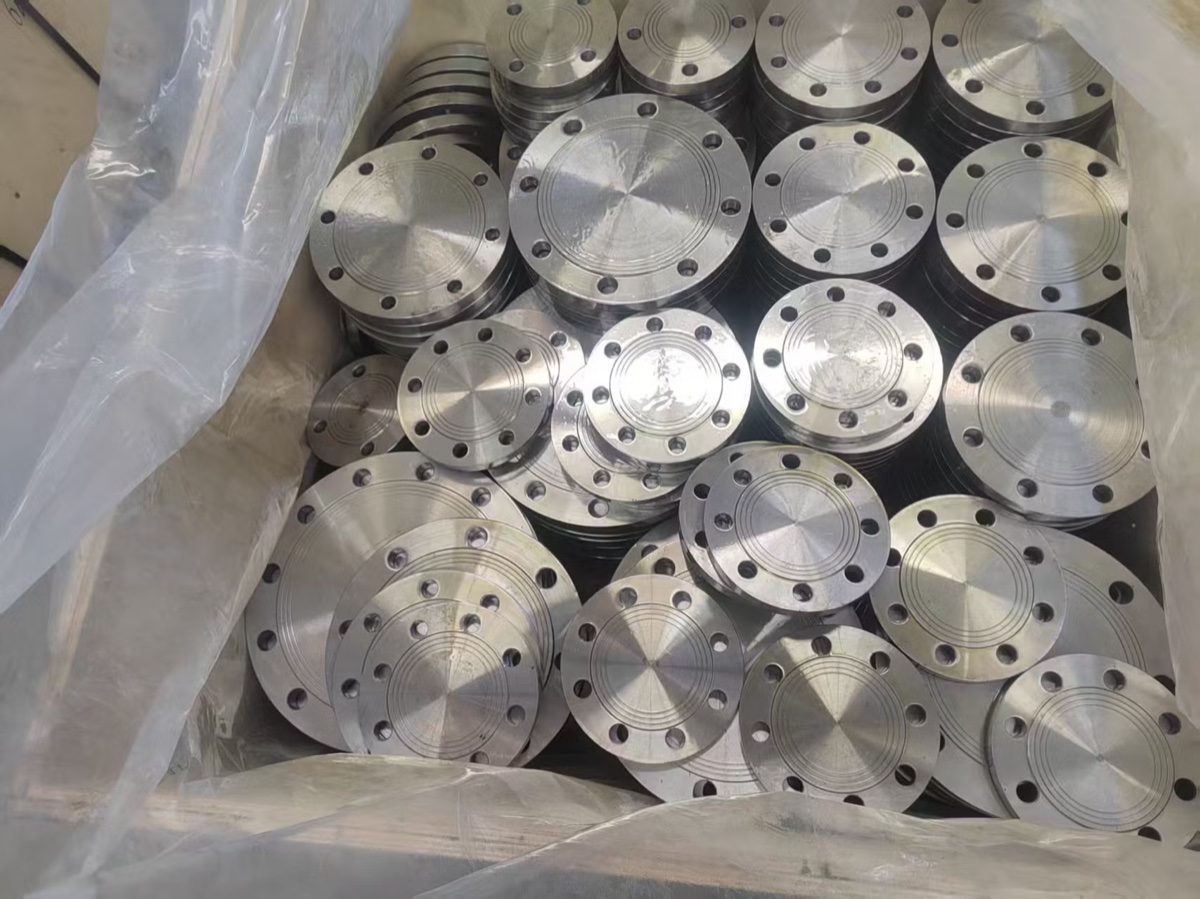
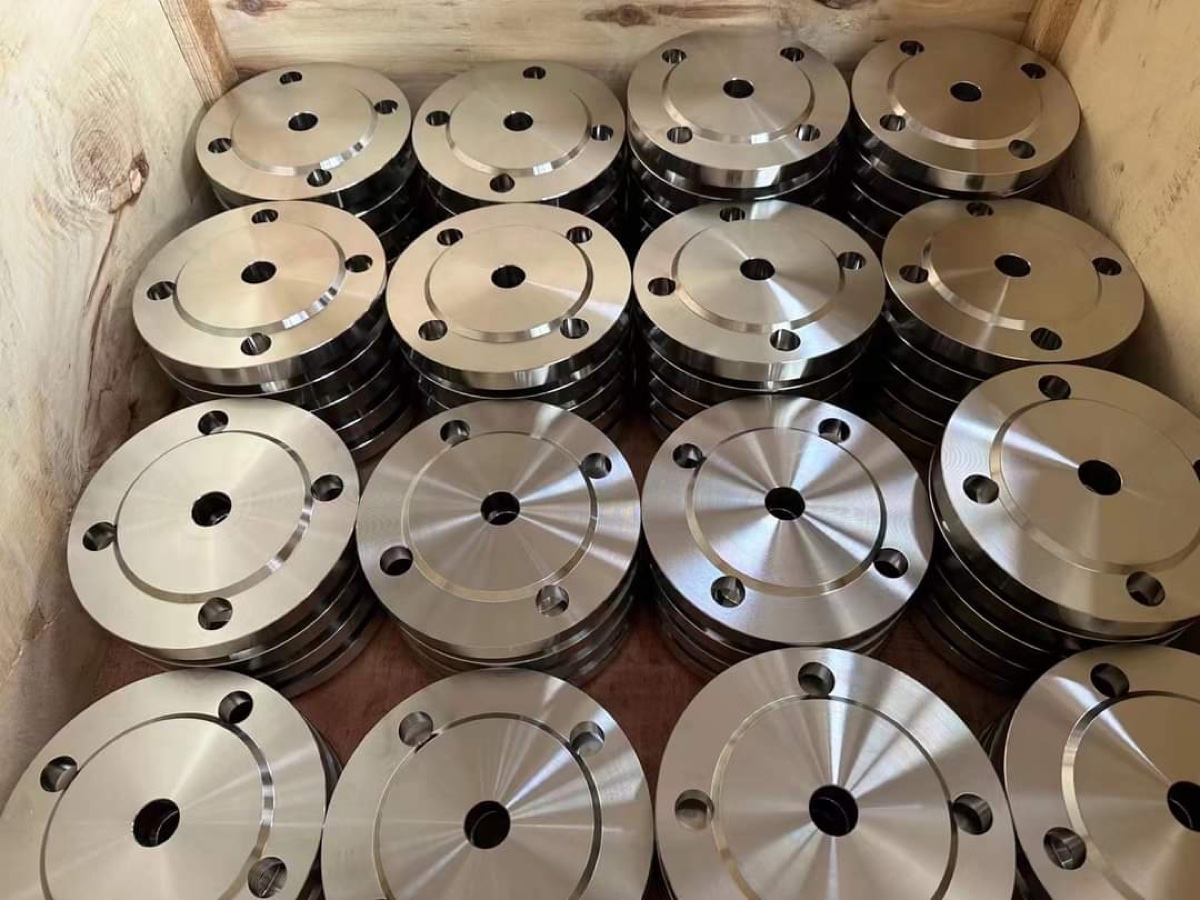
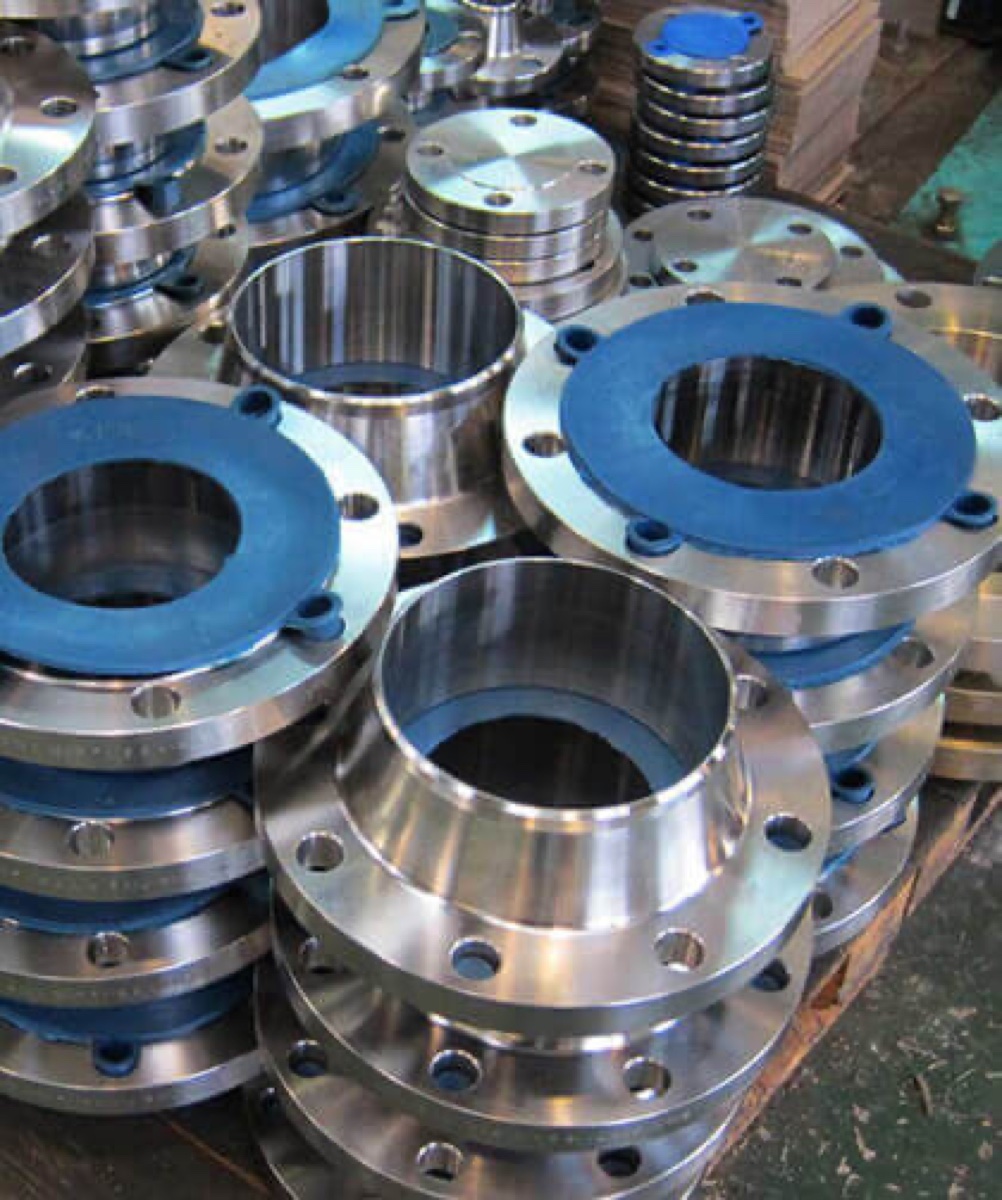
8″ Class 300 Blind — Machined Raised FaceBlind Flange Production — Ready for DispatchHastelloy C-22 Flanges — Protected Stock
Hastelloy C-22 Blind Flange Dimensions
Blind dimensions are class-governed — identical across material grades. Full charts:
How to Specify & Order a Hastelloy C-22 Blind Flange
Five elements — and if the stream's redox character is known, tell us: the sibling check is free:
1
Size & standard — e.g. 4″ NB ASME B16.5, or the B16.47 series for 26″ and above.
2
Pressure class & facing — Class 150–2500; RF, FF or RTJ (with ring number) to match the mating flange.
3
Grade — ASTM B564 UNS N06022 (Hastelloy C-22), solution annealed; W.Nr. 2.4602 where the European designation is required.
4
Service declarations & certification — sour service (NACE MR0175) where applicable; NPT tap size if a test blind; matching spectacle blinds or spades from the same heat if the isolation set is ordered together; PMI or 3.2 witnessing as specified; EN 10204 3.1 — our standard.
A Hastelloy C-22 blind flange is a solid forged disc of nickel-chromium-molybdenum-tungsten alloy — ASTM B564, UNS N06022, W.Nr. 2.4602 — drilled to the standard bolt pattern with no bore, used to close flanged connections in severe chemical service. It is the C-family rebalanced for the oxidizing flank: chromium promoted to 20.0-22.5%, above molybdenum's 12.5-14.5% — the reverse of C-276's ranking — with 2.5-3.5% tungsten retained. That buys command of oxidizing acids, ferric and cupric chlorides, hypochlorite and chlorine dioxide while keeping a deep reducing-acid reserve. Dimensions follow ASME B16.5 from ½ inch to 24 inch and ASME B16.47 beyond, in raised face, flat face and ring joint facings.
How does Hastelloy C-22 differ from C-276?
Same idea, opposite ranking. C-276 ranks molybdenum above chromium (15.0-17.0% over 14.5-16.5%) and is the deeper alloy in strongly reducing media — hot hydrochloric, hot dilute sulphuric. C-22 reverses the order: chromium up to 20.0-22.5%, molybdenum down to 12.5-14.5%, tungsten trimmed to 2.5-3.5%. Chromium is the element that defends in oxidizing media, so C-22 goes further in nitric-bearing mixtures, ferric and cupric chlorides, hypochlorite and wet-oxidizing upsets — and it is slightly stronger and more ductile on the certificate (310 MPa yield, 45% elongation, against 283/40%). The redox balance of the stream decides between them; where the stream refuses to declare a side, C-22's wider two-flank window is exactly why it exists.
Why is C-22 the C-alloy for oxidizing service?
Because chromium leads its chemistry. In oxidizing environments — nitric-bearing acid mixtures, ferric and cupric chloride solutions, hypochlorite, chlorine dioxide, wet-oxidizing gas trains — the protective film is chromium's work, and C-22 carries 20.0-22.5% of it, half again C-276's ration. Field results follow: C-22 posts among the highest critical pitting and crevice temperatures of any standard alloy in oxidizing chloride tests, and it is the usual answer when a hypochlorite or ClO2 duty has attacked a molybdenum-led grade. The cost of the rebalance is depth on the reducing side — hot concentrated hydrochloric still belongs to C-276 — but the reducing reserve that remains is deeper than anything outside the C-family.
What is the chemical composition of Hastelloy C-22 (UNS N06022)?
Nickel balance (about 56%), chromium 20.0-22.5%, molybdenum 12.5-14.5%, iron 2.0-6.0%, tungsten 2.5-3.5%, cobalt ≤2.5%, manganese ≤0.50%, vanadium ≤0.35%, silicon ≤0.08%, carbon ≤0.015%, phosphorus ≤0.02%, sulphur ≤0.02%. Read it against C-276: chromium and molybdenum swap ranks, tungsten is trimmed, and the extra-low carbon and silicon discipline carries over — C-22 stays clean in the as-welded condition just as its sibling does. Our PMI reads the Cr-Mo-W signature on every piece — and because C-22 and C-276 look identical on the shelf, that instrument check is what guarantees the two never mix.
What are the mechanical properties of Hastelloy C-22 blind flanges?
In the solution-annealed condition ASTM B564 requires tensile strength 690 MPa (100 ksi) minimum, yield strength 310 MPa (45 ksi) minimum and elongation 45% minimum — quietly the strongest and most ductile certificate of the two mainstream C-alloys, edging C-276's 283 MPa and 40%. It is single-condition and non-hardenable: no ageing windows, no hardness ceilings, the solution-annealed certificate is the whole story. Where a design needs genuinely high yield inside a corrosion-resistant alloy, the escalation is 625 at 414 MPa or the age-hardened grades — 925, K-500 — each with its own page here.
Why is C-22 called the versatility grade?
Because it holds the widest one-alloy window across both halves of the redox map. Multi-product chemical plants, toll manufacturers and pharmaceutical reactor trains change campaigns constantly: acid one month, hypochlorite sanitisation the next, chloride-bearing washes between. Specifying for the worst case of every campaign would demand two alloys; C-22 covers the union — oxidizing command from its chromium, reducing depth from molybdenum plus tungsten, chloride immunity from all three. That is why it is the default construction alloy of modern pharma and fine-chemical equipment, and the same logic makes a C-22 blind the right closure on systems whose future duty is honestly unknown.
How does Hastelloy C-22 perform against chlorides?
At the top of the table. Its critical pitting and crevice temperatures in the standard ferric chloride tests rank among the highest of any wrought alloy — in oxidizing chloride media it meets or beats C-276 — and the nickel base removes chloride stress corrosion cracking from the failure map. Hypochlorite and chlorine dioxide, the aggressive oxidizing chlorides of bleach and sanitisation chemistry, are C-22 signature duties. For the practical buyer the message is the same as the C-276 page's: chloride escalation ends at the C-family; which member takes the duty is decided by the redox character of the stream, not by another step up the ladder.
Why does C-22 chemistry appear in welds across the whole C-family?
Because C-22's balanced chemistry makes it the family's universal filler metal — fabricators routinely join C-276, C-4 and C-2000 equipment with C-22-matching consumables, trusting its two-flank resistance to protect the weld whatever the service. For flange buyers that is a useful compatibility fact: a C-22 blind bolted to C-276 piping introduces no galvanic mischief — the alloys sit together electrochemically, just as they do in a welded seam. It also means a plant standardising on C-22 hardware simplifies its stores without narrowing its chemistry. As always, our blinds are supplied as forgings with no welding in the pressure boundary — the filler fact matters to the system, not the disc.
Hastelloy C-22 or Inconel 625 — how do they divide?
625 is the strength-and-heat nickel alloy: 414 MPa yield from its niobium hardening, fatigue resistance, service capability toward 980°C — the marine, aerospace and heat-plus-corrosion grade. C-22 is the chemistry specialist of the pair: more chromium (20-22.5% against 625's 20-23% — level pegging there) but far more molybdenum-plus-tungsten (roughly 16% combined against 9%), which is why C-22 goes deeper in acids on both flanks and posts higher pitting numbers in oxidizing chlorides. Practical split: strength, fatigue or temperature leading the specification — 625; aggressive or unpredictable chemistry leading it — C-22. Both are B564 forgings from our works and both carry pages on this site.
Is Hastelloy C-22 acceptable for NACE MR0175 sour service?
Yes — solution-annealed C-22 is listed in NACE MR0175 / ISO 15156 among the highly rated corrosion-resistant alloys, qualified for severe sour environments alongside its sibling C-276. Like all the solid-solution C-alloys it is single-condition and non-hardenable, so there are no ageing-window or hardness-ceiling complications — the solution-annealed certificate carries the qualification. In sour duty C-22 tends to appear where the well chemistry also involves oxidizing excursions or hypochlorite-based treatments; where the sour stream is flatly reducing — H2S, chlorides and sulphur alone — C-276 remains the more common closure, and we stock both.
When should I pick C-276 instead of C-22?
When the stream is committed to the reducing side. Hot hydrochloric acid, hot dilute sulphuric, and the flatly reducing sour packages — H2S, chlorides, elemental sulphur with no oxidizing excursions — reward C-276's deeper molybdenum-plus-tungsten reserve (about 19% combined against C-22's 16%). C-276 also carries the longer track record and the wider legacy approvals, which some specifications simply name. The reverse handoff applies in oxidizing service: nitric-bearing mixtures, ferric and cupric chlorides, hypochlorite and ClO2 favour C-22's chromium. Both are stocked as B564 forgings at our works — send the service sheet and we will put the right sibling on the quotation.
What facings are Hastelloy C-22 blind flanges made with?
All three: raised face (BLRF) — the default — flat face (BLFF) for mating the glass-lined, rubber-lined and FRP equipment common in pharmaceutical and bleach-plant service, and ring type joint (BLRTJ) for high-pressure sour and acid systems. Each facing has its own page on this site. As on the C-276 page, gaskets deserve attention: PTFE-based and C-22- or C-276-wound spiral gaskets keep the joint's corrosion resistance as high as its flanges. NPT-tapped test and injection blinds are machined and certified at the works.
Where are Hastelloy C-22 blind flanges used?
Pharmaceutical and fine-chemical reactor trains and their CIP/SIP circuits, multi-product and toll-manufacturing plants, hypochlorite and chlorine dioxide systems in pulp bleaching and water treatment, ferric and cupric chloride etching and leaching lines, nitric-bearing mixed-acid duties, flue-gas and waste-incineration trains with oxidizing upsets, and sour oil-and-gas services with oxidizing excursions. C-22 blinds close those systems as isolations, spare-nozzle blanks, spectacle-blind companions and tapped test points — the closure matching the vessel alloy so the joint has no cheaper sacrificial member.
Which standards cover Hastelloy C-22 blind flanges?
The forging standard is ASTM B564 (UNS N06022) — the same solid-solution nickel-alloy forging specification as C-276, 625, 800 and 825; plate is B575 and bar is B574, which belong on mill paperwork rather than flange certificates, and A182 does not cover nickel alloys at all. The European designation is W.Nr. 2.4602. Dimensions follow ASME B16.5 for ½"-24" and ASME B16.47 for 26"-60", rated on the nickel-alloy lines. A complete specification reads: 'Blind Flange, RF, 4", ASME B16.5 Class 300, ASTM B564 UNS N06022 (Hastelloy C-22), solution annealed' — and our EN 10204 certificates state it exactly that way.
Who manufactures Hastelloy C-22 blind flanges in India?
Tesco Steel & Engineering is an ISO 9001:2015 certified flange manufacturer based in Mumbai, India, forging Hastelloy C-22 / ASTM B564 / UNS N06022 blind flanges from ½" to 24" NB per ASME B16.5 in Classes 150-2500 and to 60" per ASME B16.47 — solution annealed with furnace records certified, pickled, PMI-verified with the Cr-Mo-W signature read on every piece so C-22 and C-276 can never mix, certified to EN 10204 3.1/3.2 on every lot — in raised face, flat face and ring joint facings, alongside Hastelloy C-276, Inconel 625, Incoloy 825, Alloy 20 and the full nickel-alloy blind range. Exported to more than 50 countries.