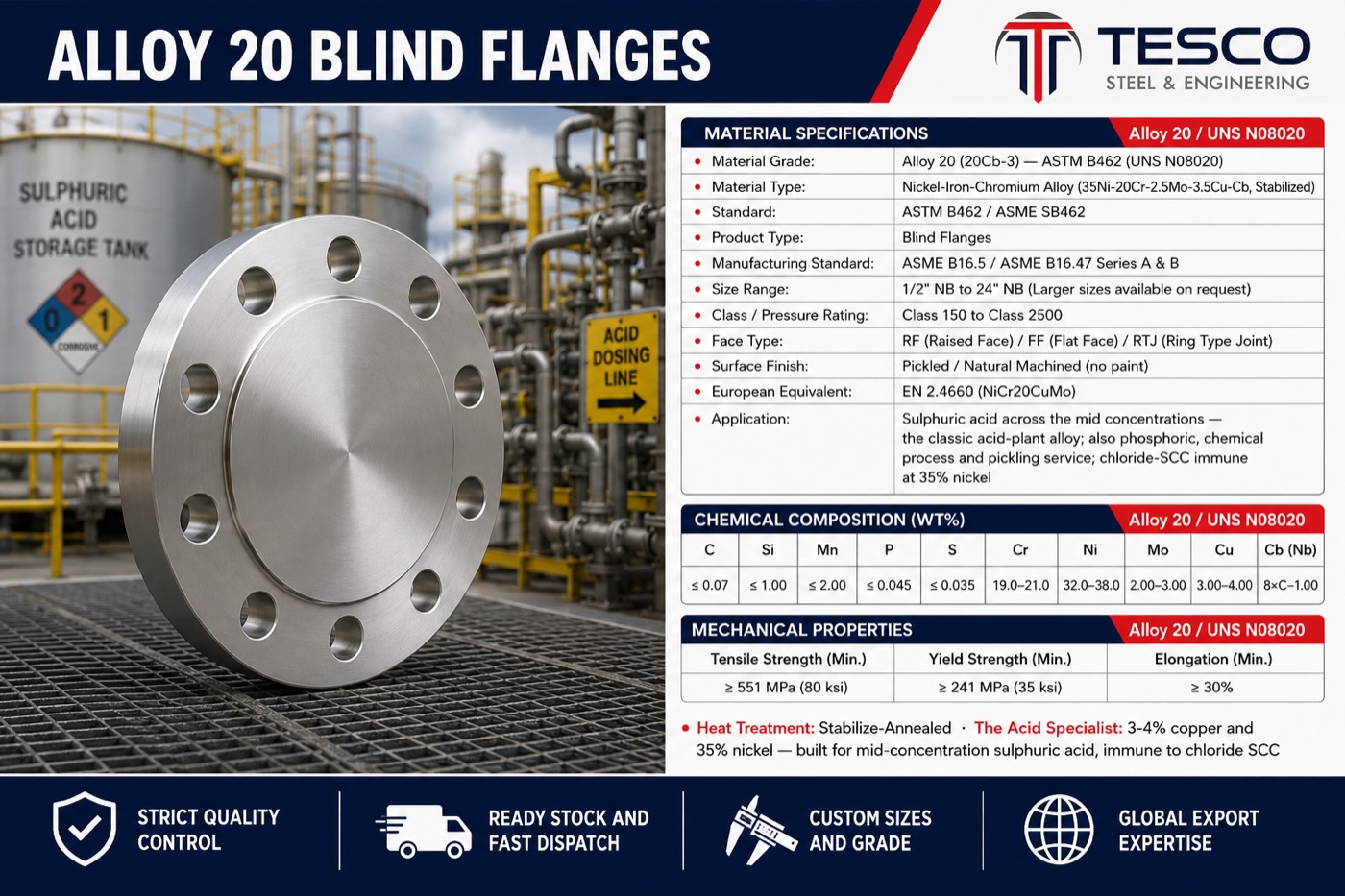
Tesco Steel & Engineering forges Alloy 20 blind flanges — 20Cb-3, ASTM B462, UNS N08020, EN 2.4660 — to ASME B16.5 Class 150–2500 from ½″ to 24″ NB and to ASME B16.47 up to 60″. This page leaves the A182 world: at 32–38% nickel the material certifies under the nickel-alloy standard B462, and its mission is the one chemical the whole stainless family fears — mid-concentration sulphuric acid, answered with copper at 3–4%, double what 904L carries. The nickel makes chloride SCC a closed subject; a niobium stabiliser at 8×C keeps every future weld sensitization-proof; and the stabilize-anneal locks the carbon up before the flange ships. Chloride pitting instead: 254 SMO. Hot contaminated acid: Hastelloy. Facings: BLRF, BLFF or BLRTJ. Every lot with EN 10204 3.1/3.2 MTC. ISO 9001:2015, made in Mumbai, India — exported to 50+ countries.
Alloy 20 · 20Cb-3 · ASTM B462 · UNS N08020EN 2.4660 · NiCr20CuMoThe Sulphuric Acid AlloyCu 3–4% · Ni 32–38%Chloride-SCC Immune · Nb-StabilisedASME B16.5 ½″–24″ · Class 150–2500RF · FF · RTJ FacingsEN 10204 3.1 / 3.2 · ISO 9001:2015
Alloy 20 Blind Flanges — Specifications at a Glance
What is an Alloy 20 Blind Flange?
The classic acid-plant alloy. A solid forged disc of nickel-iron-chromium alloy 20Cb-3 (ASTM B462 / UNS N08020 / EN 2.4660) with no bore, closing pipes, valves and nozzles in acid service that defeats stainless: mid-concentration sulphuric above all, plus phosphoric, mixed-acid and pickling chemistry. Copper 3–4% ennobles the surface against reducing attack; nickel 32–38% closes the chloride-SCC question; niobium at 8×C plus the stabilize-anneal keeps welds sensitization-proof. Mechanicals 551/241 MPa per B462. Dimensions per ASME B16.5 / B16.47 in RF, FF and RTJ facings; EN 10204 3.1 certified.
Also searched as: 20Cb-3 blind flange, Carpenter 20 blind, N08020 blind, 2.4660 blind flange, SB462 blind, nickel alloy 20 blind, sulphuric acid blind flange — all refer to the product on this page. See also the acid cousin F904L, the chloride summit 254 SMO, the hotter handoffs Hastelloy / Inconel, and the facing pages BLRF / BLFF / BLRTJ.
Built for the Hardest Stretch of the Sulphuric Curve
The Mid-Concentration Problem
Sulphuric at 20–70% and warm is too reducing for stainless passivity, not concentrated enough for carbon steel's oxide film — the band where 316L, 317L and even duplex corrode actively. Alloy 20 was designed in the 1950s for exactly this window, and seventy years of acid plants have kept it there.
Copper, Doubled
3–4% against 904L's 1–2%: the surface ennobles in reducing acid, slowing the attack itself. Backed by 20% chromium and a third of the alloy in nickel.
The 1950s Insurance Policy
Niobium at 8×C and a stabilize-anneal near 940°C lock the carbon into harmless carbides before shipment — welds made decades later inherit the same sensitization-proof structure. The "Cb" in 20Cb-3 announces it.
Off the A182 Map
At 32–38% nickel this is no longer steel: certification moves to ASTM B462 / ASME SB462, the nickel-alloy forging standard — a purchase order citing "A182 Alloy 20" needs correcting before it reaches any works.
The recipe reads acid, not chloride: copper doubled over 904L, nickel pushed to a third of the alloy — but molybdenum kept modest at 2–3%, because pitting resistance was never the brief. The niobium is dosed by formula — eight times the carbon — verified by arithmetic on every heat and read by PMI on every piece.
Mechanical Properties & The Service Span
Property
ASTM B462 N08020 Requirement
Tensile Strength
≥ 551 MPa (80 ksi)
Yield Strength (0.2%)
≥ 241 MPa (35 ksi)
Elongation
≥ 30%
Reduction of Area
Not specified in B462 for this grade — certificates carry the three values above
Hardness
No B462 limit — typically soft in the stabilize-annealed condition
Condition
Stabilize-annealed — the grade's signature heat treatment, stated on certificate
Service Span
Working world is chemical, not thermal: most duty ambient to ~150°C in the acid window; B16.5 rates the material toward 425°C
Alloy 20 Blind Flanges are available in the following specifications:
Material Grade
Alloy 20 / 20Cb-3 — ASTM B462 / ASME SB462 (UNS N08020); EN 2.4660 / NiCr20CuMo designation where the project requires it
Heat Treatment
Stabilize-annealed — the grade's signature condition; stated on certificate
Size
1/2"NB to 24"NB per ASME B16.5; 26"–60" per ASME B16.47; EN 1092-1 to order
Class
150#, 300#, 400#, 600#, 900#, 1500#, 2500# — rated on the grade's own nickel-alloy B16.5 lines
Facings
Raised Face (BLRF), Flat Face (BLFF), Ring Type Joint (BLRTJ) with groove per B16.20
Service Span
Mid-concentration sulphuric, phosphoric & mixed-acid chemistry, ambient to ~150°C typical; hot contaminated acid belongs to Hastelloy
Surface Finish
Pickled or natural machined — no paint; segregated alloy handling throughout
Modifications
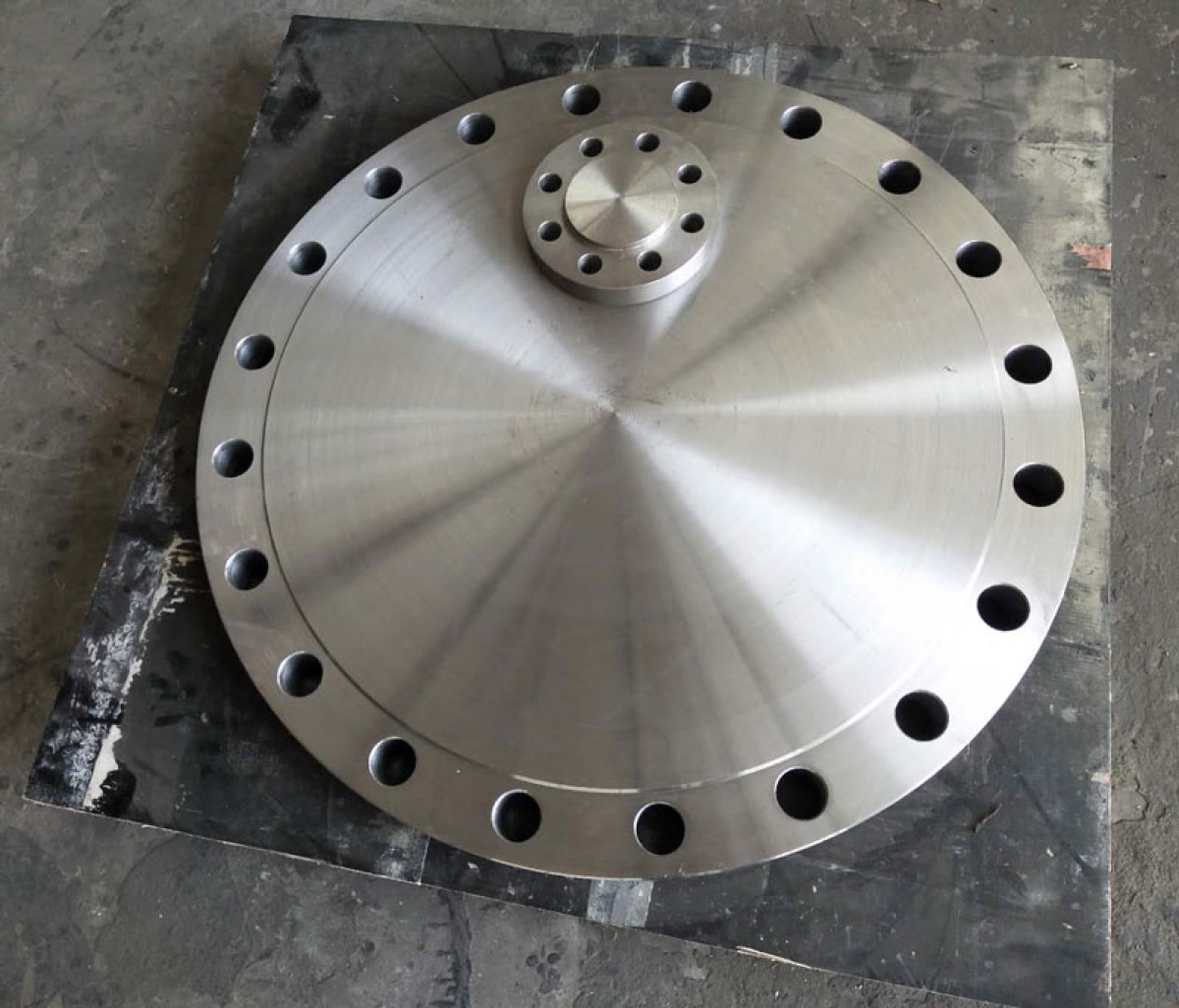
NPT-tapped centre (dosing / test / vent), lifting provisions — machined & certified at the works
Testing
Tension & chemistry per heat — copper and niobium (8×C rule) verified; PMI routine; IGC (A262) where specified
Certification
EN 10204 3.1 (standard) / 3.2 witnessed
Why Alloy 20 Blind Flanges Are Specified
Sulphuric Wrote the Line Class
Acid plants, dilution trains, sulphonation units and pickling lines have specified 20Cb-3 by name for seventy years — the closure carries the same copper-nickel certificate as the pipe it blanks.
SCC Immunity Included
At 35% nickel, the chloride stress-corrosion cracking that stalks 316L in warm acid liquor is simply off the table — without duplex's fabrication rules.
Welds Protected for Life
Niobium stabilisation plus the stabilize-anneal: the blind that becomes a welded spool at the next revamp inherits sensitization-proof grain boundaries, no post-weld treatment asked.
Stronger Than the Stainless It Replaces
551/241 MPa — 80 ksi tensile against the austenitic 75 — on the grade's own B16.5 rating lines.
Three details buyers miss.The standard is B462, not A182: purchase orders citing "ASTM A182 Alloy 20" describe a certificate that cannot exist — the nickel-alloy forging standard governs, and our MTCs read B462/SB462. SCC immunity is not pitting immunity: with molybdenum at only 2–3%, fierce chloride crevice duty still belongs to the high-moly grades — Alloy 20's copper is spent on acid, not brine. State the full acid analysis: concentration, temperature and contaminants (ferric ions, chlorides) decide whether the duty sits in Alloy 20's window or has already crossed into Hastelloy territory — the analysis on the enquiry gets the right rung quoted first time.
How Our Alloy 20 Blind Flanges Are Manufactured
1
Forging — cut billet of the spectro-verified N08020 heat — copper, nickel and niobium confirmed to their windows — is hot-forged into the solid disc blank with full heat traceability and segregated alloy handling.
2
Stabilize-anneal — the grade's signature treatment near 940°C, deliberately forming and coarsening the niobium carbides that lock the carbon up; furnace charts retained against the heat number.
3
Machining & facing — faces, OD and drilling to ASME B16.5 / B16.47; RF serrations, flat face or RTJ groove gauged per B16.20; NPT taps machined where ordered.
4
Testing — tension test and chemistry against the heat; PMI on every piece reads the copper-nickel signature; niobium checked against the 8×C rule; IGC (A262) where specified.
5
Pickling — the clean paint-free surface the acid service will meet, with marking of standard, grade, size, class and heat number.
6
Certification & packing — EN 10204 3.1 MTC (3.2 witnessed on request); faces protected, palletised or crated sea-worthy — no carbon-steel contact in transit.
Where Alloy 20 Blind Flanges Are Used
Wherever sulphuric acid is made, moved or used in earnest: acid plants and dilution trains, sulphonation and alkylation units, phosphoric acid and fertiliser circuits, steel-pickling lines, dye and pharmaceutical chemistry, mixed-acid process where stainless corrodes actively. Production below:
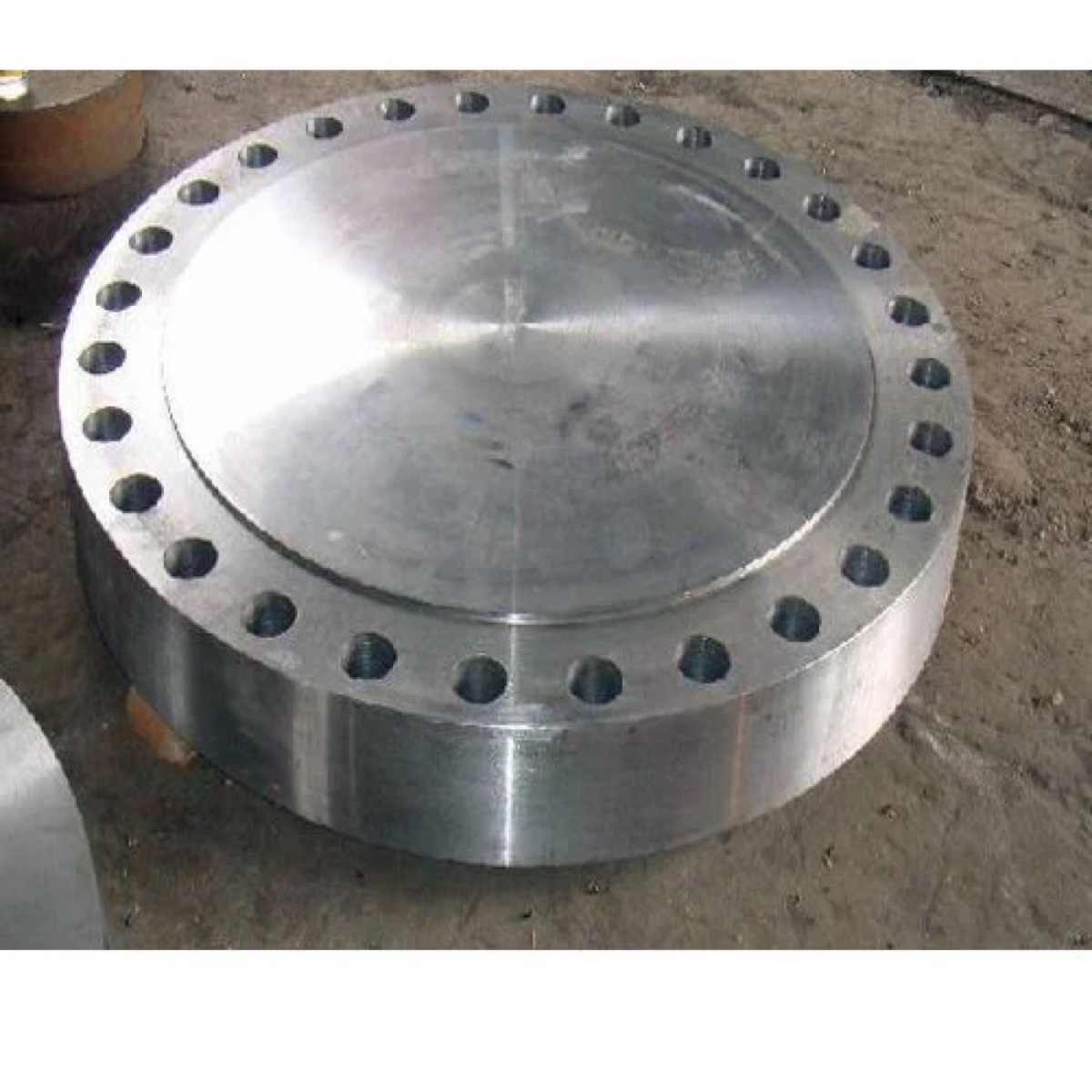
Large Blind Flange — Auxiliary Nozzle ClosureHeavy-Section Forged Blind — At Our Works
Alloy 20 Blind Flange Dimensions
Blind dimensions are class-governed — identical across material grades. Full charts:
Five elements — the acid analysis is the Alloy 20-specific one:
1
Size & standard — e.g. 3″ NB ASME B16.5, or the B16.47 series for 26″ and above.
2
Pressure class & facing — Class 150–2500; RF, FF or RTJ (with ring number) to match the mating flange — flat face for FRP and lined acid-plant equipment.
3
Grade — ASTM B462 UNS N08020 (Alloy 20 / 20Cb-3) — not A182; state EN 2.4660 where the project paperwork requires it.
4
Service & certification — state acid type, concentration, temperature and contaminants; NPT tap size if a dosing or test blind; IGC (A262), PMI or 3.2 witnessing as specified; EN 10204 3.1 standard.
An Alloy 20 blind flange is a solid forged disc of nickel-iron-chromium alloy — 20Cb-3, certified to ASTM B462 as UNS N08020, EN 2.4660 — drilled to the standard bolt pattern with no bore, used to close pipes, valves and vessel nozzles in acid service that defeats stainless steel: above all sulphuric acid in the mid concentrations, plus phosphoric, mixed-acid and pickling chemistry. Copper at 3-4% is its weapon, nickel at 32-38% closes the chloride-SCC question, and a niobium stabiliser protects every weld. Dimensions follow ASME B16.5 from ½ inch to 24 inch and ASME B16.47 beyond, in raised face, flat face and ring joint facings.
Why is Alloy 20 called the sulphuric acid alloy?
Because it was designed for exactly that, in the 1950s, and nothing at its price has displaced it since. Mid-concentration sulphuric — roughly the 20-70% band at warm temperatures — is the hardest stretch of the acid's curve: too reducing for stainless passivity, not concentrated enough for carbon steel's oxide protection. Alloy 20 attacks the problem with copper at 3-4%, double what 904L carries, ennobling the surface against reducing attack, backed by 35% nickel and 20% chromium. Acid plants, dilution circuits, pickling lines and sulphonation chemistry have specified it by name for seventy years.
Why is Alloy 20 certified to ASTM B462 and not A182?
Because at 32-38% nickel it is no longer a steel. ASTM A182 covers forged steel flanges — carbon, alloy and stainless; once nickel becomes the dominant design element the material moves to the B-series nickel-alloy standards: B462 for forged flanges and fittings, B463 for plate, B464 for pipe, with ASME SB462 as the boiler-code twin. Practical consequences for buyers: the certificate reads B462, the flange rates on nickel-alloy pressure-temperature lines in B16.5, and A182 paperwork simply does not exist for this material — a purchase order citing 'A182 Alloy 20' needs correcting before it reaches the works.
What is the chemical composition of Alloy 20 (UNS N08020)?
Carbon ≤0.07%, silicon ≤1.00%, manganese ≤2.00%, phosphorus ≤0.045%, sulphur ≤0.035%, chromium 19.0-21.0%, nickel 32.0-38.0%, molybdenum 2.00-3.00%, copper 3.00-4.00%, columbium (niobium) at 8×C to 1.00%. The recipe reads acid, not chloride: copper doubled over 904L, nickel pushed to a third of the alloy, but molybdenum kept modest — this was never meant to be a pitting-resistance champion. The niobium is dosed by formula, eight times the carbon, and verified by arithmetic on every certificate.
What are the mechanical properties of Alloy 20 blind flanges?
Per ASTM B462: tensile strength 551 MPa (80 ksi) minimum, yield strength 241 MPa (35 ksi) minimum, elongation 30% minimum, in the stabilize-annealed condition. Usefully stronger than the austenitic stainless it replaces — 80 ksi against the usual 75 — with the ductility of a high-nickel austenitic structure. B462 specifies no reduction-of-area requirement for this grade, so certificates carry the three values above; flange ratings run on Alloy 20's own nickel-alloy lines in ASME B16.5.
What is stabilize-annealing, and why does Alloy 20 contain niobium?
The same anti-sensitization insurance as stainless 347, written into a nickel alloy. Niobium at eight times the carbon captures it as harmless niobium carbides, so welding cannot strip chromium from the grain boundaries — vital in an alloy whose whole job is corrosive service. The heat treatment completes the design: rather than a plain solution anneal, Alloy 20 receives a stabilize-anneal around 940°C, deliberately held where niobium carbides form and coarsen, locking the carbon up before the flange ever ships. The certificate states the condition; welds made later inherit the same protection.
Alloy 20 or 904L — how do I choose between the acid grades?
Close cousins with different accents. Alloy 20 carries double the copper and more nickel — in mid-concentration sulphuric at temperature it is the stronger performer, and it is the name American acid-plant line classes have written for decades. 904L answers with higher molybdenum (4-5% against 2-3%), giving visibly better chloride pitting resistance, plus wider European stocking as EN 1.4539 and a slightly gentler price. The practical split: sulphuric-led duty and US-heritage specs favour Alloy 20; chloride-plus-acid mixtures and European specs favour 904L. Many plants accept either — we forge both and quote both.
When does Alloy 20 hand off to Hastelloy?
When the acid gets hot, concentrated or contaminated. Alloy 20's window is genuine but bounded: push sulphuric toward boiling, add chlorides or oxidising contaminants like ferric ions, or move into hydrochloric territory, and its corrosion rate climbs out of the serviceable range. That is Hastelloy country — C-276 and its relatives, with molybdenum at 16% and nickel at 57%, hold the aggressive end of acid chemistry at several times the cost. The honest sequence for acid duty: 316L for dilute and clean, 904L or Alloy 20 for the classic mid-band, Hastelloy when temperature and contamination compound. State the full acid analysis at enquiry and we will place the duty on the right rung.
Is Alloy 20 immune to chloride stress-corrosion cracking?
Effectively yes — this is one of its quiet selling points. Chloride SCC preys on austenitic structures in the 8-12% nickel window; resistance rises steeply with nickel, and by 32-38% the mechanism is essentially shut off. An Alloy 20 closure in warm chloride-bearing acid liquor simply does not carry the cracking risk a 316L or 317L one would. Note the distinction though: SCC immunity is not pitting immunity — with only 2-3% molybdenum, Alloy 20's PREN is modest, and fierce chloride pitting duty still belongs to the high-moly grades like 254 SMO or super duplex.
Alloy 20, 20Cb-3, Carpenter 20, N08020, 2.4660 — are these the same?
Same alloy, different labels. Alloy 20 is the generic name; 20Cb-3 is the classic trade designation (the 'Cb' announcing its columbium stabiliser); Carpenter 20 credits the originating mill; UNS N08020 is the universal number every certificate carries; EN 2.4660 / NiCr20CuMo is the European designation. A specification citing any of them is met by material certified to N08020 under ASTM B462 — our certificates carry the UNS number and B462, with the EN designation added where the project requires it.
What temperature range does an Alloy 20 blind flange cover?
Its working world is chemical, not thermal: most Alloy 20 service sits between ambient and roughly 150°C, where the acid curves it was designed for live. The material itself remains stable considerably further — B16.5 rates it toward 425°C, the niobium stabiliser protecting the structure throughout — but nobody buys 35% nickel for hot air, and above the acid window other alloys take over on merit. Cold-end behaviour is fully austenitic and tough. In short: specify it for the chemistry; the temperature rating will rarely be the limiting question.
What facings are Alloy 20 blind flanges made with?
All three: raised face (BLRF) — the process default — flat face (BLFF) for the FRP, rubber-lined and acid-brick equipment that acid plants run in quantity, and ring type joint (BLRTJ) where high-pressure practice calls for it, the ring chosen softer than the groove. Each facing has its own page on this site. Gasket chemistry deserves matching care in acid service — PTFE-based systems are the usual companions. NPT-tapped test and dosing blinds are machined and certified at the works.
Where are Alloy 20 blind flanges used?
Wherever sulphuric acid is made, moved or used in earnest: acid plants and dilution trains, sulphonation and alkylation units, phosphoric acid and fertiliser circuits, steel-pickling lines, dye and pharmaceutical chemistry, and mixed-acid chemical process where stainless corrodes actively. Alloy 20 blinds close those systems as isolations, spare-nozzle blanks and tapped dosing points — with the copper-nickel certificate the service demands and the stabilized welds the line class assumes.
Which standards cover Alloy 20 blind flanges?
The material standard is ASTM B462 (UNS N08020) with ASME SB462 as the boiler-code twin — the nickel-alloy forging standard, not A182 — alongside B463 for plate and B464 for pipe in the same alloy, and EN 2.4660 / NiCr20CuMo as the European designation. Dimensions follow ASME B16.5 for ½"-24" and ASME B16.47 for 26"-60", rated on the grade's own lines. A complete specification reads: 'Blind Flange, RF, 3", ASME B16.5 Class 150, ASTM B462 UNS N08020 (Alloy 20)' — and our EN 10204 certificates state it exactly that way, copper and niobium included.
Who manufactures Alloy 20 blind flanges in India?
Tesco Steel & Engineering is an ISO 9001:2015 certified flange manufacturer based in Mumbai, India, forging Alloy 20 / 20Cb-3 / ASTM B462 / UNS N08020 / EN 2.4660 blind flanges from ½" to 24" NB per ASME B16.5 in Classes 150-2500 and to 60" per ASME B16.47 — stabilize-annealed, pickled, PMI-verified with the copper and niobium read on every piece, certified to EN 10204 3.1/3.2 on every lot — in raised face, flat face and ring joint facings, alongside 904L, 254 SMO, duplex, Hastelloy, Inconel and Monel blinds. Exported to more than 50 countries.