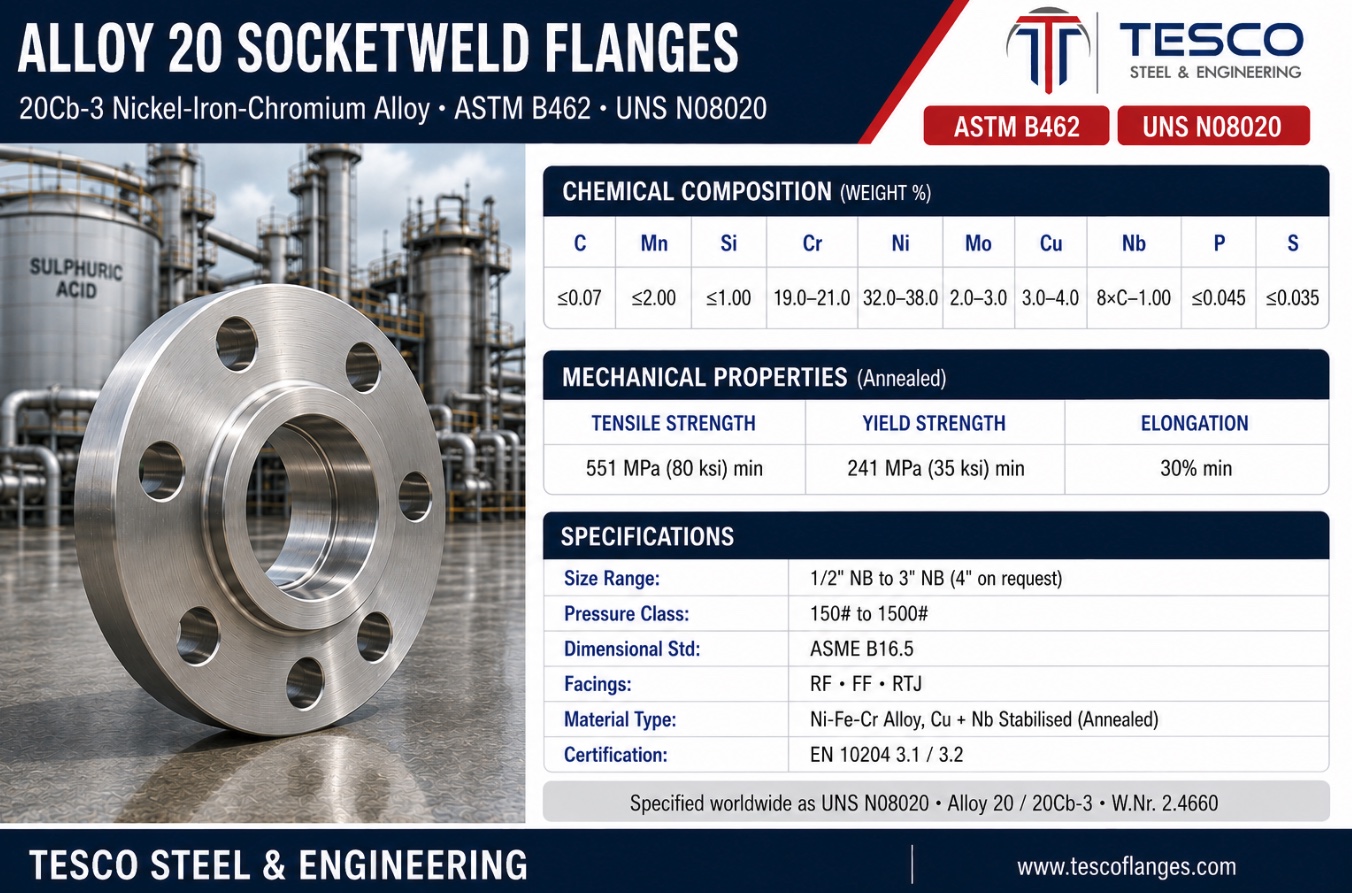
Tesco Steel & Engineering manufactures Alloy 20 socketweld flanges — the alloy that owns sulphuric acid: 20Cb-3, ASTM B462, UNS N08020, W.Nr. 2.4660 — to ASME B16.5 from ½″ to 3″ NB in Classes 150–1500. Designed in 1951 for one commodity and never displaced from it, the recipe attacks the acid's whole map at once: 3–4% copper (double 904L's dose) holds passivity in the reducing range, 19–21% chromium the oxidising flank, 2–3% Mo the chloride contamination — and 32–38% nickel puts the alloy on the immune shoulder of the SCC curve: a third of the metal is nickel, and cracking simply stops being a question. Niobium-stabilised (347's trick transplanted), welded with the purpose-built ER320LR filler — no preheat, no PWHT. The honest boundaries below: not a seawater alloy, and when hydrochloric or hostile mixed chemistry enters, the escalation is Hastelloy C-276. Facings: SWRF, SWFF, SWRTJ. Every lot with EN 10204 3.1/3.2 MTC. ISO 9001:2015, made in Mumbai, India — exported to 50+ countries.
Alloy 20 Socketweld Flanges — Specifications at a Glance
What is an Alloy 20 Socketweld Flange?
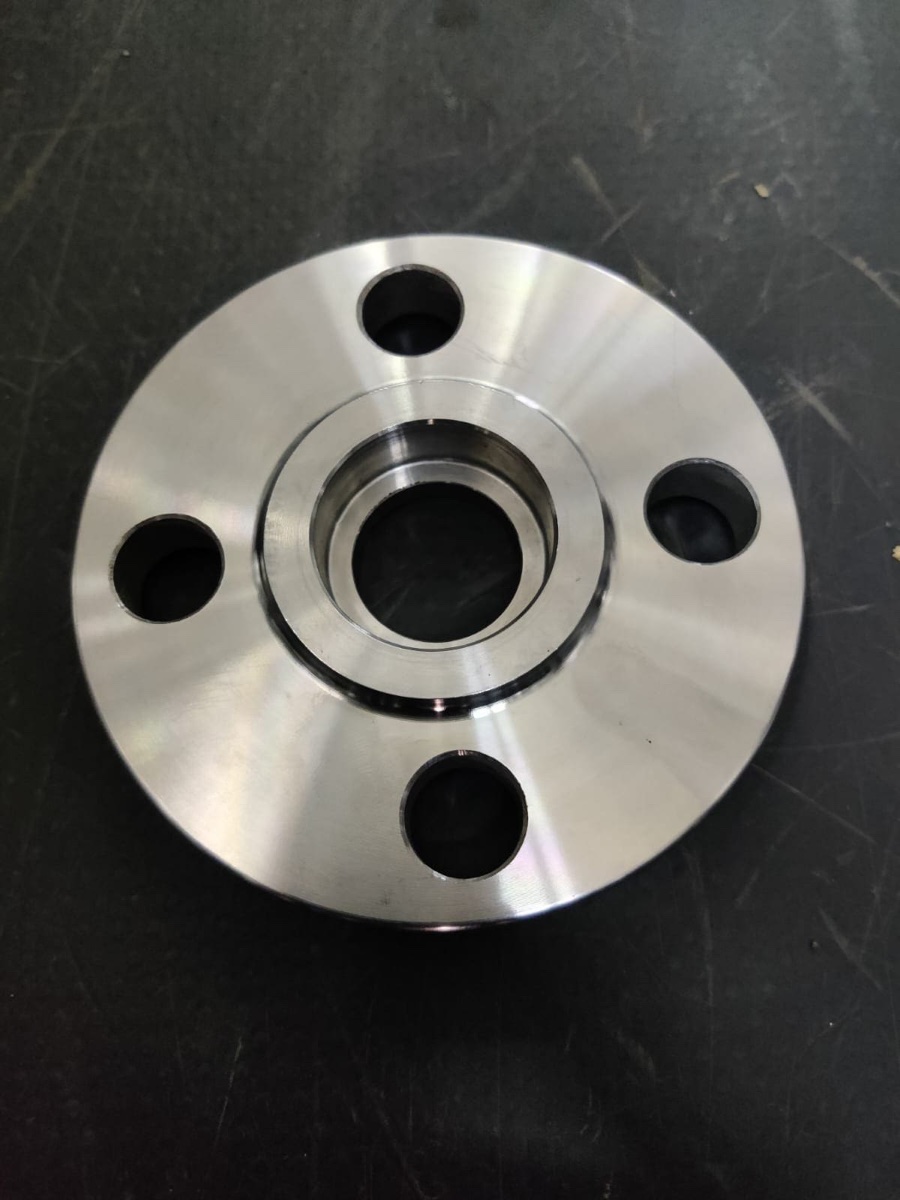
The sulphuric acid alloy in the small-bore pattern. A forged nickel-iron-chromium flange (Alloy 20 / 20Cb-3 / ASTM B462 / UNS N08020 / W.Nr. 2.4660) with a machined socket: pipe seated square by geometry, one external fillet weld with ER320LR filler — no preheat, no PWHT — through-bore matched to the pipe schedule. Cu 3–4% holds passivity across sulphuric acid's reducing range; Ni 32–38% sits on the SCC-immune shoulder of the Copson curve; Nb ≥8×C stabilises every weld zone. Tensile ≥551 MPa, yield ≥241 MPa, elongation ≥30%, annealed. Sized by ASME B16.5 at ½″–3″ NB, Classes 150–1500; EN 10204 3.1 on every lot.
Also searched as: Carpenter 20 socket weld flange, 20Cb-3 SW flange, N08020 SWRF flange, 2.4660 socket weld flange, CN7M wrought equivalent, sulphuric acid alloy flange — all the same product family. Related pages: the facings — SWRF / SWFF / SWRTJ — the socketweld hub, the other Alloy 20 types — blind, weld neck, slip-on, threaded, spectacle blind — the acid neighbours F904L / Hastelloy C-276 socketweld, and the Hastelloy hub.
Concentration and temperature draw the lines — state both on the enquiry and we check the iso-corrosion curves, not the brochure.
What the Recipe Buys
Four Weapons, One Acid
Copper for the reducing range, chromium for the oxidising flank, molybdenum for chloride contamination, nickel for the backbone — sulphuric acid's whole concentration map, answered in one chemistry.
Cracking Off the Table
At 32–38% nickel the alloy sits on the immune shoulder of the classical SCC curve — hot, chloride-contaminated acid streams crack stainless; they cannot crack this.
Weld-Safe by Stabilisation
Niobium at eight times carbon chaperones every weld zone — shop welds, field repairs and re-welds carry no sensitization arithmetic, in exactly the acid that punishes it.
Seventy Years of Franchise
Designed 1951, never displaced: acid-plant datasheets write 20Cb-3 by name for pumps, valves, coolers and piping trim — the pedigree rides on every certificate.
Alloy 20 Chemical Composition (UNS N08020)
Element
C
Mn
Si
Cr
Ni
Mo
Cu
Nb
P
S
Weight %
≤0.07
≤2.00
≤1.00
19.0–21.0
32.0–38.0
2.0–3.0
3.0–4.0
8×C–1.00
≤0.045
≤0.035
Iron is the balance — a third of the metal is nickel, filing the alloy under UNS N-numbers with the nickel family. The Cb in 20Cb-3 is niobium's old American symbol; the stabilisation is certified per heat. PMI confirms nickel, copper and niobium on every piece.
Alloy 20 Socketweld Flanges are available in the following specifications:
Material Grade
Alloy 20 / 20Cb-3, ASTM B462 (UNS N08020), W.Nr. 2.4660 — certificates carry the designations your documentation uses
Heat Treatment
Stabilising anneal (930–995 °C) with furnace records certified
Size
1/2"NB to 3"NB per ASME B16.5; 4″ and larger to order; EN 1092-1 patterns to order
Class
150#, 300#, 600#, 900#, 1500# (900# shares 1500# dimensions in most sizes) — acid-plant volume lives in 150/300
Facings
Raised Face (SWRF), Flat Face (SWFF), Ring Type Joint (SWRTJ) with groove per B16.20
Bore
Socket bore to pipe OD; through-bore matched to pipe schedule (Sch 10S/40S dominate)
Welding
Single external fillet with 1/16″ expansion gap; ER320LR filler — the purpose-built low-residual consumable; slim beads, modest dilution; no preheat, no PWHT
Service Span
Sulphuric acid across the concentration range at plant temperatures; phosphoric & organic acids; pickling lines; not seawater or HCl — see the notes
Surface Finish
Pickled or natural machined — dedicated nickel-alloy handling, no carbon-steel contact
Testing
Tension & chemistry per heat; PMI on every piece — Ni, Cu and Nb confirmed; socket depth and bore gauged
Certification
EN 10204 3.1 with anneal records (standard) / 3.2 witnessed
Specification Notes — Getting Alloy 20 Sockets Right
Four honest notes.It is an acid alloy, not a seawater alloy: molybdenum at 2–3% leaves pitting resistance near 316/317 territory — brines and chlorinated cooling water belong to the super duplex and 6Mo families, however famous the name. Hydrochloric acid is not its acid: HCl and hostile mixed chemistry escalate to Hastelloy C-276. Check the curves, not the name: hot strong sulphuric has an envelope — state concentration and temperature and we verify against the iso-corrosion charts before quoting. And where the duty is mild, 904L saves money: the rung below handles dilute and ambient acid at stainless pricing — we price the honest pair.
How Our Alloy 20 Socketweld Flanges Are Manufactured
1
Forging — cut billet of the spectro-verified N08020 heat is hot-forged into the flange blank with full heat traceability and segregated nickel-alloy handling.
2
Stabilising anneal — the 930–995 °C treatment that sets the structure and the niobium carbides; furnace charts retained against the heat number.
3
Machining — faces, OD and drilling to ASME B16.5 on dedicated stations — the gummy high-nickel matrix demands sharp tooling and positive feeds; socket counterbore and depth gauged piece by piece, through-bore matched to the ordered schedule.
4
Facing — RF serrations, flat face or RTJ groove per B16.20.
5
Testing & marking — tension and chemistry per heat; PMI on every piece with nickel, copper and niobium confirmed; laser-marked with grade, size, class, schedule and heat number.
6
Certification & packing — EN 10204 3.1 MTC with anneal records (3.2 witnessed on request); ER320LR WPS guidance included; packed sea-worthy with no carbon-steel contact.
Where Alloy 20 Socketweld Flanges Are Used
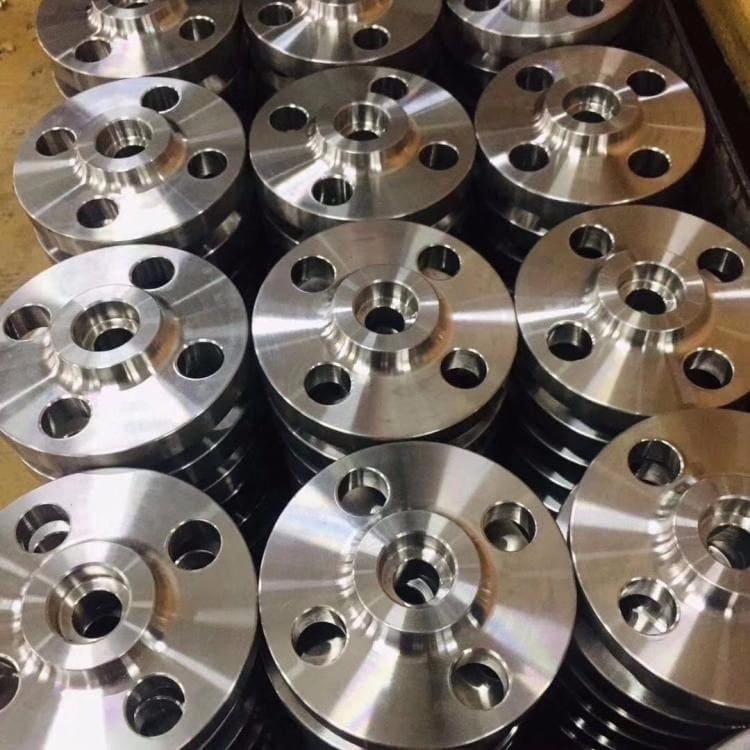
Wherever sulphuric acid meets small bore: acid plants proper (dilution trains, transfer and dosing lines, sample and instrument taps), pickling and surface-treatment lines, the sulphuric side of fertiliser works, phosphoric acid circuits, organic acid process (acetic, formic), and pharmaceutical fine chemistry that lives on acid catalysis. Production below:
How to Specify & Order an Alloy 20 Socketweld Flange
Six elements — and the acid itself belongs on the enquiry:
1
Size & standard — e.g. 1″ NB ASME B16.5, or DN25 EN 1092-1 to order.
2
Pressure class & facing — 150#–1500#; SWRF (the default), SWFF (common against lined mates) or SWRTJ — with the acid service stated, so the gasket recommendation rides with the quote.
3
Pipe schedule — Sch 10S, 40S or 80S: the through-bore is matched to the pipe ID.
4
Grade line — Alloy 20 / 20Cb-3 / ASTM B462 / UNS N08020 / W.Nr. 2.4660 all name the same metal; concentration and temperature invited for the iso-corrosion check and the honest 904L comparison.
5
Certification — EN 10204 3.1 with anneal records (our standard) / 3.2 witnessed, PMI as applicable.
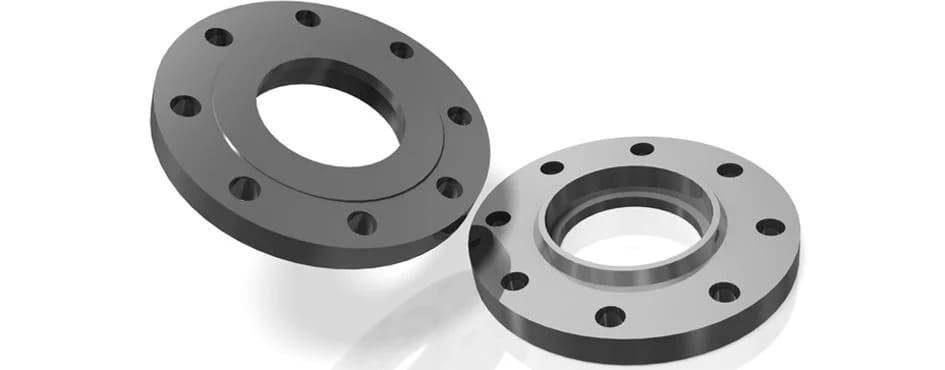
An Alloy 20 socketweld flange is a forged nickel-iron-chromium alloy flange — 32-38% nickel, 19-21% chromium, 3-4% copper, 2-3% molybdenum, niobium-stabilised, ASTM B462, UNS N08020, W.Nr. 2.4660, known by its trade name 20Cb-3 — whose back carries a machined socket: the pipe end seats inside, self-aligned square to the face, and is secured with a single external fillet weld. Alloy 20 crossed the border out of stainless steel: with a third of the metal nickel, it is certified to nickel-alloy standards, and it was designed in 1951 for one commodity — sulphuric acid — which it has served as the specification default ever since. Dimensioned to ASME B16.5 for ½" to 3" NB in Classes 150 to 1500 — the acid ladder's top dedicated rung, in the small-bore pattern.
Why is Alloy 20 THE sulphuric acid alloy?
Because it was purpose-built for the acid and has held the franchise for seventy years. Sulphuric acid is uniquely awkward: dilute it is reducing, concentrated it is oxidising, and the worst corrosion lives in the middle concentrations where stainless steels dissolve. Alloy 20's recipe attacks the whole map at once — copper for passivity in the reducing range, chromium for the oxidising range, nickel for the metal's backbone and cracking immunity, molybdenum for the chloride contamination every real acid stream carries. The result is useful resistance across essentially the full concentration range at ordinary plant temperatures, which is why acid-plant specifications write Alloy 20 by name for pumps, valves, coolers and piping trim — and why the grade never needed a successor in its own lane.
What is the chemical composition of Alloy 20 (UNS N08020)?
Carbon ≤0.07%, manganese ≤2.00%, silicon ≤1.00%, chromium 19.0-21.0%, nickel 32.0-38.0%, molybdenum 2.0-3.0%, copper 3.0-4.0%, niobium at least eight times the carbon content up to 1.00% maximum, phosphorus ≤0.045%, sulphur ≤0.035%, iron the balance. Read it as four weapons for one acid: the copper — double 904L's dose — is the sulphuric specialist; the chromium holds the oxidising flank; the modest molybdenum covers chloride contamination; and the nickel, at a full third of the metal, provides cracking immunity and files the alloy under UNS N-numbers with the nickel family. The niobium stabilisation is 347's trick transplanted — covered in its own FAQ. Chemistry is verified per heat and travels on the EN 10204 3.1 MTC.
What does 33% nickel buy — the cracking immunity story?
Practical immunity from chloride stress corrosion cracking — the failure mode that stalks every stainless steel in hot chloride service. The classical Copson curve tells the story: SCC susceptibility peaks viciously around the 8-12% nickel of the 300-series, falls steadily as nickel rises — 904L at 25% nickel is already far safer — and approaches immunity above roughly 30-35% nickel. Alloy 20 sits at 32-38%: on the immune shoulder of the curve. For acid plants this matters doubly, because real sulphuric and phosphoric streams run hot and carry chlorides together — exactly the SCC recipe — and an alloy that removes the cracking question entirely lets the engineer worry only about general corrosion rates. It is the quiet half of the grade's seventy-year franchise.
What does the copper in Alloy 20 do?
The same job as 904L's copper, at double the dose. In reducing acid — sulphuric's dilute-to-middle range — the acid strips the passive film off ordinary stainless and the bare metal dissolves. Copper in solid solution ennobles the corroding surface: a copper-enriched layer accumulates as attack begins, lifting the electrochemical potential back into the range where the protective film re-forms and holds — the alloy pushes itself back into passivity. At 3-4%, Alloy 20's copper extends that self-rescue across a wider concentration-temperature envelope than 904L's 1-2% manages, which is precisely the gap between the two grades' iso-corrosion charts. The copper also serves in phosphoric acid and hot organic acids — the grade's second and third homes.
Why is Alloy 20 niobium-stabilised — 347's trick in a nickel alloy?
The Cb in 20Cb-3 is the old American symbol for niobium (columbium), and it does exactly what it does in stainless 347: forms carbide preferentially, at eight times the carbon content, so chromium stays in solution and weld heat-affected zones cannot sensitize into intergranular attack. The stabilisation is a legacy of the alloy's era — designed before argon-oxygen decarburisation made ultra-low carbon melting routine — but it remains genuinely useful: an Alloy 20 flange can be welded, repaired and re-welded in the fabrication shop and the field without any sensitization arithmetic, and the acid it serves is exactly the environment that punishes sensitized grain boundaries. Modern heats melt lean anyway; the niobium is belt and braces, certified on every MTC.
What are the mechanical properties of Alloy 20 socketweld flanges?
In the annealed condition ASTM B462 requires tensile strength 551 MPa (80 ksi) minimum, yield strength 241 MPa (35 ksi) minimum and elongation 30% minimum — usefully stronger than the austenitic stainless certificate, with full nickel-alloy toughness and no ductile-brittle transition. Note the condition: annealed — Alloy 20's standard heat treatment is a stabilising anneal in the 930-995°C range, not the higher solution anneal of the stainless family, and the certificate records it. As across this series, corrosion chemistry rather than strength is what the alloy is bought for, and B16.5 pressure-temperature tables for the nickel-alloy group govern the flange's rating; acid-plant small bore rarely approaches them.
Alloy 20 or 904L — the acid ladder's two rungs?
Same mission, one rung apart, and the iso-corrosion charts draw the boundary. 904L — copper at 1-2%, nickel at 25% — handles sulphuric acid comfortably in the milder combinations of concentration and temperature, at stainless-family pricing; it is the economical answer for dosing, ambient transfer and dilute duty. Alloy 20 — copper doubled, nickel a third of the metal, stabilised — extends the envelope to hotter and harder acid, adds outright SCC immunity, and carries the specification pedigree in dedicated acid plants: where the datasheet names 20Cb-3, substitution is rarely welcome. The practical division: incidental or mild sulphuric duty within a stainless piping system — 904L; the acid plant proper, hot acid, or a spec that says Alloy 20 — Alloy 20. State concentration and temperature on the enquiry and we check the curves, not the brochure.
Alloy 20 or Hastelloy C-276 — when to escalate?
When the environment stops being sulphuric-centred and becomes genuinely hostile chemistry. Alloy 20 is a specialist: superb in its acid, good in phosphoric and organics, modest against chlorides, helpless in hydrochloric. C-276 is the generalist of last resort — 16% molybdenum, 16% chromium, nickel-based — that survives hot chlorides, wet chlorine, mixed and unknown acids, and the oxidising-reducing swings that defeat every specialist. It also costs several times more. The escalation logic: stay with Alloy 20 while the duty is sulphuric, phosphoric or organic acid within its envelope; move to C-276 when hydrochloric enters, when chlorides ride hot and concentrated, or when the stream's composition is aggressive and uncertain. Our Hastelloy socketweld pages carry that family's story; we price the honest pair when a duty sits near the border.
What are Alloy 20's honest chloride limits?
Modest — this is an acid alloy, not a seawater alloy, and the distinction matters. With molybdenum at only 2-3%, Alloy 20's pitting resistance sits near 316/317 territory, far below the super duplex and 6Mo grades: warm seawater, brines and chlorinated cooling water will crevice and pit it like any mid-molybdenum austenitic, and a socket weld's gap is a ready crevice. What the alloy does resist is chloride cracking — its nickel makes SCC a non-issue even where pitting begins — and the chloride contamination normally present in industrial acid streams, which its molybdenum covers adequately. The rule: chlorides as a contaminant in acid — comfortably within the franchise; chlorides as the environment itself — specify the seawater families instead. State the stream honestly and the quotation answers in kind.
How is an Alloy 20 socketweld flange welded?
With nickel-alloy care and one purpose-built consumable. Geometry is standard: pipe bottomed in the socket, withdrawn 1/16" (1.6 mm) to leave the expansion gap, single external fillet weld. No preheat, no PWHT. The consumable is the famous part: ER320LR — a filler developed specifically for 20Cb-3, its LR meaning low residuals, because fully austenitic niobium-bearing weld metal is hot-cracking-sensitive and the cure is scrupulously clean chemistry plus slim, low-dilution beads. Matching 320LR keeps the deposit's copper and nickel doing the acid's work; 625 appears where specs over-alloy. The stabilised base metal removes any sensitization concern in multi-pass or repair work. Our WPS guidance names the filler and the discipline, and travels with every supply.
What sizes and pressure classes do Alloy 20 socketweld flanges come in?
ASME B16.5 standardises socket weld flanges from ½" to 3" NB in Classes 150, 300, 600, 900 and 1500 — Class 900 sharing Class 1500 dimensions in most small-bore sizes — with 4" and Class 2500 made to order. Acid-plant small bore lives overwhelmingly in Classes 150 and 300: dosing skids, sample points, dilution trains and instrument taps run at modest pressures where the chemistry, not the rating, drives the specification. Put the pipe schedule on the enquiry — Sch 10S and 40S dominate — and the through-bore is matched to the pipe ID so the joint presents no step to the acid. B16.5 tables for the nickel-alloy group govern the rating; our quotations state them per class.
What details are needed to get an accurate Alloy 20 socketweld flange quotation?
Six elements plus commercial terms: (1) size — ½" to 3" NB; (2) pressure class — 150 to 1500; (3) facing — SWRF, SWFF or SWRTJ, with the acid service stated so the gasket recommendation comes with the quote; (4) the pipe schedule — Sch 10S, 40S or 80S, so the through-bore matches the pipe ID; (5) the grade line — Alloy 20, 20Cb-3, ASTM B462, UNS N08020 or W.Nr. 2.4660 all name the same metal, and the certificate carries the designations your documentation uses; (6) certification — EN 10204 3.1 with anneal records (our standard) or 3.2 witnessed, PMI as applicable. Add the acid, concentration and temperature for an honest check against the iso-corrosion curves — and the 904L comparison priced alongside where the duty allows either. Quotations normally within 24 hours.
Is Alloy 20 stocked or made to order?
Honestly: a project-and-maintenance grade, forged to order and quoted quickly. Alloy 20 flange demand follows acid-plant builds, revamps and the steady drumbeat of acid-side maintenance, so worldwide stock is thin and concentrated in the common small-bore sizes — ours included. The grade is an established forging for us: certified N08020 heats are held with our nickel-alloy stock, and the socket weld programme runs dedicated stations with the anneal and cleanliness discipline the alloy expects. Typical lead times run days to a few weeks by quantity; urgent acid-plant shutdown work is a story we know well — say so on the enquiry and small lots can usually be expedited, with the EN 10204 3.1 certificate carrying the 2.4660 designation where European documentation expects it.
Who manufactures Alloy 20 socketweld flanges in India?
Tesco Steel & Engineering is an ISO 9001:2015 certified flange manufacturer based in Mumbai, India, producing Alloy 20 (ASTM B462, UNS N08020) socket weld flanges from ½" to 3" NB (larger to order) in Classes 150-1500 — each forged from certified heats, stabilise-annealed with furnace records against the heat number, machined on dedicated stations with gauged socket depth and schedule-matched bore, PMI-checked — the nickel, copper and niobium chemistry confirmed on every piece — and laser-marked with grade, size, class, schedule and heat number. Supplied with EN 10204 3.1/3.2 certification and ER320LR WPS guidance, alongside the 904L rung below, the Hastelloy family above, and the full high-alloy socketweld range this series covers. Exported to more than 50 countries.