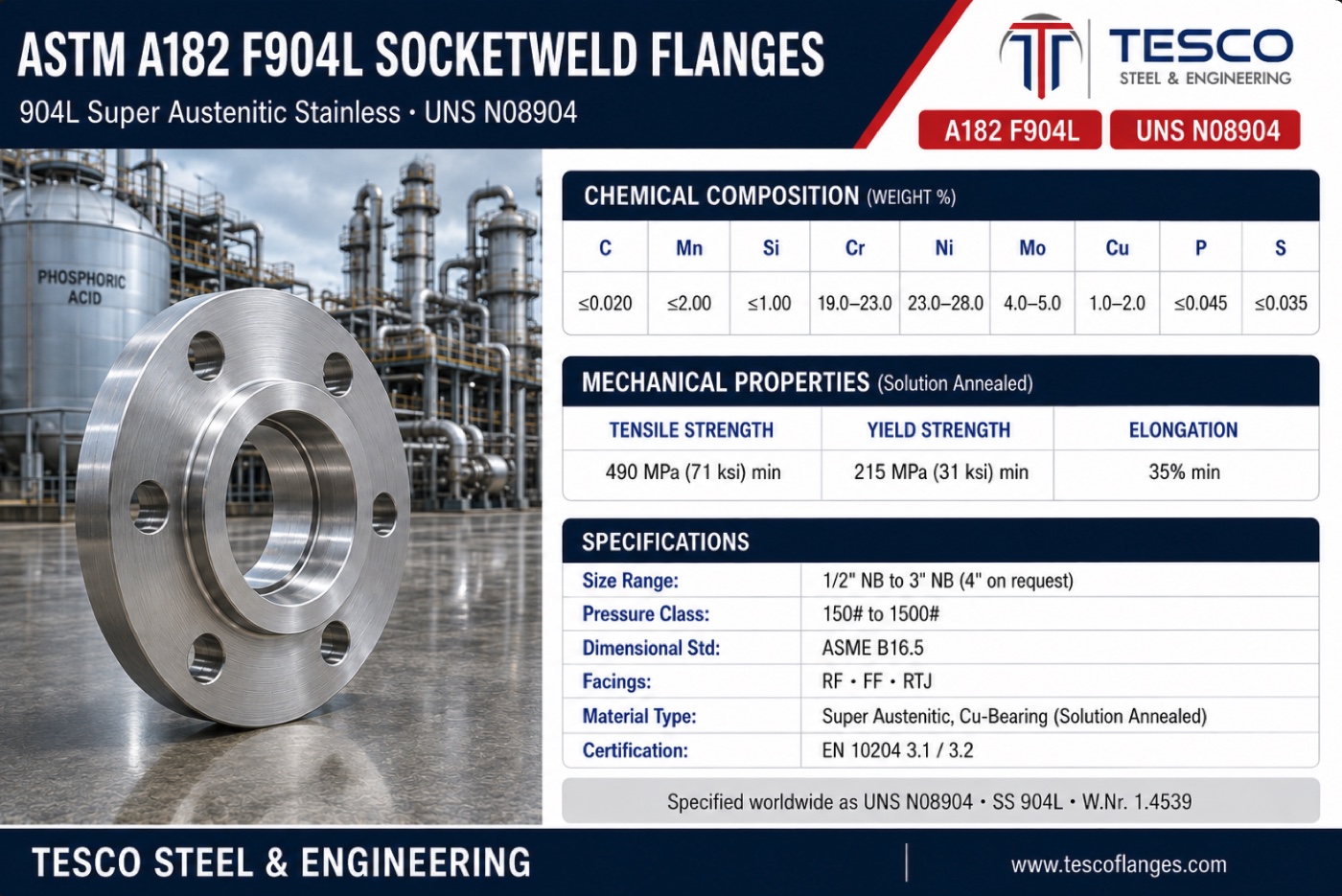
Tesco Steel & Engineering manufactures ASTM A182 F904L socketweld flanges — the acid grade: 19–23% Cr, 23–28% Ni, 4–5% Mo and 1–2% Cu, UNS N08904, W.Nr. 1.4539 — to ASME B16.5 from ½″ to 3″ NB in Classes 150–1500. 904L is halfway to a nickel alloy — its UNS number begins with N — and it was born for the job the 300-series cannot do: sitting passive in sulphuric acid, the copper pushing the surface back into passivity where reducing acid strips lesser films. The same chemistry made it the fertiliser industry's stainless — phosphoric circuits, organic acids, pharma fine chemistry — with carbon at 0.020% (weld immunity by construction) and nickel high enough to take chloride SCC nearly off the map. The honest boundaries are stated below: chlorides-plus-strength went to duplex, the sea went to super duplex and 6Mo — the acid stayed home. Below sits 317L. Facings: SWRF, SWFF, SWRTJ. Every lot with EN 10204 3.1/3.2 MTC. ISO 9001:2015, made in Mumbai, India — exported to 50+ countries.
A182 F904L · UNS N08904 · W.Nr. 1.4539The Acid Grade — Cu 1–2%Halfway to a Nickel Alloy — Ni 23–28%C ≤0.020% — Weld-Immune by ConstructionSCC Nearly Off the Map490 / 215 MPa · 35% ElongationASME B16.5 ½″–3″ · Class 150–1500EN 10204 3.1 / 3.2 · ISO 9001:2015
ASTM A182 F904L Socketweld Flanges — Specifications at a Glance
What is an ASTM A182 F904L Socketweld Flange?
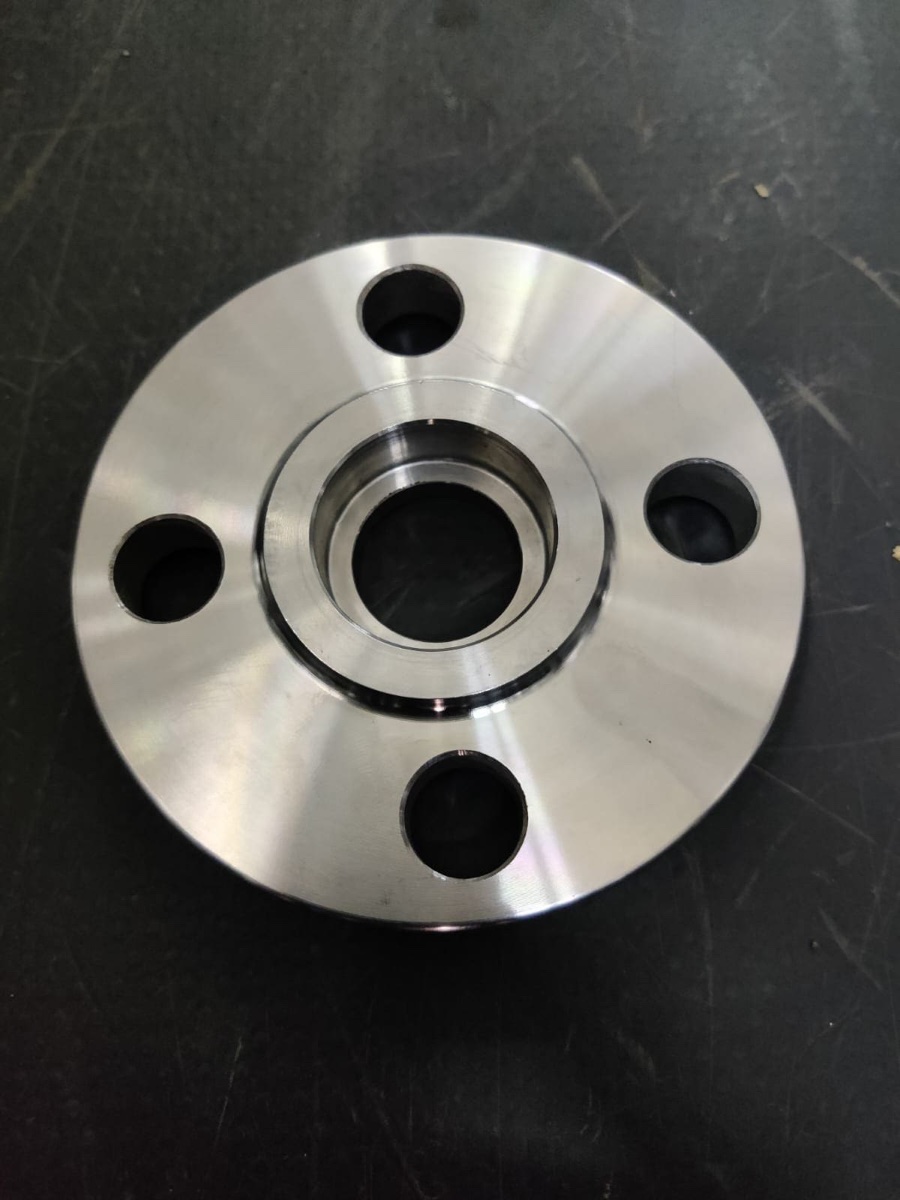
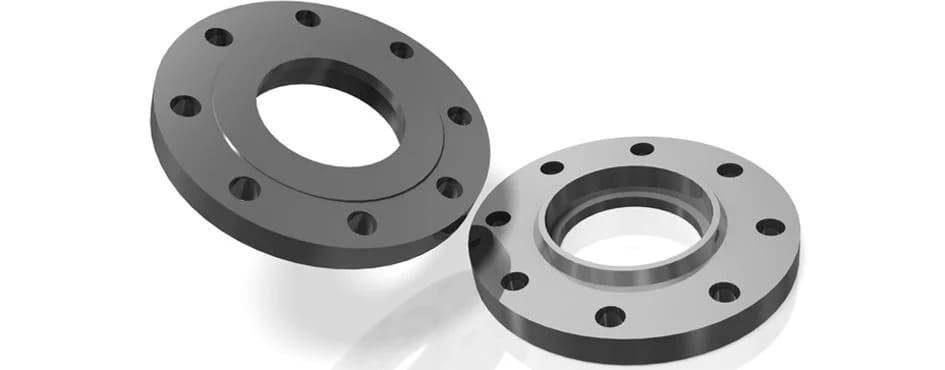
The acid grade in the small-bore pattern. A forged super austenitic flange (ASTM A182 F904L / UNS N08904 / W.Nr. 1.4539) with a machined socket: pipe seated square by geometry, one external fillet weld with matching 904L filler — no preheat, no PWHT — through-bore matched to the pipe schedule. Cu 1–2% holds the alloy passive in mid-concentration sulphuric acid; Ni 23–28% takes chloride SCC nearly off the map; Mo 4–5% sets PREN ~34–36; C ≤0.020% makes weld sensitization impossible by construction. Tensile ≥490 MPa, yield ≥215 MPa, elongation ≥35%, solution annealed. Sized by ASME B16.5 at ½″–3″ NB, Classes 150–1500; EN 10204 3.1 on every lot.
The honest summary: the newer families took the chloride market 904L once contested — and none of them can sit in sulphuric acid. The acid franchise never left.
What 904L Buys
Passivity in Reducing Acid
1–2% copper ennobles the surface: as attack begins, a copper-enriched layer lifts the potential back into the passive range — the alloy pushes itself back to stainless in mid-concentration H2SO4 that dissolves 316L.
SCC Nearly Off the Map
Chloride cracking peaks at the 300-series' 8–12% nickel and falls steeply beyond — at 23–28% Ni, 904L approaches nickel-alloy immunity in ordinary industrial exposure.
Weld-Immune by Construction
Carbon at 0.020% — the lowest ceiling in our stainless range: no sensitization arithmetic, no dual-cert questions, no preheat, no PWHT.
No Clocks, No Floors
Stable austenite means none of the duplex family's embrittlement clocks or -50 °C floor — cryogenic-capable, metallurgically simple, forgiving to fabricate.
ASTM A182 F904L Chemical Composition (UNS N08904)
Element
C
Mn
Si
Cr
Ni
Mo
Cu
P
S
Weight %
≤0.020
≤2.00
≤1.00
19.0–23.0
23.0–28.0
4.0–5.0
1.0–2.0
≤0.045
≤0.035
Read the scale: nickel more than double any 300-series grade — high enough that the UNS system files 904L with the nickel alloys under N — molybdenum out-dosing even 317L, and the copper no other grade in this series carries. The 0.020% carbon ceiling is the range's lowest. PMI confirms molybdenum and copper on every piece.
Mechanical Properties (Solution Annealed)
Property
ASTM A182 F904L Requirement
Tensile Strength
≥ 490 MPa (71 ksi)
Yield Strength (0.2%)
≥ 215 MPa (31 ksi) — corrosion chemistry, not strength, is the purchase; strength shoppers go duplex
Elongation
≥ 35% — the most ductile certificate in our stainless socketweld range
Condition
Solution annealed — stable austenite, no ageing metallurgy, no embrittlement clocks
Temperature Span
Cryogenic (no transition, no duplex-style floor) to ~400 °C practical acid duty
PREN
~34–36 — chloride-capable; the sea itself still escalates to super duplex/6Mo
ASTM A182 F904L Socketweld Flanges are available in the following specifications:
Material Grade
ASTM A182 F904L (UNS N08904), W.Nr. 1.4539 — certificates carry the designations your documentation uses
Heat Treatment
Solution annealed — furnace records certified
Size
1/2"NB to 3"NB per ASME B16.5; 4″ and larger to order; EN 1092-1 patterns to order
Class
150#, 300#, 600#, 900#, 1500# (900# shares 1500# dimensions in most sizes) — acid-plant volume lives in 150/300
Facings
Raised Face (SWRF), Flat Face (SWFF), Ring Type Joint (SWRTJ) with groove per B16.20
Bore
Socket bore to pipe OD; through-bore matched to pipe schedule (Sch 10S/40S dominate)
Welding
Single external fillet with 1/16″ expansion gap; matching 904L filler (625 over-alloy for severest acid duty); fully austenitic hot-crack discipline; no preheat, no PWHT
Service Span
Sulphuric & phosphoric acid circuits, organic acids, pharma fine chemistry; cryogenic-capable; not continuous warm seawater — see the notes
Surface Finish
Pickled or natural machined — stainless-dedicated handling, no carbon-steel contact
Testing
Tension & chemistry per heat; PMI on every piece — Mo and Cu confirmed; socket depth and bore gauged
Certification
EN 10204 3.1 with solution-anneal records (standard) / 3.2 witnessed
Specification Notes — Getting 904L Sockets Right
Four honest notes.Buy it for the acid, not the chlorides: for pure chloride duty 317L or duplex deliver the PREN cheaper — 904L's nickel earns its premium only where reducing acid or SCC drives the spec. The sea superseded it: PREN ~35 was the 1970s seawater attempt — warm-sea crevice duty now belongs to super duplex and 6Mo, built precisely because 904L's margin proved thin. Know the acid: concentration and temperature move the iso-corrosion lines — state both and we check the duty against the curves rather than selling on the grade's name. And mind the gasket: in acid service the sealing system fails before the flange — PTFE-based systems dominate; the recommendation rides with our quotation.
How Our A182 F904L Socketweld Flanges Are Manufactured
1
Forging — cut billet of the spectro-verified N08904 heat is hot-forged into the flange blank with full heat traceability and segregated high-alloy handling.
2
Solution annealing — the anneal-and-quench that homogenises the copper and molybdenum and sets the stable austenitic structure; furnace charts retained against the heat number.
3
Machining — faces, OD and drilling to ASME B16.5 on stainless-dedicated stations — the gummy high-nickel austenite work-hardens vigorously: sharp tooling, positive feeds; socket counterbore and depth gauged piece by piece, through-bore matched to the ordered schedule.
4
Facing — RF serrations, flat face or RTJ groove per B16.20.
5
Testing & marking — tension and chemistry per heat; PMI on every piece with molybdenum and copper confirmed; laser-marked with grade, size, class, schedule and heat number.
6
Certification & packing — EN 10204 3.1 MTC with solution-anneal records (3.2 witnessed on request); packed sea-worthy with no carbon-steel contact.
Where ASTM A182 F904L Socketweld Flanges Are Used
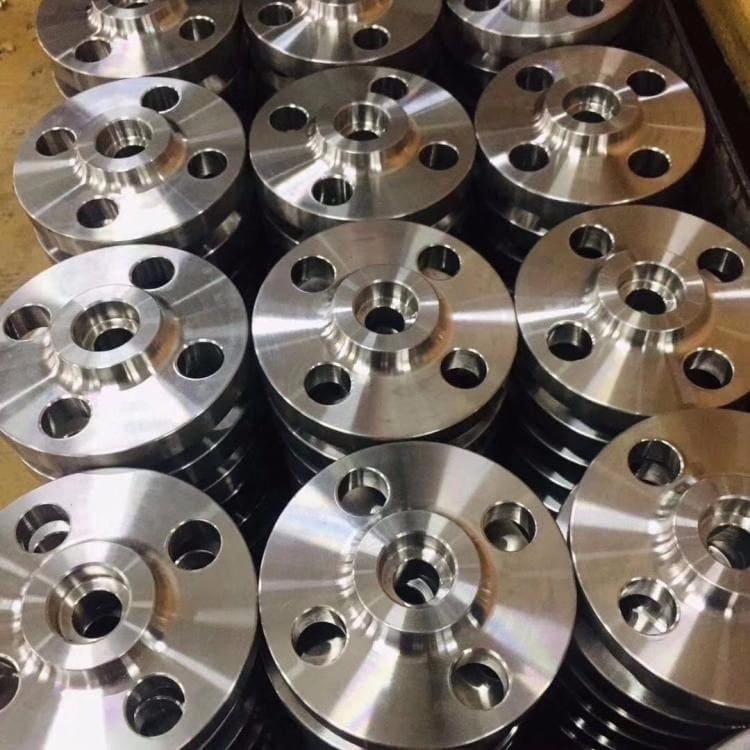
Where reducing acid meets small bore: sulphuric acid plants (dilution, dosing and transfer small bore), fertiliser-industry phosphoric acid circuits with their chloride and fluoride contamination, pickling and surface-treatment lines, organic acid process (acetic, formic), pharmaceutical fine chemistry, and SCC-prone hot chloride services where the 300-series keeps cracking. Production below:
Socket weld flange dimensions are class-governed per ASME B16.5 — identical across material grades (pressure-temperature ratings follow the austenitic group). Full charts:
How to Specify & Order an A182 F904L Socketweld Flange
Six elements — and for acid duty, the acid itself belongs on the enquiry:
1
Size & standard — e.g. 1″ NB ASME B16.5, or DN25 EN 1092-1 to order.
2
Pressure class & facing — 150#–1500#; SWRF (the default), SWFF (common against lined mates) or SWRTJ — with the acid service stated, so the gasket recommendation rides with the quote.
3
Pipe schedule — Sch 10S, 40S or 80S: the through-bore is matched to the pipe ID.
4
Grade line — F904L / UNS N08904 / W.Nr. 1.4539 all name the same metal; the acid, concentration and temperature invited for an honest iso-corrosion check.
5
Certification — EN 10204 3.1 with solution-anneal records (our standard) / 3.2 witnessed, PMI as applicable.
An ASTM A182 F904L socketweld flange is a forged super austenitic stainless steel flange — 19-23% chromium, 23-28% nickel, 4-5% molybdenum and the signature 1-2% copper, with carbon capped at 0.020%, UNS N08904, W.Nr. 1.4539 — whose back carries a machined socket: the pipe end seats inside, self-aligned square to the face, and is secured with a single external fillet weld. 904L sits halfway between a stainless steel and a nickel alloy — its UNS number begins with N, not S — and it was born for one job the 300-series cannot do: sitting passive in sulphuric acid. Dimensioned to ASME B16.5 for ½" to 3" NB in Classes 150 to 1500, in raised face, flat face and ring joint facings — the acid grade, in the small-bore pattern.
Why was 904L invented — what job does it do?
Sulphuric acid, the chemical industry's biggest commodity and stainless steel's oldest embarrassment. Mid-concentration H2SO4 is a reducing acid: it strips the passive film off 304 and 316 and dissolves them at rates measured in millimetres per year. 904L was designed in the 1970s to hold passivity across essentially the whole sulphuric concentration range at warm temperatures — the copper is the key, covered in its own FAQ — and the same chemistry turned out to handle phosphoric acid with its chloride and fluoride contaminants, organic acids, and hot dilute reducing process generally. That made it the fertiliser industry's stainless and a pharmaceutical fine-chemistry standard. Its other famous credential is trivia with substance: Rolex forges watch cases from 904L for its polish and corrosion resistance — a brand's testimony to the metal's surface quality.
What is the chemical composition of ASTM A182 F904L (UNS N08904)?
Carbon ≤0.020%, manganese ≤2.00%, silicon ≤1.00%, chromium 19.0-23.0%, nickel 23.0-28.0%, molybdenum 4.0-5.0%, copper 1.0-2.0%, phosphorus ≤0.045%, sulphur ≤0.035%. Read the scale of it: nickel at 23-28% is more than double any 300-series grade — high enough that the UNS system files 904L under N, with the nickel alloys — and molybdenum at 4-5% out-doses even 317L. The carbon ceiling of 0.020% is the lowest in our stainless range: weld sensitization is off the table by construction, no dual-certification arithmetic required. And the copper, 1.0-2.0%, is the signature no other grade in this series carries. Chemistry is verified per heat and travels on the EN 10204 3.1 MTC.
What does the copper in 904L actually do?
It changes how the alloy fails to corrode in reducing acid. In sulphuric acid the 300-series' problem is that the acid actively strips the passive film and the bare metal dissolves. Copper in solid solution ennobles the alloy surface: as the metal begins to corrode, a copper-enriched layer accumulates, raising the surface's electrochemical potential back into the range where the chromium oxide film can re-form and hold — the alloy effectively pushes itself back into passivity. The result is a stainless that sits quietly in mid-concentration H2SO4 at temperatures that would consume 316L. The same mechanism helps in phosphoric and organic acids. It is a niche superpower: copper does little for chloride pitting — that work belongs to the molybdenum and chromium — which is why 904L's PREN of ~34-36, not its copper, decides its seawater story.
What are the mechanical properties of A182 F904L socketweld flanges?
In the solution-annealed condition A182 requires tensile strength 490 MPa (71 ksi) minimum, yield strength 215 MPa (31 ksi) minimum and elongation 35% minimum — the most ductile certificate in our stainless socketweld range, and among the softest. That is the honest bargain: 904L buys corrosion chemistry, not strength; its fully austenitic, high-nickel structure is stable, tough from cryogenic temperatures upward, and immune to the embrittlement clocks that discipline the duplex family — but an engineer needing chloride resistance plus strength shops duplex, where double the yield comes cheaper. B16.5 pressure-temperature class tables govern the flange's duty as always. Within its own franchise — acid circuits at modest pressure — the mechanicals are entirely sufficient and never the story.
904L or 317L — the rung below?
They overlap less than the ladder suggests, because their franchises differ. 317L is the chloride-side workhorse — bleach plants, FGD, PREN ~30 — but it remains a 300-series alloy: ordinary nickel, no copper, and it dissolves in mid-concentration sulphuric like its family. 904L's case begins exactly where reducing acid enters: sulphuric above trace concentrations, contaminated phosphoric, hot organic acids — duties where 317L's molybdenum is irrelevant because the failure mode is film-stripping, not pitting. Where the duty is purely chloride pitting with no acid dimension, 317L or duplex is the economical answer and 904L's nickel is wasted money. State the acid picture — which acid, what concentration, what temperature — and the choice usually makes itself.
904L or duplex — the honest economics?
For chloride duty, duplex usually wins; for acid duty, duplex barely competes. Duplex 2205 matches 904L's pitting number with double the yield strength and a fraction of the nickel — which is why it squeezed 904L out of the general chloride-service market it once contested. But the squeeze stops at the acid line: duplex's half-ferrite structure has no copper and no nickel reserve, and in reducing acids it surrenders far earlier than 904L. Duplex also carries service-temperature ceilings (roughly 300°C) and embrittlement clocks that the stable austenitic 904L simply does not have, and 904L's cryogenic toughness extends where duplex's -50°C floor forbids. The division of labour is clean: chlorides and strength — duplex; reducing acids, deep cold, or metallurgical simplicity — 904L. We forge both and price the honest pair when a duty sits between.
904L or 6Mo (254 SMO) — the successor question?
6Mo is what the industry built when 904L's seawater ambitions fell short. The 6% molybdenum super austenitics — 254 SMO and kin — push PREN past 42, adding genuine warm-seawater crevice resistance that 904L's ~35 cannot promise, while keeping the austenitic virtues: weldability, toughness, no phase-balance discipline. For seawater and the harshest chloride brines, 6Mo superseded 904L decades ago. What 904L keeps: the copper — 6Mo grades carry little or none, so in sulphuric and reducing acid service 904L still holds its own franchise; and a meaningful price gap, since 6Mo's molybdenum and nitrogen command premiums. Our 254 SMO pages carry the 6Mo story; the practical guidance is simple — sea: 6Mo or super duplex; acid: 904L.
What about chloride stress corrosion cracking — 904L's quiet strength?
This is where the enormous nickel earns its keep twice. Chloride SCC susceptibility in austenitic alloys peaks near the 8-12% nickel of the 300-series and falls steeply as nickel rises; at 23-28% nickel, 904L sits far up the resistance curve, approaching the practical immunity of the true nickel alloys. Hot chloride-bearing streams that crack 316L within seasons — the classic insulated-line and heat-exchanger failures — leave 904L essentially untouched in most industrial exposures. It is not an absolute guarantee at the boiling-brine extremes, but as a working rule the SCC anxiety that shadows every 300-series specification simply lifts here — one of the quieter reasons acid plants, which often run hot and chloride-contaminated at once, standardised on the grade.
How is an F904L socketweld flange welded?
With austenitic ease and high-alloy discipline. Geometry is standard: pipe bottomed in the socket, withdrawn 1/16" (1.6 mm) to leave the expansion gap, single external fillet weld. No preheat, no PWHT, and with carbon at 0.020% there is no sensitization question at all. The discipline points: matching 904L filler as the routine consumable — with nickel-alloy 625 filler where specifications over-alloy against molybdenum segregation in the severest acid duty; a fully austenitic deposit is hot-cracking-sensitive, so slim beads, modest dilution and low interpass; and scrupulous cleanliness, as for all stainless. Distortion behaviour matches the austenitic family. Our flanges arrive solution annealed with furnace records, and WPS guidance travels with every supply.
What facings are A182 F904L socketweld flanges made with?
All three, each with its own page on this site: raised face (SWRF) — the default, with PTFE-envelope or graphite spiral wound gaskets chosen for the acid service — flat face (SWFF) for GRP, rubber-lined and cast equipment mates, which abound in acid plants, and ring type joint (SWRTJ) for the rare high-pressure case. Acid duty adds one sealing note: gasket chemistry matters as much as the flange — PTFE-based systems dominate sulphuric and phosphoric joints, and our quotation includes the gasket recommendation when the service is stated. Stainless bolting deserves anti-galling attention as always. NPT-tapped variants are machined and certified at the works.
What sizes and pressure classes do F904L socketweld flanges come in?
ASME B16.5 standardises socket weld flanges from ½" to 3" NB in Classes 150, 300, 600, 900 and 1500 — Class 900 sharing Class 1500 dimensions in most small-bore sizes — with 4" and Class 2500 made to order. Acid-plant small bore lives overwhelmingly in Classes 150 and 300: dosing lines, sample points, instrument taps and scrubber trim run at modest pressures where the corrosion chemistry, not the rating, drives the specification. Put the pipe schedule on the enquiry — Sch 10S and 40S dominate — and the through-bore is matched to the pipe ID so the joint presents no step to the acid. B16.5 austenitic pressure-temperature tables govern; our quotations state them per class.
What details are needed to get an accurate F904L socketweld flange quotation?
Six elements plus commercial terms: (1) size — ½" to 3" NB; (2) pressure class — 150 to 1500; (3) facing — SWRF, SWFF or SWRTJ, with the acid service stated so the gasket recommendation comes with the quote; (4) the pipe schedule — Sch 10S, 40S or 80S, so the through-bore matches the pipe ID; (5) the grade line — F904L / UNS N08904 / W.Nr. 1.4539 all name the same metal, and the certificate carries the designations your documentation uses; (6) certification — EN 10204 3.1 with solution-anneal records (our standard) or 3.2 witnessed, PMI as applicable. Add the acid, concentration and temperature if you want the honest 904L-versus-duplex-versus-6Mo comparison priced alongside. Quotations normally within 24 hours.
Is F904L stocked or made to order?
Honestly: a forging-programme grade, quoted quickly. 904L flange demand is project-driven — fertiliser plant builds, acid-plant revamps, pharma expansions — so worldwide stock is thin and ours concentrates in the common small-bore sizes. The grade is a routine forging for us: certified N08904 heats are held with our high-alloy bar and billet, and the socket weld programme runs the same stainless-dedicated stations as the rest of this series. Typical lead times run days to a few weeks by quantity; urgent acid-plant maintenance is a story we know well — say so on the enquiry and small lots can usually be expedited, with EN 10204 3.1 certification carrying the 1.4539 designation where European documentation expects it.
Who manufactures ASTM A182 F904L socketweld flanges in India?
Tesco Steel & Engineering is an ISO 9001:2015 certified flange manufacturer based in Mumbai, India, producing ASTM A182 F904L socket weld flanges from ½" to 3" NB (larger to order) in Classes 150-1500 — each forged from certified N08904 heats, solution annealed with furnace records, machined on stainless-dedicated stations with gauged socket depth and schedule-matched bore, PMI-checked — the molybdenum and copper both confirmed on every piece — and laser-marked with grade, size, class, schedule and heat number. Supplied with EN 10204 3.1/3.2 certification alongside the 317L rung below, the duplex and super duplex alternatives, the 254 SMO successor and the full stainless socketweld range this series covers. Exported to more than 50 countries.