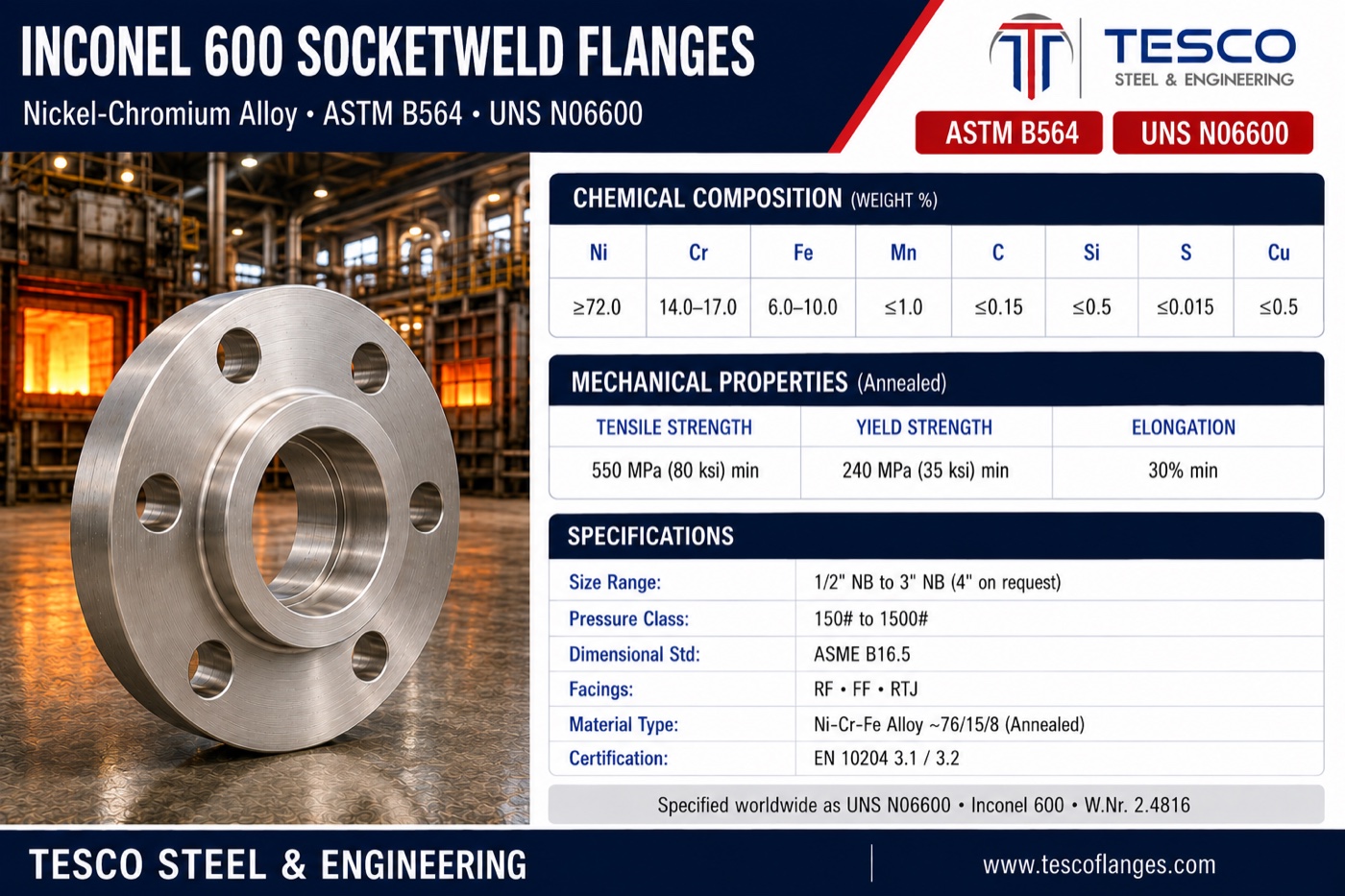
Tesco Steel & Engineering manufactures Inconel 600 socketweld flanges — the Ni-Cr-Fe classic: ASTM B564, UNS N06600, W.Nr. 2.4816 — to ASME B16.5 from ½″ to 3″ NB in Classes 150–1500. Alloy 600 is where chromium arrives in the nickel family: a passive film on a nickel backbone — oxidising conditions hold no terror, while caustic standing, chloride-SCC immunity and carburisation resistance come inherited. The result is the widest honest service span in this series: cryogenic to ~1095 °C in air — the furnace and heat-treatment classic, and the reference alloy for hot dry chlorine and HCl gas. The famous history is told honestly below: 600 built the PWR steam-generator fleet, and Alloy 690 succeeded it there — the industrial franchises are untouched. The siblings: 601 for the hottest cycled zones, 625 for wet, salty, strength-driven duty. Welded with ERNiCr-3 filler — no preheat, no PWHT. Facings: SWRF, SWFF, SWRTJ. Every lot with EN 10204 3.1/3.2 MTC. ISO 9001:2015, made in Mumbai, India — exported to 50+ countries.
Inconel 600 · B564 · N06600 · 2.4816Ni ≥72% · Cr 14–17% · Fe 6–10%Cryogenic to ~1095 °C in AirThe Hot-Chlorination Reference AlloyCaustic & SCC Immunity Inherited550 / 240 MPa · 30% ElongationASME B16.5 ½″–3″ · Class 150–1500EN 10204 3.1 / 3.2 · ISO 9001:2015
Inconel 600 Socketweld Flanges — Specifications at a Glance
What is an Inconel 600 Socketweld Flange?
The Ni-Cr-Fe classic in the small-bore pattern. A forged Inconel 600 flange (ASTM B564 / UNS N06600 / W.Nr. 2.4816) with a machined socket: pipe seated square by geometry, one external fillet weld with ERNiCr-3 filler — no preheat, no PWHT — through-bore matched to the pipe schedule. Ni ≥72% carries Cr 14–17%: a passive film on a nickel backbone — oxidation to ~1095 °C with the family's caustic standing, chloride-SCC immunity and carburisation resistance kept. The reference alloy for hot dry chlorine and HCl gas. Tensile ≥550 MPa, yield ≥240 MPa, elongation ≥30%, annealed. Sized by ASME B16.5 at ½″–3″ NB, Classes 150–1500; EN 10204 3.1 on every lot.
600 is the family's bridge alloy: the film-former's tolerance of oxygen, the nickel family's immunities — and the widest honest service span in this series.
What the Ni-Cr-Fe Recipe Buys
The Widest Span in the Series
Cryogenic to ~1095 °C in air — no transition at the bottom, a rebuilding chromia film at the top, and useful strength deep into red heat.
The Furnace Metal
Heat-treatment muffles, retorts and fixtures run on 600 because carburising and nitriding atmospheres cannot inject into a nickel matrix the way they ruin steel.
The Hot-Halogen Reference
Dry chlorine and HCl gas to ~500 °C and beyond — the duty that consumes stainless and ignites titanium is Alloy 600's oldest franchise.
The Family Immunities, Kept
Hot caustic close behind pure nickel; chloride SCC a non-issue at 72%+ Ni — the film arrives without the film-former's classic vices.
Inconel 600 Chemical Composition (UNS N06600)
Element
Ni
Cr
Fe
Mn
C
Si
S
Cu
Weight %
≥72.0
14.0–17.0
6.0–10.0
≤1.0
≤0.15
≤0.5
≤0.015
≤0.5
The nickel is a floor — nearly three-quarters of the metal; the chromium is the film-former at the 1930s recipe's modest dose; the iron is deliberate, a range not an impurity. Note what is absent: no molybdenum, no niobium — those are 625's additions. PMI confirms the chemistry on every piece.
Mechanical Properties (Annealed)
Property
ASTM B564 N06600 Requirement
Tensile Strength
≥ 550 MPa (80 ksi)
Yield Strength (0.2%)
≥ 240 MPa (35 ksi) — with the real selling point being what remains at red heat
Elongation
≥ 30% — no ductile-brittle transition, cryogenic-tough
Condition
Annealed — furnace records certified
Temperature Span
Cryogenic to ~1095 °C in air; hot sulphur excluded per the nickel rule; cycled zones beyond → 601
Rating
B16.5 nickel-alloy tables govern the joint — gasket-limited before metal-limited at heat; stated per class on our quotations
One Socket, Three Facings — and the Hot-Gasket Note
At 600's temperatures the gasket and the bolting retire before the metal — state the joint temperature and the sealing system rides with the quotation.
Inconel 600 Socketweld Flange Specifications
Inconel 600 Socketweld Flanges are available in the following specifications:
Material Grade
Inconel 600, ASTM B564 (UNS N06600), W.Nr. 2.4816 — certificates carry the designations your documentation uses
Heat Treatment
Annealed with furnace records certified
Size
1/2"NB to 3"NB per ASME B16.5; 4″ and larger to order; EN 1092-1 patterns to order
Class
150#, 300#, 600#, 900#, 1500# (900# shares 1500# dimensions in most sizes) — furnace & hot-gas volume lives in 150/300
Facings
Raised Face (SWRF), Flat Face (SWFF), Ring Type Joint (SWRTJ) with groove per B16.20
Bore
Socket bore to pipe OD; through-bore matched to pipe schedule
Welding
Single external fillet with 1/16″ expansion gap; ERNiCr-3 (Inconel 82) filler; sulphur-clean practice; no preheat, no PWHT
Service Span
Furnace & heat-treatment to ~1095 °C, hot dry Cl2/HCl, hot caustic, carburising/nitriding atmospheres; hot sulphur & wet oxidising acids excluded — see the notes
Tension & chemistry per heat; PMI on every piece — Ni-Cr-Fe confirmed; socket depth and bore gauged
Certification
EN 10204 3.1 with anneal records (standard) / 3.2 witnessed
Specification Notes — Getting Alloy 600 Sockets Right
Four honest notes.Hot sulphur is excluded: the nickel rule at full force — sulphur-bearing gas above ~300–350 °C embrittles the alloy; reducing sulphidizing atmospheres belong to the lower-nickel heat grades like F310. Wet oxidising chemistry outruns the film: hot nitric, wet chlorine and strong oxidising acids escalate to 625, C-22 or titanium by duty. Nuclear primary water writes 690: the PWSCC history is told plainly in the FAQ — industrial service is untouched, but primary-circuit enquiries get pointed at Alloy 690, not sold this page. And the joint has two ceilings: the metal's ~1095 °C and B16.5's gasket-governed envelope — state both temperatures on every hot enquiry.
How Our Inconel 600 Socketweld Flanges Are Manufactured
1
Forging — cut billet of the spectro-verified N06600 heat is hot-forged into the flange blank with full heat traceability and segregated nickel-alloy handling.
2
Annealing — sets the tough solid-solution structure; furnace charts retained against the heat number.
3
Machining — faces, OD and drilling to ASME B16.5 on dedicated stations with sulphur-free lubricants — the Ni-Cr matrix work-hardens firmly: sharp tooling, positive feeds; socket counterbore and depth gauged piece by piece, through-bore matched to the ordered schedule.
4
Facing — RF serrations, flat face or RTJ groove per B16.20.
5
Testing & marking — tension and chemistry per heat; PMI on every piece; laser-marked with grade, size, class, schedule and heat number.
6
Certification & packing — EN 10204 3.1 MTC with anneal records (3.2 witnessed on request); ERNiCr-3 WPS guidance included; packed sea-worthy with no carbon-steel contact.
Where Inconel 600 Socketweld Flanges Are Used
Wherever the nickel family meets oxygen and heat: heat-treatment plants (muffle, retort and fixture connections, thermocouple and instrument taps), furnace-adjacent hot-gas small bore, chlorination and chlorinated-solvent plants, TiCl4 and fluorochemical service, hot caustic and chlor-alkali hot ends, carburising and nitriding atmosphere systems, and hot chloride-bearing process streams that crack stainless. Production below:
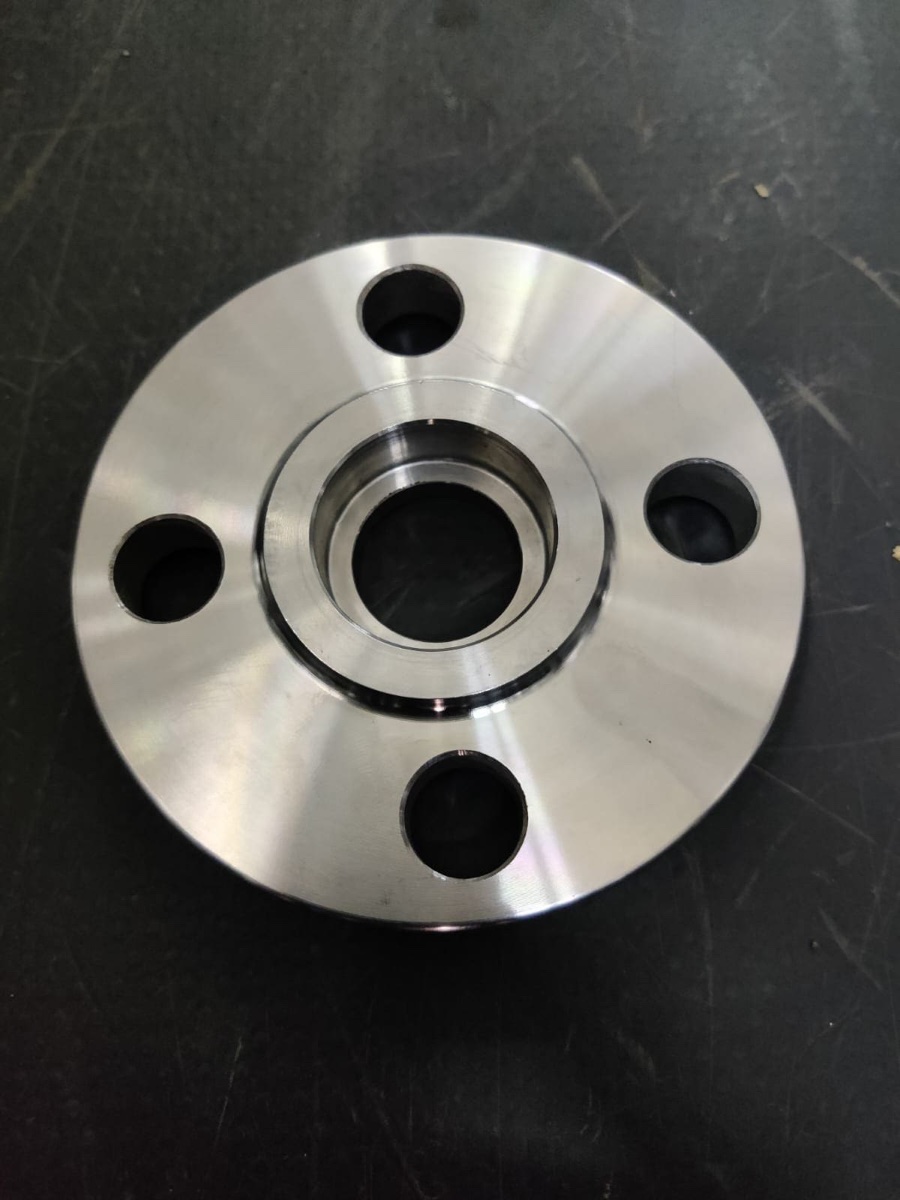
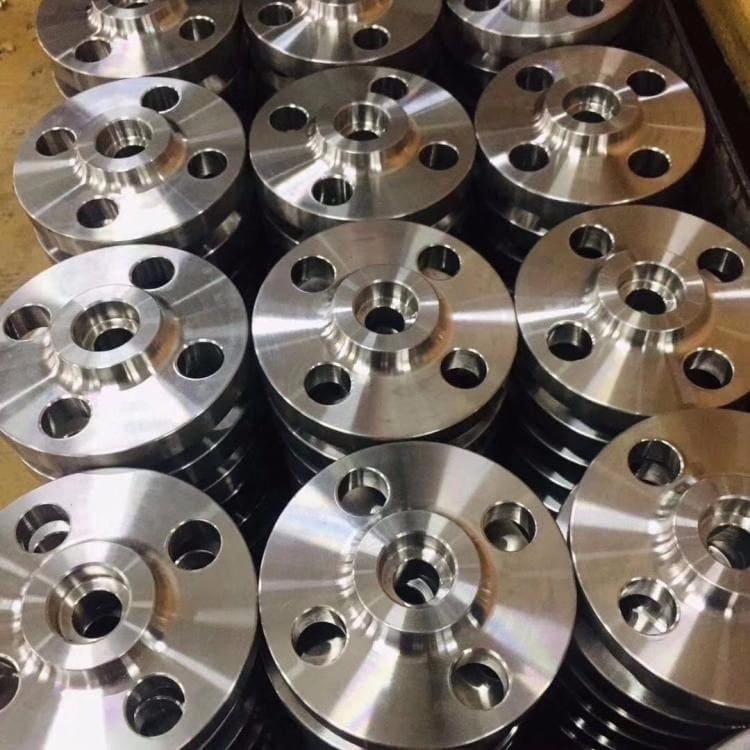
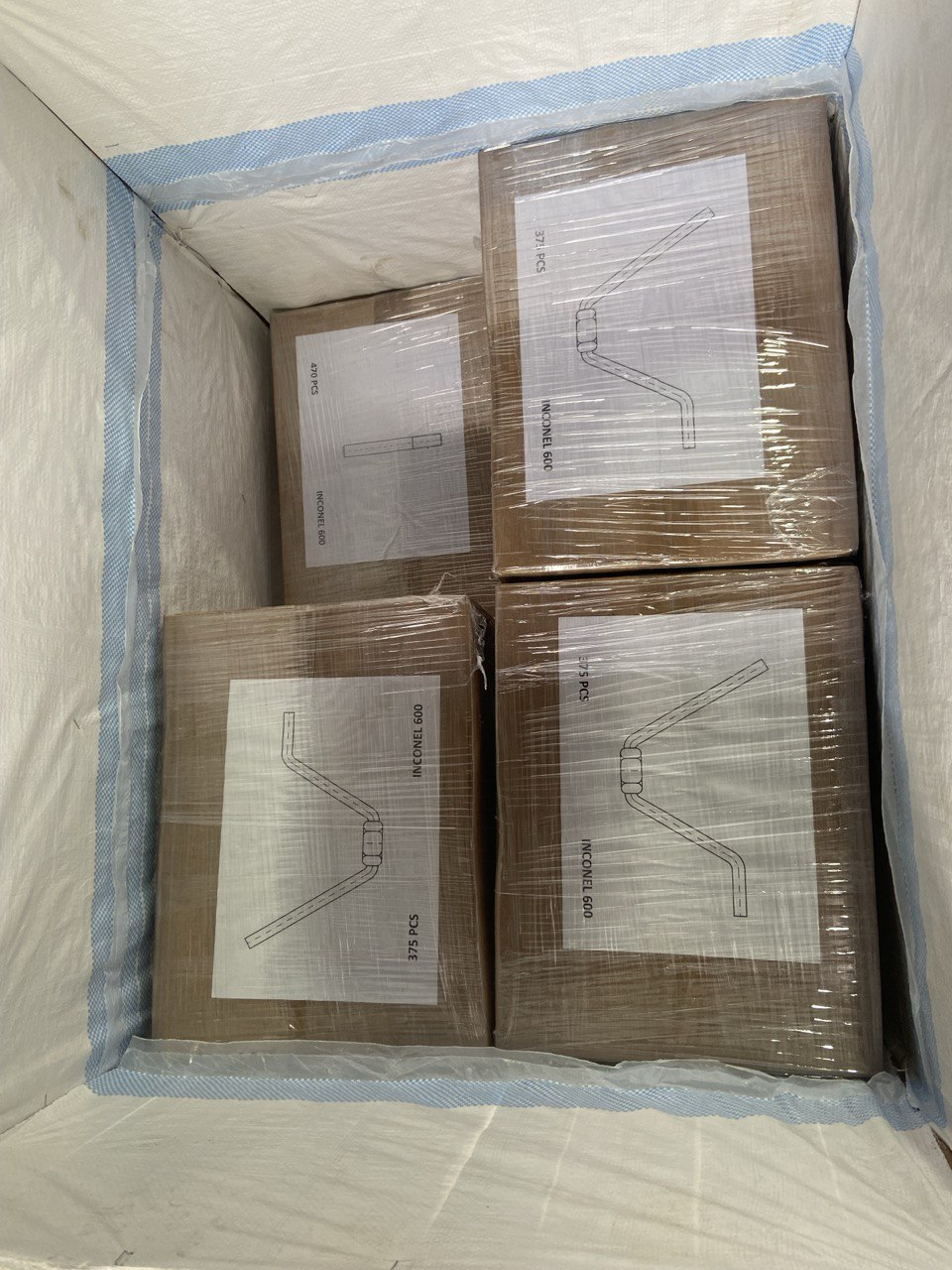
Socket Weld Flange — Socket Bore Visible, Our WorksSocket Weld Flanges — Machined Batch, Ready for DispatchInconel 600 at Our Works — Refractory Anchor Line, Export Crates
Inconel 600 Socketweld Flange Dimensions
Socket weld flange dimensions are class-governed per ASME B16.5 — identical across material grades (pressure-temperature ratings follow the nickel-alloy group). Full charts:
How to Specify & Order an Inconel 600 Socketweld Flange
Six elements — the atmosphere and the two temperatures belong on the enquiry:
1
Size & standard — e.g. 1″ NB ASME B16.5, or DN25 EN 1092-1 to order.
2
Pressure class & facing — 150#–1500#; SWRF (the default), SWFF or SWRTJ — with the joint temperature, so gasket and bolting guidance ride with the quote.
3
Pipe schedule — the through-bore is matched to the pipe ID.
4
Grade line & atmosphere — Inconel 600 / B564 / N06600 / 2.4816 all name the same metal; the atmosphere (oxidising or reducing, sulphur or clean, wet or dry) decides between 600, 601 and 625 more often than price does.
5
Certification — EN 10204 3.1 with anneal records (our standard) / 3.2 witnessed, PMI as applicable.
An Inconel 600 socketweld flange is a forged nickel-chromium-iron alloy flange — at least 72% nickel carrying 14-17% chromium and 6-10% iron, ASTM B564, UNS N06600, W.Nr. 2.4816 — whose back carries a machined socket: the pipe end seats inside, self-aligned square to the face, and is secured with a single external fillet weld. Alloy 600 is the metal where chromium finally arrives in the nickel family: the chromium grows a passive, self-healing oxide film, and the nickel backbone beneath it contributes everything the family is famous for — caustic standing, chloride-SCC immunity, carburisation resistance and strength deep into red heat. Dimensioned to ASME B16.5 for ½" to 3" NB in Classes 150 to 1500 — the furnace and hot-chlorination classic, in the small-bore pattern.
What does chromium on a nickel backbone buy?
The best of both metallurgical worlds. The Monel and pure-nickel side of the family resists by nobility — superb in reducing environments, helpless against oxidising ones, because there is no film. Stainless steel has the film — but its iron base sensitises, creep-weakens and cracks in chlorides. Alloy 600 splices the two: 15% chromium grows a genuine passive film, so oxidising conditions — hot air, oxidising salts, aerated systems — hold no terror; while three-quarters nickel keeps the film-former's classic vices away: chloride stress corrosion cracking is a non-issue, carburising atmospheres cannot inject carbon the way they do into steel, and hot caustic remains friendly territory. One alloy, serviceable from cryogenic temperatures to roughly 1095°C in air — the widest honest service span in this socketweld series.
What is the chemical composition of Inconel 600 (UNS N06600)?
Nickel 72.0% minimum, chromium 14.0-17.0%, iron 6.0-10.0%, manganese ≤1.0%, carbon ≤0.15%, silicon ≤0.5%, sulphur ≤0.015%, copper ≤0.5%. Three readings matter. The nickel is a floor — nearly three-quarters of the metal, the backbone every property stands on. The chromium is the film-former, dosed at the modest level the 1930s recipe set and never needed to change for its core duties. And the iron is a deliberate range, not an impurity — it cheapens the melt and toughens the matrix without costing the chemistry anything that matters. Note what is absent: no molybdenum and no niobium — those are Inconel 625's additions for wet corrosion and strength, covered in the sibling FAQ. Chemistry is verified per heat and travels on the EN 10204 3.1 MTC.
What are the mechanical properties of Inconel 600 socketweld flanges?
In the annealed condition ASTM B564 requires tensile strength 550 MPa (80 ksi) minimum, yield strength 240 MPa (35 ksi) minimum and elongation 30% minimum — a solid nickel-alloy certificate at room temperature, with no ductile-brittle transition down to cryogenic service. The number that sells the alloy, though, is what remains at temperature: 600 retains useful strength deep into red heat where carbon and stainless steels have long surrendered, which is why furnace fixtures, retorts and hot-zone hardware are its native territory. B16.5's nickel-alloy pressure-temperature tables govern the flange's rating; hot-service joints are usually gasket-limited before they are metal-limited, and our quotations state both honestly per class.
What is the furnace franchise — how hot can it go?
To roughly 1095°C in air, continuously — the number that made Alloy 600 the heat-treatment industry's default nickel alloy. The chromium film keeps rebuilding at temperatures that scale stainless away, and the nickel matrix shrugs at the two furnace-atmosphere attacks that ruin steel: carburisation (nickel dissolves almost no carbon, so case-hardening atmospheres cannot embrittle it) and nitriding (the same logic with nitrogen). Muffles, retorts, fixtures, thermocouple and instrument connections, burner trim and hot-gas small bore all follow. Two honest boundaries: the flanged joint itself is governed by B16.5's tables and its gasket long before the metal's ceiling — the same two-numbers honesty as our F310 page — and for cyclic oxidation beyond 1100°C the aluminium-bearing sibling 601 takes over, one link away.
Why is Alloy 600 the hot-chlorination classic?
Because hot dry chlorine and hydrogen chloride destroy almost everything else, and 600 makes a career of them. Titanium ignites in dry chlorine; stainless steels are consumed; even the copper and pure-nickel alloys give up as temperature climbs. Alloy 600's combination — a nickel matrix whose chloride corrosion products are relatively stable and non-volatile, plus a chromium film for the oxidising excursions — carries it to roughly 500°C and beyond in dry chlorine and HCl gas, the standard reference alloy for the duty. Chlorination plants, chlorinated-solvent and vinyl-chloride works, titanium-tetrachloride production and fluorochemical service all specify it by long habit. The critical word is dry: wet chlorine is a different, harsher chemistry that escalates to the C-276 family — and our Hastelloy pages carry that story.
What does 600 inherit from the nickel family — caustic and SCC?
The two inheritances that quietly decide many specifications. Caustic: with three-quarters nickel, Alloy 600 stands close behind pure nickel in hot concentrated NaOH and KOH — comfortably past Monel — and brings the chromium film as a bonus where the caustic circuit sees oxidising excursions or air ingress that pure nickel dislikes; caustic evaporator and chlor-alkali hot-end hardware uses it freely. Chloride stress corrosion cracking: at 72%+ nickel the alloy sits far beyond the Copson curve's immune shoulder — hot chloride-bearing streams that crack every austenitic stainless leave it untouched, which is why 600 appears in hot brine, chlorinated-organics and steam-with-chlorides duties that have defeated a 300-series predecessor. Both franchises read straight across from the family pages, film included.
What is Alloy 600's nuclear history — told honestly?
The alloy's most famous chapter, and its most instructive. Alloy 600 was the original steam-generator tubing and nozzle metal of the pressurised-water reactor fleet — chosen for exactly the virtues this page lists — and for decades it served; then primary-water stress corrosion cracking, a slow intergranular mechanism specific to high-temperature pure water, emerged across the fleet, and the industry replaced 600 with Alloy 690, its 30%-chromium descendant, in new and retubed plant. The honest lessons: PWSCC is a nuclear-primary-water phenomenon, not a general-service defect — none of the furnace, chlorination or caustic franchises are touched by it; but the history is why nuclear-adjacent specifications now write 690, and why an enquiry naming primary-circuit service gets pointed there rather than sold this page. Industrial 600 remains exactly as good as it ever was.
Inconel 600 or 601 — when does the hotter sibling take over?
At the top of the furnace, where cycling and scale-spalling set the agenda. Alloy 601 takes 600's recipe and raises the chromium to 21-25% with a deliberate aluminium addition — and that aluminium is the point: it builds an alumina-strengthened scale that clings through thermal cycling far better than plain chromia, extending continuous oxidation service toward 1200°C and sharply improving life in cyclic furnaces where 600's scale flakes and re-grows itself away. The division of labour: 600 for the broad furnace mid-range, hot halogens, caustic and everything aqueous-adjacent; 601 for the hottest, most cycled oxidising zones — radiant tubes, muffle ends, burner components. Our Inconel 601 socketweld page carries the sibling's story, and the two often serve in the same plant, split by zone temperature.
Inconel 600 or 625 — the strength-and-wet-corrosion sibling?
Molybdenum and niobium draw the line. Alloy 625 adds 8-10% molybdenum and ~3.5% niobium to the Ni-Cr base, and those additions buy two different careers: wet aggressive corrosion — pitting and crevice resistance in chlorides, brines and mixed acids that plain 600 does not offer, putting 625 in seawater and sour-service company 600 never keeps — and roughly double the strength, solid-solution-stiffened to a 415 MPa yield. The price is 625's own: more cost, and a hot-service ageing embrittlement that caps its long-term furnace role. So the split is clean: hot dry environments, furnaces, halogen gas, caustic — 600; wet, salty, sour or strength-driven duty — 625. Our Inconel 625 socketweld page carries that grade in full, and the two rarely compete for the same line.
What are Alloy 600's honest weaknesses?
Three, familiar in shape from the family. Hot sulphur: the nickel rule applies at full force — sulphur-bearing gas above roughly 300-350°C embrittles the alloy along its grain boundaries, and reducing sulphidizing atmospheres are excluded territory; the lower-nickel heat grades serve there. Wet oxidising acids: the modest 15% chromium film is real but not deep — hot nitric, wet chlorine and strongly oxidising wet chemistry outrun it, escalating to 625, C-22 or titanium by duty. And sensitization: with 0.15% carbon and no stabiliser, 600 can precipitate grain-boundary carbides in the 540-760°C band — irrelevant in its dry hot franchises, worth knowing when a furnace alloy is asked to face aggressive aqueous chemistry after years of service. None of these touch the core duties; all belong in the specification conversation.
How is an Inconel 600 socketweld flange welded?
With the nickel family's easy rules and its most famous filler. Geometry is standard: pipe bottomed in the socket, withdrawn 1/16" (1.6 mm) to leave the expansion gap, single external fillet weld — with ERNiCr-3 (the Inconel 82-type wire) as the classic consumable, its niobium addition guarding the deposit's grain boundaries. No preheat, no PWHT. Nickel-family housekeeping governs: sulphur, lead and zinc embrittle hot nickel, so joints are degreased, marking materials checked and tooling dedicated — doubly important for weldments headed into hot service. Weld metal is sluggish and does not wet like steel; slightly wider bevels and unhurried technique are normal. Our flanges arrive annealed with records, and WPS guidance naming ERNiCr-3 travels with every supply.
What sizes and pressure classes do Inconel 600 socketweld flanges come in?
ASME B16.5 standardises socket weld flanges from ½" to 3" NB in Classes 150, 300, 600, 900 and 1500 — Class 900 sharing Class 1500 dimensions in most small-bore sizes — with 4" and Class 2500 made to order. Furnace-adjacent and hot-gas small bore lives mostly in Classes 150 and 300, at modest pressures where the temperature and the atmosphere, not the rating, drive the specification; chlorination and caustic process duty reaches into 300 and 600. Put the pipe schedule on the enquiry — the through-bore is matched to the pipe ID — and state the design temperature, which sets the governing B16.5 rating; our quotations state it per class.
What details are needed to get an accurate Inconel 600 socketweld flange quotation?
Six elements plus commercial terms: (1) size — ½" to 3" NB; (2) pressure class — 150 to 1500, with the design and joint temperatures, which govern the rating and the gasket guidance; (3) facing — SWRF, SWFF or SWRTJ with ring number; (4) the pipe schedule, so the through-bore matches the pipe ID; (5) the grade line — Inconel 600, ASTM B564, UNS N06600 or W.Nr. 2.4816 all name the same metal; the atmosphere (oxidising or reducing, sulphur or clean, wet or dry) invited for honest metallurgy — it decides between 600, 601, 625 and the heat-grade stainlesses more often than price does; (6) certification — EN 10204 3.1 with anneal records (our standard) or 3.2 witnessed, PMI as applicable. Add quantity and destination; quotations normally within 24 hours.
Who manufactures Inconel 600 socketweld flanges in India?
Tesco Steel & Engineering is an ISO 9001:2015 certified flange manufacturer based in Mumbai, India, producing Inconel 600 (ASTM B564, UNS N06600) socket weld flanges from ½" to 3" NB (larger to order) in Classes 150-1500 — each forged from certified heats, annealed with furnace records against the heat number, machined on dedicated nickel-alloy stations with sulphur-free lubricants, gauged socket depth and schedule-matched bore, PMI-checked — the nickel-chromium-iron chemistry confirmed on every piece — and laser-marked with grade, size, class, schedule and heat number. Supplied with EN 10204 3.1/3.2 certification and ERNiCr-3 WPS guidance, alongside the Inconel 601 and 625 siblings, our Inconel 600 refractory anchor line, and the full nickel-alloy socketweld range this series covers. Exported to more than 50 countries.