Tesco Steel & Engineering forges ASTM A182 F304 slip on flanges — stainless steel 304 (UNS S30400), the most-used stainless grade in the world: the classic 18Cr-8Ni austenitic, serviceable from cryogenic temperatures to +538 °C — to ASME B16.5 Class 150–2500 from ½″ to 24″ NB, larger patterns to order. The default corrosion-resistant flange of food, pharma, water, chemical and cryogenic piping, supplied solution annealed and commonly dual-certified 304/304L, with 304L and 304H variants and 316 from the same forge. Ready stock in common sizes; every lot with EN 10204 3.1/3.2 MTC. ISO 9001:2015, made in Mumbai, India — exported to 50+ countries.
ASTM A182 F304 · SA182 · S3040018Cr-8Ni · 1.4301 · SUS 304ASME B16.5 Class 150–2500½″ – 24″ NB · SORFCryogenic to +538 °CReady Stock · Dual 304/304LEN 10204 3.1 / 3.2 · ISO 9001:2015
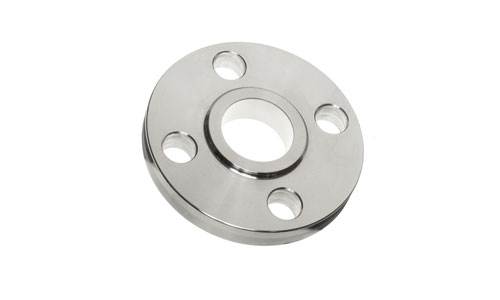
ASTM A182 F304 Stainless Steel Slip On Flange — Raised Face (SORF)
What is an ASTM A182 F304 Slip On Flange?
F304 = the world's default stainless.ASTM A182 F304 (UNS S30400) is the classic 18-8 austenitic stainless steel: a self-healing chromium passive film for corrosion resistance, nickel-stabilised austenite for toughness with no brittle transition — cryogenic to +538 °C. As a slip-on, it installs with two fillet welds, E308 consumables, no preheat, no PWHT. Food, pharma, water, chemicals, LNG — wherever carbon steel rusts and chlorides stay mild, 304 is the answer.
Also searched as: SS 304 slip on flange, stainless steel slip on flange, 304 SORF flange, SA182 F304 slip on flange, SUS 304 flange, 1.4301 slip on flange, S30400 slip on flange — all refer to the product on this page.
Rule of thumb: the stainless ladder is climbed by chloride exposure. 304 covers everything mild; salt in the service pushes the selection toward 316, then duplex, 904L and 6-moly.
ASTM A182 F304 (UNS S30400) Chemical Composition
C
Mn
Si
P
S
Cr
Ni
Fe
0.08 max
2.00 max
1.00 max
0.045 max
0.030 max
18.0-20.0
8.0-11.0
Bal
Values in weight % per ASTM A182 for UNS S30400 — the classic “18-8”. The chromium builds the self-healing passive film; the nickel stabilises the tough austenitic structure. No molybdenum — that is 316's addition for chloride duty.
ASTM A182 F304 Mechanical Properties
Tensile Strength, MPa (ksi)
Yield Strength, Min, MPa (ksi)
Elongation % min (2")
Reduction of Area % min
515 (75) min
205 (30) min
30
50
Supplied solution annealed, typically under ~200 HB. The modest 205 MPa yield is the austenitic trade-off for exceptional ductility and cryogenic toughness; where strength drives the design, duplex offers more than double the yield. Values demonstrated per heat on the EN 10204 certificate.
A182 F304 Slip On Flange Specifications
ASTM A182 F304 Slip On Flanges are available in the following specifications:
Material
ASTM A182 F304 / ASME SA182 F304 (UNS S30400); dual-certified 304/304L; F304H for high temperature
Size
1/2"NB to 24"NB per ASME B16.5; larger patterns and EN 1092-1 stainless flanges to order
Class
150#, 300#, 400#, 600#, 900#, 1500#, 2500#
Facing
Raised Face (SORF) — default; Flat Face or RTJ where the piping class specifies
Heat Treatment
Solution annealed per ASTM A182, thermal record retained
Temperature Range
Cryogenic (no impact transition) to +538 °C per ASME B16.5; above: F304H or F310
Installation
Two fillet welds (hub + bore), pipe set back 1/8"; E308/ER308 consumables, no preheat, no PWHT
Ready Stock
Class 150 & 300 common sizes — typically quick dispatch
Certification
EN 10204 3.1 (standard) / 3.2 witnessed
Equivalent Grades of ASTM A182 F304
Standard
Werkstoff Nr.
UNS
JIS
BS
GOST
AFNOR
EN
SS 304
1.4301
S30400
SUS 304
304S31
08Χ18Ν10
Z7CN18‑09
X5CrNi18-10
ASME SA182 F304 is the boiler-code twin. System partners: ASTM A312 TP304 pipe and A403 WP304 fittings — the stainless trio of process piping. Certificates always state the actual grade forged, including dual 304/304L where the heat qualifies.
Why A182 F304 Slip Ons Are the Stainless Default
The Most-Proven Stainless on Earth
18-8 has a century of service data behind it — food lines to LNG terminals — and every fabricator on earth knows how to work it.
Cryogenic Without Paperwork
No ductile-brittle transition means no impact-test complications — the same flange serves −196 °C liquid nitrogen and +500 °C process duty.
Welds Like a Dream
E308 consumables, no preheat, no PWHT, forgiving of technique — the easiest flange material a pipe crew will ever fillet-weld.
Hygienic by Nature
Inert to food acids and CIP chemicals, easy to sterilise — the standard metal of dairies, breweries, pharma and food processing worldwide.
Know the Handoffs
Chlorides in the service: 316, then duplex. Welded corrosive duty: 304L. Above 538 °C: 304H. Critical RT-mandated lines: F304 weld necks.
How Our A182 F304 Slip On Flanges Are Manufactured
1
Forging — cut billet of certified A182 F304 heat is hot-forged into the flange blank, keeping full heat traceability from raw material to despatch.
2
Solution annealing — heated and quenched per ASTM A182 to dissolve carbides and restore the fully austenitic, corrosion-ready condition; furnace record retained.
3
Machining — hub, faces and bolt holes to ASME B16.5; the bore machined slightly over pipe OD per the slip-on tolerance.
4
Facing & finish — SORF raised face with serrated stock finish, flat face or RTJ groove; pickled and passivated on request.
5
Testing & marking — mechanical and chemical verification against the heat (intergranular corrosion testing where the order specifies), then permanent marking of grade, size, class and heat number.
6
Certification & packing — EN 10204 3.1 MTC (3.2 witnessed on request), export-packed for sea freight.
Where A182 F304 Slip On Flanges Are Used
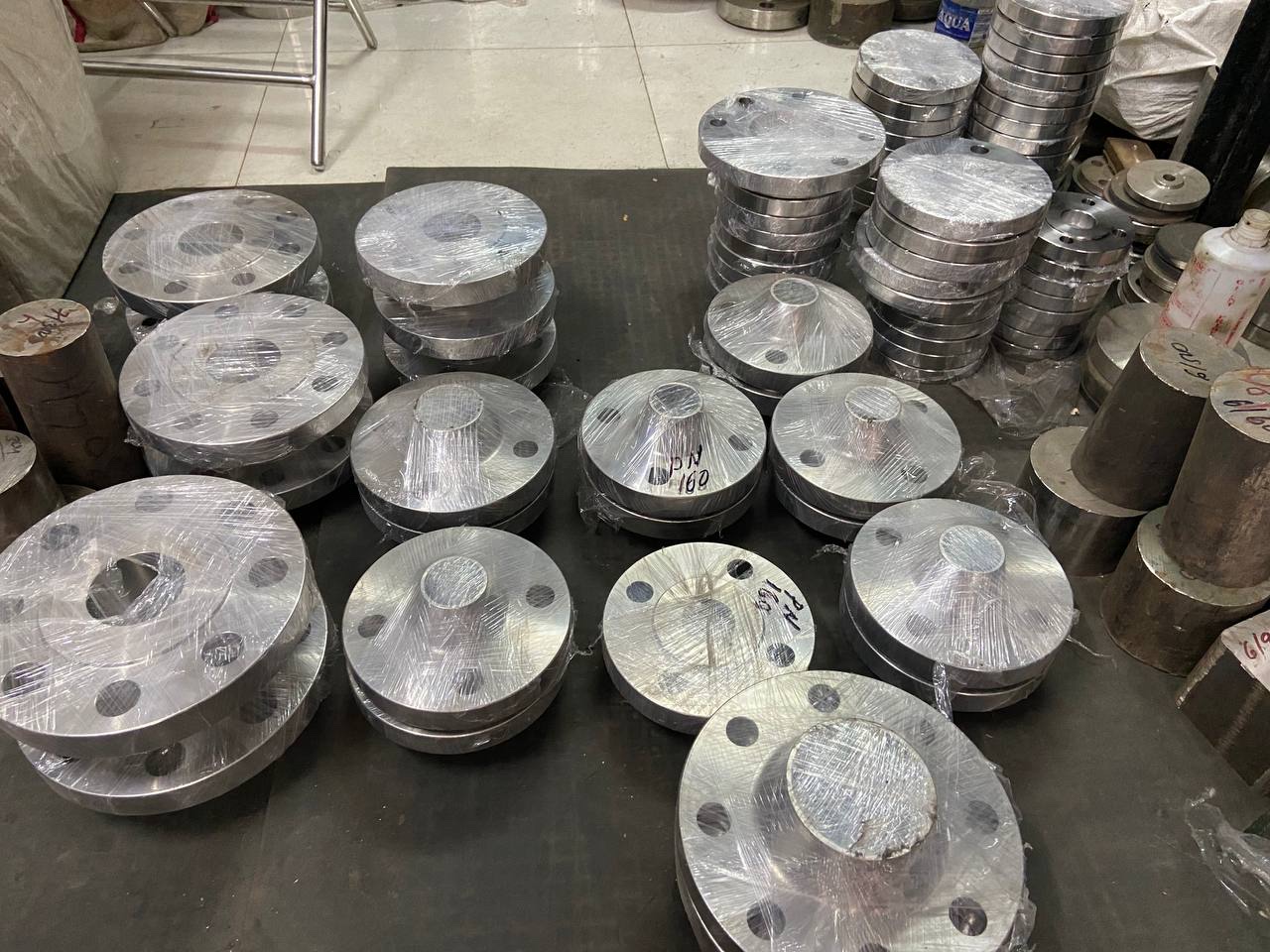
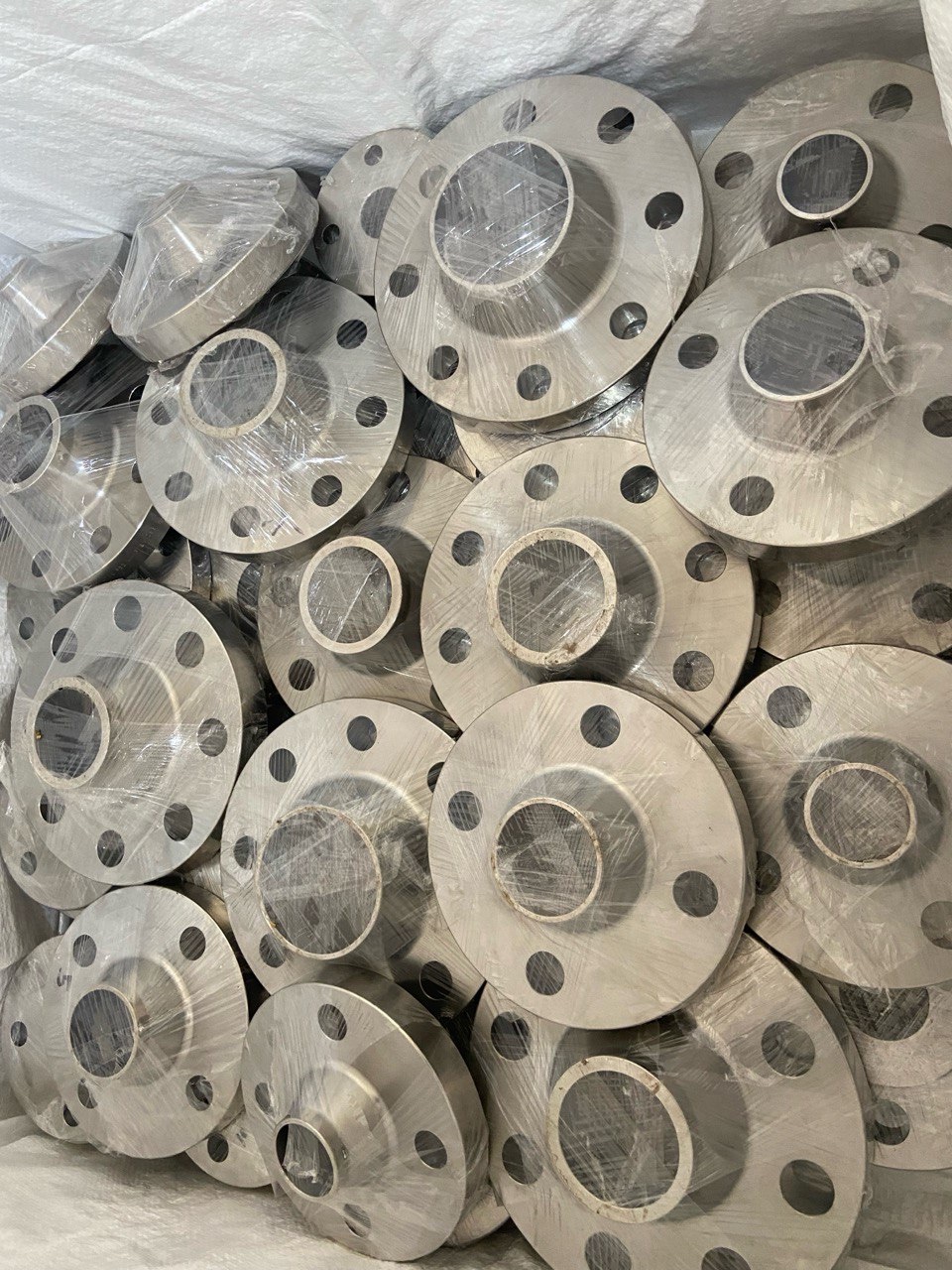
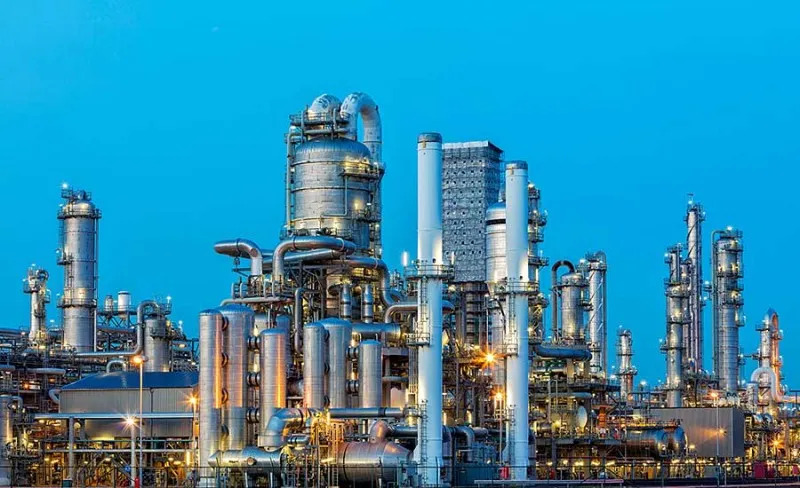
Everywhere general-purpose stainless duty: food, dairy, brewery and pharmaceutical process lines, potable and demineralised water, chemical plants with mild media, cryogenic systems (LNG, liquid nitrogen and oxygen), pulp and paper, textile and dye houses, and architectural or utility services where carbon steel rusts. Our 304 production and stock below:
A182 F304 Flanges — In Production at Our WorksA182 F304 Flanges — Ready Stock at Our WorksSS 304 Flanges — Oil & Gas Service
A182 F304 Slip On Flange Dimensions
F304 slip-on dimensions follow the ASME B16.5 slip-on tables — identical for every material. Full charts by class:
Example: “Slip On Flange, 4″ NB, ASME B16.5 Class 150, RF, ASTM A182 F304/304L dual certified, EN 10204 3.1 — 50 pcs.” Ready-stock sizes quote with immediate delivery; the rest normally within 24 hours.
ASTM A182 F304 Slip On Flanges — Frequently Asked Questions
What is an ASTM A182 F304 slip on flange?
It is a slip-on flange forged from ASTM A182 F304 — stainless steel 304 (UNS S30400), the 18% chromium, 8% nickel austenitic grade that is the most-used stainless steel in the world — dimensioned to ASME B16.5. The flange slides over the pipe end and is secured with two fillet welds, and the chemistry brings general-purpose corrosion resistance from cryogenic temperatures to +538 °C. It is the default stainless flange of food, pharma, water, chemical and utility piping.
What is the chemical composition of ASTM A182 F304?
Per ASTM A182 for UNS S30400: carbon 0.08% max, manganese 2.00% max, silicon 1.00% max, phosphorus 0.045% max, sulphur 0.030% max, chromium 18.0-20.0% and nickel 8.0-11.0% — the classic '18-8' recipe. The chromium forms the self-healing passive film that makes it stainless; the nickel stabilises the tough, ductile austenitic structure that holds from cryogenic temperatures upward. No molybdenum — that is 316's addition.
What are the mechanical properties of A182 F304 slip on flanges?
Per ASTM A182: tensile strength 515 MPa (75 ksi) minimum, yield strength 205 MPa (30 ksi) minimum, elongation 30% minimum in 2" and reduction of area 50% minimum — supplied solution annealed, typically under about 200 HB. The modest yield is the austenitic trade-off for exceptional ductility and toughness; where strength matters more, duplex grades offer double the yield. Values are demonstrated per heat on the EN 10204 certificate.
What is the difference between 304 and 304L?
Carbon. 304L caps carbon at 0.030% against 304's 0.08%, which prevents sensitization — chromium-carbide precipitation in the weld heat-affected zone that can invite intergranular corrosion in aggressive service. The L grade gives up a little strength (485/170 MPa minimums) in exchange. In practice most modern material is melted low-carbon and dual-certified 304/304L, satisfying both specifications on one certificate — state the requirement and we supply accordingly.
What is the difference between 304 and 316 stainless steel?
Molybdenum. 316 adds 2-3% molybdenum to the 18-8 base, which substantially improves resistance to chloride pitting and crevice corrosion — the reason 316 is specified for coastal, marine-adjacent and chloride-bearing process duty while 304 covers everything milder. 304 is the more economical grade wherever chlorides are low: food, dairy, pharma, fresh water, general chemical and utility service. If the service sees salt, look at 316 or beyond.
What is austenitic stainless steel?
Stainless steel whose nickel content stabilises the austenite crystal structure at all temperatures. That structure is what gives the 300-series its signature virtues: excellent ductility and toughness with no brittle transition even at cryogenic temperatures, easy weldability without preheat or PWHT, and non-magnetic behaviour in the annealed condition. 304 is the family's baseline — the '18-8' from which 316, 321, 310 and the rest branch off.
What temperature range can F304 slip on flanges handle?
Exceptionally wide: ASME B16.5 rates 304 to 538 °C for general service, and downward it has no practical limit — austenitic stainless has no ductile-brittle transition, which is why 304/304L serves LNG, liquid nitrogen and liquid oxygen systems at -196 °C and below without impact-test complications. For prolonged service above about 538 °C, the controlled-carbon 304H variant is the correct order; between those extremes 304 simply works.
When does 304 stainless steel fail — and what replaces it?
Chlorides are its known enemy. Warm chloride water pits 304's passive film, and above roughly 60 °C chlorides can drive stress-corrosion cracking through the austenite. The standard escalation: 316/316L for modest chlorides, duplex 2205 for serious brine and coastal duty, super duplex or 6-moly for hot seawater. For reducing acids, nickel alloys take over. Everywhere milder — which is most of industry — 304 remains the economical default.
Can F304 slip on flanges be welded without special treatment?
Yes — austenitic stainless is the easiest flange material to weld: two fillet welds with E308/ER308 consumables (308L for dual-certified material), no preheat, no PWHT. The one caveat is sensitization: holding standard-carbon 304 at 425-815 °C — as a weld zone briefly does — can precipitate chromium carbides and locally reduce corrosion resistance. Dual-certified 304/304L material removes the concern, which is why it is today's default supply.
What is the equivalent of ASTM A182 F304 in other standards?
ASME SA182 F304 is the boiler-code twin; UNS S30400 the designation; EN X5CrNi18-10 (Werkstoff 1.4301) the European equivalent; JIS SUS 304 the Japanese. System partners specified alongside it: ASTM A312 TP304 pipe and A403 WP304 fittings — the stainless trio of process piping. Certificates always state the actual grade forged, including dual 304/304L where the heat qualifies.
Is 304 stainless steel food grade?
Yes — 304 is the food industry's standard metal. It is inert to food acids and cleaning chemicals, easy to clean and sterilise, and accepted by food-contact regulations worldwide, which is why dairies, breweries, distilleries, sugar plants and pharmaceutical facilities are built with 304 piping and flanges. For chloride-heavy service such as brines and salted products, the industry steps up to 316L — otherwise 304 is the hygienic default.
Are 304 stainless steel flanges magnetic?
In the annealed condition, effectively not — the austenitic structure is non-magnetic, which is itself a quick shop-floor check that distinguishes 304 from carbon steel or 400-series stainless. Cold working can form a little strain-induced martensite and give a slight magnetic response at sheared edges or machined surfaces; this is normal and harmless. A forged, solution-annealed flange like ours shows negligible magnetism.
What sizes and classes are A182 F304 slip on flanges available in?
From ½" to 24" NB per ASME B16.5 in Classes 150 through 2500, with larger patterns and DIN/EN 1092-1 stainless flanges forged to order. 304 is the highest-volume stainless grade, so common Class 150/300 sizes rotate through ready stock, typically available for quick dispatch — larger sizes and higher classes are forged against the order. Every quotation states the stock position alongside price and weight.
What details are needed to get an accurate A182 F304 slip on flange quotation?
Five elements plus commercial terms: (1) size and standard — e.g. 4" NB ASME B16.5; (2) pressure class — 150 through 2500; (3) facing — SORF (raised face) default, flat face or RTJ where specified; (4) grade — F304, dual-certified 304/304L, or 304H for high-temperature service; (5) certification — EN 10204 3.1 or 3.2. No pipe schedule is needed for the slip-on bore. Add the quantity and destination and we return price, weight and delivery — often from ready stock.
Who manufactures ASTM A182 F304 slip on flanges in India?
Tesco Steel & Engineering is an ISO 9001:2015 certified flange manufacturer based in Mumbai, India, forging ASTM A182 F304 stainless steel slip on flanges from ½" to 24" NB per ASME B16.5 — alongside the 304L and 304H variants and the full 300-series family — in solution-annealed condition with ready stock in common sizes, full heat traceability and EN 10204 3.1/3.2 certification on every lot. Flanges are marked with grade, size, class and heat number and export to more than 50 countries.