Inconel 600 Blind Flanges — UNS N06600 Nickel-Chromium Blind Manufacturer
Tesco Steel & Engineering forges Inconel 600 blind flanges — ASTM B564, UNS N06600, EN 2.4816 — to ASME B16.5 Class 150–2500 from ½″ to 24″ NB and to ASME B16.47 up to 60″. After four chromium-free pages, chromium meets nickel: the oxidation armour of stainless grafted onto a 72% nickel base — one alloy carrying furnace duty toward 1100°C, hot chlorination beyond pure nickel's window, caustic at temperature with strength to spare, and complete chloride-SCC immunity where hot process streams crack stainless. The general-purpose workhorse of the nickel world: hotter oxidising duty steps to 601, wet corrosion and strength to 625, wet chlorine to Hastelloy — and for plain hot air, stainless F310 remains the economist. Facings: BLRF, BLFF or BLRTJ. Every lot with EN 10204 3.1/3.2 MTC. ISO 9001:2015, made in Mumbai, India — exported to 50+ countries.
Inconel 600 · ASTM B564 · UNS N06600EN 2.4816 · NiCr15Fe72Ni – 15Cr – 8FeFurnace Duty Toward 1100°CHot Chlorination · Hot CausticChloride-SCC ImmuneASME B16.5 ½″–24″ · Class 150–2500EN 10204 3.1 / 3.2 · ISO 9001:2015
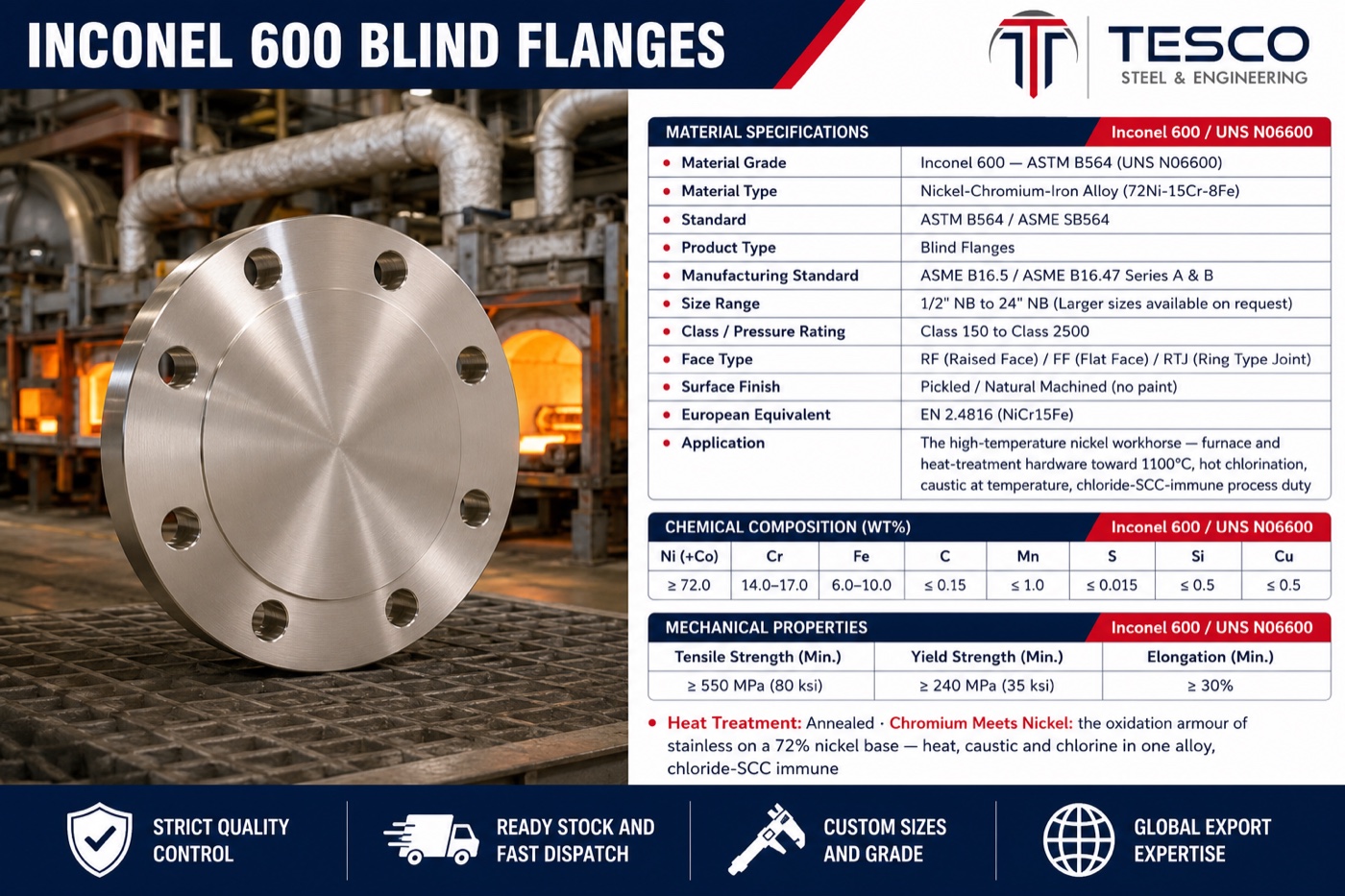
Inconel 600 Blind Flanges — Specifications at a Glance
What is an Inconel 600 Blind Flange?
The nickel world's workhorse. A solid forged disc of nickel-chromium-iron alloy — 72Ni-15Cr-8Fe (ASTM B564 / UNS N06600 / EN 2.4816) — with no bore, closing the systems where heat and chemistry attack together: furnace and heat-treatment hardware toward 1100°C, hot chlorination trains, caustic circuits at temperature, and hot chloride streams that stress-crack stainless. The chromium builds stainless's self-healing oxide armour; the 72% nickel base delivers SCC immunity, caustic tolerance and no embrittlement windows. Mechanicals 550/240 MPa annealed. Dimensions per ASME B16.5 / B16.47 in RF, FF and RTJ facings; EN 10204 3.1 certified.
Also searched as: Alloy 600 blind flange, N06600 blind, 2.4816 blind flange, NiCr15Fe blind, SB564 Inconel blind, nickel chromium blind flange — all refer to the product on this page. See also our Inconel flanges hub and Inconel refractory anchors for the same hot plants, the stainless heat champion F310, the caustic ladder's Nickel 200 / 201, and the facing pages BLRF / BLFF / BLRTJ.
Chromium Meets Nickel
The Armour Returns
Chromium at 15% builds the same self-healing oxide scale that protects stainless — oxidation to furnace temperatures, tolerance of oxidising media that attack film-free nickel on sight. The element the Monel and pure-nickel pages had to live without.
The Base Keeps Its Gifts
72% nickel underneath: chloride-SCC immunity, caustic resistance a step behind only pure nickel, dry-halogen service beyond Nickel 201's window — and no sigma phase, no 475°C window, no embrittlement clocks of any kind.
One Alloy, Both Toolkits
Heat plus chemistry in a single certificate — the reason 600 became the general-purpose core of the nickel family, and the standing answer when hot chloride streams keep cracking 316 and 321 closures.
Three readings: the nickel is a floor, with cobalt counted alongside as the specification writes it; the chromium is back — the oxidation element, absent from every copper and pure-nickel sheet before this; and the iron is a deliberate 6–10% alloying range, not a residual. Note the absence: no molybdenum — that is 625 and Hastelloy territory. Our PMI reads the Ni-Cr-Fe signature on every piece.
Mechanical Properties & The Service Span
Property
ASTM B564 N06600 Requirement
Tensile Strength
≥ 550 MPa (80 ksi) — stronger than every austenitic, copper and pure-nickel page before it
Yield Strength (0.2%)
≥ 240 MPa (35 ksi)
Elongation
≥ 30%
Hardness
No B564 limit — annealed condition
Condition
Annealed — stated on certificate
Service Span
Cryogenic upward; oxidation to ~1100°C in clean air — B16.5 ratings taper through red heat; hotter oxidising duty steps to 601
Inconel 600 / UNS N06600 Blind Flanges are available in the following specifications:
Material Grade
Inconel 600 — ASTM B564 / ASME SB564 (UNS N06600); EN 2.4816 / NiCr15Fe designation where the project requires it
Heat Treatment
Annealed — stated on certificate
Size
1/2"NB to 24"NB per ASME B16.5; 26"–60" per ASME B16.47; EN 1092-1 to order
Class
150#, 300#, 400#, 600#, 900#, 1500#, 2500# — rated on the grade's own nickel-alloy B16.5 lines
Facings
Raised Face (BLRF), Flat Face (BLFF), Ring Type Joint (BLRTJ) with groove per B16.20
Service Span
Furnace & heat-treatment duty toward 1100°C, hot chlorination (dry), hot caustic, chloride-SCC-immune process streams; hot sulphur-bearing gas reviewed case by case
Surface Finish
Pickled or natural machined — no paint; segregated alloy handling throughout
Modifications
NPT-tapped centre (test / instrument / vent), lifting provisions — machined & certified at the works
Testing
Tension & chemistry per heat — Ni-Cr-Fe verified; PMI routine
Certification
EN 10204 3.1 (standard) / 3.2 witnessed
Why Inconel 600 Blind Flanges Are Specified
Heat Plus Chemistry, One Certificate
Furnace connections that also see chlorides, chlorination trains that run hot, caustic evaporators that need strength — duties that would take two alloys anywhere else take one workhorse here.
The SCC Substitution
When hot chloride-bearing streams keep cracking 316 and 321 closures, 600 is the textbook answer — the mechanism is simply shut off at 72% nickel.
No Ageing Clocks
No sigma phase, no 475°C embrittlement, no graphitization line — thermal-cycling duty that slowly ages every iron-based alloy leaves 600's structure alone.
One Works, Whole Hot Side
The same plants that flange in Inconel anchor their linings in it — our Inconel refractory anchors and 600/601/625 flanges ship from one certified source.
Know the Map
Plain hot air at stainless prices: F310 — and we will say so. Hottest oxidising duty: 601. Wet corrosion + strength: 625. Wet chlorine & contaminated acid: Hastelloy. Full range: the Inconel hub. Facings: BLRF / BLFF / BLRTJ.
Specification Notes — Getting Inconel 600 Right
Three details buyers miss.Sulphur is still the enemy: nickel's oldest weakness carries into 600 — sulphidising gases and deposits at temperature attack the alloy, so hot sour and flue-gas duty is reviewed case by case, with iron-based heat grades often the better answer. No molybdenum means modest wet-chloride pitting: SCC immunity is not pitting immunity — cold seawater and wet aerated chloride duty belong to 254 SMO, super duplex or 625. The nuclear footnote: Alloy 600's famous PWSCC history in reactor primary water drove nuclear work to Alloy 690 — irrelevant to furnaces and chlorination trains, but nuclear-adjacent enquiries should name their service and we will quote the right alloy.
How Our Inconel 600 Blind Flanges Are Manufactured
1
Forging — cut billet of the spectro-verified N06600 heat — nickel floor, chromium window and the 6–10% iron confirmed — is hot-forged into the solid disc blank with full heat traceability and segregated alloy handling.
2
Annealing — restoring the uniform, stress-free matrix; furnace charts retained against the heat number.
3
Machining & facing — faces, OD and drilling to ASME B16.5 / B16.47 with tooling set for the tough nickel-chromium matrix; RF serrations, flat face or RTJ groove gauged per B16.20; NPT taps machined where ordered.
4
Testing — tension test and chemistry against the heat; PMI on every piece reads the Ni-Cr-Fe signature.
5
Pickling — the clean bare-metal surface, with marking of standard, grade, size, class and heat number.
6
Certification & packing — EN 10204 3.1 MTC (3.2 witnessed on request); faces protected, palletised or crated sea-worthy — no carbon-steel contact in transit.
Where Inconel 600 Blind Flanges Are Used
The four territories the chemistry unites: furnace and heat-treatment hardware (muffles, retorts, fixtures and their flanged connections), hot chlorination and HCl trains, caustic evaporator and chlor-alkali hot ends, and hot chloride-bearing process streams that stress-crack stainless. Production below:
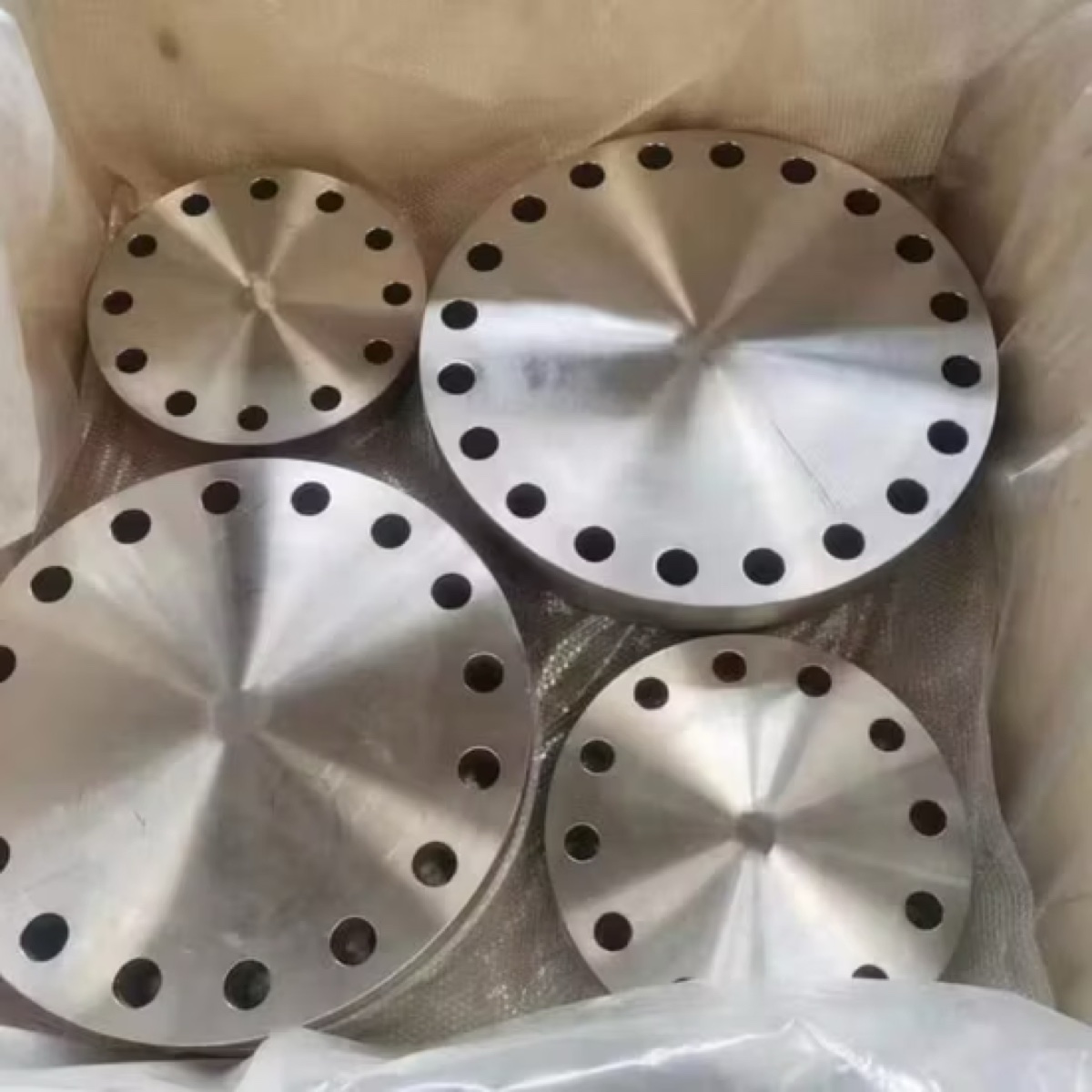
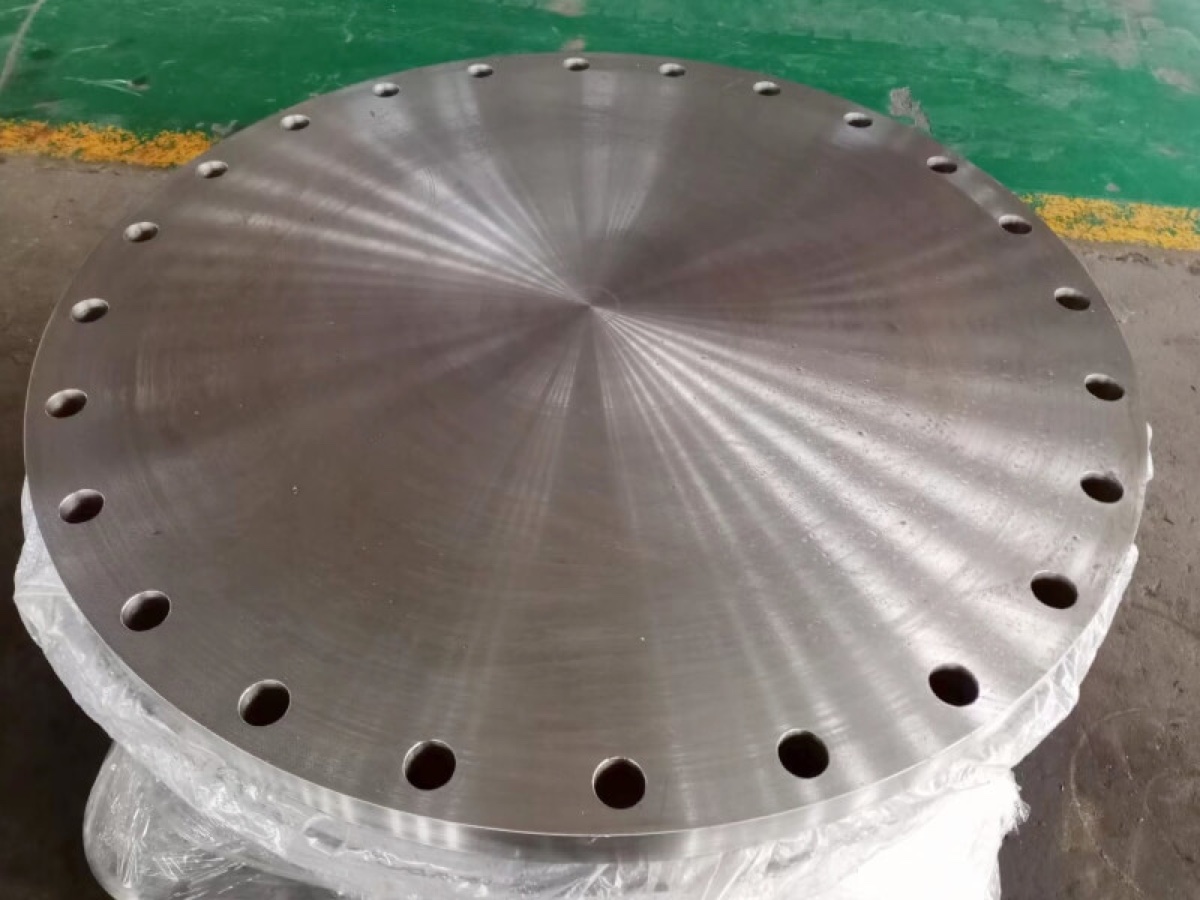
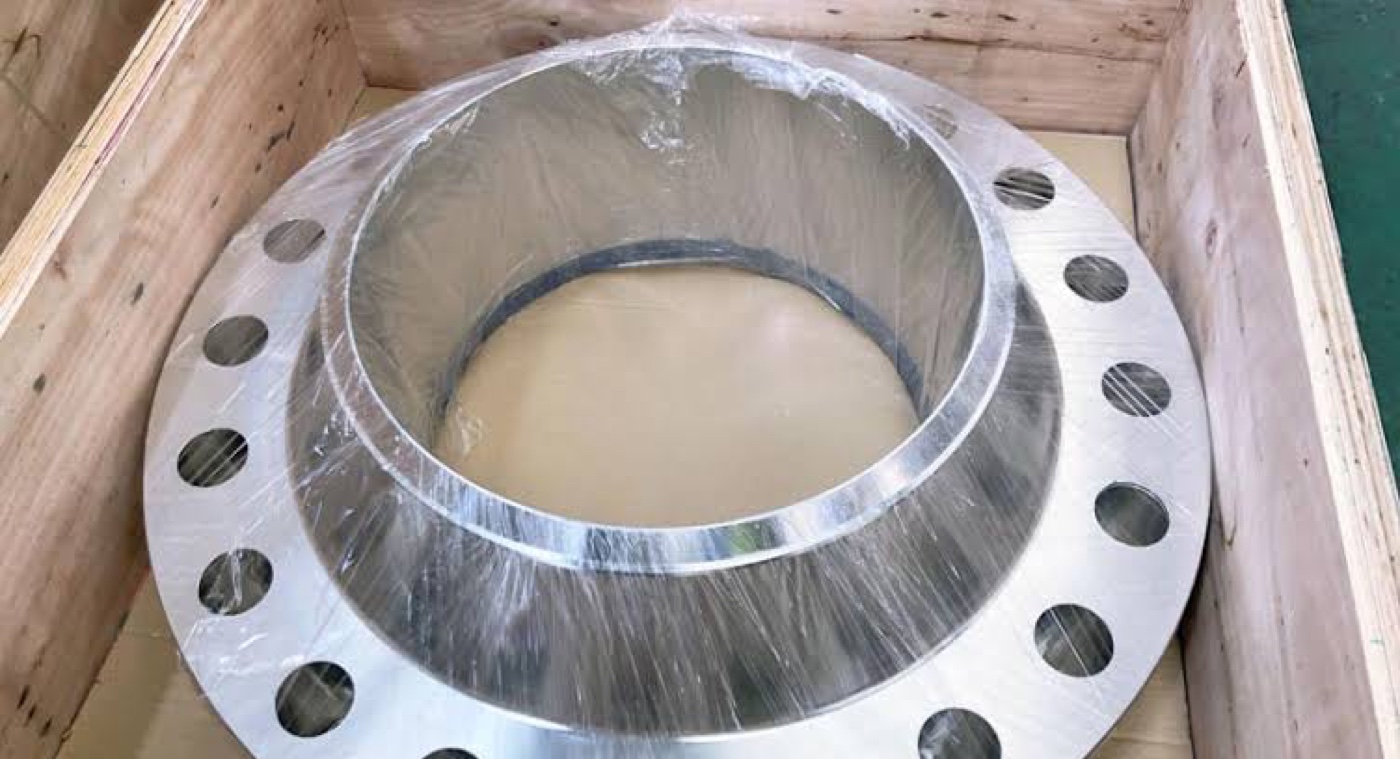
Forged Blind Flanges — Machined to ASME B16.5Machined Blind Flange — Finished FaceInconel 600 Weld Necks — Same Grade, In Stock
Inconel 600 Blind Flange Dimensions
Blind dimensions are class-governed — identical across material grades. Full charts:
How to Specify & Order an Inconel 600 Blind Flange
Five elements — the service description places the duty on the family map:
1
Size & standard — e.g. 4″ NB ASME B16.5, or the B16.47 series for 26″ and above.
2
Pressure class & facing — Class 150–2500; RF, FF or RTJ (with ring number) to match the mating flange.
3
Grade — ASTM B564 UNS N06600 (Inconel 600); 601 or 625 where the duty's hottest or wettest requirement argues up the family; EN 2.4816 designation where required.
4
Service & certification — state temperature, atmosphere (oxidising / sulphur-bearing), and moisture for any halogen stream; NPT tap size if a test blind; PMI or 3.2 witnessing as specified; EN 10204 3.1 standard.
An Inconel 600 blind flange is a solid forged disc of nickel-chromium-iron alloy — 72% nickel, 15% chromium, 8% iron, certified to ASTM B564 as UNS N06600, EN 2.4816 — drilled to the standard bolt pattern with no bore, used to close the systems where heat and chemistry attack together: furnace and heat-treatment hardware toward 1100°C, hot chlorination trains, caustic circuits at temperature, and chloride-bearing process duty where stress-corrosion cracking rules out stainless. Dimensions follow ASME B16.5 from ½ inch to 24 inch and ASME B16.47 beyond, in raised face, flat face and ring joint facings.
What does chromium add to a nickel base?
The armour the pure-nickel and Monel pages had to live without. Chromium at 15% builds the same self-healing oxide scale that protects stainless steel — oxidation resistance to furnace temperatures, and tolerance of the oxidising media that attack film-free nickel alloys on sight. Underneath it, the 72% nickel base keeps everything its family is loved for: immunity to chloride stress-corrosion cracking, caustic resistance, and metallurgical stability with no embrittlement windows. One alloy, both toolkits — which is why 600 became the general-purpose workhorse of the nickel world.
What temperature can an Inconel 600 blind flange take?
Oxidation resistance runs to roughly 1100°C in clean air — furnace-hardware territory, past every stainless except the specialised heat grades and beyond them in alloy stability. Strength, as always, retreats earlier: B16.5 pressure ratings taper through the red heat range, and most flanged 600 duty is low-pressure hot gas or moderate-temperature process service rather than high pressure at extreme heat. Below the furnace range the alloy is tough from cryogenic temperatures upward with no transition to manage. For still hotter oxidising duty, its aluminium-bearing sibling 601 takes the next step.
What is the chemical composition of Inconel 600 (UNS N06600)?
Nickel plus cobalt 72.0% minimum, chromium 14.0-17.0%, iron 6.0-10.0%, carbon ≤0.15%, manganese ≤1.0%, sulphur ≤0.015%, silicon ≤0.5%, copper ≤0.5%. Three readings matter: the nickel is a floor, written with cobalt counted alongside as the specification does; the chromium is back after the chromium-free copper and nickel pages — it is the oxidation element; and the iron is a deliberate 6-10% alloying range that stabilises and economises the matrix, not a residual. No molybdenum — that belongs to 625 and Hastelloy.
What are the mechanical properties of Inconel 600 blind flanges?
Per ASTM B564 in the annealed condition: tensile strength 550 MPa (80 ksi) minimum, yield strength 240 MPa (35 ksi) minimum, elongation 30% minimum — usefully stronger than the austenitic stainless grades and every copper or pure-nickel page before it, with full toughness from cryogenic temperatures upward. Ratings run on the alloy's own nickel-alloy B16.5 lines. Where the design needs genuinely high strength alongside nickel-alloy corrosion behaviour, the age-hardening and molybdenum-bearing siblings — X-750, 718, 625 — take over; 600's role is the all-round workhorse, not the muscle.
Inconel 600 or stainless F310 — the two heat champions?
The stainless ladder's summit against the nickel world's base camp. F310's 25Cr-20Ni holds oxidising furnace duty to similar temperatures at a fraction of the price — and for plain hot air it is often the sensible buy. Inconel 600 answers where heat is not the only enemy: chloride-bearing hot streams (where any stainless eventually stress-cracks), caustic at temperature (where stainless is excluded), chlorination chemistry, and thermal-cycling duty where 600's structure — no sigma phase, no embrittlement windows — simply has fewer ways to age. The honest rule: pure heat, F310; heat plus chemistry, Inconel 600.
Does Inconel 600 inherit the caustic and chlorine franchises?
Yes — at temperatures the pure-nickel pages cannot follow. In caustic, 600 stands just behind Nickel 200/201 in outright resistance but carries far more strength and oxidation tolerance, making it the working choice where hot concentrated caustic meets mechanical duty. In dry chlorine and hydrogen chloride, the nickel-chromium surface extends the serviceable window a step beyond Nickel 201's — 600 is the classic alloy of hot chlorination trains. The standing rule survives: dry means dry; wet chlorine chemistry belongs to the molybdenum alloys, Hastelloy first.
Is Inconel 600 immune to chloride stress-corrosion cracking?
For engineering purposes, yes. Chloride SCC preys on austenitic stainless in the 8-12% nickel window; at 72% nickel the mechanism is shut off entirely, and 600 is the textbook substitution when hot chloride-bearing service keeps cracking 316 or 321 closures. That immunity comes with the family's honest asymmetry: with no molybdenum, pitting resistance in wet, aerated chloride service is unremarkable — the alloy for hot chloride process streams is not automatically the alloy for cold seawater, where the 6-moly grades, super duplex or titanium do the work.
What is Inconel 600's nuclear history — and what is PWSCC?
Alloy 600 was the original steam-generator tubing and nozzle material of the pressurised-water reactor fleet — chosen for exactly the virtues this page describes. Decades of service then revealed its one famous weakness: primary water stress corrosion cracking, a slow intergranular mechanism in high-purity hot water under stress, which drove the industry's migration to the higher-chromium Alloy 690 for new nuclear work. For conventional industry the lesson is context, not caution — PWSCC lives in the reactor-primary environment, not in furnaces or chlorination trains — but nuclear-adjacent enquiries should name their service, and 690 exists for a reason.
Inconel 600, 601 or 625 — how does the family divide?
By what is added to the 600 base. 601 adds aluminium: an even tougher oxide scale for the hottest oxidising duty — the furnace specialist. 625 adds 9% molybdenum and niobium: wet-corrosion resistance approaching Hastelloy plus real strength, the subsea and sour-service star — and the filler wire the whole nickel family welds with. 600 remains the general-purpose core: heat, caustic, chlorine and SCC immunity in one economical package. The buying logic: start at 600, and let the duty's hottest or wettest requirement argue you up the family. We forge all three.
What service conditions does Inconel 600 dislike?
The short nickel-family list. Sulphur remains the classic enemy — sulphidising gases and deposits at temperature attack nickel alloys, so hot sour and flue-gas duty needs case-by-case review, with iron-based heat grades often the better answer. Wet, aerated chloride pitting duty is unremarkable without molybdenum — that is 625 or Hastelloy territory. High-purity hot water under stress is the nuclear PWSCC case, answered by 690. And oxidising acids are tolerated far better than by Monel or pure nickel, but the concentrated-nitric specialists remain elsewhere. In its own territory — heat plus caustic, chlorine or chlorides — the workhorse is untroubled.
What facings are Inconel 600 blind flanges made with?
All three: raised face (BLRF) — the default — flat face (BLFF) for lined and non-metallic mating equipment, and ring type joint (BLRTJ) where high-pressure practice calls for it, the ring chosen softer than the groove. Each facing has its own page on this site. Gasket systems follow the temperature as much as the chemistry — graphite-free selections in hot caustic, temperature-rated systems at the furnace end. NPT-tapped test and instrument blinds are machined and certified at the works.
Where are Inconel 600 blind flanges used?
Across the four territories the chemistry unites: furnace and heat-treatment hardware — muffles, retorts, fixtures and their flanged connections, alongside the Inconel refractory anchors we forge for the same plants; hot chlorination and HCl trains beyond pure nickel's window; caustic evaporator and chlor-alkali hot ends where strength joins the brief; and hot chloride-bearing process streams that stress-crack stainless. Inconel 600 blinds close those systems as isolations, spare-nozzle blanks and tapped test points — one workhorse certificate across all four.
Which standards cover Inconel 600 blind flanges?
The material standard is ASTM B564 (UNS N06600) with ASME SB564 as the boiler-code twin — the nickel-alloy forging standard — alongside B166 for bar, B167 for pipe and B168 for plate in the same alloy, and EN 2.4816 / NiCr15Fe as the European designation. Dimensions follow ASME B16.5 for ½"-24" and ASME B16.47 for 26"-60", rated on the grade's own lines. A complete specification reads: 'Blind Flange, RF, 4", ASME B16.5 Class 300, ASTM B564 UNS N06600 (Inconel 600)' — and our EN 10204 certificates state it exactly that way, nickel-chromium contents included.
Who manufactures Inconel 600 blind flanges in India?
Tesco Steel & Engineering is an ISO 9001:2015 certified flange manufacturer based in Mumbai, India, forging Inconel 600 / ASTM B564 / UNS N06600 / EN 2.4816 blind flanges from ½" to 24" NB per ASME B16.5 in Classes 150-2500 and to 60" per ASME B16.47 — annealed, pickled, PMI-verified with the nickel-chromium-iron signature read on every piece, certified to EN 10204 3.1/3.2 on every lot — in raised face, flat face and ring joint facings, alongside Inconel 601 and 625 flanges, Inconel refractory anchors, Nickel 200/201, Monel and Hastelloy blinds. Exported to more than 50 countries.