Incoloy 800H Blind Flanges — UNS N08810 Creep-Rated Blind Manufacturer
Tesco Steel & Engineering forges Incoloy 800H blind flanges — ASTM B564, UNS N08810, EN 1.4958 — to ASME B16.5 Class 150–2500 from ½″ to 24″ NB and to ASME B16.47 up to 60″. This grade's certificate is written in hours at temperature, not MPa at ambient: an enforced carbon floor (0.05–0.10%) feeds the fine in-service carbides, and a mandatory coarse grain (ASTM 5 or coarser) shrinks the boundary paths creep flows along — together buying the ASME allowables above 600°C that straight 800 is never granted, at the honest price of a softer cold-tensile sheet (450/170 MPa — and it doesn't matter). The alloy of reformer manifolds, pigtails and process heaters, specified by licensors by name for two generations. The hottest rupture margins: 800HT. Oxidation past the family: Inconel 601. Facings: BLRF, BLFF or BLRTJ. Every lot with EN 10204 3.1/3.2 MTC, grain size included. ISO 9001:2015, made in Mumbai, India — exported to 50+ countries.
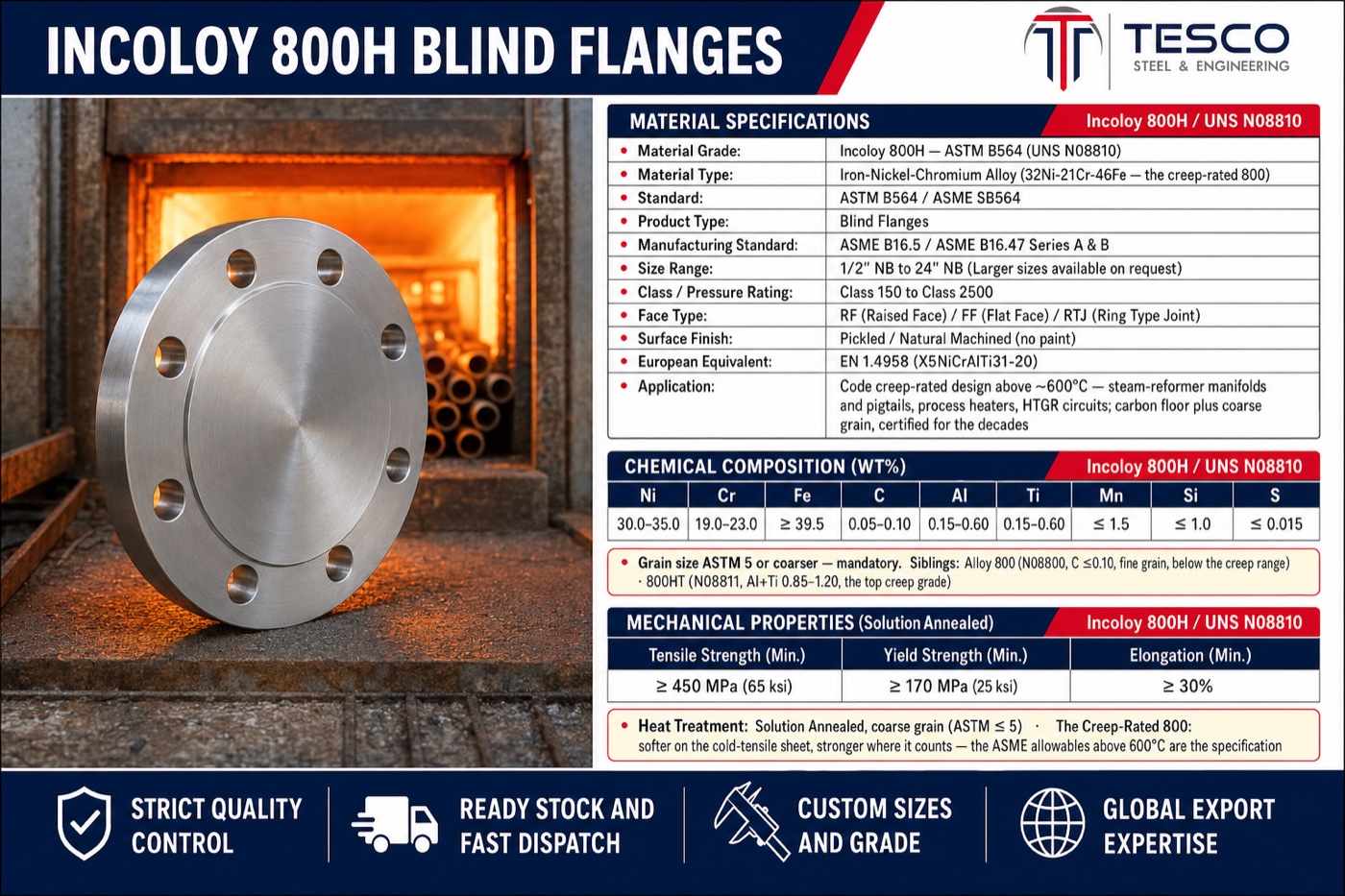
Incoloy 800H Blind Flanges — Specifications at a Glance
What is an Incoloy 800H Blind Flange?
The creep-rated 800. A solid forged disc of iron-nickel-chromium alloy (ASTM B564 / UNS N08810 / EN 1.4958) with no bore — the alloy 800 base with two additions that change everything: carbon floored at 0.05–0.10% and grain mandated coarse (ASTM 5 or coarser). Together they buy the ASME creep allowables above ~600°C — the specification reformer manifolds, pigtails and process heaters are designed around. Cold mechanicals 450/170 MPa, deliberately softer than 800's: the trade is the point. Dimensions per ASME B16.5 / B16.47 in RF, FF and RTJ facings; EN 10204 3.1 with grain size reported.
Also searched as: Alloy 800H blind flange, N08810 blind, 1.4958 blind flange, X5NiCrAlTi31-20 blind, SB564 800H blind, reformer manifold blind flange — all refer to the product on this page. See also the base grade Incoloy 800, the top creep grade 800HT, the wet-corrosion cousin 825, the H-grade relatives F304H / F316H, and the facing pages BLRF / BLFF / BLRTJ.
Two Levers, Written Into the Certificate
The Carbon Floor
0.05–0.10% with the minimum enforced — the H-grade signature from our stainless pages: guaranteed carbon feeds the fine in-service carbides that pin the structure against slow deformation at 700°C.
The Coarse Grain — the Inversion
Fine grain wins at room temperature; creep flows along grain boundaries, so at 700°C fewer boundaries mean less creep. The spec mandates ASTM 5 or coarser, the solution anneal runs deliberately hot, and the grain size goes on the MTC like a chemical element.
The Honest Trade
Cold minimums drop to 450/170 MPa (against 800's 520/205) — deliberately spent. Above 600°C the exchange pays: 800H's design allowables overtake and then dwarf anything 800's finer grain could be certified for. "Stronger" depends on the temperature at which you ask.
Dual certification is common practice: a heat melted with C 0.06–0.10% and Al+Ti 0.85–1.20% satisfies both N08810 and N08811 at once — one inventory, one MTC carrying both numbers plus the measured values that earn them. We supply dual-certified 800H/800HT forgings on request.
Incoloy 800H Chemical Composition (UNS N08810)
Element
Ni
Cr
Fe
C
Al
Ti
Mn
Si
S
Weight %
30.0–35.0
19.0–23.0
≥39.5
0.05–0.10
0.15–0.60
0.15–0.60
≤1.5
≤1.0
≤0.015
Beside the alloy 800 sheet, one number changes: the carbon line gains a floor. The specification's other half is not in this table at all — the grain-size clause (ASTM 5 or coarser) sits alongside the chemistry as an equal requirement, verified and reported on every lot. The family's iron floor (≥39.5%) carries over. Our PMI reads the Ni-Cr-Fe signature on every piece.
Mechanical Properties — and the Table That Actually Matters
ASTM 5 or coarser — mandatory, measured, reported on the MTC
Condition
Solution annealed (deliberately hot cycle) — stated on certificate
The Real Specification
The ASME elevated-temperature allowables at 650–900°C — ratings straight 800 is never granted; the closure is bought for the same hours-at-temperature arithmetic as the manifold it blanks
High-pressure hydrogen & syngas practice — ring softer than groove
Incoloy 800H Blind Flange Specifications
Incoloy 800H / UNS N08810 Blind Flanges are available in the following specifications:
Material Grade
Incoloy 800H — ASTM B564 / ASME SB564 (UNS N08810); dual-certified 800H/800HT on request; EN 1.4958 designation where required
Heat Treatment
Solution annealed, coarse grain — grain size (ASTM ≤5) measured and reported on every lot
Size
1/2"NB to 24"NB per ASME B16.5; 26"–60" per ASME B16.47; EN 1092-1 to order
Class
150#, 300#, 400#, 600#, 900#, 1500#, 2500# — rated on the grade's own nickel-alloy B16.5 lines
Facings
Raised Face (BLRF), Flat Face (BLFF), Ring Type Joint (BLRTJ) with groove per B16.20
Service Span
Code creep duty ~600–900°C — reformer manifolds, pigtails, heaters; sulphur-bearing hot gas excluded; rapid-cycling duty deserves a design review
Surface Finish
Pickled or natural machined — no paint; segregated alloy handling throughout
Modifications
NPT-tapped centre (thermocouple / test / vent), lifting provisions — machined & certified at the works
Testing
Tension & chemistry per heat — carbon floor and iron floor verified; grain size measured; PMI routine
Certification
EN 10204 3.1 (standard) / 3.2 witnessed — measured carbon and grain size on every MTC
Why Incoloy 800H Blind Flanges Are Specified
The Licensor Wrote It By Name
Reformer design codes have anchored their stress-rupture data on 800H/800HT for two generations of ammonia, methanol and hydrogen plants — the closure inherits the specification whole: allowables, grain size, decades.
The Audit Reads the Certificate
Above 600°C, straight 800 fails the check — no carbon floor, no grain-size report, no allowables. The H certificate is the difference between a rated closure and a hopeful one.
Textbook Creep Territory
Manifolds and pigtails at 700–900°C for campaigns measured in years, in carburizing hydrogen-rich gas — the checklist the whole 800 family was built for, at the temperatures where only the H grades are certified.
One Family, One Works
800 below the line, 800H above it, 800HT at the hottest end, dual-certified where useful — quoted together against one enquiry, certificate by certificate.
Know the Map
Below ~600°C: straight 800, honestly the better tool. Hottest rupture margins: 800HT. Oxidation & cycling past the family: 601. Wet & sour: 825. Facings: BLRF / BLFF / BLRTJ.
Specification Notes — Getting 800H Right
Three details buyers miss.The grain size is half the specification: a certificate without a measured grain size (ASTM ≤5) is not an 800H certificate — ours report it on every lot, beside the carbon that earns the floor. Don't pay the premium below the line: under ~600°C straight 800's finer grain gives better toughness and fatigue behaviour — the H grade buys nothing there, and we will say so on the quotation. Coarse grain has a flip side: duty dominated by rapid thermal cycling rather than steady soak trades against the coarse structure — a design review is worth the call, and sometimes the answer is the base grade or 601.
How Our Incoloy 800H Blind Flanges Are Manufactured
1
Forging — cut billet of the spectro-verified N08810 heat — carbon floor, nickel/chromium windows and the 39.5% iron floor confirmed — is hot-forged into the solid disc blank with full heat traceability and segregated alloy handling.
2
Solution annealing — the deliberately hot cycle that coarsens the grain to ASTM 5 or beyond; furnace charts retained against the heat number.
3
Grain-size verification — measured metallographically and reported on the certificate — the second half of the specification, treated like a chemical element.
4
Machining & facing — faces, OD and drilling to ASME B16.5 / B16.47; RF serrations, flat face or RTJ groove gauged per B16.20; NPT taps machined where ordered.
5
Testing & finishing — tension test and chemistry against the heat; PMI on every piece; pickled and marked with standard, grade, size, class and heat number.
6
Certification & packing — EN 10204 3.1 MTC (3.2 witnessed on request) with measured carbon and grain size; faces protected, palletised or crated sea-worthy — no carbon-steel contact in transit.
Where Incoloy 800H Blind Flanges Are Used
The code-creep heart of hot process plant: reformer outlet manifolds, pigtails and headers; fired process heaters; superheaters and high-temperature exchangers; ethylene and cracking hardware; HTGR and concentrated-solar circuits designed to elevated-temperature code cases. Production below:
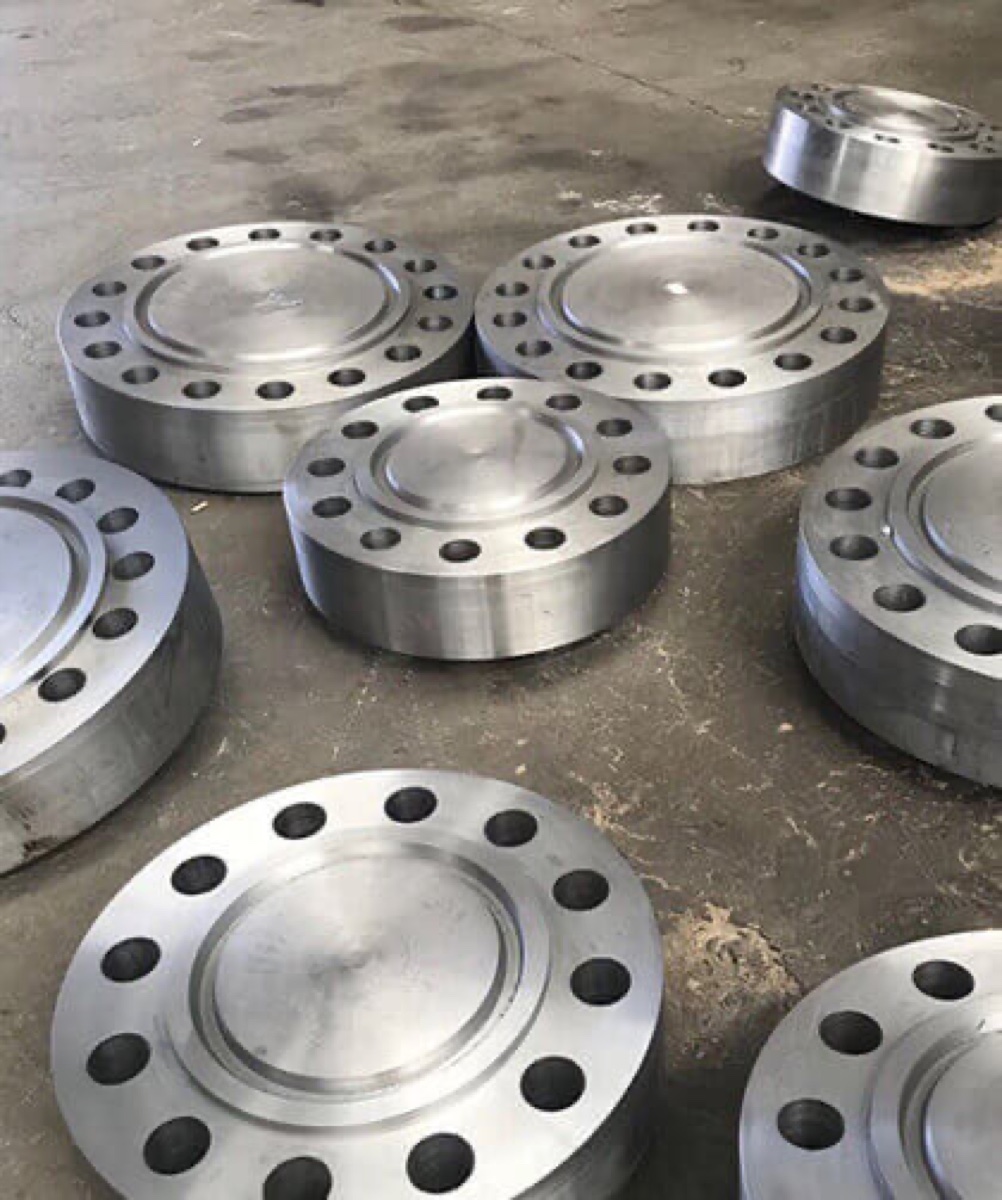
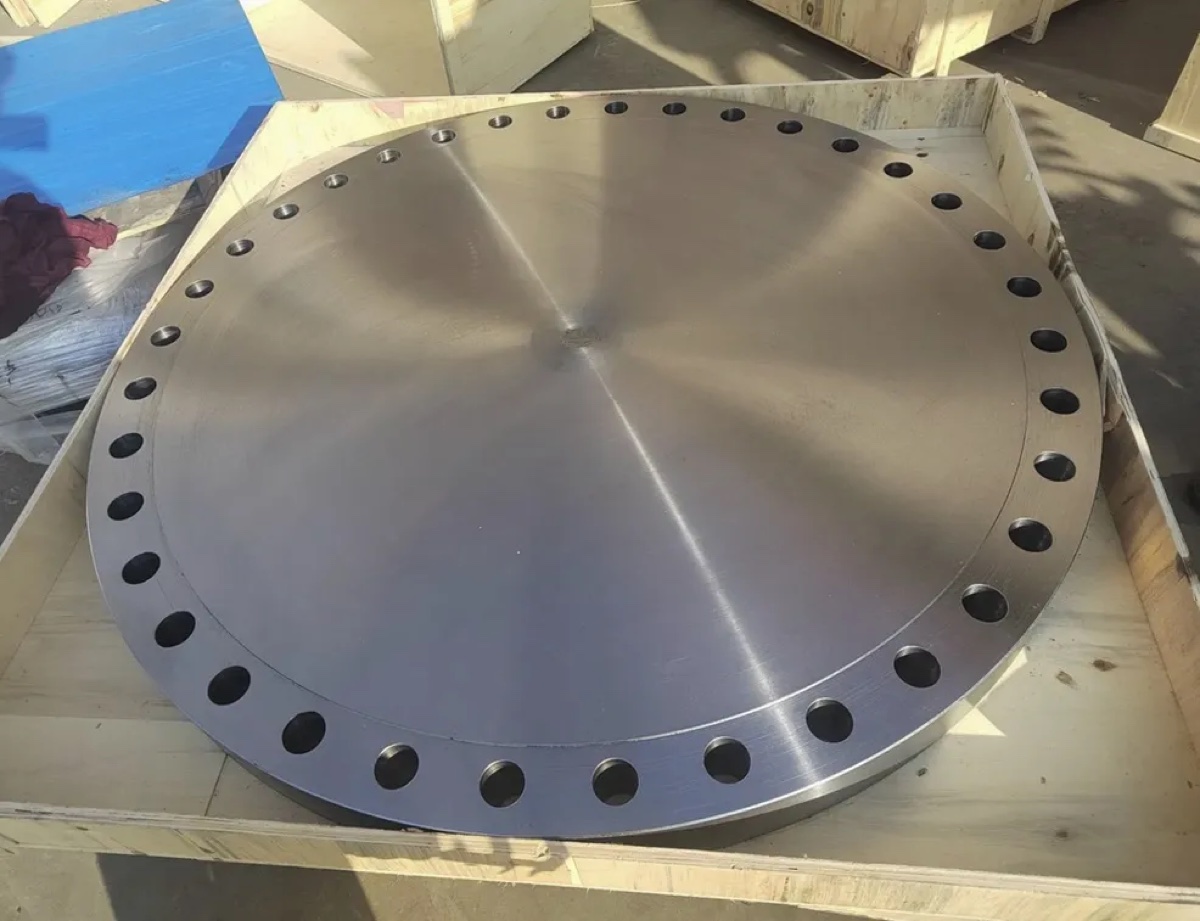
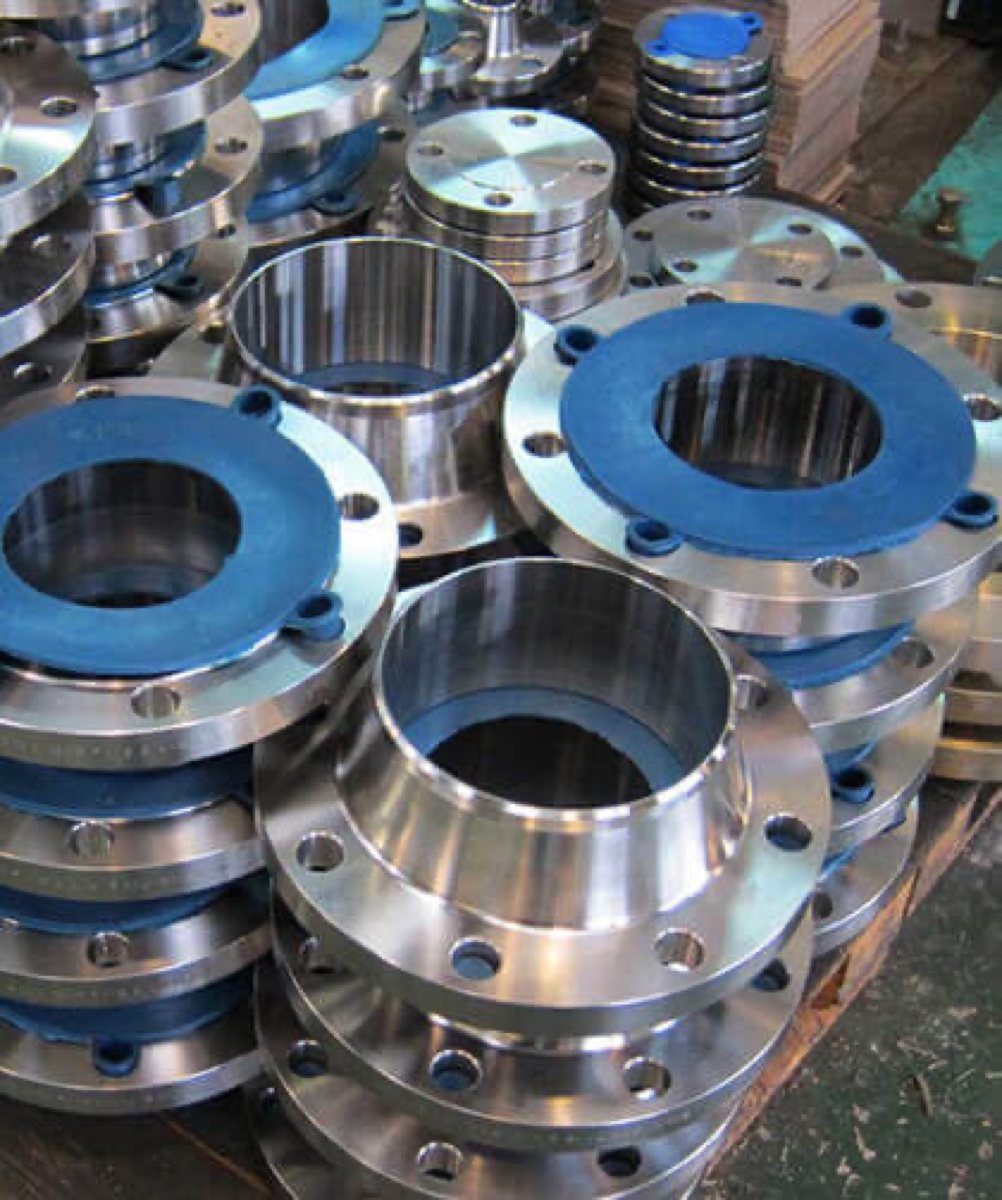
Machined Blind Flanges — On Our Shop FloorLarge Machined Blind Flange — Crated for ExportIncoloy 800H Flanges — Same Grade, Protected Stock
Incoloy 800H Blind Flange Dimensions
Blind dimensions are class-governed — identical across material grades. Full charts:
How to Specify & Order an Incoloy 800H Blind Flange
Five elements — the certificate contents are the 800H-specific ones:
1
Size & standard — e.g. 6″ NB ASME B16.5, or the B16.47 series for 26″ and above.
2
Pressure class & facing — Class 150–2500; RF, FF or RTJ (with ring number) to match the mating flange.
3
Grade — ASTM B564 UNS N08810 (Incoloy 800H), or dual-certified 800H/800HT where one stock must serve both specifications; EN 1.4958 designation where required.
4
Service & certification — state design temperature and atmosphere; NPT tap size if a thermocouple or test blind; PMI or 3.2 witnessing as specified; EN 10204 3.1 with measured carbon and grain size — our standard.
An Incoloy 800H blind flange is a solid forged disc of creep-rated iron-nickel-chromium alloy — the alloy 800 base with an enforced carbon floor and a mandatory coarse grain, certified to ASTM B564 as UNS N08810, EN 1.4958 — drilled to the standard bolt pattern with no bore. It exists for one purpose: code-governed design above roughly 600°C, where ASME creep allowables rather than room-temperature strength decide the wall — the world of steam-reformer manifolds, pigtails, process heaters and HTGR circuits. Dimensions follow ASME B16.5 from ½ inch to 24 inch and ASME B16.47 beyond, in raised face, flat face and ring joint facings.
What makes 800H creep-rated where alloy 800 is not?
Two levers, both written into the specification. First, carbon at 0.05-0.10% with the minimum enforced — the H-grade signature familiar from our stainless pages: guaranteed carbon feeds the fine in-service carbides that pin the structure against slow deformation. Second, and unique to this family, a mandatory coarse grain — ASTM 5 or coarser from a high-temperature solution anneal. Between them they roughly double the stress-rupture life at reformer temperatures, and ASME rewards the combination with the elevated-temperature allowables that straight 800 is never granted. Both levers appear on the certificate: measured carbon and measured grain size.
Why is a coarse grain good for creep — isn't fine grain better?
Better for almost everything else — which is exactly the inversion worth understanding. At room temperature, fine grain means strength and toughness, and every earlier page in our range benefits from it. But creep at 700°C proceeds largely by grain-boundary sliding and diffusion along boundaries: the more boundary area, the faster the metal flows. Coarsen the grain and the sliding paths shrink — fewer boundaries, less creep. That is why the 800H specification mandates ASTM 5 or coarser, why the solution anneal runs deliberately hot, and why the grain size is reported on the MTC like a chemical element.
Why are 800H's room-temperature mechanicals lower than alloy 800's?
The honest trade at the heart of the grade. The coarse grain that slows creep also softens the cold tensile sheet: 800H's minimums are 450/170 MPa against straight 800's 520/205. Nothing has gone wrong — the specification deliberately spends room-temperature strength to buy hours at temperature, and above 600°C the exchange pays handsomely: 800H's design allowables overtake and then dwarf what 800's finer grain could ever be certified for. It is the clearest illustration in our range that 'stronger' depends entirely on the temperature at which you ask the question.
What is the chemical composition of Incoloy 800H (UNS N08810)?
Nickel 30.0-35.0%, chromium 19.0-23.0%, iron 39.5% minimum — the family's unique iron floor — carbon 0.05-0.10% with the minimum enforced, aluminium 0.15-0.60%, titanium 0.15-0.60%, manganese ≤1.5%, silicon ≤1.0%, sulphur ≤0.015%. Beside the alloy 800 sheet, one number changes: the carbon line gains a floor. The rest of the specification's work is done by the grain-size clause — ASTM 5 or coarser — which sits alongside the chemistry as an equal requirement. Our certificates carry both, and PMI reads the Ni-Cr-Fe signature on every piece.
What are the mechanical properties of Incoloy 800H blind flanges?
Per ASTM B564 in the solution-annealed condition: tensile strength 450 MPa (65 ksi) minimum, yield strength 170 MPa (25 ksi) minimum, elongation 30% minimum. But the number that specifies this grade is not on that list: it is the ASME elevated-temperature allowable — the certified stress the code permits at 650, 750, 850°C — where 800H holds ratings that straight 800 is never granted. A reformer designer never opens the room-temperature table; the closure is bought for the same hours-at-temperature arithmetic as the manifold it blanks.
Incoloy 800H or alloy 800 — where is the line?
At roughly 600°C, and it cuts both ways. Above the line, code design needs the creep allowables only the H grade carries — hopeful substitution of straight 800 fails the audit, because the certificate lacks the carbon floor and grain size the stress tables assume. Below the line, the preference genuinely reverses: straight 800's finer grain gives better toughness and fatigue behaviour, and paying the H premium buys nothing the design can use. The design temperature picks the grade once, at specification — and mixed plants order both, certificate by certificate, from the same range.
Incoloy 800H or 800HT — when does the HT step earn its premium?
When the stress-rupture margin at the hottest end decides the design. 800HT (N08811) takes the H recipe and adds a controlled Al+Ti sum of 0.85-1.20%, sharpening the in-service precipitation that resists creep — the best rupture numbers of the trio, favoured for the hottest reformer outlet components and written into some licensor specifications by name. For much of the 600-800°C range, 800H's allowables serve identically at slightly friendlier cost and wider availability. The licensor's datasheet usually settles it; where it is silent, we quote both.
What temperature range does an Incoloy 800H blind flange cover?
Its designed territory is roughly 600-900°C — the code-creep window where its allowables are the specification — with oxidation resistance extending toward 980°C and the carburizing-atmosphere tolerance of the whole 800 family. Below 600°C it serves without advantage over straight 800; above its window, the handoffs are the familiar ones — Inconel 601 when oxidation and cycling lead, the specialised superalloys when creep demands outrun the family. For the reformer and heater world it was built for, the trio's H and HT grades are the standard answer, written into the codes by name.
Why do steam-reformer manifolds specify 800H by name?
Because reformer outlet systems are the textbook creep application. Manifolds, pigtails and headers run 700-900°C continuously for campaigns measured in years, in carburizing hydrogen-rich gas, with replacement costs that dwarf material premiums — so the licensors' design codes specify the alloys whose stress-rupture data they trust, and the 800H/800HT pair has anchored those codes for two generations of ammonia, methanol and hydrogen plants. A closure on that manifold inherits the specification whole: same allowables, same certified grain size, same decades.
What service conditions does Incoloy 800H dislike?
The family list, with one H-specific note. Sulphur-bearing hot gases attack it — fuel analysis on the enquiry, as for every nickel-bearing grade. Wet chloride chemistry is not its game: no molybdenum, so brines and acids go to Incoloy 825. The H-specific note is the flip side of its design: the coarse grain that serves creep gives away some fatigue and thermal-shock tolerance, so duty dominated by rapid cycling rather than steady soak deserves a design review — sometimes straight 800's finer grain is genuinely the better tool below the creep line.
What facings are Incoloy 800H blind flanges made with?
All three: raised face (BLRF) — the default — flat face (BLFF) for mating flat-faced and lined equipment, and ring type joint (BLRTJ) for the high-pressure hydrogen and syngas practice its plants run, the ring chosen softer than the groove. Each facing has its own page on this site. At reformer temperatures the gasket system is the joint's limiting member, and bolt-load relaxation over long hot campaigns deserves the same creep thinking as the flange itself. NPT-tapped thermocouple and test blinds are machined and certified at the works.
Where are Incoloy 800H blind flanges used?
The code-creep heart of hot process plant: steam-reformer outlet manifolds, pigtails and headers in ammonia, methanol and hydrogen plants; fired process heaters and their hot manifolding; superheaters and high-temperature exchangers; ethylene and cracking service hardware; and HTGR and concentrated-solar heat-transfer circuits designed to elevated-temperature code cases. 800H blinds close those systems as isolations, spare-nozzle blanks and tapped test points — certified, grain size and all, for the same decades as the pressure parts around them.
Which standards cover Incoloy 800H blind flanges?
The material standard is ASTM B564 (UNS N08810) with ASME SB564 as the boiler-code twin — the nickel-alloy forging standard — alongside B408 for rod and B409 for plate in the same family, and EN 1.4958 / X5NiCrAlTi31-20 as the European designation; the siblings certify as N08800 (alloy 800) and N08811 (800HT). Dimensions follow ASME B16.5 for ½"-24" and ASME B16.47 for 26"-60". A complete specification reads: 'Blind Flange, RF, 6", ASME B16.5 Class 300, ASTM B564 UNS N08810 (Incoloy 800H)' — and our EN 10204 certificates state it exactly that way, measured carbon and grain size included.
Who manufactures Incoloy 800H blind flanges in India?
Tesco Steel & Engineering is an ISO 9001:2015 certified flange manufacturer based in Mumbai, India, forging Incoloy 800H / ASTM B564 / UNS N08810 / EN 1.4958 blind flanges — with alloy 800, 800HT and dual-certified 800H/800HT material alongside — from ½" to 24" NB per ASME B16.5 in Classes 150-2500 and to 60" per ASME B16.47, solution annealed with grain size verified and reported (ASTM 5 or coarser), pickled, PMI-verified on every piece, certified to EN 10204 3.1/3.2 on every lot, in raised face, flat face and ring joint facings — alongside the full Incoloy, Inconel and nickel-alloy blind range. Exported to more than 50 countries.