

Tesco Steel & Engineering manufactures DIN 3015 rail nut pipe and tube clamp systems — mounting rails fitted with captive rail nuts that allow multiple pipe clamps to be positioned, slid, and repositioned along a single rail without welding each clamp individually. Size 6 mm to 406 mm OD. Working pressure up to 600 bar (8000 PSI). PP / Polyamide / Aluminium clamp bodies with Carbon Steel or Stainless Steel rails, plates & bolts. ISO 9001:2015 certified. Made in India.
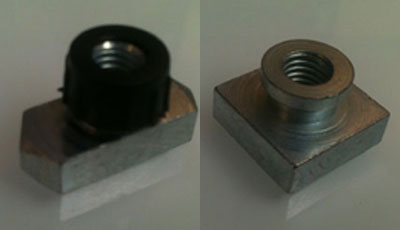
TES-LOK Rail Nut & Rail
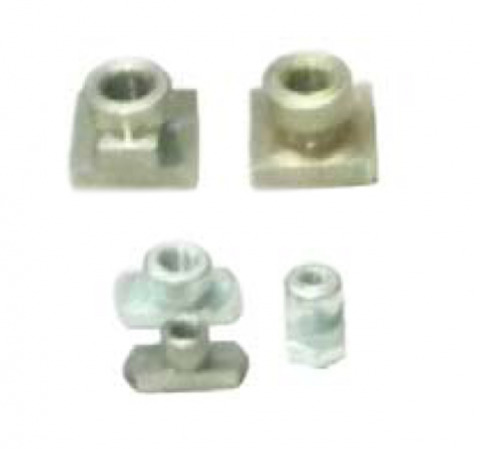
Rail-Mounted Clamp Assembly
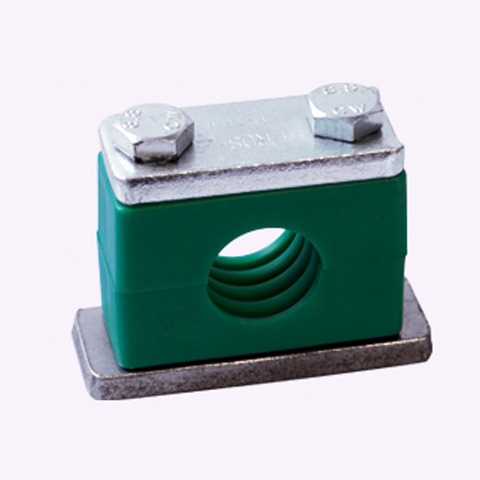
Heavy Series Clamp (Body)
The rail nut system is the preferred mounting method wherever multiple parallel pipe or tube lines run together, or where clamp positions may need to be adjusted during commissioning. It turns the DIN 3015 clamp into a modular rail-mounted system rather than a series of individually welded mounts — saving installation time and giving a tidier, more serviceable pipe rack.
| Criterion | Rail Nut System | Individual Weld Plate |
|---|---|---|
| Mounting method | One rail welded/bolted once; clamps clip on via rail nuts | Each clamp's weld plate welded separately to structure |
| Welding effort | Minimal — weld the rail once (or bolt it on) | One weld per clamp position |
| Repositionable | Yes — clamps slide and lock anywhere along the rail | No — position fixed by where the plate is welded |
| Multi-line runs | Excellent — many clamps in a neat row on one rail | Each line/clamp mounted individually |
| Add clamps later | Easy — add a rail nut + clamp to the existing rail | Requires hot work to weld a new plate |
| Best use | Multi-line pipe racks, adjustable layouts, retrofit-friendly installs | Single isolated clamp positions; permanent fixed layouts |
| Component | Function | Material Options |
|---|---|---|
| Mounting Rail | Continuous profile fixed to the structure; carries multiple clamps | Carbon Steel (zinc plated), SS 304, SS 316 |
| Rail Nut | Captive nut that slides in the rail channel and locks the clamp in position | Carbon Steel (zinc plated), SS 304, SS 316 |
| Clamp Body (two halves) | Grips the pipe/tube circumference; damps vibration | Polypropylene (PP), Polyamide, Aluminium |
| Cover Plate (top plate) | Bridges the two clamp halves; bolt bears on it | Carbon Steel (zinc plated), SS 304, SS 316 |
| Hex Bolt / Stud | Threads into the rail nut, clamping the body and locking it to the rail | Zinc-plated Grade 8.8, SS 304 (A2), SS 316 (A4) |
| Parameter | Details |
|---|---|
| Brand | TES-LOK (Tesco Steel & Engineering) |
| System | Rail nut + mounting rail — DIN 3015 Part 2 (Heavy Series geometry) |
| Pipe/Tube OD Range | 6 mm to 406 mm OD |
| Working Pressure | 100 bar (1500 PSI) up to 600 bar (8000 PSI) |
| Clamp Body Material | Polypropylene (PP), Polyamide, Aluminium |
| Rail & Rail Nut Material | Carbon Steel (zinc plated), SS 304 (A2), SS 316 (A4) |
| Mounting | Rail welded or bolted to structure; clamps mount via captive rail nut |
| Temperature Range | PP: −40°C to +90°C | PA: −40°C to +120°C | Aluminium: up to +200°C |
| Standard | DIN 3015 Part 2 (Heavy Series) |
| Size Groups | Group 1 to Group 6 — clamps of any OD in a group share the rail and rail-nut size |
| Certifications | ISO 9001:2015 | material certificates on request |
The rail is welded or bolted to the structure a single time, then carries an entire row of clamps. This eliminates dozens of individual weld-plate operations on a multi-line pipe rack — cutting installation labour, hot-work time, and inspection points dramatically.
The captive rail nut slides freely in the rail channel, so clamp positions can be set during commissioning and adjusted later without any welding or drilling. Add, remove, or relocate clamps simply by loosening and re-tightening the bolt.
The rail system accepts standard DIN 3015 clamp bodies — PP, Polyamide, or aluminium — in light and heavy series size groups. Mix clamp materials and sizes (within a group) along one rail to suit different lines on the same rack.
A single rail carrying a row of clamps keeps multiple parallel pipe and tube lines perfectly aligned and evenly spaced — a tidy, professional pipe rack that is easier to inspect, maintain, and extend than scattered individual mounts.
Rails and rail nuts in zinc-plated carbon steel for general service, or SS 304 (A2) and SS 316 (A4) for corrosive, marine, and washdown environments — matched to the clamp body and cover-plate materials.
Built on DIN 3015 Part 2 heavy-series geometry, the rail system supports high-pressure hydraulic pipe to 600 bar and large-bore pipe to 406 mm OD, with full vibration damping from the polymer or lined clamp bodies.
Download the TES-LOK Heavy Series (DIN 3015 Part 2) dimension table covering the rail, rail-nut, and clamp body dimensions for each size group:
📄 Heavy Series / Rail Nut Dimensions (PDF)| Industry | Typical Use Point | Why Rail Nut System Preferred |
|---|---|---|
| Hydraulics & Machinery | Multi-line hydraulic pipe racks on power packs and machine frames | Weld rail once; mount and adjust many clamps without further hot work |
| Oil & Gas / Petrochemical | Instrument and hydraulic tube banks on skids and platforms | Neat multi-line racks; SS 316 rail for corrosive/hazardous areas |
| Marine & Shipbuilding | Engine room and deck pipe banks running parallel | Repositionable during fit-out; SS 316 hardware resists salt corrosion |
| Power Generation | Control and lube oil pipe racks in turbine halls | Tidy, serviceable racks; easy to extend during plant upgrades |
| Steel & Metals | Large-bore hydraulic pipe runs on mill structures | Heavy-series rail supports big-bore pipe; clamps repositionable |
| Mobile & Construction Equipment | Hydraulic line banks along chassis and booms | Fast assembly of multiple lines; adjustable during build |
| Process & Chemical Plants | Utility and instrument pipe banks on cable/pipe bridges | Common rail keeps mixed-size lines organised and aligned |
| Renewable Energy | Hydraulic pipe banks in wind turbine towers and nacelles | Compact rail-mounted runs in confined spaces; easy to service |
Q1. What is a rail nut in a pipe clamp system?
A rail nut is a captive nut that slides inside the channel of a DIN 3015 mounting rail. It is the component that secures each clamp body to the rail — the clamp bolt threads into the rail nut, and tightening it locks both the pipe grip and the clamp's position on the rail. Rail nuts let multiple clamps be mounted on a single rail and repositioned without welding each one.
Q2. How is the rail nut system different from individual weld-plate mounting?
With individual weld plates, each clamp is welded separately to the structure — one weld per clamp, and the position is fixed. With the rail nut system, a single rail is welded or bolted once, and every clamp mounts to it via a sliding rail nut. This greatly reduces welding/hot-work, allows clamps to be repositioned or added later without welding, and keeps multi-line pipe racks neat and aligned.
Q3. Can I reposition clamps after the rail is installed?
Yes — that is the main advantage. To move a clamp, loosen its bolt, slide the rail nut to the new position along the rail, and re-tighten. To add a clamp, insert another rail nut into the rail channel and mount a clamp on it. No welding or drilling is needed for either operation, which makes the system ideal for commissioning adjustments and future expansion.
Q4. Can different clamp sizes be mounted on the same rail?
Yes, within the same DIN 3015 size group, clamps for different pipe ODs share a common rail and rail-nut size, so they can be mixed along one rail. This lets a single rail carry a row of clamps supporting several different pipe/tube sizes — ideal for mixed-size pipe racks. Across very different size groups, the rail/rail-nut size may change.
Q5. What clamp body materials work with the rail nut system?
The rail system accepts standard DIN 3015 clamp bodies in polypropylene (PP, to +90°C), polyamide (to +120°C), and aluminium (to +200°C, fire-zone/conductive). Choose the body material for the temperature and environment, and the rail + rail nut for the corrosion environment (zinc-plated carbon steel, SS 304, or SS 316).
Q6. What rail and rail-nut material should I use for marine installations?
Use SS 316 (A4) rails and rail nuts for marine, offshore, and coastal outdoor service — SS 316 resists chloride corrosion. SS 304 (A2) suits general outdoor and washdown service. Zinc-plated carbon steel is economical for dry indoor environments. Match the rail/rail-nut grade to the clamp cover plate and bolt grade.
Q7. How should the rail itself be supported?
The rail carries the combined weight and vibration load of all the clamps on it, so it must be fixed to the structure at adequate intervals to prevent sag or flex. Follow the support-span recommendation for the rail size and the total pipe load. A well-supported rail is essential — the clamps can only hold the pipe as securely as the rail holds them.
Q8. Do you supply the complete rail nut system or individual components?
Both. TES-LOK supplies the complete rail nut clamp system — rail, rail nuts, clamp body halves, cover plates, and bolts — as a matched assembly, or any individual component (rail, rail nut, body, plate, bolt) for spares and extensions. We also manufacture the related Light Series, Heavy Series, Twin/Double Series, Aluminium, Construction, and Multilayer clamp products. See the sidebar for the full range.