

Tesco Steel & Engineering manufactures aluminium-body pipe and tube clamps to DIN 3015 — all-metal twin-half clamp bodies for high-temperature, fire-zone, and heavy-duty hydraulic pipe support where polymer (PP / polyamide) clamps cannot be used. Size 6 mm to 406 mm OD. Working pressure up to 600 bar (8000 PSI). Service temperature up to +200°C. Aluminium clamp body with Carbon Steel or Stainless Steel weld plates, cover plates, rails & bolts. ISO 9001:2015 certified. Made in India.
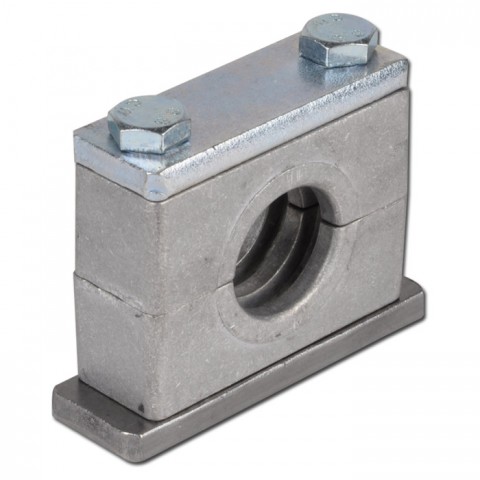
TES-LOK Aluminium Pipe Clamp
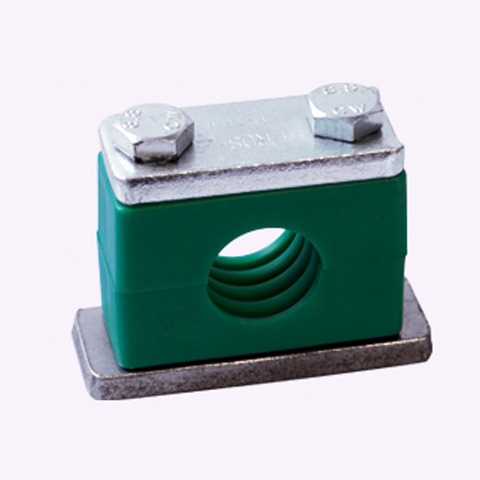
Heavy Series (Polymer)
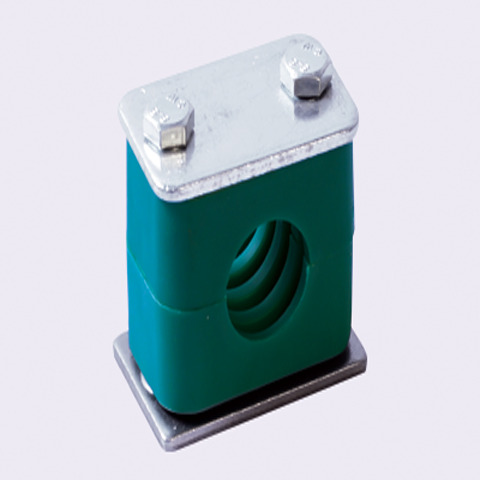
Light Series (Polymer)
The aluminium clamp is the answer when the operating environment exceeds the limits of polymer clamp bodies. Where PP tops out around +90°C and polyamide around +120°C, the aluminium body continues to perform to +200°C and beyond, while being non-combustible and naturally conductive — making it the standard choice for engine rooms, fired-process areas, and high-temperature hydraulic and fuel lines.
| Criterion | Aluminium Body Clamp | Polymer Body Clamp (PP / PA) |
|---|---|---|
| Max temperature | Up to +200°C (and higher for short excursions) | PP: +90°C | PA: +120°C |
| Fire behaviour | Non-combustible — no melt, no flame spread | Combustible — softens / melts in fire |
| Electrical conductivity | Conductive — provides pipe grounding path | Insulating (unless conductive grade specified) |
| UV / ozone resistance | Unaffected | Degrades over long outdoor exposure (unless stabilised) |
| Vibration damping | Lower than polymer — may use a liner insert | Higher — resilient polymer absorbs vibration |
| Weight | Light for a metal — lighter than steel | Lightest option |
| Best use | High-temp, fire-zone, UV-exposed, grounding-required service | Standard ambient-temperature pipe/tube runs |
| Component | Function | Material |
|---|---|---|
| Clamp Body (two halves) | All-metal halves grip the pipe; non-combustible, conductive | Aluminium alloy |
| Weld Plate (mounting plate) | Welded to the structure to anchor the clamp | Carbon Steel (zinc plated), SS 304, SS 316 |
| Cover Plate (top plate) | Bridges the two clamp halves; bolt bears on it | Carbon Steel (zinc plated), SS 304, SS 316 |
| Bottom Plate | Bolt-on alternative to weld plate (no welding needed) | Carbon Steel (zinc plated), SS 304, SS 316 |
| Mounting Rail / Rail Nut | Carries multiple clamps in a row on one rail | Carbon Steel (zinc plated), SS 304, SS 316 |
| Hex Bolt / Stud | Clamps the assembly together to specified torque | Zinc-plated Grade 8.8, SS 304 (A2), SS 316 (A4) |
| Liner Insert (optional) | Soft insert for vibration damping / pipe protection | Rubber / elastomer (optional) |
| Parameter | Details |
|---|---|
| Brand | TES-LOK (Tesco Steel & Engineering) |
| Clamp Body | Aluminium alloy (all-metal twin-half body) |
| Standard | DIN 3015 (Light / Heavy series geometry) |
| Pipe/Tube OD Range | 6 mm to 406 mm OD |
| Working Pressure | 100 bar (1500 PSI) up to 600 bar (8000 PSI) |
| Service Temperature | Up to +200°C (aluminium body) — higher than any polymer clamp |
| Hardware Material | Carbon Steel (zinc plated), SS 304 (A2), SS 316 (A4) |
| Mounting Options | Weld plate, bolt-on bottom plate, mounting rail / rail nut |
| Key Properties | Non-combustible, electrically conductive, UV / ozone resistant |
| Size Groups | Group 1 to Group 6 — common plate/rail hardware shared with polymer clamps |
| Certifications | ISO 9001:2015 | material certificates on request |
The non-combustible aluminium body does not melt, soften, or spread flame — making it the correct choice for engine rooms, fired-process areas, and fire-rated zones where polymer clamps are prohibited. It performs continuously to +200°C, far beyond the +90°C / +120°C limits of PP and polyamide.
The metal body provides an electrically conductive path, helping ground the supported pipe and dissipate static charge — valuable on fuel lines and in hazardous areas where static build-up must be avoided.
Unlike polymer bodies that can degrade under long-term UV and ozone exposure, the aluminium body is unaffected — ideal for permanent outdoor installations, offshore decks, and solar / exposed-structure pipe runs.
Aluminium clamp bodies mount on the same DIN 3015 weld plates, cover plates, and rails as the polymer light and heavy series — so an aluminium clamp can be substituted into an existing clamp rack using common mounting hardware and size groups.
Carries the full heavy-series capability — high-pressure hydraulic pipe to 600 bar and large-bore pipe to 406 mm OD — combining metal-body durability with the load capacity needed for demanding pipe support.
Pair the aluminium body with SS 316 (A4) weld plates, cover plates, rails, and bolts for marine and offshore service. Optional elastomer liner inserts add vibration damping and pipe-surface protection where required.
| Industry | Typical Use Point | Why Aluminium Clamp Preferred |
|---|---|---|
| Marine & Shipbuilding | Engine room fuel and hydraulic pipe in fire-rated zones | Non-combustible metal body meets fire-zone rules; SS 316 hardware resists salt |
| Power Generation | High-temperature lube oil, steam-adjacent, and turbine hydraulic pipe | Performs to +200°C where polymer clamps fail; conductive grounding |
| Oil & Gas / Offshore | Fuel lines and hydraulic pipe in hazardous and fire zones | Conductive body dissipates static; non-combustible; UV resistant on decks |
| Steel & Metals | Hydraulic pipe near furnaces, casters, and hot process areas | High-temperature metal body survives radiant heat near hot processes |
| Heavy Mobile Equipment | Engine-bay hydraulic and fuel lines exposed to engine heat | Withstands under-hood temperatures that would soften polymer clamps |
| Cement & Process Plants | Hydraulic and utility pipe in hot, dusty, UV-exposed plant areas | Metal body unaffected by heat, UV, and ozone over long service life |
| Defence & Aerospace Ground Support | Fuel and hydraulic lines requiring conductive, fire-safe mounting | Conductive, non-combustible support meets stringent safety specifications |
| Railways | Engine and brake hydraulic/fuel lines on locomotives | Fire-safe metal body for engine-compartment pipe runs |
Q1. When should I use an aluminium clamp body instead of a polymer one?
Use an aluminium clamp body when the service temperature exceeds polymer limits (PP +90°C, polyamide +120°C), in fire zones where a non-combustible support is required, where the pipe must be electrically grounded / static dissipated, or for long-term outdoor installations with heavy UV and ozone exposure. For standard ambient-temperature pipe/tube runs, a polymer light or heavy clamp is usually the more economical choice.
Q2. What temperature can an aluminium pipe clamp handle?
The aluminium body performs continuously to about +200°C — well beyond the +90°C limit of polypropylene and +120°C of polyamide — and can tolerate higher short-term excursions. This makes it suitable for engine rooms, hot process areas, and high-temperature hydraulic and fuel lines where polymer clamps would soften or melt.
Q3. Is the aluminium clamp suitable for fire zones?
Yes. Aluminium is non-combustible — it does not melt into burning droplets or spread flame the way a polymer body can. This makes the aluminium clamp the correct choice for fire-rated zones in marine engine rooms, offshore modules, and other areas where combustible clamp materials are prohibited by safety codes.
Q4. Does the aluminium clamp damp vibration like a polymer clamp?
A bare metal body provides less vibration damping than a resilient polymer body. Where vibration damping is important — or for soft / thin-wall tube — an optional elastomer liner insert is fitted inside the aluminium clamp halves to cushion the pipe and absorb vibration. For rigid high-pressure pipe, the bare aluminium body is normally used directly.
Q5. Can the aluminium body mount on the same hardware as polymer clamps?
Yes. The aluminium clamp body is dimensioned to the same DIN 3015 size groups as the polymer light and heavy series, so it mounts on the same standard weld plates, cover plates, and rails. This means an aluminium clamp can be substituted into an existing DIN 3015 clamp rack using common mounting hardware.
Q6. What pressure and pipe size does the aluminium clamp support?
The aluminium clamp carries the full heavy-series range — pipe/tube from 6 mm up to 406 mm OD, with working pressures from 100 bar (1500 PSI) up to 600 bar (8000 PSI) depending on pipe and clamp size. It combines metal-body durability with high-pressure, large-bore load capacity.
Q7. What hardware material should I use with an aluminium clamp in a marine environment?
Use SS 316 (A4) weld plates, cover plates, rails, and bolts for marine and offshore service — SS 316 resists chloride corrosion. SS 304 (A2) suits general outdoor service. Note that in highly corrosive or galvanic environments, attention to the aluminium-to-steel interface (isolation / compatible coatings) may be required — contact our technical team for guidance on specific installations.
Q8. Do you supply the complete clamp group or individual components?
Both. TES-LOK supplies the complete aluminium clamp group — body halves, weld/bottom plate, cover plate, rail, bolts, and optional liner insert — as a matched assembly, or any individual component for spares. We also manufacture the related polymer Light Series, Heavy Series, Twin/Double Series, Construction, Multilayer, and Rail-Nut clamp products. See the sidebar for the full range.