ASTM A182 F91 Slip On Flanges — Modified 9Cr-1Mo-V Manufacturer
Tesco Steel & Engineering forges ASTM A182 F91 slip on flanges — the modified 9Cr-1Mo-V creep-strength-enhanced ferritic (CSEF) alloy steel at the top of the chrome-moly ladder — to ASME B16.5 Class 150–2500 from ½″ to 24″ NB, larger patterns to order. Micro-alloyed with vanadium, niobium and nitrogen, F91 carries allowable stresses far above F22 at the same temperature — the grade of modern high-energy steam piping at 565–610 °C. Supplied normalized & tempered per ASTM A182 with hardness verification, faced SORF (flat face or RTJ where specified), alongside the complete family F5, F9, F11 and F22. Every lot with EN 10204 3.1/3.2 MTC. ISO 9001:2015, made in Mumbai, India — exported to 50+ countries.
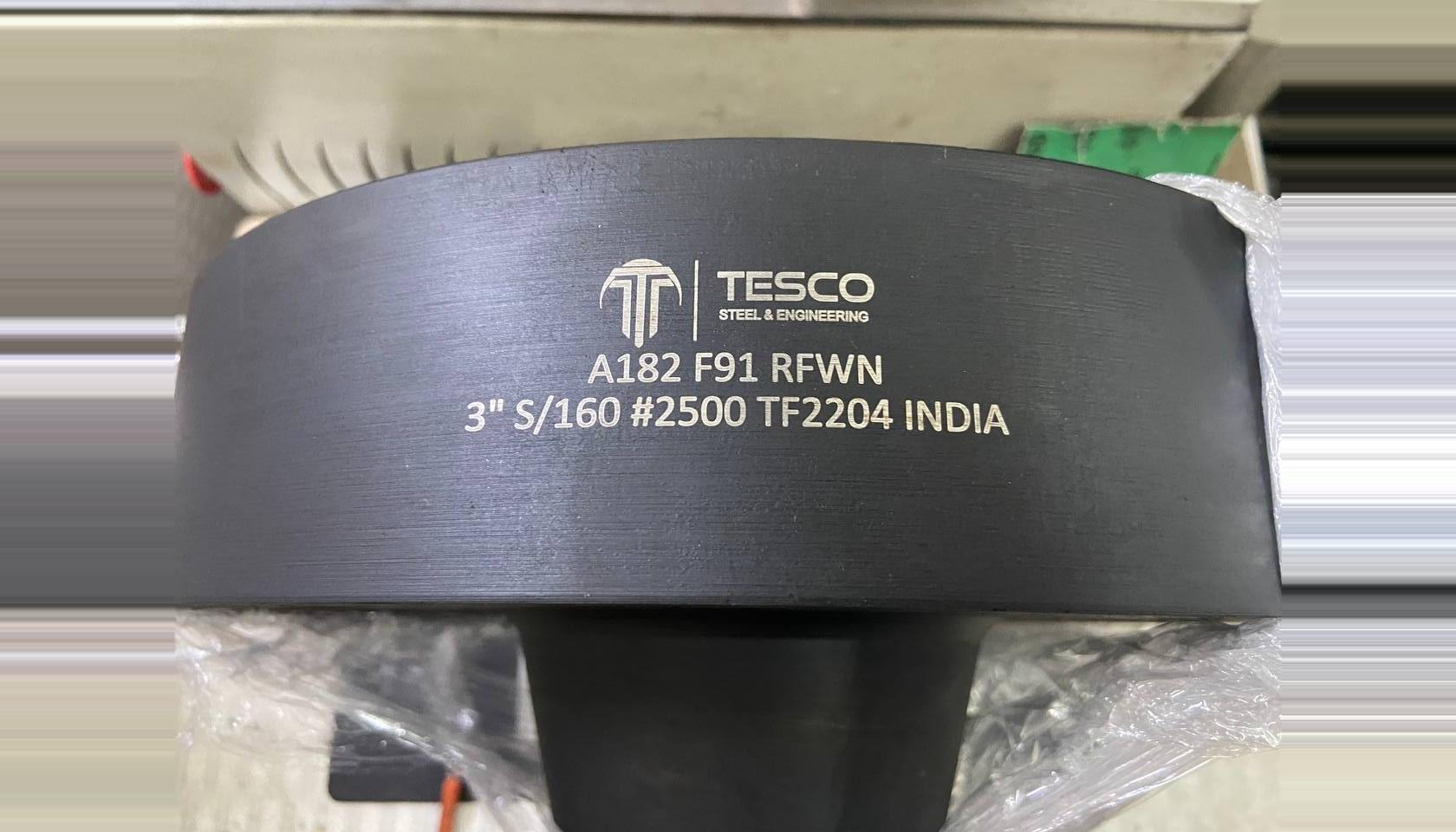
ASTM A182 F91 Flange — Forged & Machined at Our Mumbai Works
What is an ASTM A182 F91 Slip On Flange?
F91 = the top rung.ASTM A182 F91 is the modified 9Cr-1Mo-V steel: a creep-strength-enhanced ferritic (CSEF) grade whose vanadium-niobium-nitrogen micro-alloying pins the microstructure against creep, carrying roughly double F22's allowable stress at high steam temperatures. As a slip-on, it installs with two fillet welds under the strictest welding discipline on the ladder — controlled preheat, B9 consumables, tight PWHT windows, hardness checks. The grade of supercritical steam plants.
Also searched as: F91 slip on flange, P91 flange, modified 9Cr slip on flange, CSEF flange, SA182 F91 slip on flange, X10CrMoVNb9-1 slip on flange, 1.4903 slip on flange — all refer to the product on this page.
Creep-strength-enhanced — modern high-energy steam
Rule of thumb: power plants climb the ladder for creep strength (temperature), refineries climb it for corrosion (sulfur). F91 is the summit of the strength side — beyond it sit the tungsten-alloyed F92 and, for corrosion duty, stainless steel.
ASTM A182 F91 Chemical Composition
C
Mn
Si
P
S
Ni
Cr
Mo
V
Nb
N
0.08-0.12
0.30-0.60
0.20-0.50
0.020 max
0.010 max
0.40 max
8.00-9.50
0.85-1.05
0.18-0.25
0.06-0.10
0.030-0.070
Values in weight % per ASTM A182. The vanadium, niobium and nitrogen are what make F91 F91 — they form fine, stable carbonitrides that pin the tempered-martensite microstructure against creep. Without them, the composition is essentially F9. Note also the tight phosphorus and sulphur caps — CSEF cleanliness requirements.
ASTM A182 F91 Mechanical Properties
Tensile Strength, MPa (ksi)
Yield Strength, Min, MPa (ksi)
Elongation % min (2")
Reduction of Area % min
Hardness, HB max
585 (85) min
415 (60) min
20
40
248
The room-temperature numbers are only the visible part — F91's real value is creep-rupture strength at 550-620 °C, delivered by the normalized-and-tempered martensitic microstructure. That is why hardness verification (248 HB max) travels with every lot: hardness is the quick sentinel of a correct temper.
A182 F91 Slip On Flange Specifications
ASTM A182 F91 Slip On Flanges are available in the following specifications:
Material
ASTM A182 F91 / ASME SA182 F91 (UNS K90901)
Size
1/2"NB to 24"NB per ASME B16.5; larger patterns to order
Class
150#, 300#, 400#, 600#, 900#, 1500#, 2500#
Facing
Raised Face (SORF) — default; Flat Face or RTJ where the piping class specifies
Heat Treatment
Normalized ~1040-1080 °C + tempered ~730-800 °C per ASTM A182, thermal record retained, hardness verified
Service
High-energy steam duty — rated to 649 °C in the ASME B16.5 tables; the working grade of 565-610 °C headers
Installation
Two fillet welds (hub + bore), pipe set back 1/8"; preheat 200-250 °C + B9 consumables + PWHT ~745-775 °C, hardness checks per B31.1/B31.3
Finish
Bare (anti-rust oiled); other surface preparation on request
Certification
EN 10204 3.1 (standard) / 3.2 witnessed, hardness values included
Equivalent Grades of ASTM A182 F91
Standard
ASME
UNS
Werkstoff Nr.
EN (working equivalent)
ASTM A182 F91
SA182 F91
K90901
1.4903
X10CrMoVNb9-1
European grades are duty equivalents rather than chemistry-identical matches — certificates always state the actual grade forged. System partners: ASTM A335 P91 pipe and A234 WP91 fittings — the 9Cr CSEF trio of high-energy steam lines. Hotter still, the tungsten-alloyed F92 extends the concept.
Why A182 F91 Slip Ons Are Specified
Roughly Double F22's Creep Strength
At high steam temperatures the V-Nb-N pinned microstructure keeps allowable stresses where F22's have faded — thinner walls, lighter headers, fewer supports.
The Supercritical Standard
Main steam and hot reheat at 565-610 °C in modern high-efficiency plants run on 9Cr CSEF steel — F91 flanges bolt those systems' auxiliaries together.
Hardness-Verified Supply
The temper is the product: every lot ships with hardness values on the certificate, the quick sentinel that the creep-bearing microstructure is intact.
Slip-On Fit-Up Economy Where Permitted
On drains, vents and auxiliary connections where the piping class allows a slip-on, the fillet-welded flange saves bevel-matching on a grade where every rework costs a controlled PWHT.
Know the Handoffs
Below the temperatures that justify CSEF discipline: F22. Refinery hot-sulfur duty: F9 (a different 9Cr). Creep-critical joints: F91 weld necks.
How Our A182 F91 Slip On Flanges Are Manufactured
1
Forging — cut billet of certified A182 F91 heat is hot-forged into the flange blank, keeping full heat traceability from raw material to despatch.
2
Normalizing — ~1040-1080 °C and air cool to full martensite; the furnace record is retained per lot.
3
Tempering — ~730-800 °C to the tough, creep-resistant tempered-martensite condition; hardness surveyed against the 248 HB ceiling.
4
Machining & facing — hub, faces and bolt holes to ASME B16.5, bore machined slightly over pipe OD per the slip-on tolerance; SORF serrated face, flat face or RTJ groove as ordered.
5
Testing & marking — mechanical, chemical and hardness verification against the heat, then permanent marking of grade, size, class and heat number.
6
Certification & packing — EN 10204 3.1 MTC with hardness values (3.2 witnessed on request), export-packed for sea freight.
Where A182 F91 Slip On Flanges Are Used
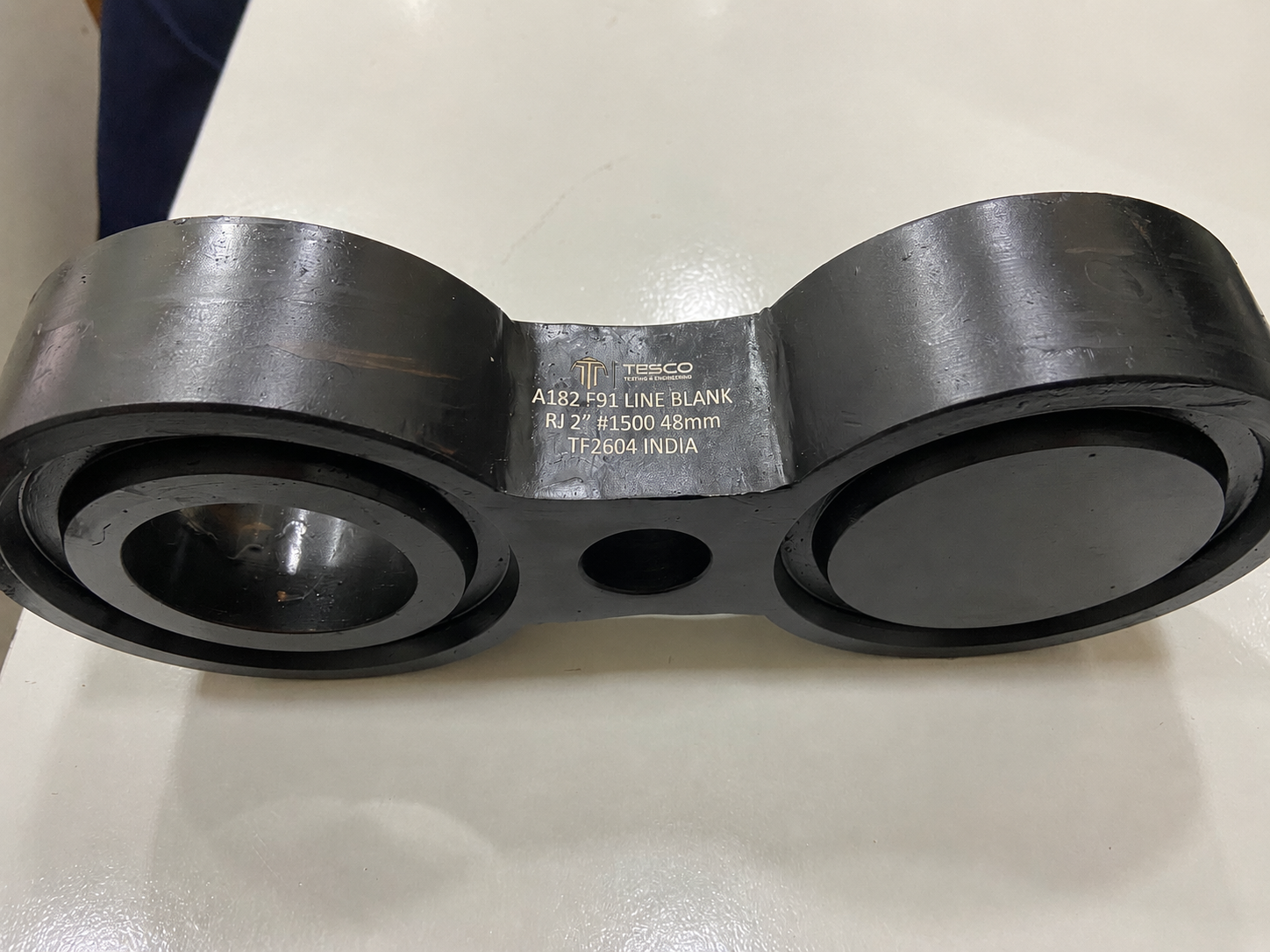
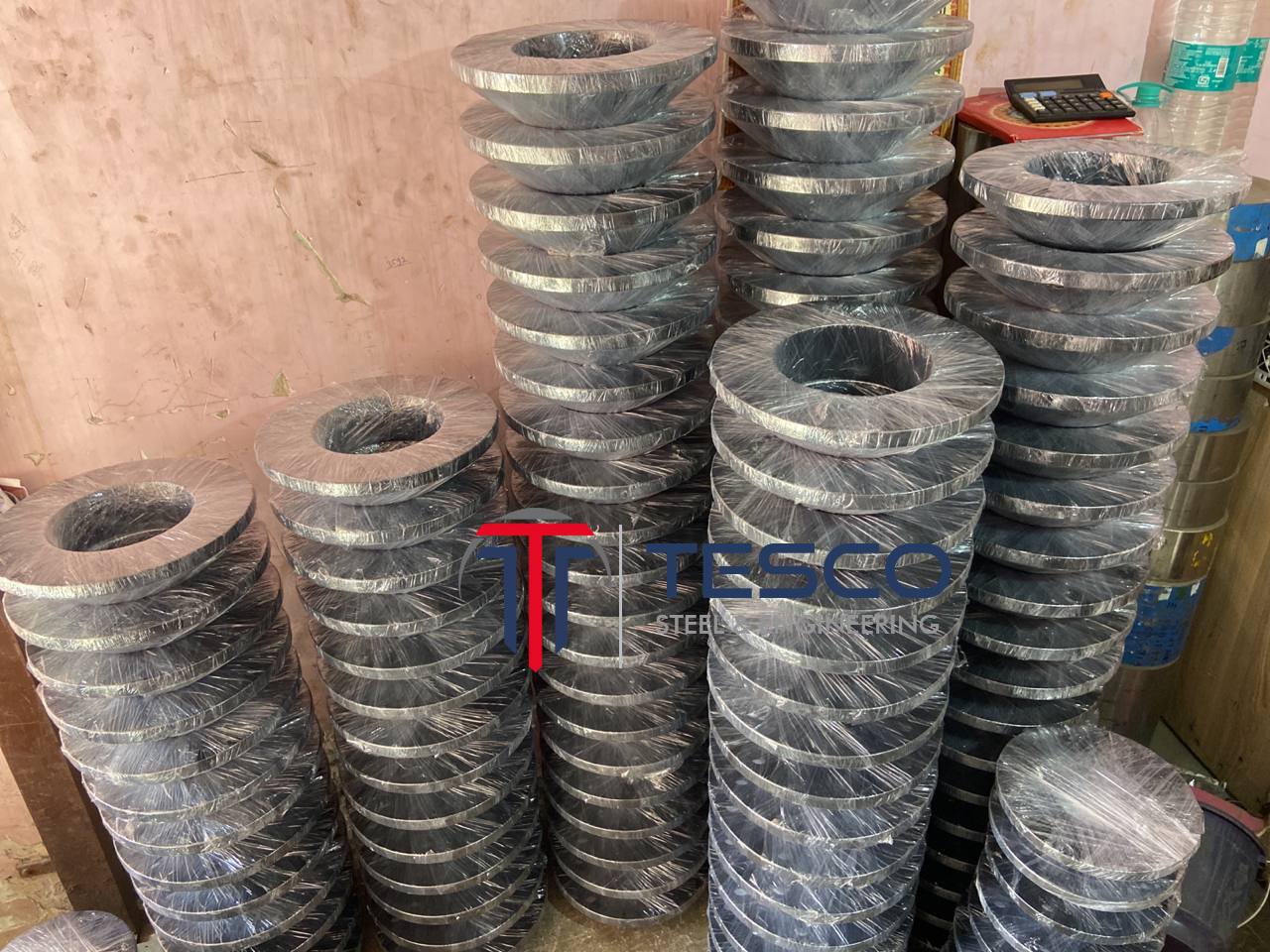
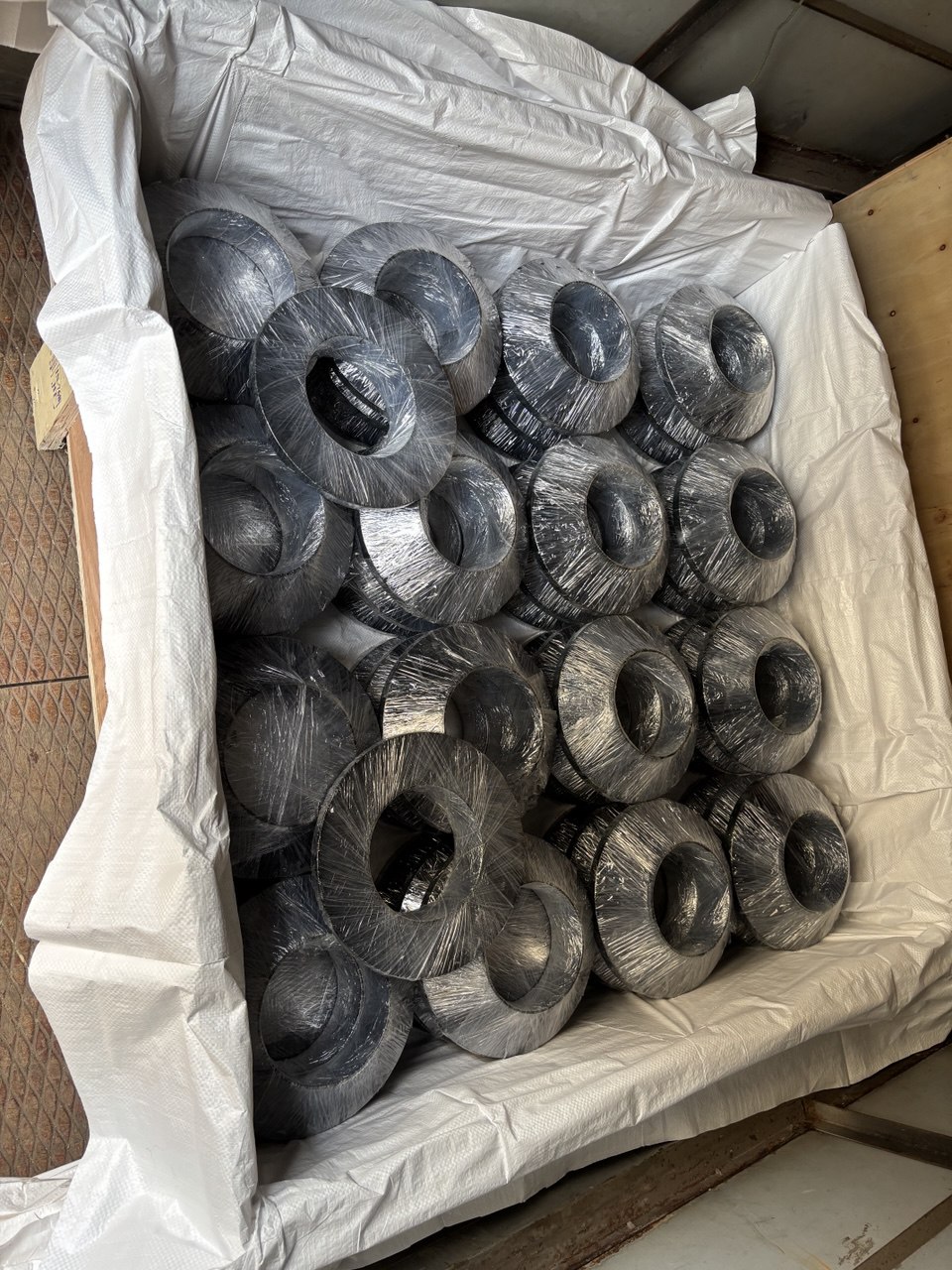
High-energy steam systems: supercritical and ultra-supercritical main steam and hot reheat circuits, superheater and reheater outlet headers, HRSG high-temperature sections, turbine bypass and auxiliary connections — the slip-ons serving drains, vents and instrument take-offs where the piping class permits. Our F91 production below:
A182 F91 Line Blank — Ring Type Joint FacingAlloy Steel Flanges — Bulk Wrapped, Stacked for DispatchPolybag-Lined Export Crate — Seaworthy Packing
A182 F91 Slip On Flange Dimensions
F91 slip-on dimensions follow the ASME B16.5 slip-on tables — identical for every material. Full charts by class:
Example: “Slip On Flange, 6″ NB, ASME B16.5 Class 600, RF, ASTM A182 F91, EN 10204 3.1 — 10 pcs.” Quotations normally within 24 hours with price, unit weight and delivery.
ASTM A182 F91 Slip On Flanges — Frequently Asked Questions
What is an ASTM A182 F91 slip on flange?
It is a slip-on flange forged from ASTM A182 F91 — the modified 9Cr-1Mo-V steel, a creep-strength-enhanced ferritic (CSEF) grade — dimensioned to ASME B16.5. The flange slides over the pipe end and is secured with two fillet welds, and the metallurgy is the top of the chrome-moly ladder: micro-alloyed with vanadium, niobium and nitrogen for allowable stresses far above F22 at the same temperature. It is the grade of modern high-energy steam piping.
What is the chemical composition of ASTM A182 F91?
Per ASTM A182: carbon 0.08-0.12%, manganese 0.30-0.60%, silicon 0.20-0.50%, phosphorus 0.020% max, sulphur 0.010% max, nickel 0.40% max, chromium 8.0-9.5%, molybdenum 0.85-1.05% — plus the elements that define the grade: vanadium 0.18-0.25%, niobium 0.06-0.10% and nitrogen 0.030-0.070%. Those three form fine, stable carbonitrides that pin the microstructure against creep; without them the steel would just be F9.
What are the mechanical properties of A182 F91 slip on flanges?
Per ASTM A182: tensile strength 585 MPa (85 ksi) minimum, yield strength 415 MPa (60 ksi) minimum, elongation 20% minimum in 2", reduction of area 40% minimum, and hardness 248 HB maximum. The high room-temperature numbers are only the visible part — the grade's real value is creep-rupture strength at 550-620 °C, which the normalized-and-tempered martensitic microstructure delivers and which is why hardness verification travels with every lot.
What does creep-strength-enhanced ferritic (CSEF) mean?
It is the family name for steels like F91 whose creep resistance comes from an engineered microstructure rather than bulk alloying. Normalizing produces martensite; tempering turns it into a fine sub-grain structure pinned by vanadium and niobium carbonitrides. That structure resists deformation at temperatures where plain 9Cr steel weakens — but it exists only as heat treatment made it. Damage the microstructure with wrong welding or heat treatment and the strength is gone, which is why CSEF grades come with strict fabrication rules.
What is the difference between A182 F91 and F22?
Allowable stress. At high steam temperatures F91's creep strength is roughly double F22's, letting designers use thinner walls, lighter headers and fewer supports — the reason supercritical and ultra-supercritical plants standardised on it. The trade is discipline: F91 demands tightly controlled welding, preheat, PWHT and hardness windows where F22 forgives. Below the temperatures that justify it, F22 remains the sensible, economical choice.
What is the difference between A182 F91 and F9?
They share the 9Cr-1Mo base but are different materials for different jobs. F91 adds vanadium, niobium and nitrogen and a controlled normalize-and-temper to create a creep-strength-enhanced microstructure for high-energy steam. F9 is the plain grade, chosen for hot-corrosion resistance in refinery service, without F91's strength or its fabrication constraints. They are not interchangeable; substituting one for the other requires engineering approval, never a warehouse decision.
What temperature can A182 F91 slip on flanges handle?
ASME B16.5 rates the 9Cr material class to 649 °C, and F91 is the grade actually used toward the top of that range — main steam and hot reheat systems at 565-610 °C in supercritical plants run on it. Its advantage over the lower rungs grows with temperature: at 600 °C F91 retains useful allowable stress where F22 has little left. As with every flange, the rating falls as temperature rises — check the B16.5 table for the class at design temperature.
How is an A182 F91 slip on flange welded to pipe?
With two fillet welds — hub outside, bore inside, pipe set back 1/8" (3 mm) — under the strictest discipline on the ladder: preheat typically 200-250 °C, matching B9 consumables (E9015-B9 / ER90S-B9), controlled interpass temperature, and PWHT in a tight window around 745-775 °C. Too cool a PWHT leaves brittle hard zones; too hot destroys the creep strength. Weld heat-affected zones are also where Type IV cracking lives — qualified procedures and hardness checks after PWHT are non-negotiable on F91.
Why is heat treatment so critical for F91?
Because the microstructure IS the product. F91's creep strength lives in a tempered-martensite sub-grain structure pinned by vanadium-niobium carbonitrides, created by normalizing at about 1040-1080 °C and tempering at about 730-800 °C. Overheat it later — a careless weld repair, an uncontrolled PWHT — and the structure coarsens or re-hardens, silently trading away creep life. That is why F91 lots ship with hardness verification (248 HB max) and why every thermal operation on the flange must stay inside qualified windows.
What is the equivalent of ASTM A182 F91 in other standards?
ASME SA182 F91 is the boiler-code twin and UNS K90901 the designation number. The European equivalent is X10CrMoVNb9-1 (Werkstoff 1.4903). System partners specified alongside it: ASTM A335 P91 pipe and A234 WP91 fittings — the 9Cr CSEF trio of high-energy steam lines. Beyond F91, the tungsten-alloyed F92 (X10CrWMoVNb9-2) extends the concept hotter still. Certificates always state the actual grade forged.
Are slip on flanges allowed in creep-range steam service?
Rarely for the critical lines. Main steam and hot reheat piping in the creep range is almost always specified with weld neck flanges — or welded joints with no flange at all — because the butt weld can be fully radiographed and manages thermal fatigue and Type IV cracking risk far better than fillet welds. F91 slip-ons serve on lower-criticality connections: drains, vents, instrument take-offs and auxiliary systems where the piping class permits them. Follow the piping class.
Is A182 F91 a stainless steel?
No — close in chromium, different in purpose. At 8-9.5% chromium F91 sits just below the passivation threshold, and its normalized-and-tempered martensitic structure is engineered for creep strength, not corrosion duty. It rusts in ambient wet service and is not selected for aqueous corrosion. For wet corrosion move to 300-series stainless; F91's chromium serves oxidation resistance and microstructural stability at steam temperatures.
What sizes and classes are A182 F91 slip on flanges available in?
From ½" to 24" NB per ASME B16.5 in Classes 150 through 2500, with larger patterns forged to order. F91 is strictly project material — forged against the order with certified heats, controlled normalize-and-temper and hardness verification — so standard sizes normally dispatch within a few weeks with EN 10204 3.1 certification. State the required delivery on the enquiry and we confirm the schedule with the quotation.
What details are needed to get an accurate A182 F91 slip on flange quotation?
Five elements plus commercial terms: (1) size and standard — e.g. 6" NB ASME B16.5; (2) pressure class — 150 through 2500; (3) facing — SORF (raised face) default, flat face or RTJ where specified; (4) grade — ASTM A182 F91, with any supplementary requirements such as hardness limits or additional testing; (5) certification — EN 10204 3.1 or 3.2. No pipe schedule is needed for the slip-on bore. Add the quantity and destination and we return price, weight and delivery.
Who manufactures ASTM A182 F91 slip on flanges in India?
Tesco Steel & Engineering is an ISO 9001:2015 certified flange manufacturer based in Mumbai, India, forging ASTM A182 F91 slip on flanges from ½" to 24" NB per ASME B16.5 — alongside the full chrome-moly family F5, F9, F11 and F22 — with normalized-and-tempered supply, hardness verification, full heat traceability and EN 10204 3.1/3.2 certification on every lot. Flanges are marked with grade, size, class and heat number and export to more than 50 countries.