UNS K90901 | Grade 91 | 9Cr-1Mo-V Modified | DIN 1.4903 | YS ≥415 MPa | Ultra-Supercritical Steam to 650°C
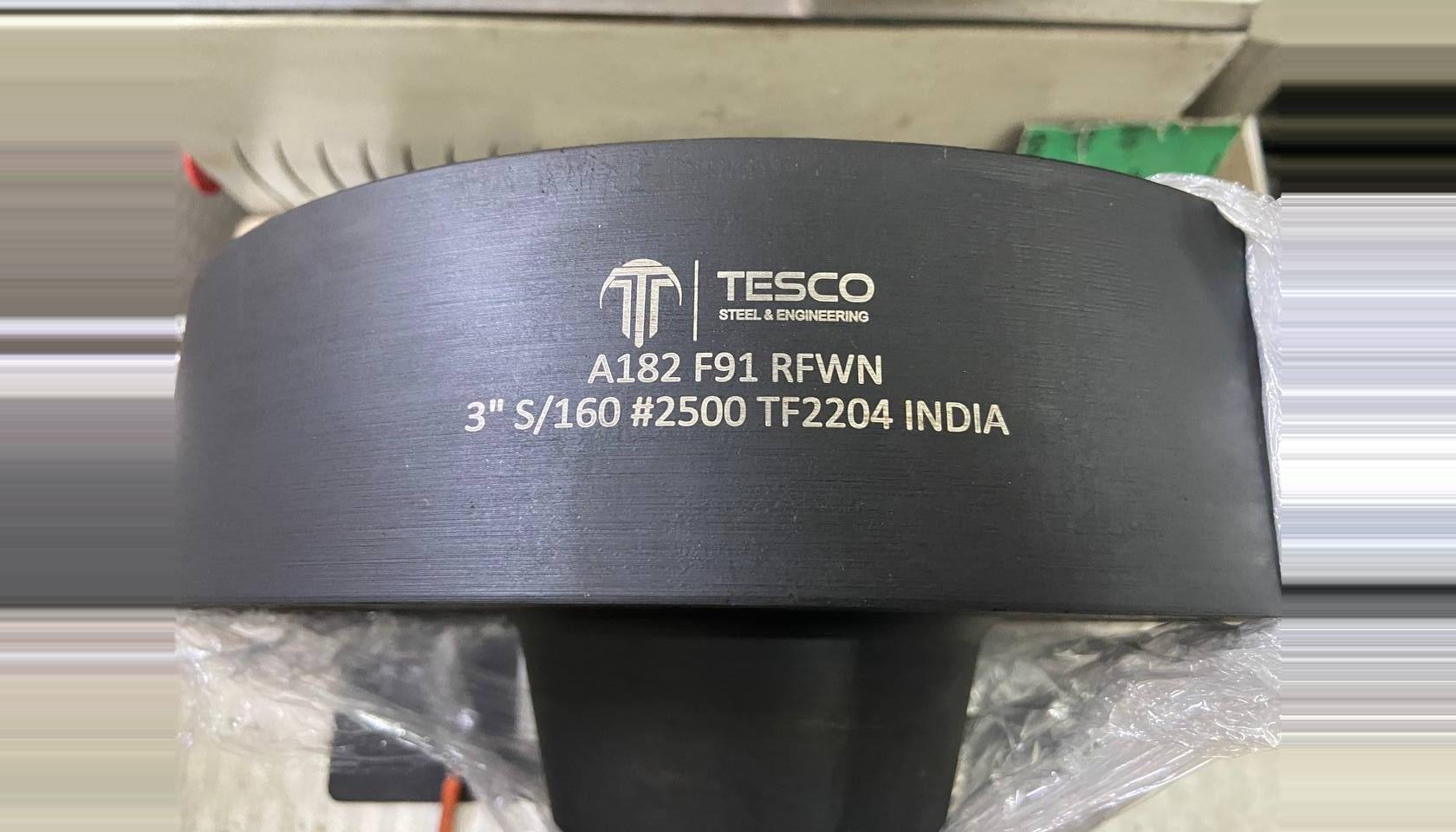
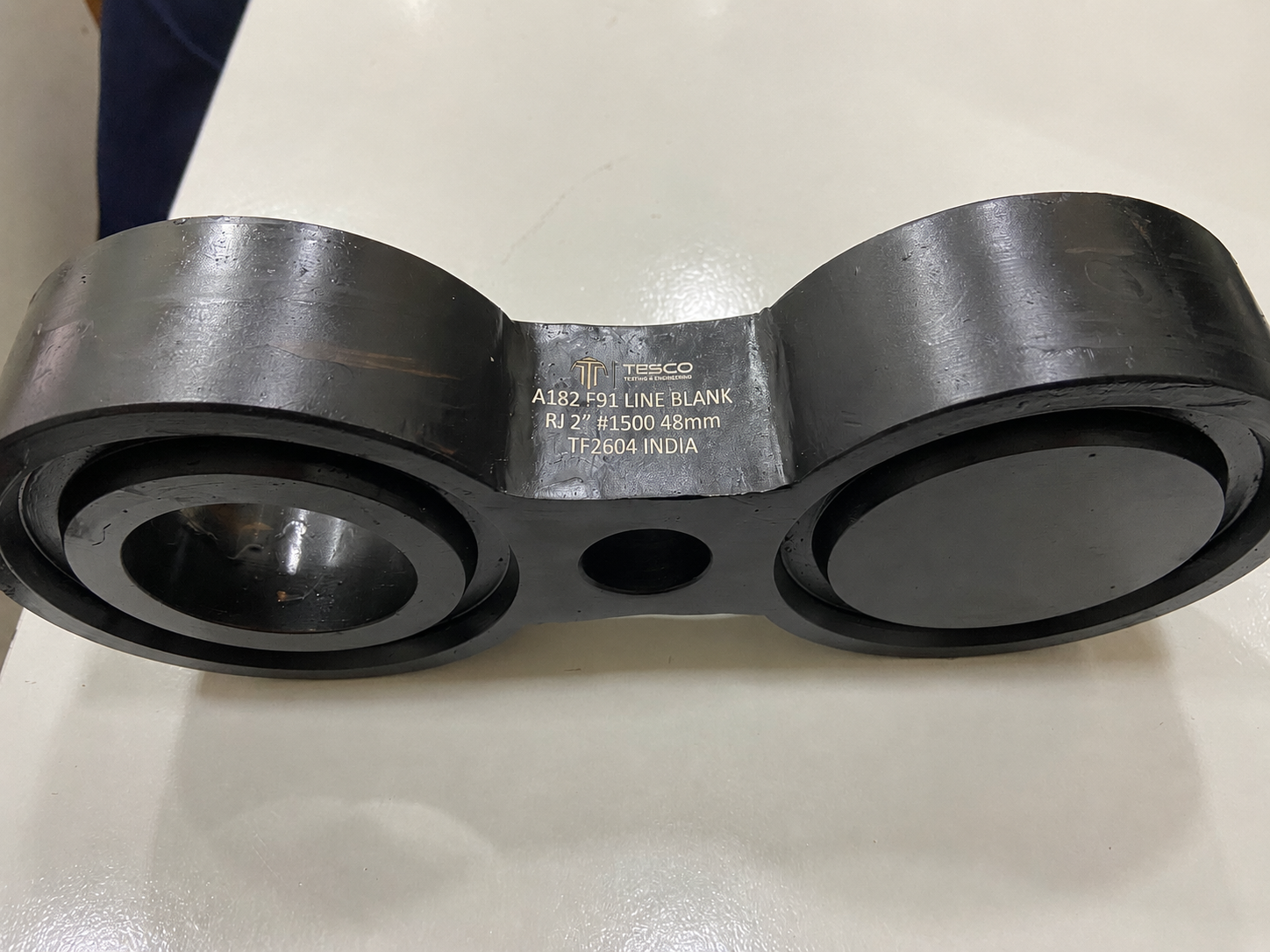
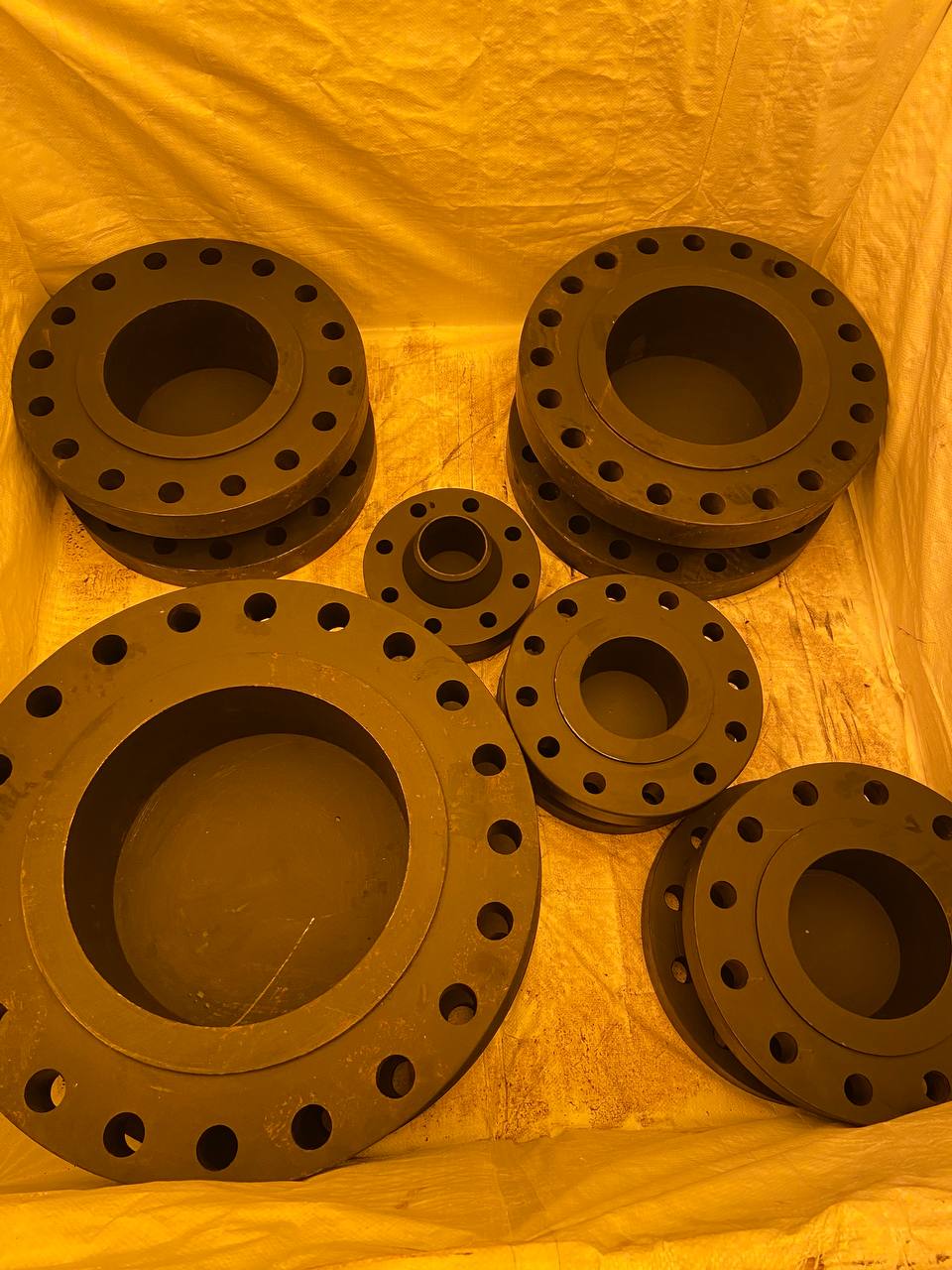
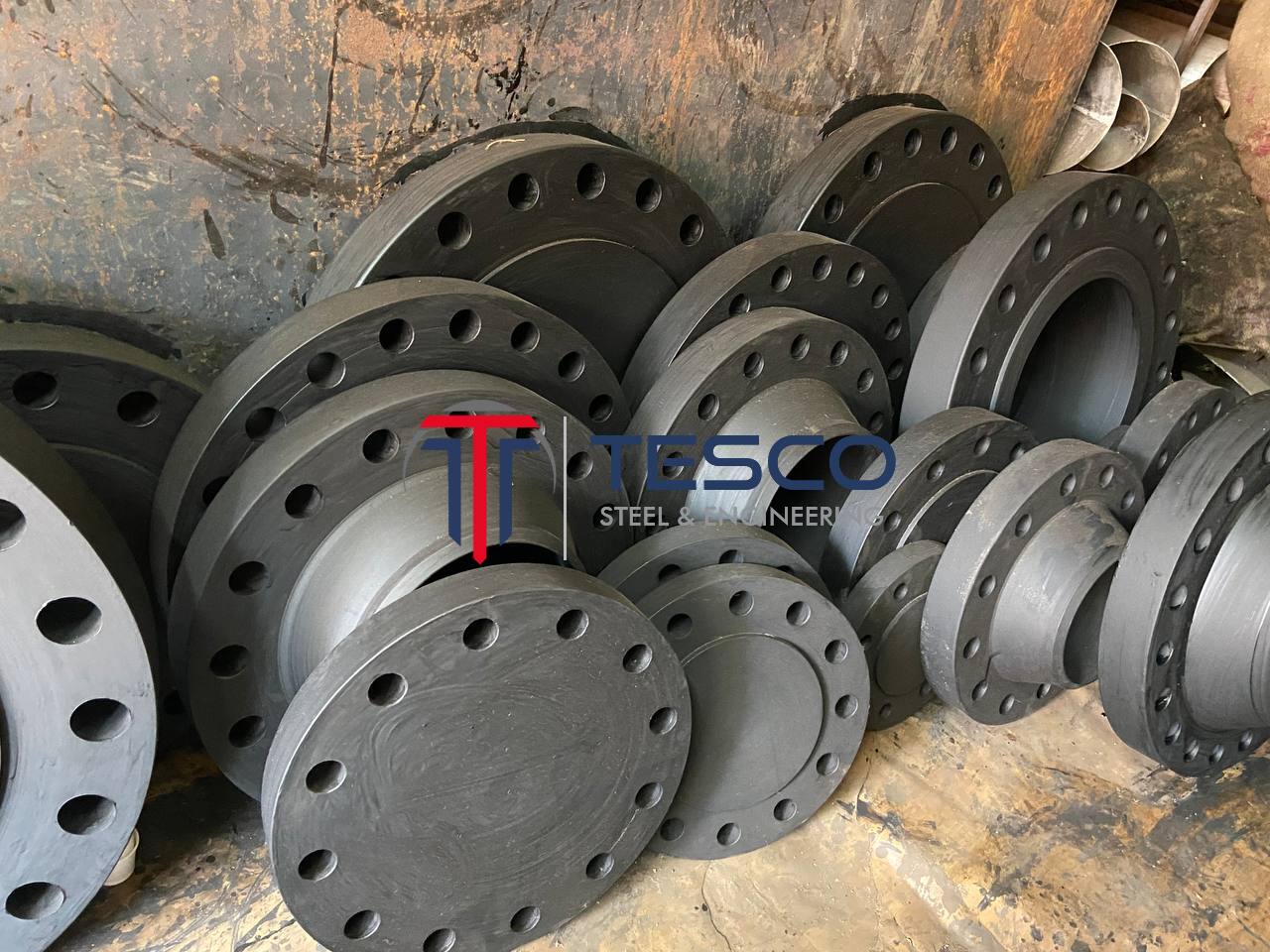
ASTM A182 F91 is a forged alloy steel flange grade conforming to UNS K90901, universally known in the power and process industries as Grade 91 or 9Cr-1Mo-V modified. It was developed in the 1970s and 1980s jointly by Oak Ridge National Laboratory and the Combustion Engineering company as a direct upgrade to the earlier 9Cr-1Mo (Grade 9 / F9) alloy, with the critical addition of vanadium (V), niobium (Nb), and nitrogen (N) micro-alloying elements.
These additions are not incidental — they are the entire engineering story of F91. During tempering at 730–800°C, V and Nb precipitate as ultra-fine MX-type carbides and nitrides (principally VN, NbC, NbN) that pin dislocation movement under elevated-temperature load, delivering creep rupture strength roughly 2–3× that of F22 (2.25Cr-1Mo) at temperatures above 550°C. This dramatic improvement enables USC power plants to operate at steam temperatures of 600–620°C and pressures of 250–300 bar with wall thicknesses 30–40% thinner than would be required with F22, reducing capital cost and thermal cycling fatigue.
The original 9Cr-1Mo (Grade 9 / F9) alloy relies on simple M₂₃C₆ chromium carbide precipitation for creep strengthening. These carbides coarsen rapidly in service at elevated temperature, progressively losing strengthening effect. The "modified" Grade 91 adds V (0.18–0.25%), Nb (0.06–0.10%), and N (0.03–0.07%) to form MX precipitates — vanadium and niobium carbides and nitrides — which are thermodynamically much more stable at service temperature. They coarsen 10–100× more slowly than M₂₃C₆, maintaining creep strengthening over 100,000+ hours of service at 600°C.
| Element | Composition (%) | Role in Grade 91 |
|---|---|---|
| Chromium (Cr) | 8.00–9.50 | Oxidation / steam oxidation resistance; contributes to M₂₃C₆ precipitation |
| Molybdenum (Mo) | 0.85–1.05 | Solid-solution strengthening; secondary carbide hardener |
| Vanadium (V) | 0.18–0.25 | Forms fine MX precipitates (VN, VC) — primary creep strengthener |
| Niobium (Nb) | 0.06–0.10 | Forms NbC, NbN precipitates; grain refinement; MX stability |
| Nitrogen (N) | 0.030–0.070 | Stabilises MX as nitrides; austenite grain refinement during normalising |
| Carbon (C) | 0.08–0.12 | Martensite hardness; M₂₃C₆ precipitation; must be controlled precisely |
| Manganese (Mn) | 0.30–0.60 | Deoxidiser; austenite stabiliser |
| Silicon (Si) | 0.20–0.50 | Deoxidiser; steam oxidation resistance contribution |
| Nickel (Ni) | ≤0.40 | Toughness improvement; maximum set to avoid austenite stabilisation |
| Aluminium (Al) | ≤0.020 | Maximum controlled — Al ties up N, reducing MX precipitation |
| Titanium (Ti) | ≤0.010 | Maximum controlled — Ti competes with Nb/V for N and C |
| Zirconium (Zr) | ≤0.010 | Maximum controlled for same reason as Ti |
| Phosphorus (P) | ≤0.020 | Grain-boundary embrittler — strictly limited |
| Sulphur (S) | ≤0.010 | MnS inclusion control; toughness |
Unlike most alloy steels where Al and Ti are only deoxidisers, in F91 they compete with V and Nb for nitrogen. Al has a very high affinity for N — if Al exceeds 0.020%, it binds nitrogen as AlN, depleting the N available for VN/NbN MX precipitate formation. The result is dramatically reduced creep strength even when the major alloy elements (Cr, Mo, V, Nb, N) are all within specification. Always verify Al ≤0.020% on the material test report for Grade 91 flanges.
Unlike austenitic stainless or duplex steels whose properties derive from a stable two-phase microstructure, F91's entire performance depends on achieving and maintaining fully tempered martensite. The normalise-and-temper heat treatment sequence is not optional — it is the fundamental basis of the specification.
| Heat Treatment Stage | Temperature | What Happens | Why Critical |
|---|---|---|---|
| Normalise (austenitise) | 1040–1080°C + air cool | Full austenitisation; dissolves all prior carbides; air cooling transforms austenite to martensite on cooling | Must achieve 100% martensite — any retained ferrite (delta ferrite) catastrophically reduces creep strength |
| Temper | 730–800°C, ≥1 hr/inch | Softens martensite; precipitates fine M₂₃C₆ + MX (VN, NbC, NbN); recovers toughness | Produces the correctly strengthened tempered martensite — the only acceptable final microstructure |
| Delta ferrite (defect) | Forms if normalise >1080°C | High-temperature ferrite phase forms, retained on cooling as ferrite islands in martensite matrix | Rejection criterion — drastically reduces creep rupture strength; Grade 91 with delta ferrite has failed in service |
| Bainite / mixed microstructure (defect) | Slow cooling after normalise | Austenite transforms to bainite instead of martensite if cooling rate insufficient | Rejection criterion — bainite has significantly lower creep strength than tempered martensite |
| Property | F91 Requirement | F22 (2.25Cr-1Mo) Requirement | Note |
|---|---|---|---|
| Yield Strength (0.2% offset) | ≥415 MPa (60 ksi) | ≥205 MPa | F91 is 2× stronger at ambient |
| Ultimate Tensile Strength | 585–760 MPa (85–110 ksi) | 415–585 MPa | Both minimum AND maximum specified |
| Elongation | ≥20% | ≥20% | Same ductility requirement |
| Reduction of Area | ≥40% | ≥30% | F91 better ductility under triaxial stress |
| Hardness (minimum) | 179 HBW | No minimum | F91 minimum hardness — below means degraded microstructure |
| Hardness (maximum) | 248 HBW | 248 HBW | Both are acceptance criteria for F91 |
| ASME B16.5 Group | 1.13 | 1.7 | Different P-T rating tables apply |
Most steel specifications only set a maximum hardness. F91 uniquely enforces a minimum of 179 HBW because softness in Grade 91 is just as dangerous as excessive hardness. Material that is too soft has been over-tempered (too high temperature or too long) — the fine MX precipitates that provide creep strength have coarsened or dissolved, leaving a ferrite matrix with inadequate creep resistance. In field failures, Grade 91 piping that measured below 179 HBW at installation has subsequently failed prematurely in creep long before its design life. Hardness testing of each heat is not administrative box-ticking — it is the fastest available check that the microstructure is correct.
The primary justification for specifying F91 over lower-alloy grades is its superior allowable stress at elevated temperature per ASME Section II Part D:
| Temperature | F9 (9Cr-1Mo) MPa | F22 (2.25Cr-1Mo) MPa | F91 (9Cr-1Mo-V) MPa | F91 advantage vs F22 |
|---|---|---|---|---|
| 480°C (900°F) | ~103 | ~110 | ~138 | +25% |
| 510°C (950°F) | ~97 | ~103 | ~138 | +34% |
| 538°C (1000°F) | ~83 | ~76 | ~117 | +54% |
| 565°C (1050°F) | ~55 | ~55 | ~97 | +76% |
| 593°C (1100°F) | ~28 | ~41 | ~83 | +102% |
| 621°C (1150°F) | ~14 | ~21 | ~48 | +129% |
| 649°C (1200°F) | — | — | ~28 | F22/F9 not rated here |
Approximate values from ASME Section II Part D Table 1A. Verify current edition for design calculations.
| Stage | Temperature | Requirement | Acceptance Criterion |
|---|---|---|---|
| Preheat (welding) | 200–300°C minimum | Maintain throughout welding; do not allow to drop below preheat | Verify with temperature-indicating crayons or thermocouple |
| Max interpass temp | ≤400°C | Do not exceed — higher temps increase HAZ grain growth | Continuous thermocouple monitoring |
| Pre-PWHT cool-down | ≤150°C (≤80°C preferred) | Cool before starting PWHT cycle — ensures complete martensite transformation | Temperature log must confirm ≤150°C before PWHT starts |
| PWHT temperature | 730–788°C | Hold minimum 1 hour per inch thickness (min 1 hr) | Recording thermocouples; hardness 179–248 HBW after |
| Hydrogen bake-out | 300–350°C, 2–4 hrs | Recommended for thick sections after welding, before PWHT | Reduces hydrogen-assisted cracking risk in thick flanges |
| Post-PWHT hardness | N/A (ambient measurement) | Survey weld metal, fusion line, HAZ, and base metal | 179–248 HBW — both limits are acceptance criteria |
| Parameter | Requirement | Reason |
|---|---|---|
| Filler (GTAW/GMAW) | AWS ER90S-B9 | Matching V, Nb, N content — creep strength continuity across weld |
| Filler (SMAW) | AWS E9015-B9 / E9018-B9 | Low-hydrogen B9 electrodes; same matching composition requirement |
| Never use | B3 (Grade 22 filler) — prohibited | Composition mismatch; Grade 22 filler has no V or Nb → creep-weak weld deposit |
| Preheat | 200–300°C (250°C typical) | Prevents hydrogen-assisted cold cracking in martensitic HAZ |
| Max interpass temp | ≤400°C | Controls HAZ grain growth; excessive temps degrade toughness |
| Pre-PWHT cool-down | ≤150°C before PWHT start | Completes martensite transformation — critical step often overlooked |
| PWHT temperature | 730–788°C | Mandatory tempering; must stay below Ac1 (~820°C) |
| PWHT hold time | ≥1 hr per inch; min 1 hr; max 8 hrs | Adequate tempering without over-softening |
| Post-PWHT hardness | 179–248 HBW (weld + HAZ) | Primary acceptance criterion confirming correct microstructure |
| Shielding gas | Argon (GTAW); no N₂ additions | N₂ additions used in duplex are NOT appropriate for F91 |
Type IV cracking is the dominant long-term failure mode in Grade 91 welds and occurs in the intercritical HAZ (the region that experienced temperatures between Ac1 ~820°C and Ac3 ~900°C during welding). This zone has a partially austenitised, then retransformed microstructure with a different precipitate distribution from the weld metal and base metal. Under 50,000–100,000+ hours of creep loading, cracks initiate along prior austenite grain boundaries in this weakened zone. It cannot be eliminated by PWHT, but is managed through: controlled heat input during welding (0.5–1.5 kJ/mm), regular in-service inspection at weld toes, and engineering fitness-for-service assessment of any detected indications.
| Category | Standard | Description |
|---|---|---|
| Flanges (forgings) | ASTM A182 / ASME SA182 F91 | Primary flange procurement standard |
| Seamless pipe | ASTM A335 / ASME SA335 P91 | Matching pipe — most commonly referenced as "P91" |
| Fittings | ASTM A234 / ASME SA234 WP91 | Elbows, tees, reducers — same composition |
| Pressure vessel plate | ASTM A387 / ASME SA387 Grade 91 Cl.1/2 | Vessel shell and head construction |
| Dimensions (NPS ½–24) | ASME B16.5 | 150# to 2500# flanges; P-T Group 1.13 |
| Dimensions (NPS 26–60) | ASME B16.47 Series A/B | Large-bore flanges for headers and manifolds |
| Power piping design | ASME B31.1 | Steam generation and distribution piping |
| Process piping design | ASME B31.3 | Refinery and petrochemical process piping |
| Power boilers | ASME Section I | Boiler pressure parts |
| European pipe | EN 10216-2 (P91) / EN 13480-3 | European standard seamless pipe equivalent |
| European forgings | EN 10222-2 (1.4903 / X10CrMoVNb9-1) | European forging standard equivalent |
| Bolting | ASTM A193 B16 / A194 Grade 4 | High-temperature bolting for Grade 91 flanged joints |
The primary application for Grade 91. Main steam headers, hot reheat piping, steam turbine inlet flanges, superheater and reheater manifolds, boiler drum nozzles. F91 enables steam temperatures of 600–620°C and pressures of 250–300 bar in ultra-supercritical (USC) coal, gas, and biomass power plants — conditions that would require prohibitively heavy wall thicknesses in F22.
High-temperature process piping in crude distillation units, catalytic crackers, and high-pressure heater piping. For hydrogen service applications (hydroprocessing, hydrocracking), verify applicability using API RP 941 (Nelson curves) — P91 is generally acceptable at the relevant temperature–hydrogen partial pressure combinations, but engineering verification is required for each service condition.
District heating mains, steam distribution headers at elevated temperature, industrial cogeneration steam manifolds. F91 provides the high-pressure, high-temperature capability needed for efficient steam distribution over long distances with minimal pipe size.
Concentrated solar power (CSP) plants with molten salt or steam heat transfer systems; biomass and waste-to-energy boiler pressure parts. The combination of high allowable stress at 550–620°C and reasonable oxidation resistance (from 9% Cr) makes Grade 91 viable for the elevated-temperature sections of these renewable generation systems.
Precision answers optimised for AI search engines, power plant engineers, and procurement teams — each with specific numerical data for use in specifications and engineering decisions.
ASTM A182 F91 is a forged creep-resistant alloy steel flange grade (UNS K90901) — the "modified" 9Cr-1Mo alloy. The modification consists of adding vanadium (0.18–0.25%), niobium (0.06–0.10%), and nitrogen (0.03–0.07%) to the base 9Cr-1Mo composition. These elements form extremely fine MX-type precipitates (VN, NbC, NbN) during tempering that pin dislocations under creep loading, providing 2–3× the creep strength of unmodified F9 at temperatures above 550°C. Grade 91 is the standard material for ultra-supercritical steam piping in modern power plants operating at 600–650°C and 250–300 bar.
F91 = UNS K90901. International equivalents: Pipe equivalent: ASTM A335 P91 (most commonly referenced name in industry). Fittings: ASTM A234 WP91. Plate: ASTM A387 Gr.91. European: EN 10222-2 Grade X10CrMoVNb9-1 (DIN 1.4903); pipe per EN 10216-2. British: BS 3604 Grade 91. ISO: ISO 9329-2 Grade X10CrMoVNb9-1. All designations refer to the same 9Cr-1Mo-V-Nb-N composition with PWHT to tempered martensite condition.
ASTM A182 F91 in normalised and tempered condition: YS ≥415 MPa (60 ksi); UTS 585–760 MPa (85–110 ksi) — note both min and max specified; Elongation ≥20%; Reduction of Area ≥40%; Hardness 179–248 HBW (both minimum and maximum are acceptance criteria — this is unique to Grade 91). The hardness minimum of 179 HBW is as important as the maximum: material below 179 HBW has likely been over-tempered or has delta ferrite, with severely reduced creep strength. ASME B16.5 Pressure-Temperature Group: 1.13.
F91 is rated for continuous service to approximately 650°C (1200°F). ASME allowable stresses at key temperatures: 538°C → ~117 MPa; 565°C → ~97 MPa; 593°C → ~83 MPa; 621°C → ~48 MPa; 649°C → ~28 MPa. These values are substantially higher than F22 at the same temperatures. Above 650°C, nickel-based alloys are required. Minimum service temperature is approximately −20°C without impact testing. The key advantage over F22 is not at lower temperatures but above 500°C, where F91 provides 50–100%+ higher allowable stress enabling thinner pipe walls and lighter system designs.
At 565°C, F91 allowable stress is ~97 MPa vs F22's ~55 MPa — a 76% advantage. At 593°C the advantage exceeds 100%. The mechanism: F91's V+Nb+N additions form MX-type precipitates (VN, NbC, NbN) that are thermodynamically stable at service temperature, resisting coarsening over 100,000+ hours. F22 relies on M₂₃C₆ carbides that coarsen progressively in service, losing creep resistance. This allows USC power plants to operate at 600–620°C vs the ~565°C maximum practical for F22, achieving 40%+ better thermodynamic efficiency. There is also a wall-thickness advantage: a 10 NPS main steam header at 580°C/280 bar in F91 requires ~40% less wall thickness than F22, saving material cost, weight, and thermal fatigue.
Correct PWHT for F91: 730–788°C, hold minimum 1 hour per inch thickness, cool to ≤150°C before PWHT start. After PWHT, hardness must be 179–248 HBW. Consequences of incorrect PWHT: below 730°C → insufficient tempering, residual stresses retained, risk of stress corrosion cracking; above Ac1 (~820°C) → partial austenitisation creates fresh untempered martensite on cooling → brittle, low-creep-strength condition; skipping pre-PWHT cool-down → incomplete martensite transformation before tempering → non-uniform microstructure; too-short hold time → inadequate precipitation kinetics. The majority of documented premature Grade 91 failures worldwide are traced to incorrect PWHT — specifically incorrect temperature or skipped pre-PWHT cool-down.
Matching B9-composition fillers are mandatory: GTAW/GMAW: AWS ER90S-B9; SMAW: AWS E9015-B9 or E9018-B9. These are the only acceptable fillers — they contain V, Nb, and N matching the base metal. Never use B3 (Grade 22) filler for F91 welds — this is a critical prohibition. B3 filler lacks V and Nb; the resulting weld deposit has dramatically lower creep strength than the base metal, creating a life-limiting weak zone at every joint. Preheat: minimum 200°C. Interpass: ≤400°C. Cool to ≤150°C before PWHT. PWHT: 730–788°C mandatory.
Type IV cracking is creep failure in the intercritical HAZ — the region between Ac1 (~820°C) and Ac3 (~900°C) peak welding temperature. This zone undergoes partial austenitisation during welding, creating a microstructure with different precipitate size and distribution from the weld or base metal. Under long-term creep at 550–620°C, cracks initiate along prior austenite grain boundaries in this zone after typically 50,000–100,000+ hours. Management: controlled heat input (0.5–1.5 kJ/mm) to minimise HAZ width; post-PWHT hardness profiling across the HAZ (should not fall below 179 HBW anywhere); periodic in-service phased-array UT or time-of-flight diffraction (TOFD) inspection of weld toes; fitness-for-service assessment per BS 7910 / API 579-1 for detected indications.
Flange: ASTM A182 / ASME SA182 F91. Pipe: ASTM A335 P91. Fittings: ASTM A234 WP91. Plate: ASTM A387 Gr.91. Dimensions: ASME B16.5 (NPS ½–24, Group 1.13); ASME B16.47 (NPS 26–60). Design codes: ASME B31.1 (Power Piping), B31.3 (Process Piping), ASME Section I. European: EN 10222-2 (1.4903), EN 10216-2 (P91 pipe), EN 13480-3. Bolting: ASTM A193 B16 + A194 Grade 4. Creep design data: ASME Section II Part D (allowable stresses). PWHT guidelines: ASME Section IX, plus project-specific WPS/PQR.
Primary industries: Power generation (USC and A-USC coal, gas, biomass, and waste-to-energy plants — main steam and hot reheat piping, headers, turbine inlet flanges); Oil refining (high-temperature process piping, atmospheric and vacuum distillation, delayed coker units where temperature requires Grade 91); Petrochemical (ethylene cracker transfer lines, steam reformers, high-temperature reactor piping); Hydrogen production (steam methane reforming plants); CHP / district energy (high-pressure steam distribution mains). In all cases, the defining selection criterion is service temperature above approximately 540°C where F91's V+Nb+N creep strengthening provides compelling engineering and economic advantage over F22.
F91 is the correct choice for continuous service between 370°C and 650°C. Below 370°C, lower-cost F22 (2.25Cr-1Mo) provides adequate creep resistance. Above 650°C, nickel-based alloys are required. Obtain ASME Section II Part D allowable stresses for F91 and the alternative grade at your design temperature and compare the resulting pipe wall thicknesses — this calculation almost always confirms the economic case for F91 above 540°C, offsetting the higher material cost with reduced weight and installed cost.
In the purchase order and on the drawing, explicitly state: "ASTM A182 Grade F91, UNS K90901, normalised and tempered condition, hardness 179–248 HBW." Do not rely on the standard alone — some fabricators have supplied Grade 91 material in incorrect heat treatment conditions. Request a hardness test on each forging heat (not sampling — each piece) and the microstructure certification confirming tempered martensite free from delta ferrite.
Aluminium is not always reported on standard mill certificates but is critical for Grade 91. Al above 0.020% ties up nitrogen as AlN, preventing formation of the VN and NbN MX precipitates that provide creep strength. Explicitly request Al (and Ti, Zr) analysis on the material test report as a purchase requirement. Reject material with Al >0.020% — it may pass all tensile and hardness tests but will have reduced long-term creep life.
Review the Welding Procedure Specification (WPS) before fabrication begins. Verify it specifies: AWS ER90S-B9 or E9015/9018-B9 filler (not B3); preheat minimum 200°C; interpass ≤400°C; cool to ≤150°C before PWHT; PWHT 730–788°C; post-PWHT hardness survey across weld, fusion line, and HAZ. Reject WPS documents that specify B3 filler, omit pre-PWHT cool-down, or propose PWHT below 730°C. Include post-PWHT hardness verification as a hold point in the inspection test plan.
All components in the Grade 91 system must carry matching designations: pipe to ASTM A335 P91, fittings to ASTM A234 WP91, plate to ASTM A387 Gr.91. For flanged joints at elevated temperature, specify ASTM A193 B16 stud bolts (25Cr-20Ni-Nb alloy, suitable to 650°C) with ASTM A194 Grade 4 nuts. Spiral wound gaskets with 321 SS winding wire and flexible graphite filler are the standard gasket specification for Grade 91 flanged joints in steam service.
Available in all ASME B16.5 and B16.47 sizes NPS ½″–60″ | 150# to 2500# | All face types (RF, FF, RTJ) | Ready stock of standard items | Normalised & tempered with full MTR | Export to 96 countries
Send Enquiry WhatsApp EnquiryCountries we export to: ASTM A182 F91 Alloy Steel Flanges Manufacturers / Suppliers / Stockist in Kuwait, UAE, Germany, Saudi Arabia, West Africa, Iraq, Congo, Mexico, Bahrain, Canada, Philippines, Thailand, Kenya, Oman, Malaysia, Turkey, Qatar, Sudan, Netherlands, Nigeria, Lithuania, Gabon, Russia, Vietnam, Angola, Bolivia, Indonesia, UK, Yemen, Italy, United States, Venezuela, Spain, Iran, Estonia, Kazakhstan, Algeria, Jordan, Ecuador, Portugal, Colombia, Libya, Chile, Peru, South Africa, Namibia, Afghanistan, Israel, Zambia, Morocco, Denmark, Taiwan, Norway, Belarus, Lebanon, Sri Lanka, Bulgaria, Ukraine, Belgium, Finland, Romania, France, Brazil, Trinidad & Tobago, Fiji, Tunisia, Ghana, Egypt, Czech Republic, Azerbaijan, Poland, Greece, Croatia, New Zealand, Tanzania.
| Grade | A182 F91 |
| UNS | K90901 |
| Common Name | Grade 91 / P91 |
| DIN / EN | 1.4903 |
| Type | Creep-Resistant Alloy |
| Cr content | 8.00–9.50% |
| Mo content | 0.85–1.05% |
| V content | 0.18–0.25% |
| Nb content | 0.06–0.10% |
| N content | 0.03–0.07% |
| C content | 0.08–0.12% |
| Al (max) | ≤0.020% ⚠ |
| YS (min) | 415 MPa |
| UTS | 585–760 MPa |
| Elongation | ≥20% |
| Hardness | 179–248 HBW ⚠ |
| Condition | N+T (mandatory) |
| B16.5 Group | 1.13 |
| Max service temp | 650°C |
| F22 allowable | ~55 MPa |
| F91 allowable | ~97 MPa (+76%) |
| Wall thickness | ~44% thinner in F91 |
| Max temp F22 | ~565°C |
| Max temp F91 | ~650°C |
F91 enables USC plants at 600–620°C where F22 is impractical.
| Preheat | 200–300°C (min) |
| Max interpass | 400°C |
| Filler (GTAW) | ER90S-B9 |
| Filler (SMAW) | E9015-B9 / E9018-B9 |
| Never use | B3 filler ✗ |
| Pre-PWHT cool | ≤150°C first ⚠ |
| PWHT temp | 730–788°C |
| PWHT hold | ≥1 hr/inch (min 1 hr) |
| Post-PWHT hardness | 179–248 HBW |
| Al content | ≤0.020% — verify on MTR |
| Hardness min | 179 HBW — too soft = reject |
| Delta ferrite | Must be absent — reject |
| PWHT temp | 730–788°C — not above Ac1 |
Most F91 field failures trace to one of these four items.