Alloy Steel Flanges Manufacturer & Exporter — ASTM A182 F5, F9, F11, F22, F91
ISO 9001:2015 Certified · Mumbai, India · Exporting to 96 Countries
Alloy steel flanges are forged piping components manufactured from chromium-molybdenum (Cr-Mo) low-alloy steels per ASTM A182 / ASME SA182. The addition of chromium (1–9.5%) and molybdenum (0.5–1.1%) — and in the case of Grade 91, vanadium and niobium — transforms plain carbon steel into a family of alloys that maintain structural integrity at temperatures from 300°C to 650°C where carbon steel flanges lose strength through creep deformation. Alloy steel flanges are the standard material for high-temperature piping in power generation boilers, refinery heaters, hydroprocessing units, and hydrogen manufacturing plants worldwide.
Tesco Steel & Engineering manufactures ASTM A182 / ASME SA182 alloy steel flanges in all Cr-Mo grades — F5 (5Cr-0.5Mo), F9 (9Cr-1Mo), F11 (1.25Cr-0.5Mo-Si), F21 (3Cr-1Mo), F22 (2.25Cr-1Mo), and F91 (9Cr-1Mo-V, Grade 91) — in NPS ½″ through 60″, Class 150 through 2500, in all facing types (RF, FF, RTJ, BW) and flange types per ASME B16.5, B16.47, EN 1092-1, and DIN standards. All flanges are supplied with full material test reports, PMI, hardness certificates, and PWHT records.
At a glance: alloy steel flanges are the chrome-moly family — forged to ASTM A182, bought for heat, creep and hydrogen: F11/F12 (1¼Cr) for steam to ~550 °C, F22 (2¼Cr) for hydroprocessing per the Nelson curves, F5/F9 for sulfur-bearing refinery streams, and F91 when supercritical power piping demands creep strength. Unlike stainless, most grades require preheat and PWHT. Specify by five things: size, class, facing, grade (with class, e.g. F11 Cl.2) and certification.
Alloy Steel Grade Classification — Cr-Mo Family
ASTM A182 alloy steel grades are classified by chromium and molybdenum content. Higher Cr+Mo content gives greater high-temperature strength, creep resistance, and oxidation resistance — at the cost of more demanding welding and PWHT requirements.
LOW Cr-Mo
1.25Cr-0.5Mo
ASME P4 Group
- F11 Class 1 & 2
- Up to ~540°C
- Moderate H₂ service
- Refinery, petrochemical
MEDIUM Cr-Mo
2.25Cr-1Mo
ASME P5A Group
- F22 Class 1 & 3
- Up to ~580°C
- Most widely used grade
- Refinery heaters, H₂ service
HIGH Cr-Mo
5–9Cr-0.5–1Mo
ASME P5A / P5B
- F5 (5Cr-0.5Mo)
- F9 (9Cr-1Mo)
- Up to ~620°C
- High H₂ / Nelson curve service
GRADE 91 (Cr-Mo-V)
9Cr-1Mo-V
ASME P5B Group
- F91 (UNS K90901)
- Up to 650°C
- Ultra-supercritical power plants
- Strictest PWHT requirements
Chemical Composition — ASTM A182 Alloy Steel Flange Grades
| Grade |
UNS |
Common Name |
Cr (%) |
Mo (%) |
V (%) |
C (Max) |
Si (%) |
P-No. |
| F11 Cl.1 & 2 |
K11597 |
1.25Cr-0.5Mo-Si |
1.00–1.50 |
0.44–0.65 |
— |
0.05–0.15 |
0.50–1.00 |
P4 |
| F21 |
K31200 |
3Cr-1Mo |
2.65–3.35 |
0.80–1.06 |
— |
0.05–0.15 |
≤0.50 |
P4 |
| F22 Cl.1 & 3 |
K21590 |
2.25Cr-1Mo |
1.90–2.60 |
0.87–1.13 |
— |
≤0.15 |
≤0.50 |
P5A |
| F5 Cl.1 & 3 |
K41545 |
5Cr-0.5Mo |
4.00–6.00 |
0.44–0.65 |
— |
≤0.15 |
≤0.50 |
P5A |
| F9 |
S50400 |
9Cr-1Mo |
8.00–10.00 |
0.90–1.10 |
— |
≤0.15 |
0.25–1.00 |
P5B |
| F91 |
K90901 |
Grade 91 (9Cr-1Mo-V) |
8.00–9.50 |
0.85–1.05 |
0.18–0.25 |
≤0.12 |
0.20–0.50 |
P5B |
F91 also contains: Nb 0.06–0.10%, N 0.03–0.07%, Ni ≤0.40%, Al ≤0.02%. These microalloying additions are critical to the Grade 91 creep mechanism — their absence or excess is a known cause of in-service failures.
Mechanical Properties — Room Temperature (ASTM A182)
| Grade |
Class / Condition |
Min YS (MPa) |
Min UTS (MPa) |
Min Elong. (%) |
Max Hardness |
| F11 |
Class 1 (Annealed) |
170 |
415 |
20 |
HB 143 |
| F11 |
Class 2 (N&T) |
310 |
515 |
20 |
HB 187 |
| F22 |
Class 1 (Annealed) |
205 |
415 |
20 |
HB 170 |
| F22 |
Class 3 (N&T) |
310 |
515 |
20 |
HB 207 |
| F5 |
Class 1 (Annealed) |
205 |
415 |
20 |
HB 187 |
| F9 |
Normalised & Tempered |
205 |
415 |
20 |
HB 207 |
| F91 |
Normalised & Tempered |
585 |
760 |
20 |
HB 248 |
F91 minimum yield strength (585 MPa) is approximately 2.9× higher than F22 Class 3 (310 MPa) and 3.4× higher than F22 Class 1 (205 MPa). This strength advantage — combined with superior creep resistance at 600–650°C — enables significantly lighter and thinner flange designs in high-pressure steam systems.
⚠ Critical: Post-Weld Heat Treatment (PWHT) is Mandatory for All Alloy Steel Grades
Unlike duplex stainless steel (where PWHT must NOT be performed), all ASTM A182 Cr-Mo alloy steel grades require mandatory PWHT after welding. The purpose is to: (1) temper the hard, brittle martensite formed in the heat-affected zone (HAZ), (2) relieve residual welding stresses, and (3) bring hardness within NACE MR0175 limits for sour service.
Omitting or incorrectly performing PWHT on F91 flanges is one of the most documented causes of premature creep cracking failure in power plant steam systems. Always specify and verify PWHT records (time, temperature, cooling rate) as part of material documentation.
PWHT Requirements — ASTM A182 Alloy Steel Grades
| Grade |
PWHT Temperature (°C) |
Min. Hold Time |
Cooling |
NACE HRC Limit |
| F11 Cl.1 |
675–760 |
1 hr / 25mm |
Air or furnace |
HRC 22 (HB 237) |
| F11 Cl.2 |
675–760 |
1 hr / 25mm |
Air or furnace |
HRC 22 (HB 237) |
| F22 Cl.1 |
675–760 |
1 hr / 25mm |
Air or furnace |
HRC 22 (HB 237) |
| F22 Cl.3 |
675–760 |
1 hr / 25mm, min 30 min |
Air or furnace |
HRC 22 (HB 237) |
| F5 |
675–760 |
1 hr / 25mm |
Air or furnace |
HRC 22 (HB 237) |
| F9 |
730–760 |
1 hr / 25mm, min 2 hr |
Furnace cool to 315°C |
HRC 22 (HB 237) |
| F91 (Grade 91) |
730–800°C (typically 760°C ±15°C) |
Minimum 2 hours |
Furnace cool to 315°C, then air |
Not recommended for sour |
Creep Rupture Strength at 600°C — Grade Comparison
Creep rupture strength (100,000-hour, MPa) at 600°C — the higher the value, the thinner the pipe wall and lighter the flange permitted for the same pressure class. Source: ASME BPVC allowable stress data.
F11 (1.25Cr-0.5Mo)
~35 MPa
F91 (Grade 91 — 9Cr-1Mo-V)
~185 MPa
100% — Grade 91 benchmark
Approximate values for comparative reference. Use ASME BPVC Section II Part D allowable stress tables for design calculations.
Welding Parameters — ASTM A182 Alloy Steel Flanges
| Parameter |
F11 / F22 (P4, P5A) |
F9 (P5B) |
F91 — Grade 91 (P5B) |
| GTAW Filler Wire |
ER80S-B2 (F11) / ER90S-B3 (F22) |
ER90S-B9 |
EB9 (strictly B9 only) |
| SMAW Electrode |
E8018-B2 (F11) / E9018-B3 (F22) |
E9015-B9 |
E9015-B9 / E9018-B9 |
| Min. Preheat |
150°C |
200°C |
200°C minimum |
| Max. Interpass Temp. |
300°C |
300°C |
300°C |
| PWHT Temperature |
675–760°C |
730–760°C |
730–800°C (typically 760°C ±15°C) |
| PWHT Min. Hold |
1 hr / 25mm thickness |
2 hours minimum |
2 hours minimum |
| Post-Weld Cooling |
Air cool from PWHT temp |
Furnace cool to 315°C |
Furnace cool to 315°C, then air |
Critical F91 note: Non-B9 consumables (e.g., ER90S-B3 used for F22) must never be used for F91 welds — they produce a weld metal with insufficient creep rupture strength that will fail in service. Document all consumable batch certificates alongside the WPS/PQR.
Nelson Curves — Alloy Steel Flanges in Hydrogen Service (API 941)
In refinery and chemical plant hydrogen process streams (hydrocracking, hydrotreating, reforming), the combination of elevated temperature and hydrogen partial pressure causes high-temperature hydrogen attack (HTHA) in plain carbon steel: atomic hydrogen diffuses into the steel, reacts with carbon to form methane gas, creating internal voids and decarburisation that destroys mechanical strength. API RP 941 (formerly API 941 "Nelson curves") defines safe operating envelopes for each steel type.
Cr-Mo alloy steels resist HTHA because chromium and molybdenum form stable carbides (Cr₂₃C₆, Mo₂C) that resist dissolution by diffusing hydrogen. The higher the Cr+Mo content, the higher the Nelson curve limit — meaning F5 (5Cr-0.5Mo) can be used at temperatures and H₂ partial pressures where carbon steel and even F22 would suffer HTHA. For hydrogen partial pressures above approximately 3.5 MPa at 450°C, F5 or F9 is the typical engineer's choice to remain safely above the Nelson curve.
Industry Applications of Alloy Steel Flanges
⚡
Power Generation
F91 and F9 flanges on main steam, hot reheat, and feedwater heater lines in subcritical, supercritical, and ultra-supercritical (USC) coal and gas power plants. F91 is mandated by ASME B31.1 for steam above 565°C.
🛢
Refinery & Petrochemical
F22 flanges on vacuum distillation units, delayed cokers, and FCC units. F5 and F9 for hydrotreating and hydrocracking reactors where high H₂ partial pressure requires superior Nelson curve ratings.
⚗️
Hydrogen Manufacturing
Steam methane reformers (SMR) and pressure swing adsorption (PSA) systems operating at high hydrogen partial pressures and temperatures. F5 / F9 are standard for hydrogen-service piping per API 941 Nelson curve requirements.
🏭
Fertiliser & Ammonia
Ammonia synthesis loops, urea prilling towers, and high-pressure steam headers. F22 and F11 are commonly used in heat exchangers and steam generation systems in fertiliser plants.
🔩
Nuclear Power
F11 and F22 flanges in secondary steam circuits of PWR and BWR reactors per ASME Section III requirements. Tesco supplies nuclear-grade flanges with full traceability documentation.
🌡
Chemical Process
High-temperature heat exchangers, reactors, and distillation columns in chemical plants. F11 is widely used in moderate-temperature service (below 540°C) where the lower alloy cost offsets the performance premium of F22.
How Our Alloy Steel Flanges Are Manufactured
1
Forging — cut billet of certified A182 heat is hot-forged into the flange blank, keeping full heat traceability from raw material to despatch.
2
Heat treatment — the step that defines this family: normalize-and-temper (or quench-and-temper) to the grade's class, with F91 given its precise normalizing and tempering cycle; every thermal record retained per heat.
3
Machining — faces, hub and bolt holes to ASME B16.5/B16.47, bore to the stated pipe schedule.
4
Hardness verification — surveyed against the grade's window (critical for F91 and for NACE sour service), confirming the temper did its job.
5
Testing & marking — mechanical and chemical verification against the heat, PMI where specified, then permanent marking of grade and class, size, rating, schedule and heat number.
6
Certification & packing — EN 10204 3.1 MTC (3.2 witnessed on request) including the heat-treatment record, faces capped, export-packed as shown below.
Applicable Standards & Specifications
| Standard |
Scope |
| ASTM A182 / ASME SA182 | Material standard for forged alloy steel pipe flanges, fittings, and valves for high-temperature service — primary specification for F5 through F91 |
| ASME B16.5 | Dimensional standard for pipe flanges NPS ½″ to 24″, Class 150–2500 |
| ASME B16.47 | Large diameter flanges NPS 26″ to 60″ (Series A & B) |
| ASME B31.1 | Power Piping Code — design, fabrication, PWHT, and inspection requirements for steam systems including F91 service |
| ASME B31.3 | Process Piping Code — refinery, chemical plant, and general process piping |
| ASME BPVC Sec. IX | Welding and brazing qualifications — P-Number assignments and WPS/PQR requirements |
| API 941 (Nelson Curves) | Steels for hydrogen service — defines safe operating limits for Cr-Mo grades in H₂ environments |
| NACE MR0175 / ISO 15156 | Materials for H₂S sour service — hardness limits and heat treatment requirements |
| EN 1092-1 | European flanges — PN-rated alloy steel flanges for EU projects |
How to Specify & Order an Alloy Steel Flange
A complete alloy steel flange specification has five elements — with the grade's class number carrying the heat-treatment condition:
1
Size & standard — nominal bore and dimensional standard, e.g. 6″ NB ASME B16.5 or 26″ B16.47 Series A.
2
Type & pressure class — weld neck, blind, slip-on etc., in Class 150–2500; high-temperature steam lines commonly run Class 900–2500 weld necks.
3
Facing & schedule — RF or RTJ, and the pipe schedule for bored types.
4
Grade with class — e.g. F11 Cl.2, F22 Cl.3, F91 Type 1 — the class states the strength/heat-treatment condition, so it is part of the grade, not an option.
5
Certification & quantity — EN 10204 3.1 or 3.2 with heat-treatment record, hardness survey, NACE MR0175 or IBR as required, then quantity and destination, sent to
sales@tescosteel.com or the
inquiry form.
Example of a complete line item: “Weld Neck Flange, 6″ NB, ASME B16.5 Class 900, RTJ, Sch 120 bore, ASTM A182 F22 Cl.3, EN 10204 3.1 with hardness report — 8 pcs.”
Frequently Asked Questions — Alloy Steel Flanges
Technical questions about ASTM A182 Cr-Mo alloy steel flanges, Grade 91, PWHT, and Nelson curves — answered for engineers and procurement teams.
What are alloy steel flanges?
Alloy steel flanges are forged piping components manufactured from chromium-molybdenum (Cr-Mo) low-alloy steels per ASTM A182 / ASME SA182. The Cr-Mo alloying elements provide high-temperature strength, creep resistance, and oxidation resistance far beyond plain carbon steel. They are the standard material for high-temperature service in power generation, petrochemical, and refinery applications — typically at temperatures from 300°C to 650°C, depending on grade.
What is the difference between F22 and F91 alloy steel flanges?
F22 (2.25Cr-1Mo) is suitable for service up to approximately 580°C and is the most widely used grade in refineries and petrochemical plants. F91 (Grade 91, 9Cr-1Mo-V) is a higher-performance grade with vanadium, niobium, and nitrogen additions that deliver significantly higher creep rupture strength, enabling service up to 650°C in ultra-supercritical power plants. F91 has minimum yield strength of 585 MPa vs 310 MPa for F22 Class 3 — nearly double — allowing thinner, lighter flanges for the same pressure rating.
Is PWHT required for alloy steel flanges?
Yes — post-weld heat treatment (PWHT) is mandatory for all Cr-Mo alloy steel grades after welding. Unlike duplex stainless steel (which must NOT be PWHT'd), alloy steel requires PWHT to temper the hard martensite in the heat-affected zone, relieve residual stresses, and bring hardness within NACE MR0175 limits. F91 requires the most stringent PWHT: 730–800°C (typically 760°C ±15°C) for a minimum of 2 hours. Failure to PWHT F91 welds correctly is a known cause of premature creep cracking in power plants.
What is Grade 91 alloy steel and why is it used in power plants?
Grade 91 (ASTM A182 F91, UNS K90901) is a 9Cr-1Mo-V alloy steel developed for ultra-supercritical (USC) and advanced ultra-supercritical (AUSC) power plant boilers, headers, and steam lines operating up to 650°C and 35 MPa steam pressure. Its vanadium (0.18–0.25%) and niobium (0.06–0.10%) microalloying create a stable martensitic microstructure with creep rupture strength approximately 3–4× higher than F22 at 600°C, enabling thinner walls and lighter piping systems with improved thermal efficiency.
What ASME P-Numbers are alloy steel flanges?
ASME BPVC Section IX P-Number assignments: F11 (1.25Cr-0.5Mo-Si) = P4; F21 (3Cr-1Mo) = P4; F22 (2.25Cr-1Mo) = P5A; F5 (5Cr-0.5Mo) = P5A; F9 (9Cr-1Mo) = P5B; F91 (9Cr-1Mo-V) = P5B. Even though F9 and F91 share P5B, they require separate welding procedures (WPS) due to the distinct PWHT window and strict hardness requirements for F91.
Can alloy steel flanges be used in sour service (H₂S)?
Yes, with hardness control. NACE MR0175 / ISO 15156 permits Cr-Mo alloy steels in H₂S service provided hardness does not exceed HRC 22 (HB 237). F22 Class 1 (annealed, HB 170) is widely used in sour environments. F91 is generally not recommended for H₂S service because its minimum hardness in properly heat-treated condition approaches the NACE limit, and the risk of exceeding HRC 22 makes qualification difficult.
What are Nelson curves and why do they matter for Cr-Mo flanges?
Nelson curves (API 941) define safe operating limits for steels in high-temperature, high-pressure hydrogen environments. In hydrogen service, plain carbon steel suffers high-temperature hydrogen attack (HTHA) — hydrogen reacts with carbon to form methane, causing internal blistering and decarburisation. Cr-Mo alloy steels resist HTHA due to stable chromium and molybdenum carbides. F5 (5Cr-0.5Mo) has significantly better Nelson curve limits than F22 or F11, making it the standard for hydrogen-rich process piping in refineries.
What welding filler metals are required for F91 alloy steel?
F91 must be welded using matching Grade 91 (B9 classification) consumables — EB9 wire for GTAW or E9015-B9 / E9018-B9 electrodes for SMAW. Using non-matching fillers such as ER90S-B3 (used for F22) will produce a weld with insufficient creep rupture strength that will fail in service. Preheat minimum 200°C, interpass maximum 300°C, and PWHT at 730–800°C for ≥2 hours are all mandatory. Consumable batch certificates must be retained alongside the WPS/PQR records.
What is the maximum service temperature for each alloy steel grade?
Approximate continuous service temperature limits governed by creep rupture strength: F11 (1.25Cr-0.5Mo-Si) — 540°C; F21 (3Cr-1Mo) — 560°C; F22 (2.25Cr-1Mo) — 580°C; F5 (5Cr-0.5Mo) — 600°C; F9 (9Cr-1Mo) — 620°C; F91 (Grade 91) — 650°C. For precise design calculations, use the allowable stress tables in ASME BPVC Section II Part D and ASME B31.1 / B31.3 appendices.
What is the difference between ASTM A182 and ASTM A105 for alloy steel flanges?
ASTM A105 covers carbon steel flanges for ambient to moderate temperature service (up to approximately 425°C). ASTM A182 covers forged alloy and stainless steel flanges for high-temperature service — this includes all Cr-Mo alloy steel grades (F5, F9, F11, F22, F91). If your application exceeds 425°C, involves hydrogen service (H₂ partial pressure), or requires Cr-Mo composition for sour service or creep resistance, ASTM A182 is the correct standard. A105 flanges cannot substitute for A182 Cr-Mo grades in elevated-temperature or hydrogen-service applications.
What details are needed to get an accurate alloy steel flange quotation?
Five elements plus commercial terms: (1) size and dimensional standard — e.g. 6" NB ASME B16.5; (2) flange type and pressure class; (3) facing and pipe schedule; (4) grade with its class — F5, F9, F11 Cl.2, F12, F22 Cl.3 or F91, since the class carries the heat-treatment condition; (5) certification — EN 10204 3.1 or 3.2 with heat-treatment record, hardness survey, NACE MR0175 or IBR as applicable. Add the quantity and destination and we return price, weight and delivery — normally within 24 hours.
Who manufactures alloy steel flanges in India?
Tesco Steel & Engineering is an ISO 9001:2015 certified flange manufacturer based in Mumbai, India, forging chrome-moly alloy steel flanges to ASTM A182 in grades F5, F9, F11, F12, F22 and F91 — every flange type from weld neck to spectacle blind, in ASME B16.5 and B16.47 patterns. Flanges ship normalized-and-tempered with hardness verification, EN 10204 3.1/3.2 certification including the heat-treatment record, and are exported to power, refinery and petrochemical projects in 96 countries.
How to Select the Right Alloy Steel Flange Grade
A five-step engineering decision process for specifying ASTM A182 Cr-Mo alloy steel flanges.
1
Determine design temperature
Identify the maximum continuous service temperature. Below 425°C, carbon steel (ASTM A105) is usually sufficient. Above 425°C, move to Cr-Mo alloy steel. Above 600°C, only F9 or F91 (Grade 91) provide adequate creep rupture strength per ASME B31.1 allowable stress tables.
2
Check for hydrogen service (Nelson curves — API 941)
If the process fluid contains hydrogen at elevated temperature and pressure, consult API RP 941 Nelson curves. Plot your operating temperature vs H₂ partial pressure and confirm the selected grade's curve lies safely above your operating point. Above approximately 3.5 MPa H₂ partial pressure at 450°C, F5 (5Cr-0.5Mo) or higher is required.
3
Evaluate sour service (H₂S — NACE MR0175 / ISO 15156)
If H₂S is present, verify the selected grade achieves hardness ≤ HRC 22 (HB 237) in the required heat-treated condition. F22 Class 1 (annealed, HB 170) is the preferred sour-service choice. F91 is generally avoided for H₂S environments due to hardness limitations and PWHT complexity.
4
Confirm PWHT requirements and welding procedure
All Cr-Mo alloy steel grades require PWHT. Confirm the ASME P-Number (P4 for F11/F21; P5A for F22/F5; P5B for F9/F91) and ensure a qualified WPS/PQR exists. For F91, verify that B9 consumables are specified, preheat ≥200°C is maintained, and PWHT is 730–800°C for a minimum of 2 hours with furnace cool to 315°C.
5
Verify ASME B16.5 pressure-temperature rating
Confirm the required pressure class (150, 300, 600, 900, 1500, or 2500) against the ASME B16.5 P-T rating table for the alloy group. Alloy steel flanges carry higher allowable pressures than carbon steel at elevated temperatures — use this advantage to justify the material premium. Supply ASME B16.5 P-T rating confirmation with your inquiry to receive an accurate quotation.
Request a Quote for Alloy Steel Flanges
F5 · F9 · F11 · F21 · F22 · F91 (Grade 91) — NPS ½″ to 60″ — Class 150 to 2500 — PWHT supplied — Full MTR, PMI, hardness records
Get Quote
WhatsApp
Alloy Steel Flanges — Export Packaging
Every alloy steel flange dispatched by Tesco Steel & Engineering undergoes individual protection before packing — bore plugs, face caps, plastic wrapping — then is loaded into wooden export crates or polybag-lined cases. PWHT records, MTRs, and PMI certificates are packed inside each crate. Below is a representative selection of our alloy steel flange export dispatch.
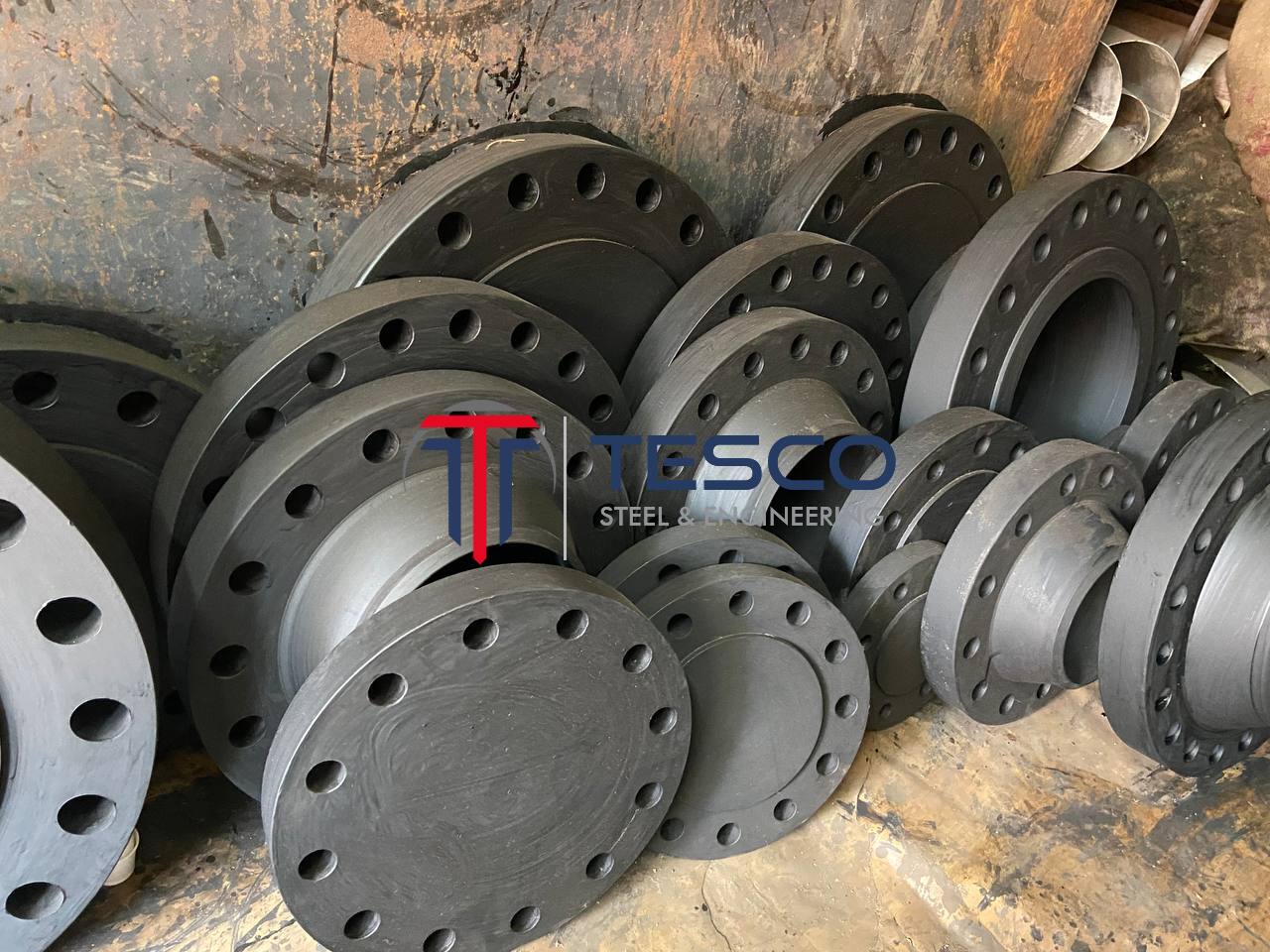
Alloy steel blind flanges — various sizes, warehouse stock
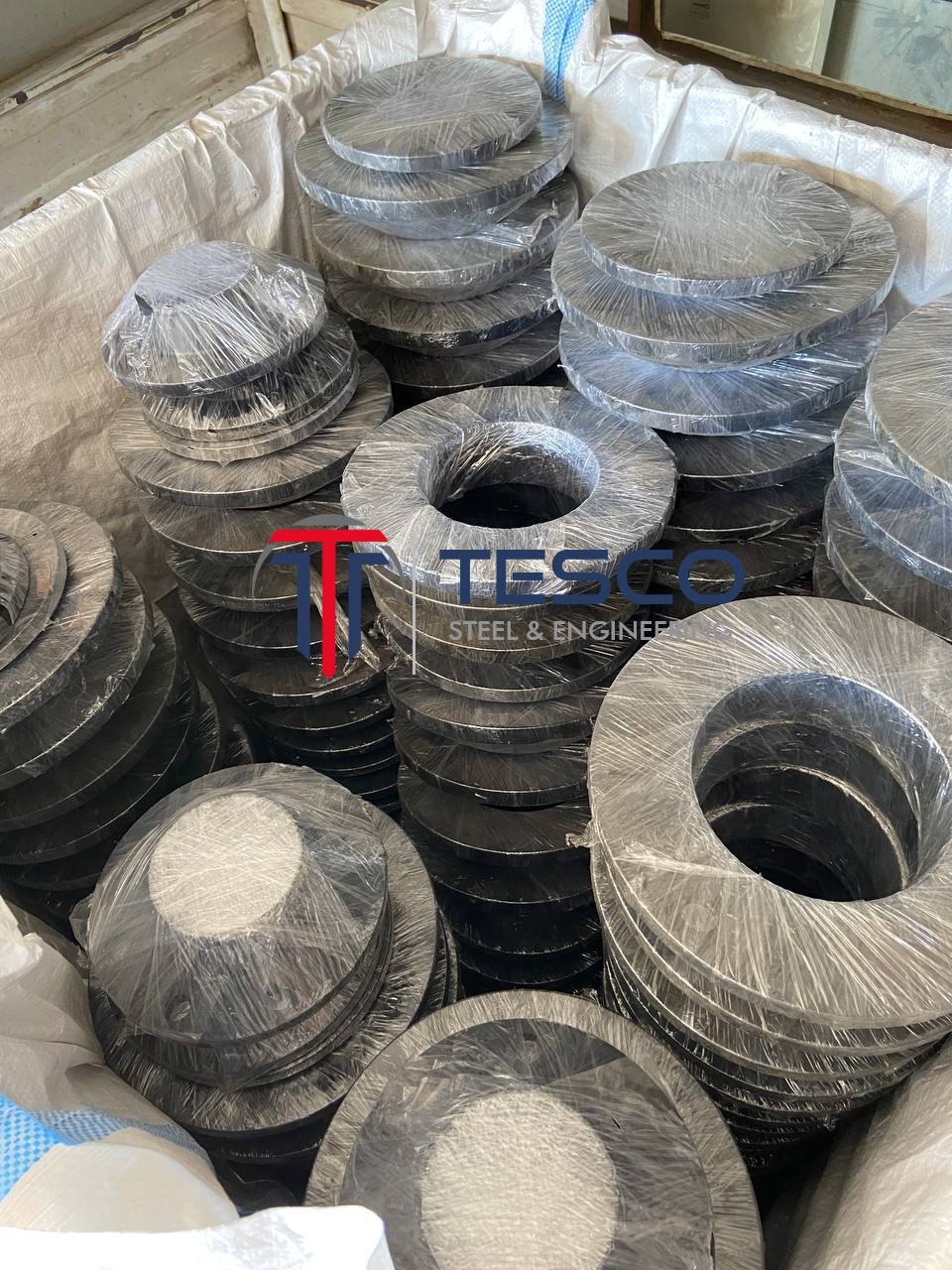
Alloy steel weld neck flanges — plastic-wrapped, export crate
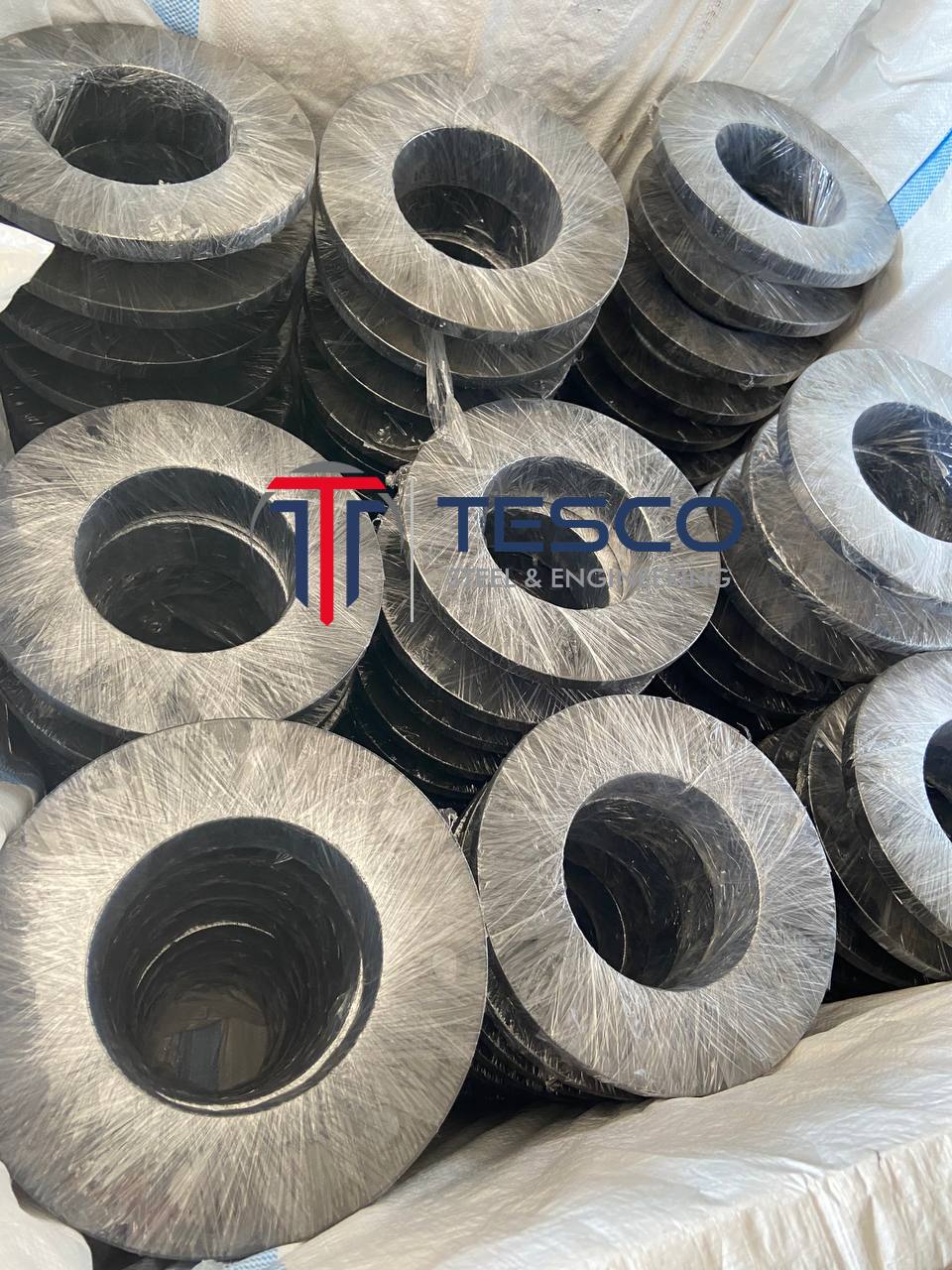
Alloy steel weld neck flanges — plastic-wrapped, bore detail
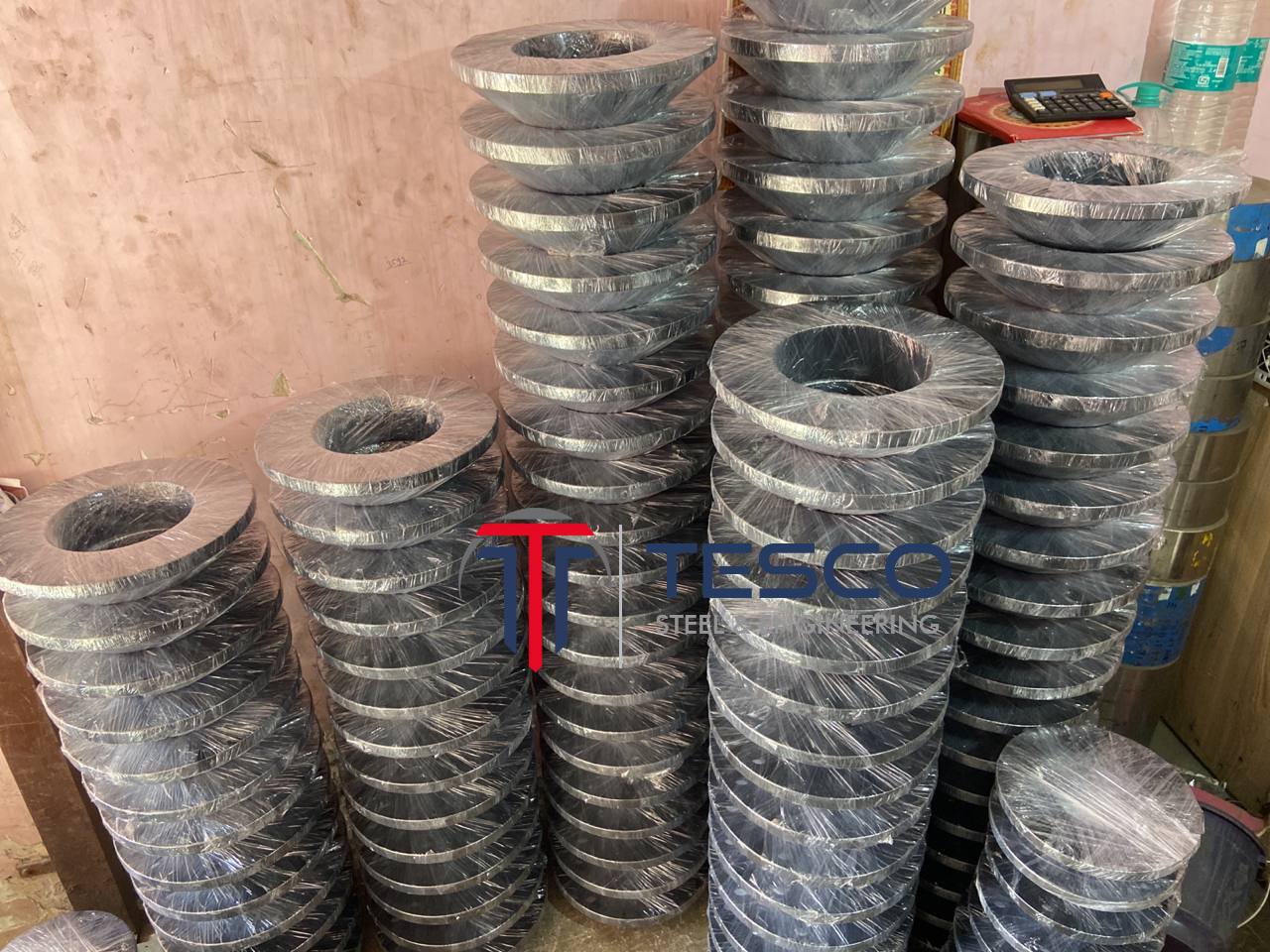
Alloy steel flanges — bulk plastic-wrapped stacks, pre-dispatch
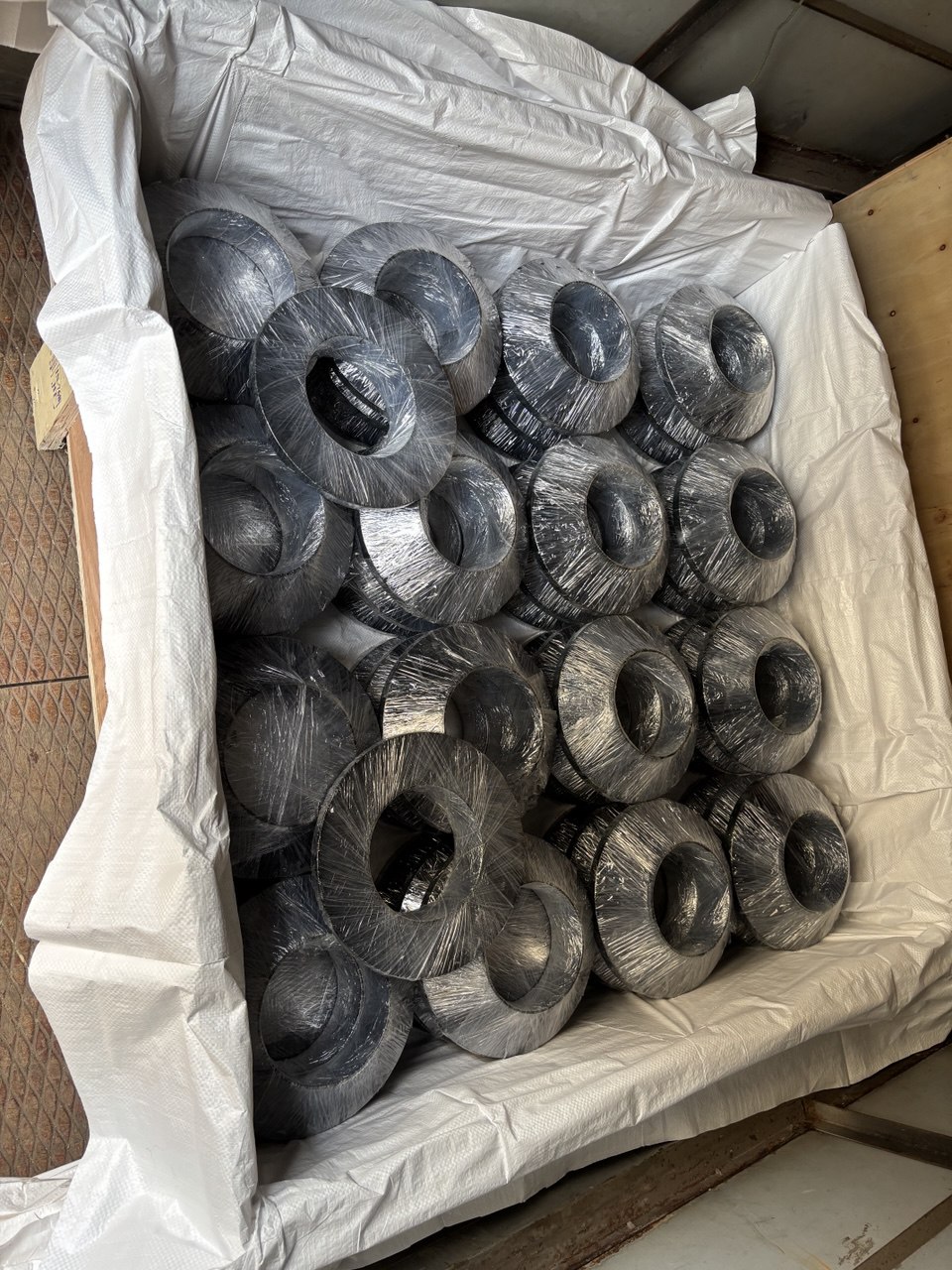
Alloy steel flanges — polybag-lined wooden export crate
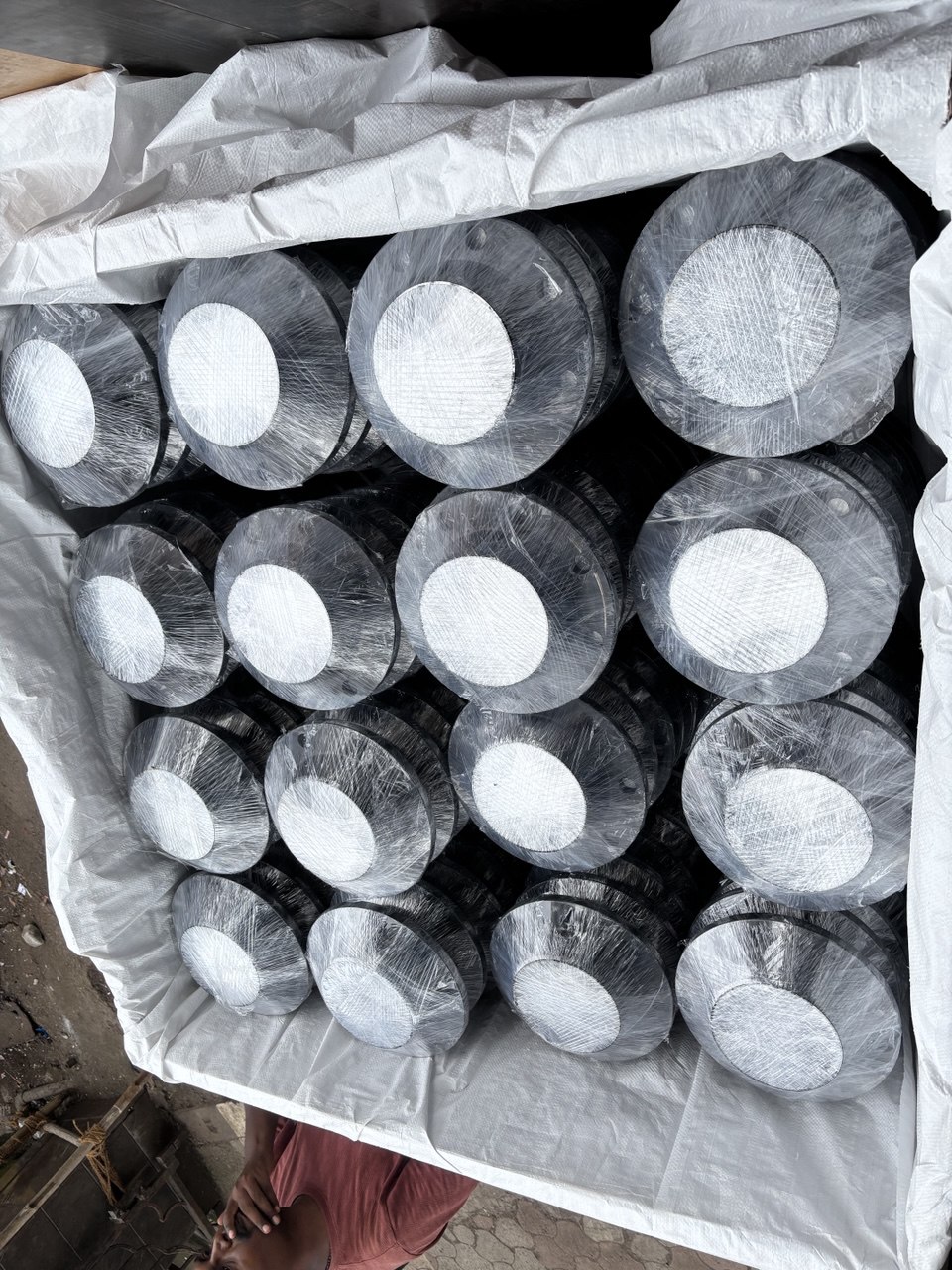
Alloy steel blind flanges — face-capped, wooden export crate
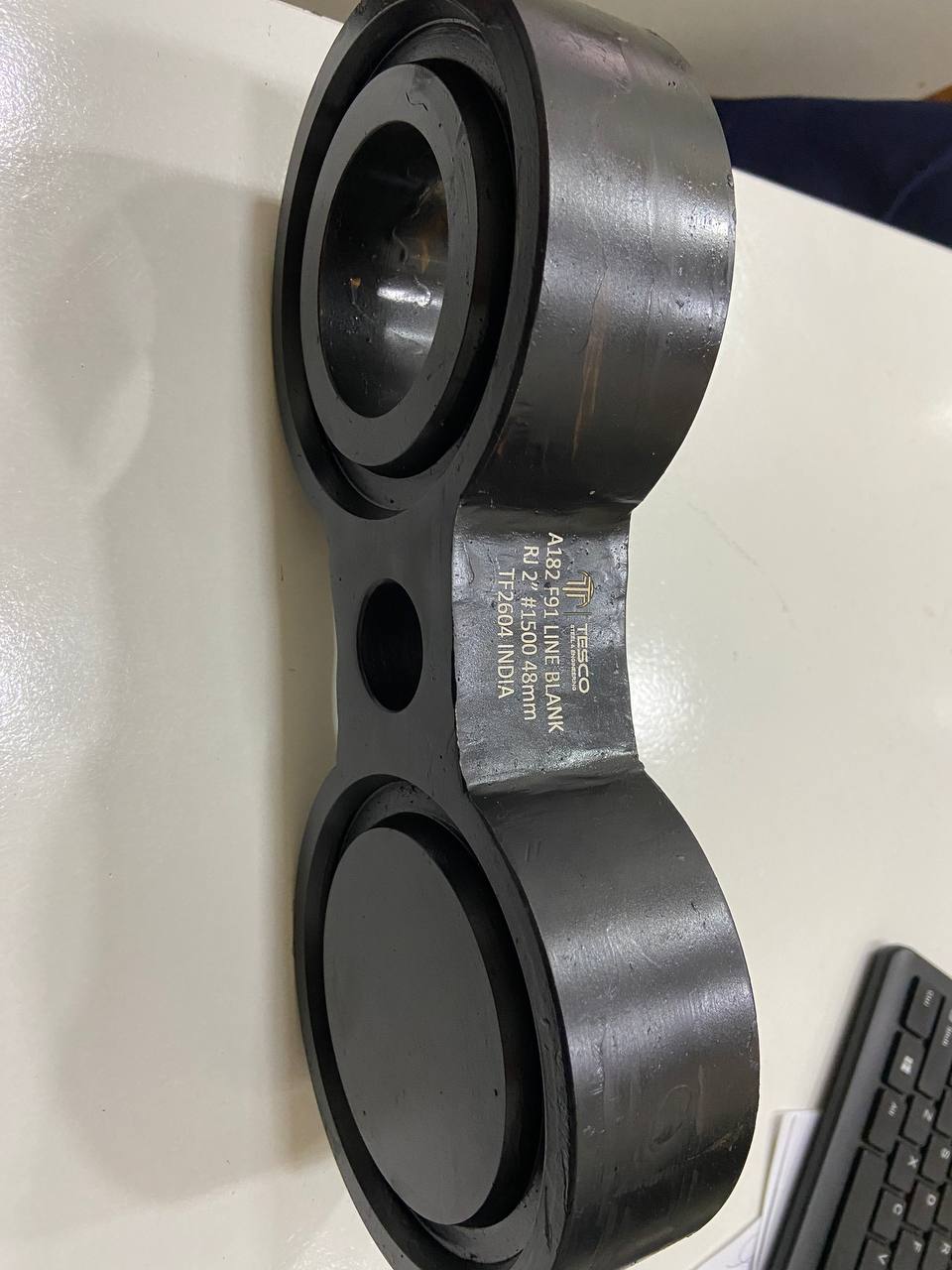
ASTM A182 F91 Grade 91 — 2″ #1500 RTJ line blank
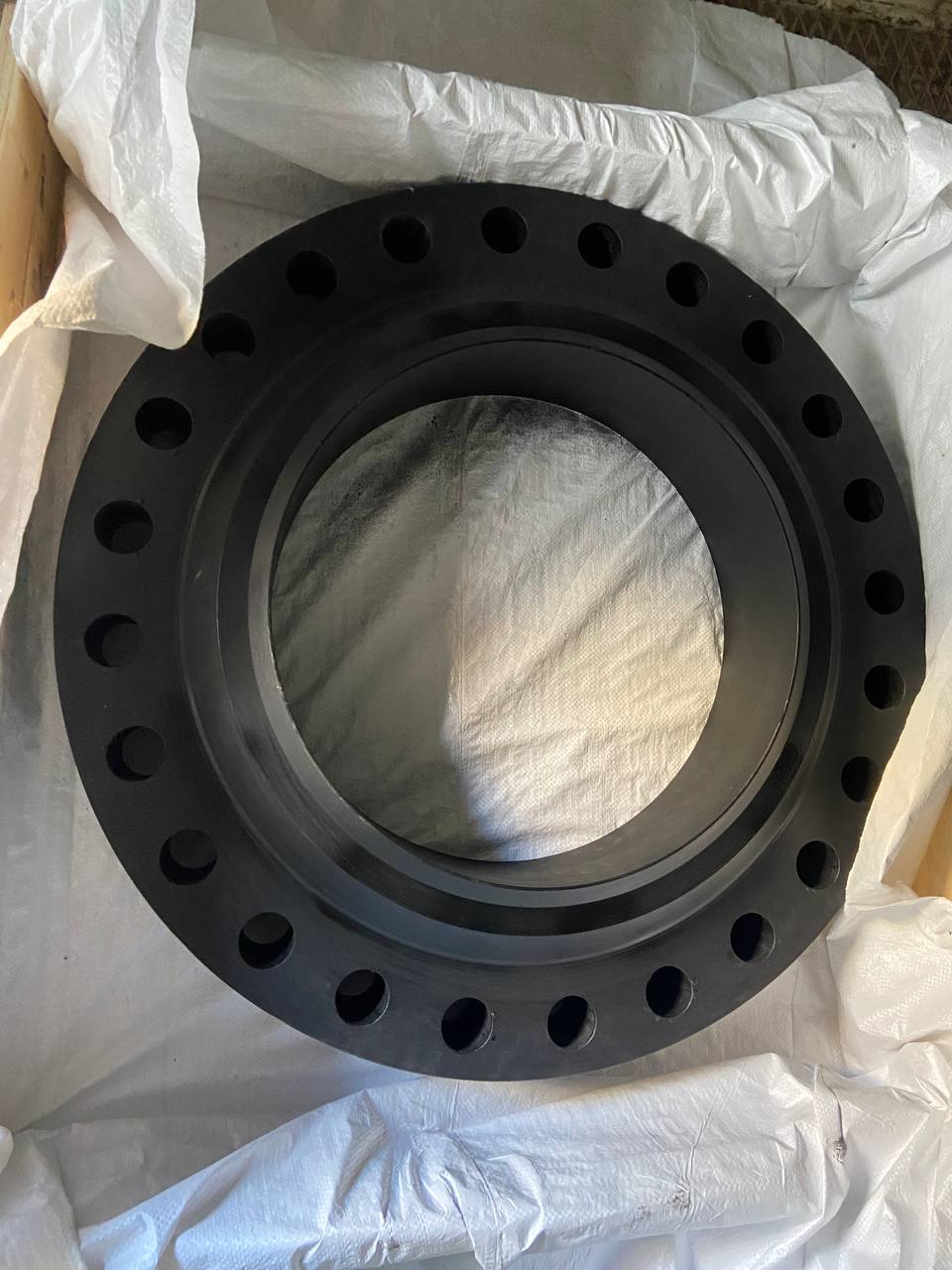
Alloy steel large diameter blind flange — raised face, export-ready
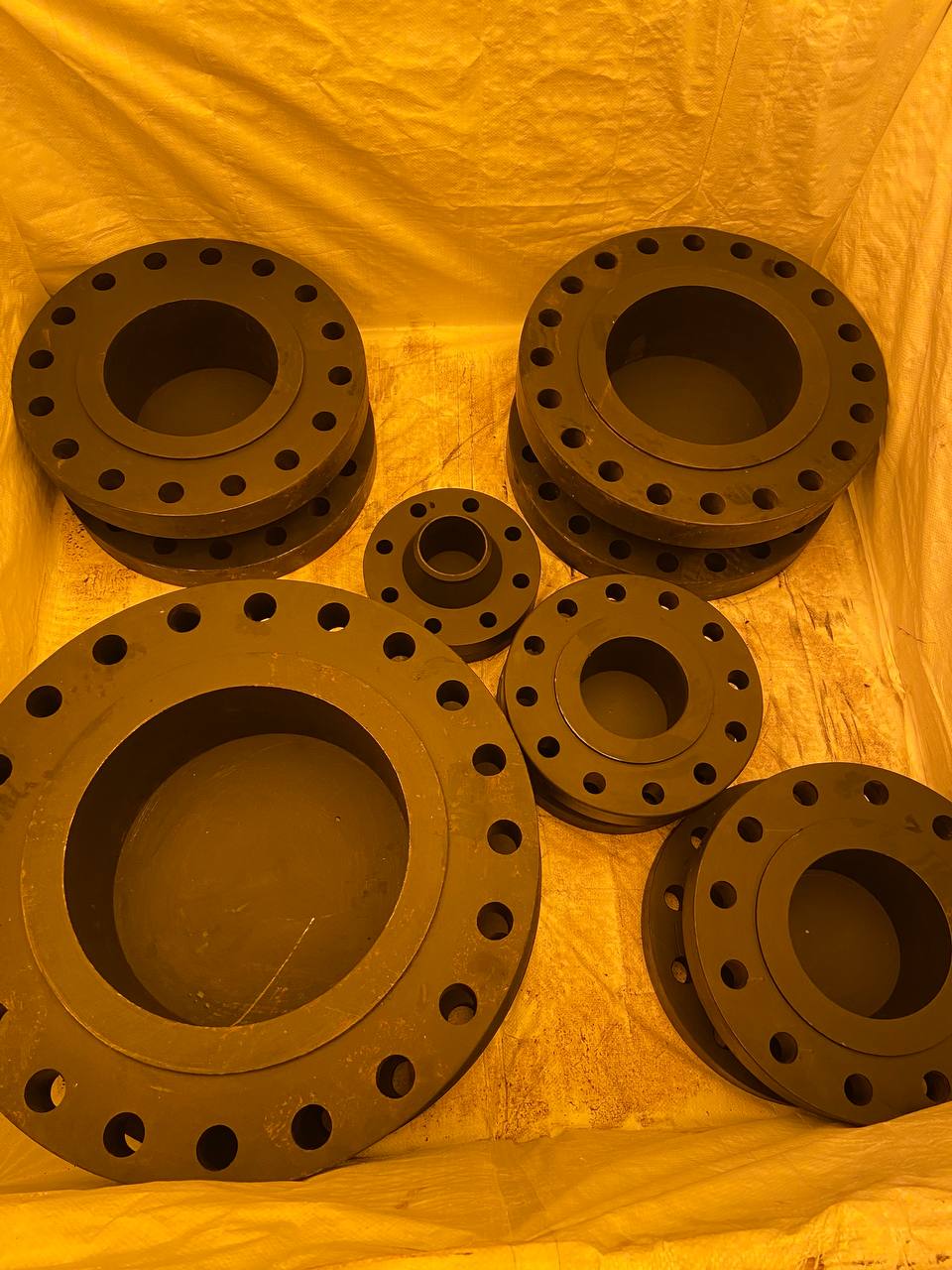
Alloy steel slip-on flanges — mixed sizes, lined export crate
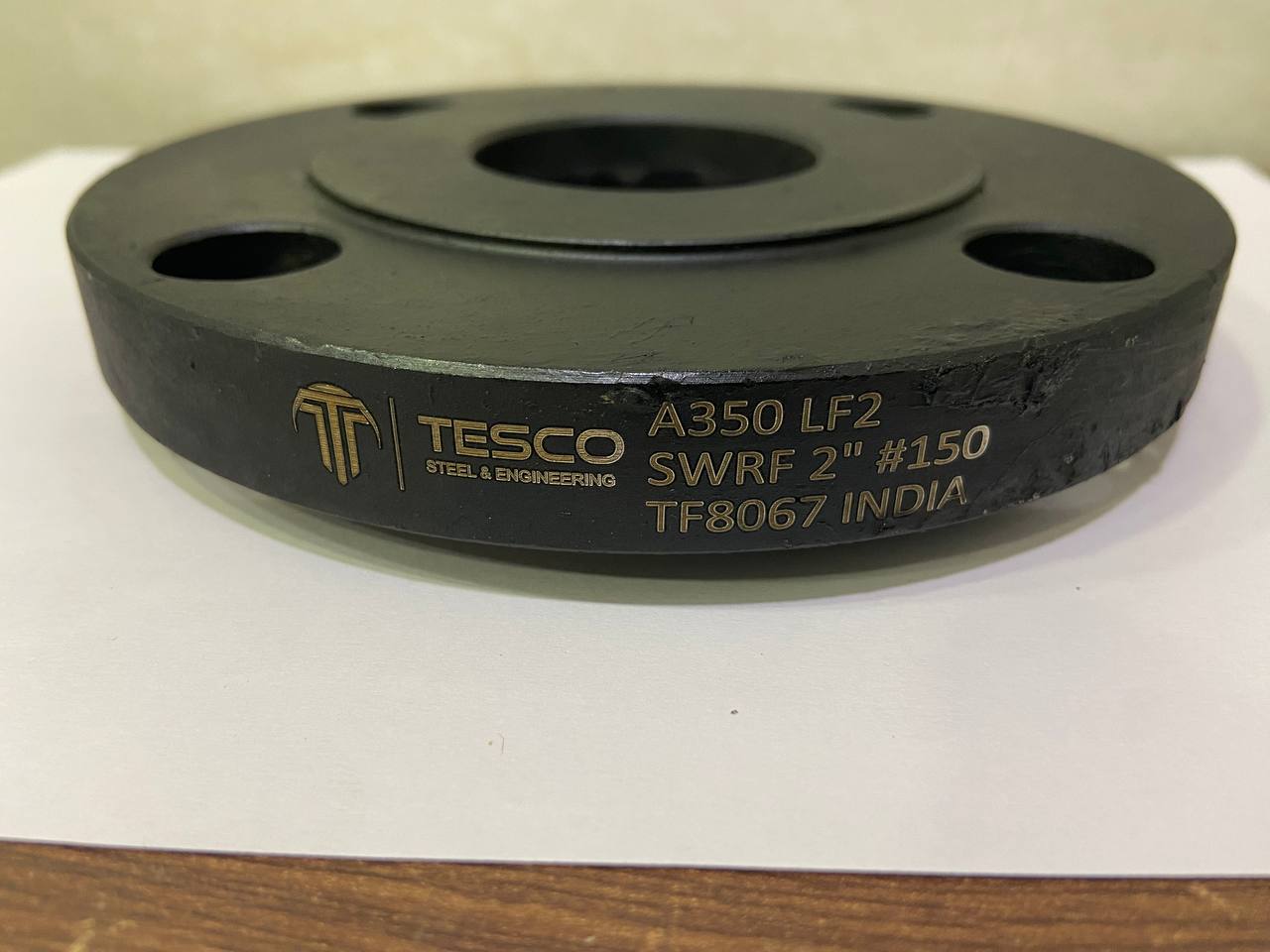
ASTM A350 LF2 — 2″ #150 socket weld RF flange
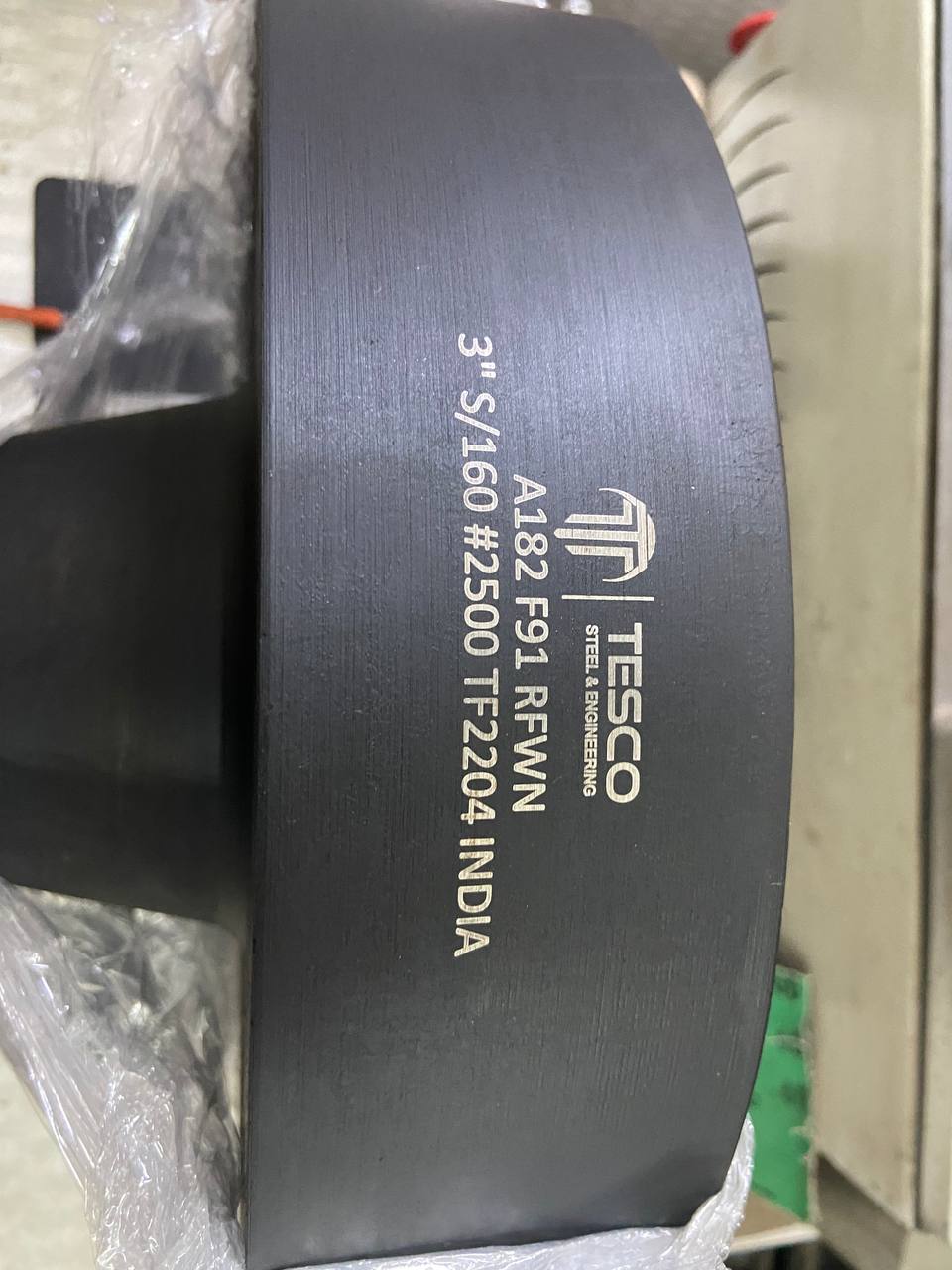
ASTM A182 F91 Grade 91 — 3″ Sch.160 Class 2500 RFWN
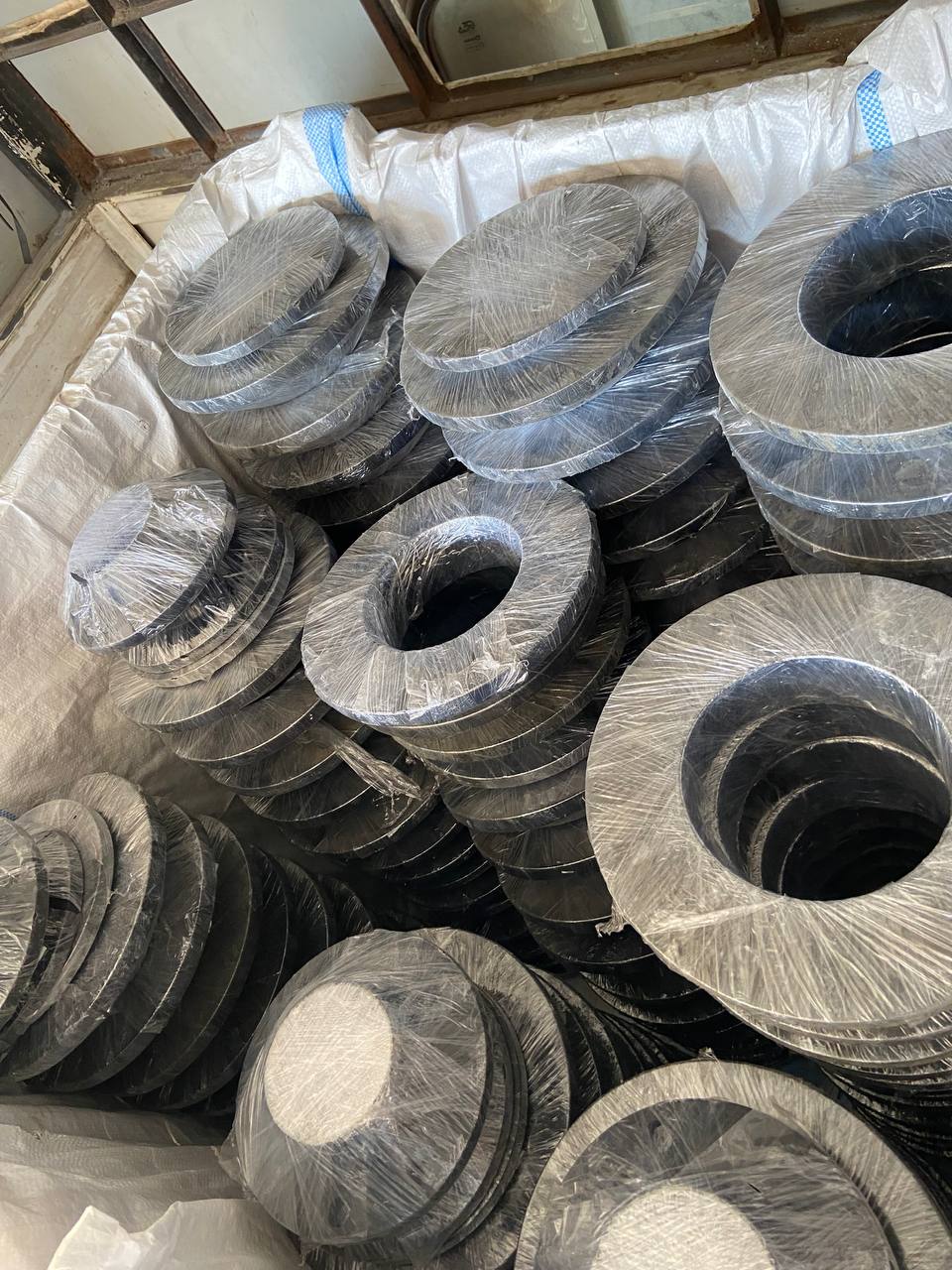
Alloy steel weld neck flanges — plastic-wrapped, bulk export load


