

TES-LOK BT Series trunnion ball valves — quarter-turn isolation valves with the ball fixed (trunnion-mounted) top and bottom for low operating torque and high-pressure shut-off. The trunnion carries the ball, so line pressure does not push the ball into the seat — giving consistent, low-effort operation even at high pressure. SS 316, SS 304, Brass, Monel, Inconel, Hastelloy. Size 1/2" to 2". Up to 10000 PSI (689 bar). −196°C to 537°C. ISO 9001:2015 certified. Made in India.
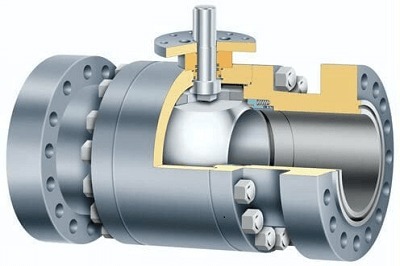
TES-LOK BT Series Trunnion Ball Valve
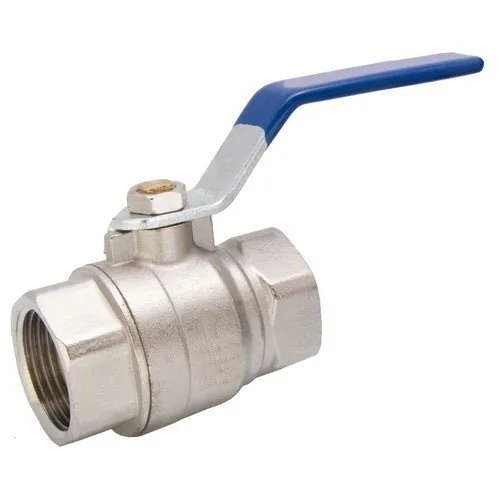
Floating Ball Valve (Related)
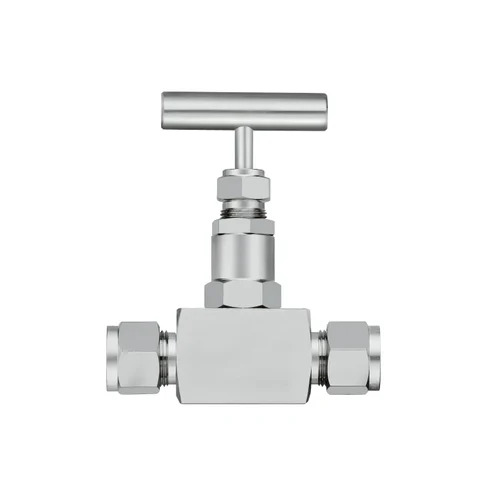
Needle Valve (Related)
The key difference from a floating ball valve is how the ball is supported and how the seal is energised. In a floating valve the ball moves slightly downstream and presses into the seat (so torque rises with pressure); in a trunnion valve the ball stays put and the seats are spring-energised against it (so torque stays low). This makes trunnion-mounted valves the choice for high-pressure, larger-bore, and frequent-cycle isolation duty.
| Criterion | Trunnion Ball (BT Series) | Floating Ball |
|---|---|---|
| Ball support | Fixed by top stem + bottom trunnion shaft | Held only by the two seats (floats) |
| Sealing | Spring-loaded seats pushed against the ball | Ball pushed by pressure into downstream seat |
| Operating torque | Low & nearly constant with pressure | Rises with pressure & size |
| Pressure capability | Higher — up to 10000 PSI (689 bar) | Up to ~7200 PSI (496 bar) |
| Best for | High-pressure, larger-bore, frequent-cycle isolation | Instrument & small/medium-bore isolation |
| See | BT Series (this page) | Ball Valve |
Choose a trunnion valve when high pressure, larger size, or frequent cycling would make a floating ball valve hard to turn; choose a floating ball valve for general instrument and small/medium-bore isolation.
| Parameter | Details |
|---|---|
| Brand | TES-LOK (Tesco Steel & Engineering) — BT Series |
| Type | Quarter-turn trunnion-mounted ball valve |
| Size | 1/2" to 2" (tube OD / NPS) |
| Working Pressure | Up to 10000 PSI (689 bar) — size, seat & material dependent |
| Working Temperature | −196°C to 537°C (−320°F to 1000°F) — seat dependent |
| Ball Support | Trunnion-mounted (top stem + bottom shaft); spring-loaded seats |
| End Connections | Tube-fitting (twin-ferrule), NPT, BSP (BSPP), BSPT, SAE, flanged, weld |
| Body Material | SS 316 / 316L, SS 304, Brass, Monel, Inconel, Hastelloy, special alloys |
| Seat / Seal Material | PTFE, Reinforced PTFE, PEEK, metal seat (high-temp / high-pressure) |
| Stem | Blow-out-proof, anti-static; locking handle option |
| Options | 2-way / 3-way, vented ball, fire-safe, NACE MR0175 (sour), oxygen-clean |
| Certifications | ISO 9001:2015 | EN 10204 3.1 MTC on request |
| Material | Corrosion / Service | Typical Use |
|---|---|---|
| SS 316 / 316L | Excellent — chloride resistant | HP instrument & process isolation, offshore, chemical |
| SS 304 / 304L | Good — general service | Water, air, mild process |
| Brass | Moderate — no ammonia/acids | Pneumatics, low-pressure water |
| Monel 400 | Excellent — HF, seawater | HF service, desalination, marine |
| Inconel 625 | Outstanding — high-temp & sour | Sour gas, high-temperature HP isolation |
| Hastelloy C-276 | Superior — strong acids | Chemical & acid HP service |
The trunnions carry the pressure load, so the valve turns with low, nearly constant effort regardless of line pressure — easy, repeatable operation at high pressure and a natural fit for actuation.
The fixed-ball, spring-energised-seat design handles working pressures up to 10000 PSI (689 bar) — well above floating-ball isolation valves — for demanding HP instrument and process duty.
Spring-loaded seats give a positive seal at low pressure, while line pressure pushes the upstream seat harder against the ball as pressure rises — reliable bubble-tight shut-off across the full range.
Blow-out-proof anti-static stem as standard, with fire-safe (secondary metal seat) and locking-handle options for safety-critical isolation duty.
SS 304, SS 316, Brass, Monel, Inconel, and Hastelloy bodies with PTFE / PEEK / metal seats, plus NACE MR0175 (sour) and oxygen-clean options for the toughest media.
Tube-fitting (twin-ferrule), NPT, BSP, SAE, flanged, and weld ends in 2-way and 3-way patterns — integrating into instrument tube, threaded, or flanged HP systems.
| Industry | Typical Use Point | Why Trunnion (BT) Preferred |
|---|---|---|
| Oil & Gas / Offshore | High-pressure instrument isolation, wellhead & HP sample shut-off | Low torque at HP; NACE sour-service materials; fire-safe option |
| Refinery & Petrochemical | HP process & analyser isolation | Easy operation at high pressure; full alloy range |
| Power Generation | HP steam-adjacent and instrument isolation | High pressure & temperature with metal seats |
| Chemical Processing | HP corrosive-line isolation | Hastelloy / Monel bodies; PTFE/PEEK/metal seats |
| Gas & Hydrogen | High-pressure gas isolation | Bubble-tight shut-off; low-torque cycling |
| Subsea & Wellhead | HP control and injection isolation | Trunnion design for HP; sour-service alloys |
| Test Rigs & Research | Frequent-cycle HP isolation | Constant low torque for repeated operation |
| Shipbuilding & Marine | HP hydraulic and instrument isolation | SS 316 salt resistance; reliable HP shut-off |
Q1. What is a trunnion ball valve?
A trunnion ball valve is a quarter-turn ball valve in which the ball is anchored by a shaft at the top and bottom (the trunnions), so it stays fixed on its axis. The trunnions carry the pressure load, and spring-loaded seats are pushed against the ball to seal. This gives low, almost constant operating torque even at high pressure — unlike a floating ball valve, where the ball moves into the seat and torque rises with pressure.
Q2. What is the difference between a trunnion and a floating ball valve?
In a floating ball valve the ball is held only by the seats and moves slightly downstream under pressure, pressing into the seat to seal — so torque increases with pressure and size. In a trunnion ball valve the ball is fixed by top and bottom shafts and the seats are spring-energised against it — so torque stays low and constant. Trunnion valves suit high-pressure, larger-bore, and frequent-cycle duty; floating valves suit general instrument isolation.
Q3. What is the BT Series?
BT Series is the TES-LOK designation for our trunnion-mounted ball valve range for instrument and process isolation — quarter-turn, trunnion-supported ball with spring-loaded seats, rated up to 10000 PSI (689 bar) and a temperature range of −196°C to 537°C, in sizes 1/2" to 2" with a full range of materials and end connections.
Q4. Why does a trunnion valve have lower operating torque?
Because the trunnions (top and bottom shafts) carry the load that line pressure exerts on the ball, the ball is not forced into the seat. The seal instead comes from spring-loaded seats pressing on the ball. Since the ball does not have to be dragged across a pressure-loaded seat, the torque to turn it stays low and nearly constant regardless of pressure — making the valve easy to operate and well suited to actuation.
Q5. What pressure and temperature can the BT Series handle?
The TES-LOK BT Series is rated up to 10000 PSI (689 bar), depending on size, seat, and material, with a temperature range of −196°C to 537°C (−320°F to 1000°F). PTFE seats limit the lower end of that range; PEEK and metal seats extend it for high-temperature and high-pressure service.
Q6. What seat materials are available?
PTFE (standard, excellent seal), reinforced PTFE, PEEK (higher temperature/pressure), and metal seats for the most extreme high-temperature and high-pressure service. The seat material largely sets the valve's temperature and pressure ceiling, so it is selected to match the application.
Q7. Can BT Series valves be supplied fire-safe or for sour service?
Yes. Fire-safe versions (with a secondary metal seat that seals if the soft seat is destroyed by fire) and NACE MR0175 / ISO 15156 sour-service versions are available, as well as oxygen-clean preparation. Specify the requirement with the fluid, pressure, and temperature when ordering.
Q8. What end connections are available?
Twin-ferrule tube-fitting ends, NPT, BSP (BSPP), BSPT, SAE, flanged, and weld ends, in 2-way and 3-way patterns. This lets the BT Series trunnion valve integrate directly into instrument tube systems, threaded piping, or flanged high-pressure lines.