

TES-LOK instrumentation gauge valves — needle-pattern isolation valves that connect, isolate, and (in vented versions) bleed pressure gauges, switches, and transmitters. Mounted between the process and the instrument, the gauge valve lets the instrument be shut off, vented, and removed for calibration without taking the line out of service. SS 316, SS 304, Brass, and special alloys. Size 1/8" to 1". Up to 6000 PSI (414 bar). PTFE packing to 232°C, graphite to 649°C. ISO 9001:2015 certified. Made in India.
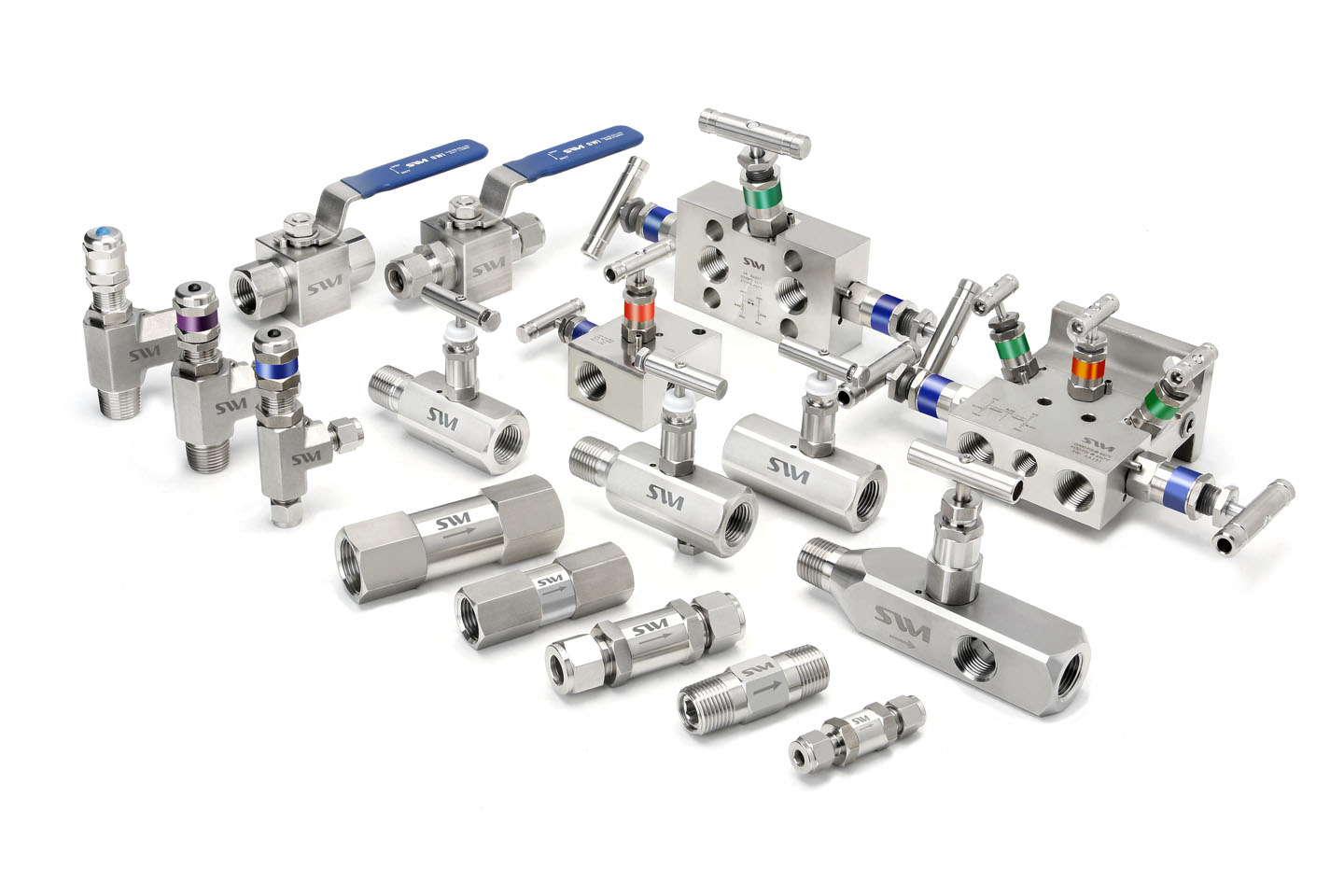
TES-LOK Gauge Valve
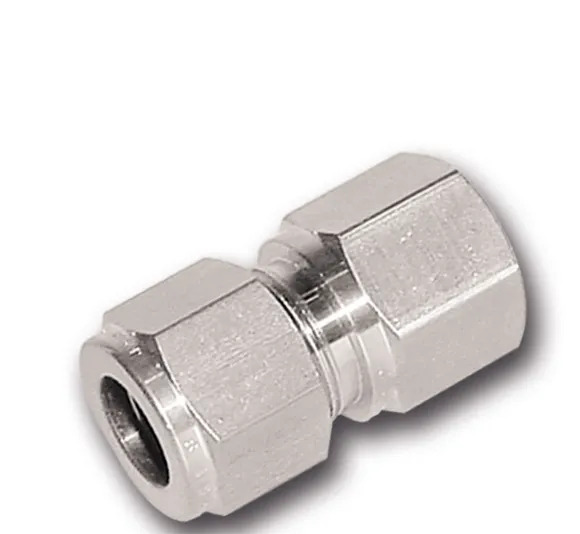
Gauge Connector (Related)
Syphon Gauge Cock (Related)
Gauge valves are a standard part of every instrument hook-up — protecting gauges from over-pressure and surges, allowing in-service calibration, and providing positive isolation for maintenance. TES-LOK supplies straight, angle, and tee-pattern gauge valves with NPT, BSP, SAE, and tube-fitting ends, in standard, vented, and bleed configurations across the full material range.
| Pattern | Description | Typical Use |
|---|---|---|
| Straight (inline) | Process and gauge in line | Inline gauge isolation on a root |
| Angle (90°) | Gauge at right angle to process | Panel & wall-mounted gauges |
| Tee / Multi-port | Extra port for bleed or test | Calibration & bleed connection |
| Vented / Bleed | Integral bleed port | Safe venting before gauge removal |
| OS&Y (rising stem) | Outside screw & yoke stem | Visual open/close indication, high temp |
| Criterion | Gauge Valve | Needle Valve | Ball Valve |
|---|---|---|---|
| Primary role | Isolate & bleed an instrument | Fine flow throttling | On/off line isolation |
| Closure | Needle stem + gauge mount | Tapered needle | Quarter-turn ball |
| Vent/bleed | Yes (vented versions) | Optional | No (separate bleed) |
| Mounting | Directly carries the gauge | Inline in tubing | Inline in tubing/pipe |
| Best for | Gauge / transmitter hook-ups | Metering & regulation | Fast line isolation |
A gauge valve is purpose-built to carry and isolate an instrument; for fine throttling use a needle valve and for full-bore isolation a ball valve. Where both isolate and vent are needed, see manifold valves and bleed valves.
| Parameter | Details |
|---|---|
| Brand | TES-LOK (Tesco Steel & Engineering) |
| Type | Needle-pattern gauge isolation valve |
| Size | 1/8" to 1" |
| Working Pressure | Up to 6000 PSI (414 bar) — size & material dependent |
| Working Temperature | −54°C to 232°C (−65°F to 450°F) with PTFE packing; up to 649°C (1200°F) with graphite packing |
| Pattern | Straight, angle (90°), tee, vented/bleed, OS&Y |
| Stem / Tip | Tapered needle; regulating or hard shut-off; anti-blowout |
| Packing | PTFE (general), Graphite (high temperature) |
| End Connections | NPT, BSP (BSPP), BSPT, UNF, SAE, ISO; tube-fitting |
| Body Material | SS 316 / 316L, SS 304, Brass, special alloys |
| Options | NACE MR0175 (sour), oxygen-clean, locking, panel-mount |
| Certifications | ISO 9001:2015 | EN 10204 3.1 MTC on request |
| Packing | Temperature Range | Best For |
|---|---|---|
| PTFE | −54°C to 232°C (−65°F to 450°F) | General gauge & instrument service; excellent chemical resistance & low friction |
| Graphite | Up to 649°C (1200°F) | High-temperature steam & hot-gas gauge lines; fire-safe |
| Material | Corrosion / Service | Typical Use |
|---|---|---|
| SS 316 / 316L | Excellent — chloride resistant | General instrumentation, offshore, chemical, marine |
| SS 304 / 304L | Good — general service | Water, air, mild process |
| Brass | Moderate — no ammonia/acids | Pneumatics, low-pressure water |
| Special Alloys | Application-specific | Aggressive / high-temperature media on request |
Designed to carry and isolate a pressure gauge, switch, or transmitter directly — the standard hook-up element between process and instrument.
Isolate and (on vented versions) bleed the gauge to calibrate or replace it without shutting down or depressurising the process line.
Closing the valve isolates the gauge from surges and over-pressure, extending instrument life and accuracy.
PTFE packing for general service to 232°C, or graphite for high-temperature steam and hot-gas lines up to 649°C.
SS 304, SS 316, Brass, and special alloys, with NACE MR0175 (sour) and oxygen-clean options for demanding media.
Straight, angle, tee, and vented/bleed patterns with NPT, BSP, SAE, or tube-fitting ends integrate into any panel or field hook-up.
| Industry | Typical Use Point | Why Gauge Valve |
|---|---|---|
| Oil & Gas / Offshore | Gauge & transmitter root isolation | Isolate & bleed for calibration; NACE sour materials |
| Refinery & Petrochemical | Pressure gauge hook-ups on vessels & lines | In-service calibration; full material range |
| Power Generation | Steam & high-temperature gauge lines | Graphite packing to 649°C; OS&Y option |
| Chemical Processing | Corrosive-media gauge isolation | SS 316 / special alloys; tight needle seat |
| Pharmaceutical / Lab | Clean gauge & transmitter hook-ups | Clean SS 316; precise isolation |
| Gas & Analyser Systems | Gauge isolation & bleed on sample loops | Vented pattern; oxygen-clean option |
| Hydraulics & Test Rigs | Gauge protection against surges | Up to 6000 PSI; isolates on pressure spikes |
| Shipbuilding & Marine | Instrument gauge hook-ups | SS 316 salt resistance; reliable isolation |
Q1. What is an instrumentation gauge valve?
It is a compact needle-pattern valve installed between a process connection and a pressure gauge, switch, or transmitter. It isolates the instrument from process pressure (and, on vented versions, bleeds trapped pressure) so the gauge can be installed, calibrated, and replaced without taking the line out of service. It is also called a gauge isolation valve, gauge root valve, or gauge cock.
Q2. What is the difference between a gauge valve and a needle valve?
Both use a tapered needle stem, but a gauge valve is purpose-built to carry and isolate an instrument — it mounts the gauge directly and often includes a bleed port. A needle valve is a general inline valve for fine flow throttling and metering. Use a gauge valve at the instrument and a needle valve for flow regulation in the line.
Q3. What is a vented (bleed) gauge valve used for?
A vented gauge valve has an integral bleed port. After closing the valve to isolate the gauge, the bleed is opened to release the pressure trapped between the seat and the gauge — making it safe to unscrew and remove the gauge for calibration or replacement without breaking a connection under pressure.
Q4. What pressure and temperature can the valve handle?
TES-LOK gauge valves are rated up to 6000 PSI (414 bar), depending on size and material, with a temperature range of −54°C to 232°C using PTFE packing and up to 649°C using graphite packing. Sizes run from 1/8" to 1".
Q5. Which packing should I choose — PTFE or graphite?
Use PTFE packing for general service from −54°C to 232°C — it offers excellent chemical resistance and low stem friction. Use graphite packing for high-temperature steam and hot-gas gauge lines up to 649°C, and where fire-safe performance is required. The packing largely sets the valve's temperature limit.
Q6. What patterns are available — straight or angle?
Straight (inline), angle (90°), and tee/multi-port patterns are available, along with vented/bleed and OS&Y (rising stem) versions. Straight valves suit inline roots, angle valves suit panel and wall-mounted gauges, and vented patterns allow safe gauge removal.
Q7. What end connections are available?
NPT, BSP (BSPP), BSPT, UNF, SAE, and ISO threads, plus tube-fitting ends. The process and gauge ends can be specified independently so the valve mates the process root on one side and the gauge connection on the other.
Q8. Can these valves be supplied for sour or oxygen service?
Yes. Gauge valves can be supplied to NACE MR0175 / ISO 15156 for sour (H₂S) service with compliant materials and hardness, and oxygen-cleaned for oxygen service. Specify the fluid, pressure, and temperature, and we will select the correct body, stem, seat, and packing.