

TES-LOK bleed & purge valves — compact needle-pattern valves that safely vent, drain, and depressurise instrument hook-ups, manifolds, and gauge lines. Fitted to the bleed port of a manifold or block valve, they release trapped pressure and purge the line before an instrument is removed or calibrated. SS 316, SS 304, Brass, and special alloys. Size 1/8" to 1/2". Up to 10000 PSI (689 bar). −54°C to 454°C with stainless steel. ISO 9001:2015 certified. Made in India.
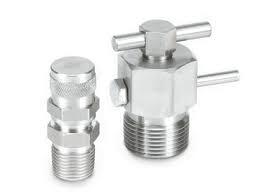
TES-LOK Bleed / Purge Valve
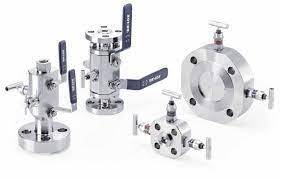
Block & Bleed Valve (Related)
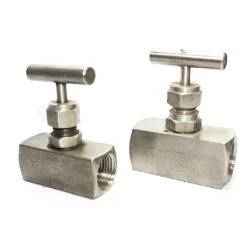
Needle Valve (Related)
Because they release trapped energy, bleed valves are a safety-critical part of any instrument installation. TES-LOK supplies bleed and purge valves with male/female NPT, BSP, and tube-fitting ends, integral bleed plugs, and screwed bonnet or OS&Y patterns, across the full material range and up to 10000 PSI.
| Type | Construction | Typical Use |
|---|---|---|
| Bleed Plug | Integral screw plug with bleed passage | Bleed/vent port of manifolds & gauges |
| Bleed / Vent Valve | Needle stem with male/female end | Venting & draining instrument hook-ups |
| Purge Valve | Bleed valve with purge/inlet connection | Purging & flushing sample / analyser lines |
| Block-and-Bleed | Block valve + integral bleed | Combined isolation + venting in one body |
Bleed valves are commonly built into instrument manifolds and block-and-bleed valves, where the block isolates and the bleed vents.
| Parameter | Details |
|---|---|
| Brand | TES-LOK (Tesco Steel & Engineering) |
| Type | Needle-pattern bleed / purge / vent valve |
| Size | 1/8" to 1/2" |
| Working Pressure | Up to 10000 PSI (689 bar) @ 70°F (21°C) |
| Working Temperature | −54°C to 454°C (−65°F to 850°F) with stainless steel; −29°C to 232°C (−20°F to 450°F) with carbon steel |
| End Connections | Male / female NPT, BSP (BSPP), BSPT, UNF, SAE, ISO; tube-fitting |
| Pattern | Bleed plug, bleed/vent valve, purge valve, block-and-bleed |
| Stem / Tip | Needle stem; soft or metal seat; vented stem cap option |
| Body Material | SS 316 / 316L, SS 304, Brass, Carbon Steel, special alloys |
| Options | NACE MR0175 (sour), oxygen-clean, anti-blowout stem, locking |
| Certifications | ISO 9001:2015 | EN 10204 3.1 MTC on request |
| Material | Corrosion / Service | Typical Use |
|---|---|---|
| SS 316 / 316L | Excellent — chloride resistant | General instrumentation, offshore, chemical, marine |
| SS 304 / 304L | Good — general service | Water, air, mild process |
| Brass | Moderate — no ammonia/acids | Pneumatics, low-pressure water |
| Carbon Steel | General — non-corrosive media | Hydraulic & process to 232°C |
| Special Alloys | Application-specific | Aggressive / high-temperature media on request |
Vents trapped pressure in a controlled way before an instrument is removed — a safety-critical step in every isolation procedure.
One compact valve vents to atmosphere, drains to a collection line, or purges and flushes sample lines, as the hook-up requires.
Rated up to 10000 PSI (689 bar), suiting high-pressure instrument and process hook-ups including block-and-bleed assemblies.
Integrates as the bleed element of manifolds and block-and-bleed valves, proving isolation and detecting seat leakage at the vent.
SS 304, SS 316, Brass, Carbon Steel, and special alloys, with NACE MR0175 (sour) and oxygen-clean options for demanding media.
Fine needle stem with soft or metal seat gives reliable shut-off so the bleed port holds tight when the line is back in service.
| Industry | Typical Use Point | Why Bleed Valve |
|---|---|---|
| Oil & Gas / Offshore | Gauge & transmitter hook-ups, block-and-bleed | Safe high-pressure venting; NACE sour materials |
| Refinery & Petrochemical | Manifold bleed, analyser purge lines | Depressurise & purge before service; full material range |
| Power Generation | Steam & instrument line draining | SS to 454°C; reliable high-pressure venting |
| Chemical Processing | Sample line purge, drain to collection | SS 316 / special alloys; tight needle seat |
| Pharmaceutical / Lab | Calibration venting & purging | Clean SS 316; precise needle control |
| Gas & Analyser Systems | Purge & flush of sample loops | Vent & purge in one valve; oxygen-clean |
| Hydraulics & Test Rigs | Bleeding air, depressurising lines | Up to 10000 PSI; compact, reliable |
| Shipbuilding & Marine | Instrument hook-up venting | SS 316 salt resistance; safe draining |
Q1. What is a bleed valve?
A bleed valve is a small needle-pattern valve used to vent, drain, or purge trapped pressure and media from an instrument hook-up before the instrument is serviced or removed. It is normally fitted to the bleed/vent port of a manifold, gauge root, or block valve, and forms the "bleed" of a block-and-bleed arrangement.
Q2. What is the difference between a bleed valve and a purge valve?
A bleed (or vent) valve releases trapped pressure to atmosphere or a drain. A purge valve does the same but also has a purge/inlet connection so a clean fluid or gas can be introduced to flush the line. Both share the same needle-pattern construction — the difference is the extra purge connection.
Q3. How does a bleed valve fit into a block-and-bleed arrangement?
In a block-and-bleed, the block valve(s) isolate the instrument from the process and the bleed valve vents the trapped section between them. After closing the block valve, opening the bleed proves positive isolation, depressurises the cavity, and reveals any seat leakage at the open vent — making it safe to remove the instrument.
Q4. What pressure and temperature can the valve handle?
TES-LOK bleed valves are rated up to 10000 PSI (689 bar) at 70°F (21°C). The temperature range is −54°C to 454°C (−65°F to 850°F) with stainless steel and −29°C to 232°C (−20°F to 450°F) with carbon steel. Sizes run from 1/8" to 1/2".
Q5. Is it safe to open a bleed valve on a live line?
No. Always isolate the line first with the upstream block/isolate valve, then open the bleed valve to vent the trapped section. Opening a bleed valve under full process pressure discharges high-pressure media and is hazardous. Point the vent away from personnel and capture toxic or flammable media safely.
Q6. What is a bleed plug, and how is it different from a bleed valve?
A bleed plug is an integral screw plug with a bleed passage that is loosened to vent and re-tightened to seal — simple and compact for a manifold bleed port. A bleed valve has a needle stem and handle for repeatable, controlled venting. Both are supplied; the choice depends on how often and how precisely the port must be operated.
Q7. What end connections are available?
Male and female NPT, BSP (BSPP), BSPT, UNF, SAE, and ISO threads, plus tube-fitting ends. This lets the bleed valve thread directly into manifold and block-valve bleed ports or connect to instrument tubing.
Q8. Can these valves be supplied for sour or oxygen service?
Yes. Bleed valves can be supplied to NACE MR0175 / ISO 15156 for sour (H₂S) service with compliant materials and hardness, and oxygen-cleaned for oxygen service. Specify the fluid, pressure, and temperature, and we will select the correct body, stem, and seat.