

TES-LOK ball valves — quarter-turn floating-ball isolation valves with PTFE / PEEK seats for fast, leak-tight on/off control of instrument and process lines. Available in 2-way and 3-way, full and reduced bore, with tube, NPT, BSP, or flanged ends. SS 316, SS 304, Brass, Monel, Inconel, Hastelloy. Size 1/2" to 2". Up to 7200 PSI (496 bar). −30°C to 130°C. ISO 9001:2015 certified. Made in India.
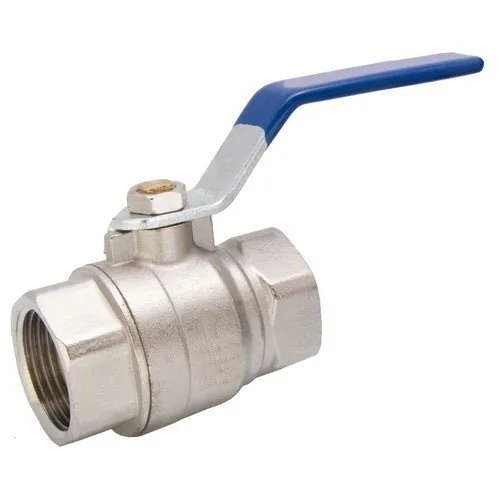
TES-LOK Ball Valve
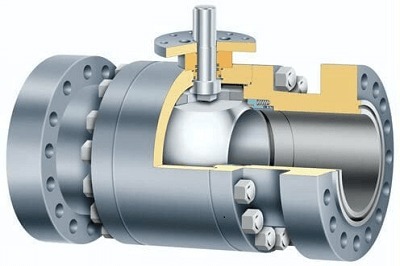
Trunnion Ball Valve (Related)
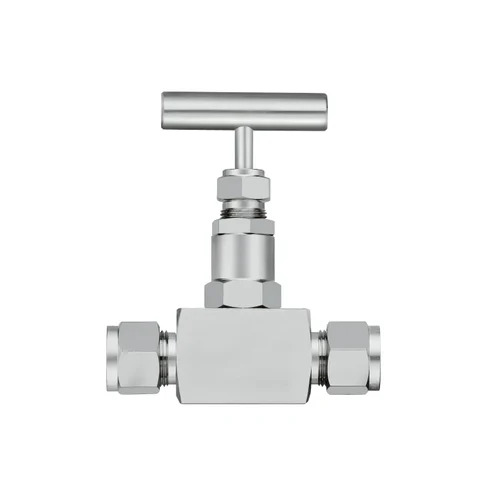
Needle Valve (Related)
In instrumentation, ball valves provide quick, positive isolation of impulse lines, sample points, gauges, transmitters, and equipment. The handle position gives an instant visual indication of open/closed. TES-LOK manufactures instrument and process ball valves in floating-ball design, in 2-way and 3-way patterns, with tube-fitting, threaded, or flanged ends across the full material range.
| Configuration | Description | Best For |
|---|---|---|
| 2-Way (On/Off) | Straight-through isolation; open or closed | Standard line isolation of instruments and process |
| 3-Way (L-Port) | Ball with L-bore; selects between two ports or diverts | Selecting / diverting flow between two lines |
| 3-Way (T-Port) | Ball with T-bore; mixes or splits flow, or common-to-both | Mixing, splitting, or common-feed switching |
| Floating Ball | Ball held by the seats; pressure energises downstream seat | Instrument & small/medium-bore process (this range) |
| Trunnion Ball | Ball supported top & bottom; lower torque at high pressure | Larger / higher-pressure pipeline duty (see Trunnion BT series) |
| Full vs Reduced Bore | Full bore = pipe-size port (low drop); reduced = smaller port | Full bore for flow / pigging; reduced for compact isolation |
| Criterion | Ball Valve | Needle Valve |
|---|---|---|
| Function | On/off isolation (quarter-turn) | Fine flow throttling / regulation (multi-turn) |
| Operation | Fast 90° open/close | Slow, precise stem adjustment |
| Flow path | Full-bore, low pressure drop | Restricted, fine control |
| Shut-off | Bubble-tight | Tight (metal/soft tip) |
| Best for | Quick, positive isolation | Throttling, calibration, fine metering |
Use a ball valve where you need fast, full-flow on/off isolation, and a needle valve where you need fine flow throttling or metering. Many instrument hook-ups use both.
| Parameter | Details |
|---|---|
| Brand | TES-LOK (Tesco Steel & Engineering) |
| Type | Quarter-turn floating-ball isolation valve |
| Size | 1/2" to 2" (tube OD / NPS) |
| Pattern | 2-way; 3-way L-port & T-port; full or reduced bore |
| Working Pressure | Up to 7200 PSI (496 bar) — size, seat & material dependent |
| Working Temperature | −30°C to 130°C (−22°F to 265°F) — seat dependent (PTFE / PEEK higher on request) |
| End Connections | Tube-fitting (twin-ferrule), NPT, BSP (BSPP), BSPT, SAE, flanged, weld |
| Body Material | SS 316 / 316L, SS 304, Brass, Monel, Inconel, Hastelloy, special alloys |
| Seat / Seal Material | PTFE (standard), Reinforced PTFE, PEEK (high-temp / high-pressure) |
| Stem | Blow-out-proof stem; anti-static design available |
| Options | Locking handle, panel mount, vented ball, NACE MR0175 (sour), oxygen-clean |
| Certifications | ISO 9001:2015 | EN 10204 3.1 MTC on request |
| Material | Corrosion / Service | Typical Use |
|---|---|---|
| SS 316 / 316L | Excellent — chloride resistant | General instrumentation, offshore, chemical, marine |
| SS 304 / 304L | Good — general service | Water, air, food, pharma, mild process |
| Brass | Moderate — no ammonia/acids | Pneumatics, compressed air, low-pressure water |
| Monel 400 | Excellent — HF, seawater | HF service, desalination, marine |
| Inconel 625 | Outstanding — high-temp & sour | Sour gas, high-temperature isolation |
| Hastelloy C-276 | Superior — strong acids | Chemical & acid service |
A simple 90° handle turn fully opens or closes the valve — quick, positive isolation with clear visual open/closed indication, ideal for instrument hook-ups and emergency shut-off.
PTFE / PEEK seats and a floating ball give a bubble-tight seal that pressure energises — the higher the line pressure, the tighter the downstream seat seals against the ball.
The stem is designed to be retained from inside the body so it cannot be ejected under pressure — a key safety feature. Anti-static and locking-handle options are available.
2-way for straight isolation; 3-way L-port and T-port for selecting, diverting, mixing, or splitting flow — one valve range for isolation and switching duties.
SS 304 and Brass for general service; SS 316 for corrosion; Monel, Inconel, and Hastelloy for HF, sour, high-temperature, and acid service, with NACE MR0175 and oxygen-clean options.
Tube-fitting (twin-ferrule), NPT, BSP, SAE, flanged, and weld ends — so the ball valve integrates directly into instrument tube, threaded, or flanged systems.
| Industry | Typical Use Point | Why Ball Valve |
|---|---|---|
| Oil & Gas / Offshore | Instrument isolation, sample points, gauge & transmitter shut-off | Fast positive isolation; SS 316 / NACE for sour service |
| Refinery & Petrochemical | Process isolation, analyser sample line shut-off | Bubble-tight isolation; full material range |
| Power Generation | Instrument and utility line isolation | Reliable quarter-turn shut-off; high pressure |
| Chemical Processing | Corrosive-line isolation and switching | Hastelloy / Monel bodies; PTFE/PEEK seats |
| Pharmaceutical / Food | Clean utility, water, and gas isolation | SS 316L, smooth bore, easy operation |
| Water & Utilities | Air, water, and gas line on/off control | Brass / SS options; low maintenance |
| Pneumatics & Compressed Air | Air line isolation and switching | Quick shut-off; locking-handle safety option |
| Shipbuilding & Marine | Instrument and utility isolation on deck/engine systems | SS 316 salt resistance; compact isolation |
Q1. What is a ball valve used for?
A ball valve is used for fast on/off isolation of a line. A quarter-turn of the handle rotates a bored ball between fully open (bore aligned with flow) and fully closed (solid ball face blocking flow), giving bubble-tight shut-off. In instrumentation it isolates impulse lines, sample points, gauges, transmitters, and equipment. It is the most common manual isolation valve because it is fast, reliable, and low in pressure drop.
Q2. What is the difference between a ball valve and a needle valve?
A ball valve is a quarter-turn on/off valve for fast, full-flow isolation. A needle valve is a multi-turn valve for fine flow throttling and metering. Use a ball valve to start/stop flow quickly and a needle valve to precisely regulate flow rate. Many instrument hook-ups use a ball valve for isolation and a needle valve for fine control.
Q3. What is the difference between a 2-way and 3-way ball valve?
A 2-way ball valve has one inlet and one outlet for straight on/off isolation. A 3-way ball valve has three ports and an L-port or T-port ball: an L-port selects or diverts flow between two ports, while a T-port can mix, split, or connect a common port to either or both of the others. Choose 3-way for switching/diverting and 2-way for simple isolation.
Q4. What is a floating ball valve?
In a floating ball valve, the ball is held in place by the two seats rather than by a fixed shaft (trunnion). When the valve is closed, line pressure pushes the ball against the downstream seat, energising the seal — so the shut-off tightens as pressure rises. Floating-ball design is ideal for instrument and small/medium-bore process valves; trunnion-mounted balls are used for larger, higher-pressure pipeline valves.
Q5. What seat materials are available and how do they affect temperature?
Standard seats are PTFE, which gives an excellent seal but limits temperature (around 130°C in this range). Reinforced PTFE and PEEK seats allow higher temperatures and pressures. The valve's temperature rating is largely set by the seat material, so specify PEEK or reinforced PTFE for hotter or higher-pressure service. The metal body itself can handle much higher temperatures.
Q6. What is a blow-out-proof stem and why does it matter?
A blow-out-proof stem is retained from inside the valve body (it is inserted from the inside, with a shoulder larger than the stem bore), so internal pressure cannot eject the stem even if the gland nut is removed. This is an important safety feature on pressurised valves, preventing the stem from being blown out during operation or maintenance.
Q7. What pressure and sizes are available?
TES-LOK ball valves are made in sizes 1/2" to 2", rated up to 7200 PSI (496 bar) depending on size, seat, and material, with a temperature range of −30°C to 130°C on standard PTFE seats (higher with PEEK). End connections include twin-ferrule tube, NPT, BSP, SAE, flanged, and weld.
Q8. Can ball valves be supplied for sour or oxygen service?
Yes. Ball valves can be supplied to NACE MR0175 / ISO 15156 for sour (H₂S) service with compliant materials and hardness, and oxygen-cleaned for oxygen service. Specify the service requirement when ordering, along with the fluid, pressure, and temperature, and we will select the correct body, seat, and seal materials.