

TES-LOK union bonnet needle valves — precise multi-turn throttling and shut-off valves in which the bonnet is secured by a separate union nut, giving a robust, leak-tight, rebuildable assembly for instrument and process fine-flow control. The tapered needle stem meters flow precisely against the seat. SS 316, SS 304, Brass, Monel, Inconel, Hastelloy. Size 1/8" to 2". Up to 6000 PSI (414 bar). PTFE packing to 232°C, graphite to 649°C. ISO 9001:2015 certified. Made in India.
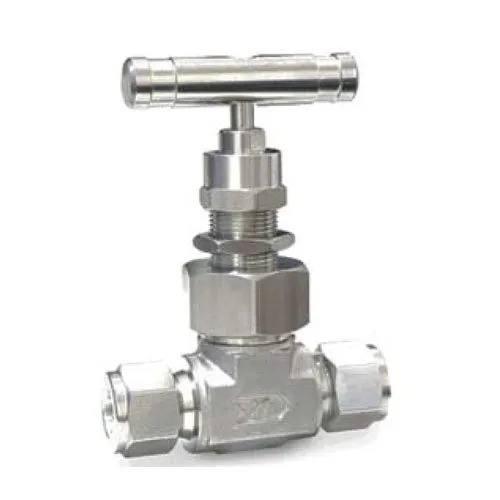
TES-LOK Union Bonnet Needle Valve
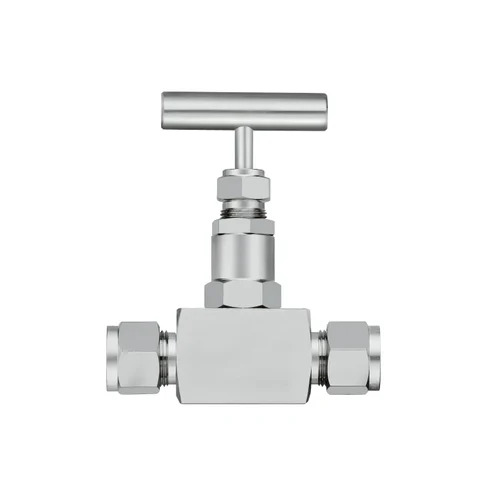
Needle Valve (Related)
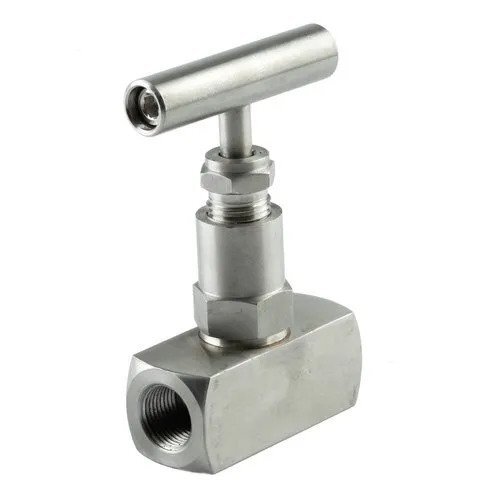
High Pressure Needle Valve (Related)
Needle valves are used wherever flow must be set precisely rather than simply turned on or off — calibration, sampling, gauge isolation with bleed, and fine regulation. The packing (PTFE for general service to 232°C, graphite for high temperature to 649°C) seals around the stem. TES-LOK supplies union bonnet needle valves in tube-fitting, NPT, BSP, and other end connections across the full material range.
| Bonnet Type | Construction | Pros | Best For |
|---|---|---|---|
| Union Bonnet | Bonnet held to body by a separate union nut | Strong, leak-tight, easy to dismantle & rebuild | High-pressure, frequent-service instrument & process valves |
| Screwed Bonnet | Bonnet threaded directly into the body | Compact, economical | General lower-pressure service |
| Integral / Bar-Stock Bonnet | Bonnet and body machined from one piece (no joint) | No bonnet joint to leak; very robust | Highest-integrity / high-pressure duty |
The union bonnet balances strength and serviceability: the union nut gives a firm, high-pressure bonnet joint while still allowing the bonnet to be removed for stem service and re-packing — a key advantage over a fixed screwed or integral bonnet.
| Criterion | Needle Valve | Ball Valve |
|---|---|---|
| Function | Fine flow throttling / metering (multi-turn) | On/off isolation (quarter-turn) |
| Control | Precise, gradual flow adjustment | Fast open/close, not for throttling |
| Flow path | Restricted — fine control orifice | Full-bore, low pressure drop |
| Operation | Many turns of the handwheel | 90° handle turn |
| Best for | Metering, calibration, gauge bleed, fine regulation | Quick, positive line isolation |
Use a needle valve to regulate flow precisely and a ball valve for fast on/off isolation. Instrument hook-ups often pair both — a ball valve to isolate, a needle valve to meter.
| Parameter | Details |
|---|---|
| Brand | TES-LOK (Tesco Steel & Engineering) |
| Type | Multi-turn union-bonnet needle (throttling) valve |
| Size | 1/8" to 2" (6 mm to 50 mm) |
| Working Pressure | Up to 6000 PSI (414 bar) — size, seat & material dependent |
| Working Temperature | −54°C to 232°C (−65°F to 450°F) with PTFE packing; up to 649°C (1200°F) with graphite packing |
| Bonnet | Union-nut bonnet (rebuildable) |
| Stem / Tip | Tapered needle point; regulating (vee/blunt) or hard shut-off tips |
| Packing | PTFE (general), Graphite (high temperature) |
| End Connections | Tube-fitting (twin-ferrule), NPT, BSP (BSPP), BSPT, SAE, weld |
| Pattern | Straight, angle (90°); panel-mount option |
| Body Material | SS 316 / 316L, SS 304, Brass, Monel, Inconel, Hastelloy, special alloys |
| Options | Anti-tamper, locking, NACE MR0175 (sour), oxygen-clean, vee-stem for fine metering |
| Certifications | ISO 9001:2015 | EN 10204 3.1 MTC on request |
| Packing | Temperature Range | Best For |
|---|---|---|
| PTFE | −54°C to 232°C (−65°F to 450°F) | General instrument & process service; excellent chemical resistance & low friction |
| Graphite | Up to 649°C (1200°F) | High-temperature steam, hot gas, and fire-exposed service |
| Material | Corrosion / Service | Typical Use |
|---|---|---|
| SS 316 / 316L | Excellent — chloride resistant | General instrumentation, offshore, chemical, marine |
| SS 304 / 304L | Good — general service | Water, air, mild process |
| Brass | Moderate — no ammonia/acids | Pneumatics, low-pressure water |
| Monel 400 | Excellent — HF, seawater | HF service, desalination, marine |
| Inconel 625 | Outstanding — high-temp & sour | Sour gas, high-temperature metering |
| Hastelloy C-276 | Superior — strong acids | Chemical & acid service |
The tapered needle stem and multi-turn handwheel give gradual, repeatable control of flow — ideal for metering, calibration, gauge bleed, and fine regulation where a quarter-turn valve cannot throttle.
The union-nut bonnet clamps firmly for high-pressure service yet unscrews for stem service and re-packing — combining strength with serviceability over a long valve life.
PTFE packing for general service to 232°C, or graphite packing for high-temperature steam and hot-gas service up to 649°C — one valve design across a wide temperature range.
The needle seats firmly in the orifice for positive shut-off, with regulating or hard-seat tip options to suit metering or bubble-tight isolation duty.
SS 304, SS 316, Brass, Monel, Inconel, and Hastelloy bodies and stems, with NACE MR0175 (sour) and oxygen-clean options for demanding media.
Straight and angle (90°) patterns with tube-fitting, NPT, BSP, SAE, or weld ends, plus panel-mount and locking options — integrating into any instrument hook-up.
| Industry | Typical Use Point | Why Union Bonnet Needle Valve |
|---|---|---|
| Oil & Gas / Offshore | Gauge isolation & bleed, sample metering, impulse-line throttling | Precise control + rebuildable bonnet; NACE sour materials |
| Refinery & Petrochemical | Analyser sample flow control, instrument metering | Fine, repeatable throttling; full material range |
| Power Generation | High-temperature steam & instrument metering | Graphite packing to 649°C; robust union bonnet |
| Chemical Processing | Corrosive-media metering & throttling | Hastelloy / Monel bodies; PTFE packing |
| Pharmaceutical / Lab | Precise flow regulation & calibration | SS 316 fine metering; clean, serviceable |
| Gas & Calibration | Gas flow metering and bleed | Vee-stem fine control; tight shut-off |
| Hydraulics & Test Rigs | Flow regulation and bleed-off | High-pressure throttling; rebuildable |
| Shipbuilding & Marine | Instrument metering & isolation | SS 316 salt resistance; reliable control |
Q1. What is a union bonnet needle valve?
It is a multi-turn throttling valve in which the bonnet (housing the stem and packing) is held to the body by a separate union nut. A fine tapered needle stem advances into a seat to precisely control flow. The union-bonnet design is strong and leak-tight for higher-pressure service, yet the bonnet can be unscrewed to service the stem and re-pack the valve — combining robustness with serviceability.
Q2. What does the "union bonnet" mean and why does it matter?
The bonnet is the part that contains the stem and packing. A union bonnet is clamped to the valve body by a separate union nut (rather than being screwed directly into the body or made integral). This gives a strong, high-pressure bonnet joint that is also removable — so the valve can be dismantled to inspect the stem, replace the needle, and renew the packing, extending service life.
Q3. What is the difference between a needle valve and a ball valve?
A needle valve is for fine flow throttling and metering — many turns of the handwheel move a tapered needle for precise, gradual control. A ball valve is for fast on/off isolation — a 90° turn fully opens or closes it, but it is not made for throttling. Use a needle valve to regulate flow and a ball valve to isolate. Many hook-ups use both together.
Q4. What packing should I choose — PTFE or graphite?
Use PTFE packing for general service from −54°C to 232°C — it has excellent chemical resistance and low stem friction. Use graphite packing for high-temperature service up to 649°C (1200°F), such as steam and hot gas, and where fire-safe performance is needed. The packing largely sets the valve's temperature limit, so it is selected to match the service.
Q5. What pressure and temperature can the valve handle?
TES-LOK union bonnet needle valves are rated up to 6000 PSI (414 bar), depending on size, seat, and material, with a temperature range of −54°C to 232°C using PTFE packing and up to 649°C using graphite packing. Sizes run from 1/8" to 2" (6 mm to 50 mm).
Q6. Can a needle valve be used for tight shut-off as well as throttling?
Yes. With a hard (non-regulating) seat tip the needle valve gives positive, tight shut-off in addition to throttling. For the finest metering, a vee-stem (regulating) tip is used. Note that needle valves should be closed just to a firm seat — over-tightening damages the needle and seat. For frequent full on/off duty, a ball valve is more suitable.
Q7. What end connections and patterns are available?
Twin-ferrule tube-fitting ends, NPT, BSP (BSPP), BSPT, SAE, and weld ends, in straight and angle (90°) patterns, with a panel-mount option. This lets the valve integrate directly into instrument tube systems, threaded piping, and gauge/transmitter hook-ups.
Q8. Can these valves be supplied for sour or oxygen service?
Yes. Union bonnet needle valves can be supplied to NACE MR0175 / ISO 15156 for sour (H₂S) service with compliant materials and hardness, and oxygen-cleaned for oxygen service. Specify the requirement with the fluid, pressure, and temperature, and we will select the correct body, stem, seat, and packing.