

TES-LOK O-Ring Face Seal (ORFS) fittings to SAE J1453 / ISO 8434-3 — flat-face fittings that seal with an O-ring captured in a face groove, giving the most leak-tight, vibration-proof connection for high-pressure hydraulic systems. The flat faces are drawn together by a swivel nut and the O-ring seals between them. SS 316, Carbon Steel, Brass. Tube 1/4" to 2" OD. Up to 14000 PSI (965 bar). −25°C to 200°C. ISO 9001:2015 certified. Made in India.
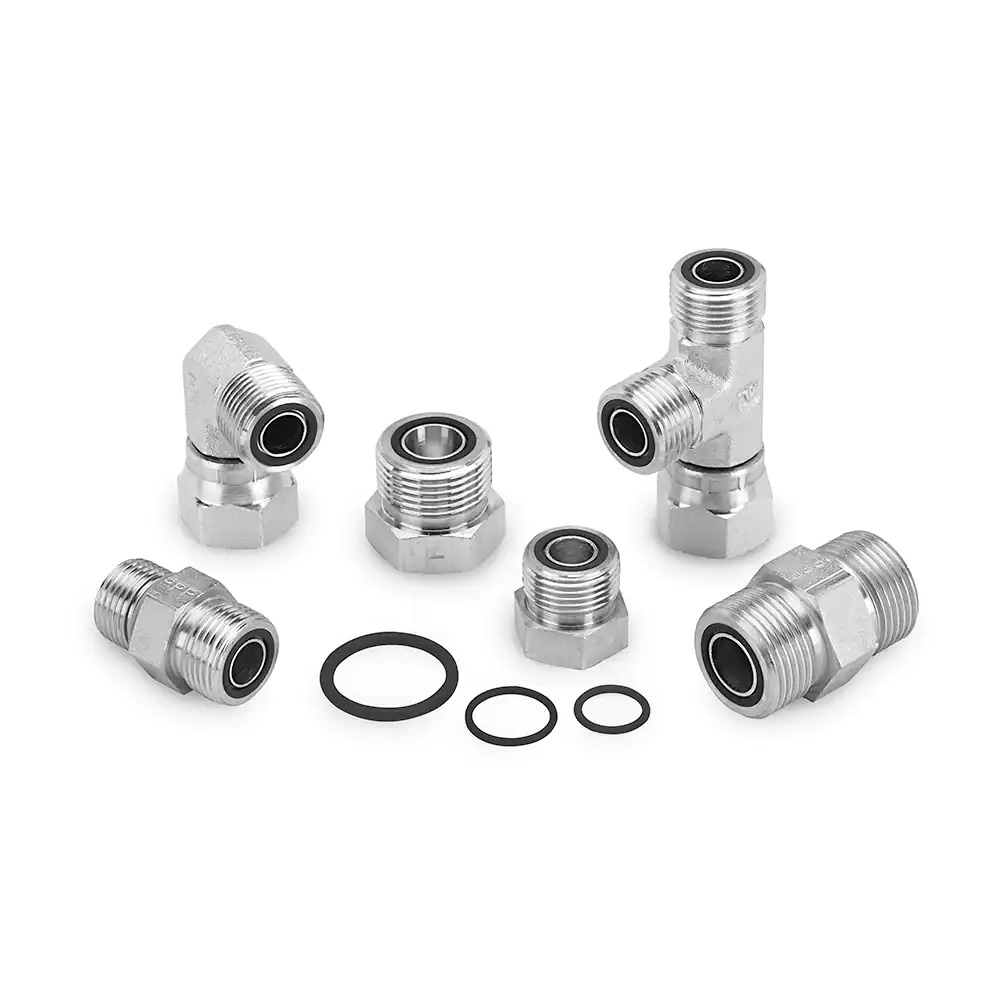
TES-LOK ORFS Fitting
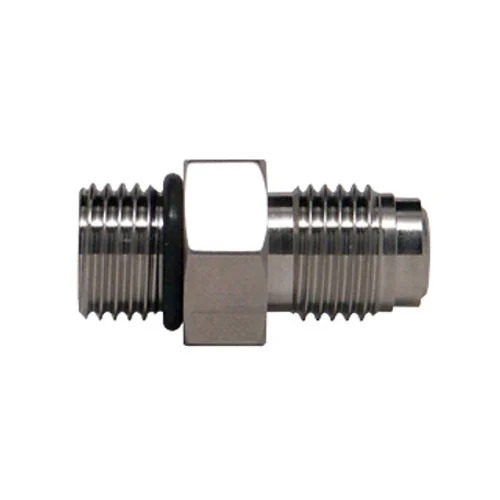
O-Seal Straight Thread (Related)
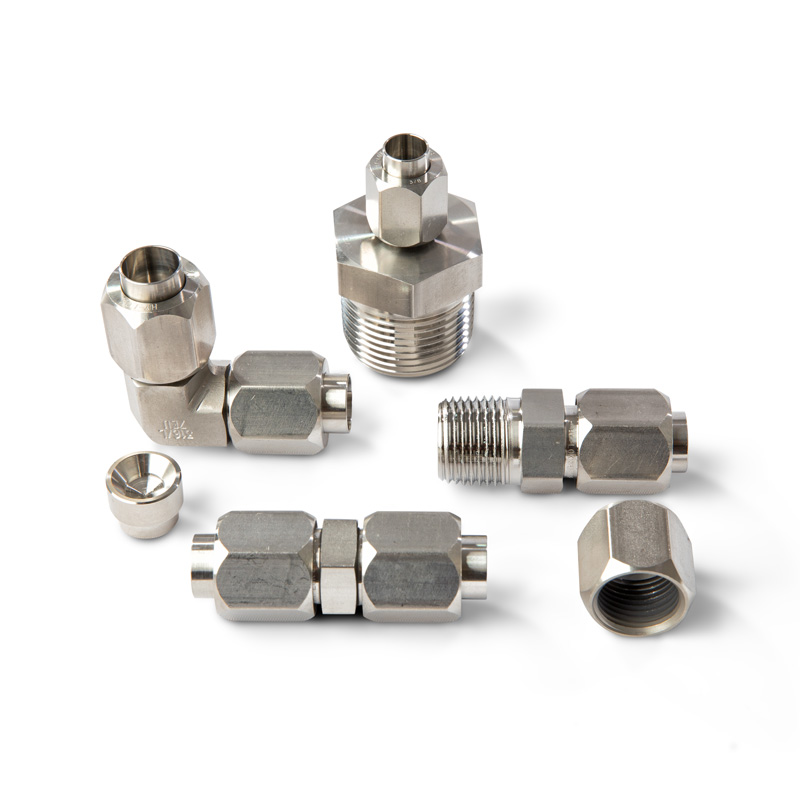
37° JIC Flare (Related)
ORFS uses straight UNF threads (the nut carries no sealing load — it only clamps), so over-tightening cannot break the seal. The flat-face O-ring design eliminates the leakage common with 37° flare fittings under vibration, making ORFS the standard for emission-conscious mobile equipment, high-pressure hydraulics, and critical fluid power. It handles pressures up to 14000 PSI (965 bar) in stainless steel.
| Connection | Standard | Seal Method | Leakage / Vibration | Best For |
|---|---|---|---|---|
| ORFS (O-Ring Face Seal) | SAE J1453 / ISO 8434-3 | O-ring on flat face | Lowest leakage; best vibration resistance | HP mobile hydraulics; zero-leak systems |
| 37° Flare (JIC) | SAE J514 | 37° metal-to-metal cone | Can weep under vibration | General hydraulic & fuel tube |
| SAE ORB | SAE J1926 | O-ring on straight-thread boss | Excellent — port seal | Pump / valve port connections |
| O-Seal Straight Thread | DIN 3852 / ISO 1179 | O-ring at thread shoulder face | Excellent — port seal | Metric instrument / hydraulic ports |
| Bite-Type | DIN 2353 | Cutting ring bites tube OD | Good | European hydraulic tube |
| Shape | Configuration | Use |
|---|---|---|
| Male Connector | ORFS flat face to male NPT / BSPP / SAE ORB thread | ORFS tube/hose to a threaded port |
| Female Swivel | ORFS flat face with female swivel nut | ORFS tube/hose to another ORFS fitting (no tube twist) |
| Union | ORFS flat face both ends | Joining two ORFS lines |
| Bulkhead Union | ORFS through-panel union | Panel / wall pass-through |
| Elbow / Tee / Cross | 90° / 45° / branch with ORFS ends | Direction change and branching |
| ORFS to ORB / JIC Adapter | ORFS one end, ORB or JIC other end | Adapting ORFS to port or flare standards |
| Parameter | Details |
|---|---|
| Brand | TES-LOK (Tesco Steel & Engineering) |
| Standard | SAE J1453 / ISO 8434-3 (O-ring face seal) |
| Seal | Captive O-ring on flat face; straight UNF clamping thread |
| Tube OD Range | 1/4" to 2" OD (dash -4 to -32) |
| Working Pressure | Up to 14000 PSI (965 bar) — size & material dependent |
| Working Temperature | −25°C to 200°C (−13°F to 392°F) — O-ring dependent |
| O-Ring Material | NBR (standard), Viton (FKM), EPDM — by hydraulic fluid type |
| Thread | Straight UNF (clamping); ORFS-to-NPT / BSPP / ORB / JIC adapter ends available |
| Body Material | SS 316 / 316L, SS 304, Carbon Steel (zinc/zinc-nickel plated), Brass, special alloys |
| Shapes | Male connector, female swivel, union, bulkhead, elbow, tee, cross, adapters |
| Certifications | ISO 9001:2015 | EN 10204 3.1 MTC on request |
| O-Ring Material | Temperature Range | Compatible Fluid | Avoid With |
|---|---|---|---|
| NBR (Nitrile) — Standard | −40°C to +100°C | Mineral oil hydraulic fluids, diesel, water | Phosphate ester, Skydrol, hot air/ozone |
| Viton (FKM) | −20°C to +200°C | High-temp oils, fuels, chlorinated & aromatic fluids | Ketones, amines, hot steam, Skydrol |
| EPDM | −40°C to +150°C | Phosphate ester (Skydrol), water-glycol, ozone/UV | Mineral oils, petroleum fluids |
The captive flat-face O-ring gives the most leak-tight hydraulic connection of any common fitting — the SAE-recognised choice for systems where zero external leakage matters (emission-conscious mobile equipment, clean facilities).
Because the O-ring (not a metal cone or thread) makes the seal, ORFS resists the loosening and weepage that affect flare fittings under vibration and pressure pulsation — ideal for high-vibration mobile and industrial hydraulics.
The straight UNF thread only clamps — it carries no sealing load — so the joint cannot be over-tightened to the point of breaking the seal. Make-up is consistent and forgiving compared with tapered-thread fittings.
Rated up to 14000 PSI (965 bar) in stainless steel, ORFS suits high-pressure hydraulic power, press, and heavy-equipment circuits where both pressure and zero leakage are demanded.
ORFS-to-ORB, ORFS-to-JIC, and ORFS-to-NPT/BSPP adapters connect ORFS lines to pump/valve ports and other standards, making it easy to integrate ORFS into mixed-standard hydraulic systems.
SS 316, SS 304, Carbon Steel, and Brass bodies with NBR, Viton, or EPDM O-rings matched to the hydraulic fluid. EN 10204 3.1 MTC available on request.
| Industry | Typical Use Point | Why ORFS Preferred |
|---|---|---|
| Mobile & Construction Equipment | High-pressure hydraulic tube/hose on excavators, cranes, loaders | Zero-leak, vibration-proof — meets emission/no-leak expectations |
| Industrial Hydraulics | HP power units, press circuits, manifolds | Lowest leakage and best vibration resistance at high pressure |
| Oil & Gas | Hydraulic control and HP tube on skids and rigs | SS 316 corrosion resistance; reliable zero-leak seal |
| Marine & Offshore | Deck machinery and steering hydraulic lines | SS 316 salt resistance; vibration-proof face seal |
| Steel & Metals | Rolling mill and casting HP hydraulics | Handles high pressure with zero weepage under cyclic load |
| Material Handling | Forklift, crane, and AGV hydraulic circuits | Leak-free connections in clean and indoor environments |
| Agriculture & Forestry | Tractor and harvester high-pressure hydraulics | Vibration-proof, reusable, zero-leak connections |
| Power Generation | Turbine governing and HP control hydraulics | Reliable high-pressure sealing; SS for hot oil |
Q1. What is an O-Ring Face Seal (ORFS) fitting?
An ORFS fitting (SAE J1453 / ISO 8434-3) is a tube/hose connection that seals with an O-ring captured in a groove on the flat face of the fitting. A swivel nut clamps two flat faces together, compressing the O-ring between them. Because the seal is a flat-face O-ring — not a metal cone or thread — ORFS gives the most leak-tight, vibration-resistant hydraulic connection, used widely on high-pressure mobile equipment.
Q2. Why is ORFS considered the lowest-leakage hydraulic fitting?
The seal is made by a captive elastomeric O-ring compressed between two flat faces — a very reliable, repeatable seal that does not depend on thread interference or precise metal-cone contact. It resists the weepage that flare fittings can develop under vibration, which is why SAE and OEMs specify ORFS for emission-conscious and zero-leak hydraulic systems.
Q3. What is the difference between ORFS and SAE ORB?
Both use O-rings, but differently. ORFS (SAE J1453) seals with an O-ring on a flat face between two fitting halves, clamped by a swivel nut — it is a tube/hose connection. SAE ORB (SAE J1926) seals with an O-ring on the shoulder of a straight thread that screws into a port boss — it is a port connection. They are not interchangeable; confirm whether you need a flat-face ORFS or a straight-thread ORB.
Q4. How does ORFS compare with 37° JIC flare fittings?
A 37° JIC fitting seals metal-to-metal on a flared cone and can weep under heavy vibration. ORFS seals with a flat-face O-ring and is far more resistant to vibration leakage. ORFS is preferred where zero leakage and high vibration resistance are required; JIC remains common for general hydraulic and fuel tube. ORFS-to-JIC adapters let the two systems connect.
Q5. What pressure can ORFS fittings handle?
TES-LOK ORFS fittings are rated up to 14000 PSI (965 bar) in stainless steel, size dependent, with a temperature range of −25°C to 200°C depending on the O-ring elastomer. This suits high-pressure hydraulic power, press, and heavy-equipment circuits.
Q6. Can ORFS fittings be over-tightened?
The straight UNF thread on an ORFS fitting only clamps the faces together — it carries no sealing load — so normal make-up cannot over-tighten the seal the way a tapered thread can. Tighten to the recommended torque or FFFT value. Grossly excessive torque should still be avoided as it can over-compress the O-ring or distort the faces, but ORFS is more forgiving than tapered-thread fittings.
Q7. What O-ring material should I use?
Use NBR (nitrile) for mineral-oil hydraulic fluids — the standard choice. Use Viton (FKM) for high-temperature oils and fuels, and EPDM for phosphate ester (Skydrol) and water-glycol fluids. Never use NBR or Viton with Skydrol, or EPDM with mineral oil. Always match the O-ring elastomer to the specific hydraulic fluid.
Q8. Can ORFS connect to ports and other fitting standards?
Yes. ORFS-to-ORB, ORFS-to-JIC, and ORFS-to-NPT/BSPP adapters connect ORFS tube/hose to pump and valve ports and to flare or pipe-thread standards. This lets ORFS be integrated into mixed-standard hydraulic systems while keeping the leak-free ORFS connection on the tube/hose side.