

TES-LOK high-pressure fittings — cone-and-thread medium-pressure (MP) and high-pressure (HP) fittings for heavy-wall tube in waterjet cutting, oil & gas well testing, chemical injection, hydrogen, and high-pressure test rigs. Engineered to seal far beyond instrument-grade fittings, with glands, collars, and anti-vibration design. SS 316, Inconel, Monel, Hastelloy, Carbon Steel. Up to 60,000 PSI (4137 bar). −73°C to 315°C. ISO 9001:2015 certified. Made in India.
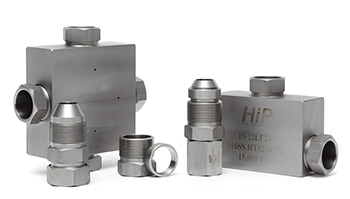
TES-LOK High Pressure Fittings
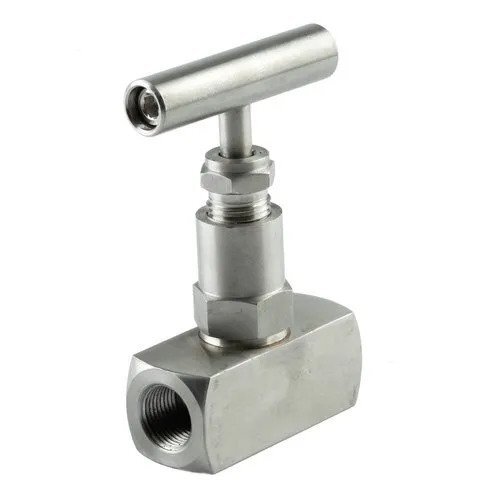
High Pressure Needle Valve (Related)
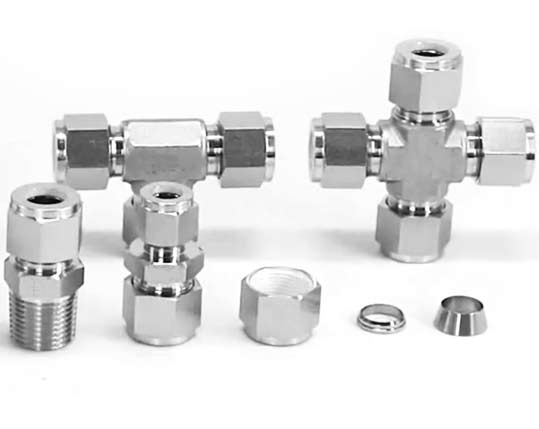
Instrumentation Tube Fittings
High-pressure fittings are supplied in pressure classes — typically Medium Pressure (MP) to around 20,000 PSI and High Pressure (HP) to around 60,000 PSI — each with its own coning angle, thread, gland, and collar dimensions and matching heavy-wall tube. TES-LOK manufactures the full range of high-pressure connectors, elbows, tees, crosses, adapters, and glands & collars, plus matching high-pressure needle valves.
| Class | Typical Rating | Tube | Typical Use |
|---|---|---|---|
| Medium Pressure (MP) | Up to ~20,000 PSI (1379 bar) | Coned & threaded heavy-wall | Well testing, chemical injection, general HP process |
| High Pressure (HP) | Up to ~60,000 PSI (4137 bar) | Coned & threaded heavy-wall, small bore | Waterjet cutting, HP test rigs, autoclaves, research |
| Instrument Compression (ref.) | Up to ~6,000 PSI (414 bar) | Standard-wall tube, twin-ferrule | General instrumentation (see tube-fitting range) |
| Criterion | High Pressure (Cone-and-Thread) | Instrument (Twin-Ferrule / Bite) |
|---|---|---|
| Pressure | Up to 60,000 PSI (4137 bar) | Up to ~6,000 PSI (414 bar) |
| Tube | Heavy-wall, small-bore, coned & threaded | Standard-wall, cut & deburred |
| Seal | Coned tube on female seat, metal-to-metal | Ferrule on tube OD / cutting ring |
| Tube prep | Coning + threading (special tools) | Square cut + deburr only |
| Components | Body, gland, collar | Body, ferrule(s), nut |
| Best for | Waterjet, well testing, chemical injection, HP research | Instrumentation, analyser, process measurement |
| Category | Fittings |
|---|---|
| Connectors & Adapters | Male / female HP connectors • MP/HP adapters • tube-to-NPT and tube-to-pipe adapters |
| Elbows | 90° and 45° high-pressure elbows |
| Tees & Crosses | HP tees, crosses, and branch fittings |
| Glands & Collars | Cone-and-thread glands and collars (per pressure class & tube size) |
| Couplings & Unions | Straight couplings, reducer couplings, bulkhead unions |
| Valves | High Pressure Needle Valves • HP relief / bleed valves |
| Parameter | Details |
|---|---|
| Brand | TES-LOK (Tesco Steel & Engineering) |
| Type | Cone-and-thread MP / HP fittings (gland & collar) |
| Tube OD Range | 1/4" to 1" heavy-wall (MP/HP) | small-bore for highest pressures |
| Working Pressure | MP: up to ~20,000 PSI (1379 bar) | HP: up to 60,000 PSI (4137 bar) |
| Working Temperature | −73°C to 315°C (−100°F to 600°F) — material dependent |
| Connection | Coned-and-threaded tube end with gland & collar; NPT / pipe adapter ends available |
| Body Material | SS 316 / 316L, SS 304, Carbon Steel, Monel, Inconel, Hastelloy, special alloys |
| Seal | Metal-to-metal coned seat (pressure-energised) |
| Shapes | Connectors, adapters, elbows, tees, crosses, couplings, unions, glands & collars |
| Certifications | ISO 9001:2015 | EN 10204 3.1 MTC on request | NACE MR0175 on request |
| Material | Max Temp | Corrosion / Service | Typical High-Pressure Use |
|---|---|---|---|
| SS 316 / 316L | 315°C | Excellent — chloride resistant | General HP, waterjet, chemical injection |
| SS 304 / 304L | 315°C | Good — general service | Water and mild HP media |
| Carbon / Alloy Steel | 315°C | Coated; high strength | HP hydraulic and test-rig service |
| Monel 400 | 315°C | Excellent — HF, seawater | HF and sour high-pressure service |
| Inconel 625 / 718 | 315°C+ | Outstanding — sour & high-strength | Sour gas, well testing, subsea HP |
| Hastelloy C-276 | 315°C | Superior — strong acids | HP acid and halogen injection |
The cone-and-thread MP/HP design seals at pressures far beyond instrument fittings — up to 60,000 PSI (4137 bar) — for the most demanding waterjet, well-testing, and high-pressure research applications.
The coned tube seats metal-to-metal against the fitting, and the seal intensifies as system pressure rises — a self-energising joint with no elastomer to fail, ideal for extreme-pressure and high-cycle service.
Available in Inconel, Monel, and Hastelloy with NACE MR0175 compliance for sour gas, HF, and aggressive chemical-injection service at high pressure — where SS alone is not enough.
The cone and threads remain on the tube, so connections can be broken and remade many times — essential for test rigs, injection skids, and systems that are frequently reconfigured.
Connectors, adapters, elbows, tees, crosses, couplings, unions, glands & collars, and matching high-pressure needle valves — the full high-pressure system from a single source.
Manufactured under ISO 9001:2015 with EN 10204 3.1 MTC and PMI available — full material traceability for the safety-critical nature of high-pressure service.
| Industry | Typical Use Point | Why High Pressure Fittings |
|---|---|---|
| Waterjet Cutting | Ultra-high-pressure waterjet and abrasive-jet lines | 60,000 PSI cone-and-thread joints withstand UHP waterjet service |
| Oil & Gas Well Testing | Surface well-test, flowback, and pressure-control lines | MP/HP fittings with Inconel/Monel for sour, high-pressure well fluids |
| Chemical Injection | HP chemical and methanol injection skids | Hastelloy / Monel cone-and-thread for corrosive HP injection |
| Hydrogen & CNG | High-pressure hydrogen and gas test/fuelling systems | Metal-to-metal seal for HP gas; no elastomer permeation |
| Research & Test Rigs | High-pressure laboratory, autoclave, and test-bench systems | Reusable, reconfigurable HP connections for research |
| Power & Process | High-pressure sampling and analyser lines | HP integrity on small-bore high-pressure taps |
| Subsea & Offshore | HP control, injection, and well-intervention lines | Inconel/Monel HP fittings for sour subsea HP service |
| Defence & Aerospace | High-pressure test and propellant systems | Traceable, high-integrity HP connections |
Q1. What is a high pressure fitting?
A high pressure fitting is a tube connection engineered to seal at pressures far above instrument fittings — up to 60,000 PSI (4137 bar). It uses a cone-and-thread design: the heavy-wall tube end is coned and threaded, and a gland and collar drive the coned tube against the fitting's matching seat for a metal-to-metal seal. It is used in waterjet, well testing, chemical injection, hydrogen, and high-pressure research.
Q2. What is the difference between MP and HP fittings?
MP (medium pressure) cone-and-thread fittings are typically rated to around 20,000 PSI (1379 bar), and HP (high pressure) fittings to around 60,000 PSI (4137 bar). They differ in coning angle, thread, gland/collar dimensions, and tube wall. MP and HP components are not interchangeable — select the class for your working pressure and use the matching tube and parts.
Q3. How is a high pressure fitting different from a standard instrument tube fitting?
An instrument tube fitting (twin-ferrule or bite-type) grips a standard-wall tube with a ferrule or ring and is rated to about 6,000 PSI. A high pressure fitting uses a coned-and-threaded heavy-wall tube with a gland and collar, sealing metal-to-metal against a seat, and is rated up to 60,000 PSI. HP fittings need special coning/threading tooling and heavy-wall tube; instrument fittings need only a square, deburred cut.
Q4. What does "cone-and-thread" mean?
Cone-and-thread describes how the tube is prepared: the tube end is machined to a cone, and an external thread is cut behind the cone. A collar threads onto the tube and a gland nut drives the coned end against the fitting's female seat. The metal-to-metal cone seal is pressure-energised — it seals tighter as pressure rises — which is why it can contain extreme pressures.
Q5. What pressure and temperature can these fittings handle?
TES-LOK high-pressure fittings cover up to 60,000 PSI (4137 bar) for the HP class and around 20,000 PSI for MP, with a temperature range of about −73°C to 315°C (−100°F to 600°F) depending on material. The all-metal cone seal has no elastomer, so performance is governed by the body material and tube.
Q6. What materials are available for sour and corrosive high-pressure service?
For sour (H₂S) and corrosive HP service, choose Inconel 625/718, Monel 400, or Hastelloy C-276 with NACE MR0175 / ISO 15156 compliance. SS 316 suits general HP and waterjet service. The material must be selected for both the high pressure and the specific fluid — contact our team with your pressure, temperature, and media.
Q7. Do high pressure fittings need special tube and tooling?
Yes. They require heavy-wall, small-bore tube of the correct grade, and the tube end must be coned and threaded using the correct coning and threading tools to the specified dimensions. Standard instrument tube and ordinary tools cannot be used. Using the correct tube and tooling is essential for safety at high pressure.
Q8. Do you also supply high pressure valves?
Yes. TES-LOK manufactures matching high-pressure needle valves and HP relief/bleed valves alongside the fitting range, so a complete high-pressure system — fittings, glands, collars, and valves — comes from a single source. See the sidebar for related products.