

Tesco Steel & Engineering manufactures DIN 3015 multilayer (stacked) pipe and tube clamp systems — standard clamp bodies stacked in vertical tiers on a single base stud or rail, supporting many rows of pipe and tube from one compact footprint. Size 6 mm to 42 mm OD. Light, Heavy, and Twin series bodies (DIN 3015 Part 1, 2 & 3). Polypropylene (PP) / Polyamide / Aluminium bodies with Carbon Steel or Stainless Steel plates & bolts. ISO 9001:2015 certified. Made in India.
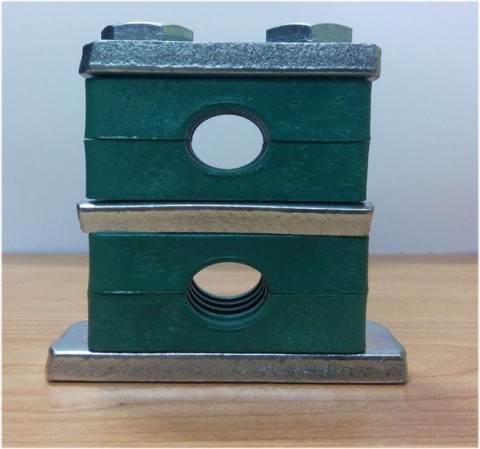
TES-LOK Multilayer Clamp Stack
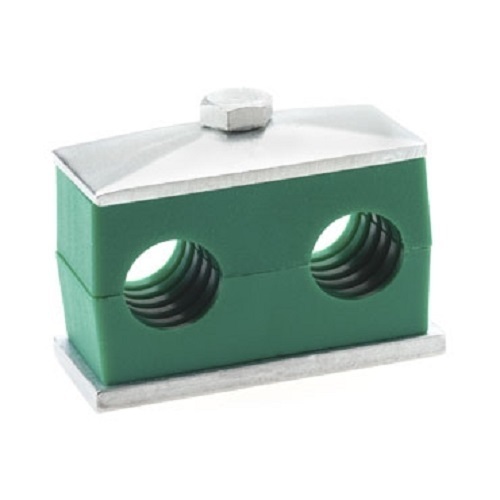
Twin Series (Related)
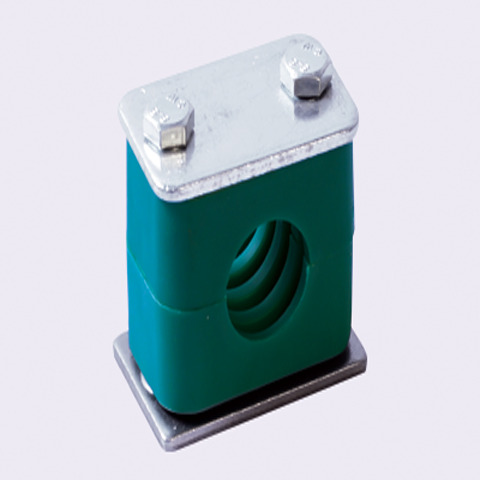
Light Series (Single)
The multilayer system is the space-saving answer wherever a large number of pipe and tube lines must be routed through a limited footprint — packed hydraulic power packs, machine cabinets, panel backs, and dense pipe bridges. Instead of spreading clamps across a wide area, the multilayer stack builds upward, organising many lines into a compact, tidy, fully supported tower.
| Criterion | Multilayer (Stacked) System | Single-Row Clamping |
|---|---|---|
| Layout | Vertical tiers — pipes stacked one above another | Pipes spread across a single horizontal row |
| Footprint | Compact — many lines on one mounting point | Wide — needs floor/wall space for every line |
| Mounts / welds | One base mount carries the whole stack | One mount per clamp row |
| Line capacity | High — limited only by stack height | Limited by available row width |
| Expandable | Add a layer to the stack with longer studs | Add another mount alongside |
| Best use | Dense pipe routing in tight footprints; multi-line racks | A few widely spaced lines; open layouts |
| Layer Body Used | Per Layer | Stack Result |
|---|---|---|
| Light Series (Part 1) | One pipe per layer | Tower of single lines — one pipe per tier |
| Heavy Series (Part 2) | One large/HP pipe per layer | Tower of high-pressure / large-bore lines |
| Twin Series (Part 3) | Two pipes per layer | Tower of paired lines — two pipes per tier |
| Mixed Layers | Different body / size each layer | Custom stack — mix single, twin, sizes up the tower |
| Aluminium Layers | Metal body per layer | High-temperature / fire-zone stacked support |
| Component | Function | Material Options |
|---|---|---|
| Clamp Bodies (per layer) | Each tier grips its pipe(s); damps vibration | Polypropylene (PP), Polyamide, Aluminium |
| Base / Weld Plate | Single mounting point welded/bolted to the structure | Carbon Steel (zinc plated), SS 304, SS 316 |
| Stacking Studs (long bolts) | Run through all layers, clamping the stack to the base | Zinc-plated Grade 8.8, SS 304 (A2), SS 316 (A4) |
| Intermediate / Separator Plates | Locate and separate each clamp layer in the stack | Carbon Steel (zinc plated), SS 304, SS 316 |
| Top Cover Plate | Caps the stack; the stud nuts bear on it | Carbon Steel (zinc plated), SS 304, SS 316 |
| Parameter | Details |
|---|---|
| Brand | TES-LOK (Tesco Steel & Engineering) |
| System | Multilayer (stacked) — vertical tiers of DIN 3015 clamp bodies |
| Designation | DIN 3015 Part 1, 2 & 3 (Light, Heavy, Twin bodies stackable) |
| Pipe/Tube OD Range | 6 mm to 42 mm OD |
| Working Pressure | Per the clamp series used in each layer (Light / Heavy / Twin) |
| Layers per Stack | Configurable — limited by stud length and base load capacity |
| Clamp Body Material | Polypropylene (PP), Polyamide, Aluminium |
| Hardware Material | Carbon Steel (zinc plated), SS 304 (A2), SS 316 (A4) |
| Temperature Range | PP: −40°C to +90°C | PA: −40°C to +120°C | Aluminium: up to +200°C |
| Mounting | Single base weld plate / bottom plate carries the whole stack |
| Certifications | ISO 9001:2015 | material certificates on request |
The stacked tier design supports a large number of pipe and tube lines from a single base mount — turning one floor or wall fixing point into a multi-row pipe rack. Ideal for dense routing where horizontal space is limited.
Each layer can use a different DIN 3015 clamp body — light, heavy, twin, or aluminium — in different sizes. Build a custom tower that supports single lines, paired lines, large-bore, and high-temperature lines all on one stud set.
Each polymer clamp body grips its pipe fully and damps vibration independently, so every line in the stack gets the same fretting and fatigue protection as a single DIN 3015 clamp.
Add another layer to an existing stack by fitting longer studs and an extra clamp body — no need for a new base mount or additional structure fixing. The stack grows upward as the pipe count increases.
Clamp bodies in PP (to +90°C), Polyamide (to +120°C), and aluminium (to +200°C / fire-zone), with base plates, separator plates, top plates, and studs in zinc-plated carbon steel, SS 304 (A2), or SS 316 (A4) for corrosive and marine service.
TES-LOK supplies the complete multilayer system — clamp bodies, base/weld plate, separator plates, top plate, and stacking studs — as a matched assembly built to your pipe schedule, or as individual components for spares and extensions.
| Industry | Typical Use Point | Why Multilayer Clamp Preferred |
|---|---|---|
| Hydraulics & Machinery | Dense hydraulic/tube routing inside power packs and machine cabinets | Stacks many lines into a tight footprint; one base mount for the whole bundle |
| Machine Tools | Coolant, hydraulic, and lubrication tube banks behind CNC panels | Vertical stack fits confined cabinet space; mixed-size layers |
| Oil & Gas / Petrochemical | Instrument tube banks on skids and analyser panels | Organises many small-bore lines compactly; SS 316 for corrosive areas |
| Marine & Shipbuilding | Dense engine-room pipe and tube routing | Saves precious space; SS 316 hardware resists salt; aluminium layers for fire zones |
| Power Generation | Control, instrument, and lube oil tube banks in turbine halls | Tidy multi-row support; easy to extend during upgrades |
| Material Handling & Automation | Hydraulic/pneumatic line bundles on robots, AGVs, and conveyors | Compact stacked routing in moving and confined assemblies |
| Process & Chemical Plants | Utility and instrument tube bundles on pipe bridges and panels | Many lines neatly stacked and individually damped |
| Renewable Energy | Hydraulic/control line bundles in wind turbine nacelles | Vertical stacking maximises use of confined nacelle space |
Q1. What is a multilayer pipe tube clamp?
A multilayer pipe tube clamp is a stacked DIN 3015 clamp system in which several clamp bodies are mounted one above another in vertical tiers on a single base stud or rail. Each layer grips its own pipe(s), and the whole stack is bolted together to one base mount. It supports many rows of pipe/tube from a single compact footprint — effectively building a multi-tier pipe rack.
Q2. How is a multilayer clamp different from a twin clamp?
A twin clamp holds two pipes side by side in one body (one layer, two bores). A multilayer system stacks multiple clamp bodies vertically, so it can support many pipes in several tiers — and each tier can itself be a single (light), large (heavy), or twin body. In short: twin = two pipes in one body; multilayer = many bodies stacked into a tower.
Q3. How many layers can be stacked?
The number of layers is configurable and limited only by the stud length and the load capacity of the base mount and its structural fixing. Stacks are built to suit the pipe schedule — from two or three layers up to tall multi-tier towers. For very tall stacks, ensure the base and studs are rated for the full combined load.
Q4. Can different pipe sizes and clamp types be mixed in one stack?
Yes. Each layer can use a different DIN 3015 clamp body — light (single), heavy (large/HP), twin (paired), or aluminium (high-temp) — in different sizes. This lets you build a custom tower that supports a mix of single and paired lines, different diameters, and even high-temperature lines, all on one set of stacking studs.
Q5. What pipe sizes does the multilayer system cover?
The TES-LOK multilayer system covers pipe/tube from 6 mm to 42 mm OD per layer — the small- and medium-bore range where dense multi-line routing is most common. Working pressure for each line follows the clamp series used in that layer (light or heavy).
Q6. Can I add layers to an existing multilayer stack later?
Yes. To add a layer, fit longer stacking studs and an additional clamp body with its separator plate — no new base mount or structural fixing is needed, provided the base and structure are rated for the increased load. This makes the multilayer system easy to extend as the number of pipe lines grows.
Q7. What hardware material should I use for marine or corrosive areas?
Use SS 316 (A4) base plates, separator plates, top plates, and stacking studs for marine, offshore, and coastal service — SS 316 resists chloride corrosion. SS 304 (A2) suits general outdoor and washdown service. Zinc-plated carbon steel is economical for dry indoor environments. For fire-zone or high-temperature stacks, use aluminium clamp bodies.
Q8. Do you supply the complete multilayer system or individual components?
Both. TES-LOK supplies the complete multilayer system — clamp bodies, base/weld plate, separator plates, top plate, and stacking studs — built to your pipe schedule as a matched assembly, or any individual component for spares and extensions. We also manufacture the related Light Series, Heavy Series, Twin/Double Series, PP Twin Double-Hole, Aluminium, Construction, and Rail-Nut clamp products. See the sidebar for the full range.