Tesco Steel & Engineering forges ASTM A350 LF2 slip on flanges — low temperature carbon steel with every heat Charpy V-notch tested at −46 °C — to ASME B16.5 Class 150–2500 from ½″ to 24″ NB and B16.47 patterns to 60″ NB. Same pressure ratings and welding habits as A105, plus certified toughness for gas processing, LPG, flare and blowdown, refrigeration and cold-climate lines. Class 1 (−46 °C) and Class 2 (−18 °C), faced SORF or SOFF, NACE MR0175 supply with hardness survey, every lot with EN 10204 3.1/3.2 MTC including impact values. ISO 9001:2015, made in Mumbai, India — exported to 50+ countries.
ASTM A350 LF2 Cl.1 & Cl.2 · SA350 · K03011Charpy Tested −46 °C, Every HeatASME B16.5 Class 150–2500½″ – 60″ NB · SORF & SOFFNACE MR0175 / ISO 15156EN 10204 3.1 / 3.2 MTCISO 9001:2015 · Exported Worldwide
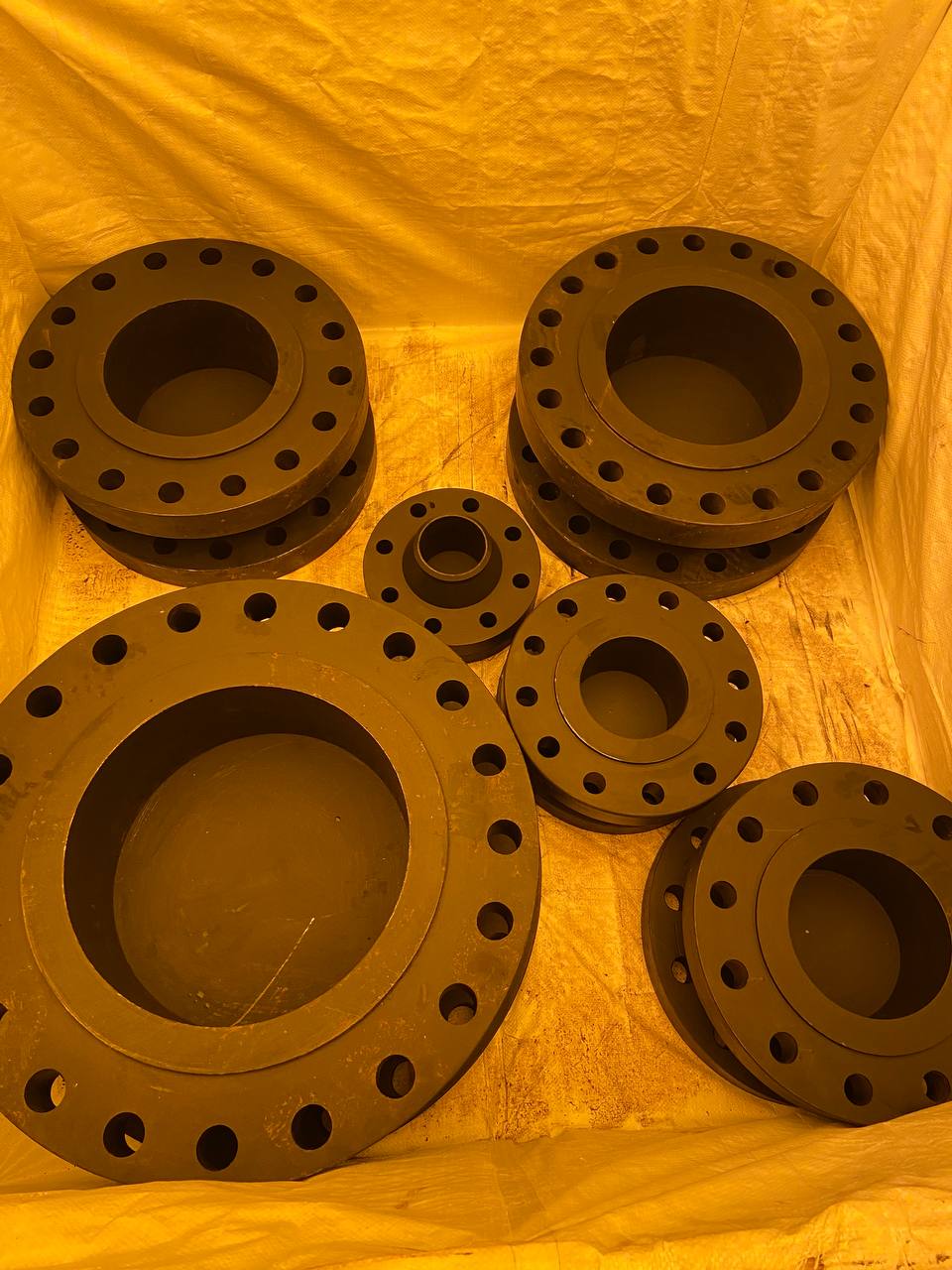
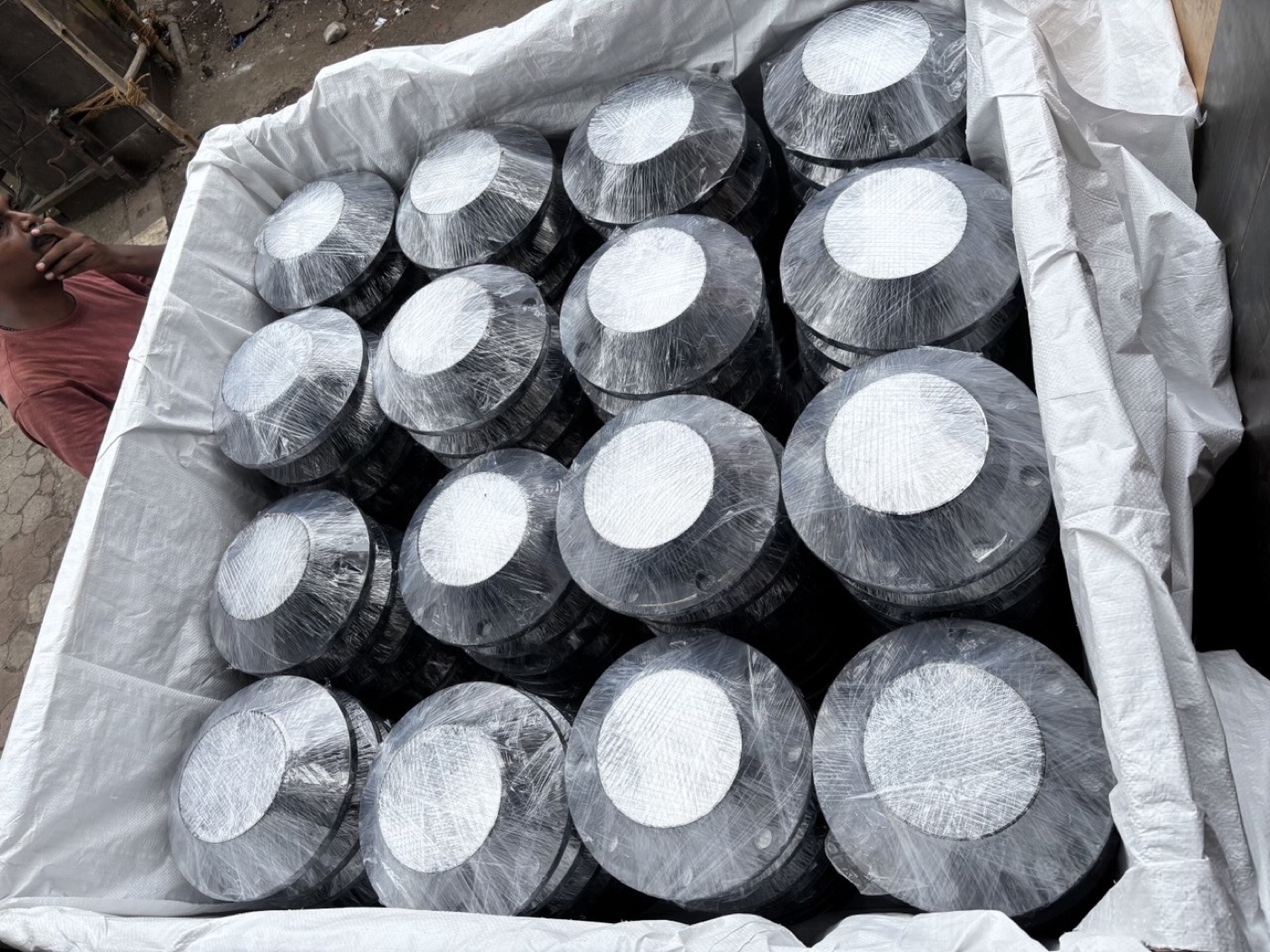
ASTM A350 LF2 LTCS Slip On Flanges — Mixed Sizes, Export Crated at Our Mumbai Works
What is an ASTM A350 LF2 Slip On Flange?
LF2 = carbon steel that stays tough at −46 °C.ASTM A350 LF2 is the impact-tested low temperature carbon steel (LTCS) forging grade: near-identical to A105 in chemistry, strength and price band, but mandatorily heat treated and Charpy tested at −46 °C (Class 1) on every heat. As a slip-on, it installs with two fillet welds and needs no pipe schedule to order. It is the default flange of the −29 °C to −46 °C band: gas plants, LPG, flare systems, refrigeration and cold climates.
Also searched as: LF2 slip on flange, LTCS slip on flange, low temperature slip on flange, SA350 LF2 slip on flange, LF2 SORF flange, A350 LF2 Cl.1 slip on — all refer to the product on this page.
A105 vs LF2 vs LF3 — the Carbon Steel Toughness Ladder
All four share carbon-steel pressure–temperature ratings and welding practice — the ladder buys certified toughness, not strength. Colder than LF3 (LNG at −162 °C), lines move to austenitic stainless or 9% nickel steel.
ASTM A350 LF2 Chemical Composition
C
Mn
Si
P
S
Ni
Cr
Mo
Cu
Nb
V
0.30 max
0.60-1.35
0.15-0.30
0.035 max
0.040 max
0.40 max
0.30 max
0.12 max
0.40 max
0.02 max
0.08 max
Values in weight %. Combined caps per the standard: Cu + Ni + Cr + Mo + V ≤ 1.00% and Cr + Mo ≤ 0.32%. The composition is deliberately close to A105 — the low-temperature performance comes from fine-grain practice, mandatory heat treatment and proven Charpy values, not from alloying.
ASTM A350 LF2 Mechanical Properties
Tensile Strength, MPa (ksi)
Yield Strength, Min, MPa (ksi)
Elongation % min (2")
Reduction of Area % min
Hardness, HB max
CVN Impact, avg (Cl.1)
485-655 (70-95)
250 (36)
22
30
197
20 J (15 ft·lbf) at −46 °C
Note the capped tensile maximum (655 MPa) — unlike A105's open-ended minimum — and the 197 HB hardness ceiling, both of which keep the steel on the tough side of its transition. Tensiles and Charpy values are reported per heat on the EN 10204 certificate; NACE lots add a hardness survey.
A350 LF2 Slip On Flange Specifications
ASTM A350 LF2 Slip On Flanges are available in the following specifications:
Material
ASTM A350 LF2 Class 1 (default) / Class 2 / ASME SA350 LF2 (UNS K03011)
Size
1/2"NB to 24"NB per ASME B16.5; to 60"NB per ASME B16.47
Class
150#, 300#, 400#, 600#, 900#, 1500#, 2500#
Facing
Raised Face (SORF) — process default; Flat Face (SOFF); serrated stock finish
Impact Testing
Charpy V-notch, every heat — −46 °C (Cl.1) / −18 °C (Cl.2), values on the MTC
Temperature Range
−46 °C to +425 °C (Cl.1); below −46 °C: A350 LF3; above +425 °C: alloy steel F11/F22
Finish
Bare (anti-rust oiled), epoxy or FBE coated; galvanizing on request
Installation
Two fillet welds (hub + bore), pipe set back 1/8"; E7018-1 low-hydrogen consumables, impact-qualified WPS per B31.3
Sour Service
NACE MR0175 / ISO 15156 compliant supply with hardness survey (≤22 HRC / 237 HB)
Certification
EN 10204 3.1 (standard) / 3.2 witnessed, impact values included
Equivalent Grades of ASTM A350 LF2
Standard
ASME
UNS
EN (working equivalent)
ASTM A350 LF2
SA350 LF2
K03011
P285NH / P285QH (EN 10222-4)
EN grades are duty equivalents for European PN-series low-temperature flanges rather than chemistry-identical matches — certificates always state the actual grade forged. System partners: ASTM A333 Gr.6 pipe and A420 WPL6 fittings — the LTCS trio specified together on every cold line.
Why A350 LF2 Slip Ons Are Specified
Proven Tough, Every Heat
Not a paper rating — three Charpy specimens from every heat-treat lot are broken at −46 °C and the joules go on your certificate.
Beats Auto-Refrigeration
Blowdown and relief chill gas lines far below ambient by Joule-Thomson expansion — LF2 keeps the flange out of brittle territory when the process makes its own winter.
Costs Like Carbon Steel
Same ratings group as A105, same fillet-weld installation, everyday consumables — the toughness upgrade adds testing, not exotic metallurgy.
Sour-Gas Natural
Already heat treated with a 197 HB ceiling, LF2 walks into NACE MR0175 compliance — the standard flange of sour gas gathering and processing.
Know the Handoffs
Above −29 °C service, A105 is the economical choice; below −46 °C, LF3; critical RT-mandated lines take LF2 weld necks.
How Our A350 LF2 Slip On Flanges Are Manufactured
1
Forging — cut billet of certified fine-grain A350 LF2 heat is hot-forged into the flange blank, keeping full heat traceability from raw material to despatch.
2
Heat treatment — mandatory per ASTM A350: normalized, normalized & tempered, or quenched & tempered, with the thermal record retained per lot.
3
Impact testing — Charpy V-notch specimens from each heat-treat lot broken at −46 °C (Cl.1) or −18 °C (Cl.2); values recorded for the certificate.
4
Machining & facing — hub, faces and bolt holes to ASME B16.5, bore machined slightly over pipe OD per the slip-on tolerance; SORF raised face with serrated finish or SOFF flat face.
5
Testing & marking — mechanical and chemical verification against the heat, hardness survey for NACE lots, then permanent marking of grade, class (LF2 Cl.1/Cl.2), size, rating and heat number.
6
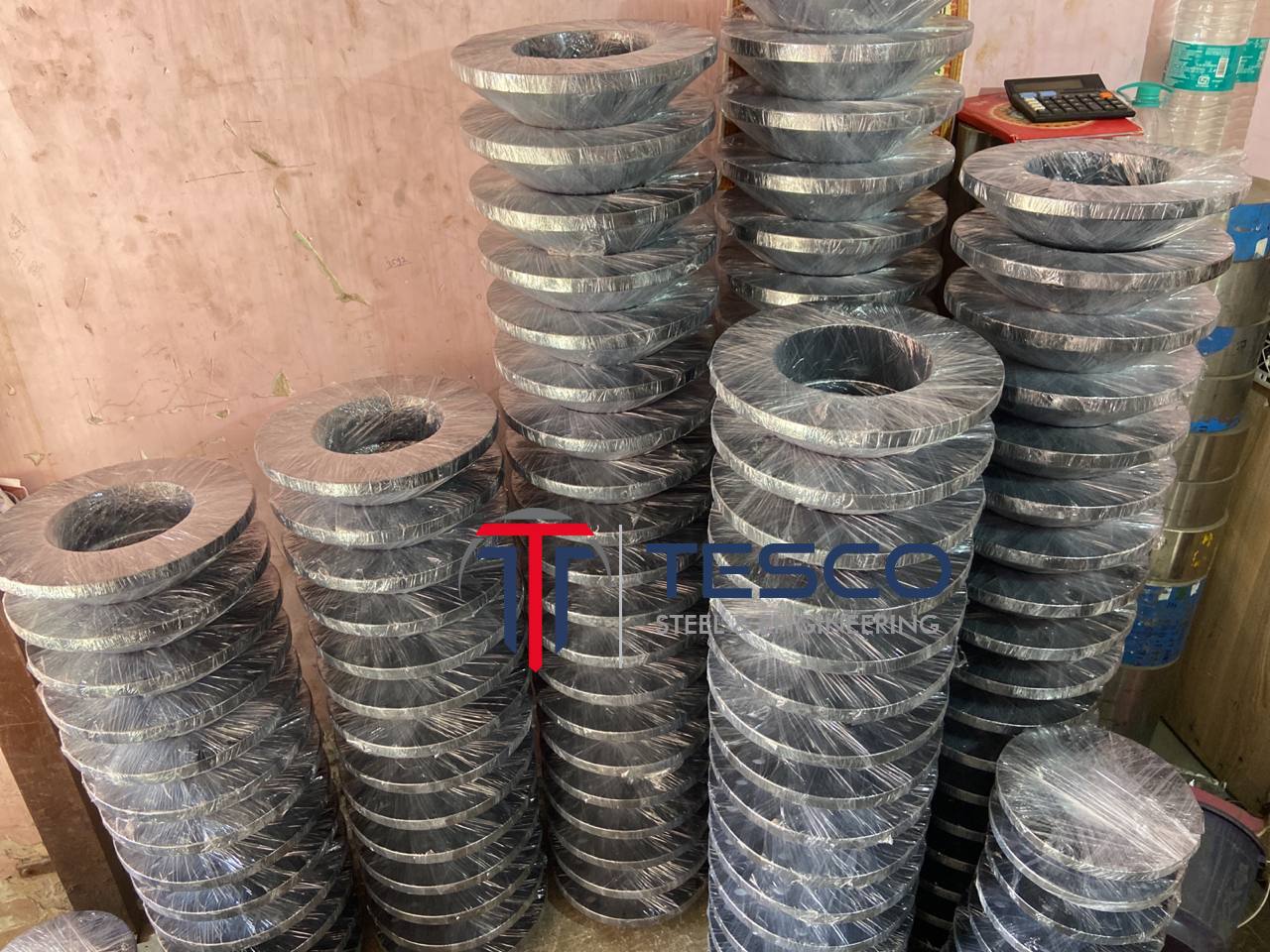
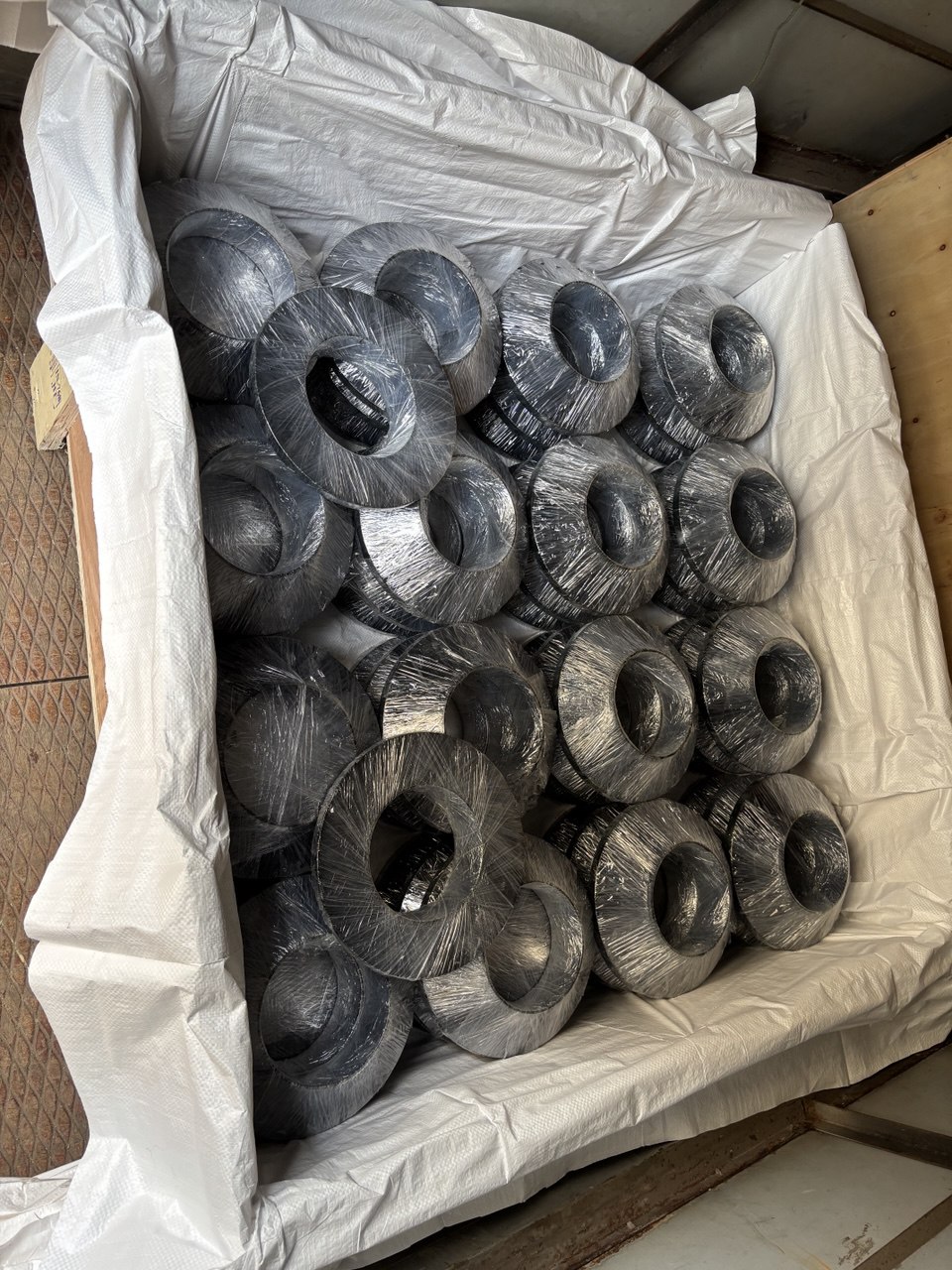
Certification & packing — EN 10204 3.1 MTC with impact values (3.2 witnessed on request), export-packed as pictured on this page.
Where A350 LF2 Slip On Flanges Are Used
Wherever the metal can get cold: gas processing and NGL recovery, LPG/propane storage and loading, flare headers and blowdown/knock-out systems, ethylene and ammonia plants, refrigeration packages, cold-climate pipelines and wellsites, offshore topsides with −46 °C design minimums, and sour gas facilities under NACE MR0175. Our LTCS production and packing below:
Five elements — no bore schedule, since the slip-on bore suits the pipe OD:
1
Size & standard — e.g. 6″ NB ASME B16.5.
2
Pressure class & facing — Class 150–2500, SORF (default) or SOFF.
3
Grade & class — A350 LF2 Cl.1 (default, −46 °C) or Cl.2 (−18 °C); NACE MR0175 where sour.
4
Finish — bare, epoxy or FBE; galvanizing on request.
5
Certification & quantity — EN 10204 3.1 or 3.2 (impact values included), quantity and destination — to sales@tescosteel.com or the inquiry form.
Example: “Slip On Flange, 6″ NB, ASME B16.5 Class 150, RF, ASTM A350 LF2 Cl.1, Charpy −46 °C, EN 10204 3.1 — 50 pcs.” Quotations normally within 24 hours with price, unit weight and delivery.
ASTM A350 LF2 Slip On Flanges — Frequently Asked Questions
What is an ASTM A350 LF2 slip on flange?
It is a slip-on flange forged from ASTM A350 LF2 — the impact-tested low temperature carbon steel (LTCS) grade — dimensioned to ASME B16.5. The flange slides over the pipe end and is secured with two fillet welds, exactly like an A105 slip-on, but every heat is Charpy V-notch tested at -46 °C (-50 °F), so the joint stays tough where plain carbon steel would turn brittle. It is the standard slip-on of gas processing, LPG, refrigeration and cold-climate piping.
What is the difference between A350 LF2 and A105 flanges?
Toughness at low temperature. The two grades are near-twins in chemistry and strength — both carbon steel, both 250 MPa minimum yield, both in ASME B16.5 material group 1.1 with identical pressure-temperature ratings — but A350 LF2 is mandatorily heat treated and Charpy impact tested at -46 °C, extending the service floor from A105's -29 °C down to -46 °C. Where a line can chill below -29 °C — by climate or by depressurization — LF2 is specified; everywhere warmer, A105 is the economical choice.
What is the difference between A350 LF2 Class 1 and Class 2?
The impact-test temperature. LF2 Class 1 is Charpy tested at -46 °C (-50 °F) and is the default — an order marked simply 'LF2' is supplied as Class 1. LF2 Class 2 is tested at -18 °C (0 °F) at a higher energy requirement, suiting less severe cold duty. Chemistry and tensile requirements are identical. Most project specifications call for Class 1; state the class on the order and the certificate carries the matching Charpy record.
What is the chemical composition of ASTM A350 LF2?
Per ASTM A350: carbon 0.30% max, manganese 0.60-1.35%, silicon 0.15-0.30%, phosphorus 0.035% max, sulphur 0.040% max, with residual limits of nickel 0.40%, chromium 0.30%, molybdenum 0.12%, copper 0.40%, niobium 0.02% and vanadium 0.08%. Two combined caps apply: copper + nickel + chromium + molybdenum + vanadium must not exceed 1.00%, and chromium + molybdenum must not exceed 0.32%. Fine-grain practice plus mandatory heat treatment is what buys the low-temperature toughness.
What are the mechanical properties of A350 LF2 slip on flanges?
Per ASTM A350: tensile strength 485-655 MPa (70-95 ksi) — note the capped maximum, unlike A105's open-ended minimum — yield strength 250 MPa (36 ksi) minimum, elongation 22% minimum in 2", reduction of area 30% minimum, and hardness 197 HB maximum. On top of these, every heat must pass Charpy V-notch impact testing at the class temperature: -46 °C for Class 1. Tensiles and impact values are reported on the EN 10204 certificate.
What temperature range can A350 LF2 slip on flanges handle?
-46 °C to +425 °C for Class 1. The lower limit comes from the Charpy test at -46 °C (-50 °F); the upper limit matches carbon steel practice per ASME B16.5. Pressure-temperature ratings are the same as A105 — both sit in material group 1.1 — so an LF2 Class 150 flange carries 285 psi at ambient. Below -46 °C the line moves to A350 LF3 (3.5% nickel, -101 °C) or stainless steel; LF2 is the workhorse of the -29 °C to -46 °C band.
Why do lines in warm climates specify LF2 flanges?
Auto-refrigeration. When a pressurized gas or LPG line depressurizes — blowdown, relief, flare, a leaking valve — Joule-Thomson expansion can chill the pipe metal tens of degrees below ambient within minutes, even in a Gulf summer. Design codes therefore set the design minimum temperature from the depressurization case, not the weather, and the answer is routinely -46 °C. That is why gas plants in hot climates are full of LF2: the cold comes from the process, not the sky.
Is A350 LF2 suitable for sour service under NACE MR0175?
Yes — LF2 is one of the most-specified flange grades for sour gas. NACE MR0175 / ISO 15156 accepts carbon steel forgings subject to a 22 HRC (237 HB) hardness cap and appropriate heat treatment, and LF2 arrives already heat treated with a 197 HB specification maximum, so compliance is natural. Sour orders typically add a hardness survey to the certificate. State the NACE requirement on the enquiry and the flanges ship documented accordingly.
What is the equivalent of ASTM A350 LF2 in other standards?
ASME SA350 LF2 is the boiler-code twin and UNS K03011 the designation number. In European practice the low-temperature forging grades P285NH / P285QH of EN 10222-4 do the equivalent duty for PN-series flanges. These are duty equivalents rather than chemistry-identical matches, so certificates always state the actual grade forged. Tesco supplies A350 LF2 dual-marked with SA350 where the specification permits.
Can A350 LF2 slip on flanges be used below -46 °C?
No — -46 °C is the certified floor of LF2 Class 1. Below it, ASTM A350 LF3 (3.5% nickel, impact tested at -101 °C) takes over, and colder still — LNG at -162 °C — the industry moves to austenitic stainless steel or 9% nickel steel, which have no impact-transition concern at all. Tesco forges the LF grades and stainless flanges alike, so mixed-temperature projects can source the whole ladder from one works.
Are slip on flanges allowed in low-temperature service?
Yes, within their usual limits. ASME B31.3 permits slip-on flanges with the standard two fillet welds in low-temperature service, and LF2 slip-ons are common on utility, drain, flare knock-out and moderate-pressure cold lines. Critical or highly cyclic LTCS lines — and most lines requiring full radiography — are specified with weld neck flanges instead, whose butt weld can be fully examined. Follow the piping class; both come impact tested.
How is an A350 LF2 slip on flange welded to pipe?
With two fillet welds — hub outside, bore inside — after setting the pipe end back 1/8" (3 mm) from the face, exactly as for any slip-on. The difference is procedure: low-temperature lines use low-hydrogen consumables (typically E7018-1 for better impact toughness) and a weld procedure qualified with impact tests at the design temperature per ASME B31.3. LF2 needs no preheat in normal sizes and no PWHT below code thickness thresholds.
What details are needed to get an accurate A350 LF2 slip on flange quotation?
Five elements plus commercial terms: (1) size and standard — e.g. 6" NB ASME B16.5; (2) pressure class — 150 through 2500; (3) facing and finish — SORF (raised face) or SOFF (flat face), bare or coated; (4) grade and class — A350 LF2 Cl.1 (default) or Cl.2, NACE MR0175 where sour; (5) certification — EN 10204 3.1 or 3.2, with Charpy values reported as standard. No pipe schedule is needed for the slip-on bore. Add the quantity and destination and we return price, weight and delivery.
Who manufactures ASTM A350 LF2 slip on flanges in India?
Tesco Steel & Engineering is an ISO 9001:2015 certified flange manufacturer based in Mumbai, India, forging A350 LF2 Class 1 and Class 2 slip on flanges from ½" to 24" NB per ASME B16.5 and larger patterns to 60" NB — SORF and SOFF, bare or coated — every heat Charpy tested at its class temperature. Flanges are marked with grade, size, class and heat number, ship with EN 10204 3.1/3.2 certification including impact values, and export to more than 50 countries.