

Tesco Steel & Engineering manufactures WNRTJ flanges — Weld Neck Ring-Type-Joint flanges that combine a weld-neck (butt-weld) pipe connection with a ring-type-joint (RTJ) face. The tapered hub is butt-welded to the pipe, transferring stress smoothly and allowing full radiographic inspection of the weld, while the face carries a deep groove holding a metal ring gasket for a metal-to-metal seal at high pressure and high temperature. SS 304/316/321, Duplex, Monel, Inconel, and Hastelloy. Class 150 to 2500, PN1 to PN400. ISO 9001:2015 certified. Made in India.
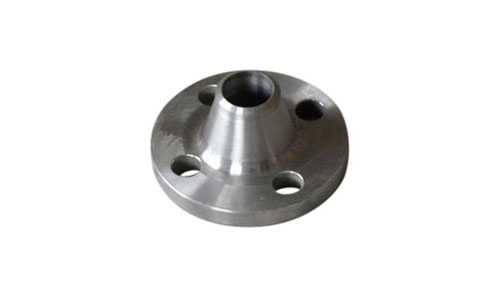
WNRTJ — Weld Neck Ring-Type-Joint Flange
WNRTJ flanges pair the strength and inspectability of a weld-neck joint with the sealing of an RTJ face. Tesco Steel & Engineering manufactures them to ASME B16.5 in the full material range — see our weld-neck flanges, SWRTJ flanges, the RTJ gasket size chart, and the flange dimensions charts.
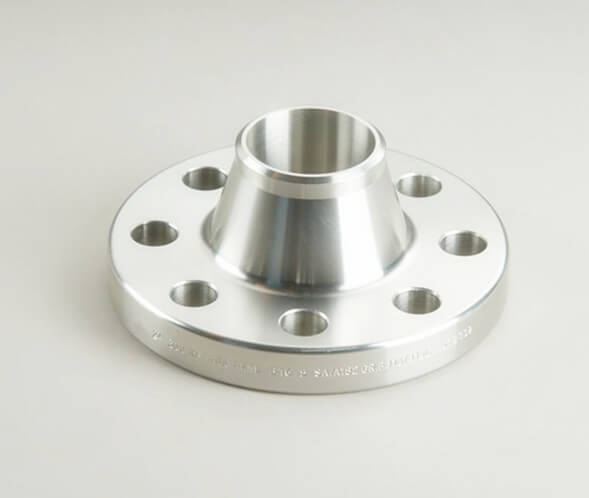
Weld-Neck Hub & Bore
| Criterion | WNRTJ | SWRTJ | Weld-Neck RF |
|---|---|---|---|
| Pipe connection | Butt weld (weld neck) | Socket weld | Butt weld (weld neck) |
| Face / seal | RTJ — metal ring | RTJ — metal ring | Raised face — soft gasket |
| Pressure / temp | Highest (full-bore + RTJ) | High (small bore + RTJ) | Moderate |
| Inspection | Butt weld radiographable | Fillet weld (limited NDT) | Butt weld radiographable |
| Best for | HP/HT all sizes, critical service | HP/HT small bore | General lower-pressure lines |
WNRTJ gives the highest integrity — a radiographable butt weld plus a metal-to-metal RTJ seal; SWRTJ is the socket-weld version for small bore; a weld-neck raised-face flange is for general lower-pressure service.
| WNRTJ Flanges are available in the following specifications: | |
|---|---|
| Size | 1/2"NB to 56"NB |
| Class | 150#, 300#, 3000#, 6000#, 9000# |
| Pressure Ratings | PN 1 - PN 400 |
| Stainless Steel WNRTJ Flanges | ASTM A 182 F - 304 / 304H / 304L / 316 / 316H / 316L / 316Ti, 309, 310, 317L, 321, 347, 904L |
| Duplex Steel WNRTJ Flanges | ASTM A 182 - F 51, F 53, F 55 |
| Alloy Steel WNRTJ Flanges | ASTM A 182 - F5, F9, F11, F21, F22 & F91 |
| Carbon Steel WNRTJ Flanges | ASTM A 105 |
| Low Temp. WNRTJ Flanges (LTCS WNRTJ Flanges) | A 350 LF2 |
| Copper Nickel (Cu-Ni) WNRTJ Flanges | C70600, 90/10, C71500, 70/30, C71640 |
| Nickel WNRTJ Flanges | UNS N02200, UNS N02201 |
| Monel WNRTJ Flanges | UNS N04400, UNS N05500, Alloy 20 |
| Inconel WNRTJ Flanges | UNS N06600, UNS N06601, UNS N06625, UNS N08800, UNS N08810, UNS N08825 |
| Hastelloy WNRTJ Flanges | UNS N10276, UNS N06022, UNS N10665, UNS N06455 |
| Titanium WNRTJ Flanges | Gr. 1, Gr. 2, Gr. 3, DTH 3.7035, DTH 3.7055 |
| Other Services | Hot Dip Galvanized (GI) WNRTJ Flanges Sand Blasting on WNRTJ Flanges Shot Peening on WNRTJ Flanges Epoxy Coating on WNRTJ Flanges FBE Coating on WNRTJ Flanges |
Select a pressure class below for its detailed WNRTJ flange dimensions:
Deep ring groove and metal ring gasket give a leak-tight metal-to-metal seal for the highest pressures and temperatures.
The weld-neck hub butt-welds to the pipe, transferring stress smoothly and allowing full radiographic inspection.
SS 304/316/321, Duplex, Monel, Inconel, and Hastelloy for corrosive and high-temperature service.
Flange to ASME B16.5 with R / RX / BX ring grooves to ASME B16.20, Class 150 to 2500.
The confined metal ring resists gasket blow-out — preferred for hazardous and critical service.
Made to ASME B16.5 or your drawing — class, ring number, and material — certified with EN 10204 3.1 MTC.
| Material | Properties | Typical Use |
|---|---|---|
| A105 Carbon Steel / A350 LF2 (LTCS) | Strong, economical; LF2 for low temp | Non-corrosive & low-temperature HP lines |
| SS 304 / 316 / 321 | Good corrosion resistance; 321 high-temp | Process, chemical & high-temperature service |
| Duplex 2205 / Super Duplex 2507 | High strength & chloride resistance | Seawater & offshore HP lines |
| Monel 400 / Inconel | Excellent in HF, marine & high-temp | HF, seawater & high-temperature service |
| Hastelloy | Superior acid resistance | Aggressive chemical service |
| Industry | Typical Use | Why WNRTJ |
|---|---|---|
| Oil & Gas | HP pipelines, wellhead & process lines | Metal-to-metal seal; radiographable butt weld |
| Refinery & Petrochemical | High-pressure / high-temperature lines | RTJ sealing; full material range |
| Power Generation | HP steam & boiler lines | SS 321 / alloy steel; metal ring at high temp |
| Chemical Plants | Corrosive HP service | Monel / Inconel / Hastelloy |
| Gas Processing | HP gas pipelines | Blow-out-resistant metal ring |
| Offshore & Marine | Topside & subsea HP lines | Duplex; metal-to-metal seal |
| LNG & Cryogenic | HP transfer lines | LTCS / SS; tight RTJ seal |
| Fertilizer & Process | High-pressure reactors & lines | Class 2500 WNRTJ |
Q1. What is a WNRTJ flange?
WNRTJ stands for Weld Neck Ring-Type-Joint flange. It combines a weld-neck (butt-weld) pipe connection with a ring-type-joint (RTJ) face that has a deep groove holding a metal ring gasket. Bolting two RTJ flanges together compresses the metal ring for a metal-to-metal seal that holds at very high pressure and temperature, with a radiographable butt weld to the pipe.
Q2. Why does a WNRTJ flange have a deep groove?
The deep groove on the face holds a solid metal ring gasket (R, RX, or BX type). When the flanges are bolted up, the ring is compressed in the grooves to make a metal-to-metal seal — far more leak-tight at high pressure and temperature than a soft gasket on a raised face, and the confined ring resists blow-out.
Q3. What is the difference between WNRTJ and SWRTJ?
Both have an RTJ face with a metal ring. A WNRTJ flange has a weld-neck hub butt-welded to the pipe (used across all sizes, with a radiographable weld), while a SWRTJ flange has a socket-weld connection for small-bore pipe. WNRTJ is preferred for the highest-integrity and larger-bore service; SWRTJ for high-pressure small-bore lines.
Q4. When should I use a WNRTJ flange instead of a weld-neck raised-face flange?
Use WNRTJ where high pressure, high temperature, hazardous media, or critical service demand a metal-to-metal seal that will not blow out. A weld-neck raised-face (WNRF) flange with a soft/spiral gasket is fine for general lower-pressure lines; the RTJ face is for the more demanding duty (typically Class 600 and above).
Q5. What classes and ring types are available?
Class 150 to 2500 (PN1 to PN400), with R (oval/octagonal), RX, and BX ring grooves to ASME B16.20 and the flange to ASME B16.5. Select the class above for the detailed WNRTJ dimensions; the ring number is matched to the flange size and class.
Q6. What materials are WNRTJ flanges made from?
A105/LTCS, SS 304/316/321, Duplex 2205/2507, Monel, Inconel, and Hastelloy. The grade is chosen for the fluid, pressure, and temperature — for example SS 321 or alloy steel for high-temperature steam and Monel/Inconel/Hastelloy for corrosive high-pressure service.
Q7. Can the metal ring gasket be reused?
No. A new, undamaged metal ring of the correct number should be used at every make-up, seated in clean, undamaged grooves. A re-used or deformed ring will not seal reliably, and ring types (R/RX/BX) must not be mixed — the ring must match the flange groove.
Q8. Can WNRTJ flanges be supplied to our drawing and certified?
Yes. We supply WNRTJ flanges to ASME B16.5 / B16.20 or your drawing — size, schedule/bore, class, ring number, and material — with EN 10204 3.1 material test certificates and the specified NDT on request. Send your line details and service conditions for a quote.