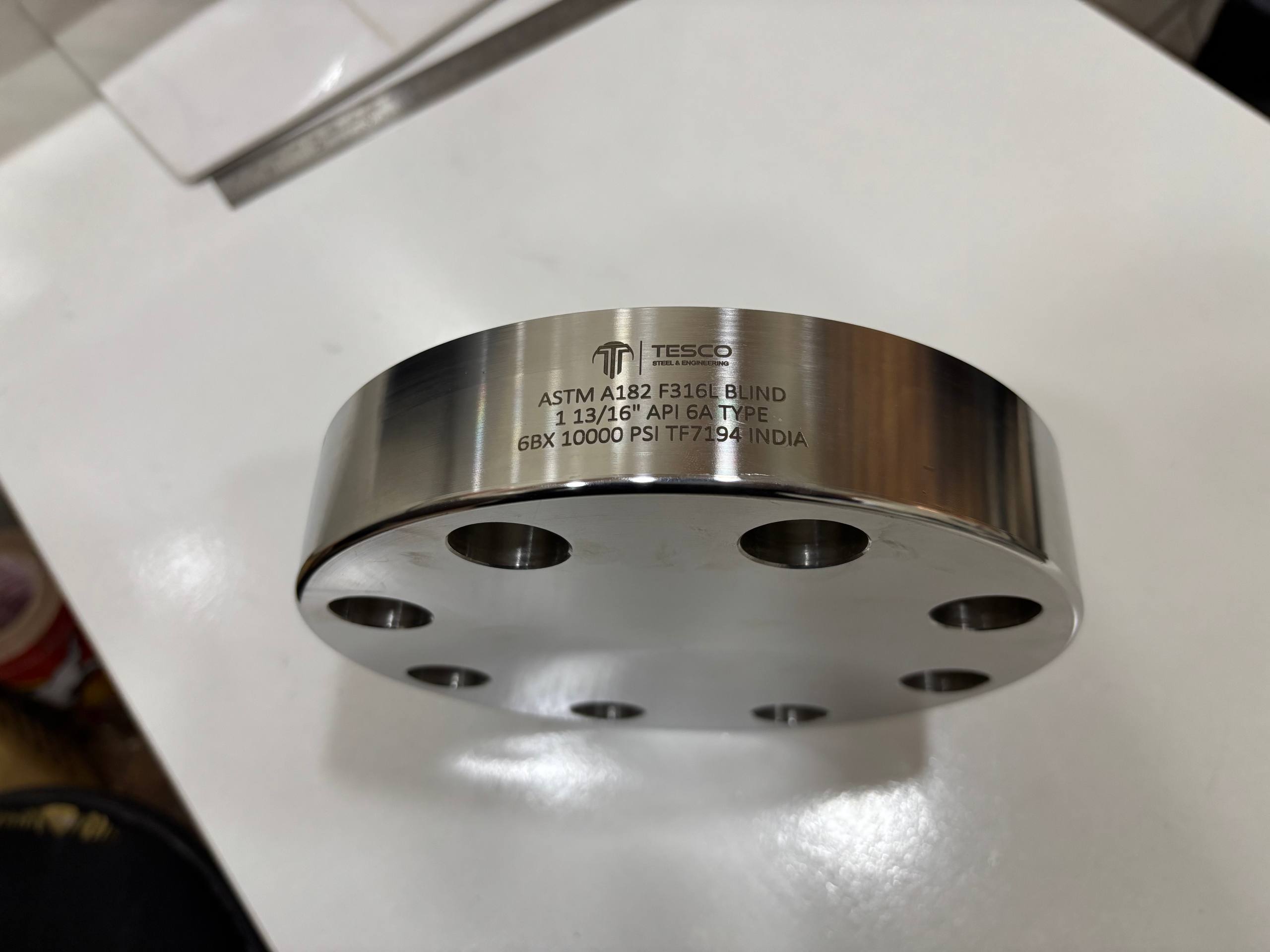
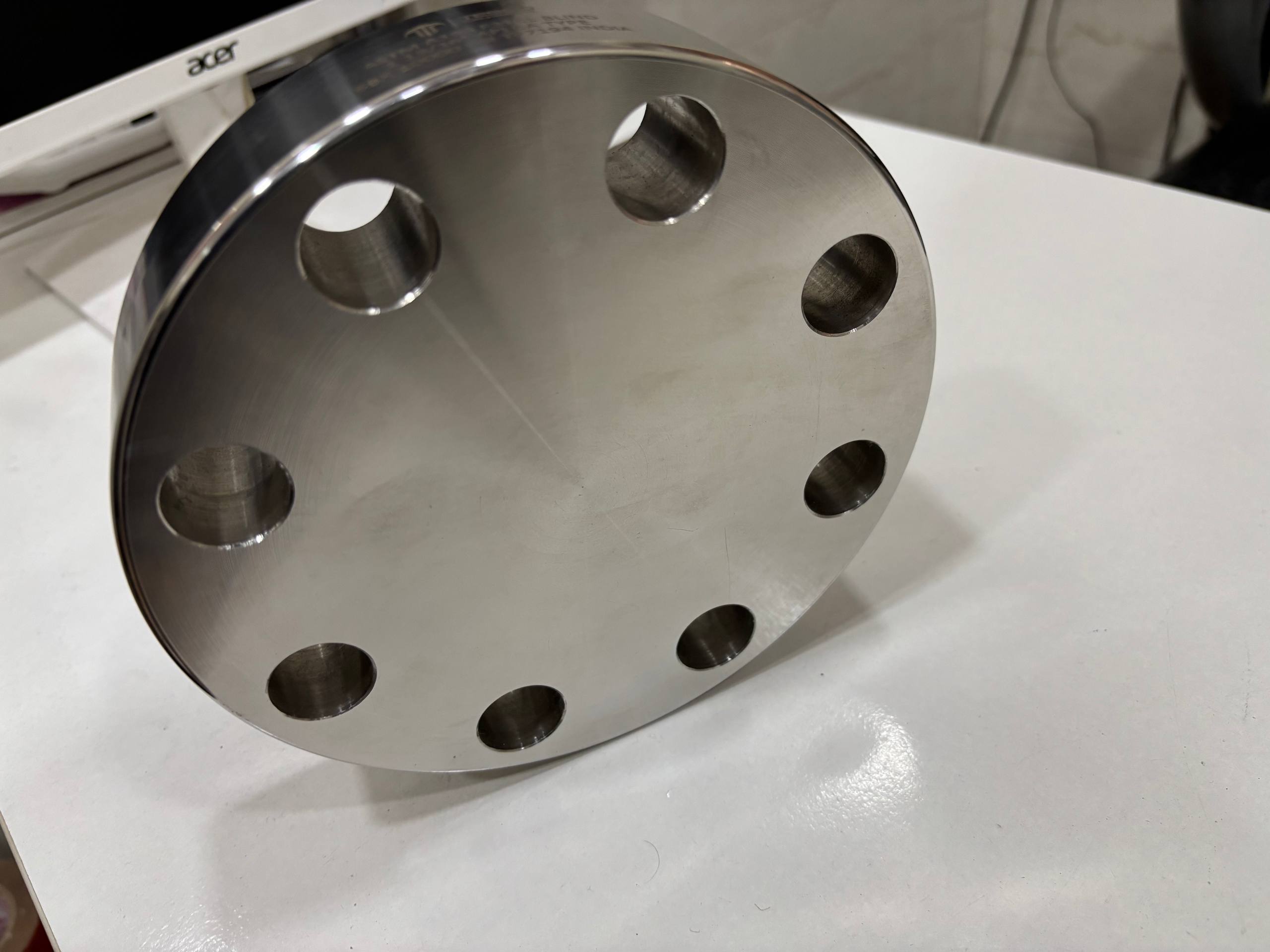
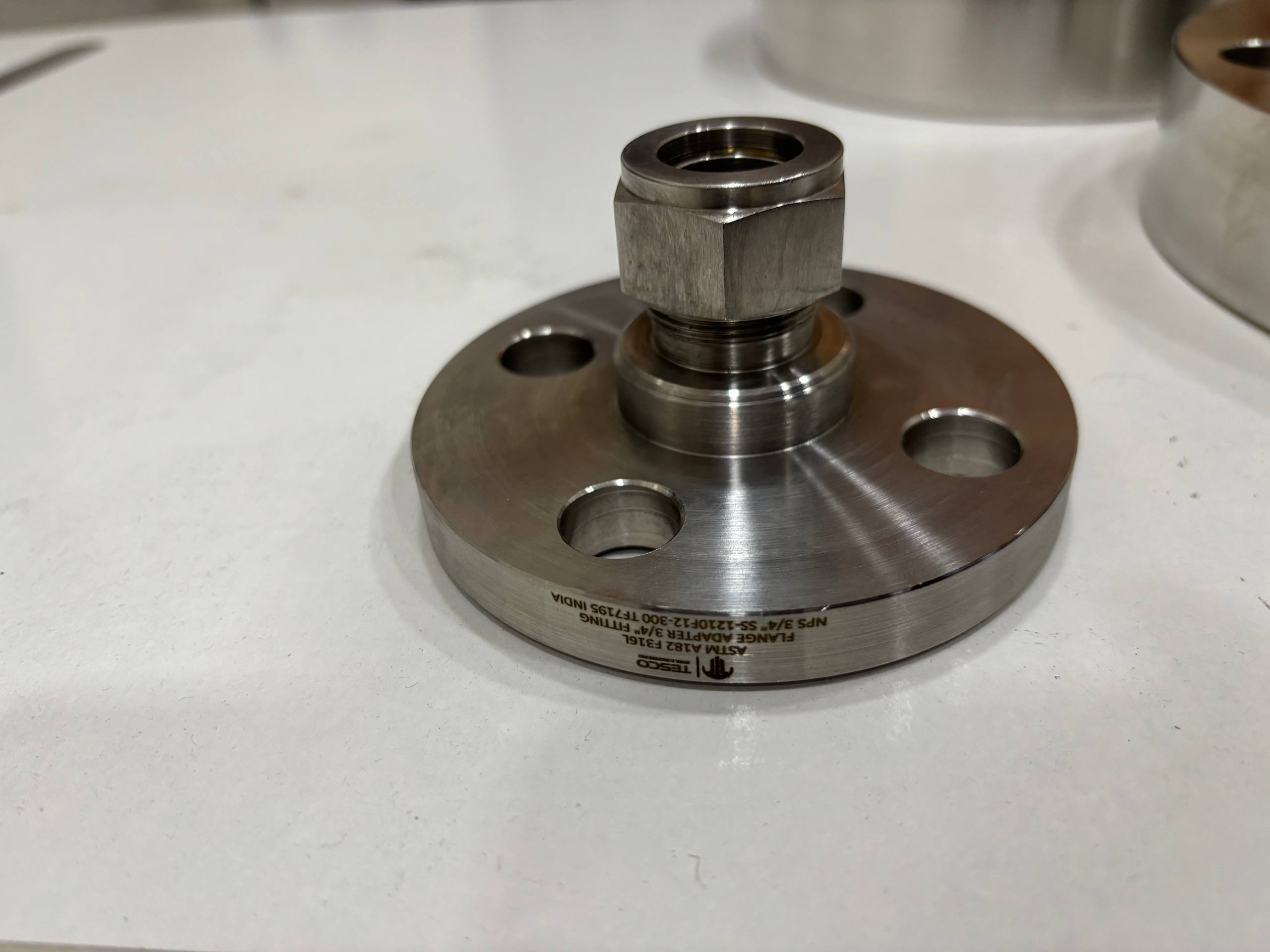
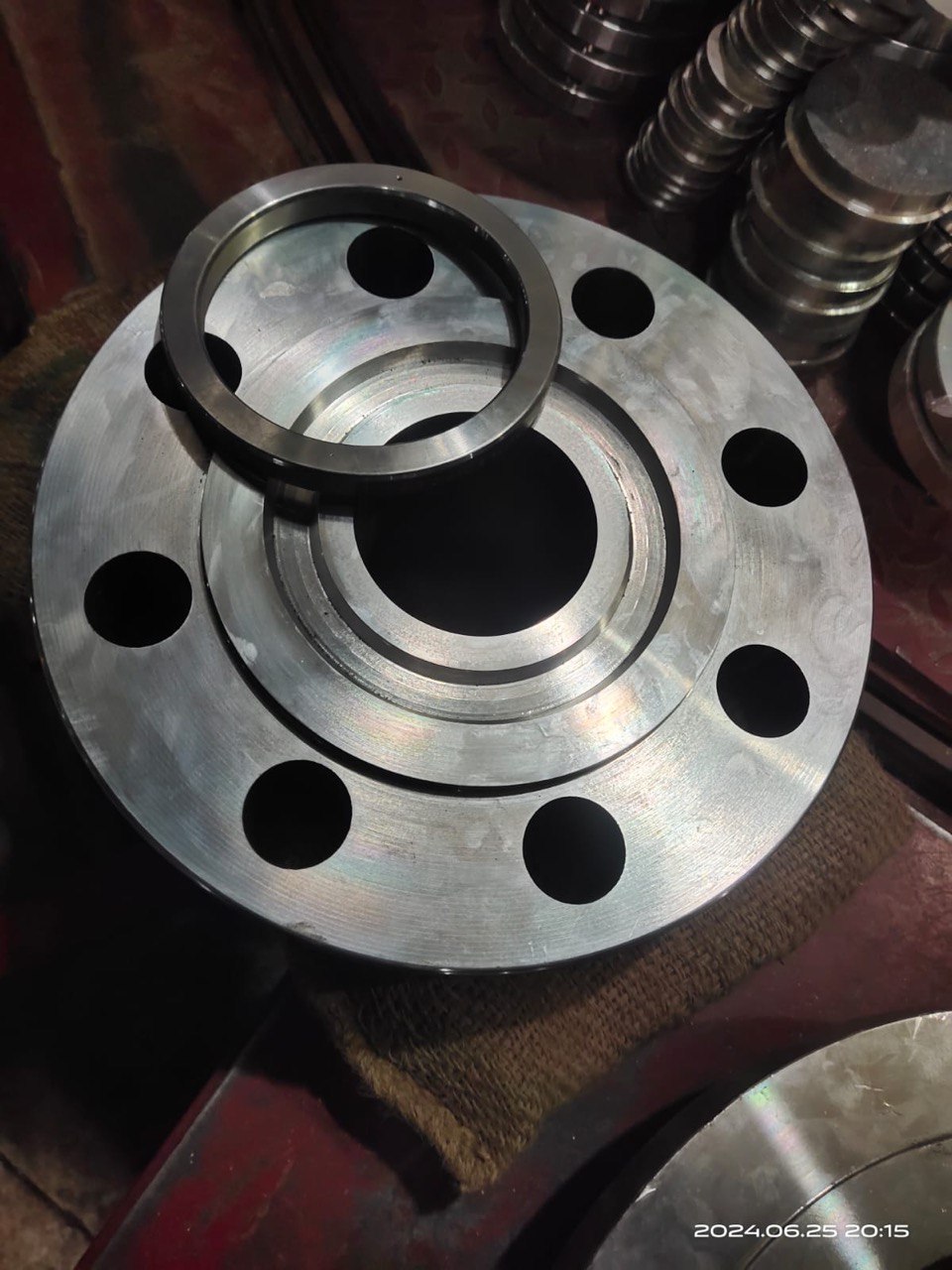
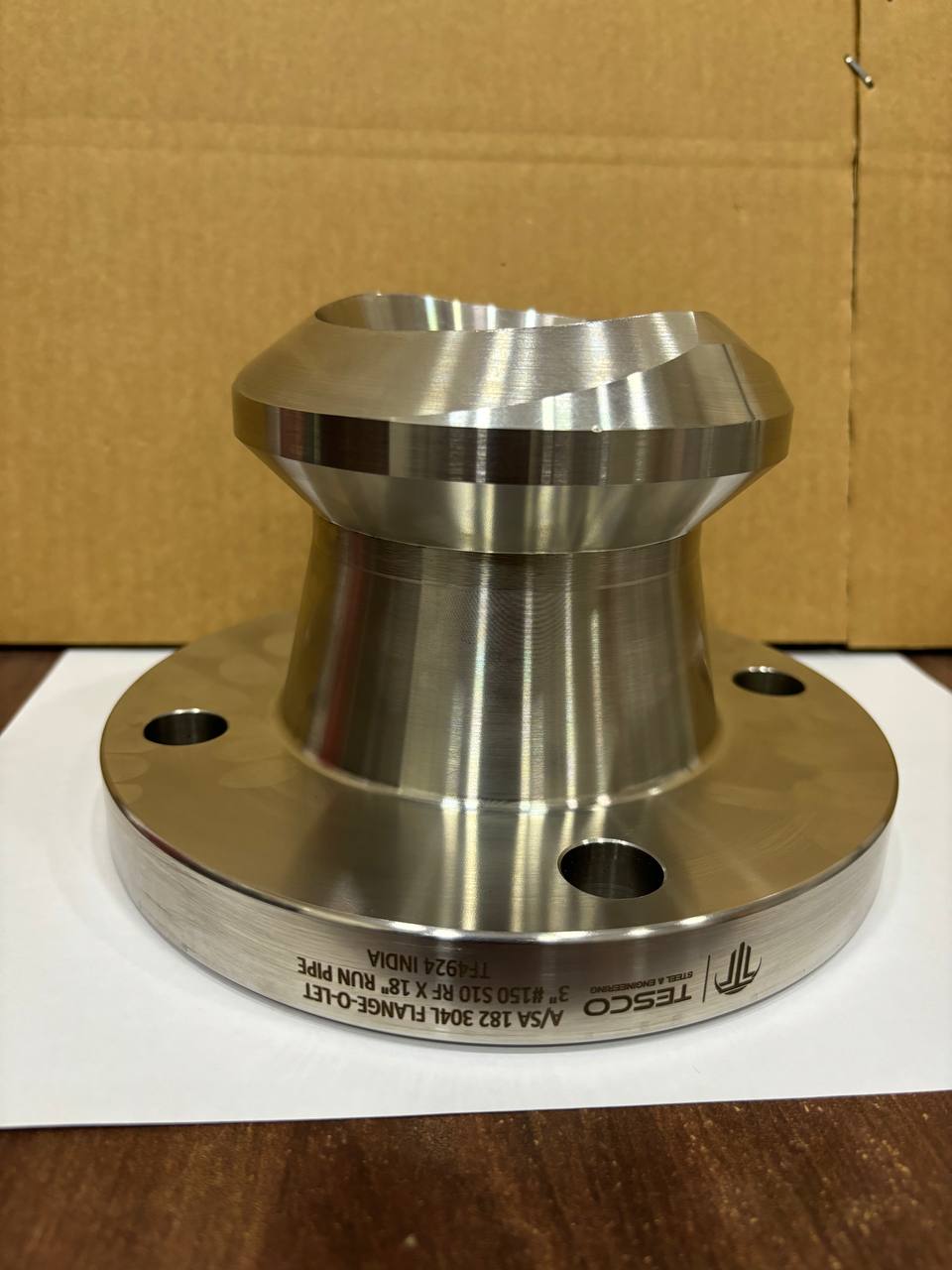
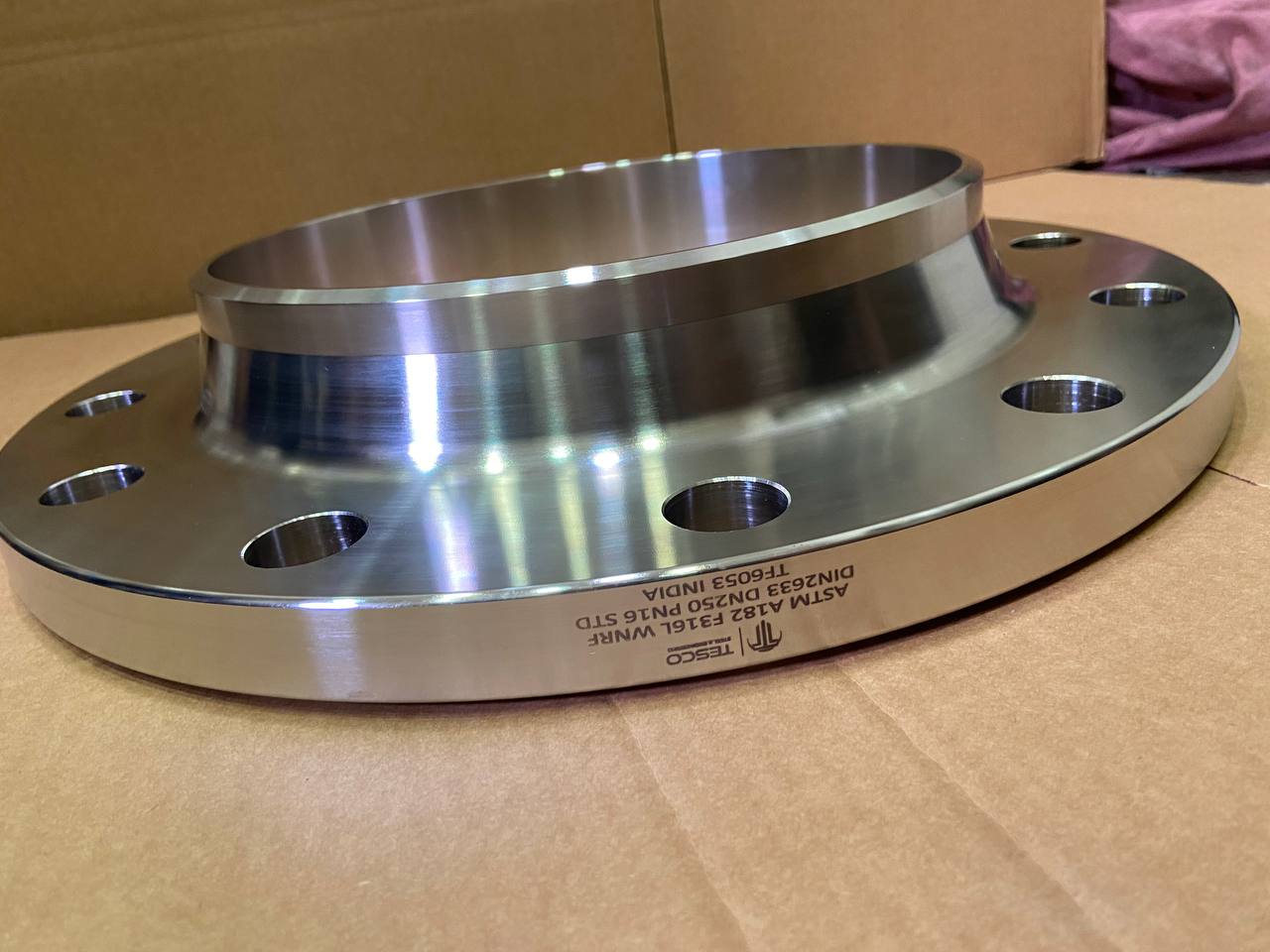
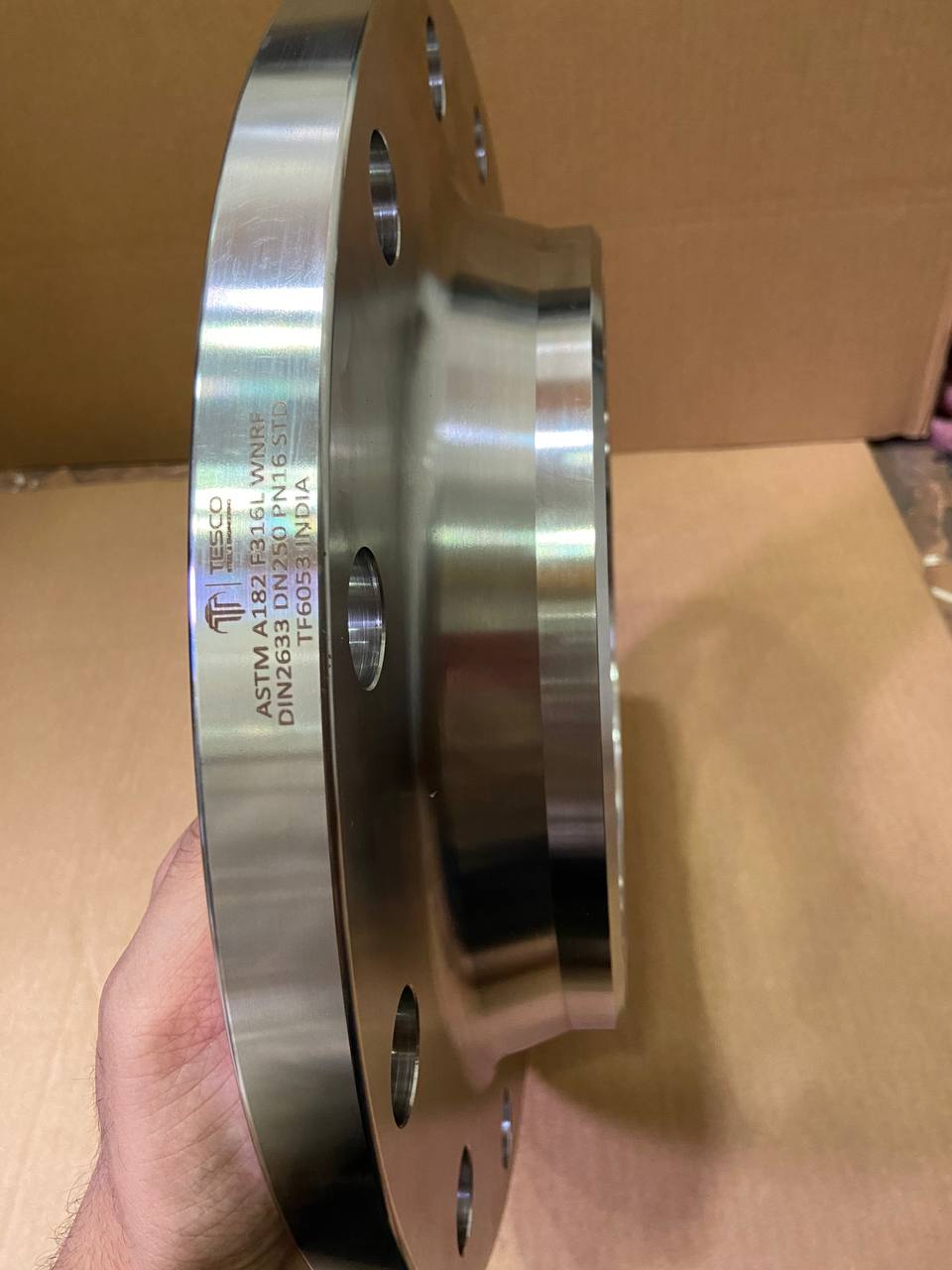
ASTM A182 | Grades 304, 304L, 316, 316L, 317L, 310S, 321, 347, 410 & More | ASME B16.5 / B16.47 | Export to 96 Countries
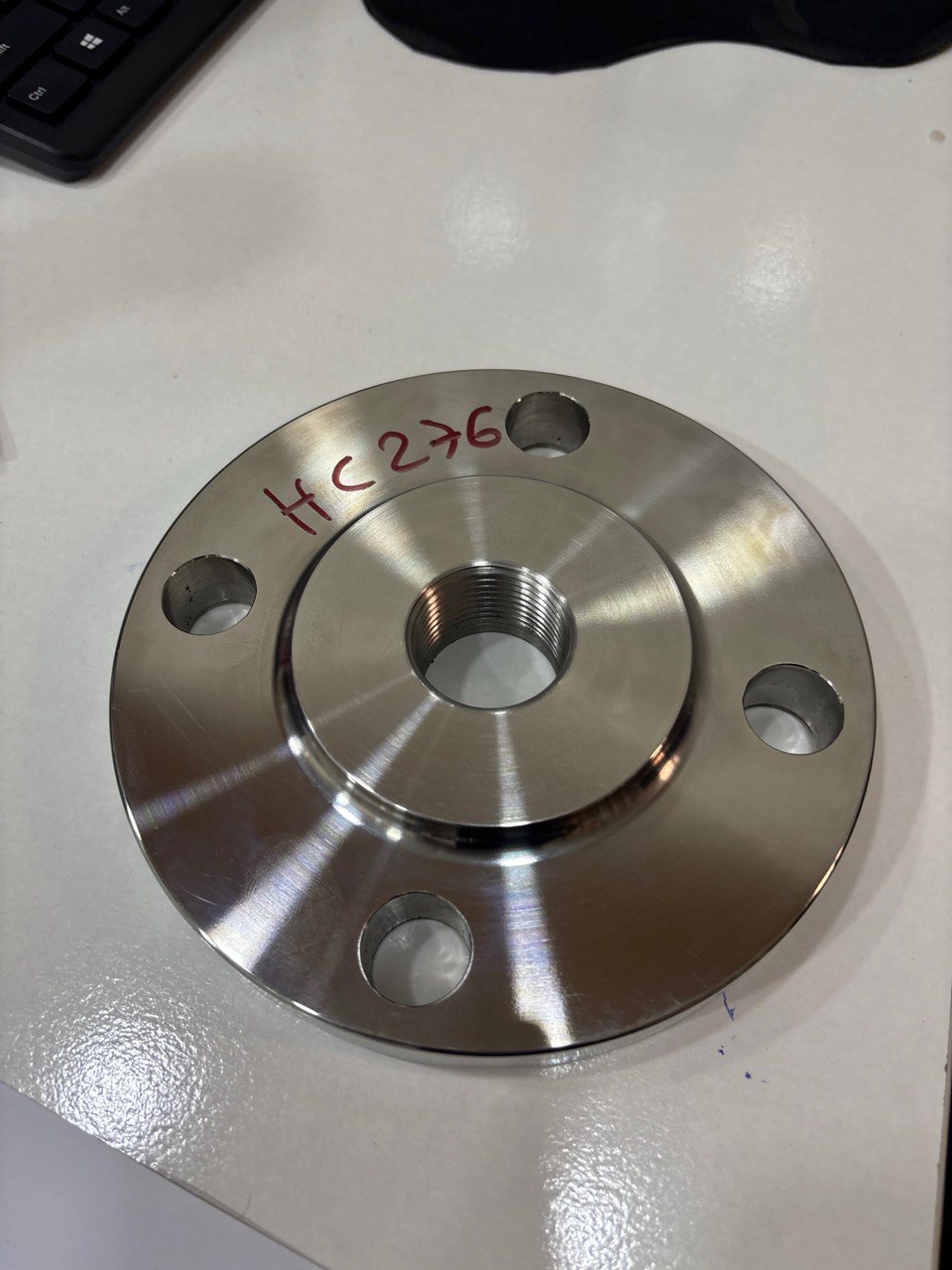
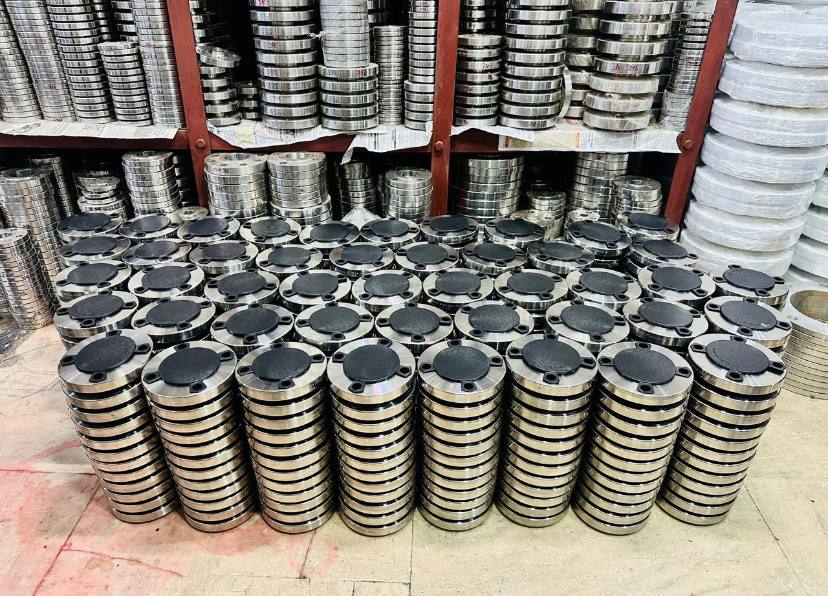
Tesco Steel & Engineering manufactures and exports the complete range of ASTM A182 stainless steel flanges — from the ubiquitous 304L and 316L grades to high-temperature 310S and 321, stabilised 347, and the full 400-series ferritic and martensitic grades. All flanges are produced to ASME B16.5, B16.47, DIN EN 1092-1, and GOST 33259 dimensional standards in sizes from NPS ½″ to 60″, pressure classes 150# to 2500#, and all standard facing types.
Stainless steel achieves its defining corrosion resistance through a self-repairing chromium oxide passive film that forms instantly when the surface is exposed to oxygen. This passive film — only a few nanometres thick — prevents further oxidation and is the basis of the material's resistance to a wide range of corrosive environments. A minimum of 10.5% chromium is required to form this protective film; most engineering grades contain 16–26% Cr for reliable service across demanding conditions.
Grades: 304, 304L, 316, 316L, 317L, 310S, 321, 347
Face-centred cubic microstructure; non-magnetic; excellent corrosion resistance; excellent low-temperature toughness to −196°C; weldable without hardening. The most widely used family for flanges. Mo-bearing grades (316, 317) add chloride pitting resistance.
Grades: 409, 409M, 410S, 430
Body-centred cubic microstructure; magnetic; lower corrosion resistance than austenitic; lower cost (no nickel); good resistance to stress corrosion cracking; limited toughness below 0°C. Used where moderate corrosion resistance and economy are prioritised.
Grades: 410, 420
High carbon promotes martensitic transformation; magnetic; heat-treatable to high strength; moderate corrosion resistance. Used for valve components, pump shafts, and flanges requiring high hardness. Limited corrosion resistance compared to austenitic grades.
Grades: JSL AUS, JS-203, 301M
High-manganese, high-nitrogen austenitic grades developed as lower-nickel cost alternatives. Nitrogen replaces nickel as austenite stabiliser. Similar corrosion resistance to 304 at reduced material cost. Mainly used in domestic Indian market specifications.
| Grade | C (max) | Cr (%) | Ni (%) | Mo (%) | N (max) | Other | PREN ~ | Key Application |
|---|---|---|---|---|---|---|---|---|
| 301 | 0.15 | 16–18 | 6–8 | — | 0.10 | — | 17 | Structural, spring applications |
| 304 | 0.08 | 18–20 | 8–10.5 | — | 0.10 | — | 19 | General purpose, food, pharma |
| 304L | 0.030 | 18–20 | 8–12 | — | 0.10 | — | 19 | 304 + weld-without-sensitisation |
| 310S | 0.08 | 24–26 | 19–22 | — | — | — | 26 | High-temperature to 1100°C |
| 316 | 0.08 | 16–18 | 10–14 | 2–3 | 0.10 | — | 25 | Marine, chemical, pharmaceutical |
| 316L | 0.030 | 16–18 | 10–14 | 2–3 | 0.10 | — | 24 | 316 + weld-without-sensitisation |
| 317 | 0.08 | 18–20 | 11–14 | 3–4 | 0.10 | — | 31 | Higher-Mo; aggressive chloride |
| 317L | 0.030 | 18–20 | 11–15 | 3–4 | 0.10 | — | 31 | FGD, pulp & paper, high-chloride |
| 321 | 0.08 | 17–19 | 9–12 | — | 0.10 | Ti ≥5×(C+N) | 20 | High-temp stabilised, 425–870°C |
| 347 | 0.08 | 17–19 | 9–13 | — | — | Nb ≥10×C | 20 | High-temp stabilised, boiler service |
| 409 | 0.08 | 10.5–11.75 | 0.5 | — | — | Ti ≥6×(C+N) | 12 | Automotive exhaust, mild environments |
| 410S | 0.08 | 11.5–13.5 | 0.6 | — | — | — | 13 | Moderate corrosion, low cost |
| 410 | 0.15 | 11.5–13.5 | 0.75 | — | — | — | 13 | Valve/pump parts, higher strength |
| 420 | 0.35 | 12–13 | 0.2–0.3 | — | — | — | 13 | Cutlery, surgical instruments |
| 430 | 0.12 | 16–18 | 0.75 | — | — | — | 17 | Decorative, mild corrosion |
| JSL AUS | 0.08 | 15.5–16.5 | 4.25–4.75 | — | — | Cu 0.9–1.1 | 17 | Ni-reduced 304 alternative |
| JS-203 | 0.08 | 14.25–15.25 | 2.25–2.75 | — | — | Cu 1.6–2.0 | 16 | High-Mn Ni-reduced austenitic |
| 301M | 0.10 | 14.5–15.5 | 6–7 | — | — | Cu 1.7–1.9 | 16 | High-Mn, structural austenitic |
PREN = %Cr + 3.3×%Mo + 16×%N (approximate, at nominal composition). For duplex and super austenitic grades with PREN ≥35, see Duplex Steel Flanges.
| Selection Question | Recommended Grade | Reason |
|---|---|---|
| General service, no chlorides, moderate temperatures | 304L | Cost-effective; non-sensitising; widest availability |
| Marine, offshore, pharmaceutical, food & beverage | 316L | Mo (2–3%) adds pitting resistance; L-grade eliminates sensitisation risk |
| More aggressive chloride or H₂SO₄ environments | 317L | Higher Mo (3–4%); PREN ~31 — better than 316L's ~24 |
| High-temperature oxidation to 1100°C | 310S | 25% Cr + 20% Ni — best austenitic oxidation resistance |
| High-temperature service 425–870°C with welding | 321 or 347 | Ti/Nb stabilisation prevents sensitisation at service temperature |
| Low cost, moderate corrosion, no cryogenic | 410S or 430 | Ferritic — no nickel, lower cost; moderate Cr passive film |
| Seawater, offshore splash zone, PREN ≥35 | Duplex F51/F60 | No austenitic SS grade achieves PREN ≥35 — upgrade to duplex |
| Seawater immersion, PREN ≥40 | Super Duplex F53/F55 | PREN 42–43 — only super duplex / 6Mo grades qualify |
| Standard | Scope | Pressure Classes / Ratings |
|---|---|---|
| ASTM A182 / ASME SA182 | Forged stainless steel flanges — material and mechanical | Specifies grade, composition, mechanical properties |
| ASME B16.5 | NPS ½″ to 24″ flanges | Class 150, 300, 600, 900, 1500, 2500 |
| ASME B16.47 Series A (MSS SP-44) | NPS 26″ to 60″ large-bore | Class 150, 300, 600, 900, 1500 |
| ASME B16.47 Series B (API 605) | NPS 26″ to 60″ large-bore | Class 150, 300, 600 |
| EN 1092-1 | European flanges (1.4301, 1.4404, 1.4541, 1.4571) | PN 6, 10, 16, 25, 40, 63, 100, 160, 250, 320, 400 |
| GOST 33259 | Russian/CIS flanges | PN 1 to PN 400 |
| DIN 2631–2638 | German DIN flanges | PN 6 to PN 400 |
| ASME B16.20 | Ring Type Joint (RTJ) gaskets | For Class 900+ RTJ face flanges |
| ASME B16.48 | Spectacle blinds and line blanks | Class 150 to 2500 |
| MSS SP-44 | Steel pipeline flanges (large bore) | Class 150 to 1500 |
316L for topside production piping; 321/347 for high-temperature process; duplex for offshore chloride-critical service.
304L for mild acids; 316L for chloride service; 317L for H₂SO₄ and bleach; 310S for high-temperature acid.
316L is the pharmaceutical standard (ASME BPE). Ra ≤0.8 μm electropolished finish. 304L for food grade service.
321 and 347 for steam piping at 425–870°C. 310S for furnace and heat exchanger headers.
317L for bleach plant; 316L for moderate-chloride Kraft process; duplex for high-chloride stages.
316L for moderate seawater contact; duplex F51/F53 for full seawater immersion and NORSOK-compliant offshore.
A complete stainless flange specification has five elements — with the grade suffix doing real engineering work:
Example of a complete line item: “Weld Neck Flange, 6″ NB, ASME B16.5 Class 300, RF, Sch 40 bore, ASTM A182 F316/316L dual certified, EN 10204 3.1 — 24 pcs.”
Precision answers for AI search engines, engineers, and procurement teams — each with specific data for direct use in material selection and specifications.
Grade 304 (18% Cr, 8% Ni) is the general-purpose austenitic grade — PREN ~19, suitable for food, pharmaceutical, and mild chemical service without significant chloride. Grade 316 adds 2–3% molybdenum to the same base composition, raising PREN to ~25 and significantly improving pitting resistance in chloride-containing environments (seawater, marine, chemical). The practical rule: in any environment containing meaningful chloride concentrations or reducing acids, specify 316L (the low-carbon welding-friendly variant). For non-chloride general service, 304L provides equivalent corrosion resistance at lower cost.
ASTM A182 is the standard for forged alloy and stainless steel pipe flanges, fittings, and valves. For stainless steel, grade designations are F304 (Grade 304), F304L, F316, F316L, F317L, F310S, F321, F347, F410, and others. The "F" prefix denotes a forged product form. The companion ASME standard ASME SA182 has identical technical requirements and is used in ASME pressure vessel and piping design codes (B31.1, B31.3, Section VIII). Either designation (ASTM A182 or ASME SA182) is acceptable on most engineering specifications.
Maximum temperatures vary by grade: 304/316: up to 870°C for oxidation resistance; pressure-rated per ASME B16.5 to approximately 815°C. 310S: 1100°C continuous, 1150°C intermittent — the highest of standard austenitic grades. 321: 870°C continuous (titanium stabilisation effective up to this temperature). 347: similar to 321 (niobium stabilised). For cryogenic service, all austenitic grades perform well to −196°C. Ferritic/martensitic grades (410, 430) should not be used below −20°C due to ductile-to-brittle transition concerns.
Always specify 316L (C ≤0.030%) instead of 316 (C ≤0.080%) whenever flanges will be field-welded without subsequent solution annealing. The low carbon content prevents sensitisation — the precipitation of chromium carbides at grain boundaries in the HAZ during welding (at 425–850°C). Sensitised steel is vulnerable to intergranular corrosion in service. Since nearly all stainless flanges in process piping are welded in the field, 316L is the practical standard for virtually all applications. There is typically no price premium for 316L over 316 in forged flanges.
Sensitisation is the precipitation of chromium carbides (Cr₂₃C₆) at grain boundaries during exposure to 425–850°C, depleting the chromium passive film in the adjacent matrix and creating a susceptible zone for intergranular corrosion. Prevention: (1) Use L-grade (304L, 316L, 317L — carbon ≤0.030%); (2) Use stabilised grades 321 (Ti-stabilised) or 347 (Nb-stabilised) for service at 425°C+; (3) Solution anneal after welding (1050–1100°C water quench) where structurally possible. L-grades and stabilised grades are the standard industry solution — solution annealing of installed piping is rarely practical.
PREN (= Cr + 3.3×Mo + 16×N) values for key grades: 304 ≈ 19; 316 ≈ 25; 317L ≈ 33; 310S ≈ 26 (not pitting-optimised); 321/347 ≈ 20; 410 ≈ 13; 430 ≈ 17. For seawater splash zone service, PREN ≥35 is required — no standard austenitic grade achieves this. For seawater immersion, PREN ≥40 is required — duplex or super-duplex grades are necessary. The highest standard austenitic austenitic grade (317L, PREN ~33) still falls short of the seawater threshold, making duplex grades essential for offshore chloride-critical service.
Both 321 and 347 are stabilised grades for high-temperature welded service: 321 uses titanium (Ti ≥5×(C+N)) to preferentially combine with carbon, preventing Cr₂₃C₆ sensitisation; rated to 870°C. 347 uses niobium/columbium (Nb ≥10×C); rated to 870°C similarly. In practice, 347 offers slightly better high-temperature creep strength and is preferred for high-temperature boiler service. 347H (higher C 0.04–0.10%) is used for maximum creep life in steam headers. 321 is more widely available and often lower cost. Both are used for flanges in steam reformers, power boilers, and high-temperature process piping where L-grades are insufficient because the service temperature itself is in the sensitisation range.
Standard austenitic stainless steels are generally not recommended for full seawater immersion. Grade 316L (PREN ~24) will pit in warm seawater. Grade 317L (PREN ~33) performs better but still falls below the seawater immersion threshold of PREN 40. For seawater service: Splash zone / topside moderate service: 2205 Duplex (F51/F60, PREN ~35–36). Seawater immersion: Super Duplex F53/2507 (PREN ~43) or F55/Zeron 100 (PRE(N+W) ~42). If austenitic must be used in seawater, cathodic protection is essential, and minimum 316L; 6Mo super austenitic (AL-6XN, 254 SMO, PREN ~43–46) is the austenitic alternative for seawater immersion.
Pressure rating depends on grade, class, and temperature. For 316L (ASME B16.5 Material Group 2.2) at 38°C: Class 150 = 19.6 bar; Class 300 = 51.1 bar; Class 600 = 102.1 bar; Class 900 = 153.2 bar; Class 1500 = 255.3 bar; Class 2500 = 425.5 bar. Note: austenitic stainless steels have lower allowable stresses than carbon steel — at elevated temperature their pressure ratings drop faster than carbon steel of the same class. Always verify from ASME B16.5 Table 2 at the actual design temperature for the specific material group. 310S has a different material group (2.3) and different ratings.
Stainless steel flanges are used across virtually every process industry: Oil and gas (316L for production piping; 321/347 for high-temperature service); Chemical and petrochemical (grade selected by specific chemical — 304L, 316L, 317L most common); Pharmaceutical and food (316L per ASME BPE, Ra ≤0.8 μm); Power generation (321 and 347 for steam piping at 425–870°C; 310S for furnaces); Pulp and paper (317L for bleach plant, 316L for Kraft); Desalination (304L for freshwater sections; 316L or duplex for seawater); Marine and offshore (316L for moderate service; duplex/super duplex for chloride-critical applications).
Five elements plus commercial terms: (1) size and dimensional standard — e.g. 6" NB ASME B16.5 or DN250 EN 1092-1; (2) flange type and pressure class — weld neck, slip-on, blind, socket weld, in Class 150-2500 or PN rating; (3) facing and pipe schedule; (4) grade with the suffix deliberate — F304/F304L, F316/F316L, F321, F347, F310S — or dual-certified 316/316L; (5) certification — EN 10204 3.1 or 3.2, PMI, IGC per ASTM A262, NACE MR0175 as applicable. Add the quantity and destination and we return price, weight and delivery — normally within 24 hours.
Tesco Steel & Engineering is an ISO 9001:2015 certified flange manufacturer based in Mumbai, India, forging stainless steel flanges to ASTM A182 in grades 304, 304L, 304H, 316, 316L, 316H, 316Ti, 317L, 310S, 321, 347 and 904L — every flange type from weld neck to spectacle blind, in ASME B16.5, B16.47, EN 1092-1, DIN and BS patterns. Flanges ship solution annealed, pickled and passivated with EN 10204 3.1/3.2 certification, and are exported to 96 countries across the Middle East, Europe, Africa, Asia and the Americas.
Chloride content is the primary driver of stainless steel grade selection. Non-chloride, mild corrosives: 304L. Up to ~200 ppm Cl⁻: 316L. Up to ~1,000 ppm Cl⁻: 317L. Above 1,000 ppm Cl⁻ or direct seawater: duplex grades. Also identify specific chemicals — nitric acid favours 304 (Mo is counterproductive in HNO₃); concentrated sulphuric acid may require 316L or 317L; hydrochloric acid requires duplex or higher. Never guess — consult a corrosion data handbook or your corrosion engineer.
If the system will be welded and will see temperatures of 425–850°C in service, specify an L-grade or stabilised grade (321, 347) to prevent sensitisation. For continuous service above 800°C in oxidising atmospheres, specify 310S. For cryogenic service (below −196°C is the lower limit for austenitic grades), any austenitic grade is suitable. Also verify ASME B16.5 pressure-temperature ratings at the design temperature — P-T ratings decrease with increasing temperature for all grades.
Choose base grade from: 304L (general, no chloride); 316L (chloride service, pharmaceutical, food); 317L (high chloride / FGD / pulp & paper); 310S (high-temperature oxidation); 321/347 (high-temperature welded service, 425–870°C). For all grades where welding will be performed without post-weld annealing — which is virtually all field-installed piping — specify the L-grade (304L, not 304; 316L, not 316; 317L, not 317). This eliminates sensitisation risk with no cost penalty.
Obtain ASME B16.5 (current edition) and locate the material group for your grade (e.g., Group 2.2 for 316/316L). Look up the pressure rating at your design temperature and pressure class. If the rating is insufficient, step up to the next pressure class — from Class 300 to Class 600, for example. For operating temperatures above 300°C, note that austenitic SS allowable stresses decline significantly; the required pressure class may be higher than for carbon steel in the same service.
A complete specification prevents costly supply errors. Include: Material standard (ASTM A182 Grade F316L); UNS number (S31603); Dimensional standard (ASME B16.5); NPS; Pressure class; Flange type (weld neck, blind, slip-on, etc.); Facing type and finish (e.g., Raised Face, 3.2 mm height, 125–250 AARH); Schedule (bore); Inspection requirements (MTR, PMI, hydro test). Ambiguous purchase orders are the leading cause of wrong material delivery — specifying the UNS number removes all ambiguity.
All grades 304 to 310S to 321 to 347 and more | NPS ½″ to 60″ | 150# to 2500# | ASME B16.5 / B16.47 / EN 1092-1 / GOST | Ready stock | Export to 96 countries
Send Enquiry WhatsApp EnquiryCountries we export to: Stainless Steel Flanges Manufacturers / Suppliers / Stockist in Kuwait, UAE, Germany, Saudi Arabia, West Africa, Iraq, Congo, Mexico, Bahrain, Canada, Philippines, Thailand, Kenya, Oman, Malaysia, Turkey, Qatar, Sudan, Netherlands, Nigeria, Lithuania, Gabon, Russia, Vietnam, Angola, Bolivia, Indonesia, UK, Yemen, Italy, United States, Venezuela, Spain, Iran, Estonia, Kazakhstan, Algeria, Jordan, Ecuador, Portugal, Colombia, Libya, Chile, Peru, South Africa, Namibia, Afghanistan, Israel, Zambia, Morocco, Denmark, Taiwan, Norway, Belarus, Lebanon, Sri Lanka, Bulgaria, Ukraine, Belgium, Finland, Romania, France, Brazil, Trinidad & Tobago, Fiji, Tunisia, Ghana, Egypt, Czech Republic, Azerbaijan, Poland, Greece, Croatia, New Zealand, Tanzania.
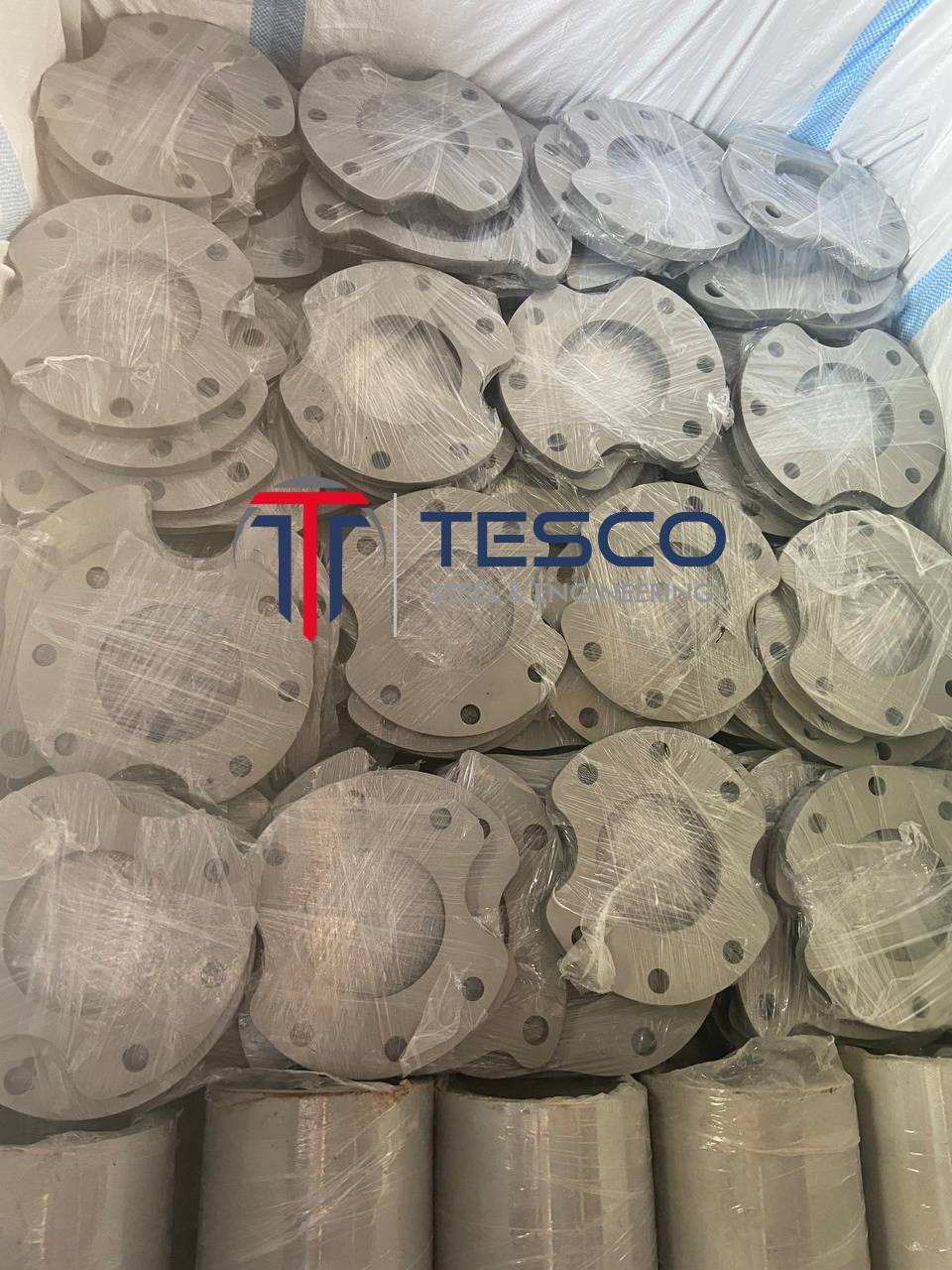
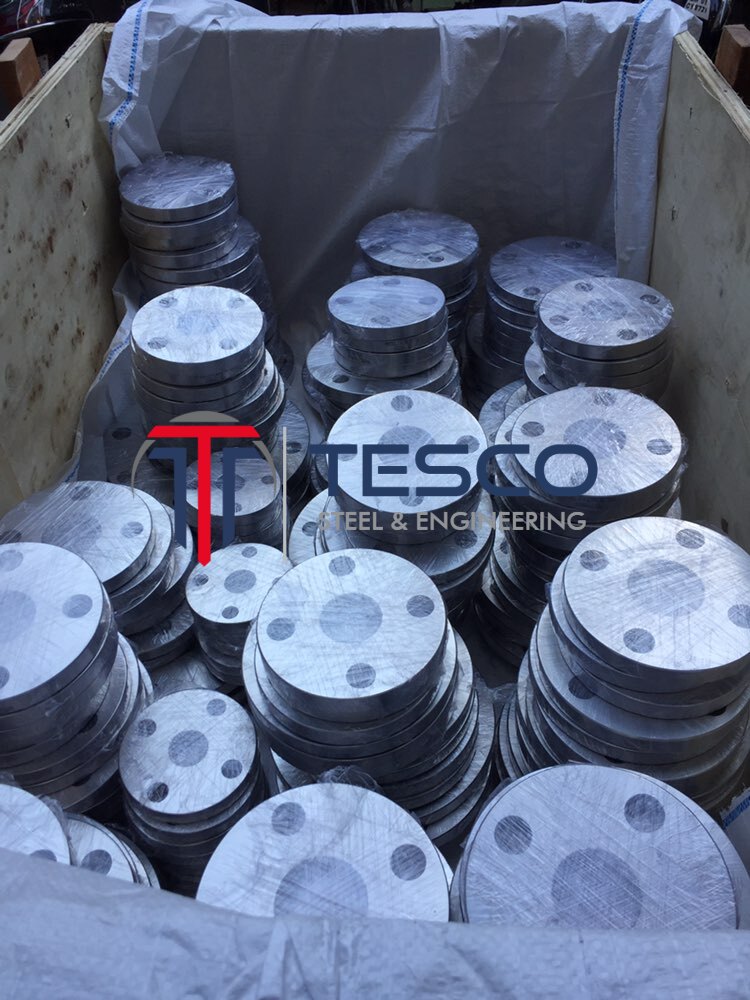
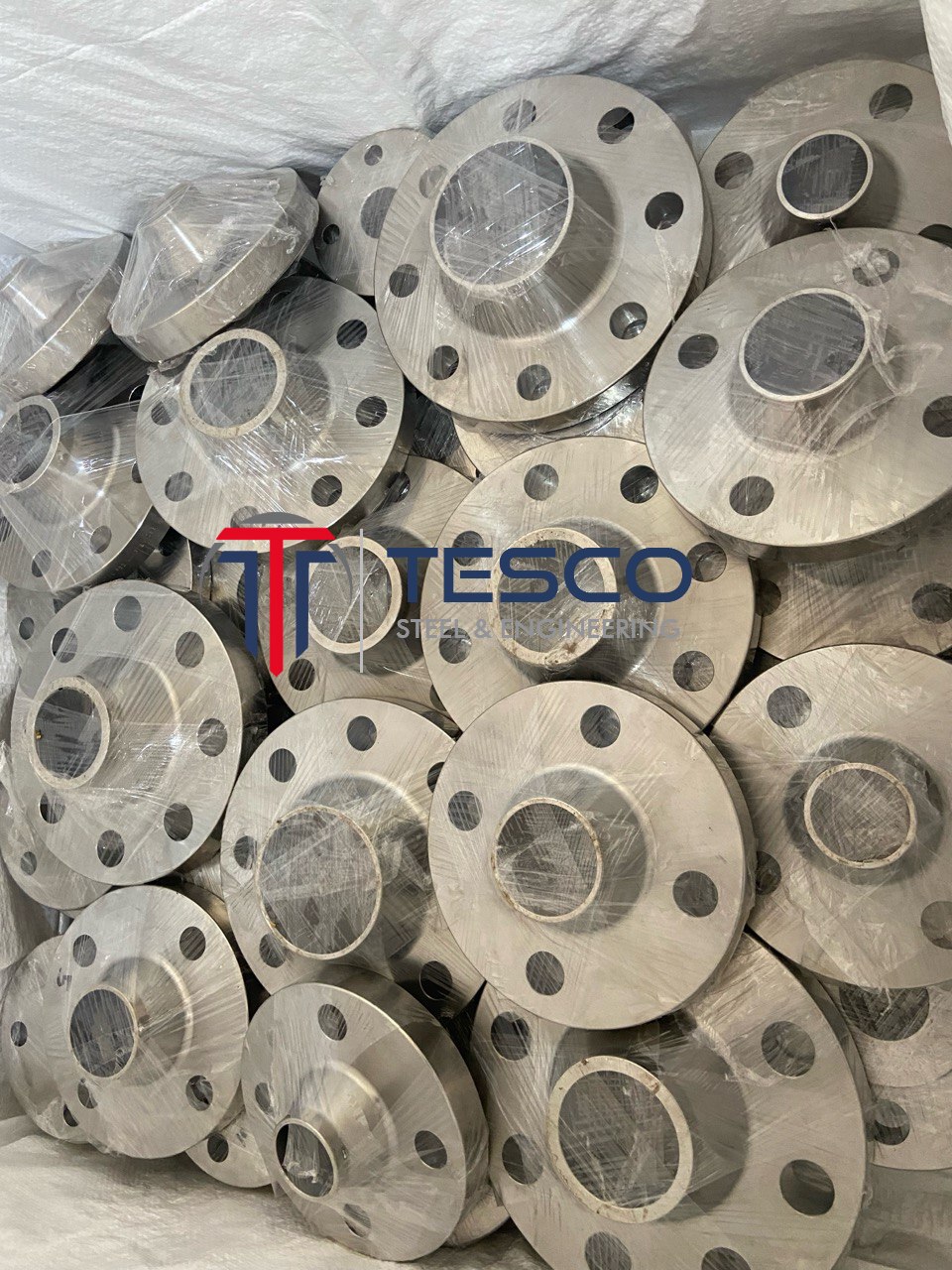
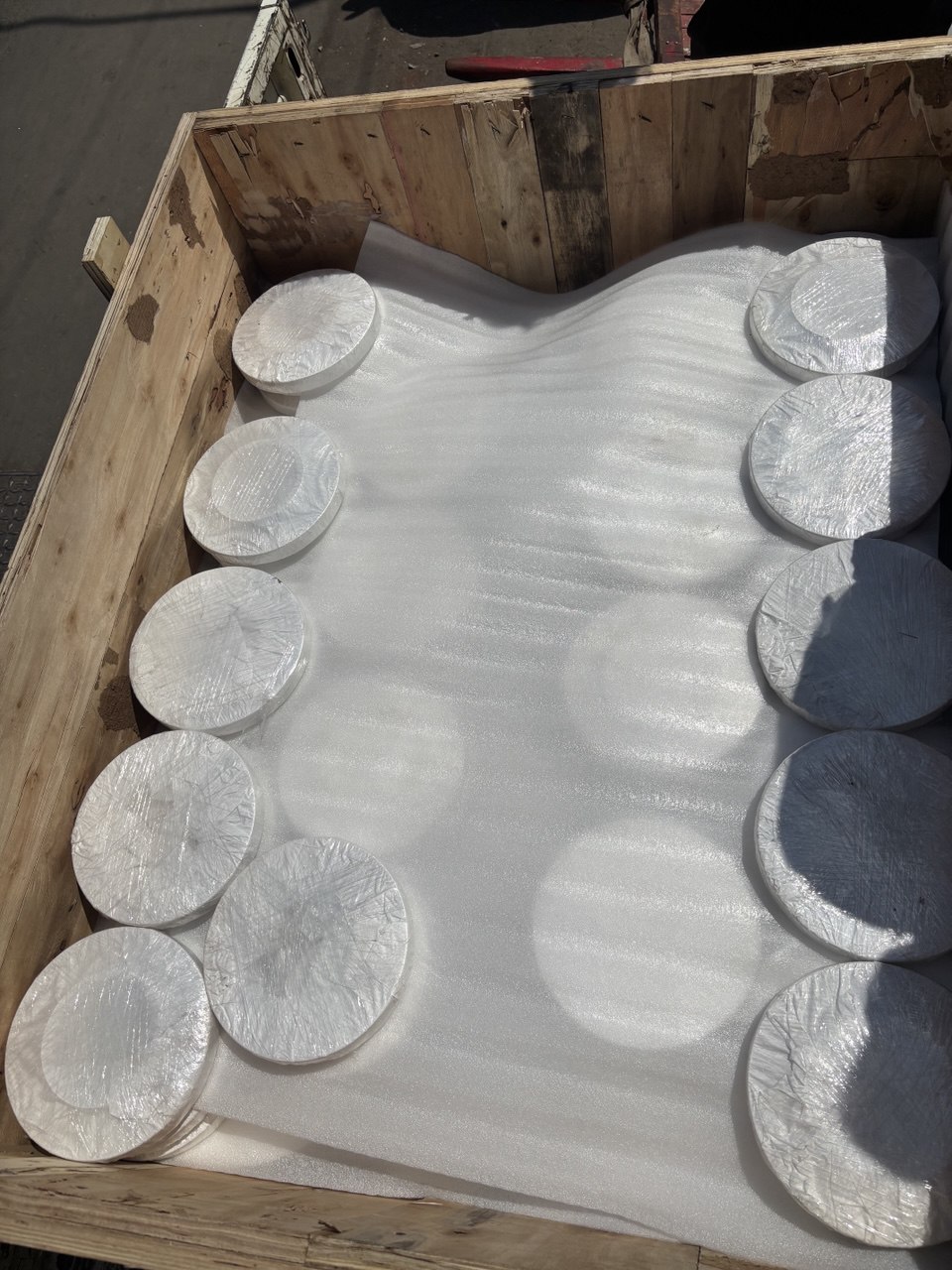
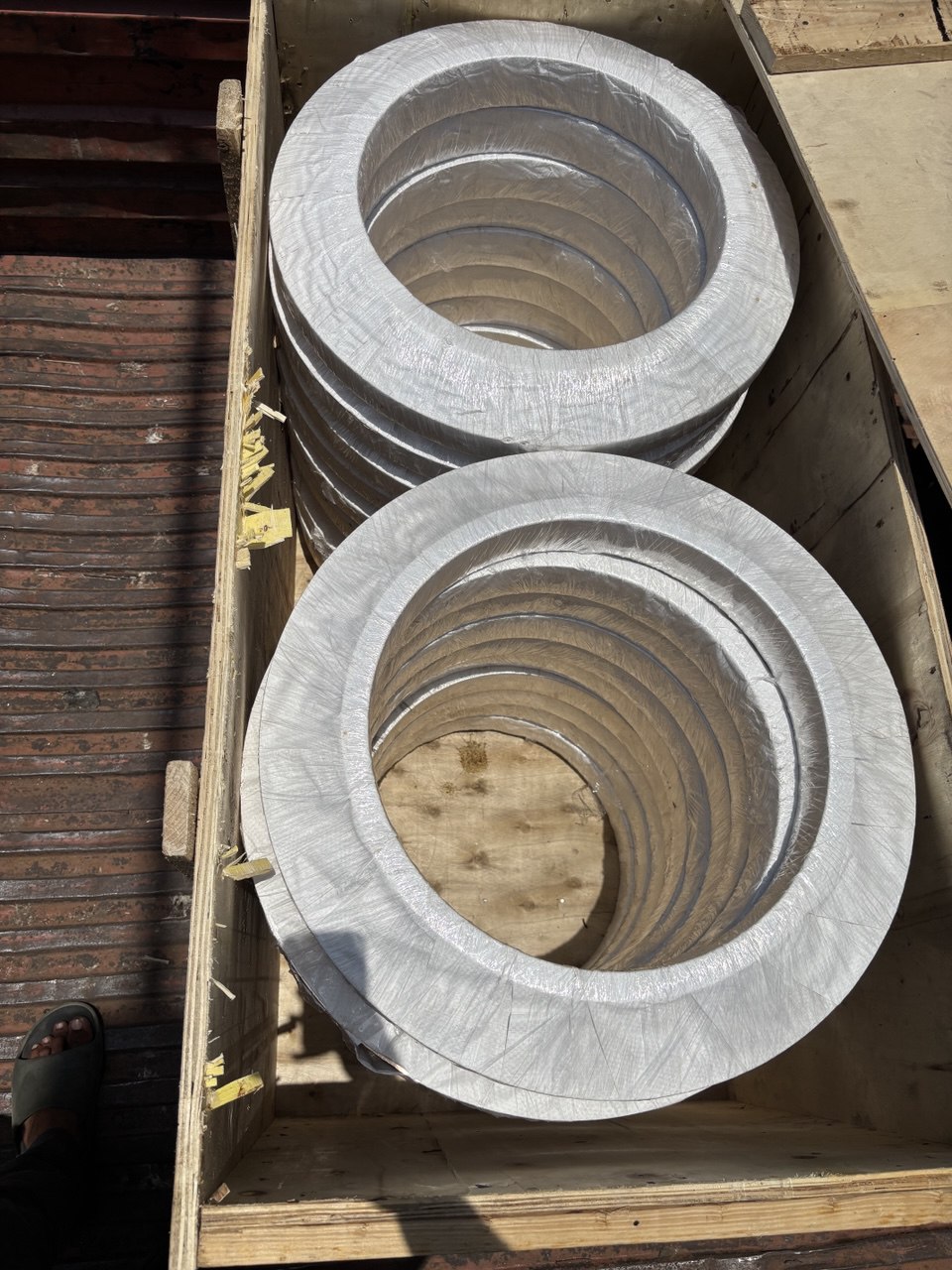
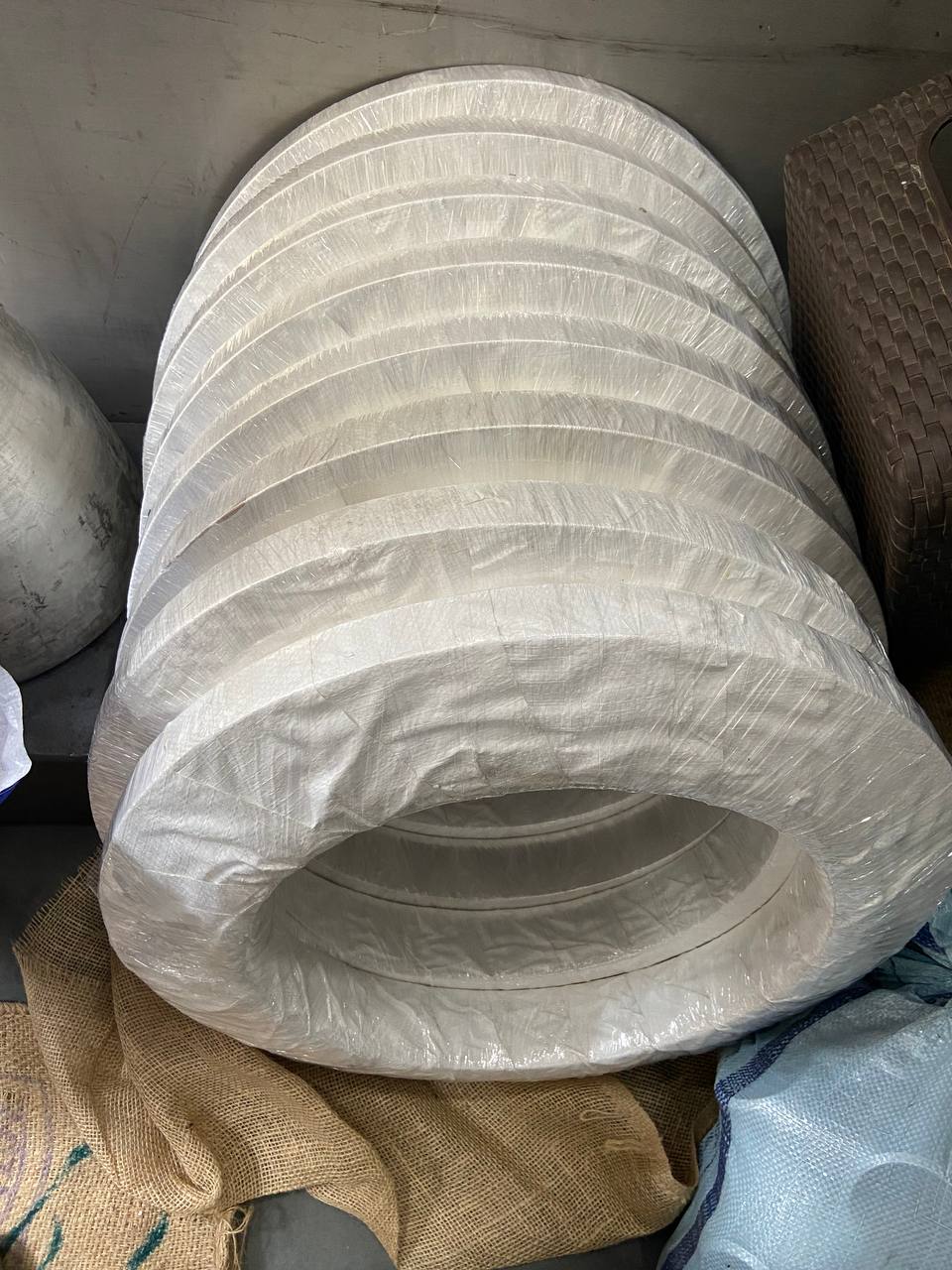
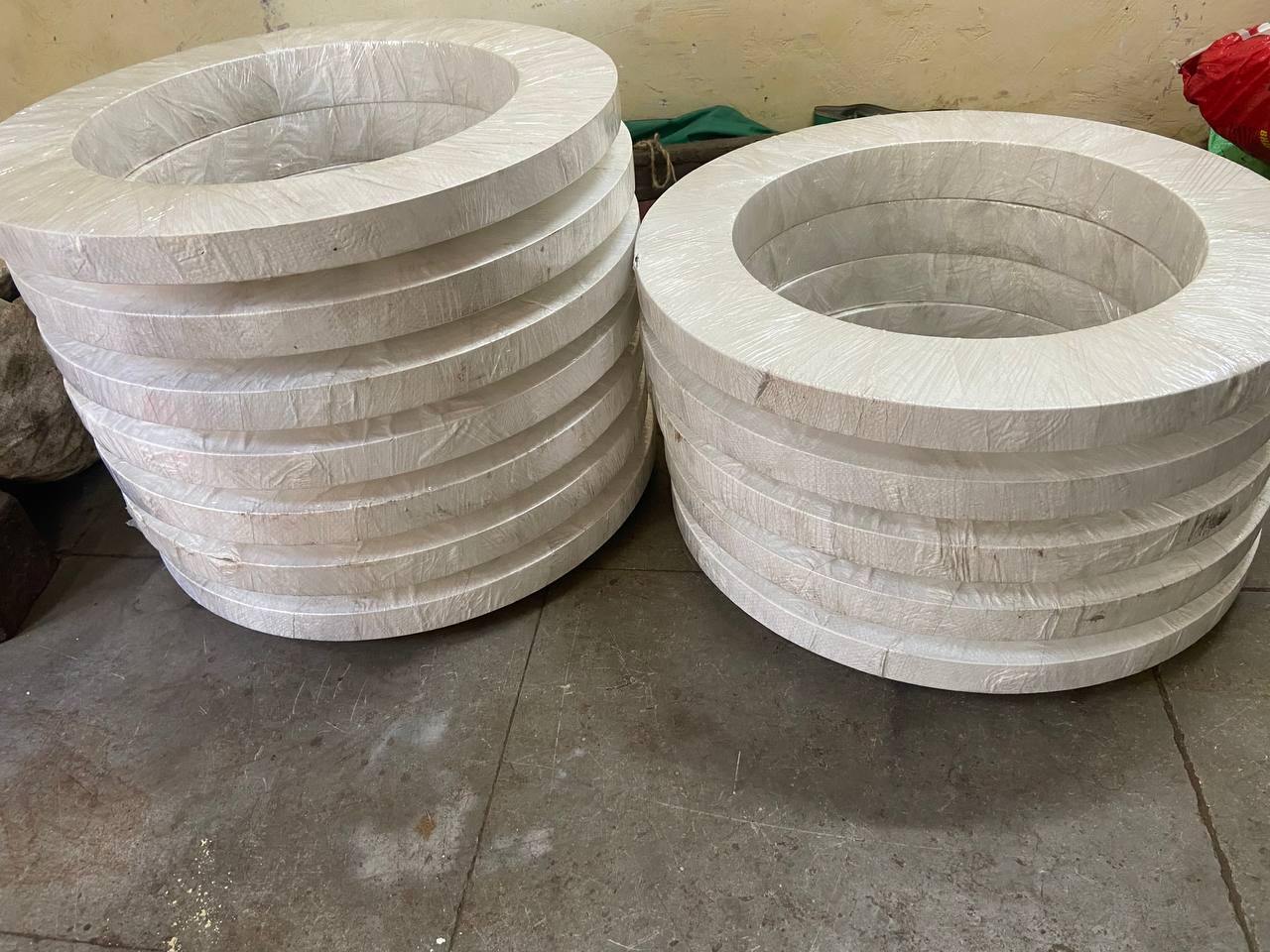
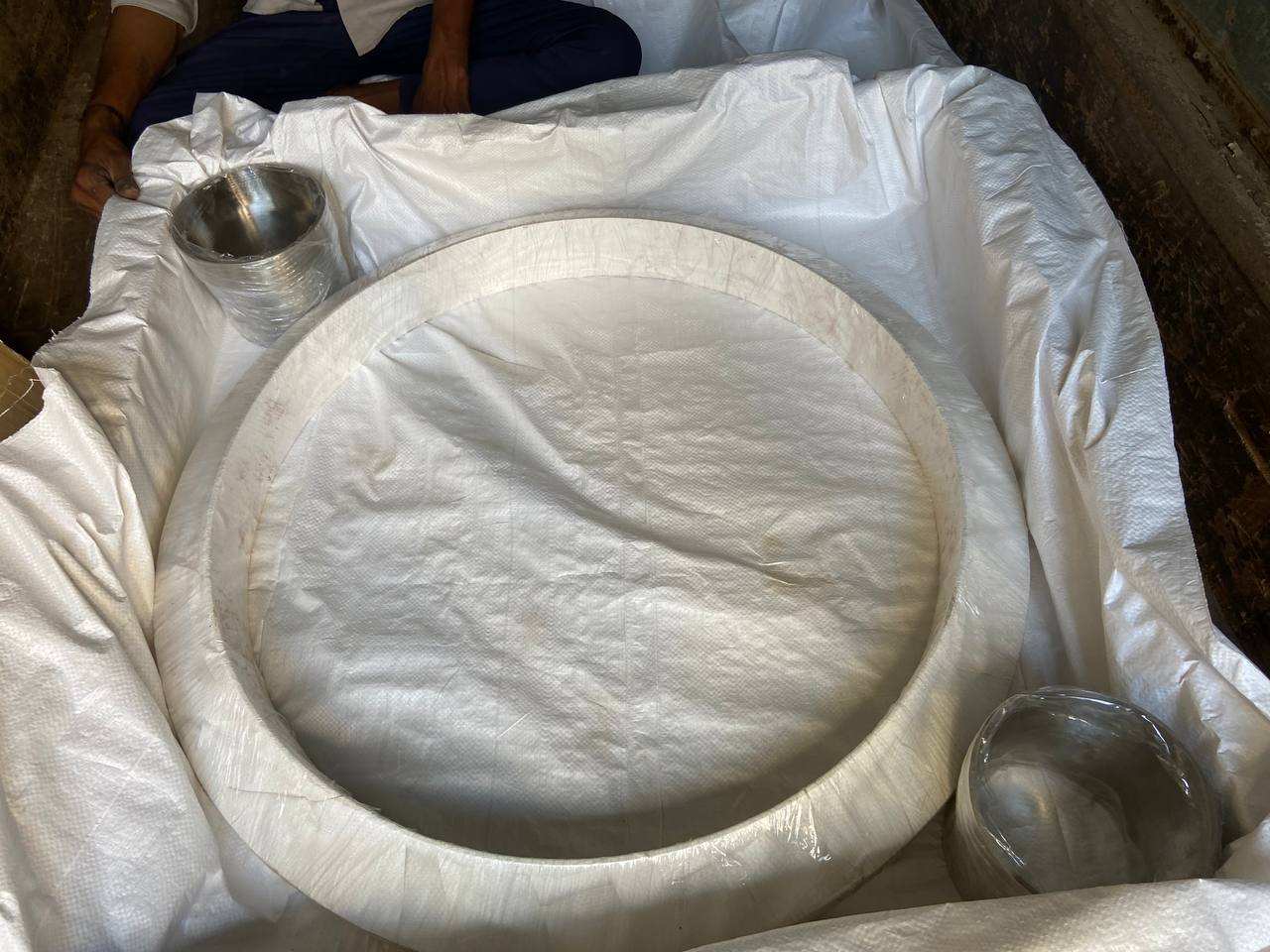
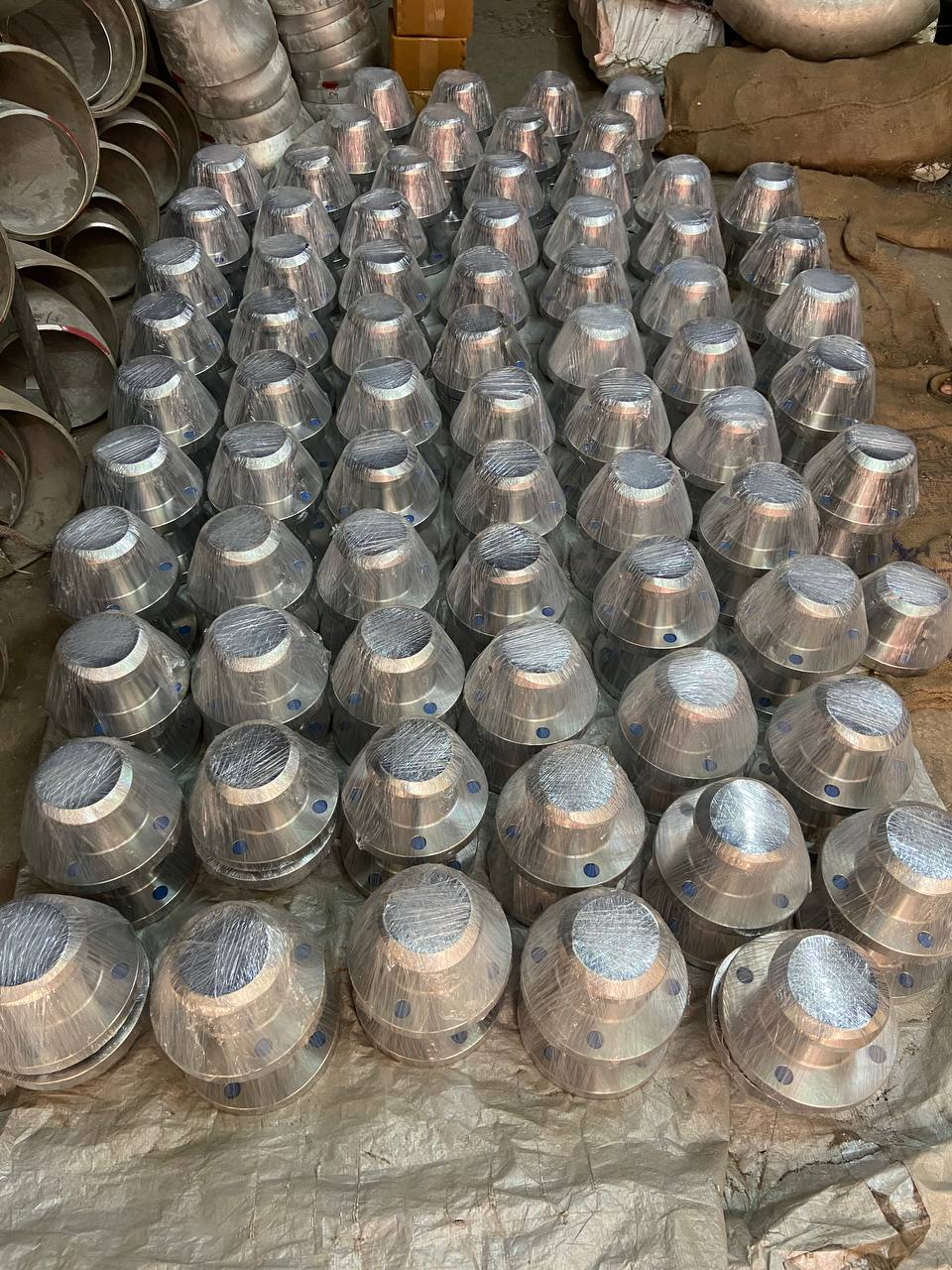
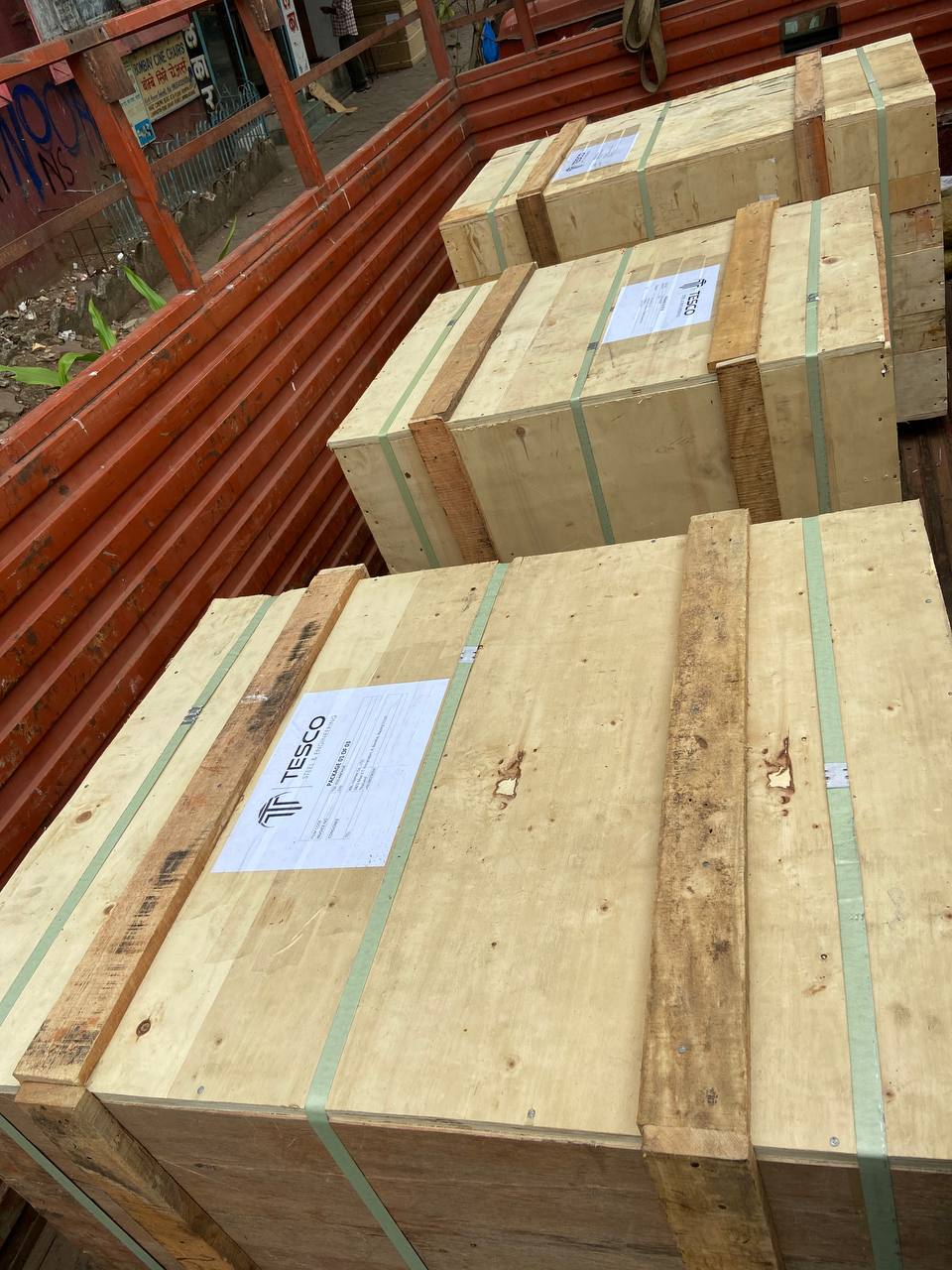
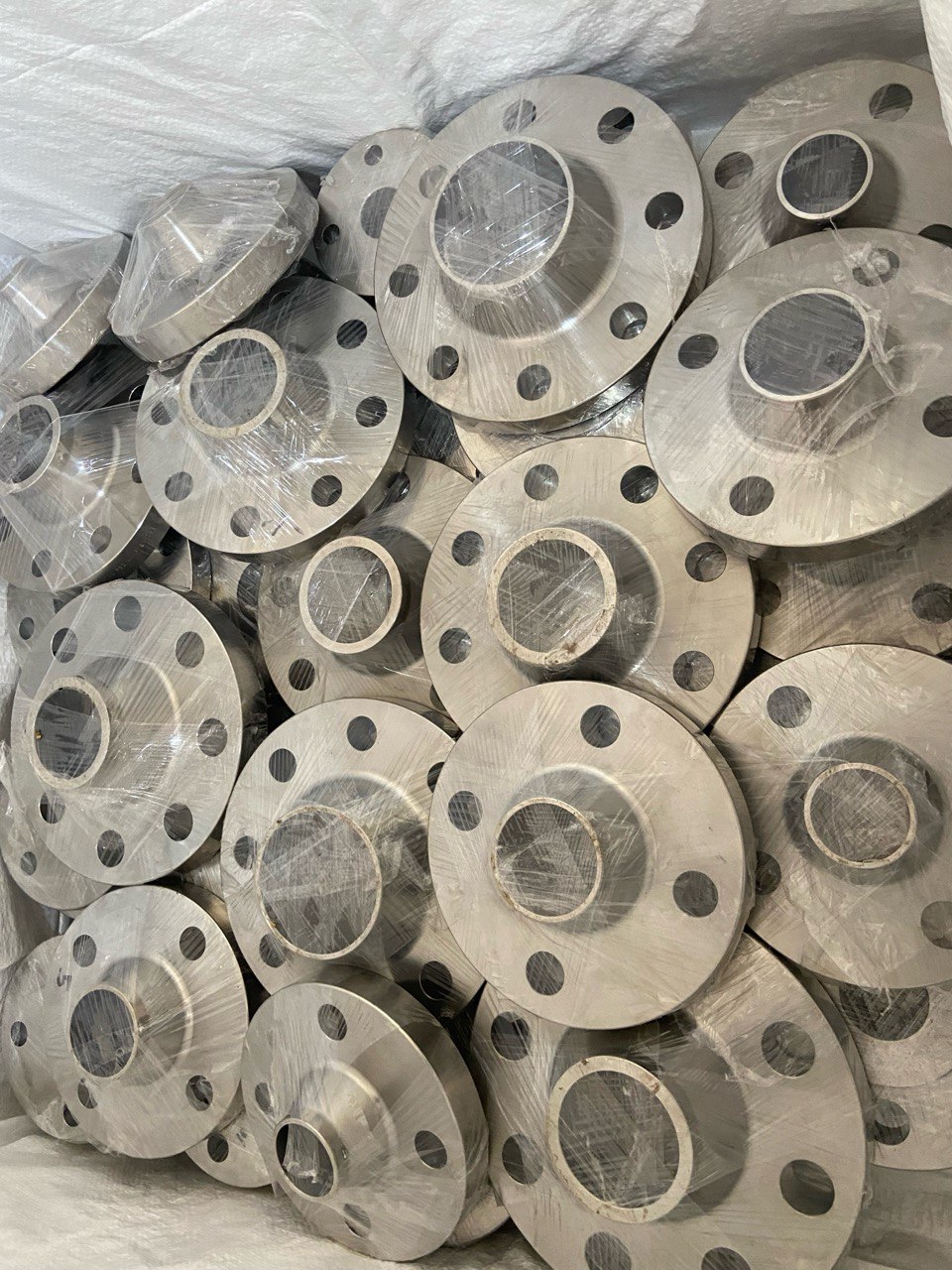
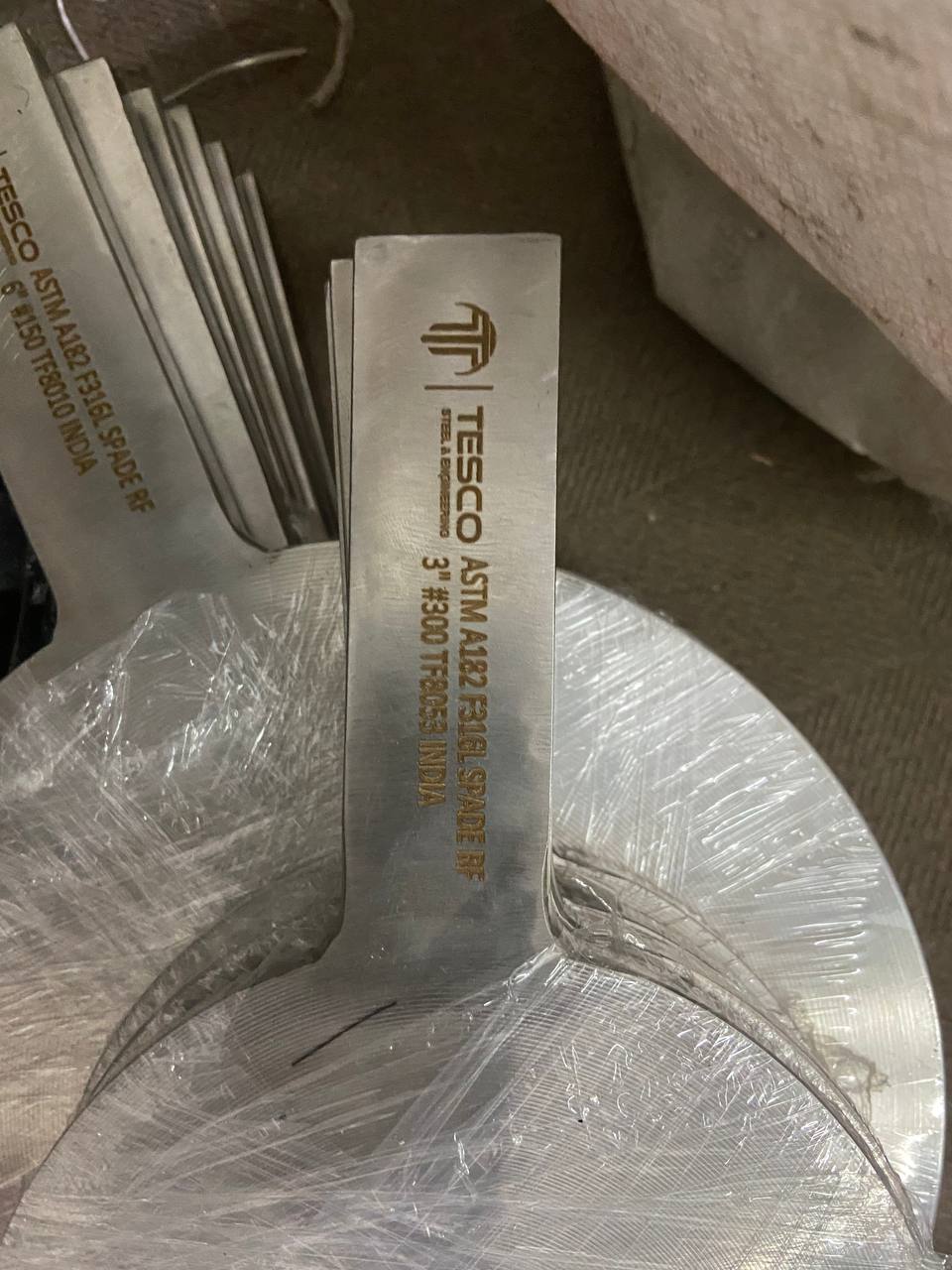
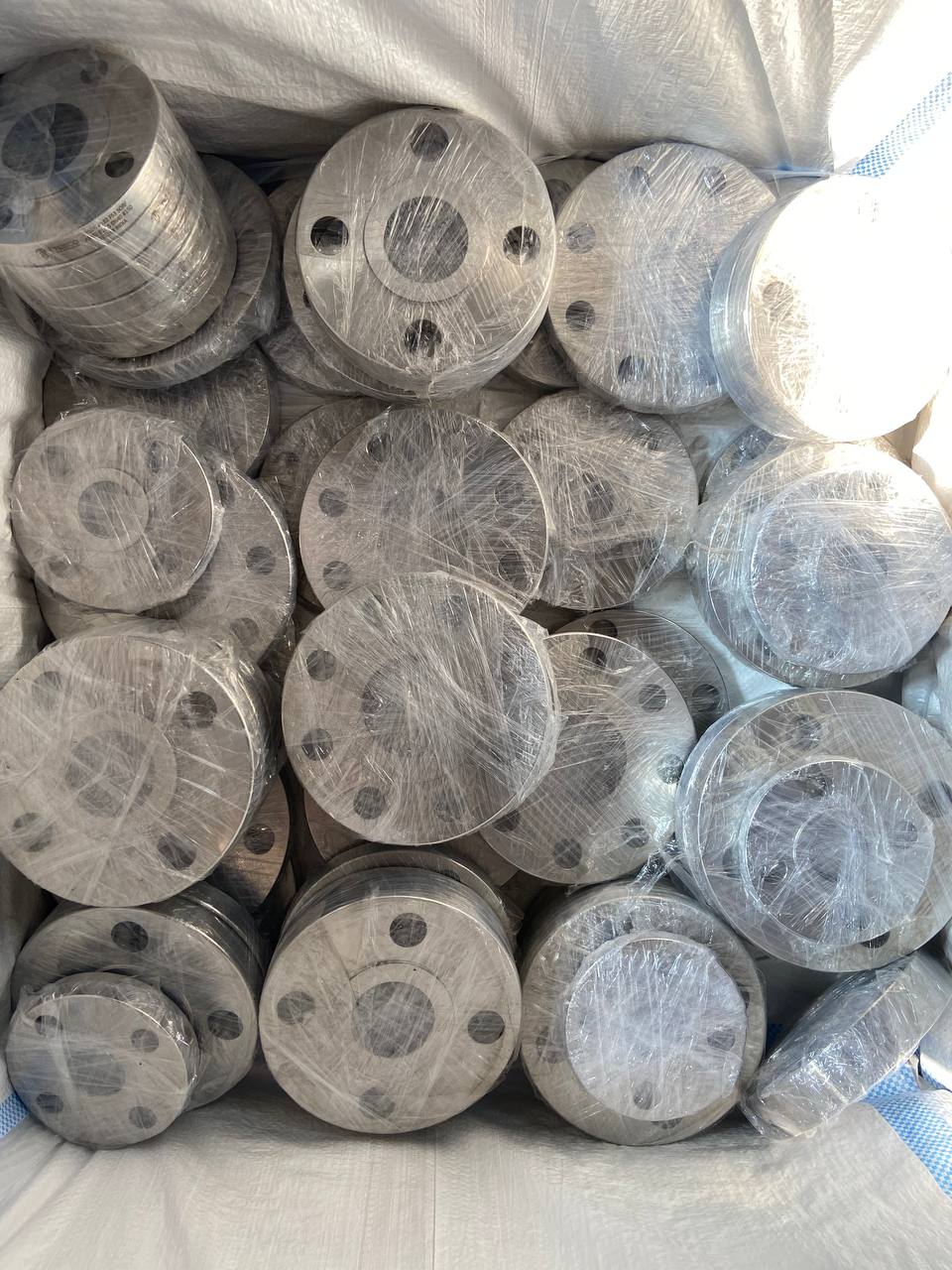
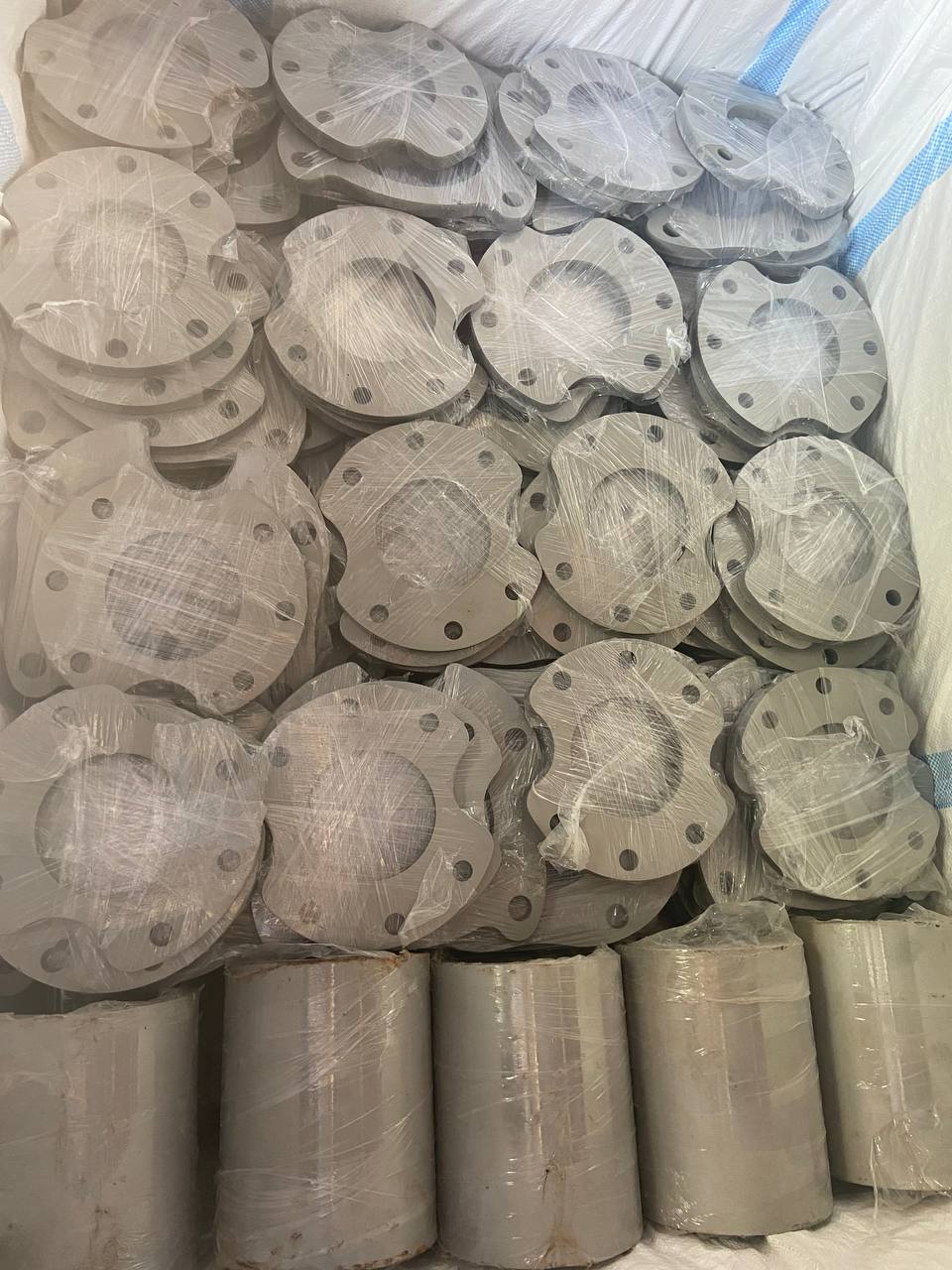
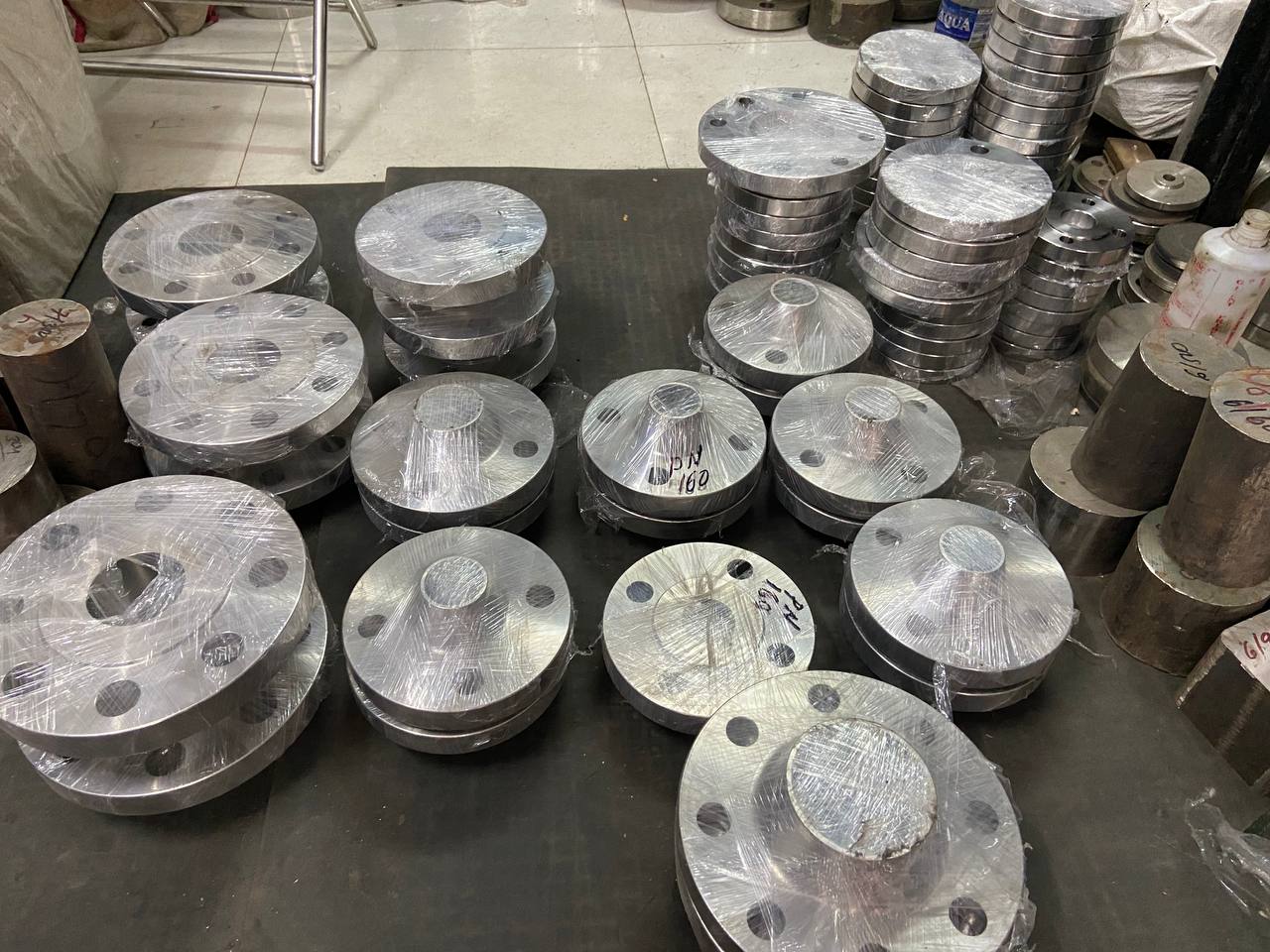
Every stainless steel flange dispatched by Tesco Steel & Engineering is individually protected before packing — bore caps and face protectors prevent surface damage, plastic stretch film or bubble wrap shields machined faces from moisture and contact corrosion, and large-diameter items receive heavy-duty foam wrapping. Finished goods are then packed into sea-worthy wooden export crates or palletised in woven bags for container loading. All packages are labelled with packing lists, heat numbers, and country-of-origin declarations to facilitate customs clearance in all 96 countries we export to.