Copper-Nickel 90/10 Blind Flanges — UNS C70600 Blind Manufacturer
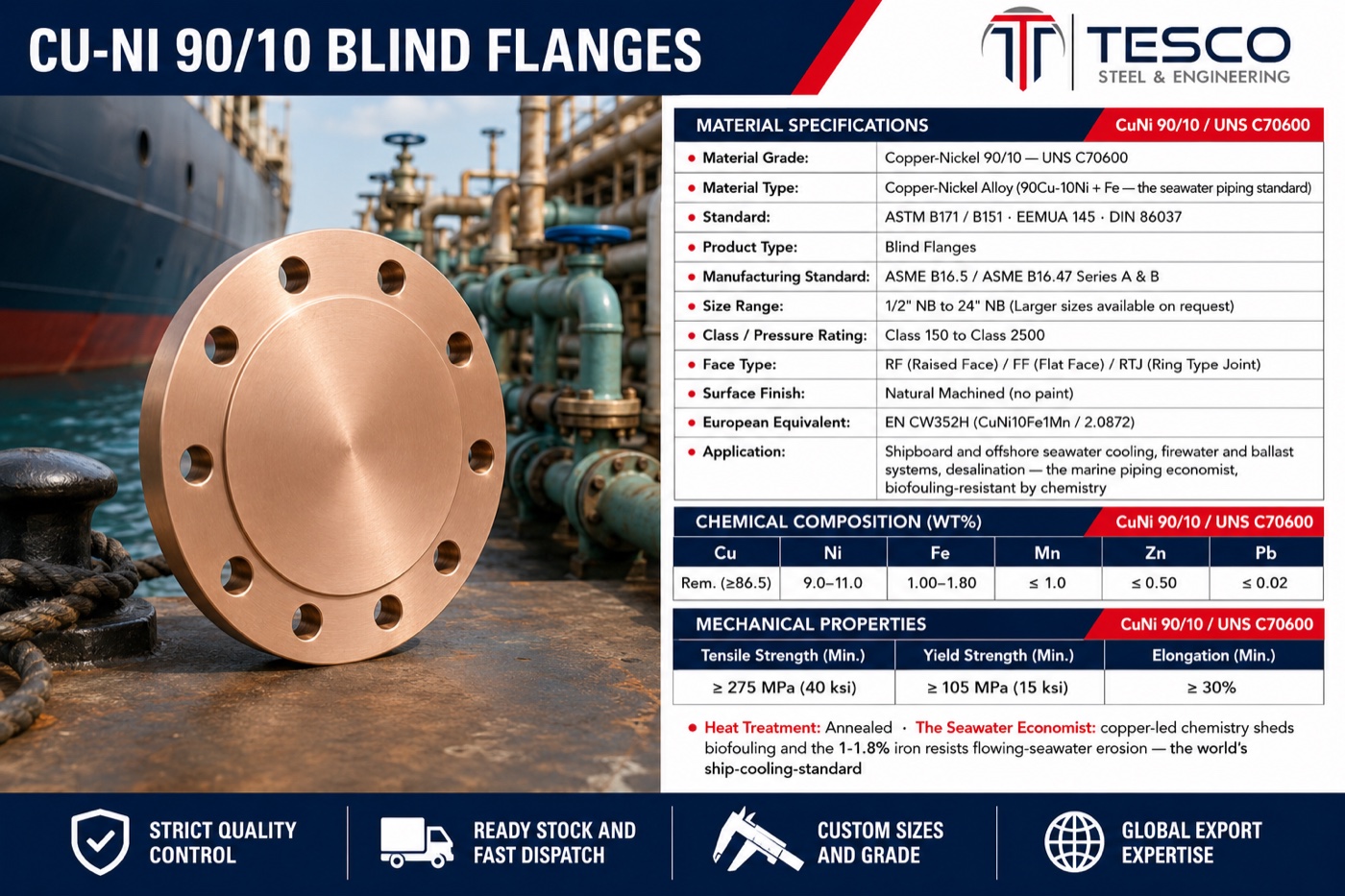
Tesco Steel & Engineering manufactures copper-nickel 90/10 blind flanges — UNS C70600, EN 2.0872 / CuNi10Fe1Mn — to ASME B16.5 Class 150–2500 from ½″ to 24″ NB, to ASME B16.47 up to 60″, and to the marine patterns EEMUA 145 and DIN 86037. The Monel ratio inverted — copper-led, for economics — with two properties nothing else on this site has: biofouling resistance by chemistry (shed copper ions keep barnacles and mussels from ever settling — the reason navies standardised ship cooling on it) and a deliberate 1–1.8% iron addition that toughens the surface film against flowing-seawater erosion. Shipboard cooling, firewater, ballast, desalination. Faster or fouler water: 70/30 (C71500). The hard points: Monel. Pressure and severity beyond copper: super duplex / titanium. Facings: BLRF, BLFF or BLRTJ. Every lot with EN 10204 3.1/3.2 MTC. ISO 9001:2015, made in Mumbai, India — exported to 50+ countries.
CuNi 90/10 · UNS C70600EN 2.0872 · CuNi10Fe1MnEEMUA 145 · DIN 86037 Marine PatternsBiofouling-Resistant by ChemistryFe 1–1.8% — Erosion-ProofedThe Ship-Cooling StandardASME B16.5 ½″–24″ · Class 150–2500EN 10204 3.1 / 3.2 · ISO 9001:2015
Copper-Nickel 90/10 Blind Flanges — Specifications at a Glance
What is a Copper-Nickel 90/10 Blind Flange?
The seawater economist. A solid disc of the world's standard seawater piping alloy — 90% copper, 10% nickel, iron-alloyed (UNS C70600 / EN 2.0872) — with no bore, closing shipboard and offshore cooling, firewater, ballast and desalination systems. Copper-led chemistry gives it what no steel has: biofouling resistance — marine growth never settles — and the deliberate 1.0–1.8% iron toughens its film against flowing-water erosion. Mechanicals 275/105 MPa annealed, matched to cooling-water duty. Dimensions per ASME B16.5 / B16.47 or the marine patterns EEMUA 145 / DIN 86037, in RF, FF and RTJ facings; EN 10204 3.1 certified.
Also searched as: CuNi 90/10 blind flange, cupro-nickel blind flange, C70600 blind, 2.0872 blind flange, CuNi10Fe1Mn blind, CW352H blind, EEMUA 145 blind flange, DIN 86037 blind, marine blind flange — all refer to the product on this page. See also our copper-nickel 90/10 & 70/30 hub for the full flange-type range, the sibling 70/30 C71500 flanges, the ratio-inverted Monel 400, and the facing pages BLRF / BLFF / BLRTJ.
Two Properties Nothing Else Here Has
Biofouling Resistance by Chemistry
The surface releases a trace of copper ions — lethal to settling barnacle and mussel larvae, invisible to everything else. Coolers stay clean for decades without coatings, chlorination or pigging, while steel and stainless in the same water foul within a season. The copper does what copper alone can.
Iron on Purpose
Plain cupronickel erodes where seawater flows fast. Iron at a deliberate 1.0–1.8% toughens the protective film and roughly doubles the velocity tolerance — the difference between a static alloy and a piping material. A certificate showing 0.3% iron describes an inferior metal; our PMI reads the iron on every piece.
And the Economics
A fraction of nickel-alloy cost, ordinary shipyard fabrication, uniform predictable corrosion — the whole-system arithmetic that made 90/10 the world's ship-cooling standard two generations ago.
Seawater Metals, Mapped
Family
Lead Metal
Its Seawater Role
Step Up When…
CuNi 90/10 (this page)
Copper
The piping economist — cooling, ballast, firewater; biofouling-proof
The first grade in our blind range where copper is the base — the Monel ratio inverted, with the C-prefix UNS number to match. Read the iron correctly: a deliberate range, not a residual cap — it is the erosion-corrosion element, and the number our PMI checks first.
Mechanical Properties & The Service Span
Property
UNS C70600 Requirement (Annealed)
Tensile Strength
≥ 275 MPa (40 ksi) — the lowest in our range, and sufficient: cooling water lives at modest pressure
Yield Strength (0.2%)
≥ 105 MPa (15 ksi)
Elongation
≥ 30%
Hardness
No specification limit — soft, gasket-kind alloy
Condition
Annealed — stated on certificate
Service Span
Sub-zero marine duty to ~200°C practical ceiling; the working windows are set by water chemistry and design velocity, not temperature
One Closure, Three Facings — Plus the Marine Patterns
Offshore & shipbuilding line classes — manufactured to order
C70600 Blind Flange Specifications
Copper-Nickel 90/10 Blind Flanges are available in the following specifications:
Material Grade
Copper-Nickel 90/10 — UNS C70600 (ASTM B171/B151 chemistry); EN 2.0872 / CuNi10Fe1Mn (CW352H) designation where required
Heat Treatment
Annealed — stated on certificate
Size
1/2"NB to 24"NB per ASME B16.5; 26"–60" per ASME B16.47; EEMUA 145 / DIN 86037 / EN 1092-1 to order
Class
150#, 300#, 400#, 600#, 900#, 1500#, 2500# — rated on the alloy's own B16.5 lines
Facings
Raised Face (BLRF), Flat Face (BLFF), Ring Type Joint (BLRTJ); marine-pattern facings per EEMUA/DIN
Service Span
Clean flowing seawater at design velocity — cooling, firewater, ballast, desalination; sulphide-polluted water and ammonia excluded — state the water quality at enquiry
Surface Finish
Natural machined — no paint, no coating; segregated copper-alloy handling throughout
Modifications
NPT-tapped centre (test / sampling / vent), lifting provisions — machined & certified at the works
Testing
Tension & chemistry per heat — the 1.0–1.8% iron verified; PMI routine
Certification
EN 10204 3.1 (standard) / 3.2 witnessed
Why C70600 Blind Flanges Are Specified
The Ship Already Speaks 90/10
Kilometres of shipboard and platform cooling pipe run in C70600 — the closure carries the same alloy, the same marine pattern, the same certificate as the system it blanks.
Clean Coolers, No Chemicals
Biofouling control by metallurgy: no chlorination dosing to maintain, no coating to renew, no growth hiding crevice sites — for the life of the system.
Decades, Predictably
Uniform, slow, well-documented corrosion in clean seawater — the design handbooks quote its rates to the year. No pitting surprises behind the gasket.
Marine Patterns, One Works
ASME, EEMUA 145 and DIN 86037 from one certified source — whichever world the project's line class lives in.
Three details buyers miss.Verify the iron: Fe 1.00–1.80% is a deliberate range, not a residual — low-iron material erodes at design velocities, and our PMI reads it on every piece. Water quality decides the grade: sulphide-polluted harbour water and decaying-organics service strip the protective film — 70/30 tolerates it better, and the water analysis belongs on the enquiry; ammonia service is excluded for all copper alloys. Mind the galvanic table: in seawater, cupronickel is anodic to stainless, Monel and titanium — a small CuNi closure in a large noble system corrodes for both; bolting per the marine spec (aluminium bronze, Monel or coated) and stated mating metallurgy are part of the closure's specification.
How Our C70600 Blind Flanges Are Manufactured
1
Forming — cut stock of the spectro-verified C70600 heat — copper base, nickel window and the deliberate iron confirmed — is worked into the solid disc blank with full heat traceability and segregated copper-alloy handling.
2
Annealing — restoring the soft, uniform matrix; furnace charts retained against the heat number.
3
Machining & facing — faces, OD and drilling to ASME B16.5 / B16.47 or the EEMUA 145 / DIN 86037 pattern ordered; RF serrations, flat face or RTJ groove gauged; NPT taps machined where ordered.
4
Testing — tension test and chemistry against the heat; PMI on every piece reads the copper-nickel-iron signature.
5
Finishing — natural machined surface, no paint or coating, with marking of standard or marine pattern, grade, size, class and heat number.
6
Certification & packing — EN 10204 3.1 MTC (3.2 witnessed on request); faces protected, palletised or crated sea-worthy — no carbon-steel contact in transit.
Where C70600 Blind Flanges Are Used
Wherever seawater is pumped for a living: shipboard cooling from engine jackets to HVAC circuits, offshore platform cooling and firewater mains, ballast systems, desalination trains, coastal power intakes, port and aquaculture infrastructure. Production below:
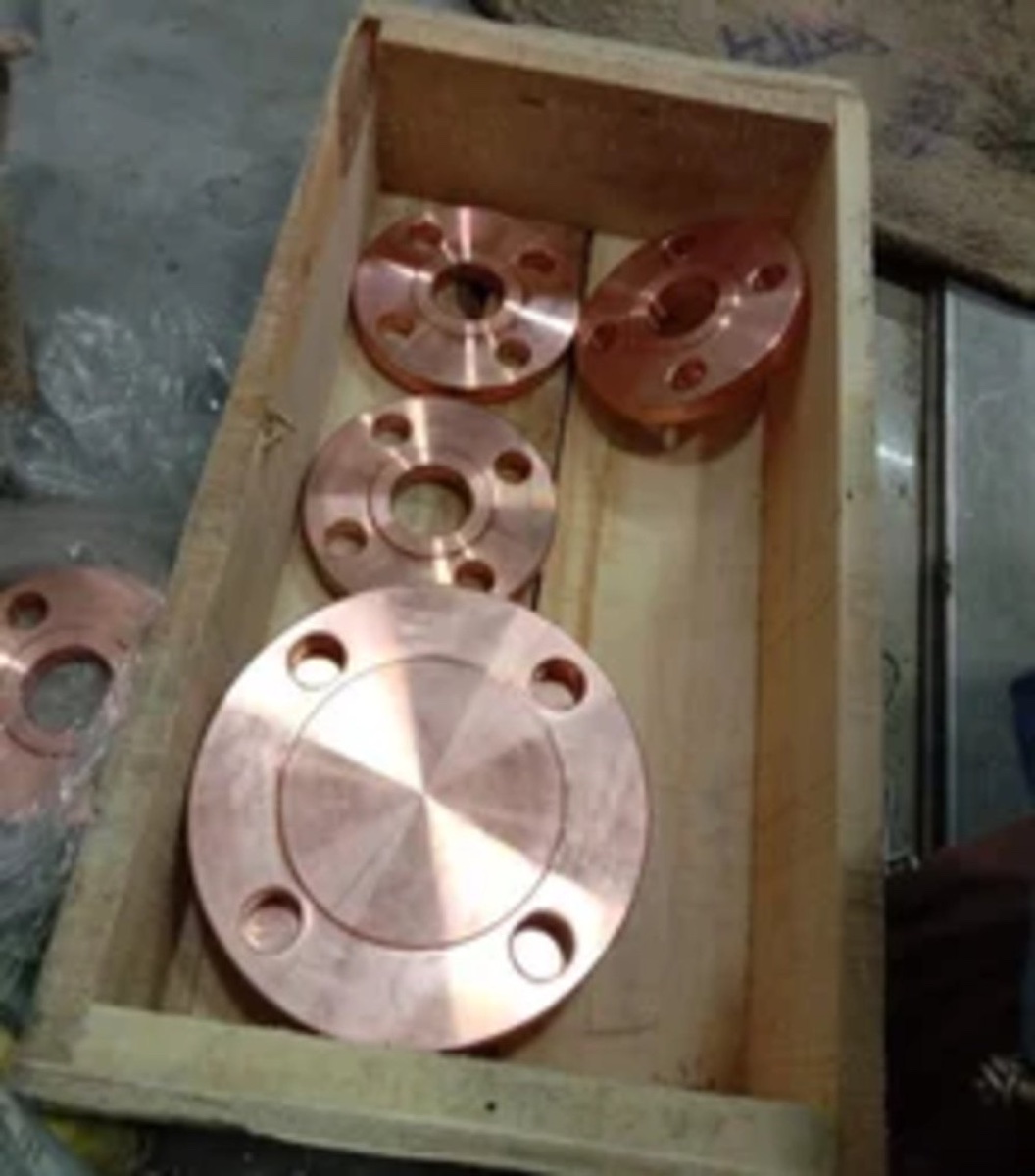
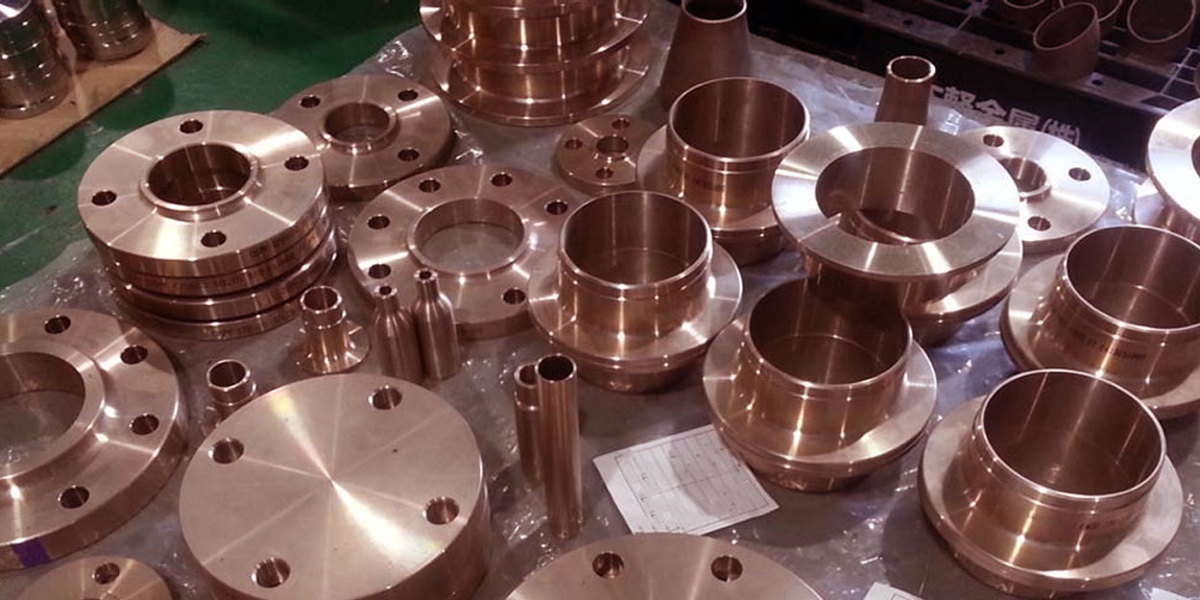
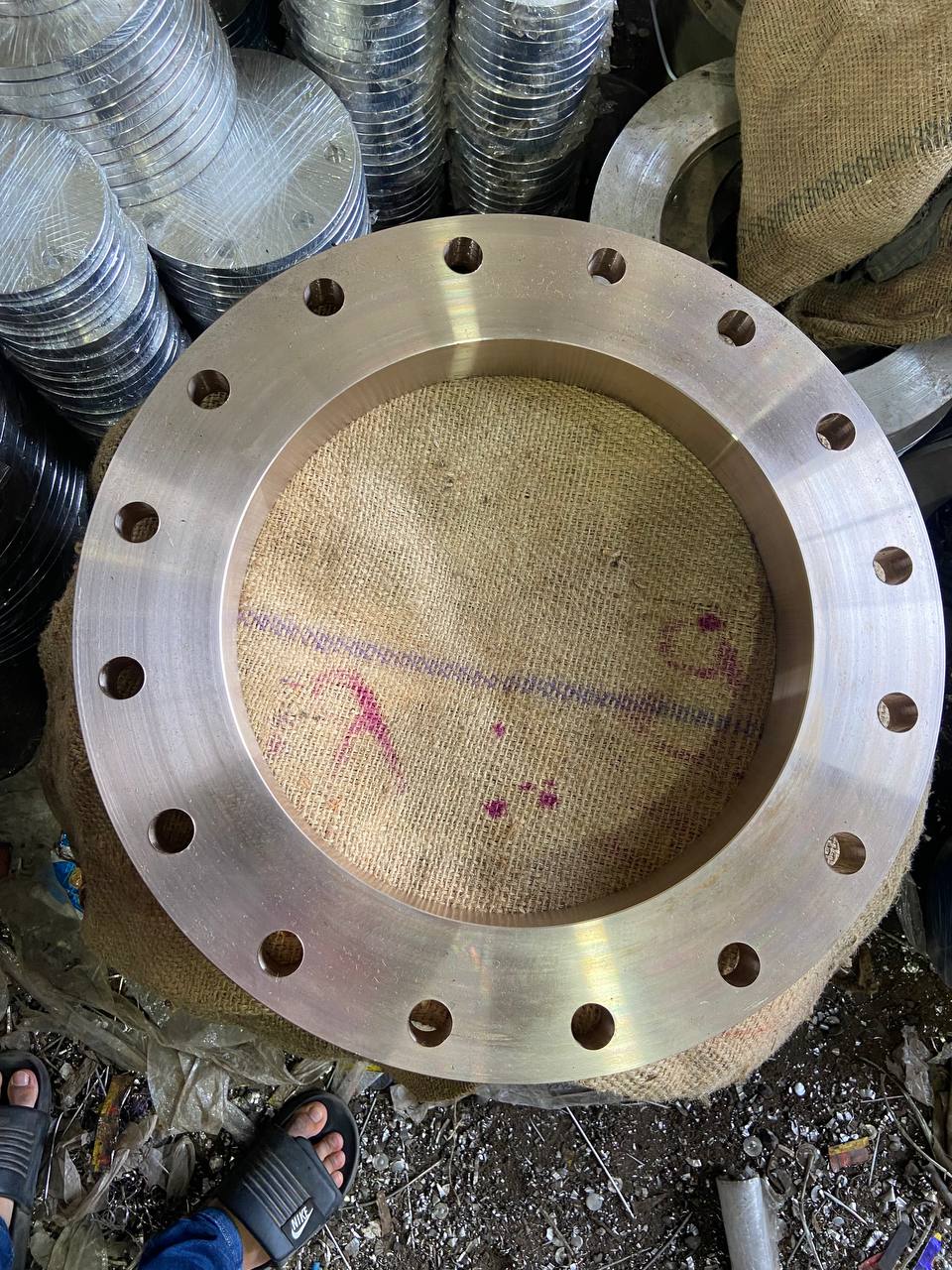
Copper-Nickel Flanges — Boxed at Our WorksCupro-Nickel 90/10 — Across the Production TableLarge-Diameter CuNi Blind — Machined & Finished
C70600 Blind Flange Dimensions
ASME blind dimensions are class-governed — identical across material grades; EEMUA 145 and DIN 86037 patterns follow their own tables, supplied against the specification. Full ASME charts:
Five elements — the standards world and the water quality are the CuNi-specific ones:
1
Size & standard — e.g. 6″ NB ASME B16.5 — or the EEMUA 145 / DIN 86037 marine pattern where the line class lives in that world.
2
Pressure class & facing — Class 150–2500; RF, FF or RTJ to match the mating flange — flat face for GRP and lined shipboard systems.
3
Grade — UNS C70600 (CuNi 90/10), stating EN 2.0872 where the project requires it — or 70/30 C71500 where velocity, pollution or temperature has stepped the duty up.
4
Service & certification — state the water quality (clean / harbour / sulphide-bearing), design velocity and mating metallurgy; NPT tap size if a test blind; PMI or 3.2 witnessing as specified; EN 10204 3.1 standard.
What is a copper-nickel 90/10 (UNS C70600) blind flange?
A copper-nickel 90/10 blind flange is a solid disc of the world's standard seawater piping alloy — roughly 90% copper, 10% nickel with a deliberate iron addition, UNS C70600, EN 2.0872 — drilled to the standard bolt pattern with no bore, used to close seawater cooling, firewater, ballast and desalination systems on ships, platforms and coastal plants. Copper-led chemistry gives it the property no steel possesses: biofouling resistance — barnacles and mussels simply do not colonise it. Dimensions follow ASME B16.5 from ½ inch to 24 inch and ASME B16.47 beyond, with EEMUA 145 and DIN 86037 marine patterns to order, in raised face, flat face and ring joint facings.
Why is 90/10 copper-nickel the seawater piping standard?
Because it wins the whole-system economics of seawater, not just the corrosion table. It corrodes slowly and uniformly in clean seawater — no pitting drama, predictable life measured in decades. It sheds biofouling by chemistry, so coolers stay clean without chlorination infrastructure. It costs a fraction of the nickel alloys and fabricates with ordinary shipyard skills. Navies and merchant fleets standardised shipboard cooling on 90/10 generations ago, and desalination plants followed. Where the water is clean and the velocities are designed right, nothing delivers more seawater service per rupee.
How does copper-nickel resist biofouling?
By slow, deliberate self-sacrifice. The alloy's surface releases a trace of copper ions — far below any environmental concern, but lethal to the larvae of barnacles, mussels and marine growth trying to settle. A 90/10 pipe or closure stays biologically clean for the life of the system without coatings, chlorination dosing or pigging campaigns — while a stainless or steel surface in the same water fouls within a season, losing flow area and hiding crevice sites under the growth. No other flange family on this site has the property; it is the copper doing what copper alone does.
Why does C70600 contain iron — isn't iron an impurity?
Here it is the second most important element in the recipe. Plain copper-nickel suffers erosion-corrosion where seawater flows fast — the protective film strips at bends, inlets and pump discharges. Iron at a deliberate 1.0-1.8%, dissolved into the alloy, toughens that film dramatically: velocity tolerance roughly doubles, and the alloy becomes viable as a flowing-water piping material rather than a static one. The specification writes iron as a range, not a cap — a certificate showing 0.3% iron describes a different, inferior material, and our PMI reads the iron on every piece for exactly that reason.
What is the chemical composition of C70600?
Copper the remainder — at least 86.5% — nickel 9.0-11.0%, iron 1.00-1.80% as a deliberate addition, manganese ≤1.0%, zinc ≤0.50%, lead ≤0.02%. The first grade in our blind range where copper is the base metal: the Monel ratio inverted, with the C-prefix UNS number to match. No chromium, no molybdenum, no passive-film chemistry — protection comes from copper's nobility and the iron-toughened surface film, and the biofouling resistance comes from the copper itself.
What are the mechanical properties of C70600 blind flanges?
In the annealed condition: tensile strength 275 MPa (40 ksi) minimum, yield strength 105 MPa (15 ksi) minimum, elongation 30% minimum — the lowest tensile figures in our blind range, and entirely sufficient for the duty. Seawater cooling and ballast systems live at modest pressures, flange ratings run on the alloy's own B16.5 lines, and marine specifications like EEMUA 145 were written around exactly these numbers. Where seawater duty genuinely needs strength — high-pressure injection, deep risers — the conversation moves to super duplex or Monel K-500; 90/10's franchise is the vast low-and-medium-pressure world of cooling water.
Which standards cover copper-nickel flanges — what are EEMUA 145 and DIN 86037?
Copper-nickel lives in the marine standards world as much as the ASTM one. The alloy chemistry certifies against ASTM B171 (plate) and B151 (rod) for C70600; the flanges themselves are dimensioned to ASME B16.5/B16.47 — or to the two great marine patterns: EEMUA 145, the UK offshore industry's dedicated 90/10 flange specification, and DIN 86037, the German shipbuilding standard, both written specifically for cupronickel seawater systems with their own bolting and facing conventions. A marine enquiry should state which world it lives in; we manufacture to all of them and the certificate follows the pattern ordered.
90/10 or 70/30 copper-nickel — when is each specified?
90/10 (C70600) is the economist and the default: the standard for shipboard and offshore cooling at ordinary velocities and temperatures. 70/30 (C71500) triples the nickel to buy the next step — higher velocity tolerance, better resistance in polluted or sulphide-bearing water, more strength and a higher temperature ceiling — at a correspondingly higher price. The practical split: general cooling, ballast and firewater run 90/10; pump discharge zones, high-flow headers and harbour-water duty step up to 70/30. We supply both, and the same system frequently mixes them by location.
Copper-nickel or Monel — they share the same two metals?
The same two metals with the ratio inverted, and the ratio decides everything. Cupronickel — copper-led — is the piping economist: biofouling resistance, good uniform behaviour, moderate cost, the material of kilometres of shipboard pipe. Monel — nickel-led — is several times stronger, resists acids and alkalis cupronickel cannot touch, and costs accordingly. Classic marine practice uses them as a system: 90/10 pipework and closures for the runs, Monel at the hard points — pump internals, valve trim, fasteners. Both families are on this site, and the galvanic note below matters when they meet.
What service conditions does 90/10 copper-nickel dislike?
Four honest limits. Sulphide-polluted water — stagnant harbours, decaying organics — converts its protective film to a fragile sulphide layer that strips and pits; 70/30 tolerates it better, and badly polluted berths challenge every copper alloy. Excess velocity beyond the design window erodes even the iron-toughened film — system design, not the flange, governs. Ammonia and ammonium compounds can stress-crack copper alloys. And its strength and ~200°C practical ceiling suit cooling water, not process duty. In clean flowing seawater at design velocity — its actual job — none of these apply.
Does bolting a copper-nickel flange to stainless or Monel cause galvanic problems?
It can, and marine practice plans for it. In seawater, cupronickel is anodic to stainless steel, Monel and titanium — couple a 90/10 flange to a large cathodic partner and the copper alloy corrodes for both of them. The standing rules: keep the unfavourable area ratio small (a CuNi closure on a CuNi line is ideal; a CuNi component in a large noble system is not), use compatible bolting per the marine specification (typically aluminium bronze, Monel or coated), and isolate where design requires. State the mating metallurgy at enquiry — it is part of the closure's specification in seawater, not an afterthought.
What facings are C70600 blind flanges made with?
All three ASME facings — raised face (BLRF) as the default, flat face (BLFF) for the GRP and rubber-lined systems seawater plants run in quantity, and ring type joint (BLRTJ) where high-pressure practice reaches into cupronickel service — plus the facing conventions of EEMUA 145 and DIN 86037 where the marine pattern governs. The soft alloy seats gaskets kindly; full-face elastomeric systems are the shipboard norm. NPT-tapped test and sampling blinds are machined and certified at the works.
Where are C70600 blind flanges used?
Wherever seawater is pumped for a living: shipboard cooling systems from engine jackets to air-conditioning circuits, offshore platform cooling and firewater mains, ballast systems, desalination plant trains, coastal power station intakes, and aquaculture and port infrastructure. C70600 blinds close those systems as isolations, spare-nozzle blanks and tapped test points — staying biologically clean in the one environment where every other flange family fouls.
Which standards cover C70600 blind flanges?
The alloy certifies to UNS C70600 chemistry per ASTM B171/B151, with EN 2.0872 / CuNi10Fe1Mn (CW352H) as the European designation. Dimensions follow ASME B16.5 for ½"-24" and ASME B16.47 for 26"-60", or the dedicated marine patterns — EEMUA 145 for offshore practice and DIN 86037 for shipbuilding. A complete specification reads: 'Blind Flange, FF, 6", ASME B16.5 Class 150, UNS C70600 (CuNi 90/10)' — or the EEMUA/DIN designation where the project's world requires it — and our EN 10204 certificates state it exactly that way, iron content included.
Who manufactures copper-nickel 90/10 blind flanges in India?
Tesco Steel & Engineering is an ISO 9001:2015 certified flange manufacturer based in Mumbai, India, producing copper-nickel 90/10 / UNS C70600 / EN 2.0872 blind flanges from ½" to 24" NB per ASME B16.5 in Classes 150-2500, to 60" per ASME B16.47, and to EEMUA 145 / DIN 86037 marine patterns — annealed, natural machined finish, PMI-verified with the copper-nickel-iron signature read on every piece, certified to EN 10204 3.1/3.2 on every lot — in raised face, flat face and ring joint facings, alongside 70/30 (C71500), the full copper-nickel flange range, Monel 400 and K-500 blinds. Exported to more than 50 countries.