

'SHAPING INDUSTRIES WITH THE FINEST STEEL'
'SHAPING INDUSTRIES WITH THE FINEST STEEL'
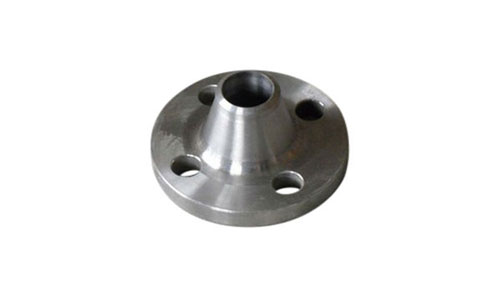
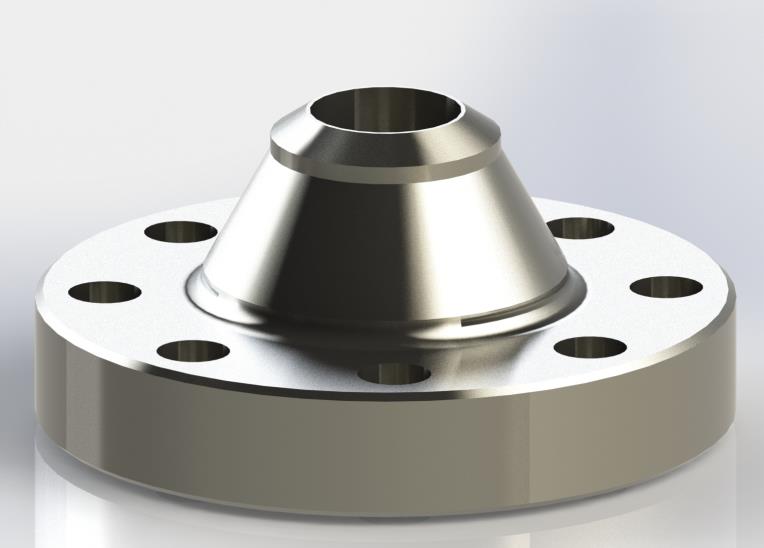
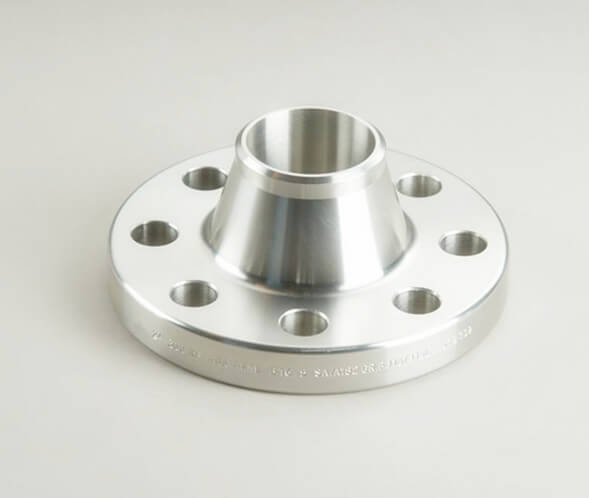
Tesco Steel & Engineering manufactures ASME B16.47 Series B Class 900 weld neck flanges — the heaviest class the large-diameter standard tabulates, in the compact Series B (formerly API 605) pattern, built for high-pressure gas transmission and injection, compressor discharge, synthesis loops and slug catchers. Sizes NPS 26–48 (DN 650–1200) — Class 900 stops at 48″ — raised face 7 mm or RTJ, forged or rolled-ring forged, bored to your pipe wall. This page is the complete reference: the full 12-size dimension chart in mm with bolt circles, stud counts, hole sizes and weights, the pressure–temperature table in bar, the Series B vs Series A comparison and the material grades we produce — from A105 and A694 pipeline grades to SS 316 and duplex. ISO 9001:2015 certified, made in Mumbai, India — exported worldwide.
ASME B16.5 stops at NPS 24; from 26″ up, large diameter steel flanges belong to ASME B16.47 — and Class 900 is where that standard itself tops out. The table runs only to NPS 48, and the hardware explains why: a 48″ flange is a 2.26-tonne forging on twenty-four 4″ studs. Series B, inherited from API 605, reaches the same rating as Series A with a smaller ring and more, smaller bolts at 26″–36″ — 476 kg against 692 kg at 26″ — which matters most exactly where this class lives: high-pressure gas transmission and injection, compressor discharge headers and manifolds, offshore topsides and FPSO HP process lines, gas-processing, hydrocracker and synthesis loops, HP boiler feedwater and main steam, slug catchers and separator nozzles.
Two conventions apply at this class: the raised face is 7 mm (or RTJ, specified as often at these pressures) and the tabulated thickness excludes it. And one relationship to know: from NPS 38 to 48, B16.47 defines Series A Class 900 with these Series B dimensions — this chart is the pattern both series share at the top of the range. As everywhere in B16.47, the bore is not standardised: every flange is bored to the pipe OD × wall on the order. Ratings follow ASME B16.5 Table 2, reproduced below in bar.
“Class 900” (also written 900 lb or #900, roughly PN 160) is a pressure–temperature rating class, and B16.47 adopts the ASME B16.5 Table 2 ratings for it — identical for both series, so Series B gives up nothing in rating for its compact build:
| Temperature °C | Group 1.1 — A105 / A350 LF2 / A694 | Group 2.1 — A182 F304 | Group 2.2 — A182 F316 |
|---|---|---|---|
| −29 to 38 | 153.2 | 148.9 | 148.9 |
| 100 | 139.8 | 126.6 | 129.4 |
| 150 | 135.2 | 115.5 | 118.5 |
| 200 | 131.4 | 107.0 | 110.3 |
| 250 | 125.8 | 100.1 | 103.4 |
| 300 | 119.5 | 94.9 | 97.9 |
| 350 | 112.7 | 91.0 | 93.8 |
| 400 | 104.2 | 88.3 | 91.2 |
| 450 | 86.3 | 86.3 | 88.2 |
Working pressure in bar (gauge) per ASME B16.5 Tables 2-1.1, 2-2.1 and 2-2.2, as adopted by B16.47. A694 high-yield grades rated per Group 1.1 unless otherwise agreed. Confirm for your exact material group, bolting and gasket.
All dimensions in mm per ASME B16.47-2020 Series B. Letters follow the figure: O = outer diameter, C = flange thickness (excluding the 7 mm raised face), X = hub diameter at base, A = hub diameter at the weld bevel (= pipe OD per B36.10M), R = raised face diameter, V = length through hub (including the face), B = bolt circle (PCD), H = bolt hole diameter. Prefer it on paper? Download the full Series B Class 900 dimensions datasheet (PDF) — the same chart with the drawing, ratings, materials and ordering notes, ready for the workshop.
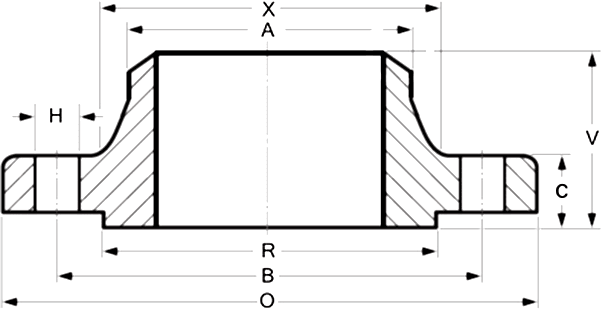
Weld Neck Flange Dimension Reference — ASME B16.47 Series B
| Size in Inch | Size in mm | Outer Diameter | Flange Thickness | Hub OD | Weld Neck OD | RF Diameter | Length Through Hub | PCD | No. of Studs | Hole Ø | Stud Size | Approx Weight (kg) |
|---|---|---|---|---|---|---|---|---|---|---|---|---|
| O | C | X | A | R | V | B | — | H | — | |||
| 26 | 650 | 1020 | 135.0 | 743 | 660.4 | 762 | 265.4 | 901.7 | 20 | 66.7 | 2 1/2 | 476 |
| 28 | 700 | 1105 | 147.7 | 797 | 711.2 | 819 | 282.4 | 971.6 | 20 | 73.0 | 2 3/4 | 689 |
| 30 | 750 | 1180 | 155.6 | 851 | 762.0 | 876 | 295.4 | 1035.0 | 20 | 79.4 | 3 | 826 |
| 32 | 800 | 1240 | 160.4 | 908 | 812.8 | 927 | 309.4 | 1092.2 | 20 | 79.4 | 3 | 937 |
| 34 | 850 | 1315 | 171.5 | 962 | 863.6 | 991 | 325.4 | 1155.7 | 20 | 85.7 | 3 1/4 | 1111 |
| 36 | 900 | 1345 | 173.1 | 1016 | 914.4 | 1029 | 331.4 | 1200.2 | 24 | 79.4 | 3 | 1143 |
| 38 | 950 | 1460 | 190.5 | 1073 | 965.2 | 1099 | 358.4 | 1289.0 | 20 | 92.1 | 3 1/2 | 1535 |
| 40 | 1000 | 1510 | 196.9 | 1127 | 1016.0 | 1162 | 370.4 | 1339.8 | 24 | 92.1 | 3 1/2 | 1642 |
| 42 | 1050 | 1560 | 206.4 | 1176 | 1066.8 | 1213 | 377.4 | 1390.6 | 24 | 92.1 | 3 1/2 | 1796 |
| 44 | 1100 | 1650 | 214.4 | 1235 | 1117.6 | 1270 | 397.4 | 1463.7 | 24 | 98.4 | 3 3/4 | 1950 |
| 46 | 1150 | 1735 | 225.6 | 1292 | 1168.4 | 1334 | 417.4 | 1536.7 | 24 | 104.8 | 4 | 2105 |
| 48 | 1200 | 1785 | 233.4 | 1343 | 1219.2 | 1384 | 425.4 | 1587.5 | 24 | 104.8 | 4 | 2259 |
| Series B (this page) | Series A | |
|---|---|---|
| Origin | API 605 (large-diameter CS flanges) | MSS SP-44 (pipeline flanges) |
| Geometry | Compact — more, smaller bolts, tight circle | Larger OD, thicker, fewer / larger bolts |
| Weight (26″ Cl.900) | ≈476 kg | ≈692 kg |
| At Class 900 | Differ at NPS 26–36; identical at NPS 38–48 — Series A adopts the Series B dimensions there | |
| Typical use | Process plants, gas plants, offshore topsides | Pipelines, valves, pumps, vessel nozzles |
Rule of thumb: match the mating equipment, and state the series on every drawing and enquiry. Our Series A Class 900 chart carries the companion table for NPS 26–36, where the two patterns genuinely differ.
B16.47 Series B Class 900 weld neck flanges are produced in the material families below — forged or rolled-ring forged, each with EN 10204 3.1 mill certificates, heat-number traceability and PMI on request:
| Material Family | Typical Flange Grades | Best suited to |
|---|---|---|
| Carbon Steel | ASTM A105 / A105N; A266 Cl.2 for large forgings | General high-pressure service, plant utility |
| High-Yield Pipeline | ASTM A694 F42, F46, F52, F56, F60, F65 | Matched to API 5L X42–X65 line pipe |
| LTCS | ASTM A350 LF2 Cl.1 / Cl.2, LF3 | Low-temperature service, impact tested |
| Stainless Steel | A182 F304/L, F316/L, F321 | Corrosive process & refinery service |
| Duplex / Super Duplex | A182 F51 (2205), F53 (2507) | High strength + chloride resistance, offshore |
| Clad / Weld Overlay | CS + 316L, Inconel 625 or Cu-Ni face overlay | Corrosion resistance at carbon-steel cost — on request |
| EN Equivalents | P250GH, P355NH / L360NB (1.0582), 1.4404 — on request | European specifications |
Large diameter flanges are manufactured to order — use the Ask for Quote button or the inquiry form for today’s price and delivery position.
| Pressure Class | Series B (ex API 605) | Series A (ex MSS SP-44) |
|---|---|---|
| Class 75 | Series B Class 75 Weld Neck | — (no Series A Class 75) |
| Class 150 | Series B Class 150 Weld Neck | Series A Class 150 Weld Neck |
| Class 300 | Series B Class 300 Weld Neck | Series A Class 300 Weld Neck |
| Class 400 | Series B Class 400 Weld Neck | Series A Class 400 Weld Neck |
| Class 600 | Series B Class 600 Weld Neck | Series A Class 600 Weld Neck |
| Class 900 | Series B Class 900 Weld Neck (this page) | Series A Class 900 Weld Neck |
Below NPS 26, see our ASME B16.5 Class 900 weld neck chart. Related references: Weld Neck Flanges overview · Series B Class 900 Blind · All Flange Dimension Charts · Flange Weight Chart.
The heaviest class the large-diameter standard tabulates, stopping at NPS 48 — and at 26″–36″ Series B carries it with 200-plus kg less steel per flange than Series A.
From NPS 38 to 48 the standard defines Series A Class 900 with these Series B dimensions — this chart is the pattern both series share at the top of the range.
The tapered hub and full-penetration butt weld give the joint the strength and fatigue life of the pipe itself, with a weld geometry open to full radiography.
High-pressure gas transmission and injection, compressor discharge headers and manifolds, offshore topsides and FPSO HP process lines, gas-processing, hydrocracker and synthesis loops, HP boiler feedwater and main steam, slug catchers and separator nozzles.
What is an ASME B16.47 Series B Class 900 weld neck flange?
A large diameter welding neck flange in the heaviest class ASME B16.47 tabulates, running NPS 26 through 48. Series B, formerly API 605, is the compact bolting pattern: smaller outside diameter and more, smaller bolts on a tight circle, making it lighter than the Series A counterpart at NPS 26-36; from NPS 38 to 48 the two series share identical Class 900 dimensions. The weld neck type carries a tapered hub butt-welded to the pipe, giving the best stress distribution and fatigue life of any flange type at these sizes.
What are the dimensions of a B16.47 Series B Class 900 weld neck flange?
They are tabulated in ASME B16.47-2020 and reproduced in full in the chart above: for each of the twelve sizes from NPS 26 to 48, the outer diameter, flange thickness, hub diameters at base and bevel, raised face diameter, length through hub, bolt circle, stud count, hole diameter and stud size — all in millimetres — plus the approximate weight. A 36 in flange, for example, is 1345 mm OD and 173.1 mm thick (plus the 7 mm face) on a 1200.2 mm bolt circle with twenty-four 3 in studs, at about 1143 kg.
Why does B16.47 Class 900 stop at NPS 48?
Because beyond that, a conventional bolted flange at 150-plus bar stops making engineering sense. The 48 in flange already weighs about 2.26 tonnes on twenty-four 4 in studs; anything larger would demand bolting and ring sections outside sensible practice, so the standard ends the Class 900 table at 48 in while the lower classes run to 60. Larger ultra-high-pressure connections move to special designs — hub clamps or welded construction.
Is the pressure rating the same as Series A Class 900?
Yes — both series use the ASME B16.5 Table 2 Class 900 ratings: 153.2 bar at 38 °C for A105, derating with temperature. At NPS 26-36 Series B reaches that rating in a more compact, lighter flange; at NPS 38-48, B16.47 gives Series A the Series B dimensions, so the two series coincide there. The full bar table for carbon and stainless groups is on this page.
How much lighter is Series B than Series A?
At the sizes where the two patterns differ, NPS 26 to 36, the saving is substantial: a 26 in Series B Class 900 weld neck weighs about 476 kg against 692 kg for Series A, and a 36 in about 1143 kg against 1540 kg. From NPS 38 upward the standard gives the two series identical Class 900 dimensions, so the saving applies to the 26-36 in range.
Series A or Series B — which do I need?
Match the mating equipment. Series B (ex API 605) is common in refineries, gas plants and offshore topsides; valves, pumps and older MSS SP-44 pipeline systems are usually Series A. When in doubt, compare the bolt count and bolt circle of the mating flange against the chart — at NPS 26-36 the two series never share a Class 900 drilling.
Are Series A and Series B Class 900 flanges interchangeable?
At NPS 26 to 36, no — different OD, bolt circle, bolt count and bolt size, so they can never bolt together there, nor to any B16.5 or B16.1 drilling. At NPS 38 to 48 the standard defines the two series with identical Class 900 dimensions. The series must still be stated on every enquiry and drawing, because at other sizes and classes the difference is real.
What is API 605 and how does it relate to B16.47 Series B?
API 605 was the American Petroleum Institute's standard for large-diameter carbon steel flanges on refinery and tank-farm piping — compact, economical patterns for moderate pressures. When ASME consolidated large diameter flanges into B16.47 in 1990, API 605 became Series B, dimension for dimension. Drawings still call up API 605 regularly, and a flange made to our chart mates with it exactly.
Does the thickness in the chart include the raised face?
No — at Class 400 and above the raised face is 7 mm (1/4 in), and the tabulated thickness C excludes it, while the length through hub V includes it. That is the reverse of the Class 75-300 convention, where the 2 mm face is included in the thickness — worth checking whenever you compare charts. The hub diameter at the bevel A equals the pipe outside diameter per ASME B36.10M.
Why is the bore not shown in the dimension table?
Because ASME B16.47 deliberately leaves it to the purchaser. Large diameter pipe is ordered by wall thickness rather than schedule, so there is no standard bore to print — the flange is bored to match the pipe stated on the order. Give the pipe OD and wall thickness (or the exact ID) with your enquiry; our chart weights assume a bore for STD (9.53 mm) wall pipe.
How much does a B16.47 Series B Class 900 weld neck flange weigh?
From the weight column in our chart: a 26 inch weighs about 476 kg, a 36 inch about 1143 kg and a 48 inch about 2259 kg — every size above 32 in is more than a tonne, and the top of the chart is a 2.26-tonne forging on twenty-four 4 in studs. These are approximate carbon-steel weights bored for STD wall pipe; the exact weight varies with the bore and material.
Why do the bolt counts and stud sizes alternate through the chart?
The Series B Class 900 pattern balances bolt load size by size rather than in long runs, so count and stud size alternate as the chart climbs — and at one point the stud size even steps down: a 34 in flange carries twenty 3-1/4 in studs while a 36 in carries twenty-four 3 in studs. Always count holes and measure the bolt circle against the mating flange rather than assuming a trend.
Which gasket and bolts are used with these flanges?
Spiral wound gaskets to ASME B16.20 with inner ring on RF joints, or octagonal ring gaskets in RTJ grooves — common at this class — with stud bolts and heavy hex nuts: A193 B7 / A194 2H for carbon steel, B8M Class 2 for stainless flanges. Studs run 2-1/2 to 4 in on this chart, 20 to 24 per flange, and the holes are drilled 3.2 mm larger than the stud. Hydraulic tensioning is the only sensible make-up method at these stud sizes.
What materials are available for B16.47 Series B flanges?
Carbon steel ASTM A105/A105N and A266 Cl.2 for large forgings, high-yield A694 F42 through F65 matched to API 5L X42-X65 pipeline pipe, low-temperature A350 LF2/LF3, stainless A182 F304/L, F316/L and F321, duplex F51 and super duplex F53, plus carbon-steel flanges with 316L, Inconel 625 or copper-nickel weld overlay on request. EN equivalents such as P250GH, P355NH and 1.4404 are available — all with EN 10204 3.1 certificates, 3.2 on request.
Why choose a weld neck at these sizes?
Because at 26 to 48 in and Class 900 pressures the piping loads are enormous and the joint lives on its fatigue performance. The weld neck's tapered hub feeds bending and pressure loads gradually from flange ring into pipe wall, and its full-penetration butt weld can be radiographed — which is why gas injection systems, compressor discharge headers and synthesis loops standardise on it at this class.
What facing do these flanges come with?
A 7 mm (1/4 in) raised face or a ring type joint — at Class 900 the RTJ is specified as often as the RF, with octagonal ring gaskets seating in machined grooves. Faces are serrated to 125-250 microinch Ra (3.2-6.3 micrometre) for spiral wound gaskets on RF joints. State the facing with the enquiry; RF and RTJ do not interchange in the field.
How are your B16.47 flanges manufactured, tested and certified?
Forged from certified ingots or blooms, or rolled-ring forged at the larger diameters, then normalised, quenched-and-tempered or solution annealed per the material specification. Dimensional inspection follows ASME B16.47 tolerances with face finish per MSS SP-6, and marking per B16.47 and MSS SP-25 including "B16.47 SER. B" and "CL 900". Every batch ships with EN 10204 3.1 certificates; UT per ASTM A388, MPI/DPT, PMI, Charpy impact testing, NACE MR0175, PED and IBR compliance and 3.2 endorsement are available on request.
What other names does this flange go by?
ANSI B16.47 Series B 900 lb WNRF flange, API 605 Class 900 weld neck flange, 900# compact large diameter welding neck flange and 26-48 in WN flange all describe the same product, and the rating sits at roughly PN 160 in metric terms. ANSI and ASME B16.47 are the same standard — custodianship moved to ASME but the old names, API 605 especially, persist on drawings.
What sizes does B16.47 Class 900 cover, and what about smaller flanges?
Twelve sizes, NPS 26 through 48 — the Class 900 table ends at 48 in, unlike the lower classes which run to 60. Below 26 in, large flanges are B16.5 territory: our Class 900 weld neck dimensions page carries NPS 1/2 to 24 with the same style of chart, and the drilling families line up so systems transition cleanly at the 24/26 in boundary.