

Tesco Steel & Engineering manufactures SAE J518 mono flanges — the single-piece (one-piece) 4-bolt hydraulic flange used to connect hydraulic pumps, motors, valves, and manifold blocks to pipe and hose ends. Available in Code 61 (3000 PSI) and Code 62 (6000 PSI) series. SS 316, Duplex, Carbon Steel, Inconel, Monel. Size 3/8" to 5" NB. 34–420 bar. ISO 9001:2015 certified. Made in India.
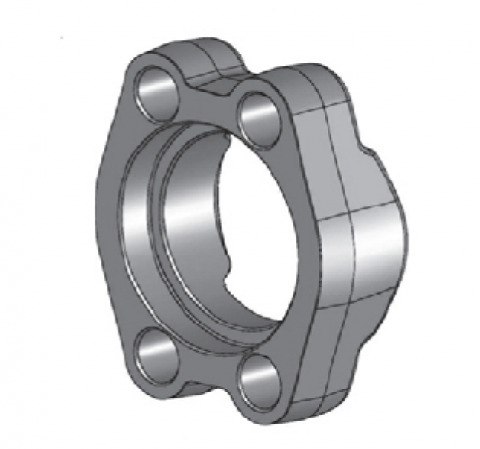
TES-LOK SAE Mono Flange
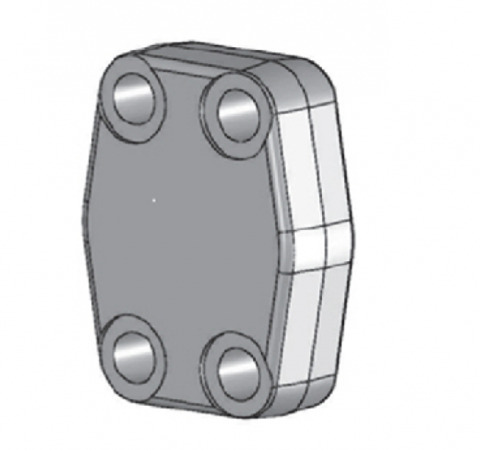
SAE Blind Mono Flange
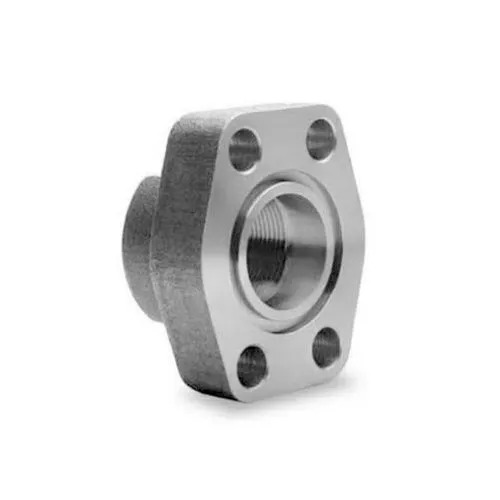
SAE Flange Range
Mono flanges are the preferred SAE connection where a permanent, compact, single-component flanged joint is wanted — typically factory-assembled hydraulic power packs, manifold blocks, and pump/motor port connections. They come in the same two pressure series as all SAE flanges: Code 61 (standard pressure, 3000–5000 PSI) and Code 62 (high pressure, 6000 PSI).
| Feature | Mono Flange (Single-Piece) | Split Flange (Two-Half Clamp) |
|---|---|---|
| Construction | One solid flange ring with 4 bolt holes | Two semi-circular clamp halves, 2 bolts each |
| Part count | 1 flange + 4 bolts per connection | 2 clamp halves + 4 bolts per connection |
| Installation | Flange placed over pipe end before pipe is connected/welded; pipe must be free | Halves wrap around captive flange head; pipe need not be free |
| Serviceability | Lower — pipe assembly must be disconnected/rotated to remove flange | Higher — remove halves to disconnect pipe without disturbing the rest of the line |
| Compactness | More compact, fewer parts to handle | Slightly more parts but easier in confined spaces |
| Best for | Permanent factory-assembled connections; compact power packs & manifolds | Field-serviceable lines; retrofit; tight installation spaces |
| Criterion | Code 61 (Standard Pressure) | Code 62 (High Pressure) |
|---|---|---|
| SAE / ISO standard | SAE J518 Code 61 / ISO 6162-1 | SAE J518 Code 62 / ISO 6162-2 |
| Pressure rating | 3000–5000 PSI (207–345 bar) — size dependent | 6000 PSI (420 bar) — all sizes |
| Flange head diameter | Larger head for same port size | Smaller, thicker head |
| Bolt size | Smaller bolts, wider spacing | Larger bolts, closer spacing |
| Interchangeable? | No — different bolt pattern from Code 62 | No — verify port code before ordering |
| Typical use | Pump suction/return, medium-pressure mobile hydraulics | Pump outlet, press circuits, heavy industrial hydraulics |
| Connection Type | Description | Best Application |
|---|---|---|
| Threaded NPT | Female NPT thread on the flange back for pipe-thread connection | Threaded hydraulic pipe systems; field adaptation |
| Threaded BSPP | Female BSPP (G) parallel thread with O-ring / bonded seal | European hydraulic systems with BSPP-threaded piping |
| Socket Weld (Weld-In) | Counter-bore socket — pipe slips in and is fillet welded | Welded hydraulic pipe systems; permanent connections |
| Butt Weld (Weld-On) | Bevelled or plain weld end butted to pipe and full-penetration welded | High-integrity welded hydraulic lines; large bore |
| Tapped-Hole (Drilled & Tapped) | Mono flange face with tapped bolt holes — bolts thread directly into the flange (no through-bolt + nut) | Manifold block face connections where the mating side cannot accept a nut |
| Parameter | Details |
|---|---|
| Brand | TES-LOK (Tesco Steel & Engineering) |
| Size Range | 3/8" to 5" NB |
| Pressure Series | Code 61 — 3000 PSI | Code 62 — 6000 PSI |
| Working Pressure | 34 bar to 420 bar (depending on size and code) |
| Configuration | Single-piece (one-piece) — through-bolt and tapped-hole versions |
| Connection Types | Threaded NPT, Threaded BSPP, Socket Weld (Weld-In), Butt Weld (Weld-On), Tapped-Hole |
| Standards | SAE J518 | ISO 6162-1 (Code 61) | ISO 6162-2 (Code 62) |
| O-Ring Material | NBR (standard), Viton (FKM), EPDM — by hydraulic fluid type |
| Certifications | ISO 9001:2015 | EN 10204 3.1 MTC | PMI (XRF) on request | Hydrostatic test cert |
| Material Family | Grades / ASTM Spec |
|---|---|
| Stainless Steel Mono Flanges | ASTM A182 F304 / 304H / 304L / 316 / 316H / 316L / 316Ti, 309, 310, 317L, 321, 347, 904L |
| Duplex & Super Duplex Mono Flanges | ASTM A182 F51 (2205), F53 (2507), F55 (Zeron 100) |
| Alloy Steel Mono Flanges | ASTM A182 F5, F9, F11, F21, F22, F91 |
| Carbon Steel Mono Flanges | ASTM A105 (standard hydraulic flange material) |
| Low-Temp Carbon Steel (LTCS) | ASTM A350 LF2 — cryogenic / low-temperature service |
| Copper-Nickel Mono Flanges | C70600 (90/10), C71500 (70/30), C71640 |
| Nickel Mono Flanges | UNS N02200, UNS N02201 |
| Monel Mono Flanges | UNS N04400, UNS N05500, Alloy 20 |
| Inconel Mono Flanges | UNS N06600, N06601, N06625, N08800, N08810, N08825 |
| Hastelloy Mono Flanges | UNS N10276, N06022, N10665, N06455 |
| Titanium Mono Flanges | Gr. 1, Gr. 2, Gr. 3, DTH 3.7035, DTH 3.7055 |
Download the full TES-LOK SAE mono flange dimension tables for the 3000 PSI (Code 61) and 6000 PSI (Code 62) series — flange head diameter, bolt circle, bolt size, bore, and tapped-hole dimensions for each NB size:
📄 3000 PSI SAE Mono Flange Dimensions (PDF) 📄 6000 PSI SAE Mono Flange Dimensions (PDF) 📄 Mono Flange Tapped-Hole Dimensions (PDF)| O-Ring Material | Temperature Range | Compatible Hydraulic Fluid | Avoid With |
|---|---|---|---|
| NBR (Nitrile) — Standard | −40°C to +100°C | Mineral oil hydraulic fluids (ISO HM / HV), diesel | Phosphate ester, Skydrol, hot water |
| Viton (FKM) | −20°C to +200°C | High-temperature mineral oils, fire-resistant HFD fluids | Skydrol (phosphate ester), hot water/steam |
| EPDM | −40°C to +150°C | Phosphate ester (Skydrol) fluids, water-glycol (HFC) | Mineral oils, petroleum-based fluids |
Flange head diameter, bolt circle, bolt hole size, and O-ring groove are machined to SAE J518 / ISO 6162 tolerances for Code 61 and Code 62 — ensuring direct interchangeability with hydraulic pumps, motors, and valves from any OEM worldwide.
The one-piece flange ring is the most compact and rigid SAE flange form — fewer parts to handle, no clamp-half alignment to manage, and a solid section that distributes bolt load evenly around the O-ring for a reliable seal in permanent connections.
Available with through bolt holes (bolt + nut) or tapped (threaded) bolt holes where bolts thread directly into the flange — the tapped version is essential for manifold block face connections where the mating side cannot accept a nut.
Code 62 (6000 PSI / 420 bar) mono flanges for high-pressure hydraulic press circuits, heavy machinery, and pump outlet ports where threaded connections cannot reliably hold pressure and vibration resistance is essential.
From standard Carbon Steel A105 to SS 316, Duplex, Inconel, Monel, and Hastelloy for corrosive and marine hydraulic systems. Single-source supply across the full alloy spectrum with EN 10204 3.1 MTC and PMI on request.
SAE mono flanges are manufactured on the same CNC machining centres and to the same QA/QC discipline that govern our full range of ASME, DIN, and EN flanges. ISO 9001:2015 certified, with material traceability and hydrostatic testing on every batch.
| Industry | Typical Use Point | Why SAE Mono Flange Preferred |
|---|---|---|
| Industrial Hydraulics | Hydraulic power unit pump ports, manifold block face connections, press circuits | Compact single-piece flange; tapped-hole version bolts directly to manifold faces |
| Mobile & Construction Equipment | Excavator, loader, crane hydraulic pump and motor port connections | One-piece flange resists vibration; high pressure with no thread loosening |
| Marine & Offshore | Deck machinery hydraulics, winch and steering gear circuits | SS 316 / Duplex mono flange resists marine corrosion; compact permanent connection |
| Oil & Gas | BOP hydraulic control, drilling rig and top-drive hydraulics | High-pressure Code 62; corrosion-resistant alloys for offshore environment |
| Steel & Metals | Rolling mill hydraulics, continuous casting hydraulic systems | Heavy-duty single-piece connection withstands high-pressure cyclic loading |
| Plastics & Injection Moulding | Injection moulding machine clamp and injection hydraulic circuits | Code 62 high-pressure connection for high-pressure injection/clamping hydraulics |
| Mining | Haul truck, shovel, and drill rig hydraulics | Robust single-piece flange survives extreme shock and vibration |
| Wind Energy | Turbine pitch, yaw, and brake hydraulic manifold connections | Compact mono flange suits packed nacelle hydraulic manifolds |
Q1. What is the difference between an SAE mono flange and a split flange?
A mono flange is a single solid flange ring with four bolt holes; a split flange uses two semi-circular clamp halves (two bolts each) that wrap around a flange head. Both make the same SAE J518 connection and use the same O-ring port seal, but the mono flange is more compact and is used for permanent factory-assembled connections, while the split flange allows the pipe to be connected/disconnected without rotating the line — preferred for field-serviceable installations.
Q2. What is a tapped-hole SAE mono flange?
A tapped-hole mono flange has threaded (tapped) bolt holes rather than plain through-holes. The cap screws thread directly into the flange itself, so no nut is needed on the back. This is essential for manifold block face connections, where the mating component is a solid block and there is no access to fit a nut behind the flange. Through-bolt mono flanges, by contrast, use a bolt-and-nut arrangement and require access to both sides.
Q3. What is the difference between Code 61 and Code 62 mono flanges?
Code 61 is the standard-pressure series (3000–5000 PSI / 207–345 bar) and Code 62 is the high-pressure series (6000 PSI / 420 bar). For the same nominal port size, Code 62 has a smaller, thicker flange head, larger bolts, and closer bolt-hole spacing. They are not interchangeable — a Code 61 mono flange will not fit a Code 62 port and vice versa. Always confirm the code stamped on the equipment port before ordering.
Q4. Why are SAE mono flanges preferred over threaded connections?
SAE mono flanges handle far higher pressure than threaded fittings, do not loosen under the vibration and pressure pulsation common in hydraulic systems, and provide a reliable O-ring face seal. The single-piece ring distributes bolt load evenly and is the most compact SAE flange form. Above about 1" NB and 3000 PSI, SAE flanges are the standard hydraulic connection method worldwide.
Q5. Can I install a mono flange after the pipe is connected at both ends?
No — a one-piece mono flange must be slid onto the pipe end before the pipe connection is completed (welded or threaded). Because it is a solid ring, it cannot be fitted around a pipe that is already connected at both ends. If you need to add a flange to a captive pipe run without dismantling it, use a split flange instead — its two clamp halves can be fitted around the pipe at any time.
Q6. What O-ring material should I use for Skydrol (phosphate ester) hydraulic fluid?
Use EPDM. Skydrol and other phosphate ester fire-resistant hydraulic fluids attack NBR (nitrile) and Viton (FKM) O-rings, causing rapid swelling and seal failure. EPDM is compatible with phosphate ester fluids. Conversely, EPDM must NOT be used with mineral-oil hydraulic fluids — for those use NBR (standard) or Viton (high temperature). Always match the O-ring elastomer to the specific hydraulic fluid.
Q7. Can SAE mono flanges be supplied in stainless steel or duplex for marine hydraulics?
Yes. Mono flanges are available in SS 304, SS 316 / 316L, Duplex 2205, and Super Duplex 2507 for marine, offshore, and corrosive-environment hydraulic systems, with EN 10204 3.1 material test certificates and PMI on request. SS 316 and Duplex resist the chloride-induced corrosion that attacks standard Carbon Steel mono flanges in marine atmospheres.
Q8. Do you provide SAE mono flange dimension charts?
Yes. Full dimension charts for the 3000 PSI (Code 61) and 6000 PSI (Code 62) mono flange series, including tapped-hole dimensions, are available as downloadable PDF documents on this page. These give flange head OD, bolt circle, bolt size, bolt-hole spacing, bore, and tapped-hole data for every NB size. For any size or configuration not in the standard charts, contact our technical team.