

TES-LOK pressure snubbers — flow-restricting dampers fitted ahead of a gauge, switch, or transmitter to absorb pressure spikes, surges, and pulsation. By forcing the media through a fine porous element or an adjustable piston orifice, the snubber smooths a fluctuating signal so the instrument reads a steady average and lasts far longer. Porous-metal and piston (adjustable) types. SS 316, SS 304, Brass, and special alloys. Size 1/8" to 1/2" (NPT/BSP). Up to 3000 PSI (207 bar). −23°C to 191°C. ISO 9001:2015 certified. Made in India.
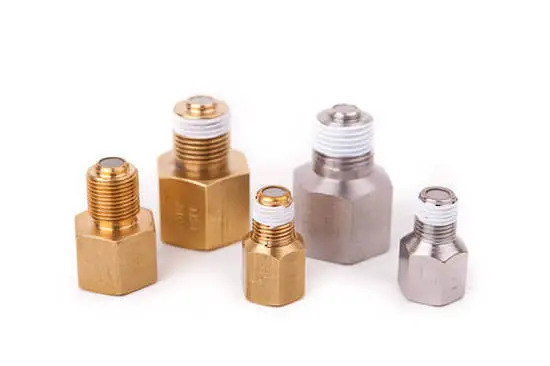
TES-LOK Pressure Snubber
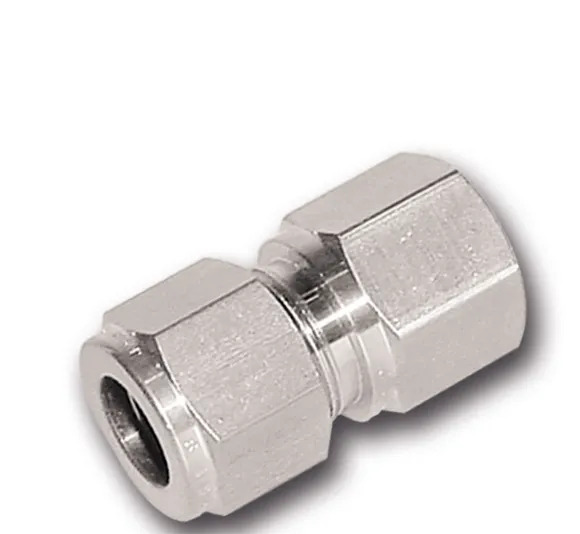
Gauge Connector (Related)
Syphon & Gauge Cock (Related)
Snubbers are essential wherever a gauge is exposed to reciprocating pumps, water hammer, or rapid cycling. TES-LOK supplies porous-metal and adjustable piston snubbers with NPT and BSP threads, sized to the media viscosity, across the full material range — often fitted together with a gauge valve on the instrument hook-up.
| Type | Damping Element | Characteristics |
|---|---|---|
| Porous-Metal Snubber | Sintered porous-metal disc | Fixed restriction, fine filtration effect; element grade matched to media |
| Piston Snubber | Adjustable piston orifice | Field-adjustable damping; self-cleaning piston resists clogging |
| Fixed-Orifice Snubber | Drilled fixed orifice | Simple, robust restriction for clean media |
| Media | Recommended Element / Setting | Notes |
|---|---|---|
| Gas / Air | Fine porous element | Light, fast pulses need fine restriction |
| Light liquids (water, oil) | Medium porous / piston | Balances damping and response |
| Viscous / dirty liquids | Coarse / piston (self-cleaning) | Piston resists clogging on heavy media |
Choosing the right element or orifice for the fluid viscosity is the key to effective damping without sluggish response — specify the media and conditions and we will recommend the grade.
| Parameter | Details |
|---|---|
| Brand | TES-LOK (Tesco Steel & Engineering) |
| Type | Pressure / gauge snubber (porous-metal, piston, fixed-orifice) |
| Connection Size | 1/8" to 1/2" (NPT, BSP / BSPT, UNF, SAE, ISO) |
| Working Pressure | Up to 3000 PSI (207 bar) @ 70°F (21°C) |
| Working Temperature | −23°C to 191°C (−10°F to 375°F) |
| Damping Element | Sintered porous metal (graded), adjustable piston, or fixed orifice |
| Configuration | Male × female (in-line, between root/valve and gauge) |
| Body Material | SS 316 / 316L, SS 304, Brass, special alloys |
| Options | Element grade to suit media, NACE MR0175 (sour), oxygen-clean |
| Certifications | ISO 9001:2015 | EN 10204 3.1 MTC on request |
| Material | Corrosion / Service | Typical Use |
|---|---|---|
| SS 316 / 316L | Excellent — chloride resistant | General instrumentation, offshore, chemical, marine |
| SS 304 / 304L | Good — general service | Water, air, mild process |
| Brass | Moderate — no ammonia/acids | Pneumatics, low-pressure water |
| Special Alloys | Application-specific | Aggressive / high-temperature media on request |
Absorbs spikes, surges, and pulsation so gauges, switches, and transmitters last far longer and stay accurate on harsh lines.
Stops needle flutter and averages out rapid swings, giving a stable reading on reciprocating pumps and pulsating systems.
Sintered porous-metal for fixed fine damping, or a field-adjustable, self-cleaning piston snubber for tuning and dirty media.
SS 304, SS 316, Brass, and special alloys, with NACE MR0175 (sour) and oxygen-clean options for demanding media.
Element grade and orifice are selected for the fluid viscosity — fine for gases, coarser for viscous liquids — for effective, responsive damping.
Compact male × female body screws straight between the process root or gauge valve and the gauge — no extra hardware needed.
| Industry | Typical Use Point | Why Pressure Snubber |
|---|---|---|
| Oil & Gas / Offshore | Gauges on pumps & pulsating lines | Damps spikes; NACE sour materials |
| Refinery & Petrochemical | Compressor & pump discharge gauges | Protects instruments; full material range |
| Power Generation | Feed-pump & steam-line gauges | Stops flutter; extends gauge life |
| Chemical Processing | Dosing-pump & reactor gauges | SS 316 / special alloys; tuned damping |
| Water & Utilities | Pump discharge, water-hammer lines | Absorbs surges & hammer |
| Hydraulics & Test Rigs | Gauges on cycling hydraulic systems | Up to 3000 PSI; protects gauge movement |
| HVAC & Compressed Air | Compressor & receiver gauges | Steadies pulsating air pressure |
| Pharmaceutical / Process | Pump & line gauges | Clean SS 316; accurate readings |
Q1. What is a pressure snubber?
A pressure snubber (gauge snubber) is a small in-line device fitted ahead of a pressure gauge, switch, or transmitter to dampen pressure spikes, surges, and pulsation. It restricts flow through a fine porous-metal element or an adjustable piston orifice so rapid pressure changes are slowed and averaged, giving the instrument a steady reading and a much longer life.
Q2. How does a snubber protect a gauge?
By restricting flow, it limits how fast pressure can change at the gauge. Violent swings from reciprocating pumps, water hammer, or rapid cycling are smoothed into a steady average, which stops the needle fluttering and protects the gauge movement from fatigue and damage that would otherwise destroy it quickly.
Q3. What types of pressure snubber are available?
Porous-metal snubbers use a sintered disc for fixed, fine damping; piston snubbers use an adjustable, self-cleaning piston orifice that can be tuned in the field and resists clogging on dirty media; fixed-orifice snubbers use a simple drilled orifice for clean media. The choice depends on the media and whether field adjustment is needed.
Q4. Is a snubber the same as an isolation valve?
No. A snubber only damps pressure fluctuations — the process flows through it continuously. It does not shut off or isolate the gauge. For isolation and bleeding, use a gauge valve. The two are often fitted together: the gauge valve isolates and bleeds, the snubber damps.
Q5. What pressure and temperature can the snubber handle?
TES-LOK pressure snubbers are rated up to 3000 PSI (207 bar) at 70°F (21°C), with a temperature range of −23°C to 191°C (−10°F to 375°F). Connection sizes run from 1/8" to 1/2" in NPT, BSP, and other threads.
Q6. How do I select the right snubber for my fluid?
Match the porous-element grade or piston-orifice setting to the media viscosity: a fine restriction for gases and thin liquids, a coarser one (or a self-cleaning piston) for viscous or dirty liquids. Too fine clogs and makes the gauge sluggish; too coarse does not damp. Tell us the media and conditions and we will recommend the grade.
Q7. Can a snubber clog, and how is it maintained?
Yes — a porous element can clog on dirty or viscous media, making the gauge slow to respond. Choose the correct grade, fit an upstream filter on dirty lines, and inspect/clean the element periodically. Adjustable piston snubbers are more resistant to clogging because the piston is self-cleaning.
Q8. Can snubbers be supplied for sour or oxygen service?
Yes. Pressure snubbers can be supplied to NACE MR0175 / ISO 15156 for sour (H₂S) service with compliant materials and hardness, and oxygen-cleaned for oxygen service. Specify the fluid, pressure, and temperature, and we will select the correct body and element.