

Tesco Steel & Engineering manufactures pneumatic cylinders — air actuators that convert compressed air into precise linear motion to push, pull, clamp, lift, and position in automation. Available single-acting (air one way, spring return) and double-acting (air both ways), in compact, round-body (ISO 6432), and profile/tie-rod (ISO 15552) styles. SS 304, SS 316, Brass, and special alloys. Working pressure 115 to 145 PSI (8–10 bar). −20°C to 80°C. ISO 9001:2015 certified. Made in India.
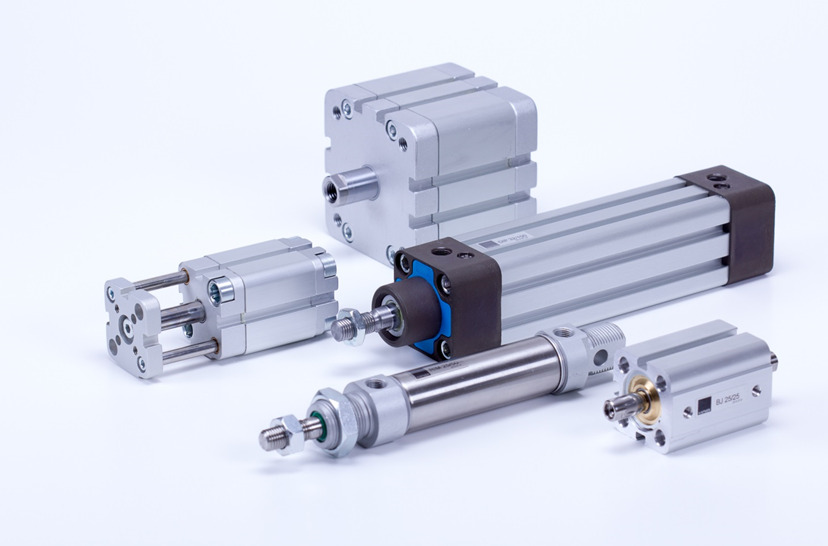
Pneumatic Cylinder
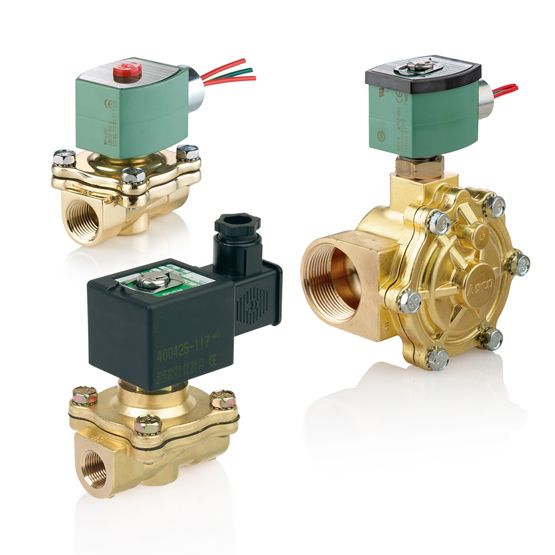
Solenoid Valve (Related)
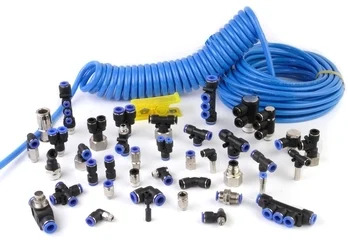
PU Fittings & Tube (Related)
Tesco Steel & Engineering supplies pneumatic cylinders in compact, round-body (ISO 6432), and profile/tie-rod (ISO 15552) styles across a wide range of bores and strokes, with cushioning and magnetic-piston options — driven by our solenoid valves and plumbed with PU pipe and PU fittings.
| Type | Operation | Return | Best For |
|---|---|---|---|
| Single-Acting | Air drives the rod one way only | Internal spring | Simple push/clamp; fail-safe return on air loss; lower air use |
| Double-Acting | Air drives both extend & retract | Air (powered both ways) | Most automation; full force & control in both directions, longer strokes |
| Style | Standard | Characteristics |
|---|---|---|
| Round-Body (Mini) | ISO 6432 | Small-bore, threaded-body cylinders for light duty & tight spaces |
| Profile / Tie-Rod | ISO 15552 | Larger-bore standard cylinders with versatile mountings & cushioning |
| Compact | ISO 21287 | Short overall length for confined machine builds |
| Guided / Twin-Rod | — | Anti-rotation & side-load capacity for accurate guiding |
| Rodless | — | Long stroke in a compact footprint (carriage moves along the body) |
| Parameter | Details |
|---|---|
| Product | Pneumatic (air) cylinder — single & double-acting |
| Styles | Round-body (ISO 6432), profile/tie-rod (ISO 15552), compact, guided, rodless |
| Working Pressure | 115 to 145 PSI (8–10 bar) |
| Working Temperature | −20°C to 80°C |
| Medium | Clean, dry, lubricated or non-lube compressed air |
| Port Thread | NPT, BSP (BSPP), BSPT, UNF, SAE, ISO |
| Cushioning | Fixed or adjustable end cushioning; magnetic piston (sensing) option |
| Seals | NBR (standard); Viton/PU for higher temperature |
| Body / Rod Material | SS 316 / 316L, SS 304, Brass, aluminium, special alloys; hard-chromed rod |
| Mountings | Foot, flange, clevis, trunnion, rod eye/clevis accessories |
| Certifications | ISO 9001:2015 |
| Material | Corrosion / Service | Typical Use |
|---|---|---|
| SS 316 / 316L | Excellent — chloride resistant | Food, marine, washdown & corrosive areas |
| SS 304 / 304L | Good — general service | General industrial automation |
| Brass / Aluminium | Light & economical | General & weight-sensitive builds |
| Special Alloys | Application-specific | Aggressive / high-temperature environments |
Single-acting for simple, fail-safe push/clamp duties and double-acting for full powered motion both ways — matched to the application.
Round-body (ISO 6432), profile/tie-rod (ISO 15552), and compact styles for easy interchange and standard mounting accessories.
Fixed or adjustable cushioning absorbs end-of-stroke impact for smooth, quiet, long-life operation at speed.
SS 316 bodies for food/marine/washdown and hard-chromed piston rods for wear and corrosion resistance and long seal life.
Magnetic-piston option lets reed/Hall position sensors confirm extend/retract for reliable automation feedback.
Foot, flange, clevis, trunnion, and rod-end accessories integrate the cylinder into any machine frame.
| Industry | Typical Use | Why Pneumatic Cylinder |
|---|---|---|
| Factory Automation | Pushing, indexing & positioning | Fast, clean linear motion |
| Clamping & Fixturing | Work-holding on machines | Strong, repeatable clamp force |
| Packaging | Pushers, gates, sealing jaws | High-speed cycling; cushioned |
| Material Handling | Diverters, stoppers, lifts | Reliable, low-maintenance |
| Assembly Lines | Press-fit, ejection, transfer | Controlled force & stroke |
| Food & Beverage | Filling, capping, washdown lines | SS 316 hygienic cylinders |
| Machine Tools | Doors, clamps & feeders | Compact & guided styles |
| Process Plants | Valve & damper actuation | Robust, fail-safe single-acting |
Q1. What is a pneumatic cylinder?
A pneumatic cylinder (air cylinder) is an actuator that converts compressed air into linear motion. Air pushes a piston in the cylinder bore, and the attached piston rod extends or retracts to push, pull, clamp, lift, or position a load. It is the standard motion element of factory automation, driven by directional/solenoid valves.
Q2. What is the difference between single-acting and double-acting cylinders?
A single-acting cylinder uses air to drive the rod in one direction and a spring to return it — simple, fail-safe, and economical on air, used for push and clamp duties. A double-acting cylinder uses air on both sides of the piston to power both the extend and retract strokes, giving full force and control in both directions; it is used for most automation and longer strokes.
Q3. How do I work out the force a cylinder gives?
Force equals the piston area multiplied by the air pressure. A larger bore or higher pressure gives more force. On a double-acting cylinder the retract force is a little lower than the extend force because the rod reduces the effective piston area on the rod side. Size the bore for the required force at your supply pressure with a safety margin.
Q4. What pressure and temperature do they operate at?
Tesco pneumatic cylinders operate at 115 to 145 PSI (8–10 bar) with a working temperature of −20°C to 80°C using standard seals. Viton/PU seals are available for higher temperatures. They run on clean, dry compressed air (lubricated or non-lube depending on the design).
Q5. What cylinder styles do you offer?
Round-body mini cylinders (ISO 6432), profile/tie-rod cylinders (ISO 15552), compact cylinders (ISO 21287), guided/twin-rod cylinders for side loads, and rodless cylinders for long strokes in a compact footprint. ISO styles allow easy interchange and use of standard mounting accessories.
Q6. What is end cushioning and why does it matter?
Cushioning slows the piston near the end of its stroke so it does not slam into the end cap. Fixed or adjustable air cushions absorb the impact, reducing noise, shock, and wear and allowing higher cycle speeds. Adjustable cushioning lets you tune the deceleration to the load and speed.
Q7. How is cylinder speed controlled?
Speed is set with flow-control (speed) valves on the cylinder ports that meter the exhaust air, controlling how fast the rod moves. Combined with the directional/solenoid valve and clean dry air, this gives smooth, repeatable motion. End cushioning then absorbs the impact at the stroke ends.
Q8. Can cylinders provide position feedback?
Yes. With a magnetic piston, reed or Hall-effect sensors clamped to the cylinder body detect the piston at the extend and retract positions, sending a signal to the PLC for sequencing and confirmation. This is standard for automated lines requiring position feedback.