

Tesco Steel & Engineering manufactures PU pipe & pneumatic tubing — flexible, kink-resistant tube for compressed-air, vacuum, and low-pressure fluid lines. Extruded in polyurethane (PU), nylon (PA), polyethylene (PE), PVC, and PTFE to suit pressure, flexibility, and chemical needs, and supplied in bright colours for easy line identification. Size OD 4mm to 16mm, ID 2.5mm to 12mm. Up to 10 kg/cm². 20°C to 80°C. Coils of 10, 20, 50 & 100 m. ISO 9001:2015 certified. Made in India.
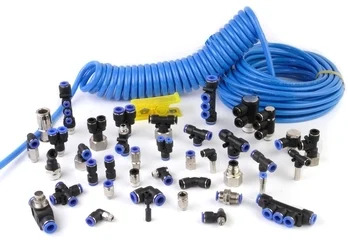
PU Pipe & Pneumatic Fittings
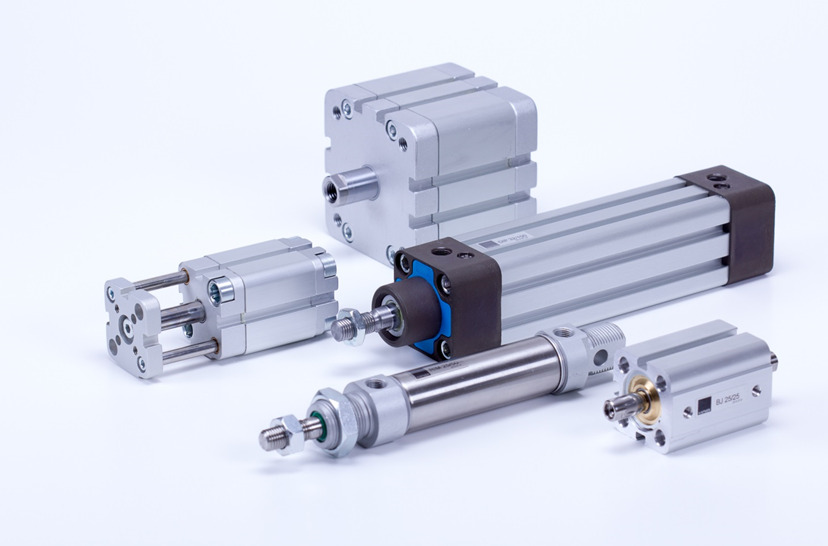
Pneumatic Cylinder (Related)
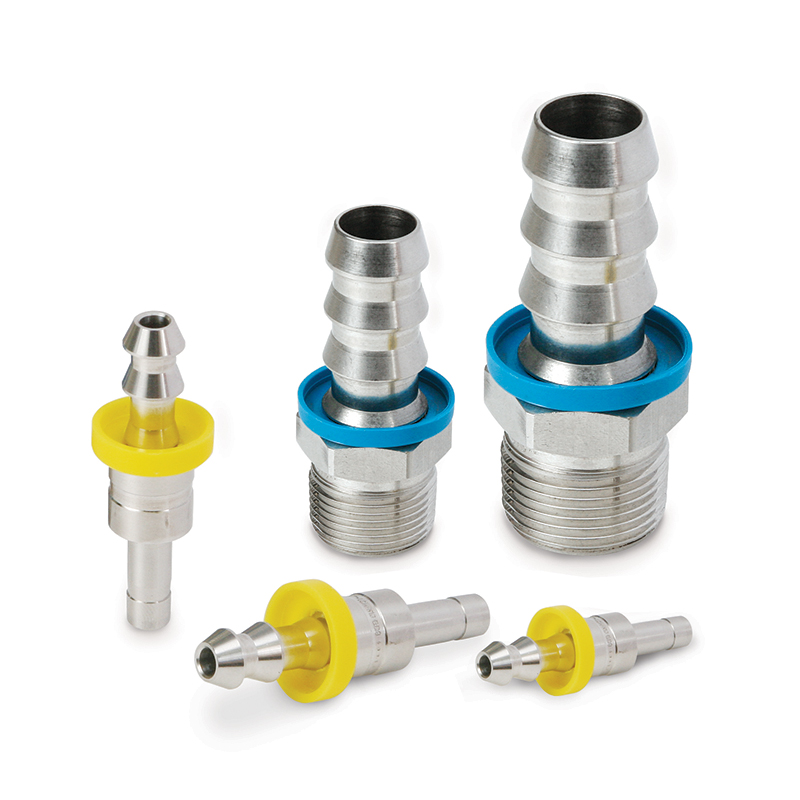
Push-on Hose Fittings (Related)
PU and pneumatic tubing is the backbone of factory automation, machine tooling, and instrument air lines. Tesco Steel & Engineering supplies it in a full range of bores, materials, colours, and coil lengths, matched with PU push-in fittings for a complete pneumatic system.
| Material | Key Properties | Best For |
|---|---|---|
| Polyurethane (PU) | Very flexible, kink & abrasion resistant, tight bend radius | General pneumatics, robots, moving / flexing lines |
| Nylon (Polyamide) | Higher pressure & temperature, rigid, low permeability | Higher-pressure air, fuel & hydraulic pilot lines |
| Polyethylene (PE) | Light, economical, good chemical resistance | Water, low-pressure fluid & instrument lines |
| PVC | Flexible, clear options, economical | Low-pressure air, fluid & drain lines |
| PTFE | Excellent chemical & high-temperature resistance | Aggressive media & high-temperature service |
| Parameter | Details |
|---|---|
| Product | PU pipe / pneumatic tubing |
| Size | OD 4 mm to 16 mm; ID 2.5 mm to 12 mm |
| Materials | Polyurethane (PU), Nylon (PA), Polyethylene (PE), PVC, PTFE |
| Working Pressure | Up to 10 kg/cm² (≈10 bar) — material & size dependent |
| Working Temperature | 20°C to 80°C (material dependent; PTFE higher) |
| Colour | Blue / Yellow / Red / Black (natural/clear on request) |
| Length | 10 m / 20 m / 50 m / 100 m coils and multiples thereafter |
| Connection | Push-in (one-touch) pneumatic fittings, barb / hose-tail |
| Certifications | ISO 9001:2015 | RoHS-compliant materials on request |
| OD (mm) | ID (mm) | Typical Use |
|---|---|---|
| 4 mm | 2.5 mm | Small actuators, pilot & signal lines |
| 6 mm | 4 mm | General pneumatic control & tools |
| 8 mm | 5 / 5.5 mm | Mid-flow air lines, cylinders |
| 10 mm | 6.5 / 7 mm | Higher-flow air supply |
| 12 mm | 8 / 9 mm | Main air feeds & manifolds |
| 16 mm | 12 mm | High-flow main lines |
Polyurethane tube bends tightly without kinking or collapsing, ideal for moving, flexing, and confined-space pneumatic runs.
Sized for push-in (one-touch) pneumatic fittings — the tube is simply pushed in and gripped, for fast, tool-free assembly and re-routing.
Blue, yellow, red, and black tube lets each air, vacuum, or fluid line be identified at a glance, simplifying installation and maintenance.
PU, nylon, PE, PVC, and PTFE so the tube can be matched to the pressure, temperature, flexibility, and chemical demands of the line.
OD 4 to 16 mm in 10, 20, 50, and 100 m coils and multiples — from fine pilot lines to high-flow main feeds.
Precision-extruded to a consistent bore and wall for reliable sealing in push-in fittings and predictable flow.
| Industry | Typical Use | Why PU / Pneumatic Tube |
|---|---|---|
| Factory Automation | Air lines to valves, cylinders & actuators | Flexible, push-in, colour-coded |
| Machine Tools | Clamping, blow-off & coolant air lines | Kink-resistant, tight routing |
| Robotics | Lines on moving arms & grippers | High flex life, abrasion resistant |
| Packaging & Printing | Vacuum & air control lines | Clean, light, easy to route |
| Instrumentation | Low-pressure signal & air lines | PE / PTFE chemical resistance |
| Material Handling | Conveyor & pneumatic controls | Durable, colour identification |
| Textile & Food | Air, vacuum & fluid lines | PU / PVC / PTFE options |
| Workshops & Tools | Air-tool & spray lines | Flexible, economical, recoiling |
Q1. What is PU pipe?
PU pipe is flexible, small-bore pneumatic tubing — most commonly made of polyurethane — used to carry compressed air, vacuum, and low-pressure fluids between compressors, valves, cylinders, and tools. It connects to push-in (one-touch) pneumatic fittings for fast, tool-free assembly and is supplied in colour-coded coils.
Q2. What materials is the tubing available in?
Polyurethane (PU), nylon (polyamide), polyethylene (PE), PVC, and PTFE. PU is the most flexible and kink-resistant for general pneumatics; nylon handles higher pressures and temperatures; PE and PVC are economical for low-pressure fluid lines; PTFE suits aggressive chemicals and high temperatures.
Q3. What sizes and pressure rating are available?
Tube is available from OD 4 mm to 16 mm (ID 2.5 mm to 12 mm), rated up to 10 kg/cm² (about 10 bar) depending on material and size, with a working temperature of 20°C to 80°C for standard materials (PTFE handles higher temperatures).
Q4. What do the tube colours mean?
Colours (blue, yellow, red, black, and natural/clear) are used for line identification — for example separating air supply, vacuum, and control or different machine functions. There is no fixed industry standard, so colours are assigned to suit the plant; consistent coding speeds installation and troubleshooting.
Q5. How is PU tube connected?
Most commonly with push-in (one-touch) pneumatic fittings: the tube is cut square and pushed into the fitting, where a collet grips it and an O-ring seals on the tube OD. To release, the collet ring is pressed and the tube withdrawn. Barb/hose-tail connections are also used. See our PU fittings page.
Q6. Why must the tube be cut square?
A square, clean, burr-free cut lets the O-ring in a push-in fitting seal evenly around the tube OD and the collet grip uniformly. An angled or crushed end causes air leaks and can pull out under pressure. Always use a proper tube cutter rather than pliers or a knife.
Q7. What coil lengths are supplied?
Standard coils of 10 m, 20 m, 50 m, and 100 m, and multiples thereafter. Coil length is chosen to suit the run and to minimise joints, since fewer connections mean fewer potential leak points.
Q8. Can the tube be used for fluids and water, not just air?
Yes. While PU and nylon are most common for compressed air, PE and PVC are widely used for low-pressure water and fluid lines, and PTFE for aggressive chemicals and high temperatures. Select the material for the medium, pressure, and temperature of the line.