

TES-LOK push-on (push-lock) hose fittings — barbed-stem fittings that grip rubber and synthetic hose without a clamp, for air, water, fuel, coolant, lubrication, and low-pressure hydraulic lines. The hose is simply pushed over the barb; the serrations and hose elasticity hold it, and pressure tightens the grip. SS 316, SS 304, Brass. NPT / BSP / BSPT ends. Up to 350 PSI (24 bar). −40°C to 100°C. ISO 9001:2015 certified. Made in India.
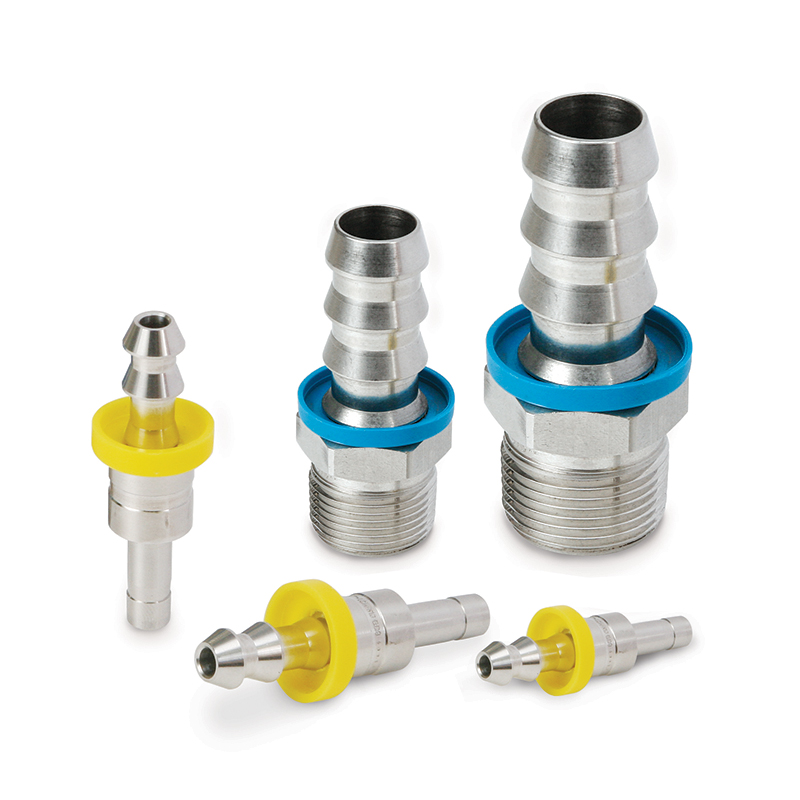
TES-LOK Push-On Hose Fittings
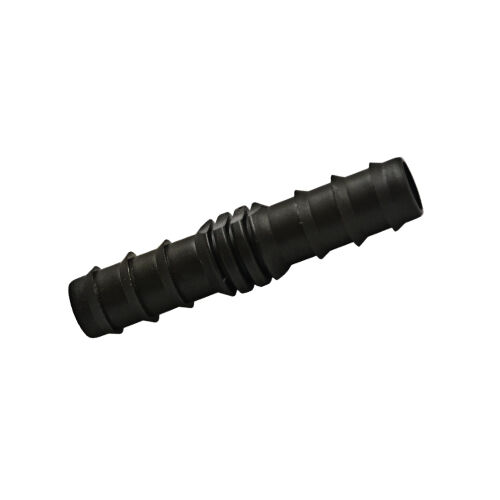
Barbed Connector (Related)
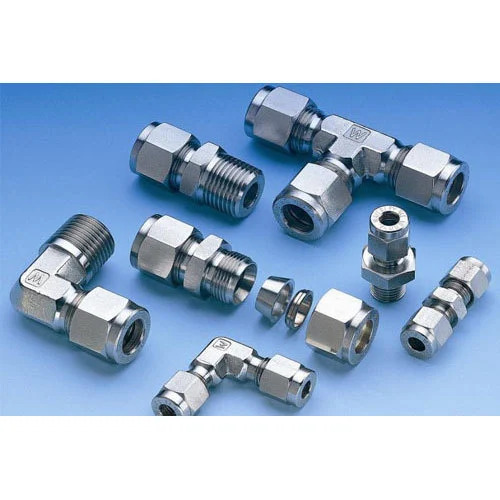
Tube Fittings (Related)
Push-on fittings are designed specifically for use with matching push-on (push-lock) hose, which has a thin, flexible cover and wall tuned to grip the barb. They suit low- to medium-pressure service up to about 350 PSI (24 bar) on air, water, fuel, oil, coolant, and lubrication lines — wherever quick, clamp-free hose assembly is wanted.
| Criterion | Push-On (Push-Lock) | Clamped Barb | Crimped Hydraulic |
|---|---|---|---|
| Assembly | Push hose on by hand — no clamp/tool | Push on + worm/ear clamp | Crimp ferrule with crimping machine |
| Pressure | Low/medium — up to ~350 PSI (24 bar) | Low/medium (clamp dependent) | High — hydraulic hose ratings |
| Hose type | Matching push-on / push-lock hose | General rubber / PVC hose | Reinforced hydraulic hose |
| Tools | None | Screwdriver / clamp pliers | Crimping press & dies |
| Reusable | Yes — pull off & re-push | Yes — re-clamp | No — permanent crimp |
| Best for | Air, water, fuel, coolant, lube; fast assembly | General low-pressure hose | High-pressure hydraulic hose |
| Shape | Configuration | Use |
|---|---|---|
| Male Connector | Barb stem to male NPT / BSP thread | Hose to a male-threaded port |
| Female Connector | Barb stem to female NPT / BSP thread | Hose to a male-threaded fitting |
| Hose Union / Mender | Barb stem both ends | Joining two hoses |
| Elbow (90° / 45°) | Barb stem to thread or barb at an angle | Direction change in hose routing |
| Tee / Y | Three-way barb / thread branch | Branching hose lines |
| Reducer | Two different barb sizes | Connecting two hose sizes |
| Parameter | Details |
|---|---|
| Brand | TES-LOK (Tesco Steel & Engineering) |
| Type | Push-on / push-lock barbed hose fitting (no clamp) |
| Hose / Barb Size | 1/4" to 1" ID (common) | other sizes on request |
| Working Pressure | Up to 350 PSI (24 bar) @ 38°C (100°F) — hose dependent |
| Working Temperature | −40°C to 100°C — hose dependent |
| Thread / End Options | NPT, BSP (BSPP), BSPT, UNF, barb-to-barb |
| Body Material | SS 316 / 316L, SS 304, Brass, special alloys |
| Barb Profile | Multi-serration tapered barb tuned for push-on hose grip |
| Shapes | Male / female connector, union, elbow, tee, Y, reducer |
| Certifications | ISO 9001:2015 | material certificates on request |
| Material | Corrosion / Service | Typical Use |
|---|---|---|
| Brass | Good for air, water, fuel, oil | Pneumatics, workshop air, fuel, coolant — most common |
| SS 304 | Good — general corrosion resistance | Water, mild chemicals, food/pharma washdown |
| SS 316 / 316L | Excellent — chloride resistant | Marine, chemical, coastal, hygienic service |
| Special Alloys | On request | Aggressive media (consult technical team) |
Just push the hose on by hand — no clamps, ferrules, crimping machines, or special tools. The fastest, lowest-labour way to make a reliable low-pressure hose connection, ideal for production lines and field assembly.
Internal pressure expands the hose against the barbs, so the grip and seal tighten as pressure rises — the connection holds more securely the harder it works, within the rated range.
The hose can be pulled off and re-pushed for maintenance or re-routing — no permanent crimp — making push-on fittings convenient for systems that are frequently serviced or reconfigured.
Brass for air, fuel, and general service; SS 304 and SS 316 for water, marine, chemical, and hygienic applications where corrosion resistance is needed. Threaded ends in NPT, BSP, or BSPT to suit any port.
Male and female connectors, hose unions, elbows, tees, Ys, and reducers — the complete set of push-on shapes to connect, branch, reduce, and route hose throughout a low-pressure system.
Manufactured under ISO 9001:2015 with consistent barb profiles and clean threads for reliable grip and sealing. Material certificates available on request.
| Industry | Typical Use Point | Why Push-On Preferred |
|---|---|---|
| Workshops & Pneumatics | Compressed-air lines, tools, blow-off, air tooling | Fast clamp-free assembly; reusable for re-routing |
| Automotive & Equipment | Fuel, coolant, vacuum, and low-pressure oil lines | Quick, secure hose connections; brass for fuel/oil |
| Agriculture | Water, spray, and low-pressure lines on machinery | Tool-free field assembly; durable barb grip |
| Water & Irrigation | Low-pressure water and dosing lines | SS / brass corrosion options; easy connection |
| Food & Beverage | Washdown, water, and low-pressure utility hose | SS 316 hygienic option; quick clean-down service |
| Lubrication Systems | Low-pressure oil and grease feed lines | Reliable barb grip; reusable for maintenance |
| General Industry | Coolant, drain, and low-pressure transfer hose | Lowest-cost, fastest reliable hose connection |
| Marine | Deck washdown and low-pressure water hose | SS 316 salt resistance; clamp-free assembly |
Q1. What is a push-on hose fitting?
A push-on (push-lock) hose fitting is a barbed-stem fitting that grips rubber or synthetic hose without any clamp, ferrule, or crimp. The hose is simply pushed onto the serrated barb by hand; the barbs and hose elasticity hold it, and line pressure tightens the grip. It is the fastest, lowest-cost way to make a reliable low-pressure hose connection — no tools required.
Q2. Does a push-on hose fitting need a clamp?
No — that is its defining feature. When used with the correct matching push-on hose within its pressure rating, no clamp is required: the barb profile, hose elasticity, and pressure self-energising hold the hose securely. Some users add a light clamp for extra security on the upper end of the range, but it is not needed for normal service.
Q3. What pressure can push-on hose fittings handle?
TES-LOK push-on fittings are rated up to about 350 PSI (24 bar) at 38°C with matching push-on hose, and a temperature range of −40°C to 100°C (hose dependent). They are low/medium-pressure fittings — for high-pressure hydraulic service, use crimped hydraulic hose fittings instead.
Q4. What is the difference between push-on, clamped barb, and crimped fittings?
Push-on fittings grip matching push-on hose with no clamp (low/medium pressure). Clamped barb fittings use a barb plus a worm/ear clamp on general hose. Crimped fittings use a permanently crimped ferrule on reinforced hydraulic hose for high pressure. Push-on is the fastest and reusable; crimped is the highest pressure but permanent.
Q5. What hose should I use with push-on fittings?
Use hose specifically made for push-on / push-lock fittings — it has a wall and cover tuned to grip the barb and seal without a clamp. The hose ID must match the barb size, and the hose must be rated for the pressure, temperature, and fluid. Using the wrong hose (e.g. stiff hydraulic hose) can prevent a proper grip and lead to blow-off.
Q6. Are push-on hose fittings reusable?
Yes. Because there is no crimp, the hose can be pulled off the barb and a fitting re-pushed onto fresh hose for maintenance or re-routing. Inspect the hose end for wear and cut back to fresh hose if needed before re-pushing, to ensure a good grip and seal.
Q7. What materials and threads are available?
Brass (most common, for air/fuel/oil/water), SS 304, and SS 316 (for water, marine, chemical, and hygienic service), with threaded ends in NPT, BSP (BSPP), BSPT, or UNF — plus barb-to-barb union forms. Special alloys are available on request for aggressive media.
Q8. What is the difference between a push-on fitting and a barbed connector?
They are closely related — both use a barbed stem. A push-on (push-lock) fitting is specifically designed to grip matching push-on hose with no clamp, relying on barb profile and hose elasticity. A general barbed connector is often used with a clamp on ordinary hose. TES-LOK supplies both; choose push-on for clamp-free assembly with push-on hose.