

Tesco Steel & Engineering manufactures Integrated Socket Weld SAE Flanges with O-Ring — single-piece SAE J518 hydraulic flanges that combine a socket-weld pipe end and an integral O-ring boss (ORB) sealing face in one body. Available in Code 61 (3000 PSI) and Code 62 (6000 PSI) series. SS 316, Duplex, Carbon Steel, Inconel, Monel. Size 3/8" to 5" NB. 34–420 bar. ISO 9001:2015 certified. Made in India.
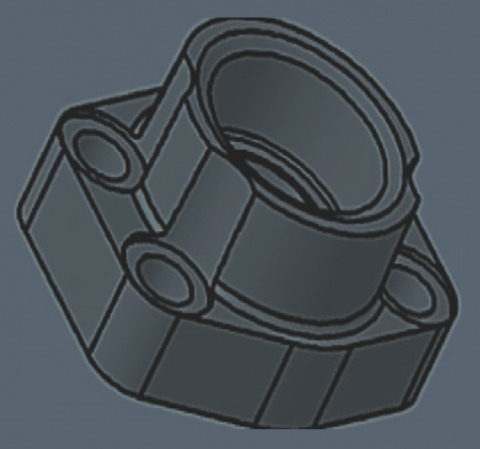
TES-LOK Integrated Socket Weld O-Ring Flange
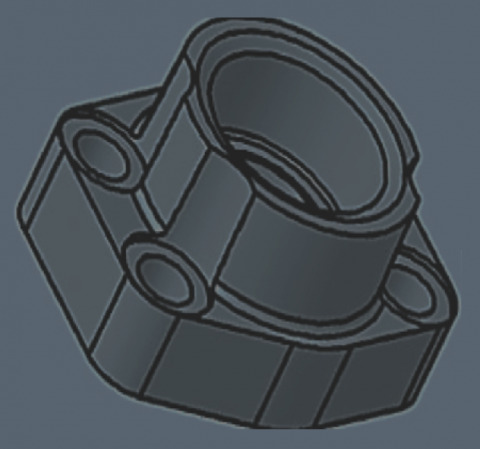
Integrated Threaded O-Ring (Related)
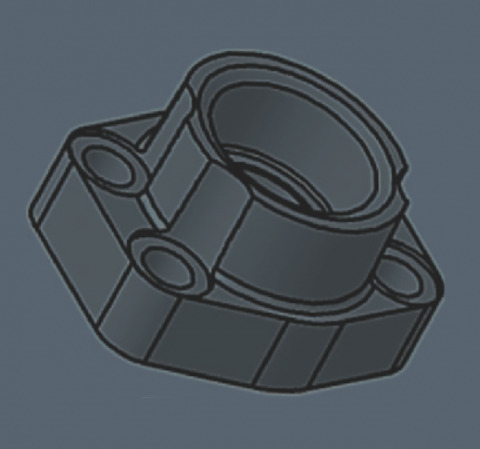
Integrated Socket Weld Flat Face
The "integrated" designation means the O-ring face and the socket-weld pipe connection are formed together in one body, eliminating any intermediate joint between the weld end and the sealing face. This gives the most direct, leak-resistant route from a welded hydraulic pipe to a standardised SAE port — combining the permanence of a welded pipe joint with the reliability of an O-ring face seal.
| Variant | Sealing Face | Pipe-End Connection | Best For |
|---|---|---|---|
| Socket Weld + O-Ring (this product) | Integral O-ring boss (ORB) face | Socket weld (weld-in) | Welded hydraulic pipe to SAE port; positive O-ring seal |
| Socket Weld + Flat Face | Flat face (gasket / metal seal) | Socket weld (weld-in) | Welded pipe to flat-face port; where O-ring not specified |
| Threaded (FNPT) + O-Ring | Integral O-ring boss face | Female NPT thread | Threaded pipe to SAE port with O-ring seal |
| Threaded (FBSP) + Flat Face | Flat face | Female BSP thread | European BSP-threaded pipe to flat-face port |
| Butt Weld (BTW) + Flat Face | Flat face | Butt weld (weld-on) | High-integrity large-bore welded pipe to flat-face port |
| Criterion | O-Ring Boss (ORB) Face | Flat Face |
|---|---|---|
| Sealing element | Captive elastomeric O-ring in machined groove | Flat gasket or metal-to-metal contact |
| Seal reliability | Excellent — positive seal, vibration-proof, vacuum-capable | Good — depends on gasket and bolt load |
| Re-usability | Replace O-ring at each reassembly | Replace gasket at each reassembly |
| Sealant needed | None — O-ring seals dry | Gasket required |
| Typical use | Standard high-pressure hydraulic SAE port seal | Where O-ring groove not required or gasket preferred |
| Criterion | Code 61 (Standard Pressure) | Code 62 (High Pressure) |
|---|---|---|
| SAE / ISO standard | SAE J518 Code 61 / ISO 6162-1 | SAE J518 Code 62 / ISO 6162-2 |
| Pressure rating | 3000–5000 PSI (207–345 bar) | 6000 PSI (420 bar) |
| Flange head | Larger head, wider bolt spacing | Smaller thicker head, closer bolt spacing |
| Interchangeable? | No — different bolt pattern from Code 62 | No — verify port code first |
| Parameter | Details |
|---|---|
| Brand | TES-LOK (Tesco Steel & Engineering) |
| Size Range | 3/8" to 5" NB |
| Pressure Series | Code 61 — 3000 PSI | Code 62 — 6000 PSI |
| Working Pressure | 34 bar to 420 bar (depending on size and code) |
| Construction | Single-piece integrated body — socket-weld bore + integral O-ring boss face |
| Sealing Face | Integral O-ring boss (ORB) — machined groove with captive O-ring |
| Pipe-End Connection | Socket Weld (Weld-In) bore |
| O-Ring Material | NBR (standard), Viton (FKM), EPDM — by hydraulic fluid type |
| Standards | SAE J518 | ISO 6162-1 (Code 61) | ISO 6162-2 (Code 62) | ASME B16.11 (socket weld bore) |
| Certifications | ISO 9001:2015 | EN 10204 3.1 MTC | PMI (XRF) on request | Hydrostatic test cert |
| Material Family | Grades / ASTM Spec |
|---|---|
| Stainless Steel | ASTM A182 F304 / 304H / 304L / 316 / 316H / 316L / 316Ti, 309, 310, 317L, 321, 347, 904L |
| Duplex & Super Duplex | ASTM A182 F51 (2205), F53 (2507), F55 (Zeron 100) |
| Alloy Steel | ASTM A182 F5, F9, F11, F21, F22, F91 |
| Carbon Steel | ASTM A105 (standard hydraulic flange material) |
| Low-Temp Carbon Steel (LTCS) | ASTM A350 LF2 — cryogenic / low-temperature service |
| Copper-Nickel | C70600 (90/10), C71500 (70/30), C71640 |
| Nickel | UNS N02200, UNS N02201 |
| Monel | UNS N04400, UNS N05500, Alloy 20 |
| Inconel | UNS N06600, N06601, N06625, N08800, N08810, N08825 |
| Hastelloy | UNS N10276, N06022, N10665, N06455 |
| Titanium | Gr. 1, Gr. 2, Gr. 3, DTH 3.7035, DTH 3.7055 |
Download the full TES-LOK integrated socket-weld O-ring SAE flange dimension tables for the 3000 PSI (Code 61) and 6000 PSI (Code 62) series — flange head diameter, bolt circle, bolt size, socket bore, and O-ring groove dimensions for each NB size:
📄 3000 PSI Socket Weld O-Ring Flange (PDF) 📄 6000 PSI Socket Weld O-Ring Flange (PDF) 📄 Socket Weld Flat Face Flange (PDF)| O-Ring Material | Temperature Range | Compatible Hydraulic Fluid | Avoid With |
|---|---|---|---|
| NBR (Nitrile) — Standard | −40°C to +100°C | Mineral oil hydraulic fluids (ISO HM / HV), diesel | Phosphate ester, Skydrol, hot water |
| Viton (FKM) | −20°C to +200°C | High-temperature mineral oils, fire-resistant HFD fluids | Skydrol (phosphate ester), hot water/steam |
| EPDM | −40°C to +150°C | Phosphate ester (Skydrol) fluids, water-glycol (HFC) | Mineral oils, petroleum-based fluids |
The socket-weld bore and O-ring boss face are machined into one body. No separate weld collar plus flange ring, no intermediate joint between the welded pipe end and the sealing face — the most direct, leak-resistant route from a welded hydraulic pipe to a SAE port.
The O-ring sits in a machined groove on the flange face — held captive during handling and assembly, sealing positively from vacuum to full rated pressure and unaffected by vibration. No loose seal ring to misplace, no thread sealant to contaminate the hydraulic fluid.
The socket-weld pipe end gives a permanent, high-integrity fusion joint to the hydraulic pipe — preferred where threaded pipe connections cannot be tolerated due to vibration, pressure cycling, or code requirements on the pipe side.
Manufactured to SAE J518 / ISO 6162 tolerances in both Code 61 (3000 PSI) and Code 62 (6000 PSI) series — bolts directly onto any standardised SAE port. Full integrated range also includes threaded and butt-weld pipe ends with O-ring or flat-face seals.
From standard Carbon Steel A105 to SS 316, Duplex, Inconel, Monel, and Hastelloy for corrosive and marine hydraulic systems. Single-source supply across the full alloy spectrum with EN 10204 3.1 MTC and PMI on request.
Integrated SAE flanges are manufactured on the same CNC machining centres and to the same QA/QC discipline that govern our full range of ASME, DIN, and EN flanges. ISO 9001:2015 certified, with material traceability and hydrostatic testing on every batch.
| Industry | Typical Use Point | Why This Flange Preferred |
|---|---|---|
| Industrial Hydraulics | Welded hydraulic pipe to power unit pump and manifold SAE ports | Single-piece socket-weld + O-ring gives welded pipe integrity with positive port seal |
| Mobile & Construction Equipment | Welded hydraulic lines on excavators, cranes, loaders | Vibration-proof O-ring seal; welded pipe end survives shock loads |
| Marine & Offshore | Welded hydraulic pipe runs on deck machinery and steering gear | SS 316 / Duplex body resists marine corrosion; welded pipe + O-ring face seal reliable in vibration |
| Oil & Gas | BOP and drilling rig welded hydraulic circuits | High-pressure Code 62; welded pipe integrity for safety-critical hydraulic lines |
| Steel & Metals | Rolling mill and casting welded hydraulic pipe systems | Heavy-duty welded connection with O-ring port seal withstands cyclic loading |
| Power Generation | Turbine governing and lube oil welded hydraulic pipe connections | Welded pipe integrity for HP hydraulic lines; Viton O-ring for hot oil service |
| Mining | Welded hydraulic circuits on haul trucks and shovels | Robust welded pipe + vibration-proof O-ring seal in extreme conditions |
| Shipbuilding | Engine room welded hydraulic pipe systems | Welded process side meets classification society requirements; O-ring face seal for serviceability |
Q1. What does "integrated" mean in an integrated socket weld SAE flange with O-ring?
"Integrated" means the socket-weld pipe end and the O-ring boss sealing face are machined into a single continuous body — not assembled from a separate weld collar plus a separate flange ring. There is no intermediate joint between the welded pipe end and the sealing face, giving the most direct and leak-resistant connection from a welded hydraulic pipe to a SAE port.
Q2. What is the difference between the O-ring face and flat-face versions?
The O-ring boss (ORB) face has a machined groove holding a captive elastomeric O-ring that seals against the port boss — a positive, vibration-proof, vacuum-capable seal with no separate gasket. The flat-face version seals with a flat gasket or metal-to-metal contact. The O-ring boss face is the standard high-pressure hydraulic SAE seal; the flat face is used where an O-ring groove is not required or a gasket is preferred.
Q3. Can I fit the O-ring before socket welding the pipe?
No. Never fit the O-ring before or during welding — the radiant and conducted heat from the socket weld will char and destroy the elastomer. Always complete the socket weld first, allow the flange to cool fully, inspect the weld, and only then fit the O-ring before bolting the flange to the SAE port.
Q4. What is the gap requirement for the socket weld?
Per ASME B16.11, insert the pipe into the socket bore until it bottoms out, then withdraw approximately 1.5 mm (1/16") before welding. This gap allows for thermal expansion of the pipe during welding and prevents the socket floor or weld root from cracking. Confirm the gap before tack welding the full-circumference fillet weld.
Q5. What is the difference between Code 61 and Code 62?
Code 61 is the standard-pressure series (3000–5000 PSI / 207–345 bar) and Code 62 is the high-pressure series (6000 PSI / 420 bar). For the same nominal port size, Code 62 has a smaller, thicker flange head, larger bolts, and closer bolt-hole spacing. They are not interchangeable — confirm the code stamped on the port before ordering.
Q6. What O-ring material should I use for Skydrol (phosphate ester) hydraulic fluid?
Use EPDM. Skydrol and other phosphate ester fire-resistant hydraulic fluids attack NBR (nitrile) and Viton (FKM) O-rings, causing rapid swelling and failure. EPDM is compatible with phosphate ester fluids. Conversely, EPDM must NOT be used with mineral-oil hydraulic fluids — for those use NBR (standard) or Viton (high temperature). Always match the O-ring elastomer to the specific hydraulic fluid.
Q7. Can these flanges be supplied with threaded or butt-weld pipe ends instead of socket weld?
Yes. TES-LOK manufactures the full integrated SAE flange range — socket-weld, female NPT thread, female BSP thread, and butt-weld pipe ends — each available with an O-ring boss face or a flat face. Specify the pipe-end connection and the sealing face type when ordering. Cross-links to the threaded and flat-face variants are in the sidebar.
Q8. Can these flanges be supplied in stainless steel or duplex for marine hydraulics?
Yes. Integrated socket-weld O-ring SAE flanges are available in SS 304, SS 316 / 316L, Duplex 2205, and Super Duplex 2507 for marine, offshore, and corrosive-environment hydraulic systems, with EN 10204 3.1 material test certificates and PMI on request. SS 316 and Duplex resist the chloride-induced corrosion that attacks standard Carbon Steel flanges in marine atmospheres.