

Tesco Steel & Engineering manufactures camlock (cam & groove) couplings — lever-arm quick-connect hose couplers for fast, tool-free bulk transfer of liquids, fluids, and powders. A grooved male adapter drops into a female coupler and two pivoting cam arms snap down over the groove to lock and seal the joint in seconds. Made to the standard Type A, B, C, D, E, F, DC and DP range. SS 316, SS 304, Brass, and special alloys. Size 1/2" to 4". NPT/BSP ends. ISO 9001:2015 certified. Made in India.
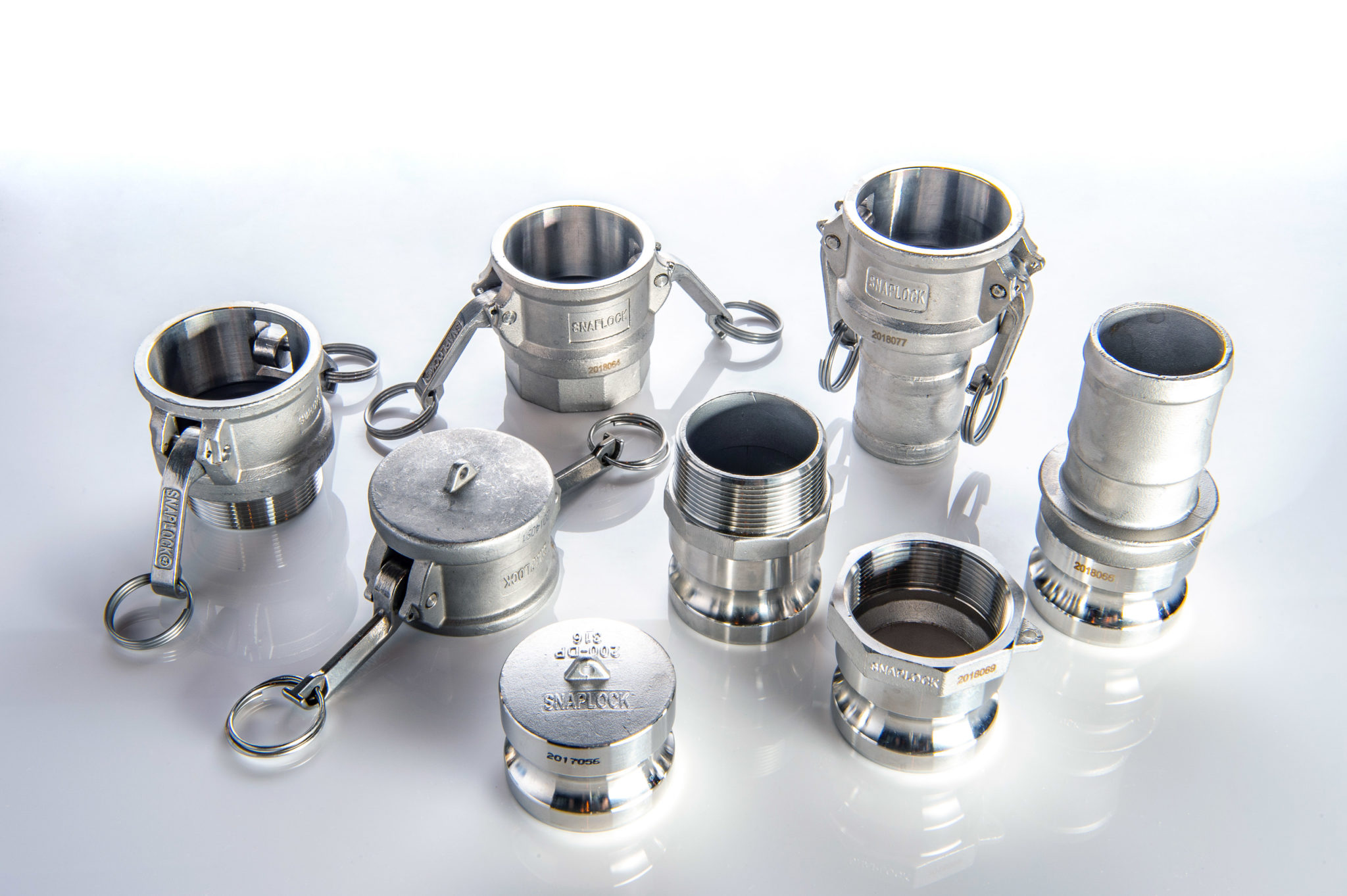
TES Camlock Coupling
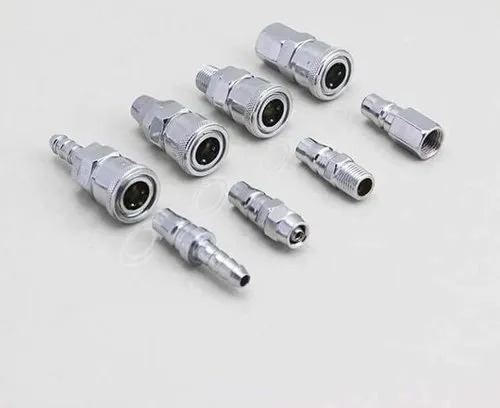
QRC Coupling (Related)
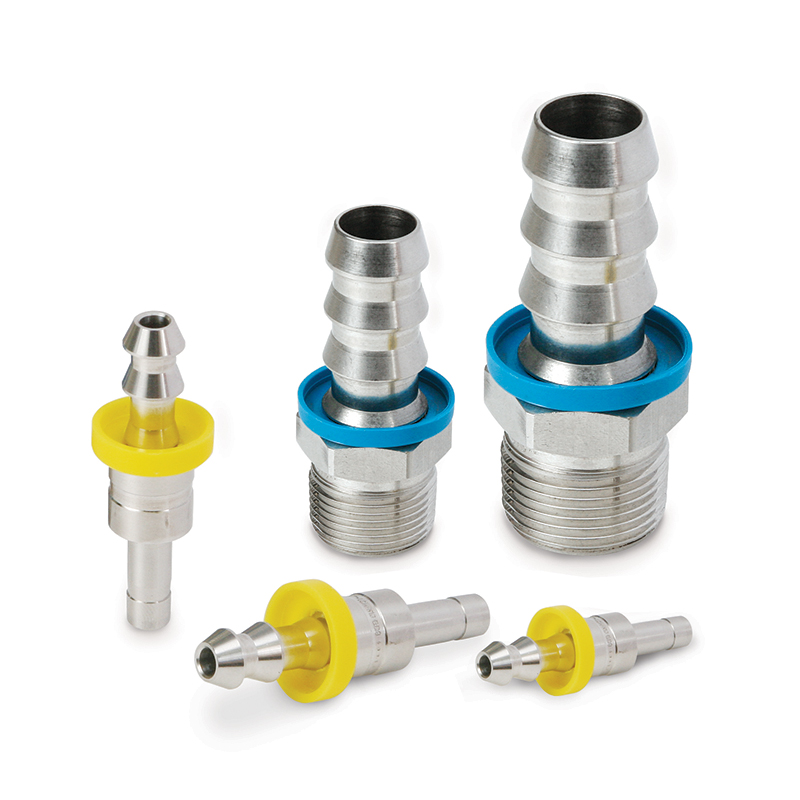
Push-on Hose Fittings (Related)
Tesco Steel & Engineering supplies the complete camlock range — Types A, B, C, D, E, F, DC, and DP — in SS 316, SS 304, Brass, and special alloys with a choice of gaskets, alongside QRC quick-release couplings and push-on hose fittings.
| Type | Part | One End | Other End |
|---|---|---|---|
| Type A | Adapter | Cam-groove adapter | Female thread (NPT/BSP) |
| Type B | Coupler | Cam-arm coupler | Male thread (NPT/BSP) |
| Type C | Coupler | Cam-arm coupler | Hose shank (hose-tail) |
| Type D | Coupler | Cam-arm coupler | Female thread (NPT/BSP) |
| Type E | Adapter | Cam-groove adapter | Hose shank (hose-tail) |
| Type F | Adapter | Cam-groove adapter | Male thread (NPT/BSP) |
| Type DC | Dust Cap | Caps a male adapter | — |
| Type DP | Dust Plug | Plugs a female coupler | — |
A male adapter (A, E, F) always mates with a female coupler (B, C, D) of the same size; dust caps (DC) and plugs (DP) seal the halves when disconnected.
| Gasket | Suits | Notes |
|---|---|---|
| NBR (Buna) | Oils, fuels, general fluids | Economical, good all-round |
| Viton / FKM | Aggressive chemicals, solvents, high temp | Wide chemical resistance |
| EPDM | Water, acids, alkalis, hot water | Not for oils/fuels |
| PTFE | Highly aggressive & pure media | Broadest chemical compatibility |
| Food-grade (e.g. silicone/PTFE) | Food & beverage transfer | Hygienic, FDA materials |
| Parameter | Details |
|---|---|
| Product | Camlock (cam & groove) coupling |
| Types | A, B, C, D, E, F (adapters & couplers); DC dust cap, DP dust plug |
| Size | 1/2" to 4" |
| Standard | A-A-59326 (formerly MIL-C-27487) / EN 14420-7 interchange |
| End Connections | Male / female NPT, BSP (BSPP), BSPT; hose shank (hose-tail) |
| Working Pressure | Typically up to ~250 PSI — size, type & material dependent (lower on larger sizes) |
| Gasket | NBR, Viton/FKM, EPDM, PTFE, food-grade |
| Body Material | SS 316 / 316L, SS 304, Brass, special alloys |
| Options | Safety/locking arms, arm pins, food-grade, oxygen-clean |
| Certifications | ISO 9001:2015 | EN 10204 3.1 MTC on request |
| Material | Corrosion / Service | Typical Use |
|---|---|---|
| SS 316 / 316L | Excellent — chloride resistant | Chemicals, food, marine, offshore transfer |
| SS 304 / 304L | Good — general service | Water & mild fluids |
| Brass | Moderate — no ammonia/acids | Fuels, oils, water (economical) |
| Special Alloys | Application-specific | Aggressive media on request |
Lever-arm cam & groove design joins and parts hoses by hand without tools — ideal for fast, repeated bulk transfer connections.
Adapters (A, E, F), couplers (B, C, D), dust caps (DC) and plugs (DP) in every size to build any hose, tank, pump, or pipe connection.
Made to the A-A-59326 / EN 14420-7 standard so they mate with existing camlock equipment of the same type and size.
SS 316 for chemicals, food, and marine, brass for fuels and water, and special alloys for aggressive media — with the right gasket for each.
NBR, Viton, EPDM, PTFE, and food-grade gaskets for fuels, chemicals, water, hot fluids, and hygienic transfer.
Optional locking arms and pins keep the cams closed under pressure and vibration for secure, accidental-release-proof transfer.
| Industry | Typical Use | Why Camlock |
|---|---|---|
| Fuel & Oil Transfer | Tanker, bowser & drum loading | Fast connect; brass/SS + NBR |
| Chemical Processing | IBC, drum & tank transfer | SS 316 + Viton/PTFE gaskets |
| Water & Irrigation | Pump & hose connections | Quick swap; EPDM gaskets |
| Food & Beverage | Liquid & ingredient transfer | SS 316 hygienic; food-grade gaskets |
| Construction & Mining | Dewatering & slurry hoses | Rugged, fast site connections |
| Tankers & Marine | Bulk liquid loading/unloading | SS 316 corrosion resistance |
| Agriculture | Sprayers, water & slurry | Tool-free; durable |
| Dry Bulk / Powders | Powder & granule transfer | Large-bore quick connect |
Q1. What is a camlock coupling?
A camlock (cam & groove) coupling is a quick-connect hose coupler that joins two lines by hand in seconds without tools. A grooved male adapter is inserted into a female coupler and two pivoting cam arms are pressed down over the groove to lock and seal the joint against a gasket. It is the standard coupling for fast bulk transfer of liquids, fluids, and powders.
Q2. What are the camlock types A, B, C, D, E and F?
Type A is an adapter with a female thread; Type B a coupler with a male thread; Type C a coupler with a hose shank; Type D a coupler with a female thread; Type E an adapter with a hose shank; Type F an adapter with a male thread. DC is a dust cap for an adapter and DP a dust plug for a coupler. A male adapter (A/E/F) mates with a female coupler (B/C/D) of the same size.
Q3. Are camlocks interchangeable between manufacturers?
Yes, when made to the same standard (A-A-59326 / EN 14420-7) and of the same type and size, camlocks from different makers will mate. We manufacture to this interchange standard so our couplings connect with your existing equipment. Confirm the type and size when ordering.
Q4. What gasket should I choose?
NBR (Buna) for oils, fuels, and general fluids; Viton/FKM for aggressive chemicals, solvents, and higher temperatures; EPDM for water, acids, alkalis, and hot water (not oils); PTFE for highly aggressive and pure media; and food-grade gaskets for food and beverage transfer. Always match the gasket to the media and temperature.
Q5. What pressure can a camlock handle?
Camlocks are typically rated up to around 250 PSI depending on the size, type, and material, with larger sizes rated lower. They are intended for bulk transfer rather than high-pressure service. For higher-pressure, frequently-cycled, self-sealing connections, use a QRC quick-release coupling.
Q6. How is a camlock different from a QRC quick-release coupling?
A camlock uses external cam arms over a groove and has an open bore (no internal shut-off), ideal for lower-pressure bulk hose transfer. A QRC uses a spring sleeve and locking balls, is often self-sealing, and handles higher pressures, suiting air tools, hydraulics, and test rigs. Choose camlock for bulk transfer and QRC for high-pressure, no-spill tool lines.
Q7. Are safety/locking arms necessary?
For pressurised lines, vibration, or where accidental release would be hazardous, yes — locking arms or safety pins keep the cam arms closed so they cannot be knocked open. They are recommended for fuel, chemical, and pressurised transfer. Because camlocks have no internal shut-off, always depressurise before opening the arms.
Q8. Can camlocks be supplied in stainless steel for food or chemicals?
Yes. SS 316 camlocks with food-grade or PTFE/Viton gaskets are supplied for food, beverage, and chemical transfer, with brass and special alloys for other media. Oxygen-cleaned versions are available on request. Specify the media, size, and temperature and we will recommend the type, body, and gasket.