ISO 9001:2015 Certified

'SHAPING INDUSTRIES WITH THE FINEST STEEL'

ASTM A182 F5 Alloy Steel Flanges Manufacturer in India


5Cr-0.5Mo  |  DIN 1.7362  |  ASME SA182  |  Sulfidation Resistant  |  Service to 649°C  |  Modified McConomy Curves  |  Class 150–2500

Ask for Quote WhatsApp
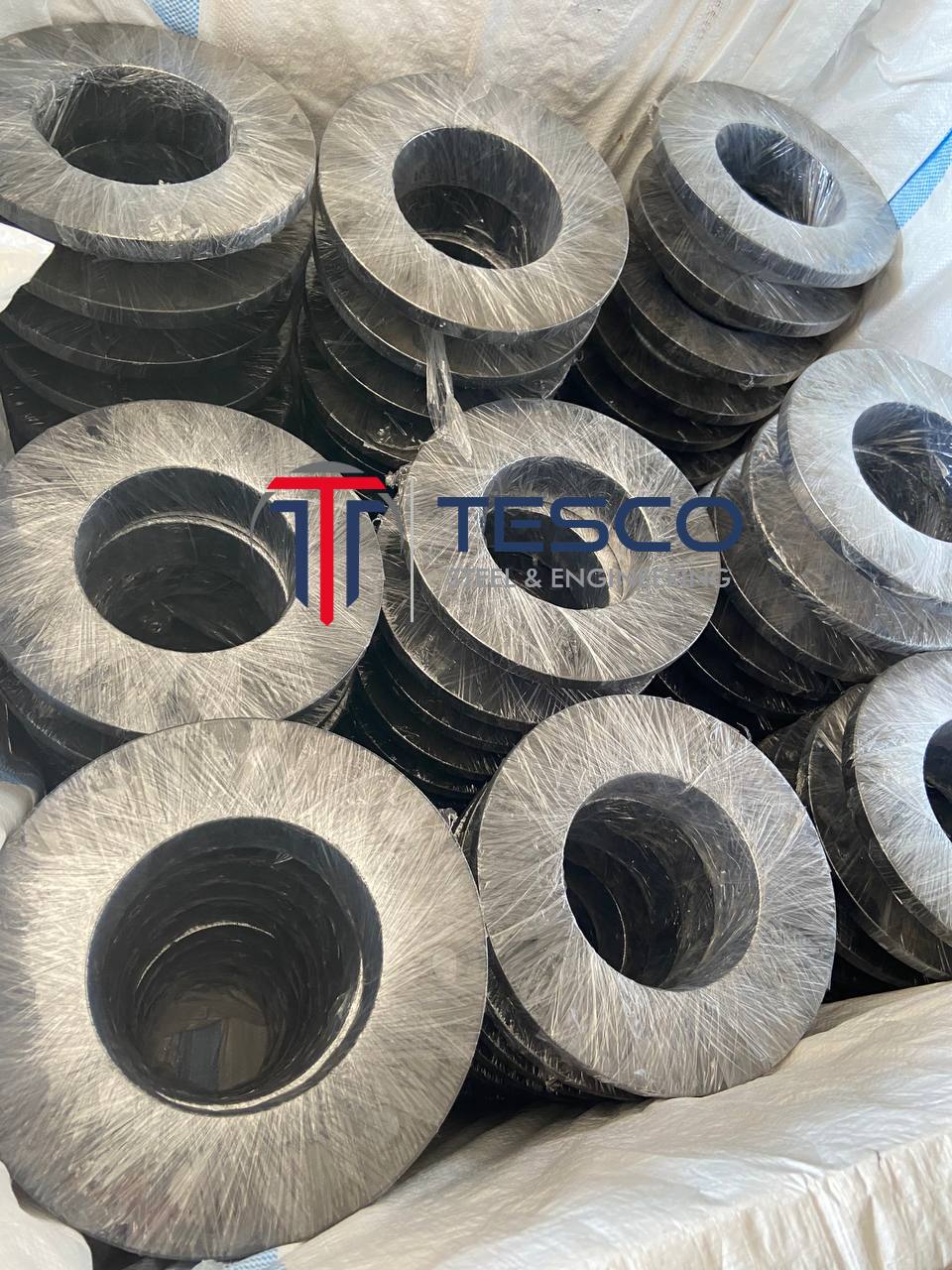
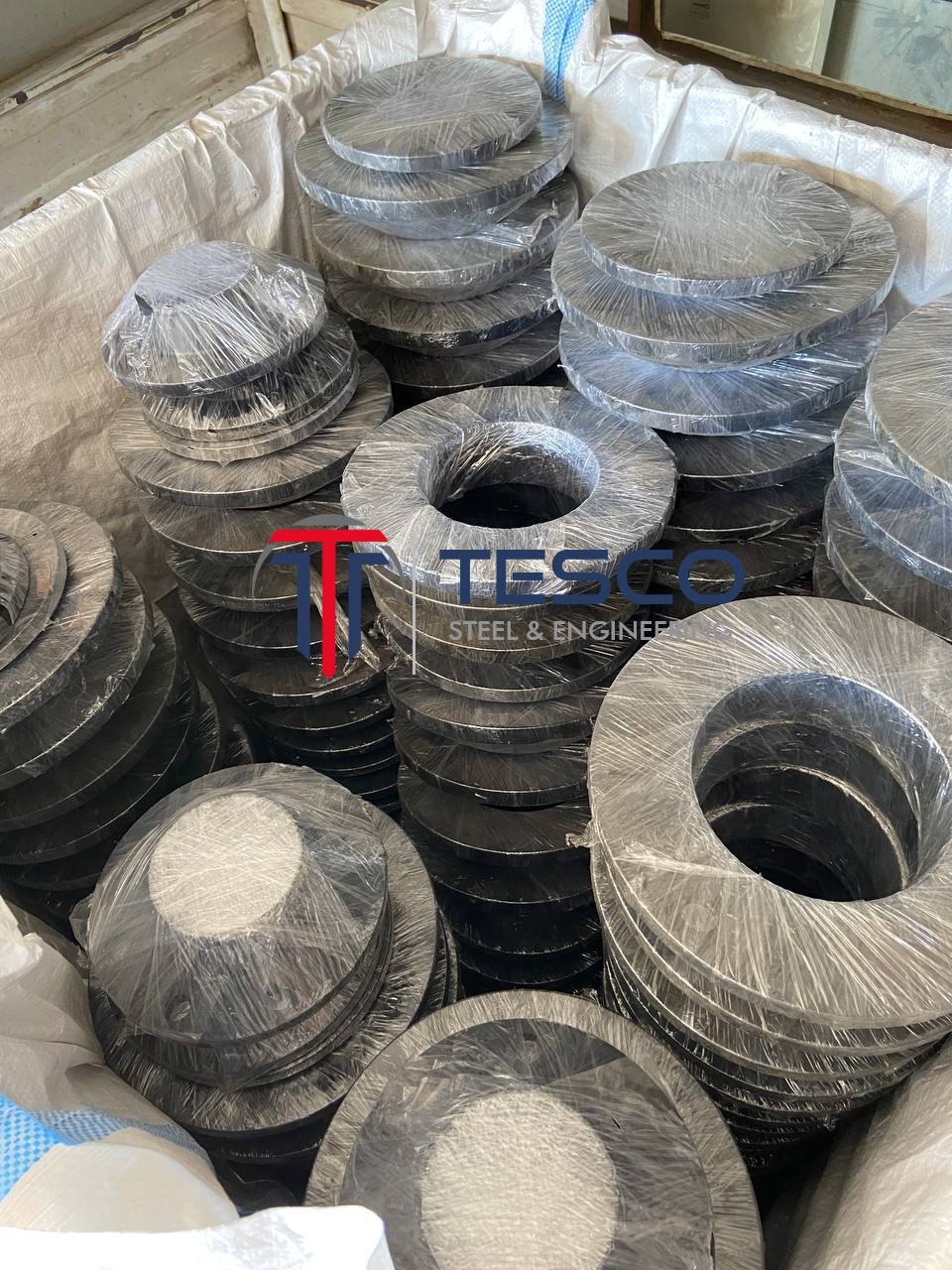
ASTM A182 F5 alloy steel flanges manufacturer India — 5Cr-0.5Mo sulfidation resistant

ASTM A182 F5 alloy steel flanges — 5Cr-0.5Mo, sulfidation-resistant, ASME SA182

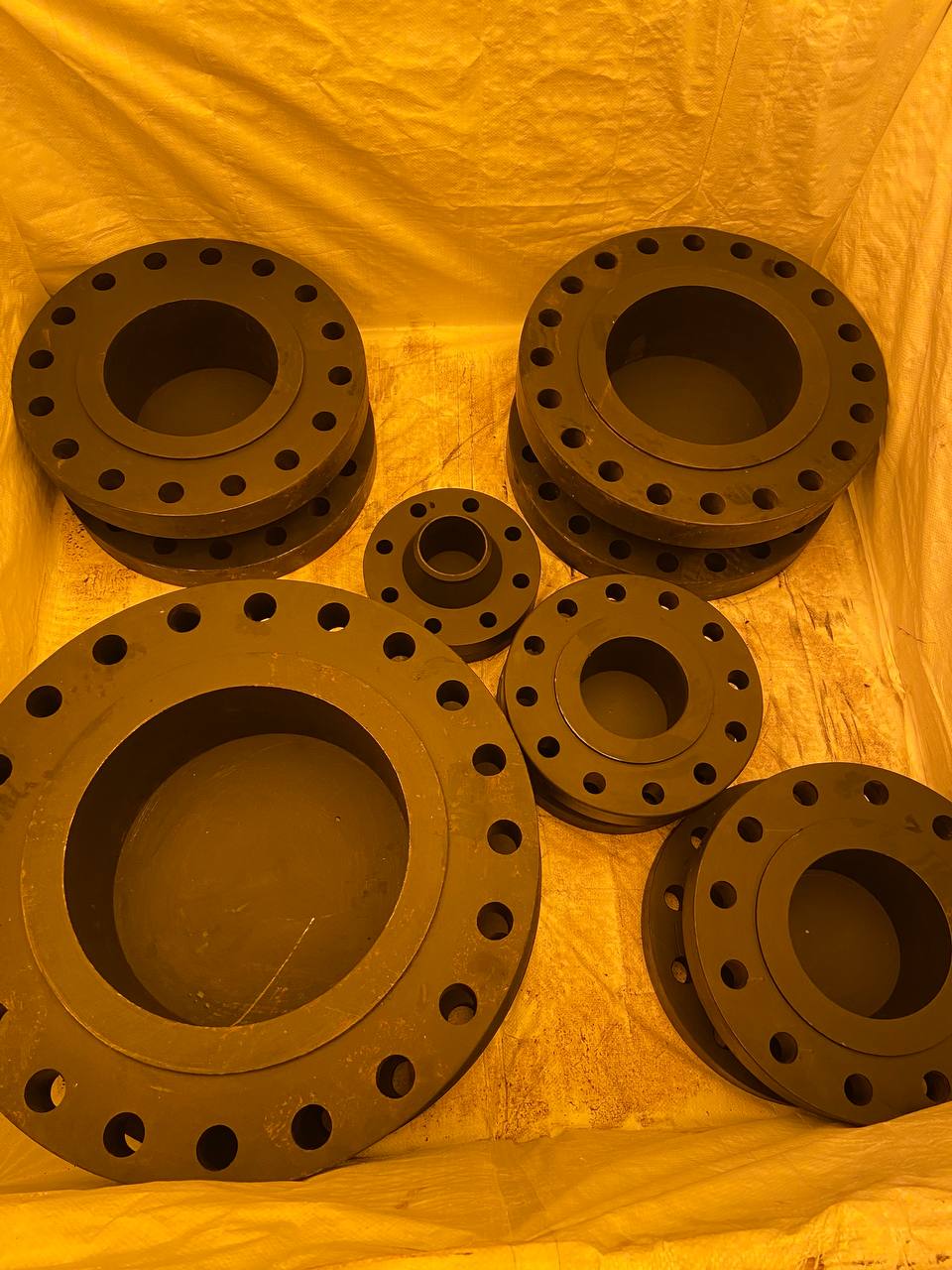
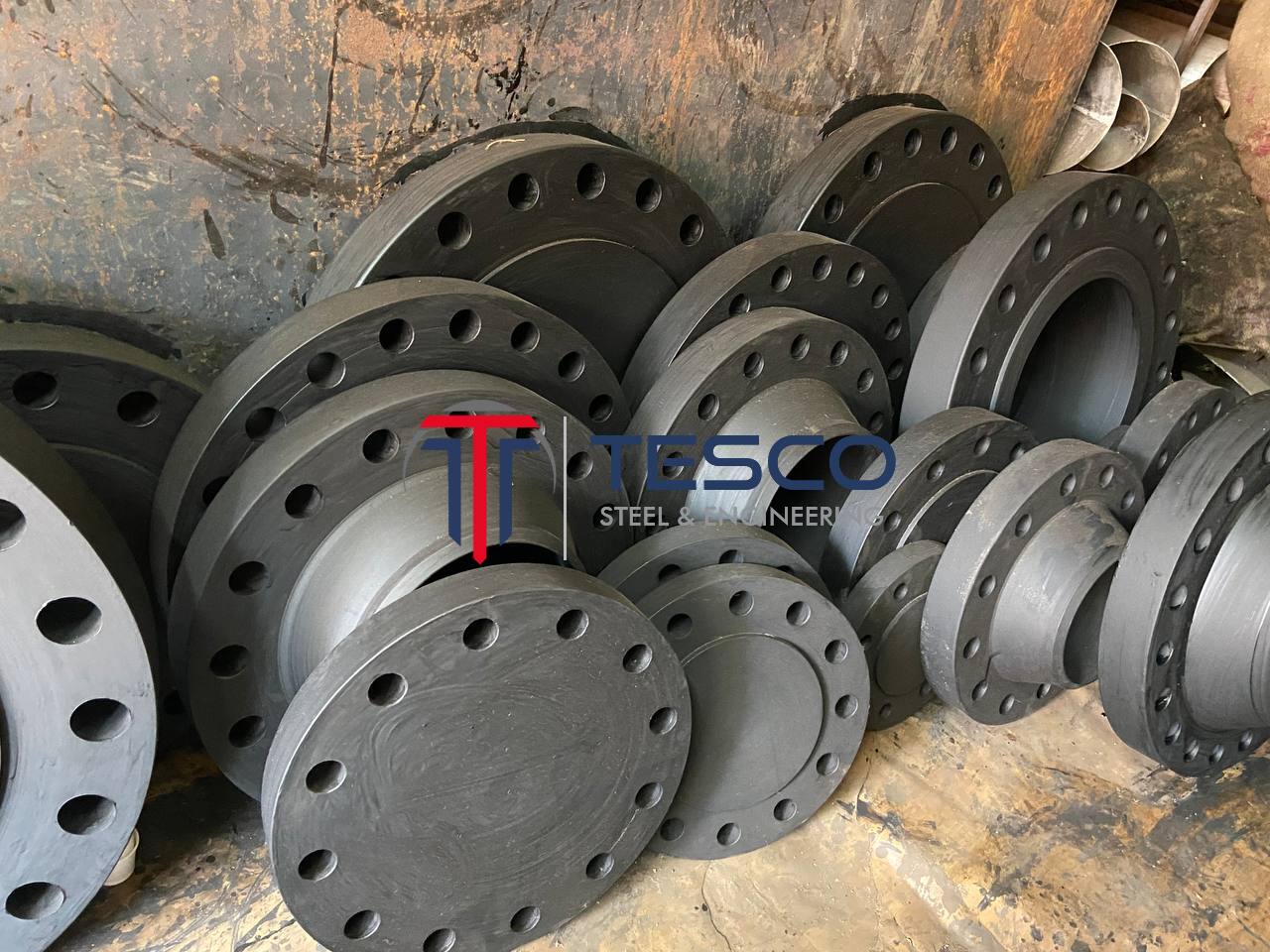
ASTM A182 F5 weld neck raised face flanges WNRF high temperature refinery service India

F5 weld neck raised face (WNRF) flanges — for coking units, vacuum columns, HDS units

What is ASTM A182 F5 Alloy Steel?


ASTM A182 F5 (ASME SA182 F5) is a 5% chromium – 0.5% molybdenum (5Cr-0.5Mo) low-alloy ferritic steel forging specification for high-temperature piping flanges, fittings, and valve bodies. It is the defining grade for service in high-temperature sulfur-bearing streams — the primary degradation environments in petroleum refining, petrochemical processing, and fossil fuel power generation. With chromium content of 4.00–6.00%, F5 forms a protective chromia (Cr₂O₃) oxide scale at elevated temperatures that dramatically reduces sulfidation and oxidation corrosion rates compared to lower-chromium Cr-Mo grades such as F11 (1.25% Cr) or F22 (2.25% Cr).

The Modified McConomy curves (referenced in API 939-C) are the standard industry tool for predicting high-temperature sulfidation corrosion rates in Cr-Mo steels. They show that F5 (5Cr steel) corrodes at a rate 3–7 times lower than F11 (1.25Cr) at equivalent sulfur content and temperature, making F5 the material of choice for refinery coking units, crude vacuum columns, atmospheric residue pipework, and hydrodesulfurisation (HDS) unit flanges. ASTM A182 F5 flanges are rated to a maximum of 649°C (1200°F) per ASME B16.5 Group 5.1, and Tesco Steel & Engineering manufactures them in all types — WNRF, SORF, BLRF, SWRF, LJTF, THRF — from NPS ½ to 60, Class 150 to 2500, to ASME B16.5 and B16.47.

Key Selection Rule: Specify F5 (5Cr-0.5Mo) when the process stream contains significant sulfur (H₂S, elemental S) at temperatures above 260°C, and when F11 or F22 sulfidation corrosion rates predicted by Modified McConomy curves exceed the design corrosion allowance for the planned equipment life.

Selecting the Right Cr-Mo Grade: F11 → F5 → F9 for Sulfur and High-Temperature Service


The chromium-molybdenum alloy steel family provides progressively better sulfidation resistance, oxidation resistance, and creep strength as chromium content increases. F5 occupies the critical middle position for high-sulfur refinery service:

A182 F11
1.25Cr-0.5Mo
Max temp: 593°C
Sulfidation resist.: Moderate (1.25% Cr)
Primary use: High-temp without heavy sulfur (steam boilers, catalytic reformers, moderate H₂S)
Upgrade to F5 when: H₂S corrosion rate exceeds allowance
A182 F5 ★
5Cr-0.5Mo — Sulfidation Champion
Max temp: 649°C
Sulfidation resist.: High (4–6% Cr)
Primary use: Coking units, vacuum columns, HDS units, high-sulfur crude streams above 260°C
The standard for: Refinery high-sulfur, high-temp piping
A182 F9
9Cr-1Mo
Max temp: 649°C
Sulfidation resist.: Very high (9% Cr)
Primary use: Very high-temp oxidation & sulfidation, USC boiler connecting flanges, severe service above F5 limit
Upgrade from F5 when: F5 sulfidation rate still too high at operating conditions

Sulfidation Resistance: Why F5 Outperforms F11 and F22


High-temperature sulfidation is the corrosion of steel by sulfur species (H₂S, elemental sulfur, mercaptans, polysulfides) at temperatures above approximately 260°C. It is one of the most prevalent and damaging corrosion mechanisms in petroleum refinery piping. The Modified McConomy curves (API 939-C) quantify the relative sulfidation corrosion rates of Cr-Mo steels as a function of chromium content, sulfur content, and temperature.

Grade Cr Content Relative Sulfidation Rate at 400°C
(lower = better)
Typical Refinery Application
Carbon Steel (A105)0%1.00 (baseline)Below 260°C only — severe sulfidation above 260°C
F11 (1.25Cr-0.5Mo)1.25%~0.30 (3× better than CS)Moderate sulfur, non-critical high-temp lines
F22 (2.25Cr-1Mo)2.25%~0.15 (6× better than CS)Moderate-high sulfur, hydrocracker service
F5 (5Cr-0.5Mo)5%~0.05–0.10 (10–20× better)Coking units, vacuum columns, high-sulfur crude
F9 (9Cr-1Mo)9%~0.01–0.03 (30–100× better)Very high-sulfur, very high-temp, oxidation-severe
316L SS (austenitic)16–18% Cr + NiMinimal (Ni stabilises scale)Where Cr-Mo grades are still corroding too fast

* Relative rates are indicative; actual values depend on sulfur species, concentration, and temperature. Always verify against site-specific corrosion monitoring data and API 939-C curves.

ASTM A182 F5 Chemical Composition


Element F5 Limit (%) Role in the Alloy
Carbon (C)≤ 0.15Low carbon maintained to ensure weldability and toughness; higher C increases hardenability and cracking risk during welding
Manganese (Mn)0.30 – 0.60Mild solid solution strengthener; deoxidiser; controlled to limit hardenability in the high-Cr matrix
Silicon (Si)≤ 0.50Deoxidiser; also provides minor oxidation resistance contribution
Phosphorus (P)≤ 0.025Strictly limited to prevent temper embrittlement — a critical embrittlement mechanism in Cr-Mo steels during PWHT and high-temperature service
Sulphur (S)≤ 0.025Controlled to improve toughness and prevent hot cracking during welding of the high-Cr ferritic microstructure
Chromium (Cr)4.00 – 6.00The primary functional element — forms dense, adherent Cr₂O₃ (chromia) scale resistant to sulfidation, oxidation, and hot corrosion up to 649°C; this level of Cr is essential for refinery sulfur service
Molybdenum (Mo)0.44 – 0.65Creep resistance at elevated temperatures; solid solution strengthening; retards grain boundary sliding under sustained high-temperature load

Mechanical Properties — A182 F5 vs the Cr-Mo Family


Note: F5 has lower ambient-temperature mechanical strength than F11 or A105. It is selected for its high-temperature corrosion performance, not for ambient strength.

Property A182 F5
(5Cr-0.5Mo)
A182 F11 Cl.2
(1.25Cr-0.5Mo)
A182 F22 Cl.3
(2.25Cr-1Mo)
A182 F9
(9Cr-1Mo)
A105
(Carbon Steel)
UTS (MPa min)415485585585485
Yield Strength (MPa min)205275380380250
Elongation (% min)2020202022
Reduction of Area (% min)4530303030
Hardness (HBW max)187197241241187
ASME B16.5 Group5.13.145.21.1
Max Service Temp (°C)649593649649538
Sulfidation ResistanceHigh (5% Cr)Moderate (1.25% Cr)Moderate-High (2.25% Cr)Very High (9% Cr)Poor (0% Cr)
Min Preheat (°C)17515017520093 (t>25mm)
PWHT Temp (°C)720–760675–760690–760730–760620–680
Density (g/cm³)7.857.857.857.677.85

ASTM A182 F5 Flange Face Types Available


Type Abbreviation Application for High-Temperature F5 Sulfur Service
Weld Neck Raised Face WNRF The standard choice for all high-temperature F5 refinery flanges. Butt-welded tapered hub eliminates the stress raisers inherent in slip-on and socket-weld designs — mandatory for Class 600+ and for the thermally cyclic, corrosive conditions of coking units and vacuum column bottoms.
Slip-On Raised Face SORF Used in lower-pressure F5 auxiliary lines (Class 150–300) where thermal cycling is moderate. The double fillet weld crevice can trap sulfur deposits — avoid in high-sulfur condensate service where underdeposit corrosion is a risk.
Blind Raised Face BLRF Solid disc for isolation of hot oil lines, coker heater isolation, and test connection blanking. Must be rated for the full differential pressure at maximum operating temperature — typically Class 300 or above for coking service.
Socket Weld Raised Face SWRF Small-bore (NPS ½–2) Class 3000/6000 instrument connections and drain/vent points on high-temperature F5 systems. The socket crevice must be considered for sulfidation — keep the 1.6 mm gap before welding as per ASME B31.3 to minimise crevice corrosion risk.
Ring Type Joint RTJ Specified for Class 900, 1500, and 2500 F5 flanges in high-pressure hot oil service, coker unit isolation valves, and vacuum column nozzle connections where spiral-wound gaskets may be inadequate under high-temperature creep.
Long Weld Neck LWN Used on pressure vessel nozzles, coker drum nozzles, and vacuum column bottom connections where the flange also acts as the nozzle neck. F5 LWN flanges are common in delayed coking unit drum necks operating in high-sulfur, high-temperature service.
Threaded / Screwed THRF Restricted use in high-temperature F5 service — thread engagement can loosen under thermal cycling. Used for non-critical instrument and utility connections only; never in primary high-temperature, high-sulfur piping runs.

ASTM A182 F5 Grade Cross-Reference & Equivalents


Standard / System Designation
ASTM / ASME (Flanges)A182 Grade F5 / ASME SA182 F5
UNS NumberK41545
DIN Material Number1.7362
DIN / EN Steel GradeX12CrMo5 (close equivalent)
EN Standard (Forgings)EN 10222-2 — closest equivalent X11CrMo5+NT
BS StandardBS 1503 Grade 625 (5Cr-0.5Mo steel forgings)
JIS StandardJIS G3203 SFCM660 / JIS G4109 SCM5
ASME B16.5 Material GroupGroup 5.1 (4–6% Cr, 0.5% Mo ferritic steels)
Filler Metal (GTAW / GMAW)ER80S-B6 (AWS A5.28) — 5Cr-0.5Mo matching filler
Electrode (SMAW)E8018-B6 (AWS A5.5) — low-hydrogen 5Cr-0.5Mo electrode
Related Pipe StandardASTM A335 Grade P5 (seamless 5Cr-0.5Mo pipe)
Related Fittings StandardASTM A234 Grade WP5 (5Cr-0.5Mo butt-weld fittings)
Related Valve BodiesASTM A217 Grade C5 (5Cr-0.5Mo castings)
Lower-Cr Step-DownASTM A182 F22 (2.25Cr-1Mo) — better creep; less sulfidation resistance
Higher-Cr UpgradeASTM A182 F9 (9Cr-1Mo) — better sulfidation and oxidation resistance

ASTM A182 F5 Flange Specifications & Dimensions


Standard Supply Parameters
Size RangeNPS ½" to 60" (DN 15 to DN 1500)
Pressure Classes (ASME B16.5)Class 150, 300, 600, 900, 1500, 2500
Pressure Classes (ASME B16.47)Class 75, 150, 300, 400, 600, 900 (Series A & B)
Bore ScheduleSTD, XS, XXS, Schedule 10, 20, 40, 80, 120, 160
PN RatingPN 6, 10, 16, 25, 40, 64, 100, 160, 250, 320, 400
Heat Treatment (Standard)Annealed or Normalised and Tempered
ASME B16.5 Material GroupGroup 5.1 — maximum 649°C (1200°F)
Face TypesRF (Raised Face), FF (Flat Face), RTJ (Ring Type Joint), MF (Male/Female), TG (Tongue & Groove)
Face Finish125–250 μin Ra AARH (serrated), 63–125 μin (smooth), RTJ groove per ASME B16.20
Material StandardASTM A182 / ASME SA182 Grade F5
Dimensional StandardsASME B16.5, ASME B16.47, MSS SP-44, API 6A

ASME B16.5 Class 150 Raised Face — Representative Dimensions (A182 F5 WNRF)

NPS OD (mm) Bolt Circle (mm) No. of Bolts Bolt Size RF Dia. (mm) Flange Thickness (mm)
½"89604M12359.6
1"108794M165111.2
1½"127984M167312.7
2"1521214M169214.2
3"1901524M2012715.9
4"2291908M2015717.5
6"2792418M2421620.6
8"3432988M2427022.4
10"40636212M2732423.9
12"48343212M2738125.4
16"59754016M3048928.6
20"69863520M3059731.8
24"81374920M3071134.9

* Dimensions per ASME B16.5-2017. For Class 300–2500 and ASME B16.47 (NPS 26–60), contact us for certified dimensional drawings.

Welding ASTM A182 F5 Flanges — Procedure, Preheat & Mandatory PWHT


Parameter Requirement for ASTM A182 F5 (5Cr-0.5Mo)
Filler — GTAW (TIG)ER80S-B6 (AWS A5.28) — 5Cr-0.5Mo matching filler wire; use with 100% argon shielding gas
Electrode — SMAW (Stick)E8018-B6 (AWS A5.5) — low-hydrogen 5Cr-0.5Mo electrode; bake at 300–350°C for 1 hour before use; store in heated quiver at 150°C
Preheat TemperatureMinimum 175°C (350°F) for all thicknesses — higher than F11 (150°C) due to greater hardenability of the 5% Cr ferritic matrix; preheat uniformly 75 mm each side of the joint
Interpass TemperatureMaximum 300°C — avoid excessive heat input; high interpass temperature promotes coarse grain growth in the ferritic HAZ, degrading toughness
PWHT Temperature720–760°C (1330–1400°F) — mandatory per ASME B31.3 Table 331.1.1 for all pressure-containing welds on P-Number 5A (5–6% Cr) material
PWHT Hold Time1 hour per 25 mm of weld thickness (minimum 2 hours total for F5 to ensure full tempering of martensite in HAZ)
Heating / Cooling RateHeating rate ≤ 200°C/h and cooling rate ≤ 250°C/h above 425°C — controlled rates prevent cracking of the brittle martensite before tempering and thermal shock during cooling
Why PWHT is Critical for F5F5 weld HAZ contains brittle martensite (hardness > 350 HBW without PWHT) susceptible to hydrogen cracking and stress corrosion in H₂S service. PWHT tempers martensite to bainite/tempered ferrite, restores toughness, and reduces residual stress. Also necessary for NACE MR0175 compliance (max 22 HRC)
Temper Embrittlement5Cr-Mo steels are susceptible to temper embrittlement (TE) if slowly cooled through 375–575°C during PWHT or in service. Specify step-cooling test (J-factor) for critical applications; rapid cooling after PWHT mitigates TE risk
Dissimilar Metal WeldsF5-to-carbon steel (A105): use ER80S-B6 or E8018-B6 filler with F5 PWHT (720–760°C). F5-to-stainless steel: use ERNiCrMo-3 (Inconel 625) or ER309L butter layer; buttering required before joining to austenitic grades

Applications of ASTM A182 F5 Alloy Steel Flanges


Delayed Coking Units (DCU)
Coker drum outlet flanges, heater transfer line connections, coke drum nozzle flanges, and fractionator bottoms piping in delayed coking units — among the most demanding sulfur and temperature environments in any refinery, operating at 480–510°C in high-H₂S service.

Crude Distillation & Vacuum Units
Atmospheric residue (AR) piping flanges, vacuum column bottoms connections, vacuum residue (VR) pump flanges, and crude preheat train connections in the high-temperature section where sulfur corrosion is accelerated above 260°C.

Hydrodesulfurisation (HDS) Units
Reactor inlet and outlet flanges, high-temperature separator nozzles, and recycle gas compressor discharge connections in naphtha, kerosene, and diesel HDS units operating in combined H₂S + H₂ atmospheres at 300–425°C.

Catalytic Cracking (FCC) Units
Regenerated catalyst transfer line flanges, main fractionator bottoms nozzles, and slurry oil circuit connections in fluid catalytic cracking units where high temperature and sulfur-bearing streams co-exist.

Refinery Fired Heater Connections
Charge heater outlet headers, convection section outlet flanges, and crossover transfer flanges in refinery process heaters handling high-sulfur crude and vacuum residue at skin temperatures above 430°C.

Petrochemical — Sulphur Recovery Units
Claus unit process gas flanges, tail gas treating unit (TGTU) connections, and sulphur condenser nozzles where sulfur vapour and H₂S contact metal surfaces at elevated temperatures.

Power Generation — High-Sulfur Fuel Service
Boiler flue gas path flanges in coal-fired power plants burning high-sulfur coal, waste heat recovery boiler connections, and sulfuric acid plant boiler nozzles where sulfur trioxide (SO₃) and sulfur dioxide (SO₂) are present at high temperatures.

Offshore & Marine Refinery Processing
FPSO (Floating Production Storage and Offloading) high-temperature process flanges for heavy crude processing, crude preheating, and atmospheric/vacuum distillation skids where compact design and sulfur-resistant flanges are critical.

International Standards for ASTM A182 F5 Alloy Steel Flanges


Category Standard Scope
Material (Flanges)ASTM A182 / ASME SA182Alloy steel pipe flanges — F5 chemistry, mechanical, and heat treatment requirements
Related PipeASTM A335 Grade P5 / ASME SA335Seamless 5Cr-0.5Mo alloy steel pipe for high-temperature service
Related FittingsASTM A234 Grade WP5 / ASME SA2345Cr-0.5Mo butt-welding fittings for high-temperature service
Related CastingsASTM A217 Grade C55Cr-0.5Mo martensitic stainless steel castings for valve bodies
Flange DimensionsASME B16.5Flanges NPS ½–24, Class 150–2500; Group 5.1 P-T ratings
Large FlangesASME B16.47 Series A & BFlanges NPS 26–60
Quality / MTCEN 10204 Type 3.1Material test certificates with chemistry, mechanical properties, heat treatment records
NDE — MTASTM E709Magnetic particle examination of alloy steel forgings
NDE — UTASTM A388 / ASME SA388Ultrasonic examination of heavy forgings
PWHT / WeldingASME B31.3 Table 331.1.1Mandatory PWHT for P5A (5–6% Cr) materials — temperature 720–760°C
Sulfidation ReferenceAPI 939-CModified McConomy curves — guidelines for avoiding sulfidation failures in oil refinery service
Sour ServiceNACE MR0175 / ISO 15156Hardness limits and material requirements for H₂S environments — max 22 HRC for F5
Welding FillerAWS A5.28 / A5.5ER80S-B6 (GTAW) and E8018-B6 (SMAW) filler metal specifications
European StandardEN 10222-2 / EN 1759-15Cr-0.5Mo steel forgings / European pipe flanges

ASTM A182 F5 Flange Product Range — Tesco Steel & Engineering


ASTM A182 F5 alloy steel weld neck raised face flanges WNRF manufacturer India

A182 F5 Weld Neck Flanges (WNRF)

ASTM A182 F5 alloy steel slip-on raised face flanges SORF manufacturer India

A182 F5 Slip-On Flanges (SORF)

ASTM A182 F5 alloy steel blind raised face flanges BLRF manufacturer India

A182 F5 Blind Flanges (BLRF)

Tesco Steel & Engineering manufactures the complete range of ASTM A182 F5 / ASME SA182 F5 (5Cr-0.5Mo) alloy steel flanges: Weld Neck (WNRF / WNFF / WNRTJ), Slip-On (SORF / SOFF), Blind (BLRF / BLFF / BLRTJ), Socket Weld (SWRF), Threaded (THRF), Lap Joint (LJTF), Long Weld Neck (LWN), Spectacle Blind, Orifice Flanges, and custom coker drum nozzle flanges. All F5 forgings supplied with normalised-and-tempered heat treatment records and EN 10204 3.1 MTC. NACE MR0175-compliant hardness verification available on request.

For pricing, lead times, and current stock, contact us via Inquiry Form or our technical sales team. Third-party inspection by SGS, Bureau Veritas, TÜV, Intertek, or TPIA accepted. Full export documentation including MTCs, packing lists, and country of origin certificates available for all international orders.

Frequently Asked Questions — ASTM A182 F5 Alloy Steel Flanges


What is ASTM A182 F5 material?

ASTM A182 F5 (ASME SA182 F5) is a 5% chromium – 0.5% molybdenum (5Cr-0.5Mo) alloy steel forging specification for high-temperature piping flanges rated to 649°C. The 4–6% chromium content makes it the standard material for high-temperature sulfur-bearing refinery streams, providing 3–20× lower sulfidation corrosion rates than F11 or F22 at equivalent conditions per the Modified McConomy curves. Min UTS: 415 MPa; min YS: 205 MPa; max hardness: 187 HBW.

What is the maximum service temperature for ASTM A182 F5 flanges?

ASTM A182 F5 flanges are rated for service up to 649°C (1200°F) per ASME B16.5 Group 5.1 — the same maximum temperature as F22 (2.25Cr-1Mo) and F9 (9Cr-1Mo), and 56°C higher than F11 (593°C max). At temperatures above 593°C, F5 maintains allowable pressures that F11 cannot meet.

Why is ASTM A182 F5 used instead of F11 in refinery service?

The primary reason is sulfidation resistance. Per Modified McConomy curves (API 939-C), F5 (5% Cr) corrodes at 10–20× lower rates than F11 (1.25% Cr) in high-H₂S streams above 260°C. F5 is the industry-standard material for coking units, vacuum columns, crude unit hot sections, and any high-temperature line carrying significant sulfur content where F11 or F22 would corrode through the design corrosion allowance within the planned equipment life.

What is the chemical composition of ASTM A182 F5 alloy steel?

Per ASTM A182, F5 contains: C ≤ 0.15%; Mn 0.30–0.60%; Si ≤ 0.50%; P ≤ 0.025%; S ≤ 0.025%; Cr 4.00–6.00%; Mo 0.44–0.65%. The 4–6% chromium forms a protective Cr₂O₃ scale providing sulfidation and oxidation resistance. The tight P limit (≤ 0.025%) prevents temper embrittlement.

What is the difference between ASTM A182 F5 and F9 flanges?

F9 (9Cr-1Mo) has nearly double the Cr (8–10%) and double the Mo (0.9–1.1%) of F5, giving superior sulfidation resistance, better oxidation resistance at higher temperatures, and higher creep strength. F9 is used where F5 sulfidation rates are still too high — typically in very high-temperature, very high-sulfur environments or where oxidation resistance above ~538°C is the dominant concern.

What is the tensile strength of ASTM A182 F5 flanges?

F5 in annealed/normalised-and-tempered condition: min UTS 415 MPa (60 ksi), min YS 205 MPa (30 ksi), min elongation 20%, min reduction of area 45%, max hardness 187 HBW. These are lower than F11 or A105 — F5 is specified for its sulfidation and oxidation resistance, not for ambient mechanical strength.

What filler metal is used for welding ASTM A182 F5 flanges?

ER80S-B6 (AWS A5.28) for GTAW and E8018-B6 (AWS A5.5) for SMAW — both are 5Cr-0.5Mo matching fillers. Minimum preheat 175°C. Mandatory PWHT at 720–760°C for all pressure-containing welds per ASME B31.3.

What is the DIN / European equivalent of ASTM A182 F5?

The closest DIN / European equivalent is DIN 1.7362 (X12CrMo5), covered under EN 10222-2 for forgings. The British equivalent is BS 1503 Grade 625. The JIS equivalent is JIS G3203 SFCM660 / JIS G4109 SCM5.

What ASME B16.5 material group is ASTM A182 F5?

ASTM A182 F5 is in ASME B16.5 Material Group 5.1 (4–6% Cr, 0.5% Mo ferritic steels), with a maximum service temperature of 649°C (1200°F) per the Group 5.1 pressure-temperature tables.

Can ASTM A182 F5 flanges be used in hydrogen sulfide (H₂S) sour service?

Yes. F5 in the properly heat-treated condition (annealed or N&T with full PWHT at 720–760°C) typically achieves hardness well below the 187 HBW ASTM maximum, meeting NACE MR0175 / ISO 15156 requirements (≤ 22 HRC, 250 HBW) for sour service. F5 is also valued for its resistance to high-temperature sulfidation corrosion by H₂S above 260°C — a corrosion mechanism entirely different from the ambient-temperature SSC that affects carbon steel.

A182 F5 Quick Specs

GradeA182 F5
UNSK41545
DIN1.7362 / X12CrMo5
ASTMA182 / ASME SA182
Alloy5Cr – 0.5Mo
Cr4.00 – 6.00%
Mo0.44 – 0.65%
C (max)0.15%
UTS (min)415 MPa (60 ksi)
YS (min)205 MPa (30 ksi)
Elongation≥ 20%
Hardness (max)187 HBW
Density7.85 g/cm³
Max Temp649°C (1200°F)
B16.5 GroupGroup 5.1
SulfidationHigh (API 939-C)
Filler (GTAW)ER80S-B6
Electrode (SMAW)E8018-B6
Preheat (min)175°C (350°F)
PWHT720–760°C (Mandatory)
NACE MR0175Compliant (≤ 22 HRC)
Sizes½" – 60" NB
Classes150# – 2500#
Ask for Quote WhatsApp Us

Why Choose Tesco Steel?

  • ASTM A182 F5 certified supply
  • EN 10204 Type 3.1 MTC every order
  • NACE MR0175 compliant hardness
  • ISO 9001:2015 quality management
  • TPI — SGS / BV / TÜV accepted
  • PWHT documentation available
  • API 939-C sulfidation compliance
  • Export to 96 countries, 6 continents

Related Alloy Steel Flanges