

Tesco Steel & Engineering manufactures QRC (Quick Release Couplings) — couplers that connect and disconnect lines by hand, without tools, for air, hydraulic, water, gas, and fluid service. A spring-loaded sleeve and locking balls clamp the male nipple into the female socket, and self-sealing versions have internal shut-off valves that close both halves automatically on disconnect to stop spillage and ingress. SS 316, SS 304, Brass, and special alloys. Size 1/8" to 4". Up to 3500 PSI. Up to 200°C. ISO 9001:2015 certified. Made in India.
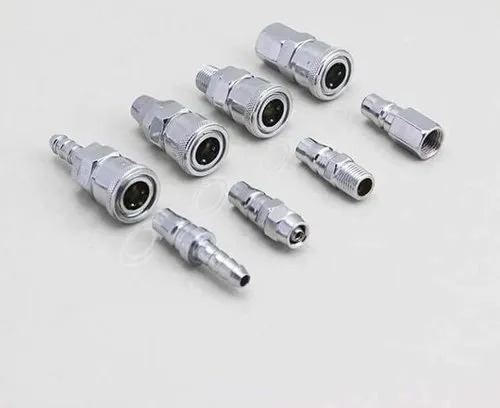
TES Quick Release Coupling
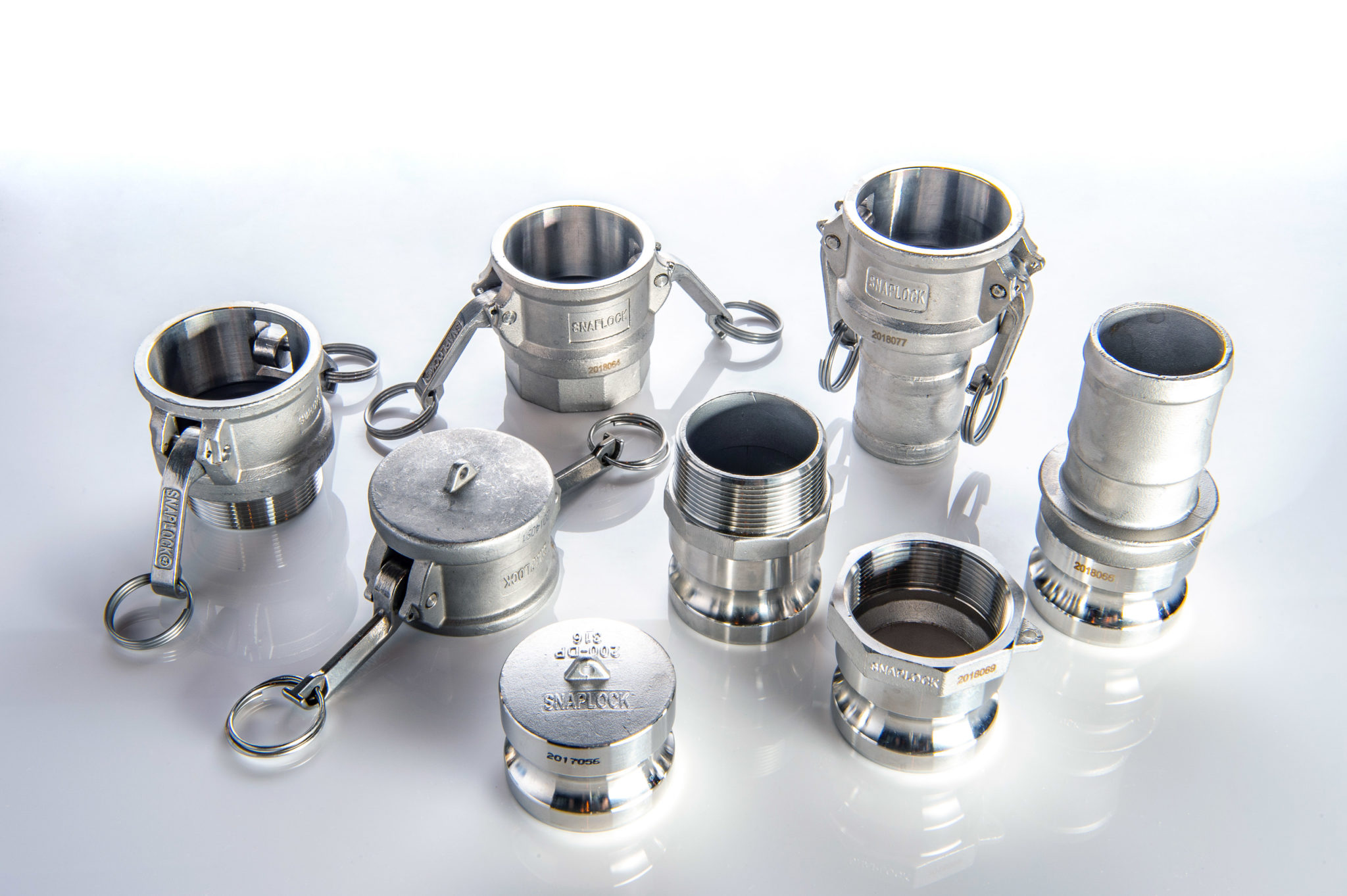
Camlock Coupling (Related)
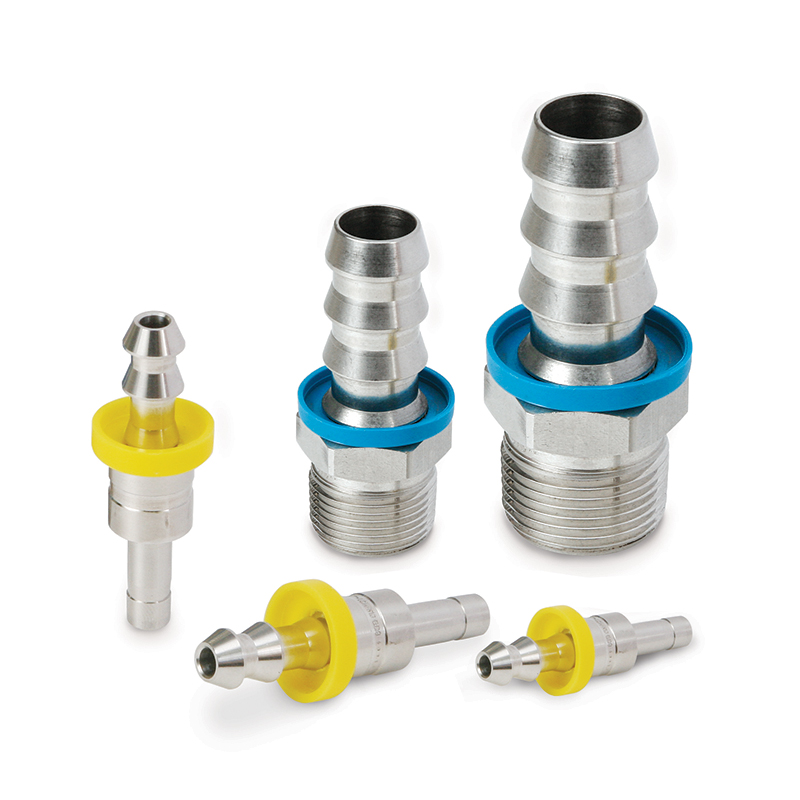
Push-on Hose Fittings (Related)
QRCs save time and prevent spillage wherever lines are swapped often — air tools, hydraulic attachments, test equipment, and fluid transfer. Tesco Steel & Engineering supplies them in single and double shut-off, straight-through, and ISO-interchange patterns across the full material range, alongside camlock couplings and push-on hose fittings.
| Type | Shut-Off | Characteristics |
|---|---|---|
| Double Shut-Off | Valves in both halves | Both sides seal on disconnect — no drain, no ingress; standard for hydraulics |
| Single Shut-Off | Valve in one half only | One side seals; used where the other side is open or low-cost air service |
| Straight-Through (open) | No internal valves | Full unrestricted flow; line must be isolated before disconnect |
| Criterion | QRC (Quick Release) | Camlock |
|---|---|---|
| Locking | Spring sleeve + locking balls (push-to-connect) | Cam arms over a groove |
| Self-sealing | Yes (single/double shut-off available) | No (open bore) |
| Pressure | Higher — to 3500 PSI | Lower-pressure bulk transfer |
| Typical use | Air tools, hydraulics, test rigs | Tanker, drum & hose bulk transfer |
For lever-arm bulk hose transfer see camlock couplings; QRCs suit higher-pressure, frequently-cycled tool and equipment lines.
| Parameter | Details |
|---|---|
| Product | QRC — Quick Release / Quick-Connect Coupling |
| Size | 1/8" to 4" |
| Working Pressure | Up to 3500 PSI (≈241 bar) — size, type & material dependent |
| Working Temperature | Up to 200°C (seal dependent) |
| Sealing | Double shut-off, single shut-off, or straight-through |
| Locking | Spring-loaded sleeve with locking balls; ISO-interchange profiles on request |
| End Connections | Male / female NPT, BSP (BSPP), BSPT, UNF, SAE, ISO; hose-tail |
| Seal | NBR (standard), Viton/FKM, EPDM, PTFE — to suit media & temperature |
| Body Material | SS 316 / 316L, SS 304, Brass, special alloys |
| Options | Dust caps/plugs, NACE MR0175 (sour), oxygen-clean |
| Certifications | ISO 9001:2015 | EN 10204 3.1 MTC on request |
| Material | Corrosion / Service | Typical Use |
|---|---|---|
| SS 316 / 316L | Excellent — chloride resistant | Chemical, food, marine, offshore fluids |
| SS 304 / 304L | Good — general service | Water, air, mild process |
| Brass | Moderate — no ammonia/acids | Air, water, pneumatics (economical) |
| Special Alloys | Application-specific | Aggressive / high-temperature media on request |
Push-to-connect, sleeve-to-release operation joins and parts lines by hand without tools — ideal for frequently swapped equipment.
Single and double shut-off valves close both halves automatically on disconnect, preventing fluid loss, air loss, and contamination.
Rated up to 3500 PSI, suiting hydraulic attachments and test rigs as well as air-tool and fluid service.
SS 316 for corrosive, food, and marine fluids and brass for economical air and water, with NBR, Viton, EPDM, or PTFE seals.
Spring-loaded locking balls clamp the nipple firmly and seal on an O-ring for a vibration-proof, leak-tight connection.
A full size range with NPT, BSP, SAE, and hose-tail ends and ISO-interchange profiles to mate with existing couplers.
| Industry | Typical Use | Why QRC |
|---|---|---|
| Workshops & Tools | Air-tool & blow-gun connections | Fast tool-free swap; self-sealing |
| Hydraulics | Attachments, jacks & power packs | Double shut-off; to 3500 PSI |
| Test & Calibration Rigs | Frequent connect/disconnect of test lines | No-drip disconnection |
| Construction & Plant | Air & hydraulic equipment | Rugged, quick swap on site |
| Chemical & Process | Fluid transfer & dosing | SS 316 + Viton; clean disconnect |
| Food & Beverage | Hose & equipment transfer | SS 316 hygienic; EPDM seals |
| Mobile & Agriculture | Implement hydraulic lines | Quick attach; sealed both ends |
| Cooling & Utilities | Water & coolant line connections | Fast, leak-free coupling |
Q1. What is a QRC coupling?
A QRC (Quick Release Coupling), also called a quick-connect or quick-disconnect coupler, is a two-part connector that lets a fluid or gas line be joined and parted by hand in seconds without tools. A spring-loaded sleeve and locking balls clamp the male nipple into the female socket, and self-sealing types have internal valves that close on disconnect.
Q2. What does "self-sealing" mean?
Self-sealing means each coupling half contains a spring-loaded poppet valve that closes automatically when the coupling is disconnected. This stops the line draining, prevents air or fluid loss, and keeps dirt out. Double shut-off seals both halves; single shut-off seals one; straight-through types have no valves and need the line isolated before disconnect.
Q3. What is the difference between single and double shut-off?
Double shut-off has a valve in both the nipple and the socket, so both sides seal on disconnect — standard for hydraulics where no spillage or air ingress is acceptable. Single shut-off has a valve in only one half, used where the other side is open or for economical air service. Straight-through has no valves for full unrestricted flow.
Q4. What pressure and temperature can a QRC handle?
Tesco QRCs are rated up to 3500 PSI (about 241 bar) depending on size, type, and material, with a temperature up to 200°C depending on the seal. NBR seals suit general service, with Viton, EPDM, or PTFE for higher temperatures and aggressive media.
Q5. How is a QRC different from a camlock coupling?
A QRC uses a spring sleeve and locking balls for push-to-connect operation and is often self-sealing and higher-pressure (to 3500 PSI), suiting air tools, hydraulics, and test rigs. A camlock uses external cam arms over a groove and has an open bore for lower-pressure bulk hose transfer. Choose QRC for frequently-cycled, higher-pressure lines.
Q6. Are QRCs interchangeable between brands?
Only if they share the same interchange profile and size. There are several common profiles (e.g. ISO and various industry standards), so the socket and nipple must match. We supply ISO-interchange profiles on request so couplers mate with your existing equipment — specify the profile when ordering.
Q7. Should I depressurise before disconnecting?
Yes, wherever possible. Disconnecting a pressurised straight-through coupling sprays media, and on hydraulics trapped pressure can make couplers very hard to connect or disconnect. Relieve pressure first, then retract the sleeve and withdraw the nipple. Self-sealing types still seal cleanly, but relieving pressure is safest.
Q8. Can QRCs be supplied for food, sour, or oxygen service?
Yes. SS 316 bodies with EPDM/PTFE seals suit hygienic food service; NACE MR0175 / ISO 15156 versions are available for sour (H₂S) service; and oxygen-cleaned couplings for oxygen service. Specify the media, pressure, and temperature and we will select the correct body, seal, and shut-off type.