

Tesco Steel & Engineering manufactures paddle spacers (spacer rings / spade spacers) — open-bore plate spacers with a protruding handle that are bolted between two flanges to keep the line open and bridge the flange gap. A paddle spacer is the matching counterpart of a spade blank: the spade (solid) isolates the line, and the spacer (open bore) restores full flow — the two are swapped at a flanged joint as the “closed” and “open” positions. Made to ASME B16.48 in A105, SS 304/316/321, Duplex, Monel, Inconel, and Hastelloy. Class 150 to 2500, PN1 to PN400. ISO 9001:2015 certified. Made in India.
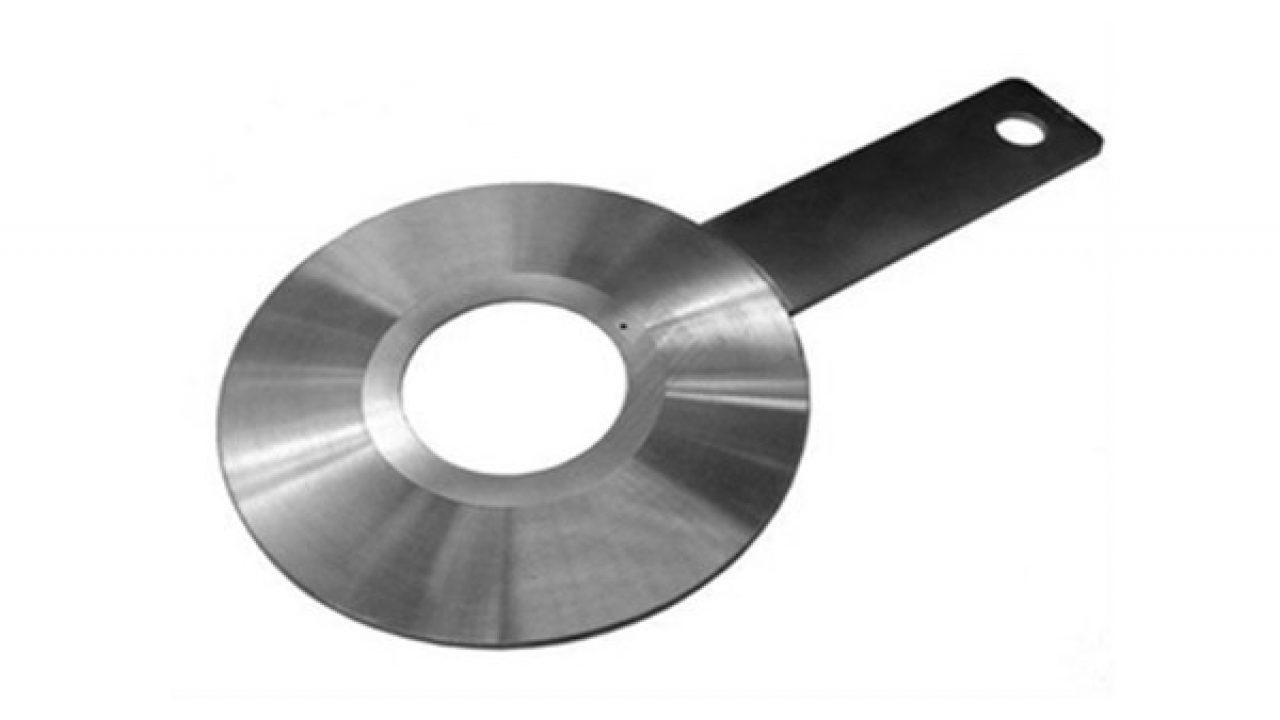
Paddle Spacer (Spacer Ring)
Paddle spacers are core line-isolation hardware paired with spades for plant turnarounds and safe work. Tesco Steel & Engineering manufactures paddle spacers, spade blanks, ring spacers, and line blanks to ASME B16.48 in the full material range — dimensioned per the tables below.
| Item | Bore | Function |
|---|---|---|
| Paddle Spacer (spacer ring) | Open bore (full pipe ID) | Keeps the line open & the flange gap filled — the “open” position |
| Spade Blank (paddle blind) | Solid (no bore) | Blanks/isolates the line — the “closed” position |
| Spectacle Blind | One solid + one open, joined by a web | Both functions in one part — flip to open or isolate |
A paddle spacer and a spade blank are the two halves of the job as separate plates (used on larger lines where a one-piece spectacle blind would be too heavy); a spectacle blind combines both into a single figure-8 plate for smaller lines.
| Paddle Spacers are available in the following specifications: | |
|---|---|
| Size | 1/2"NB to 56"NB |
| Class | 150#, 300#, 3000#, 6000#, 9000# |
| Sch (Schedule) | XS, XXS, STD & Schedule 20, 40, 80, 160 |
| Pressure Ratings | PN 1 - PN 400 |
| Stainless Steel Paddle Spacers | ASTM A 182 F - 304 / 304H / 304L / 316 / 316H / 316L / 316Ti, 309, 310, 317L, 321, 347, 904L |
| Duplex Steel Paddle Spacers | ASTM A 182 - F 51, F 53, F 55 |
| Alloy Steel Paddle Spacers | ASTM A 182 - F5, F9, F11, F21, F22 & F91 |
| Carbon Steel Paddle Spacers | ASTM A 105 |
| Low Temp. Carbon Steel Paddle Spacers (LTCS Orifice Flanges Flanges) | A 350 LF2 |
| Copper Nickel (Cu-Ni) Paddle Spacers | C70600, 90/10, C71500, 70/30, C71640 |
| Nickel Paddle Spacers | UNS N02200, UNS N02201 |
| Monel Paddle Spacers | UNS N04400, UNS N05500, Alloy 20 |
| Inconel Paddle Spacers | UNS N06600, UNS N06601, UNS N06625, UNS N08800, UNS N08810, UNS N08825 |
| Hastelloy Paddle Spacers | UNS N10276, UNS N06022, UNS N10665, UNS N06455 |
| Titanium Paddle Spacers | Gr. 1, Gr. 2, Gr. 3, DTH 3.7035, DTH 3.7055 |
| Other Services | Hot Dip Galvanized (GI) Paddle Spacers Sand Blasting on Paddle Spacers Shot Peening on Paddle Spacers Epoxy Coating on Paddle Spacers FBE Coating on Paddle Spacers |
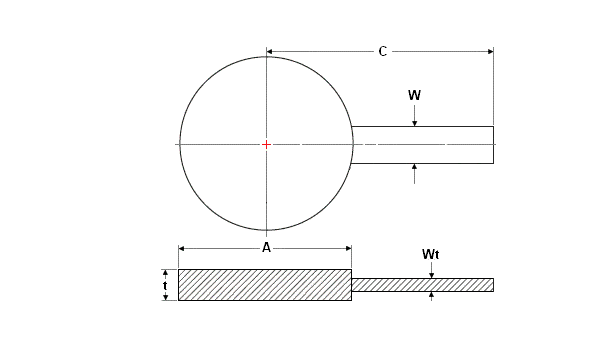
Spade & Paddle Dimension Diagram
| NPS | Outside Dia. | Center End | Thickness | Handle Width |
| A | C | t | W | |
| A | C | t | W | |
| 1/2 | 45 | 126 | 3 | 32 |
| 3/4 | 54 | 131 | 3 | 32 |
| 1 | 64 | 136 | 3 | 32 |
| 1.1/4 | 73 | 145 | 6.4 | 32 |
| 1.1/2 | 83 | 145 | 6.4 | 32 |
| 2 | 102 | 155 | 6.4 | 32 |
| 2.1/2 | 107 | 170 | 6.4 | 32 |
| 3 | 133 | 170 | 6.4 | 32 |
| 3.1/2 | 159 | 202 | 9.7 | 38 |
| 4 | 172 | 202 | 9.7 | 38 |
| 5 | 194 | 225 | 9.7 | 38 |
| 6 | 219 | 225 | 12.7 | 38 |
| 8 | 276 | 267 | 12.7 | 38 |
| 10 | 337 | 322 | 15.7 | 44 |
| 12 | 406 | 357 | 19.1 | 44 |
| 14 | 448 | 378 | 19.1 | 44 |
| 16 | 511 | 410 | 22.4 | 44 |
| 18 | 546 | 427 | 25.4 | 51 |
| 20 | 603 | 455 | 28.4 | 51 |
| 24 | 714 | 512 | 31.8 | 51 |
| NPS | Outside Dia. | Center End | Thickness | Handle Width |
| A | C | t | W | |
| 1/2 | 51 | 129 | 6.4 | 32 |
| 3/4 | 64 | 136 | 6.4 | 32 |
| 1 | 70 | 139 | 6.4 | 32 |
| 1.1/4 | 79 | 150 | 6.4 | 32 |
| 1.1/2 | 92 | 150 | 6.4 | 32 |
| 2 | 108 | 158 | 9.7 | 32 |
| 2.1/2 | 127 | 177 | 9.7 | 32 |
| 3 | 146 | 177 | 9.7 | 32 |
| 3.1/2 | 162 | 205 | 12.7 | 38 |
| 4 | 178 | 205 | 12.7 | 38 |
| 5 | 213 | 240 | 15.7 | 38 |
| 6 | 248 | 240 | 15.7 | 38 |
| 8 | 305 | 281 | 22.4 | 38 |
| 10 | 359 | 333 | 25.4 | 44 |
| 12 | 419 | 363 | 28.4 | 44 |
| 14 | 483 | 395 | 31.8 | 44 |
| 16 | 536 | 422 | 38.1 | 44 |
| 18 | 594 | 450 | 41.1 | 51 |
| 20 | 651 | 480 | 44.5 | 51 |
| 24 | 772 | 540 | 50.8 | 51 |
| NPS | Outside Dia. | Center End | Thickness | Handle Width |
| A | C | t | W | |
| 1/2 | 51 | 129 | 6.4 | 32 |
| 3/4 | 64 | 136 | 6.4 | 32 |
| 1 | 70 | 139 | 6.4 | 32 |
| 1.1/4 | 79 | 150 | 9.7 | 32 |
| 1.1/2 | 92 | 150 | 9.7 | 32 |
| 2 | 108 | 158 | 9.7 | 32 |
| 2.1/2 | 127 | 177 | 12.7 | 32 |
| 3 | 146 | 177 | 12.7 | 32 |
| 3.1/2 | 159 | 211 | 15.7 | 38 |
| 4 | 191 | 211 | 15.7 | 38 |
| 5 | 238 | 248 | 19.1 | 38 |
| 6 | 264 | 248 | 22.4 | 38 |
| 8 | 318 | 288 | 28.4 | 38 |
| 10 | 397 | 352 | 35.1 | 44 |
| 12 | 454 | 381 | 41.1 | 44 |
| 14 | 489 | 398 | 44.5 | 44 |
| 16 | 562 | 435 | 50.8 | 44 |
| 18 | 610 | 459 | 53.8 | 51 |
| 20 | 679 | 493 | 63.5 | 51 |
| 24 | 787 | 547 | 73.2 | 51 |
| NPS | Outside Dia. | Center End | Thickness | Handle Width |
| A | C | t | W | |
| 1/2 | 60 | 134 | 6.4 | 32 |
| 3/4 | 67 | 137 | 6.4 | 32 |
| 1 | 76 | 142 | 6.4 | 32 |
| 1.1/4 | 86 | 151 | 9.7 | 32 |
| 1.1/2 | 95 | 151 | 9.7 | 32 |
| 2 | 140 | 174 | 12.7 | 32 |
| 2.1/2 | 162 | 186 | 12.7 | 32 |
| 3 | 165 | 186 | 15.7 | 32 |
| 4 | 203 | 217 | 19.1 | 38 |
| 5 | 244 | 259 | 22.4 | 38 |
| 6 | 286 | 259 | 25.4 | 38 |
| 8 | 356 | 307 | 35.1 | 38 |
| 10 | 432 | 370 | 41.1 | 44 |
| 12 | 495 | 401 | 47.8 | 44 |
| 14 | 518 | 412 | 53.8 | 44 |
| 16 | 572 | 440 | 60.5 | 44 |
| 18 | 635 | 471 | 66.5 | 51 |
| 20 | 696 | 501 | 73.2 | 51 |
| 24 | 835 | 571 | 88.9 | 51 |
| NPS | Outside Dia. | Center End | Thickness | Handle Width |
| A | C | t | W | |
| 1/2 | 61 | 135 | 6.4 | 32 |
| 3/4 | 67 | 137 | 9.7 | 32 |
| 1 | 76 | 142 | 9.7 | 32 |
| 1.1/4 | 86 | 151 | 9.7 | 32 |
| 1.1/2 | 95 | 151 | 12.7 | 32 |
| 2 | 140 | 174 | 12.7 | 32 |
| 2.1/2 | 162 | 190 | 15.7 | 32 |
| 3 | 172 | 190 | 19.1 | 32 |
| 4 | 206 | 219 | 22.4 | 38 |
| 5 | 251 | 256 | 28.4 | 38 |
| 6 | 279 | 256 | 35.1 | 38 |
| 8 | 349 | 303 | 41.1 | 38 |
| 10 | 432 | 370 | 50.8 | 44 |
| 12 | 518 | 412 | 60.5 | 44 |
| 14 | 575 | 442 | 66.5 | 44 |
| 16 | 638 | 472 | 76.2 | 44 |
| 18 | 702 | 504 | 85.9 | 51 |
| 20 | 752 | 530 | 95.3 | 51 |
| 24 | 899 | 603 | 111.3 | 51 |
| NPS | Outside Dia. | Center End | Thickness | Handle Width |
| A | C | t | W | |
| 1/2 | 67 | 137 | 9.7 | 32 |
| 3/4 | 73 | 140 | 9.7 | 32 |
| 1 | 83 | 145 | 9.7 | 32 |
| 1.1/4 | 102 | 161 | 12.7 | 32 |
| 1.1/2 | 114 | 161 | 15.7 | 32 |
| 2 | 143 | 175 | 15.7 | 32 |
| 2.1/2 | 165 | 201 | 19.1 | 32 |
| 3 | 194 | 201 | 22.4 | 32 |
| 4 | 232 | 232 | 28.4 | 38 |
| 5 | 276 | 273 | 35.1 | 38 |
| 6 | 314 | 273 | 41.1 | 38 |
| 8 | 384 | 321 | 53.8 | 38 |
| 10 | 473 | 390 | 66.5 | 44 |
| 12 | 546 | 427 | 79.2 | 44 |
Same outline, bolt-circle, and handle as the spade blank, so the open spacer and solid spade interchange perfectly during a shutdown.
The bore matches the pipe ID, so the spacer keeps the line fully open with no flow restriction when in service.
Made to ASME B16.48 line-blank dimensions for the full Class 150–2500 range, with RF or RTJ facings.
A105, LTCS, SS 304/316/321, Duplex, Monel, Inconel, Hastelloy, Copper-Nickel, and Titanium.
Handles stamped with size, rating, and material for clear identification and safe blind-list control.
Manufactured to ASME B16.48 or your drawing, certified with EN 10204 3.1 MTC.
| Material | Properties | Typical Use |
|---|---|---|
| A105 Carbon Steel / A350 LF2 (LTCS) | Strong, economical; LF2 for low temp | Non-corrosive & low-temperature lines |
| SS 304 / 316 / 321 | Good corrosion resistance; 321 high-temp | Process, chemical & high-temperature lines |
| Duplex 2205 / Super Duplex 2507 | High strength & chloride resistance | Seawater & offshore service |
| Monel 400 / Inconel | Excellent in HF, marine & high-temp | HF, seawater & high-temperature lines |
| Hastelloy / Copper-Nickel / Titanium | Superior corrosion resistance | Aggressive chemical & marine service |
| Industry | Typical Use | Why Paddle Spacer |
|---|---|---|
| Oil & Gas | Open position in spade & spacer sets | Full-bore flow; matched to the spade |
| Refinery & Petrochemical | Turnaround line blinding kits | Interchanges with the spade; full material range |
| Power Generation | Boiler & steam-line spacing | SS 321 high-temperature service |
| Chemical Plants | Corrosive-line spacer rings | Monel / Inconel / Hastelloy |
| Pipelines | Open position at isolation points | High-class, full-bore spacer |
| Pharmaceutical / Process | Equipment isolation kits | Clean SS plates; clear marking |
| Offshore & Marine | Topside line spacing | Duplex / alloy corrosion resistance |
| Water & Utilities | Maintenance blinding kits | Economical open-bore spacer |
Q1. What is a paddle spacer?
A paddle spacer (spacer ring) is an open-bore plate with a protruding handle that is bolted between two pipe flanges to keep the line open and fill the flange gap. It is the open counterpart of a spade blank — the spade isolates the line and the spacer restores full flow, the two being swapped at a flanged joint as the closed and open positions.
Q2. What is the difference between a paddle spacer and a spade blank?
A spade blank is solid (no bore) and blanks the line — the “closed” position. A paddle spacer has an open bore equal to the pipe and keeps the flange gap when flow is wanted — the “open” position. They are a matched pair with identical outline, bolt-circle, and handle so the crew swaps one for the other to isolate or restore the line.
Q3. Why is a paddle spacer needed if the line is just open?
When the spade is removed the flange gap and bolt length must still be filled and aligned, and the joint must stay properly spaced and sealed. The paddle spacer does this — it is the same thickness and outline as the spade with an open bore, so the bolting and gaskets stay the same whether the line is open (spacer) or isolated (spade).
Q4. How does a paddle spacer differ from a spectacle blind?
A spectacle blind joins a solid disc and an open ring with a web into one figure-8 part — you flip it to isolate or open. A paddle spacer and spade do the same job as two separate plates, used on larger lines where a one-piece spectacle blind would be too heavy. Function is the same; the difference is two-piece vs one-piece.
Q5. What standard and dimensions apply to paddle spacers?
Paddle spacers and spades are made to ASME B16.48 (line blanks) for Class 150 to 2500, dimensioned to the matching ASME B16.5 flange. The ring outside diameter sits inside the bolt circle, the bore matches the pipe ID, and the handle projects beyond the flange OD. The tables on this page give dimensions by pressure class.
Q6. What is the difference between a paddle spacer and a ring spacer?
Both are open-bore spacers. A paddle spacer has a protruding handle (tab) like the spade it pairs with, for easy handling and identification; a ring spacer is a plain ring without the handle. They serve the same function; the choice depends on whether a handle is wanted and the set it pairs with.
Q7. What materials are paddle spacers made from?
Carbon steel (A105) and LTCS (A350 LF2), stainless steels (304/316/321 and others), Duplex (F51/F53/F55), alloy steels, Monel, Inconel, Hastelloy, Copper-Nickel, and Titanium — matched to the line material, fluid, and temperature, and to the spade it pairs with.
Q8. Can paddle spacers be supplied to our drawing and certified?
Yes. We supply paddle spacers, spades, and ring spacers to ASME B16.48 or your drawing — size, class, facing, material, and handle marking — with EN 10204 3.1 material test certificates on request. Send your line details and service conditions for a quote.