

'SHAPING INDUSTRIES WITH THE FINEST STEEL'
'SHAPING INDUSTRIES WITH THE FINEST STEEL'
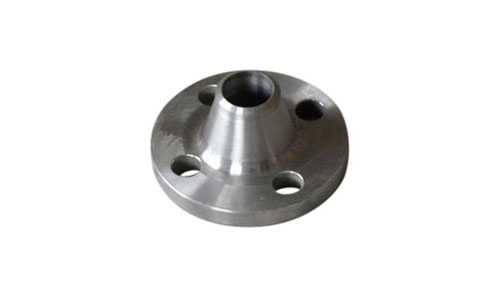
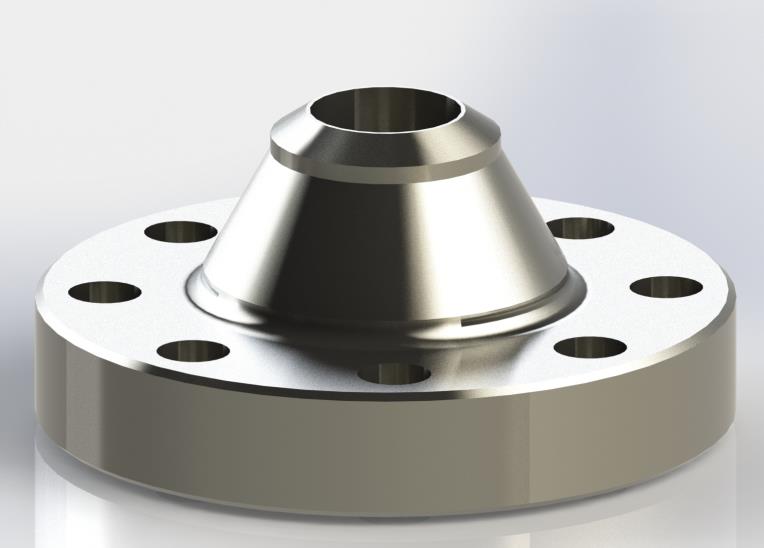
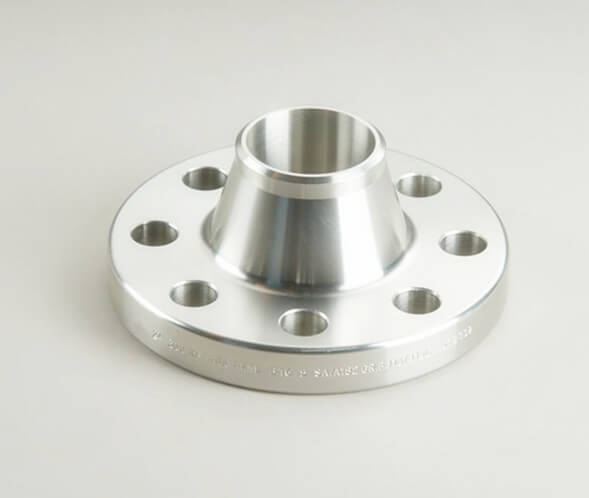
Tesco Steel & Engineering manufactures BS 3293 Class 150 weld neck flanges — the British large-diameter petroleum-industry standard for flanges above 24 inches — in NPS 26 to 48, raised face, with the bore matched to your pipe. This page is the complete reference: the full dimension chart in mm with weights in kg and lbs, PCD and drilling, the standard’s relationship to BS 1560 and ASME B16.47 / MSS SP-44, and every material grade we produce — from A105 and A350 LF2 to SS 316, duplex and Inconel. ISO 9001:2015 certified, made in Mumbai, India — exported worldwide.
BS 3293 was published for the petroleum industry to cover what BS 1560 (the British counterpart of ASME B16.5) could not: flanges larger than 24 inches. Its weld neck series shares the imperial class system — 150, 300, 400 and 600 — and its dimensions sit in the same lineage as MSS SP-44 and today’s ASME B16.47 Series A large-diameter flanges. At these sizes a weld neck is the only sensible construction: the tapered hub spreads enormous joint loads into the pipe, and the butt weld can be volumetrically examined.
Class 150 is the workhorse of large low-pressure petroleum service — tank farm manifolds, loading lines and big transfer headers run on these flanges, and the chart reaches all the way to NPS 48. Refineries, terminals and pipelines engineered to British specifications — in the UK, the Middle East, Africa and Asia — still carry these flanges, and replacement orders cite BS 3293 to this day. We manufacture them as forged rings with full traceability, alongside the ASME B16.5 Class 150 series for 24″ and below.
“Class 150” is an ASME-style pressure–temperature rating class, not a fixed working pressure: for carbon steel at 38 °C it allows roughly 285 psig (≈20 bar), derating as temperature rises. The British petroleum flange system splits by size:
All dimensions in mm (NPS in inches). The two right-hand columns give the approximate weight per flange in kg and lbs (carbon steel, standard bore).
| NPS: Nominal Pipe Size (in) O: Flange Outside Diameter C: Flange Thickness Y2: Length Through Hub |
A: Weld-End OD (matches pipe OD) X: Hub Diameter R: Raised Face Diameter |
NBH: Number of Bolt Holes DBH: Diameter of Bolt Holes D: Bolt Circle (PCD) |
| NPS | O | C | Y2 | A | X | R | NBH | DBH | D | Approx Wt (kg) | Approx Wt (lbs) |
|---|---|---|---|---|---|---|---|---|---|---|---|
| 26 | 869.9 | 50.8 | 127.0 | 660.4 | 723.9 | 742.9 | 24 | 34.9 | 806.4 | 118 | 260 |
| 28 | 927.1 | 52.4 | 128.6 | 711.2 | 781.0 | 793.7 | 28 | 34.9 | 863.6 | 134 | 295 |
| 30 | 984.2 | 54.0 | 130.2 | 762.0 | 831.8 | 857.2 | 28 | 34.9 | 914.4 | 153 | 337 |
| 32 | 1060.4 | 57.1 | 133.3 | 812.8 | 889.0 | 908.0 | 28 | 41.3 | 977.9 | 190 | 419 |
| 34 | 1111.2 | 58.7 | 134.9 | 863.6 | 939.8 | 958.8 | 32 | 41.3 | 1028.7 | 212 | 467 |
| 36 | 1168.4 | 60.3 | 136.5 | 914.4 | 996.9 | 1022.3 | 32 | 41.3 | 1085.8 | 242 | 534 |
| 38 | 1238.2 | 60.3 | 136.5 | 965.2 | 1060.4 | 1073.1 | 32 | 41.3 | 1149.3 | 284 | 626 |
| 40 | 1289.0 | 63.5 | 139.7 | 1016.0 | 1111.2 | 1123.9 | 36 | 41.3 | 1200.1 | 311 | 686 |
| 42 | 1346.2 | 66.7 | 142.9 | 1066.8 | 1168.4 | 1193.8 | 36 | 41.3 | 1257.3 | 358 | 789 |
| 44 | 1403.3 | 66.7 | 142.9 | 1117.6 | 1219.2 | 1244.6 | 40 | 41.3 | 1314.4 | 376 | 829 |
| 46 | 1454.2 | 68.3 | 144.5 | 1168.4 | 1270.0 | 1295.4 | 40 | 41.3 | 1365.2 | 399 | 880 |
| 48 | 1511.1 | 69.9 | 146.1 | 1219.2 | 1327.2 | 1358.9 | 44 | 41.3 | 1422.4 | 440 | 970 |
BS 3293 Class 150 weld neck flanges are produced in every material family from our range, with EN 10204 3.1 mill certificates, heat-number traceability and PMI on request:
| Material Family | Typical Grades | Best suited to |
|---|---|---|
| Carbon Steel | ASTM A105, A694 F42–F65 | Petroleum pipelines & general service (the standard’s home turf) |
| LTCS | ASTM A350 LF2 / LF3 | Low-temperature service, impact tested |
| Stainless Steel | A182 F304/L, F316/L, F321, F310, F347 | Corrosive process service |
| 254 SMO | F44 (S31254) | Seawater & high-chloride service |
| 904L | N08904 | Sulphuric & phosphoric acid service |
| Duplex / Super Duplex | F51 (2205), F53/F55 (2507) | Offshore & high-chloride, high-strength duty |
| Alloy Steel | A182 F1, F5, F9, F11, F22, F91 | High-temperature refinery lines |
| Monel | 400 / K500 | Seawater, HF acid, marine |
| Inconel | 600 / 625 / 825 | High temperature, sour & oxidising media |
| Hastelloy | C276 / C22 | Severely corrosive chemical service |
| Titanium | Gr. 2 / Gr. 5 | Chlorides, seawater; ≈42% lighter |
| Copper Nickel | 90/10, 70/30 | Marine & seawater cooling systems |
| Bimetal / Clad | CS base + SS/alloy overlay | Corrosion resistance at carbon-steel cost |
Large-diameter flanges are produced to order as forged rings — use the Ask for Quote button or the inquiry form for current lead times and pricing.
| Class | Weld Neck Chart | Slip-On Chart | ≤ 24″ Counterpart |
|---|---|---|---|
| Class 150 | BS 3293 Class 150 Weld Neck (this page) | BS 3293 Class 150 Slip-On | ASME B16.5 Class 150 (≤24″) |
| Class 300 | BS 3293 Class 300 Weld Neck | BS 3293 Class 300 Slip-On | ASME B16.5 Class 300 (≤24″) |
| Class 400 | BS 3293 Class 400 Weld Neck | BS 3293 Class 400 Slip-On | ASME B16.5 Class 400 (≤24″) |
| Class 600 | BS 3293 Class 600 Weld Neck | BS 3293 Class 600 Slip-On | ASME B16.5 Class 600 (≤24″) |
Related references: Weld Neck Flanges overview · All Flange Dimension Charts · Flange Weight Chart · BS 4504 (PN series) Charts.
Above 24″ the joint forces are enormous — the weld neck’s tapered hub spreads them into the pipe and the butt weld can be volumetrically examined, which is why BS 3293 specifies this construction.
BS 3293 dimensions sit in the same family as MSS SP-44 and ASME B16.47 Series A, so replacements and cross-standard matching are usually straightforward — once the drilling is confirmed.
Class 150 is the only BS 3293 class charted to NPS 48 — four-foot flanges for the biggest transfer and loading lines in the terminal.
Tank farms, marine loading lines, refinery transfer headers, crude and product pipelines — wherever British-specified plants move big volumes at modest pressure.
What is BS 3293?
BS 3293 is the British Standard for large-diameter carbon-steel pipe flanges for the petroleum industry — sizes above NPS 24, where its companion standard BS 1560 stops. It uses the imperial pressure-class system (Class 150, 300, 400 and 600) and tabulates weld neck and slip-on flanges with dimensions in millimetres. This page covers the Class 150 weld neck series.
Is BS 3293 still a current standard?
It is an old British standard that has been overtaken in new projects by ASME B16.47 for large-diameter flanges, but it is far from dead: refineries, terminals and pipelines engineered to British specifications across the UK, Middle East, Africa and Asia still carry BS 3293 flanges, and their drawings, spares lists and replacement orders cite the standard daily. We manufacture to it as cited.
What is the difference between BS 3293 and BS 1560?
They split the size range: BS 1560 covers petroleum flanges from NPS 1/2 to 24 (dimensionally aligned with ASME B16.5), and BS 3293 takes over above 24 inches. A British-specified plant of the era would use BS 1560 flanges on its process piping and BS 3293 on its large transfer, loading and pipeline connections.
How does BS 3293 relate to ASME B16.47 and MSS SP-44?
All three sit in the same large-diameter lineage: MSS SP-44 pipeline flanges informed both BS 3293 and what is now ASME B16.47 Series A, so outside diameters, bolt circles and drilling generally correspond for common sizes and classes. That makes cross-standard replacement usually straightforward — but always confirm the drilling (bolt count, hole size, PCD) against the chart before mating flanges from different standards on a critical joint.
What does Class 150 mean?
Class 150 is an ASME-style pressure-temperature rating class, not a fixed working pressure. For carbon steel at 38 °C it allows roughly 285 psig (about 20 bar), and the allowable pressure falls as temperature rises. Always confirm the rating for your material and design temperature against the class tables.
What sizes does BS 3293 Class 150 cover?
The Class 150 weld neck chart on this page covers NPS 26 to 48 — these are large-diameter flanges, produced as forged rings rather than standard forgings. Class 150 is the only class charted all the way to NPS 48.
What do the column letters in the chart mean?
NPS is the nominal pipe size in inches; all other values are millimetres. O is the flange outside diameter, C the flange thickness, Y2 the length through hub, A the weld-end outside diameter (it matches the pipe OD), X the hub diameter, R the raised face diameter, NBH the number of bolt holes, DBH the bolt hole diameter and D the bolt circle (PCD).
How much does a BS 3293 Class 150 weld neck flange weigh?
From the weight columns in our chart: an NPS 26 weighs about 118 kg (260 lbs), an NPS 38 weighs about 284 kg (626 lbs), an NPS 48 weighs about 440 kg (970 lbs). These are carbon-steel weights with a standard bore — at these diameters, weight matters for handling, bolt tensioning equipment and freight, so check the chart before planning installation.
What bolting does a BS 3293 Class 150 flange take?
The NBH, DBH and D columns give the drilling per size: an NPS 26 takes 24 holes of 34.9 mm on a 806.4 mm bolt circle, and an NPS 48 takes 44 holes of 41.3 mm on a 1422.4 mm bolt circle. Imperial-series stud bolts are used; we supply matched fastener and gasket sets with the flanges on request.
What facing do BS 3293 flanges have?
Raised face is the standard — the R column in the chart gives its diameter per size. Ring type joint and special facings are machined on request. Surface finish is machined to suit the gasket specified, typically spiral wound at these diameters.
Which gasket is used with these flanges?
Spiral wound gaskets sized to the raised face are the usual choice at large diameters and petroleum duty; sheet gaskets serve benign low-pressure services. Large-diameter gaskets are fragile to handle — we can supply them with the flanges, sized to the chart, to avoid site mismatches.
What bore should I specify?
The bore is machined to match the inside diameter of the mating pipe, so state the pipe wall thickness or schedule with your order. The A column in the chart is the weld-end outside diameter — it equals the pipe OD, confirming the weld prep matches your line pipe.
What materials are available for BS 3293 Class 150 flanges?
Carbon steel A105 and high-yield A694 F42–F65 are the petroleum classics; we also produce A350 LF2 for low temperature, stainless 304/316/321, duplex and super duplex, alloy steel F1–F91, Monel, Inconel, Hastelloy, titanium, copper nickel and clad construction — all as forged rings with EN 10204 3.1 certificates, PMI and heat-number traceability.
Why are large-diameter flanges always weld neck?
Above 24 inches the hydrostatic end force on a joint runs to hundreds of tonnes. The weld neck's tapered hub feeds that load smoothly into the pipe wall, the full-penetration butt weld can be examined by UT or radiography, and the matched bore avoids turbulence — slip-on construction is limited to the lower classes and less critical duty at these sizes.
How are flanges this large manufactured?
They are produced as forged and rolled rings: a punched billet is ring-rolled to near size, heat treated, then machined all over — faces, bore, hub taper, weld bevel and drilling — on large vertical lathes and drilling centres. Every ring carries its heat number, and mechanical properties are certified per heat with EN 10204 3.1 documentation.
How are your BS 3293 flanges tested and certified?
Dimensional inspection against the standard, marking with size, class, grade and heat number, and EN 10204 3.1 mill test certificates are standard. PMI verification, ultrasonic examination of the forging, magnetic-particle testing of machined surfaces, impact testing for low-temperature grades, NACE MR0175 compliance and third-party witness by LR, BV, DNV, SGS, TÜV or IBR are available on request.
Which industries buy BS 3293 Class 150 flanges?
Refineries, storage terminals and pipeline operators with British-specification heritage — the UK, Middle East, Africa and Asia are full of BS 3293 Class 150 installations still ordering spares and tie-ins to the original standard.
What information should I send with a BS 3293 enquiry?
Size (NPS) and quantity, class (150), the standard as cited on your drawing (BS 3293 or ASME B16.47 Series A), bore schedule or pipe wall, facing, material grade, any impact-test or NACE requirement, and the certification and inspection you need. Tesco Steel & Engineering is an ISO 9001:2015 certified flange manufacturer and exporter in Mumbai, India, shipping worldwide with sea-worthy packing.