Syphon Tube Manufacturer
TES-LOK Syphon Tubes — U-Type, Q-Type (Coil) & C-Type for steam & high-temperature pressure gauge protection. SS 304 · SS 316 · Brass · Inconel · Monel · NPT · BSPT · BSPP · Up to 6,000 PSI · ISO 9001:2015 certified.
ISO 9001:2015 Certified
Up to 400 °C
Up to 6,000 PSI
NPT · BSPT · BSPP
Global Export
SS 304 · SS 316 · Brass · Inconel
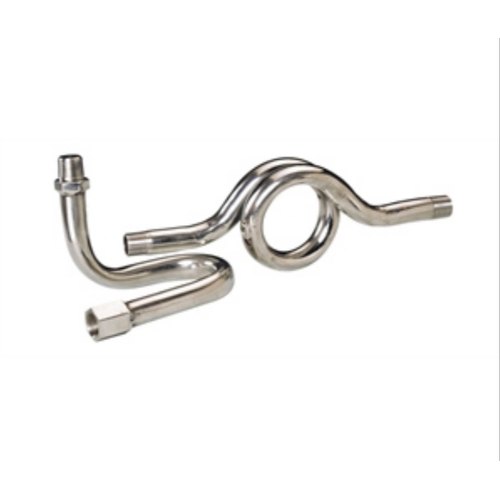 U-Type Syphon Tube
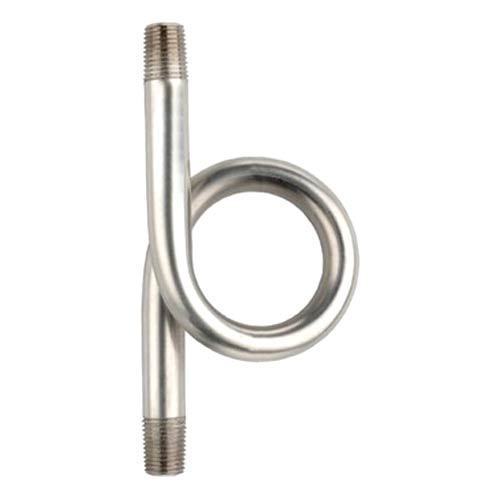 Q-Type / Coil Syphon Tube
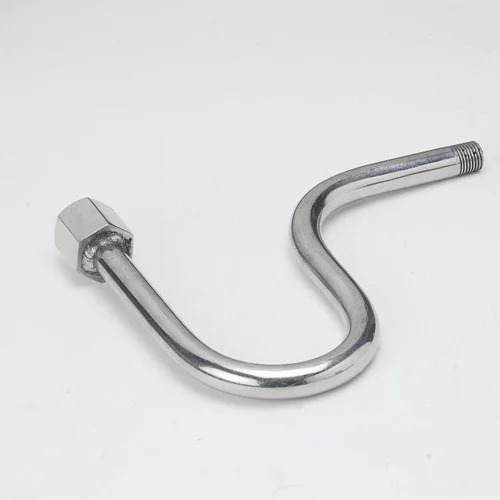 Pigtail Syphon Tube
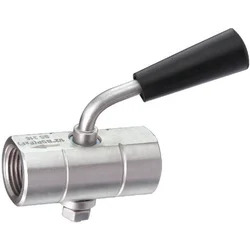 Syphon with Gauge Cock
Tesco Steel & Engineering manufactures TES-LOK Syphon Tubes — the critical condensate-barrier accessory fitted between a steam line or high-temperature process and a pressure gauge, thermometer, or transmitter. By forming and trapping a column of cool condensate water inside their loop or coil, syphon tubes completely isolate the gauge internals from direct steam contact, preventing measurement errors, bourdon tube failure, and premature instrument damage. Available in U-type (pigtail), Q-type (coil), and C-type configurations, TES-LOK syphon tubes are manufactured in SS 304, SS 316, Brass, Inconel, Monel, and Hastelloy with NPT, BSPT, and BSPP thread ends to suit all standard pressure gauge connections.
Why a Syphon Tube is Mandatory on Steam Services
Steam Damages Bourdon Tubes
Direct steam contact heats the bourdon tube element above its design range, causing creep, set, and eventual rupture. The syphon condensate column provides a permanent thermal barrier.
Measurement Error Without Syphon
Steam density is 1/1,600 of liquid water. Without a condensate seal, the gauge reads low — the steam head correction is effectively zero, introducing a systematic negative error at all readings.
Personnel Safety
A burst gauge on a live steam line is a scalding hazard. The syphon provides an additional element of mechanical isolation — its coil absorbs pressure pulsations and thermal transients before they reach the gauge.
How a Syphon Tube Works
Condensate-Barrier Principle: On first use, the syphon coil or loop must be pre-filled with water before pressurising. Once live steam reaches the lower end of the syphon, it condenses against the cool water column already sitting in the loop. The condensate level is maintained by gravity; steam cannot travel upward through the water-filled coil to reach the gauge. Pressure is transmitted hydraulically — accurately — through the incompressible water column, not through steam.
1
Pre-fill with water: Before opening the steam isolation valve, fill the syphon tube fully with clean water (distilled preferred). This creates the initial condensate barrier.
2
Steam enters lower port: When the process valve is cracked open, steam enters the bottom leg of the syphon and immediately contacts the cool water column.
3
Condensation at the steam–water interface: Steam condenses at the interface, keeping the coil filled. Heat is dissipated through the metal wall. Condensate level self-regulates.
4
Hydraulic pressure transmission: Process pressure is transmitted through the incompressible condensate column to the gauge bourdon tube — accurately and safely at ambient temperature.
5
Pulsation damping: The coil geometry also acts as a hydraulic snubber, attenuating pressure spikes and reducing gauge pointer vibration in turbulent steam flows.
Syphon Tube Type Comparison
| Type | Shape / Geometry | Condensate Volume | Best For | Typical Size Range |
|---|
| U-Type (Pigtail) |
Single open loop — U or pigtail bend in one plane |
Low–moderate (~5–15 mL) |
Standard steam pressure gauge connections; most common plant use |
1/4" to 1/2" NPT/BSPT |
| Q-Type (Coil) |
Closed helical coil or pancake coil — higher volume loop |
High (~20–60 mL) |
High-pressure steam, superheated steam, pulsating services requiring extra damping |
1/4" to 1/2" NPT/BSPT |
| C-Type (Half Coil) |
C-shaped 180° return bend — compact variant |
Moderate (~8–18 mL) |
Space-restricted panel boards, close-couple gauge installations |
1/4" to 3/8" NPT/BSPT |
| Straight Syphon (Condensate Nipple) |
Straight tube with enlarged middle section — no coil |
Very low (~2–5 mL) |
Low-temperature steam (below 150 °C); horizontal gauge installations only |
1/4" to 1/2" NPT/BSPT |
| Flanged Syphon |
U-type or coil with flanged ends (RF or FF) |
Low–high depending on type |
High-pressure steam headers where screwed connections are not permitted (ASME B31.1 Power Piping) |
1/2" to 2" NPS |
Available Thread Forms & End Connections
| Thread Form | Standard | Seal Type | Taper / Parallel | Gauge Connection |
|---|
| NPT |
ASME B1.20.1 |
Thread interference (PTFE tape) |
Tapered 1:16 |
Most US/Middle East pressure gauges |
| BSPT |
BS 21 / ISO 7 |
Thread interference (PTFE tape) |
Tapered 1:16 |
European & Asian gauges with tapered female port |
| BSPP (BSP) |
BS 2779 / ISO 228 |
Dowty bonded seal or flat-face sealing washer |
Parallel |
European gauges with parallel female socket; Swagelok-pattern accessories |
| SAE 45° Flare |
SAE J512 |
Metal-to-metal 45° flare seat |
Parallel with flare |
Hydraulic instruments, mobile equipment gauges |
BSPP Thread Sealant Warning:
BSPP (parallel BSP) threads do not seal on the thread form — they seal on the face. Never apply PTFE tape to BSPP syphon tube threads. Use a Dowty bonded seal (metal-backed rubber washer) seated in the gauge boss socket. Applying PTFE tape to a parallel thread creates a false torque sensation and the joint will weep under steam pressure. NPT and BSPT (both tapered) require 2–3 wraps of PTFE tape (ASTM D1668 Grade D) applied clockwise from the second thread.
Thread Sealant Selection Guide
| Thread Type | Seal Method | Application Notes |
|---|
| NPT (Tapered) |
PTFE tape (2–3 wraps, ASTM D1668 Grade D) or anaerobic thread sealant |
Apply PTFE tape clockwise from second thread; leave first thread bare to prevent system contamination |
| BSPT (Tapered) |
PTFE tape (2–3 wraps) or anaerobic sealant rated to process temperature |
Same as NPT; do not mix NPT syphon into BSPT gauge boss — 60° vs 55° thread flank angle will cause cross-threading |
| BSPP (Parallel) |
Dowty bonded seal (EN ISO 1179-1 compliant) seated in gauge boss socket |
No PTFE tape; Dowty seal must be rated for steam temperature; inspect seal face for scoring before assembly |
Standard Size Range
| Nominal Size | OD (Tube Body) | U-Type | Q-Type / Coil | C-Type | Typical Gauge Range |
|---|
| 1/4" NPT/BSPT | 10–12 mm | ✓ | ✓ | ✓ | 0–10 bar to 0–160 bar |
| 3/8" NPT/BSPT | 14–16 mm | ✓ | ✓ | ✓ | 0–25 bar to 0–250 bar |
| 1/2" NPT/BSPT | 18–22 mm | ✓ | ✓ | — | 0–40 bar to 0–400 bar |
| 1/4" BSPP | 10–12 mm | ✓ | ✓ | ✓ | Standard European gauge port |
| 3/8" BSPP | 14–16 mm | ✓ | ✓ | — | Large European gauge port |
| 1/2" BSPP | 18–22 mm | ✓ | ✓ | — | Heavy-duty industrial gauge port |
| Custom OD & length | Per spec | ✓ | ✓ | ✓ | Available on request (DRG required) |
Material & Technical Specifications
| Parameter | Details |
|---|
| Brand | TES-LOK (Tesco Steel & Engineering) |
| Product | Syphon Tube — U-Type, Q-Type (Coil), C-Type, Flanged |
| Tube OD Range | 6 mm to 25 mm (1/4" to 1") |
| Connection Size | 1/4" to 1/2" NPT, BSPT, BSPP; custom sizes on request |
| Material — Body | SS 304 (ASTM A479/A276), SS 316 (ASTM A479), Brass (ASTM B283), Inconel 600/625 (ASTM B166), Monel 400 (ASTM B164), Hastelloy C-276 (ASTM B574), Carbon Steel (ASTM A105) |
| PTFE Ferrule Standard | ASTM D1710 / ASTM D3294 (where PTFE ferrule seals are used on compression ends) |
| Pressure Rating — SS | Up to 6,000 PSI (413 bar) at ambient; de-rated at elevated temperature per ASME B31.3 |
| Pressure Rating — Brass | 300 / 1,000 / 3,000 PSI depending on grade and wall thickness |
| Working Temperature | –50 °C to +400 °C (material dependent; SS 316 rated to 870 °C for short exposure) |
| Surface Finish | Bright annealed, electropolished, or pickled & passivated per ASTM A380 |
| Standards | DIN 16282 (syphon tubes), ASME B16.14 (threaded accessories), BS 6212, ISO 9001:2015 |
| Certifications Available | EN 10204 3.1 MTR, NACE MR0175, PMI, Hydrostatic test certificate |
| Compatible Instruments | Bourdon tube pressure gauges, diaphragm gauges, pressure transmitters, pressure switches |
| Compatible Thread Brands | Swagelok, Parker A-LOK, Ham-Let, Hoke — standard thread forms fully interchangeable |
Material Selection Guide
| Service Fluid | Temperature | Recommended Material | Reason |
|---|
| Saturated / low-pressure steam (up to 12 bar) |
Up to 190 °C |
Brass |
Cost-effective; excellent machinability; suitable up to 200 °C |
| Medium-pressure steam (12–40 bar) |
190 °C – 250 °C |
SS 304 or SS 316 |
Higher strength and temperature rating; immune to stress corrosion cracking in clean steam |
| High-pressure / superheated steam (>40 bar) |
>250 °C |
SS 316 or SS 316L |
Better creep resistance at elevated temperatures; compliant with ASME B31.1 Power Piping |
| Chloride-containing steam / seawater service |
Up to 300 °C |
Monel 400 or Hastelloy C-276 |
SS susceptible to SCC in chloride environments above 60 °C; Monel / Hastelloy immune |
| Caustic / alkaline process steam |
Up to 200 °C |
SS 316L or Inconel 600 |
SS 316L resists caustic SCC up to moderate concentrations; Inconel preferred above 50% NaOH |
| Acidic condensate / acid gas service |
Up to 250 °C |
Hastelloy C-276 |
Broad acid resistance (HCl, H₂SO₄, HF); suitable for sour service per NACE MR0175 |
Installation Procedure
1
Verify thread compatibility: Confirm syphon tube thread form (NPT / BSPT / BSPP) matches gauge bottom connection. Do not mix NPT into BSPT — 60° vs 55° flank angle causes cross-threading and leakage under pressure.
2
Apply sealant to process-side thread only: Apply 2–3 wraps of PTFE tape clockwise from the second thread (NPT / BSPT). For BSPP, place a Dowty bonded seal in the gauge boss socket. Leave gauge-side thread bare until after pre-filling.
3
Mount on process connection: Thread syphon onto process boss or needle valve handtight, then wrench-tighten 1½–2 turns (NPT / BSPT) or to specified torque for BSPP (typically 20–35 N·m for 1/2" connections). Orient the syphon upright so the loop or coil is uppermost.
4
Pre-fill with water: Before fitting the gauge, fill the syphon coil/loop completely with clean water using a small syringe or filling bottle through the upper gauge port. This condensate charge is critical — do not skip. Confirm water is visible at the top port.
5
Connect the gauge: Apply sealant to the syphon gauge-side thread, then thread on the pressure gauge. Tighten to manufacturer's torque spec — typically 1½–2 turns past handtight for tapered threads. Do not over-tighten brass gauges.
6
Open isolation valve slowly: Crack open the process root valve or gauge cock very slowly to allow controlled steam admission. The syphon will heat; allow 2–3 minutes for steady condensate level to establish before reading the gauge.
7
Check for leaks: Inspect all threaded joints with steam-rated leak detection solution. Snug any weeping joints (¼ turn max on tapered threads) while live. Do not re-tape a live joint — isolate, cool, de-pressure, then re-assemble.
8
Orient correctly: Syphon must always be oriented so the coil or loop sits above the process connection and below the gauge. A horizontal or inverted syphon cannot retain the condensate barrier and will allow steam to reach the gauge.
Critical — Pre-Fill Before Pressurising:
Never open a steam isolation valve before the syphon tube is completely pre-filled with water. An empty syphon allows live steam to pass directly into the gauge bourdon tube, destroying it immediately at elevated temperatures and potentially causing a pressurised steam release if the bourdon tube ruptures. Always pre-fill — this is not optional.
Why Choose TES-LOK Syphon Tubes
High-Temperature Rated
SS 316 syphon tubes rated continuously to 400 °C and intermittently to 870 °C, covering all steam service from LP heating systems to power-plant superheated steam headers.
6,000 PSI Pressure Rating
Stainless steel construction and precision-machined threads provide 6,000 PSI (413 bar) working pressure rating, suitable for high-pressure boiler and steam turbine instrumentation.
Multiple Thread Standards
Single-source supply in NPT, BSPT, and BSPP across all types and materials. No adaptors needed — direct connection to any standard pressure gauge regardless of origin country.
Full Alloy Range
SS 304, SS 316, Brass, Inconel 600/625, Monel 400, Hastelloy C-276 — material options to match every corrosive steam condensate environment, including NACE MR0175 sour service.
Full Traceability
ISO 9001:2015 certified manufacturing. EN 10204 3.1 mill test reports, PMI verification, and hydrostatic test certificates available — EPC and owner-inspector requirements covered.
Ready Stock & Fast Delivery
Common sizes in SS 316 and Brass maintained in Mumbai warehouse stock. Same-week dispatch for urgent plant maintenance shutdowns. Custom Q-type coil syphons in 3–5 working days.
Applications
| Industry | Application | Recommended Type |
|---|
| Power Generation | HP/LP steam drum pressure gauge protection, turbine inlet gauges, boiler drum level instruments | Q-Type SS 316 (superheated steam) |
| Oil & Gas | Process steam injection gauges, reboiler pressure indicators, sour service steam instruments | Q-Type Hastelloy / Monel (sour/chloride) |
| Petrochemical | Column overhead steam gauges, heat exchanger steam side instruments, stripping steam measurement | U-Type SS 316L with PTFE sealant |
| Pharmaceutical / Food | Clean steam pressure measurement on autoclaves, sterilisers, CIP/SIP systems | U-Type SS 316L electropolished |
| HVAC / Building Services | Steam heating main pressure gauges, boiler room panel boards | U-Type Brass (low-pressure steam) |
| Fertiliser / Chemical | Ammonia steam-heated exchanger gauges, caustic evaporator steam instruments | U-Type Inconel / Monel (caustic/NH₃) |
| Textile / Dyeing | Autoclave and high-temperature dye bath pressure measurement | U-Type Brass or SS 304 |
| Marine & Offshore | Boiler pressure gauges, steam-heated cargo line instruments | Q-Type Monel (seawater chloride environment) |
Frequently Asked Questions
Why does a syphon tube need to be pre-filled with water before commissioning?
The syphon's protective function depends entirely on a column of liquid water acting as both a thermal barrier and hydraulic pressure transmitter. Without pre-filling, the coil contains only air. When steam enters, it passes straight through the air-filled coil into the gauge, exposing the bourdon tube to live steam temperature and destroying it. Pre-filling creates the initial condensate charge — thereafter, incoming steam condenses at the steam–water interface and the condensate level is self-maintaining.
What is the difference between a U-type syphon and a Q-type (coil) syphon?
A U-type (pigtail) syphon is a simple single open-loop bend, holding a small condensate volume (~5–15 mL). A Q-type (coil) syphon has multiple turns forming a helical or pancake coil, holding a larger condensate volume (~20–60 mL) and providing greater thermal mass and more effective pulsation damping. The Q-type is preferred for high-pressure superheated steam and services with rapid pressure fluctuations. The U-type is adequate for most standard steam gauge connections up to moderate pressure.
Can I use a brass syphon tube on high-pressure steam?
Brass syphon tubes are typically rated to 300–1,000 PSI and recommended for saturated steam services below 12 bar (190 °C). Above these limits, the brass weakens due to dezincification and creep, and ASTM B283 brass specifications do not cover elevated temperature service adequately. For steam above 12 bar or superheated steam, use SS 304 or SS 316. For high-pressure power plant steam (>40 bar), SS 316 is the standard.
Should I use NPT or BSPT when connecting a syphon tube to a pressure gauge?
This depends entirely on the gauge's bottom connection thread. NPT gauges require NPT syphon tubes; BSPT gauges require BSPT. Do not mix them — though both are tapered at 1:16, NPT has a 60° thread flank angle and BSPT has a 55° angle. Mixing them will cross-thread the fitting, damage both threads, and produce a joint that either leaks immediately or fails under steam pressure cycling. Always check the gauge data plate or procurement documentation for thread specification.
How do I know if my syphon tube has failed and is no longer protecting the gauge?
Signs of syphon failure include: (1) Gauge reads noticeably lower than expected while other pressure indicators read normally — suggesting the condensate has been displaced and the gauge is measuring a partial steam column. (2) Gauge pointer vibrates excessively — the condensate buffer is gone and pulsations reach the bourdon tube directly. (3) Gauge becomes hot to touch at the connection — steam is passing through. (4) Gauge reads zero even when process is pressurised — bourdon tube may have failed. In any of these cases, isolate, cool, remove gauge, inspect syphon for blockage or steam cutting, re-fill, and recommission.
What material should I specify for offshore or marine steam instrumentation?
Seawater and marine atmospheres introduce chloride ions that cause stress corrosion cracking (SCC) in standard austenitic stainless steels (SS 304 / SS 316) above 60 °C. For marine and offshore steam gauge syphons, specify Monel 400 (ASTM B164) as the primary choice — it is essentially immune to chloride SCC and performs well in both steam and seawater condensate service. Hastelloy C-276 is specified where mixed acid/chloride condensate is possible (e.g., offshore gas processing). Both materials are available in TES-LOK U-type and Q-type configurations with NPT/BSPT/BSPP ends.
Does a syphon tube affect pressure gauge accuracy?
A correctly installed, pre-filled syphon tube does not affect gauge accuracy in any meaningful way. Pressure is transmitted hydraulically through an incompressible condensate column — there is no signal loss. The only correction to consider is the static head of the condensate column itself: for a syphon mounted below the gauge, the condensate column height (typically 100–300 mm) creates a positive offset equal to the liquid head (ρgh). For a standard water column of 200 mm, this is approximately 0.02 bar — negligible for most process gauges but relevant for high-precision instruments. This offset is constant and can be zeroed out at commissioning.
Are TES-LOK syphon tubes compatible with Swagelok or Parker gauge connections?
Yes. TES-LOK syphon tubes use standard ASME B1.20.1 (NPT), BS 21/ISO 7 (BSPT), and BS 2779/ISO 228 (BSPP) thread forms, which are fully interchangeable with Swagelok, Parker A-LOK, Ham-Let, and Hoke fittings and gauge accessories. The thread pitch, taper, and thread form dimensions are identical — no adaptors required. Specify the correct thread standard when ordering to match your existing instrument inventory.

